For any property owner in Ann Arbor, a reliable elevator is simply non-negotiable. It’s the circulatory system of your building, the workhorse that keeps tenants, visitors, and daily operations moving. This guide isn’t about quick fixes; it’s a complete game plan for proactive elevator care that guarantees safety, compliance, and long-term performance.
Keeping Your Building Moving Safely
You need to think of your elevator as more than just a machine—it’s one of your building’s most critical assets. Its uptime directly impacts tenant satisfaction, property value, and day-to-day logistics. An “out of order” sign is way more than an inconvenience; it’s a roadblock that can stall business, frustrate residents, and create serious accessibility problems.
That’s why a rock-solid plan for Ann Arbor elevator maintenance is a cornerstone of responsible property management. We’re here to give you a complete resource for managing this vital system, helping you shift from a reactive, “fix-it-when-it-breaks” mindset to a proactive one that stops problems before they ever start.
What You Will Learn
This article is built to give you a clear, no-nonsense understanding of what top-tier elevator service actually looks like. We’ll break down the essentials to put you in control as a property owner or manager:
- Michigan Safety Codes: We’ll demystify the specific state and local rules you have to follow to stay compliant and avoid violations.
- Preventative Maintenance Tasks: Get a detailed look at what a high-quality service plan really includes, covering everything from the machine room down to the pit.
- Real Costs and Budgets: Find out what actually drives maintenance costs and how to plan your budget effectively, without any surprises.
- Choosing a Reliable Partner: Learn how to spot a quality elevator contractor who will protect your investment and make tenant safety their top priority.
A well-maintained elevator is a silent success story—it runs so smoothly that no one even thinks about it. The entire goal of proactive care is to keep it that way, ensuring dependable performance day in and day out.
This focus on prevention is more important now than ever. The global elevator maintenance market is expected to balloon to US$62.7 billion by 2033, driven by new construction and the reality of aging equipment.
This trend underscores the critical need for proactive care to sidestep costly downtime, especially for the traction systems common in Ann Arbor’s commercial high-rises. You can learn more about the factors driving these market changes and see how they’re impacting maintenance strategies across the board.
Navigating Michigan Elevator Codes and Inspections
For property owners in Ann Arbor, keeping up with elevator regulations can feel like you’re trying to solve a puzzle with half the pieces missing. But these rules aren’t just bureaucratic red tape; they’re the bedrock of passenger safety and the key to keeping your building’s operational license active.
The master blueprint for nearly all vertical transportation in the state is the ASME A17.1 Safety Code for Elevators and Escalators. Think of it as the ultimate safety manual, dictating everything from the strength of the cables to the responsiveness of the emergency phone. Your job as a building manager is to make sure your equipment hits every single one of those standards through regular, state-mandated inspections.
A good partner in Ann Arbor elevator maintenance will handle this whole process for you. You shouldn’t have to become a code expert just to keep your building running.
Annual vs. Five-Year Safety Tests
Michigan law requires two main types of inspections, and it helps to think of them like a vehicle check-up. The annual test is your routine wellness exam, while the five-year test is a much deeper, more intense diagnostic.
- Category 1 (CAT 1) Annual Test: This is a yearly checkup that verifies the day-to-day operational safety of your elevator. Inspectors will run through key functions like emergency lighting, door operations, how accurately the car levels at each floor, and the communication systems. The goal here is to catch common wear-and-tear issues before they snowball into serious hazards.
- Category 5 (CAT 5) Full-Load Test: Required every five years, this one is a much bigger deal. Technicians test the elevator’s braking and safety systems under full-load conditions to ensure they can handle a maximum-capacity emergency stop. It’s a critical stress test that confirms the absolute integrity of your most important safety gear.
Dropping the ball on these tests can lead to some serious headaches.
Non-compliance isn’t just a paperwork problem. It can lead to steep fines from the state, mandatory shutdowns that disrupt your entire building, and a massive increase in your liability if an incident ever occurs. Staying ahead of it is the only real option to protect your investment and your tenants.
A huge part of these inspections is making sure all safety features are up to snuff, especially the emergency communication system. You can get a better sense of what inspectors look for by reading our guide to elevator emergency phone requirements.
Ultimately, navigating these codes is about more than just avoiding a penalty. It’s about showing a real commitment to safety and reliability. A true maintenance professional doesn’t just show up to perform the tests; they prepare your equipment to pass them effortlessly, flagging and fixing potential violations during routine visits. This proactive approach turns a stressful obligation into just another simple checkmark on your property management calendar.
What a Proactive Maintenance Plan Actually Includes
A proactive maintenance strategy is all about prevention, not just reaction. It goes way beyond a simple “oil and grease” visit. True Ann Arbor elevator maintenance is a detailed, systematic inspection of your elevator’s core systems, designed to catch and fix minor issues before they can snowball into a sudden, expensive breakdown.
The easiest way to understand this is to break the elevator down into its three critical zones: the machine room, the top of the car, and the pit. Each area has unique components that need specific attention. A skilled technician works through a meticulous checklist in each zone, every single visit, to make sure the entire system works as a single, reliable unit.
The Machine Room: Your Elevator’s Command Center
The machine room is the heart and brain of your elevator’s operation. It’s where the motor, controller, and drive systems live. Keeping this area in top condition isn’t just a good idea—it’s non-negotiable for reliable performance.
Key tasks in the machine room include:
- Checking Fluid Levels: For hydraulic elevators, this means verifying the oil level and quality in the tank. For traction elevators, it’s checking the gear lubricant. Low or contaminated fluid is a classic cause of overheating and component failure.
- Inspecting the Controller: Think of the controller as the elevator’s brain. Technicians check for fault codes, tighten up electrical connections, and clean components to stop dust buildup, which can cause short circuits.
- Monitoring the Motor and Brakes: A good technician listens for unusual noises, checks for vibrations, and makes sure the brake pads and mechanisms are working perfectly to guarantee smooth, safe stops.
The Car Top: A View from Above
Next, the technician gets on top of the car to inspect the components inside the hoistway. This is the only way to get a good look at the parts that are in constant motion and subject to a lot of wear and tear.
From this vantage point, the focus is on:
- Guide Rails and Rollers: The guide rails need to be clean and properly lubricated for a smooth, quiet ride. Worn or misaligned guide rollers are a common culprit behind those annoying bumps and jerky movements.
- Door Operator and Hangers: Believe it or not, roughly 70% of all elevator service calls are tied to door problems. Technicians clean and adjust the door operator, check hanger rollers, and test safety edges to make sure doors open and close reliably every time.
- Traveling Cables: These thick, ribbon-like cables are the elevator’s lifeline, carrying power and communication signals to the car. They’re carefully inspected for any signs of fraying or damage that could disrupt operations.
This diagram shows how the codes governing these maintenance tasks are structured.
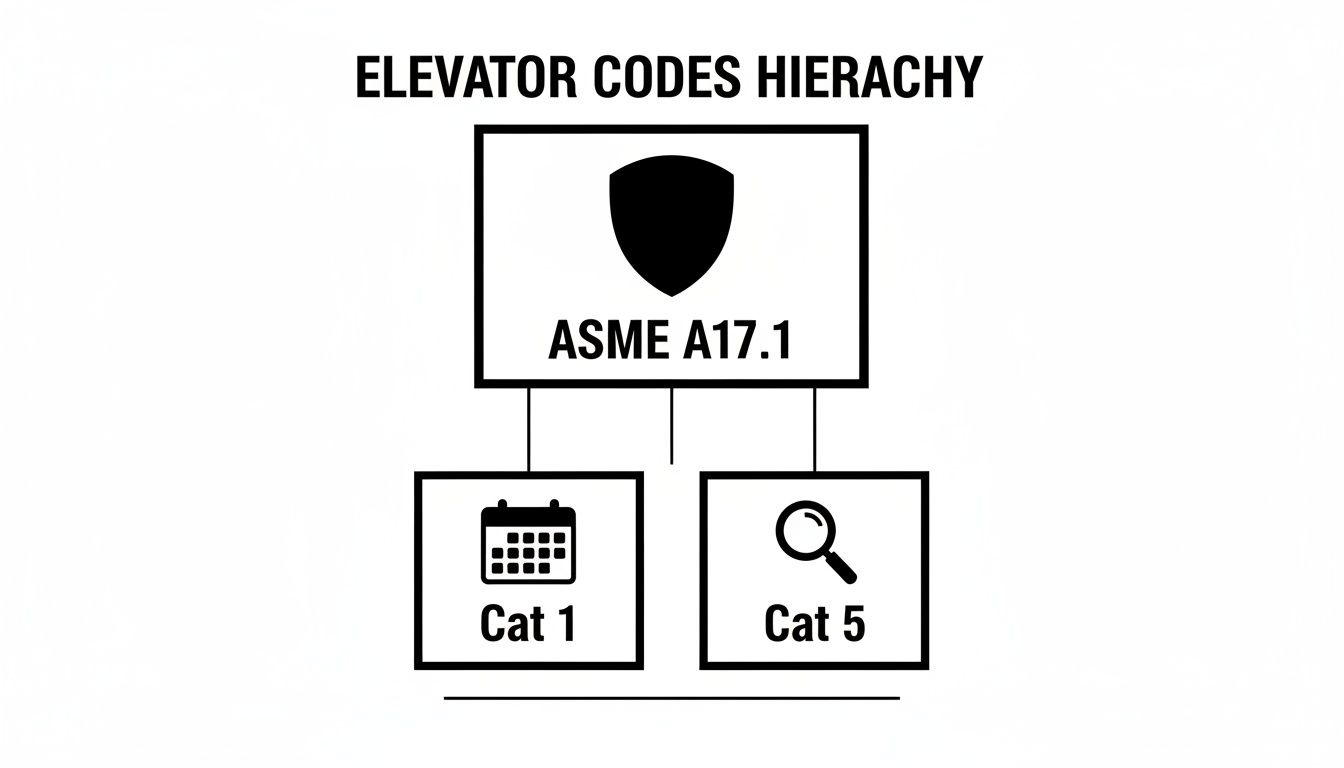
As you can see, the comprehensive ASME A17.1 safety standard is the foundation for both the routine annual (CAT 1) and the more in-depth five-year (CAT 5) inspections.
The Pit: Foundation of Safety
Finally, the inspection wraps up in the elevator pit—the area at the very bottom of the hoistway. It’s an often overlooked space, but it houses some of the most critical safety components.
The pit has to be kept clean, dry, and totally free of debris. Technicians check the buffers—those large springs or hydraulic pistons that act as a final failsafe—and confirm the final limit switches are working correctly.
A truly comprehensive plan has to cover all three of these zones. We explain in detail why elevator maintenance is crucial for reliability, performance, and compliance in our other guide. At the end of the day, this preventative approach is the single best way to protect your investment and ensure a safe, smooth ride for your tenants.
Common Elevator Problems and How to Prevent Them
That little “out of order” sign is a property owner’s worst nightmare. It’s an instant headache, throwing a wrench into the day for tenants, guests, and staff. Even what seems like a minor glitch can escalate fast, but understanding the most common elevator problems is the first step to preventing them with solid, professional Ann Arbor elevator maintenance.
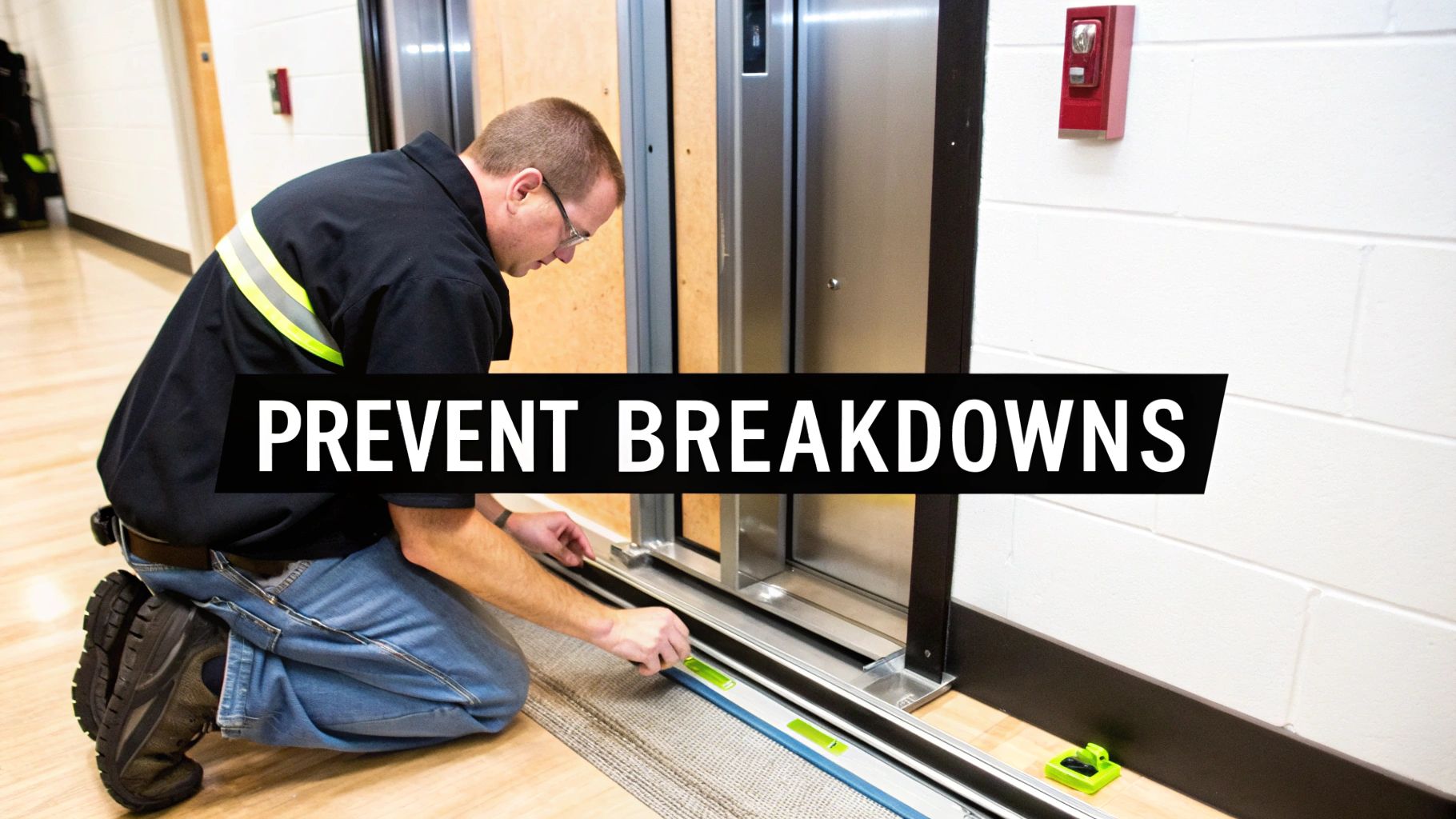
Many of the most frequent failures are things passengers notice immediately. Take a jerky ride, for example. It’s not just uncomfortable; it points a finger directly at specific mechanical issues. In a hydraulic elevator, that could be a problem with the control valve. For a traction system, it often means the guide rollers are worn out and need replacing.
Then there are the strange noises—the scraping, grinding, or clunking sounds that are clear warning signs. These almost always come from poorly lubricated parts, like guide rails or hoist ropes, creating friction that just eats away at the equipment.
From Symptoms to Solutions
The real key here is connecting those common symptoms back to specific, preventative actions. A proactive maintenance plan doesn’t sit around waiting for something to break; it actively works to stop it from ever happening in the first place.
Here’s how a technician’s proactive care solves these frequent headaches before they start:
- Malfunctioning Doors: Door systems cause the vast majority of service calls. That’s why technicians are constantly cleaning door tracks, inspecting sensors, and checking the door operator motors to keep everything moving smoothly and reliably.
- Jerky Movements: Consistent lubrication of the guide rails and regular checks of hydraulic valves or traction sheaves are what keep the ride smooth. It prevents the component wear that leads directly to that bumpy, unsettling travel.
- Slow Operation: A sluggish elevator can be caused by anything from low hydraulic fluid to a struggling motor. Routine fluid checks and motor performance monitoring catch and fix these slowdowns before they become a real drag.
Proactive maintenance transforms potential emergencies into routine adjustments. By addressing the root causes—like friction, misalignment, and wear—a skilled technician ensures small issues never become major shutdowns.
This preventative approach is absolutely vital for older buildings. The elevator maintenance market is projected to hit USD 59.66 billion by 2032, and a big driver of that is aging infrastructure. With over 15% of elevators in areas like Ann Arbor being more than 25 years old, these older units can see their operational costs jump by 20-40% without predictive care. You can explore more about these market trends and their impact on maintenance costs. By catching failures before they happen, you protect both your tenants and your bottom line.
Understanding the True Cost of Elevator Maintenance
Budgeting for elevator care in Ann Arbor shouldn’t be a guessing game. The true cost of Ann Arbor elevator maintenance isn’t just the number on your monthly invoice; it’s really about balancing a predictable, proactive investment against the risk of a catastrophic, unbudgeted repair bill down the road.
Think of it like this: a cheap, minimal service plan is like buying discount tires for a delivery truck. Sure, you save a little upfront, but you’re dramatically increasing the risk of a costly blowout that sidelines your entire operation. A solid maintenance plan, on the other hand, acts as a predictable, fixed cost that shields you from those sudden financial shocks.
An emergency repair, like a hydraulic jack replacement or a motor failure, can easily run into thousands of dollars and knock your building offline for days.
Key Factors Influencing Your Maintenance Costs
The price of a service contract is never one-size-fits-all. Several key variables determine what you can expect to pay for reliable service in the Ann Arbor area. Getting a handle on these factors will empower you to analyze quotes and see where the real value lies.
- Elevator Type and Technology: Hydraulic elevators, which are common in low-rise buildings, generally have lower maintenance costs than the more complex traction systems you find in taller structures. The age of your controller and drive system also plays a big part.
- Building Usage: An elevator in a busy downtown commercial building or a medical facility sees far more wear and tear than one in a quiet residential complex. Higher usage simply demands more frequent and intensive maintenance.
- Equipment Age: As elevators get older, their parts naturally wear out. Older units, especially those over 20 years old, often need more attention and specialized parts, which can drive up the cost of a full-service contract.
Investing in a comprehensive plan is about shifting your spending from reactive, high-cost emergencies to proactive, predictable maintenance. This strategy significantly lowers your total cost of ownership and protects your building’s operational flow.
Ultimately, the goal is to find a plan that delivers long-term value, not just the lowest price tag today. This approach ensures your elevator remains a dependable asset instead of becoming a recurring financial headache.
Choosing the Right Elevator Service Partner in Ann Arbor
Picking an elevator contractor isn’t like calling a plumber for a one-off fix. It’s about starting a long-term partnership that directly impacts your budget, your tenants’ safety, and your building’s day-to-day flow.
Get it right, and you get peace of mind. Get it wrong, and you’re in for a world of recurring breakdowns, angry tenants, and costs that just keep climbing. Making a smart choice starts by asking the right questions—not just the easy ones.
An effective partner for Ann Arbor elevator maintenance does more than just show up. They act as a proactive guardian for your equipment, keeping you safe, compliant, and running smoothly.
Key Questions to Ask Any Potential Contractor
When you’re vetting companies, you need to cut through the sales pitch. These three questions will tell you everything you need to know about their real-world commitment to you.
- Do you have deep expertise with Michigan elevator codes? A simple “yes” is a red flag. Dig deeper. Ask them for specific examples of how they manage annual and five-year testing schedules for other clients right here in Ann Arbor. A true expert tracks these deadlines for you, gets the equipment ready to pass, and handles all the paperwork.
- What is your guaranteed 24/7 emergency response time? Elevators don’t stick to a 9-to-5 schedule, and neither should your service partner. You need a company with technicians on call 24/7/365, period. Ask about their guaranteed response time and, more importantly, if they have a “No Show, No Pay” policy. That’s a policy that holds them accountable.
- Do you install and service non-proprietary equipment? This is the big one. Proprietary, or “closed,” systems use parts and diagnostic tools that only the original manufacturer can access. This tactic locks you into a single, often wildly overpriced, service provider for the life of the equipment.
Choosing a contractor who champions non-proprietary solutions is the single best way to protect your freedom as a building owner. It ensures competitive pricing, parts availability, and the ability to switch providers if service quality ever declines.
Opting for a specialist isn’t just about better service; it’s a smart financial move. Outsourcing to an expert can save you 15-25% compared to trying to handle it in-house, especially when you use non-proprietary solutions that prevent you from getting trapped by a single vendor.
By asking these direct questions, you can cut through the noise and find a partner truly committed to transparency and reliability. You can also explore our elevator services available in Ann Arbor and Ypsilanti to see exactly how a proactive, owner-first approach works in practice.
Your Ann Arbor Elevator Maintenance Questions, Answered
If you own or manage a property in Ann Arbor, you’ve probably got questions about your elevators. Here are some straight answers to the most common ones we hear.
How Often Does My Elevator in Ann Arbor Need an Inspection?
In Michigan, the state requires most commercial elevators to pass an annual safety inspection, which is called a Category 1 test. Think of it as a yearly check-up to make sure everything from the doors to the emergency phone is working exactly as it should.
On top of that, there’s a more intensive Category 5 load test required every five years. It’s important to remember these formal, state-mandated inspections are totally separate from your day-to-day maintenance visits. A good service partner will track these dates for you, handle the scheduling, and fix any issues that come up so you stay compliant without the headache.
What Is a Non-Proprietary Elevator System?
This is a huge one for building owners. A proprietary system is one where the manufacturer uses exclusive parts and diagnostic tools. This effectively locks you into using them—and only them—for service, often at a much higher price. If something breaks, you have no choice but to call them and pay what they ask.
A non-proprietary system, on the other hand, is built with universally available components. This gives you the freedom to choose any qualified company for your Ann Arbor elevator maintenance. It keeps pricing competitive and ensures you’re never held hostage by a single vendor. It’s all about keeping you in control of your own equipment.
Choosing non-proprietary equipment is one of the smartest long-term decisions a building owner can make. It guarantees you can always get the best service at a fair price, because you’re not trapped in one company’s ecosystem.
Should I Repair or Modernize My Old Elevator?
This question comes up a lot, especially with Ann Arbor’s mix of historic and modern buildings. If your elevator is breaking down frequently, parts are getting harder to find, or it’s just running inefficiently, modernization is almost always the better long-term investment.
A simple repair just patches the immediate problem. A full modernization can dramatically improve safety, boost reliability, and cut down on energy costs, giving your elevator a whole new life. The best approach is to get a professional assessment that compares the long-term costs and benefits for your specific elevator.
Ready to work with a team that puts transparency, safety, and your freedom of choice first? Crane Elevator Company delivers expert maintenance, repair, and non-proprietary modernizations for buildings all across Ann Arbor.