An out-of-service elevator isn’t just an inconvenience—it’s a critical failure in your building’s core operations. For any property manager, a silent elevator means unhappy tenants, serious accessibility problems, and a direct hit to your building’s reputation. Getting it fixed right comes down to catching the problem early, getting an accurate diagnosis, and having a qualified local expert on your side.
(Servicing Lower Michigan)
For Questions or Service Call
1-734-726-4247
Or
Fill Out Our Contact Form
Why Your Elevator Motor Is The Heart Of Your Building

Think of the elevator motor as your building’s heart. It provides the raw power needed to move people and goods, floor after floor. When it’s running smoothly, no one gives it a second thought. The second it stutters, the entire building feels it.
For property managers across Michigan—from busy high-rises in Ann Arbor to industrial sites in Romulus—a failing motor can bring everything to a standstill. It’s more than a mechanical issue; it’s a logistical breakdown that impacts everyone.
The True Cost of Downtime
The cost of a broken elevator goes way beyond the repair invoice. Every hour it’s down, the problems multiply. You start to see real-world consequences for both your tenants and your budget:
- Tenant Frustration: People depend on reliable elevator service. Constant breakdowns lead to complaints and are a major factor when it comes time for lease renewals.
- Accessibility Barriers: For anyone with mobility challenges, a broken elevator isn’t an inconvenience—it’s a complete barrier, blocking them from their homes or workplaces.
- Operational Delays: In commercial or industrial buildings, like those in Ypsilanti or Milan, a dead freight elevator can stop deliveries, hold up projects, and kill productivity.
A proactive approach to motor maintenance is non-negotiable. Knowing the early warning signs and having a trusted service partner on call turns a potential crisis into a manageable repair.
This guide will walk you through the entire process. We’ll cover how to spot the first signs of motor trouble, how to make the critical call between repair and replacement, and why preventative maintenance is your best defense against unexpected shutdowns and costs.
Understanding How Your Elevator Motor Works

Think of your elevator motor as the engine of your vertical transport system. It’s the powerhouse that converts electricity into the raw mechanical force needed to move thousands of pounds, day after day. Without a healthy motor, your elevator is just a stationary box.
Whether you manage a sleek office tower in Ypsilanti or a busy manufacturing plant in Romulus, that motor is what makes vertical movement happen.
Understanding its basic design is the first step toward having productive conversations with technicians and making smart financial decisions when problems pop up.
The Two Primary Types of Elevator Motors
Elevators rely on two dominant motor technologies, and knowing which one is in your machine room is critical for diagnostics and repair.
Traction Motors: These are the workhorses of mid-rise and high-rise buildings. They operate like a sophisticated pulley system, using the motor to turn a grooved wheel (the sheave) that grips steel ropes or belts. As the sheave turns, it hoists the cab up or lowers it down, balanced by a heavy counterweight.
Hydraulic Motors (Power Units): Found mostly in low-rise buildings—typically under six stories—hydraulic systems push, they don’t pull. The motor’s job is to pump hydraulic fluid into a massive cylinder, which drives a piston upward and lifts the elevator car. To go down, the system simply releases the fluid.
The difference isn’t just academic; it dictates the entire maintenance and repair strategy. A traction system in a tall apartment building has completely different needs than a hydraulic unit in a small commercial building in Milan.
To help clarify the differences, here’s a quick comparison.
Traction Vs Hydraulic Elevator Motors At A Glance
| Feature | Traction Motor (Geared & Gearless) | Hydraulic Motor (Power Unit) |
|---|---|---|
| Operating Principle | Pulls the elevator cab up with steel ropes/belts over a sheave. | Pushes the elevator cab up from below using a fluid-driven piston. |
| Typical Application | Mid-rise and high-rise buildings (5+ stories). | Low-rise buildings (typically 2-6 stories). |
| Common Maintenance | Sheave groove wear, bearing lubrication/replacement, motor winding checks. | Hydraulic fluid levels and quality, pump seals, valve adjustments. |
| Energy Use | More energy-efficient, especially gearless models. | Less energy-efficient; uses significant power on the "up" travel. |
Each design has its place, and you can learn more about the pros and cons of traction vs. hydraulic elevators to see why one might be chosen over the other.
At its core, an elevator motor's job is straightforward to convert electricity into controlled motion. But how it achieves this, and the components involved, determines everything about its performance, maintenance needs, and potential points of failure.
Key Components and What They Do
No matter the type, every elevator motor is built from a few crucial parts. When a technician discusses an elevator motor repair, one of these components is almost always the culprit.
-
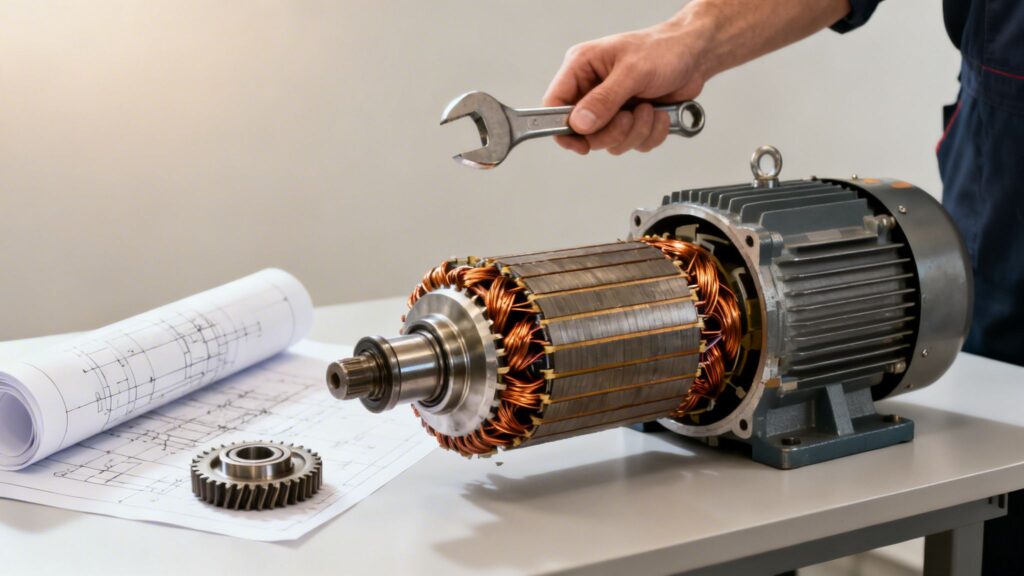
Windings: These are the motor's muscles—tightly coiled copper wires that create a powerful magnetic field when electricity passes through them. This field generates the torque (rotational force) that drives the whole system.
-
Rotor: This is the part that spins. The magnetic field from the windings forces the rotor to turn, transferring that motion to either the traction sheave or the hydraulic pump.
-
Bearings: If the windings are muscles, bearings are the joints. These small, hardened metal rings allow the rotor to spin smoothly with almost zero friction. Worn-out bearings are a leading cause of motor failure and often announce themselves with a distinct grinding or whining noise.
-
Shaft: This is the central axle that the rotor spins on. It’s the backbone that transfers all the motor’s rotational power to the rest of the elevator machinery.
Knowing these parts demystifies the repair process. When a tech tells you the "bearings are shot" or the "windings are overheating," you'll have a clear picture of what's failing inside that machine, empowering you to ask the right questions.
Spotting The Warning Signs Of Motor Failure
An elevator motor almost never fails out of the blue. Before it quits and strands tenants, it will give you plenty of warning signs. The trick is knowing what to look for—and listen for.
Think of it like being a detective for your own building. Noticing a small change today can head off a massive failure tomorrow. When a facility manager in Ypsilanti can tell a technician, "I hear a high-pitched whine on the way up," the problem gets solved a lot faster than a vague call about the elevator "acting weird."
This isn't a minor issue. The global elevator repair market hit nearly $35.76 billion in 2025, and it's growing at 8% a year. A huge chunk of that is driven by aging motors. In fact, motors are behind 20-25% of all commercial repair calls. Simply catching problems early can cut downtime by up to 40%. You can explore more data on this expanding market to see the full scope.
Listen For Changes In Sound
Your ears are your best early-warning system. The machine room should have a steady, predictable hum. When that sound changes, pay attention.
-
Grinding or Scraping: This is the classic sign of failing bearings. When the bearings that let the motor shaft spin freely wear out, you get a harsh, metal-on-metal sound that gets worse under load.
-
Loud Humming or Buzzing: A motor hum is normal. A loud, vibrating buzz is not. This usually points to an electrical problem, like bad motor windings or an unstable current making the motor work too hard.
-
Squealing or Whining: That high-pitched noise is a cry for help. It often signals a problem with the drive sheave (on traction elevators) or a failing pump (on hydraulic systems). It means something needs lubrication or replacement, now.
Pay Attention To New Smells
Don't ignore strange smells coming from the machine room. They’re a huge red flag for problems you can't see yet.
If you’re managing a building in Romulus and smell something odd near the elevator equipment, it's time to investigate before a small issue becomes a big one.
If you smell something burning, call for service immediately. Overheating parts are a fire hazard and can cause irreversible motor damage, turning a simple repair into a full replacement.
Two smells in particular demand action:
-
A Burning Electrical Smell: This sharp, acrid odor means the motor's windings are overheating. This is a fast track to a total "burnout," and there's often no coming back from that.
-
The Smell of Hot or Burnt Oil: For hydraulic elevators, this points to an overworked pump motor or hydraulic fluid that's breaking down from too much heat.
Feel For Performance Issues
Finally, trust what you feel when you ride the elevator. Any changes in its movement are direct symptoms of a motor struggling to do its job.
A property manager in Milan, for example, might get complaints that the ride feels "shaky." That's not a comfort issue—it's a diagnostic clue.
Keep an eye out for these physical signs, as they often point directly to the need for an elevator motor repair:
- Jerky Starts and Stops: If the car lurches or hesitates, the motor probably isn't getting consistent power.
- Slower Than Normal Travel: A weak motor will struggle to lift the cab at its proper speed. If trips between floors seem to take longer, the motor is likely losing power.
- Mis-leveling: The elevator consistently stopping just above or below the floor is a classic sign that the motor and its controls are out of sync.
The Critical Decision: Repair or Replace Your Motor
When your elevator motor fails, you’re facing a big question with a big price tag: do you pay for a repair, or is it time to replace the whole thing? This isn't just about the immediate invoice. It's a strategic call that affects your building's reliability, your energy bills, and your budget for years to come.
The right answer isn't always obvious. For instance, if a five-year-old motor in a Ypsilanti office building throws a bearing, a repair makes perfect sense. But if a 25-year-old motor in a Flint apartment complex has a catastrophic winding failure, sinking money into a repair is often throwing good money after bad. A modern, energy-efficient replacement will almost always deliver a better return over the next decade.
Key Factors Guiding Your Decision
You have to weigh the variables like a pro, balancing the short-term cost against the long-term value.
- Motor Age and Condition: Most motors are built to last 20-30 years—if they're properly maintained. If your unit is getting close to that age, a major failure is often the first domino to fall. Other components are likely on their way out, too.
- Severity of the Damage: Swapping out a bad component is one thing; a complete motor rewind is another. A catastrophic failure, like a burned-out stator, almost always points toward replacement.
- Availability of Parts: Finding parts for old, obsolete motors can turn into an expensive and time-consuming scavenger hunt. If sourcing a component for a repair in a building in Romulus takes weeks, a new unit is the faster, more practical path.
- Long-Term Energy Savings: This is a big one. Modern motors are worlds more efficient than their predecessors. An upgrade can deliver serious, immediate savings on your utility bills that help pay for the initial investment.
This decision tree helps visualize how a technician diagnoses the problem, connecting the symptoms you see to the work that needs to be done.

As the chart shows, things like strange noises or jerky rides are the first clues. They tell a technician whether to look for a simple fix or start a much deeper investigation.
Analyzing the ROI of Modernization
Putting in a new motor isn't just a repair; it's a building upgrade that pays you back. Swapping an old motor for a modern gearless traction model can cut energy consumption by a massive 30-50%. Even better, it can reduce the need for future repairs by as much as 45%. That’s a powerful financial argument property managers in cities like Milan are paying close attention to.
The push for modernization is reshaping the entire $41.7 billion global elevator maintenance market. These upgrades are vital, especially when you consider that elevators installed before 1990 have a failure rate of around 25%.
This isn't just about saving energy. In North America, the use of predictive diagnostics has already cut unplanned outages in busy buildings by 35%. Modern technology directly leads to a more reliable elevator and fewer angry calls from tenants. You can discover more insights about the evolving elevator market and its focus on modernization.
When to Choose Repair Over Replacement
Even with all the benefits of a new motor, sometimes a simple repair is the right call. A fast, cost-effective fix is often the smartest move if:
- The motor is relatively young (under 15 years old).
- The failure is isolated to a single, easily replaceable part like a bearing or brake coil.
- Your budget is tight, and a full replacement just isn't in the cards right now.
Ultimately, you need a qualified elevator partner who can give you the straight scoop. They should perform a thorough diagnosis and lay out a clear comparison of the costs, timelines, and long-term benefits of both options. That's how you make an informed decision for your Michigan property.
How Proactive Maintenance Prevents Costly Failures

The best way to handle an elevator motor repair is to stop it from happening in the first place. While some breakdowns are just unavoidable, a proactive maintenance strategy is the single most important factor for a reliable, safe, and cost-effective elevator.
Think of it as a scheduled check-up versus a frantic trip to the emergency room.
A predictable monthly maintenance payment is a controlled operational expense. An emergency motor replacement in your Ypsilanti high-rise, on the other hand, is a massive, unplanned capital expenditure. It blows up your budget, disrupts your tenants, and grinds your operation to a halt.
Consistent, professional care isn't just another bill—it's an investment that protects one of your building's most critical assets.
The Anatomy Of A Quality Maintenance Plan
A real preventative maintenance plan is much more than a quick look-around. It’s a systematic process designed to catch minor wear and tear before it snowballs into a full-blown failure. For building managers in Michigan cities like Milan or Romulus, knowing what your service partner should be doing is critical.
A comprehensive plan must always include:
- Scheduled Lubrication: This is the lifeblood of your motor. Proper lubrication of bearings and moving parts cuts down on friction, stops overheating, and is one of the easiest ways to add years to a motor's life.
- Vibration Analysis: Technicians use specialized tools to feel subtle vibrations the human hand could never detect. These tiny shakes are often the very first sign of bearing wear, allowing for a planned fix before a catastrophic failure.
- Thorough Cleaning: A clean machine room is a healthy one. Dust, dirt, and grime contaminate lubricants, clog cooling fans, and make motor components run hot. A full clean-down should be part of every single visit.
The global elevator maintenance market, valued at $21.6 billion, is dominated by preventive service contracts for a reason—they make up over 55% of the industry in 2024. This proactive approach is proven to prevent up to 70% of major failures.
Take traction elevators: motor overheating causes 35% of all repairs, and it's almost always linked to bad lubrication or misalignment—problems that routine checks would have caught early. The data also shows that strong maintenance programs lead to 60% fewer compliance violations.
Protecting Your Investment And Your Tenants
At the end of the day, proactive maintenance is about more than just dodging a huge repair bill. It's about ensuring the safety of every single person who steps into your elevator and delivering the reliability your tenants expect.
Frequent breakdowns destroy trust and can seriously damage your building's reputation.
A well-maintained elevator runs smoothly, quietly, and dependably. That consistency is the hallmark of a professionally managed property. When you partner with a service provider that lives by this proactive philosophy, you take the most important step in protecting your equipment, your budget, and the people who count on your building every day.
Our team has built its reputation on exactly that philosophy. To see how our approach can benefit your property, check out our comprehensive elevator maintenance programs designed for Michigan building owners.
Choosing The Right Elevator Service Partner In Michigan
When your elevator motor starts giving you trouble, who you call is just as important as the repair itself. Picking the right service partner is a major decision that directly impacts your building’s safety, your budget, and your peace of mind.
For facility managers across Michigan, from Romulus to Milan, the choice boils down to a single factor: control.
A good partner doesn't just fix the immediate issue. They give you knowledge and options, making sure you’re never locked into a single company for the life of your equipment.
Proprietary Vs. Non-Proprietary Service
If there's only one question you ask a potential service partner, make it this: Do you install non-proprietary equipment? The answer has massive implications for your property.
-
Proprietary Systems: Think of these as "closed" systems installed by the original manufacturer (OEM). They need special tools, private software, and specific parts that only the OEM can provide. This locks you into their service contracts, often at a premium price.
-
Non-Proprietary Systems: This is the "open" approach. The equipment uses universal, off-the-shelf components and standard diagnostic tools. This means any qualified and licensed elevator technician in Michigan can legally and competently work on your system.
Choosing a non-proprietary provider gives you freedom. You can get competitive bids for maintenance and repairs, ensuring you get the best service at a fair price without being held hostage by one company.
Checklist For Vetting A Michigan Elevator Company
Finding a reliable partner for your elevator motor repair requires asking the right questions. Whether you're in Ypsilanti or anywhere else in Lower Michigan, use this checklist to find a contractor you can trust.
A great elevator partner works for you, not just on your equipment. They should be a transparent, responsive resource dedicated to keeping your building safe and operational, not just a name on an invoice.
Look for a company that can give you a confident "yes" to every one of these points:
- Proven Local Track Record: Have they been serving businesses in your community for a long time? Deep knowledge of local codes and building types is a huge advantage.
- True 24/7/365 Emergency Availability: Problems don’t follow a 9-to-5 schedule. Make sure they have technicians on call around the clock—including nights, weekends, and holidays.
- Transparent and Upfront Pricing: Ask for a clear breakdown of all costs. A trustworthy partner provides detailed quotes with no hidden fees, surprise trip charges, or confusing jargon.
- Commitment to Non-Proprietary Solutions: Confirm that their entire service philosophy is built on installing universal parts and open systems. This is your best defense against getting locked into an expensive monopoly.
Vetting potential partners with these criteria ensures you’re handing your keys to a company that puts your building’s needs first. To see what this looks like in practice, you can explore our guide to elevator repair in Michigan and see how we hold up to these standards.
Frequently Asked Questions About Elevator Motor Repair
When an elevator motor acts up, property managers across Michigan—from Ypsilanti to Romulus—tend to ask the same critical questions. Here are the straightforward answers you need.
How Long Does An Elevator Motor Typically Last?
A well-maintained elevator motor is built to last, with a typical lifespan of 20 to 30 years.
But that number isn't a guarantee. The actual service life depends heavily on daily usage intensity, the machine room environment, and—most importantly—the quality of your maintenance. Consistent, high-quality preventative maintenance is the single best way to get the most out of your motor and avoid a premature failure.
What Is The Average Cost Of An Elevator Motor Repair?
The cost for an elevator motor repair can swing wildly depending on the motor type and what exactly went wrong.
A minor fix, like swapping out some worn bearings in a small Milan office building, might only run a few thousand dollars. A major overhaul is a different story. A complete motor rewind or a full replacement on a large commercial traction elevator can easily cost anywhere from $10,000 to over $30,000. Always get a detailed, itemized quote before you sign off on any work.
An unexpected motor failure shouldn't derail your budget. A good technician won't just quote the repair; they'll show you the long-term value of a full replacement. This gives you a clear financial picture to make the right call for your property.
How Long Will My Elevator Be Out Of Service?
Downtime is a huge concern for tenants. The timeline comes down to the complexity of the repair and whether the necessary parts are on hand.
A simple component replacement could be done in a single day. But if the job requires pulling the motor for a full rebuild or replacement, expect the elevator to be down for several days to a week. Your elevator contractor should give you a realistic timeline upfront so you can keep your tenants in the loop.
Can I Switch Service Providers With Proprietary Equipment?
Yes, you absolutely can, but it takes a specific approach. If your elevator uses proprietary equipment that "locks" you into a single service provider, an independent contractor like Crane Elevator can perform a modernization.
This process involves replacing the locked, manufacturer-specific controls and parts with universal, non-proprietary ones. While there's an upfront cost, it gives you permanent freedom. You’ll never be stuck with one company again and can get competitive bids for all future maintenance and repairs, which almost always leads to significant long-term savings.
Is your elevator motor showing signs of trouble, or are you looking for a more reliable service partner in Michigan? The experienced team at Crane Elevator Company is available 24/7/365 to provide honest diagnostics, fast repairs, and non-proprietary solutions that put you back in control. Contact us today for a free, no-obligation second opinion or to discuss our proactive maintenance plans at https://www.craneelevator.com.