The elevator power unit is the absolute heart of any hydraulic elevator. It’s the system that generates the force to lift and lower the elevator car.
You’ll often hear them called pump units or tank units, but they all do the same job: ensuring smooth, safe vertical transport in low to mid-rise buildings all over Michigan. When this core system fails, your building’s operations can grind to a halt.
Michigan’s #1 Elevator Power Unit Replacement Service
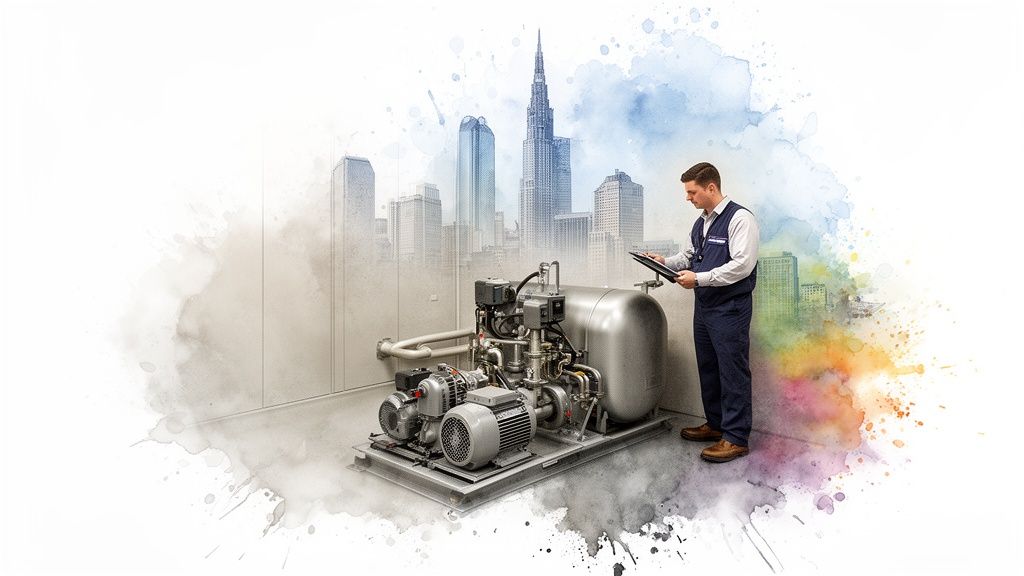
This guide is your complete reference for elevator power units. We’ll explain the critical role they play and why Crane Elevator is the leading choice for replacement services for building owners in Detroit, Ann Arbor, and across Lower Michigan.
For any property manager, understanding your equipment is always the first step. The condition of the pump unit directly impacts ride quality, energy use, and your long-term operational costs.
We focus on delivering real value by combining competitive rates with high-quality, non-proprietary parts. This approach means you get top-tier work without being locked into a single manufacturer for future repairs or maintenance.
Our Commitment to Quality and Value
At Crane Elevator, we know that replacing a pump unit or tank unit is a major investment. That’s why we bring over 25 years of hands-on experience to every job, grounded in transparency, competitive rates, and a commitment to high-quality results.
Our goal isn’t just to be another vendor. We aim to be your long-term partner in keeping your building’s elevators running right. You can learn more about our specific approach to hydraulic elevators and how we can address your building’s needs.
Here’s what our service includes:
- Competitive Rates: We make sure our pricing is fair and that the work we deliver justifies every dollar of your investment. We are confident in our ability to offer the best value.
- High-Quality Components: We install high-quality, non-proprietary parts, which gives you crucial flexibility and control over your elevator’s future.
- Guaranteed Work: Our seasoned technicians stand behind their work, putting your building’s safety and performance first.
You can trust Crane Elevator to provide a modern, efficient, and reliable tank unit solution for your property.
Understanding the Core Components of a Power Unit
The elevator power unit is the muscle behind any hydraulic elevator. Think of it as a self-contained system that generates the immense force required to lift thousands of pounds, day in and day out. To truly get a handle on how it works and why maintenance is so critical, you need to understand its four main components.
When these parts work together, you get smooth, safe, and reliable performance. But if even one of them starts to fail, it can throw the whole system off, leading to poor ride quality or a complete shutdown. Knowing what each part does helps you spot trouble early and understand what your service technician is telling you.
The Anatomy of a Pump Unit
A standard hydraulic power unit—often called a pump unit or tank unit in the trade—is a surprisingly elegant piece of engineering. It’s an integrated system where each component has a very specific job.
- Electric Motor: This is the workhorse. It converts electricity into the rotational, mechanical power that drives the pump. If you hear strange noises, notice the elevator running at inconsistent speeds, or have breakers tripping, the motor is often the first place to look.
- Pump: This component, usually a positive-displacement screw pump, is what actually moves the hydraulic fluid. It draws oil from the tank and pressurizes it, pushing it down into the cylinder to lift the elevator car.
- Reservoir Tank: More than just a holding container, the tank stores the system’s lifeblood: the hydraulic fluid. It also plays a key role in cooling the fluid and allowing any grit or contaminants to settle to the bottom, away from sensitive parts.
- Control Valves: This is the brain of the hydraulic circuit. These intricate valves are responsible for managing the fluid’s flow, direction, and pressure. They dictate how smoothly the car accelerates, decelerates, and—most importantly—levels at each floor.
A common sign of a failing control valve is an elevator car that slowly “drifts” down after stopping at a floor. This is caused by hydraulic fluid leaking past worn valve seals and seeping back into the tank, a problem that only gets worse over time.
To give you a clearer picture, here’s a quick-reference breakdown of these essential parts and their roles.
Key Power Unit Components and Their Functions
| Component | Primary Function | Common Failure Sign |
|---|---|---|
| Electric Motor | Converts electrical energy into mechanical power to run the pump. | Unusual noises (humming, grinding), overheating, or tripped breakers. |
| Pump | Pressurizes and moves hydraulic fluid from the tank to the cylinder. | Slow or jerky car movement; whining or groaning sounds during operation. |
| Reservoir Tank | Stores, cools, and helps clean the hydraulic fluid. | Low fluid levels, visible leaks around the unit, or contaminated/dark oil. |
| Control Valves | Regulate the speed, direction, and pressure of the hydraulic fluid. | Poor leveling at floors, abrupt starts/stops, or car "drifting" downward. |
Seeing how these parts function individually is the first step. The next is understanding how they respond to commands from the elevator’s main brain. For more on that, see our guide to the elevator control panel.
When you can recognize the symptoms of a failing component, you can give your service provider clear, actionable information. That almost always leads to a faster diagnosis and a quicker repair. We’ll dive deeper into specific failure modes and what to look for in the next section.
How Different Elevator Power Systems Function
The type of elevator in your building depends almost entirely on its height and design. You’ll find two main technologies out there: hydraulic and traction. Each works differently and has its place, especially when you look at the mix of buildings across Michigan.
For low- to mid-rise buildings, like the ones you see all over Lansing and Kalamazoo, hydraulic systems are the undisputed workhorses. The heart of this system is the elevator power unit, sometimes called a pump unit or tank unit. Its job is to pump hydraulic fluid from a reservoir tank into a cylinder, which then pushes a piston upward to lift the elevator car.
This diagram shows you the key parts that make it all happen.
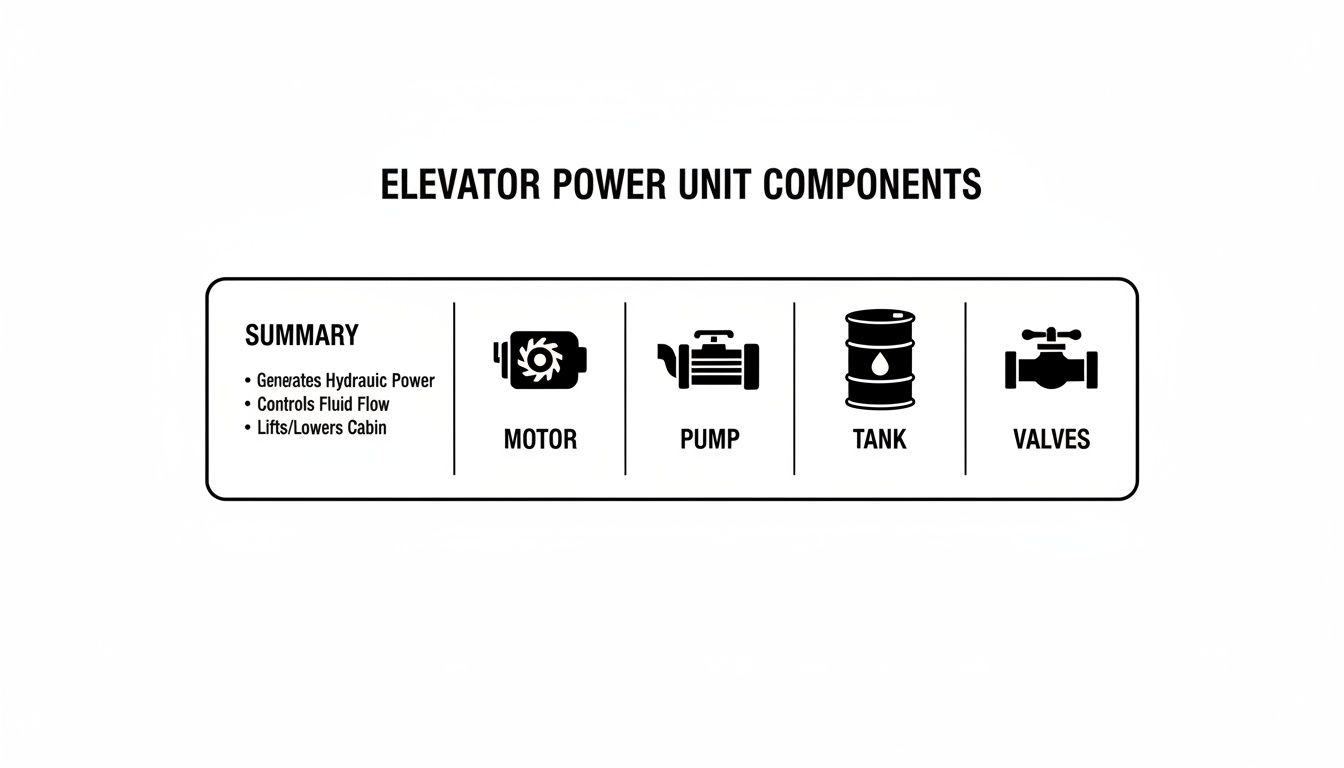
Understanding how the motor, pump, tank, and valves work together is the first step to figuring out what’s wrong when you have a problem.
Hydraulic vs. Traction Systems
For buildings under six stories, hydraulic elevators have always been the default choice, making up 70-80% of the low-rise market around the world. Why? Their mechanics are simpler and the initial installation is cheaper—often 20-30% less than a traction setup.
Newer machine-room-less (MRL) hydraulic designs have even made them more efficient, cutting space needs by up to 50% and using a lot less energy. You can learn more about the history of elevator development on elevators.com.
Traction elevators, on the other hand, are built for height. They work like a sophisticated pulley system. An electric motor turns a grooved wheel (the sheave), which grips steel ropes to pull the elevator car up and down the hoistway. A massive counterweight balances the car’s weight, so the motor only has to lift the passengers, not the entire weight of the car.
The core difference is simple: hydraulic systems push the car up from below, while traction systems pull it up from above. That’s why traction is the only real option for high-rises, but hydraulics provide a smooth, powerful ride for shorter travels.
Deciding between them comes down to a series of trade-offs. We break down the pros and cons in our guide on Traction vs. Hydraulic Elevators.
Recognizing Common Power Unit Failures
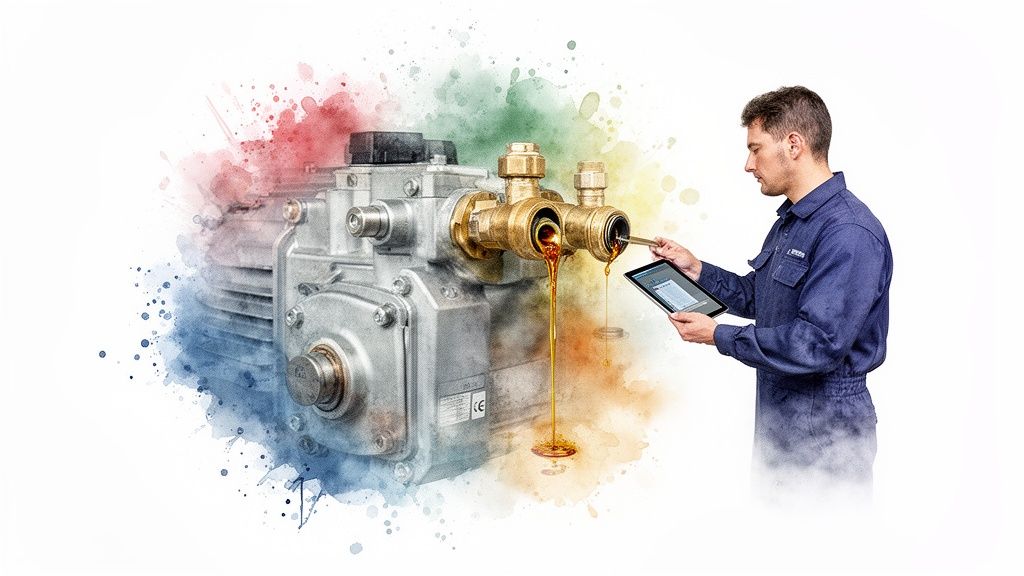
When an elevator power unit starts to fail, it’s almost never a silent problem. The system gives off plenty of warning signs that, if you catch them early, can help you avoid a total shutdown and minimize the headache of downtime.
Knowing what to look, listen, and feel for is the first step. These clues help you give a technician a clear picture of the problem. Whether you call it a power unit, pump unit, or tank unit, the issues show up in very similar ways.
Common Symptoms and What They Mean
That weird noise or bumpy ride isn’t just an annoyance. It’s your elevator telling you exactly what’s wrong. Paying attention can help you narrow down if the problem is the motor, the pump, the valves, or the hydraulic fluid itself.
Here are the most common failure modes we see in the field:
- Loud Whining or Groaning: This usually points straight to pump cavitation. This is a destructive issue where air bubbles form and collapse inside the hydraulic fluid, often from low fluid or a clogged suction strainer. If you don’t fix it, it will destroy the pump.
- Jerky or Bouncy Ride: If the elevator lurches on starts and stops or feels bouncy, the control valves are the likely culprit. They might be sticking, failing to open smoothly, or just not regulating pressure correctly anymore.
- Visible Fluid Leaks: Seeing puddles of hydraulic oil around the tank unit is an obvious red flag. Leaks can come from a bad seal, a failing gasket, or even a crack in the tank. It’s a direct path to low fluid levels and system failure.
A huge indicator of trouble is contaminated hydraulic fluid. If the oil in the sight glass looks dark, milky, or smells burnt, it’s shot. It can no longer lubricate or cool the system, which causes accelerated wear on every single component.
Electrical and Performance Issues
Not every failure is mechanical. The motor and electrical controls are just as likely to cause problems, and they have their own unique symptoms.
A motor that just hums or buzzes but struggles to start often means motor burnout or a bad capacitor.
If the elevator has a hard time leveling with the floor—consistently stopping just above or below—that points to valve issues or problems with the sensors that talk to the power unit.
By recognizing these signs, you can act fast. Telling a technician you have “a loud whining noise during ascent” gives them a massive head start compared to just saying “the elevator’s broken.”
At Crane Elevator, our 24/7 responsive service is built to diagnose these emergencies quickly and get your building’s elevator back in service with as little disruption as possible.
Sooner or later, every building manager faces the big question: do we repair this power unit again, or is it time to replace it? A quick fix might seem cheaper on paper, but if you’re paying for frequent service calls and dealing with constant downtime, those “savings” disappear fast.
Knowing when to bite the bullet and invest in a full modernization is a business decision, not just a technical one. It’s about long-term reliability and protecting your asset.
There are a few tell-tale signs that your power unit is on its last legs. The most obvious is age. If your pump unit is pushing 20 years or older, it’s already past its prime. Another huge red flag is parts obsolescence—when the manufacturer stops making replacement components for your unit, every repair becomes a costly, time-consuming scavenger hunt.
Key Factors for Modernization
Is your elevator breaking down more and more? That’s not a coincidence; it’s a clear signal the core power system is failing. Another drain is poor energy efficiency. Older hydraulic systems are notorious energy hogs compared to today’s technology.
Upgrading to a new, high-quality power unit isn’t just a fix; it’s a strategic improvement with real returns:
- Better Energy Efficiency: A modern elevator power unit can slash energy use by an impressive 30-50%, directly lowering your building’s operating costs.
- Quieter Operation: New units are designed for minimal noise and vibration. Your tenants and guests will notice the difference.
- Smoother Ride: Modern valves and controls deliver smooth starts and stops, getting rid of the jarring, jerky movements of older systems.
- Fewer Breakdowns: A new unit means fewer emergency calls, less tenant frustration, and more predictable performance.
Modernization isn’t just about replacing an old machine. It’s an upgrade that boosts your property’s value, improves tenant safety, and pays for itself through lower energy bills and fewer repair invoices.
Michigan’s Modernization Experts
At Crane Elevator, we specialize in full elevator modernizations. We’re experts at swapping out old, proprietary systems for high-quality, non-proprietary equipment. This is a critical distinction—it means any qualified technician can service your elevator, giving you freedom and control over future maintenance.
The technology has come a long way. The roped hydraulic elevator was a huge deal back in 1878, but today’s units are in a different league. Find out more about the history of elevator innovation on otis.com. Modern hydraulic power units can be 70-80% more efficient than their predecessors, and some machine-room-less (MRL) designs don’t use any oil at all.
For property owners in Detroit or Ann Arbor, the numbers speak for themselves. A well-maintained modern hydraulic unit can cut energy bills by 30-50% and add up to 20 years to the system’s service life.
We know a full power unit replacement is a major capital expense. That’s why we offer flexible financing options and competitive rates to make these essential upgrades manageable and affordable. Our goal is to help you get the best work done without breaking your budget.
Why Choose Crane for Your Replacement Service

When you need an elevator power unit replaced in Michigan, you’re looking for a partner, not just a vendor. You need a company that delivers high-quality work, offers competitive rates, and cares about the long-term health of your building. That’s what we do at Crane Elevator.
As a family-owned business, we bring a level of accountability to every job that bigger corporations often can’t. We know a failing pump unit is more than a mechanical issue—it’s a major disruption for your tenants and your business.
That’s why our team is available 24/7/365. Elevator emergencies don’t keep business hours.
Our Customer-First Guarantees
We build relationships on transparency and solid work. We’re so confident in our pricing and technical skill that we offer free second opinions and quotes. Our goal is to give you all the facts so you can make the right call for your property.
Here’s what sets us apart:
- Non-Proprietary Equipment: We install high-quality, non-proprietary power units. This is a big deal—it means you’re never locked into a single company for future service. You keep your freedom.
- Price-Beat Guarantee: We will meet or beat any competitor’s price. You get the best value for your investment, period.
- Transparent Process: You’ll get a clear, detailed proposal with no surprises. We’re always here to walk you through it and answer your questions.
Since the first electric elevators appeared back in the 1880s, the technology has changed, but the need for reliable service hasn’t. Upgrading an old freight or passenger elevator with a modern tank unit can slash operational costs by 25-40% over 15 years while drastically cutting downtime. You can learn more about the history of these systems at ANSI.org.
Our specialty is bringing these modern efficiencies to buildings right here in Michigan, combining high-quality service with competitive rates.
Frequently Asked Questions About Power Units
When it’s time to replace an elevator power unit, building owners in Michigan usually have a few key questions. Based on our decades of work in the field, we’ve put together answers on cost, timelines, and how to spot a failing unit.
This is the practical information you need to understand the process for replacing a pump unit or tank unit and make a sound decision for your property.
What Is the Average Cost of an Elevator Power Unit Replacement?
Costs will always depend on your elevator’s size, capacity, and the specific setup in your machine room. That said, a typical commercial power unit replacement generally falls in the $20,000 to $50,000 range.
We provide free, no-obligation quotes that break down every line item, so you see exactly where your money is going. We’re committed to fair pricing and can also discuss financing options to help make this necessary upgrade fit your budget.
How Long Does a Pump Unit Replacement Take?
A standard power unit replacement is a focused job. Most projects take between two and four days from start to finish. The exact time depends on site access, the condition of the machine room, and the specific unit we’re installing.
Our crew is trained to work efficiently to keep disruption to a minimum. We plan the work around your building’s schedule to get the elevator back in service safely and as quickly as we can.
What Are the Signs My Tank Unit Needs Replacing?
An elevator power unit rarely fails without giving you some warning. If you see any of these signs, it’s a strong indicator that your tank unit is nearing the end of its useful life.
- Frequent Breakdowns: If you’re making more and more service calls, the power unit is often the underlying cause.
- Inconsistent Performance: Jerky rides, changes in speed, or a car that consistently misses the floor leveling are classic symptoms of a struggling unit.
- Strange Noises: Grinding, whining, or loud humming sounds are not normal. They point to significant mechanical wear inside the pump.
- Visible Fluid Leaks: Any sign of hydraulic fluid pooling or dripping around the pump unit means seals or gaskets have failed.
- Old Age: If the power unit is over 20 years old, it’s running on borrowed time. Proactively replacing it is almost always smarter than waiting for a complete failure.
At Crane Elevator Company, we believe in providing high-quality service at competitive rates. If you’re facing any of these issues, contact us for a free quote and discover how we can improve your elevator’s performance and reliability. Learn more about our approach by visiting https://www.craneelevator.com.