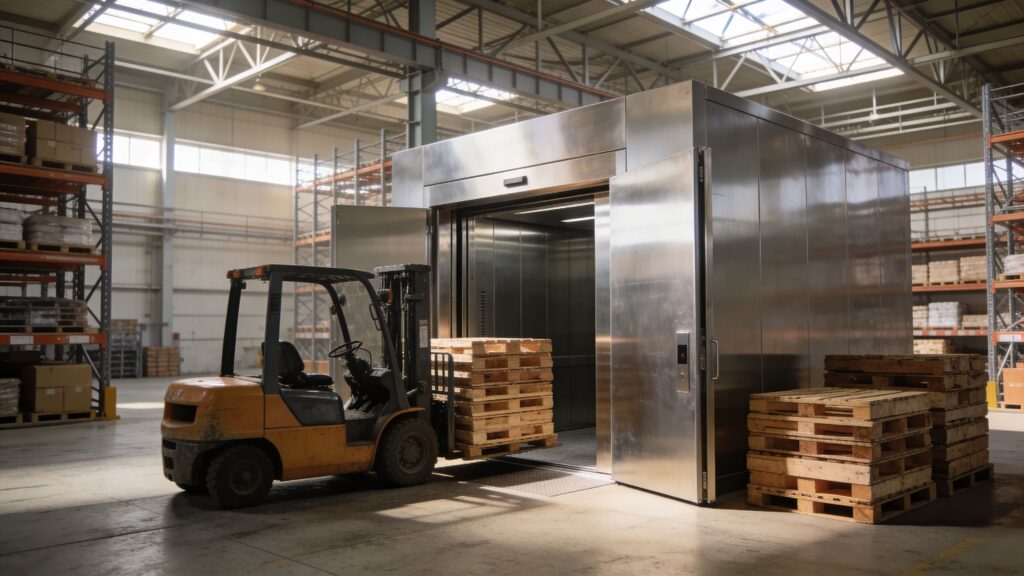
A lot of Michigan owners don’t think much about their freight elevator until the day operations stop.
That usually happens at the worst time. A warehouse in Grand Rapids is receiving pallets. A plant in Flint is moving parts between floors. A hospital support building near Ann Arbor is trying to move bulk supplies on schedule. Then the car starts jerking, a gate won’t close, or the unit levels poorly and trips out of service.
At that point, the elevator stops being a background system and becomes the most expensive problem in the building.
Industrial freight elevators aren’t just lifting devices. They’re part of production flow, tenant service, safety compliance, and long-term building value. If you own or manage an older commercial building in Detroit, Lansing, Kalamazoo, Jackson, or smaller towns across Lower Michigan, the right strategy isn’t just “fix it fast.” It’s knowing when to maintain, when to modernize, when to replace, and how to avoid locking yourself into bad long-term costs.
The True Cost of an Unreliable Freight Elevator
A failing freight elevator hits you in three places at once. First, operations slow down. Second, people start working around the problem in ways they shouldn’t. Third, emergency repair costs show up when you have the least bargaining power.
A common example is an older industrial building where the freight car still runs, but not well. The doors drag. The controller acts up in humid weather. Leveling gets rough enough that a loaded cart catches at the sill. Staff start saying things like, “It usually works if you reset it,” which is never a sentence an owner wants to hear.
Downtime rarely stays isolated
In a manufacturing setting, one disabled car can interrupt material movement between departments. In a warehouse, it can create forklift congestion on the floor that still has access. In a municipal or healthcare building, it can stall basic back-of-house logistics for hours.
The visible invoice is only part of the loss. The hidden cost is workflow disruption, overtime, delivery delays, and management time spent chasing a recurring issue instead of solving it.
An unreliable freight elevator trains your staff to improvise. Improvisation around heavy vertical transportation is where risk starts.
Reactive service costs more over time
Emergency repairs are often the most expensive way to buy elevator work. You’re paying for urgency, not planning. You may also end up replacing parts one at a time on a system that really needs a coordinated modernization.
What doesn’t work is staying in a cycle of nuisance calls and hoping the unit makes it through another winter. That approach is common in older Michigan facilities, especially where capital budgets are tight, but it usually leads to more shutdowns, more violations, and harder decisions later.
The owners who control freight elevator cost best are the ones who treat it like an operating asset. They know its loading class, maintenance history, code exposure, and modernization path before the next breakdown makes the decision for them.
What Defines an Industrial Freight Elevator
A real freight elevator is built like a work truck. A passenger elevator is built more like a sedan.
Both move vertically. That’s where the similarity ends.
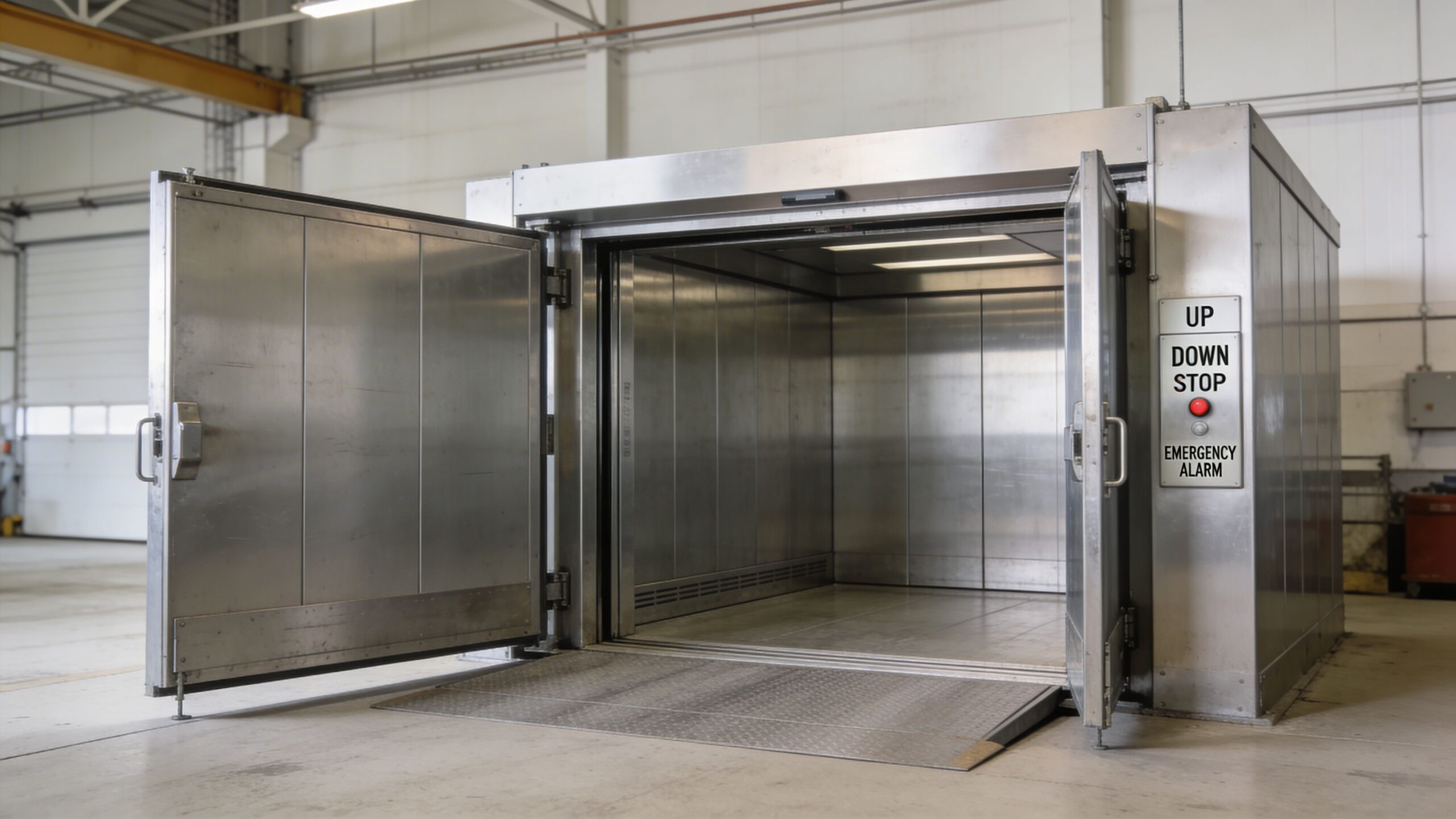
An industrial freight elevator is designed around heavy loads, repeated abuse, awkward cargo, stronger door systems, tougher interiors, and different loading conditions. It isn’t just a bigger passenger elevator. The structure, controls, entrances, and operating expectations are different from the start.
Built for cargo, not comfort
Passenger units prioritize ride quality, appearance, and people flow. Freight units prioritize durability and load handling.
That changes the details:
- Cab construction matters more: Freight cars commonly use heavy steel interiors and protection suited for carts, pallets, drums, or industrial traffic.
- Entrances take abuse: Gates and doors have to tolerate impact and hard daily use that would quickly damage a passenger entrance.
- Leveling is operational, not cosmetic: Poor leveling in a freight application creates a loading hazard fast.
- Controls are tuned for work: Operators care about dependable starts, stops, door operation, and handling of repeated service calls.
In a warehouse in Novi or a supplier facility outside Detroit, those differences aren’t theoretical. They’re what determine whether the car survives real use.
Hydraulic versus traction
Most owners eventually face the practical question. What drive system fits the building best?
Hydraulic freight elevators are often a good fit for lower-rise buildings and retrofit situations where shaft conditions, pit depth, or machine room limitations make traction less practical. They’re straightforward, familiar to many technicians, and often well suited to older Michigan buildings.
Traction freight elevators make more sense when the building has more travel, more traffic, or tighter cycle demands. Schindler’s published freight specs show the Schindler 2600 offers capacities from 1,000 to 6,300 kg (2,200 to 13,900 lbs), speeds from 0.15 to 1.6 m/s, travel heights up to 65 m (213 ft), and door widths from 800 to 3,200 mm (31 to 126 inches), using traction or hydraulic configurations depending on application (Schindler 2600 freight elevator specifications).
That matters because system choice affects cycle time, service complexity, space needs, and modernization options.
Freight elevator versus material lift
Owners also mix up freight elevators with material lifts or other vertical handling equipment. The distinction matters because the code path, operating rules, and use cases are not the same.
A freight elevator is intended as an elevator system with elevator-code implications, rated loading classes, and the kind of entrance and platform construction needed for building service. If your building regularly moves loaded carts, pallets, or industrial equipment between occupied floors, guessing wrong on equipment type creates trouble later.
Practical rule: Start with the load, the loading method, and the building conditions. Then choose the equipment. Owners get into trouble when they choose the cheapest-looking option first and ask code questions later.
The features that usually separate serious equipment from light-duty solutions
When evaluating industrial freight elevators, pay attention to:
- Loading method: Hand trucks, pallet jacks, or forklifts all impose different stresses.
- Entrance configuration: Opposite openings, adjacent openings, and larger clear widths affect traffic flow.
- Cab protection: Wall, gate, and sill durability should match the abuse level in the building.
- Control flexibility: Future modernization is easier when the system isn’t tied to a proprietary dead end.
- Serviceability: Owners in places like Battle Creek or Port Huron don’t want a system that only one provider can diagnose.
Those decisions shape lifetime cost far more than the initial brochure does.
Understanding Freight Elevator Classes and Specifications
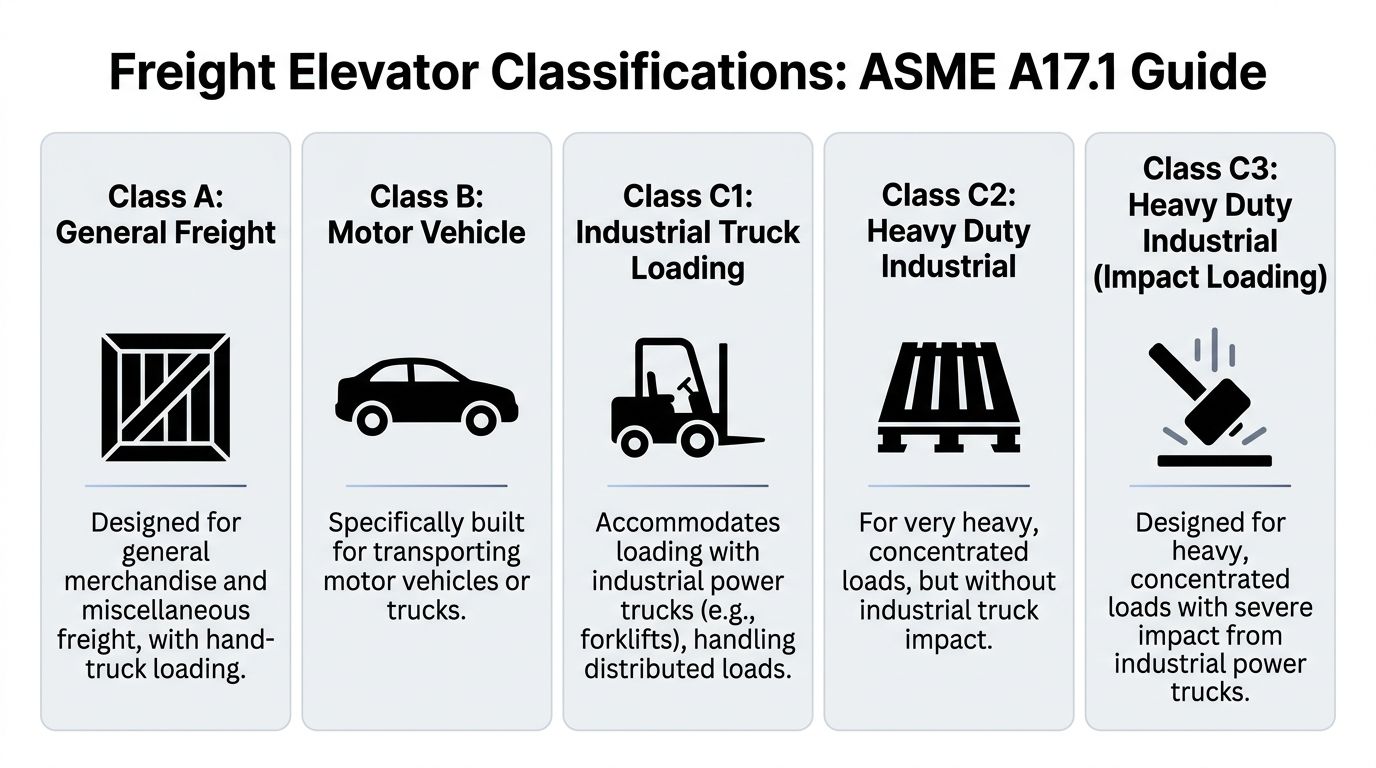
The fastest way to buy the wrong freight elevator is to size it by “what seems heavy-duty enough.” Freight elevators need to match the actual loading condition. That’s what the ASME classifications are for.
The key issue isn’t just how much total weight the car can carry. It’s how the load reaches the platform, how concentrated that load is, and whether industrial trucks are involved.
Why the class matters in daily use
A building in Kalamazoo moving boxed goods by pallet jack needs something different from a factory in Sterling Heights loading with forklifts. If the class is wrong, the platform, entrances, sills, and operating components wear out faster. In the worst case, you end up with a code-compliant elevator on paper that still isn’t right for the work being done.
The TK Elevator planning guide is the practical reference many contractors use for these distinctions. It states that Class A requires a minimum capacity of 50 lbs per sq. ft. (244 kg/m²) of net inside platform area, and Class C-2 allows forklifts for loading and unloading only, with platform load during operations capped at 150% of rated capacity (TK Elevator freight planning guide).
ASME A17.1 freight elevator classifications
| Class | Description | Minimum Capacity | Common Use Case |
|---|---|---|---|
| Class A | General freight loading with distributed loads | 50 lbs per sq. ft. | Hand trucks, palletized goods, general warehouse use |
| Class B | Motor vehicle loading | Qualitative code-specific application | Parking or vehicle transport use |
| Class C-1 | Industrial truck loading where the truck is carried on the elevator | At least the total loaded truck weight, and not less than 50 lbs per sq. ft. | Facilities where the truck rides with the load |
| Class C-2 | Industrial truck loading/unloading only, truck not carried | Rated capacity equals loaded truck weight for units up to 20,000 lbs; loading operations capped at 150% of rated capacity | Forklift loading at the landing, not transport inside the car |
| Class C-3 | Heavy concentrated loads with severe impact conditions | Qualitative heavy-duty application | Hard industrial environments with impact loading |
Owners who are still sorting out platform sizing often find it useful to review these practical freight elevator dimensions alongside class requirements before committing to a modernization or new installation.
What Class A means
Class A is the baseline freight category for many commercial and light industrial properties. It fits general freight loading where weight is distributed in a normal way across the platform.
This works well for buildings using carts, palletized goods, or manual loading methods. It does not mean “light duty.” It means the system is designed around general freight conditions rather than concentrated wheel loads and forklift impact.
Where C-1 and C-2 get confused
This is one of the most expensive misunderstandings I see in older buildings.
Class C-1 applies when the industrial truck is carried on the elevator with the load. That means the platform has to support the truck’s total loaded weight directly as part of normal operation.
Class C-2 is different. A forklift can load or unload at the landing, but it is not carried inside the elevator. That distinction affects platform design, entrances, loading rules, and how operators are supposed to use the equipment.
If your team regularly drives a forklift into a car that was intended only for loading from the landing, you’re not just increasing wear. You may be using the equipment outside its intended class.
If operators and the original specification disagree about how the elevator is used, the operators win. The building owner pays for it later.
Don’t overspec, but don’t underspec
Some owners assume bigger is always safer. It isn’t.
An overbuilt system can increase project cost and complexity without solving the actual problem. An underspecified system is worse. It creates chronic service calls, premature damage at the entrances and platform, and a constant argument between operations and maintenance.
For Michigan facilities, the right specification usually comes from answering a short set of plain questions:
- What exactly is moving in the car?
- How is it loaded?
- Do industrial trucks enter the platform or stop at the landing?
- Are the loads distributed or concentrated?
- Is this traffic occasional, steady, or punishing?
Those answers matter more than brand preference. The class should fit the work, not the other way around.
Navigating Michigan Elevator Codes and Compliance
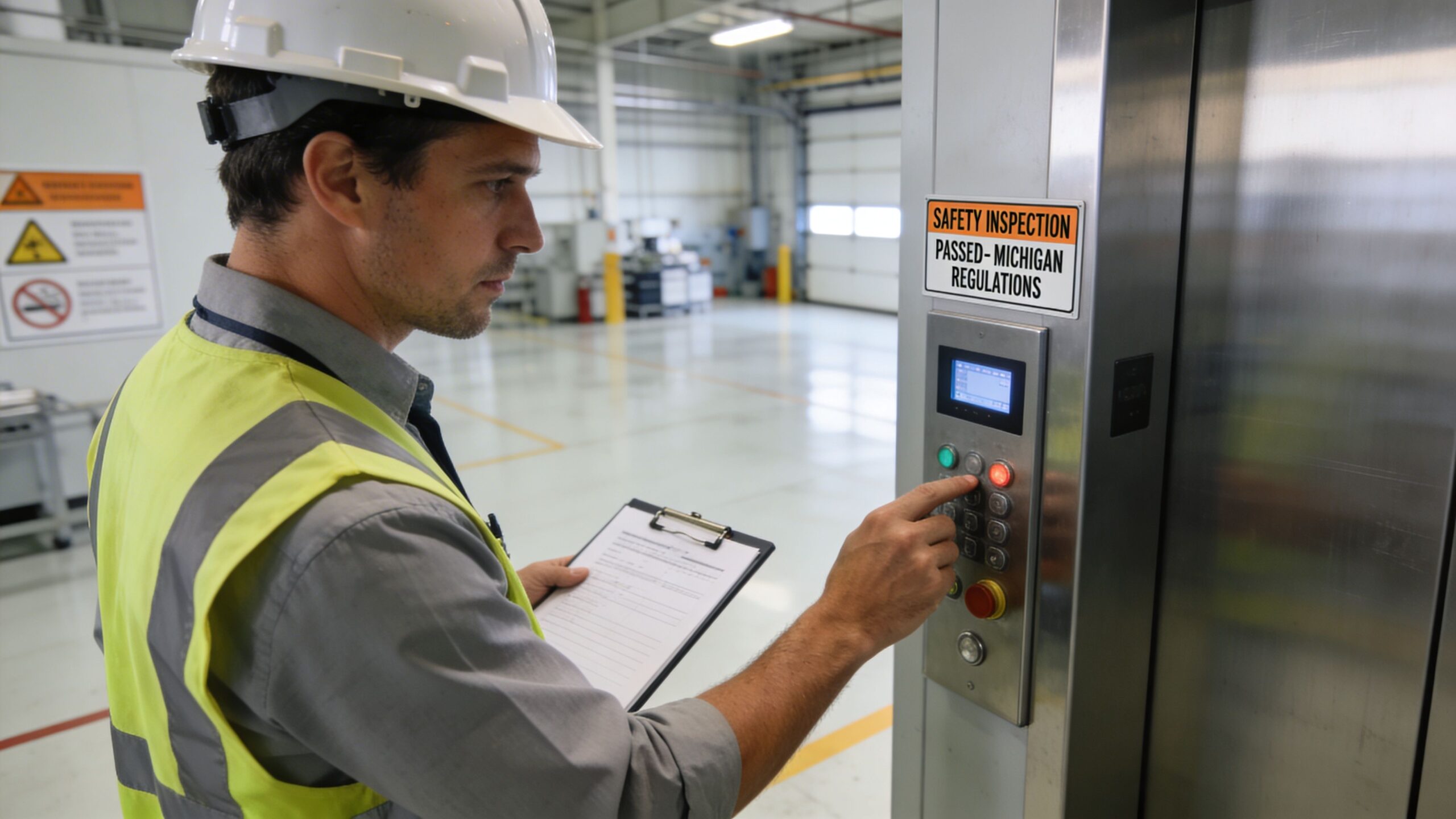
Michigan owners don’t need to memorize every code section. They do need to understand what creates risk.
Most freight elevator compliance problems start with a gap between how the unit is being used, what condition it’s in, and what the current rules require. That gap gets wider in older buildings, especially where equipment has been patched over for years without a clear compliance plan.
Why older Michigan buildings need closer attention
A large share of industrial and commercial properties in Michigan weren’t built to current expectations. For industrial facilities in Michigan, 35% of buildings predate 1980s codes, and emerging post-2025 code updates plus IoT integration are adding complexity. In some mandated zones, seismic retrofits can add 20% to 30% to modernization costs (freight elevator industrial compliance guide).
That doesn’t mean every older freight elevator has to be replaced. It does mean owners in cities like Lansing, Ann Arbor, Dearborn, and Saginaw should assume nothing. Older equipment often needs targeted corrections before it can be considered inspection-ready and dependable.
Compliance isn’t just paperwork
Code compliance affects how safely the car runs and whether you can keep it in service without surprise shutdowns.
For industrial freight elevators, the big issues usually include:
- Safety testing: Required tests have to be completed on schedule and documented.
- Door and gate protection: Freight entrances take abuse and often become a weak point.
- Fire service and emergency features: These need to function as required, not just appear present.
- Leveling and operation: Rough stops, misleveling, and intermittent faults can turn into code issues fast.
- Violation correction: Small deferred items tend to pile up until a routine inspection becomes a larger project.
Michigan owners should also pay attention to pending code deadlines and state-specific adoption requirements. This summary of the Michigan elevator code deadline January 1st 2028 is a useful checkpoint if you’re trying to understand how upcoming requirements may affect older equipment.
What owners should ask their contractor
A lot of compliance trouble comes from vague service conversations. Ask direct questions.
- What open violations exist right now? Don’t settle for “nothing major.”
- What tests are due, and when? You want dates, not generalities.
- What code items are likely to fail next inspection? Good contractors can usually spot the likely trouble points.
- Can this system be updated without proprietary controls? That affects both compliance strategy and future service cost.
- What operating habits are shortening life or creating code exposure? Operator behavior matters more than many owners realize.
Field advice: The safest time to solve code problems is before the inspector writes them up and before operations are depending on a fragile system during peak use.
The practical path for owners
If you manage an older building in Monroe, Ypsilanti, or Bay City, the smart move is a documented review of the elevator’s current condition, code exposure, and modernization options.
That review should cover the controller, entrances, door locks, leveling, communication devices, machine space, and safety functions. It should also compare the elevator’s building use against its intended freight class.
What doesn’t work is waiting for a shutdown, a failed test, or a tenant complaint to force the issue. Compliance is cheaper when it’s planned.
Proactive Maintenance for Decades of Reliability
The lowest-cost freight elevator over its life is usually the one that doesn’t break at the wrong time.
That sounds obvious, but many owners still buy maintenance like they buy janitorial service. They want the minimum monthly line item and then act surprised when the unit needs expensive emergency work. Industrial freight elevators punish that approach because they operate under rougher conditions and carry higher operational risk than standard passenger equipment.
The historical proof still matters
Long service life isn’t a theory. It’s been demonstrated for decades when maintenance is done properly.
When the Empire State Building opened in 1931, it included six industrial freight elevators from Otis. Those units were part of a system using 119 miles of rope, and they operated reliably for decades, showing how proactive maintenance supports long-term performance under heavy use (Otis company history).
That example matters because it cuts through a common misconception. Age alone doesn’t condemn a freight elevator. Neglect does.
What real preventive maintenance looks like
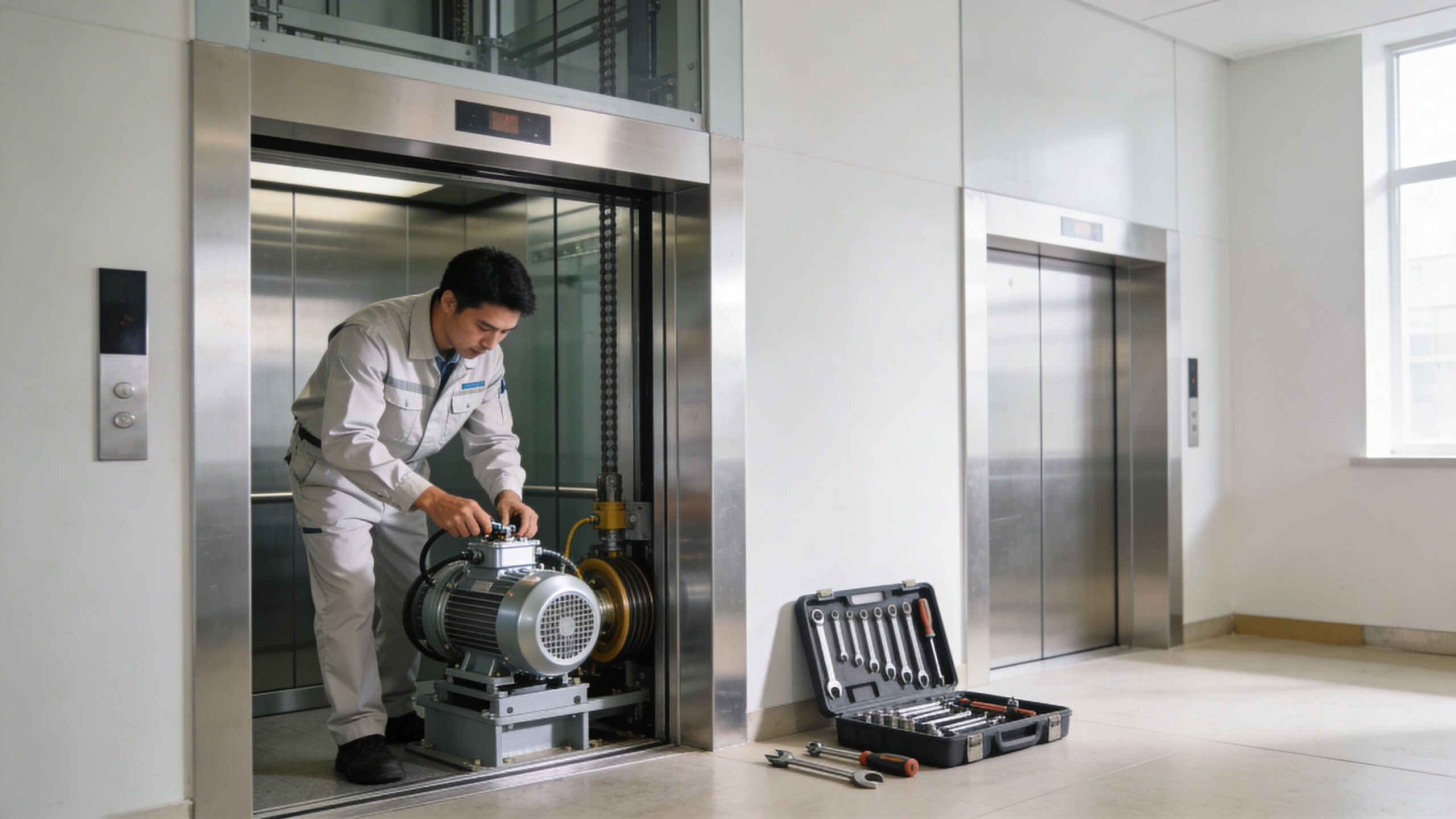
Good freight elevator maintenance is not a quick visual pass and a signature.
It should include work that owners don’t always see but absolutely pay for if it’s skipped:
- Machine room and pit clean-downs: Dirt, debris, and oil buildup make troubleshooting harder and shorten component life.
- Door and lock attention: Freight entrances are constant wear points and should never be treated casually.
- Hydraulic checks: Packing, leaks, fluid condition, and power unit behavior all need regular review on hydraulic systems.
- Rope and sheave review: Wear here can turn into a larger safety and reliability problem if ignored.
- Car top and sill inspection: These areas collect damage and contamination fast in industrial environments.
A maintenance plan should also match the building’s actual use. A lightly used municipal building in one Michigan town doesn’t need the same service frequency as a busy parts operation in Warren.
What owners should expect from a maintenance program
A strong program does three things well.
First, it catches wear before the elevator goes down. Second, it documents recurring trouble so repairs follow a pattern instead of guesswork. Third, it helps the owner decide when maintenance is still economical and when modernization makes more sense.
The goal of maintenance isn’t to keep an old machine alive forever. It’s to get the maximum safe, reliable value out of the asset and make replacement decisions from a position of control.
A useful maintenance conversation should answer:
- Which parts are wearing faster than they should?
- Are the entrances causing most of the service calls?
- Is the controller still supportable?
- Are shutdowns random, or do they point to one underlying issue?
- Can the current system remain compliant without throwing good money after bad?
Here’s a look at freight elevator operation in practice:
What doesn’t work
Deferred maintenance almost always looks cheaper for a while. Then the elevator starts failing in clusters.
One month it’s a door issue. Next month, a relay problem. Then a leveling fault. By the time owners realize the pattern, they’ve spent a lot on emergency calls without improving long-term reliability.
For industrial freight elevators, preventive maintenance is the discipline that protects uptime, code readiness, and long-term cost control. Without it, every other strategy gets harder.
Modernization vs Replacement What Michigan Businesses Should Know
Once a freight elevator becomes unreliable or outdated, owners usually face two choices. Modernize the existing equipment or replace it entirely.
A lot of projects go wrong because people treat this as a simple age question. It isn’t. The key question is which option gives the building the best mix of reliability, compliance, serviceability, and total cost of ownership.
When modernization is the smarter move
For many older freight elevators, modernization is the better financial decision. Modernizing an industrial freight elevator can extend its life by 20 to 30 years at 40% to 60% of a full replacement cost, and in high-use buildings, non-proprietary upgrades with regenerative drives can produce energy savings of up to 30%. That matters even more because 60% of freight elevators in the US are over 25 years old (industrial freight elevator maintenance and modernization economics).
If the rails, cab shell, platform, and hoistway are still good candidates, modernization often delivers the best value. You replace the aging brains and wear-prone subsystems without tearing the whole installation apart.
That usually means work focused on controls, fixtures, door equipment, safety components, and other critical operating parts.
Why non-proprietary matters so much
This is the issue many owners miss on the first project and regret later.
A non-proprietary modernization gives you a system that qualified elevator companies can service. That keeps your options open on maintenance pricing, response times, and future repairs. It also reduces the risk that you’ll be stuck waiting on one manufacturer’s parts channel or one provider’s schedule.
In practical terms, that matters a lot in Southern Michigan. If your building in Detroit, Flint, or Jackson has a freight car that only one outfit can touch, your negotiating position is weak from day one.
When replacement makes more sense
Full replacement can still be the right call.
It’s usually justified when the existing installation has structural limits, severe hoistway issues, chronic code obstacles, or a configuration that no longer matches the building’s use. If the elevator is the wrong size, wrong class, or wrong layout for the operation, replacing pieces won’t fix the underlying mismatch.
Replacement also makes sense when years of piecemeal work have left the system with too many mixed generations of components and no clear service path.
A practical decision lens
Use this kind of side-by-side thinking when weighing the options:
| Decision factor | Modernization | Full replacement |
|---|---|---|
| Building disruption | Usually lower | Usually higher |
| Use of existing infrastructure | Often preserved | Often reworked |
| Future service flexibility | Strong if non-proprietary | Varies by design choice |
| Cost control | Often better upfront | Higher capital commitment |
| Best fit for wrong elevator | Limited | Stronger |
Owner test: If the basic elevator is still right for the building but the major components are aging out, modernization usually deserves the first serious look.
What works in the field
The best modernization projects are scoped around actual failure points and long-term service access. They don’t just make the car run again. They leave the owner with a system that can be maintained competitively for years.
What doesn’t work is spending heavily on patch repairs while postponing the modernization discussion because replacement sounds scary. In many Michigan facilities, that middle ground is where money disappears.
Selecting Your Local Michigan Elevator Service Partner
The contractor you choose shapes cost almost as much as the equipment itself.
That’s especially true for industrial freight elevators, where the work is less about polish and more about diagnosis, code judgment, and long-term planning. A company that’s fine on passenger units may still struggle with older freight entrances, hard-use controllers, or industrial loading conditions.
What to look for first
Start with service philosophy, not the sales pitch.
A good partner should be able to explain:
- How they handle older systems: Not every company wants to work on aging freight equipment.
- Whether they support non-proprietary solutions: That affects your long-term freedom.
- How they approach preventive maintenance: You want more than a callback-based relationship.
- What happens after hours: Freight elevator failures rarely wait for business hours.
- How they document findings: Clear reporting helps owners make capital decisions sooner.
If you’re comparing providers in Detroit, Ann Arbor, or the surrounding market, this elevator repair company near me resource is a useful example of the kinds of local service questions owners should be asking.
Questions that separate strong contractors from weak ones
Don’t ask only for price. Ask for clarity.
Try questions like these:
- What kinds of freight elevators do your technicians work on most often?
- Can you modernize this unit without locking me into one manufacturer?
- What recurring issues do you see on elevators like mine?
- How do you handle code corrections and test preparation?
- If this unit becomes uneconomical to maintain, how will you show me that with evidence?
Good answers are specific. Weak answers stay general.
Red flags owners should take seriously
Some warning signs show up early:
- Everything pushes toward replacement immediately: Sometimes replacement is right, but not as a default answer.
- No clear maintenance scope: If the proposal is vague, service quality usually is too.
- Proprietary lock-in is brushed off: That’s a lifetime cost issue, not a minor detail.
- Poor communication on violations or testing: Owners get burned when deadlines sneak up.
- No operational curiosity: A serious freight elevator contractor asks how the building uses the car.
The best service partner doesn’t just repair breakdowns. They help you avoid buying the same problem twice.
For Michigan owners, local responsiveness matters. But technical honesty matters more. Choose the company that can explain the trade-offs plainly and back recommendations with field logic, not just a brochure.
Your Freight Elevator A Strategic Industrial Asset
A freight elevator can either drain money or support the building for years with predictable cost.
The difference usually comes down to a few decisions. Specify the right class. Keep the unit compliant. Maintain it before failures stack up. Modernize intelligently when the core equipment is still worth keeping. Replace only when the building needs a new system, not just another expensive repair cycle.
Owners across Michigan already understand how hard it is to run a facility with aging infrastructure. Industrial freight elevators deserve the same strategic attention as roofs, boilers, and production equipment because they affect safety, uptime, and tenant confidence in the same way.
When you treat the freight elevator as a managed asset instead of a recurring headache, you get fewer surprises and better financial control. That’s the ultimate win.
If you own or manage a building in Lower Michigan and need help with maintenance, repairs, code compliance, or a non-proprietary modernization strategy, Crane Elevator Company is a practical partner to call. They work on all makes and models, offer 24/7/365 response, provide free second opinions, and focus on long-term serviceability so your freight elevator stays reliable without locking you into the wrong solution.