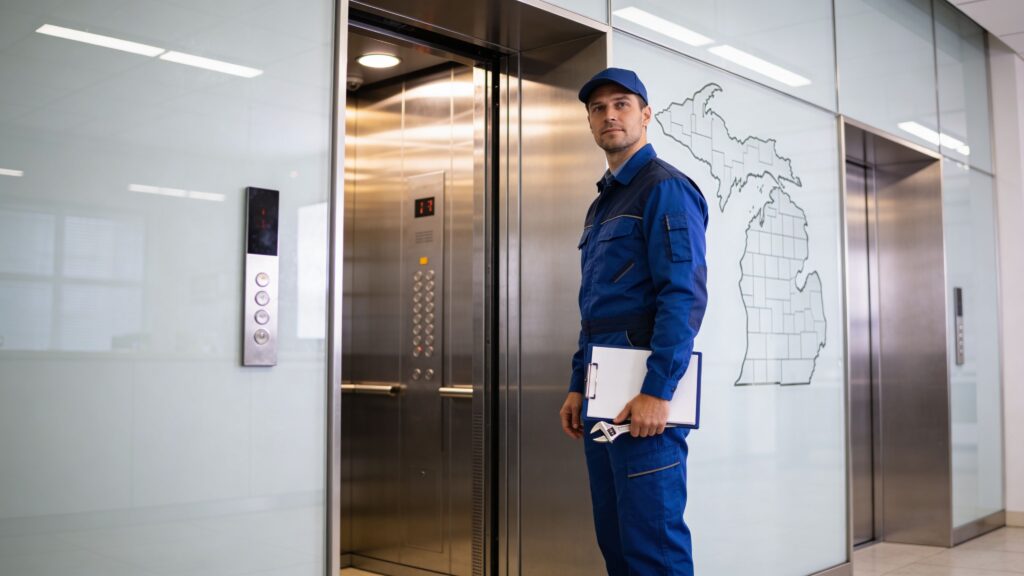
If you're searching elevator repair company near me, the problem usually isn't theoretical. A car is down. Tenants are calling. Staff is walking equipment up stairs. Someone wants to know how fast it can be fixed and whether this is going to happen again next month.
In Michigan, that question hits differently depending on the building. In Ann Arbor, one disabled passenger lift being out can turn routine access into a daily operational problem. In Flint, a freight unit going down can interrupt material flow and put pressure on the whole shift. In a Lansing office or a Detroit apartment building, one shutdown creates a line of complaints fast.
A good repair partner doesn't just get the car running. They help you avoid repeat failures, pass required testing, and keep you out of a maintenance arrangement that gets more expensive over time.
When Your Elevator Stops The Search Begins
The first thing most owners see is a taped sign. Out of Service. After that, the search starts.
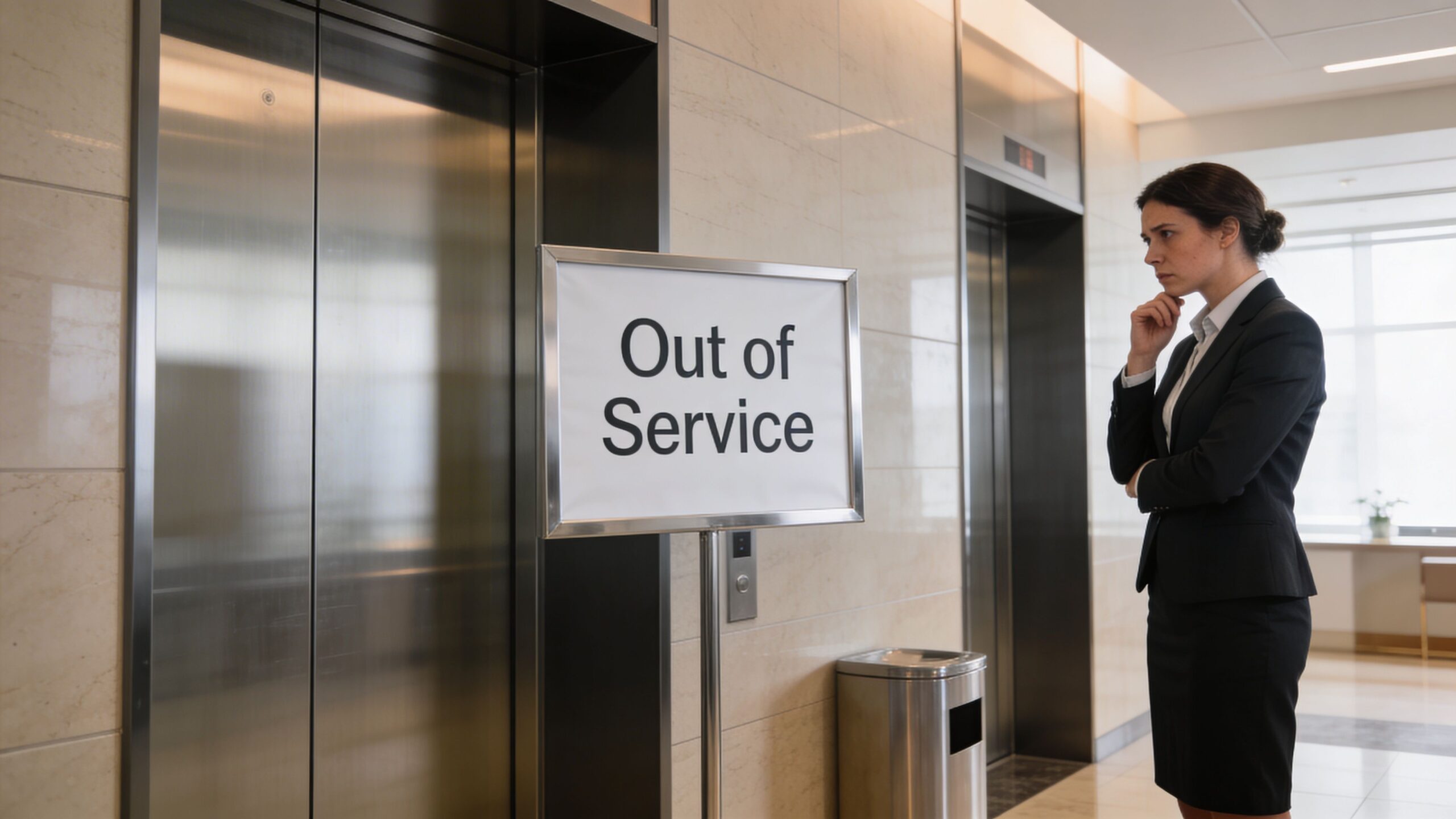
An elevator outage isn't just an inconvenience. It affects access, deliveries, staff movement, tenant confidence, and in some buildings, regulatory exposure if a known issue isn't handled correctly.
Downtime spreads beyond the elevator
A property manager in Kalamazoo might first hear about the problem from a tenant. A hospital facility team in southern Michigan usually hears about it from several departments at once. In either case, the same pattern shows up. One shutdown starts forcing workarounds everywhere else.
A stuck elevator creates two jobs at once. You have to restore service now and figure out why the failure happened in the first place.
That second part matters. If all you do is reset faults and replace obvious parts, you'll keep paying for the same breakdown in different forms.
The urgency behind these calls also reflects a larger industry reality. The global elevator maintenance market is projected to grow from $38.33 billion in 2026 to $68.25 billion by 2034, according to Fortune Business Insights' elevator maintenance market outlook. More buildings are relying on vertical transportation every year, which makes dependable service and fast recovery more important, not less.
The first call should be practical
When a car is down, start with availability and response discipline. Ask whether the company handles entrapments, whether they service your equipment type, and whether they can support after-hours emergencies. If immediate service is what you need, Crane Elevator's emergency elevator service is one example of the kind of 24/7 response building owners should be looking for.
Don't choose based on whoever answers the phone first. Choose based on whether they can diagnose the issue correctly, document the condition clearly, and keep the next outage from becoming routine.
Your Initial Search for a Local Elevator Expert
A local search result isn't proof of qualification. It only proves the company knows how to show up online.
The better approach is to build a short list, then verify each company the way you'd verify any contractor working on critical building infrastructure.
Where to look first
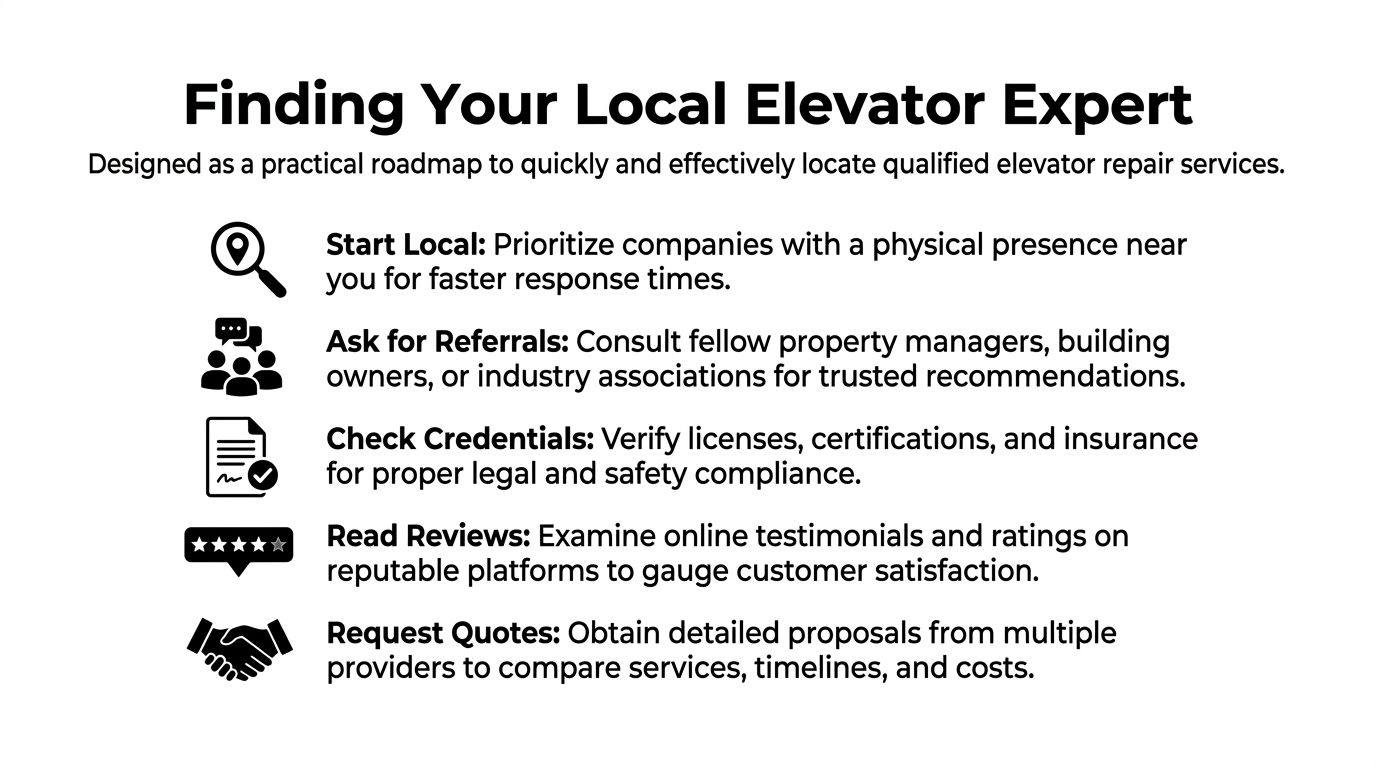
Start close to the building. A company with an actual service presence in Michigan is usually easier to hold accountable than a dispatcher routing calls from somewhere else.
Use a mix of sources:
- Local referrals: Ask other property managers, plant managers, school administrators, or hospital facility directors who they use when a car is down.
- Industry associations: Check recognized contractor directories and trade memberships.
- Direct outreach: Call the office, not just the emergency line. You can learn a lot from how they answer basic questions.
- Service fit: Confirm they handle your equipment category, whether that's a passenger elevator, freight car, wheelchair lift, dumbwaiter, or LULA unit.
What to verify before you hire
The elevator trade requires real technical skill. The U.S. Bureau of Labor Statistics reports a median annual wage of $106,580 for elevator installers and repairers in May 2024, which reflects the specialized nature of the work and why owners should vet who is touching their equipment through the BLS occupational profile for elevator installers and repairers.
That means your checklist should be strict.
Ask for documents, not promises
Request:
- Licensing confirmation: Make sure they can legally perform the work required in your jurisdiction.
- Liability insurance: Get current proof, not a verbal assurance.
- Workers' compensation coverage: If someone gets hurt on your property, this matters immediately.
- Service references: Ask for buildings similar to yours, not just any customer.
If a company hesitates to provide these, move on.
Match their experience to your actual equipment
A contractor who mostly works on newer office elevators may not be the right fit for an older hydraulic unit in Jackson or a heavy-duty freight elevator in Detroit. Ask direct questions:
- What brands and controller types do you service most often?
- Do you work on both proprietary and non-proprietary systems?
- Have you handled this exact problem before on this type of unit?
- Can you support required testing and code-related corrections after the repair?
Good signs and bad signs
Some clues show up in the first conversation.
Good signs
- They ask for the symptoms, not just the address.
- They want the unit type, controller information, and failure history.
- They talk about diagnosis first, not part replacement first.
Bad signs
- They quote a fix before seeing the equipment.
- They use vague language like "we'll get it going" with no scope.
- They avoid discussing follow-up maintenance or testing.
Practical rule: If a company can't explain how it verifies the fault, it probably changes parts until the problem goes away or comes back.
In Michigan cities like Grand Rapids, Novi, Dearborn, and Battle Creek, the right local expert is the one who can document conditions, explain options clearly, and work within your building's specific situation, not the one with the slickest ad.
Decoding Elevator Services From Maintenance to Modernization
Owners often hear four terms in the same conversation: repair, maintenance, testing, and modernization. They aren't interchangeable.
If you don't separate them, it's easy to approve the wrong work or delay the work that protects the equipment.
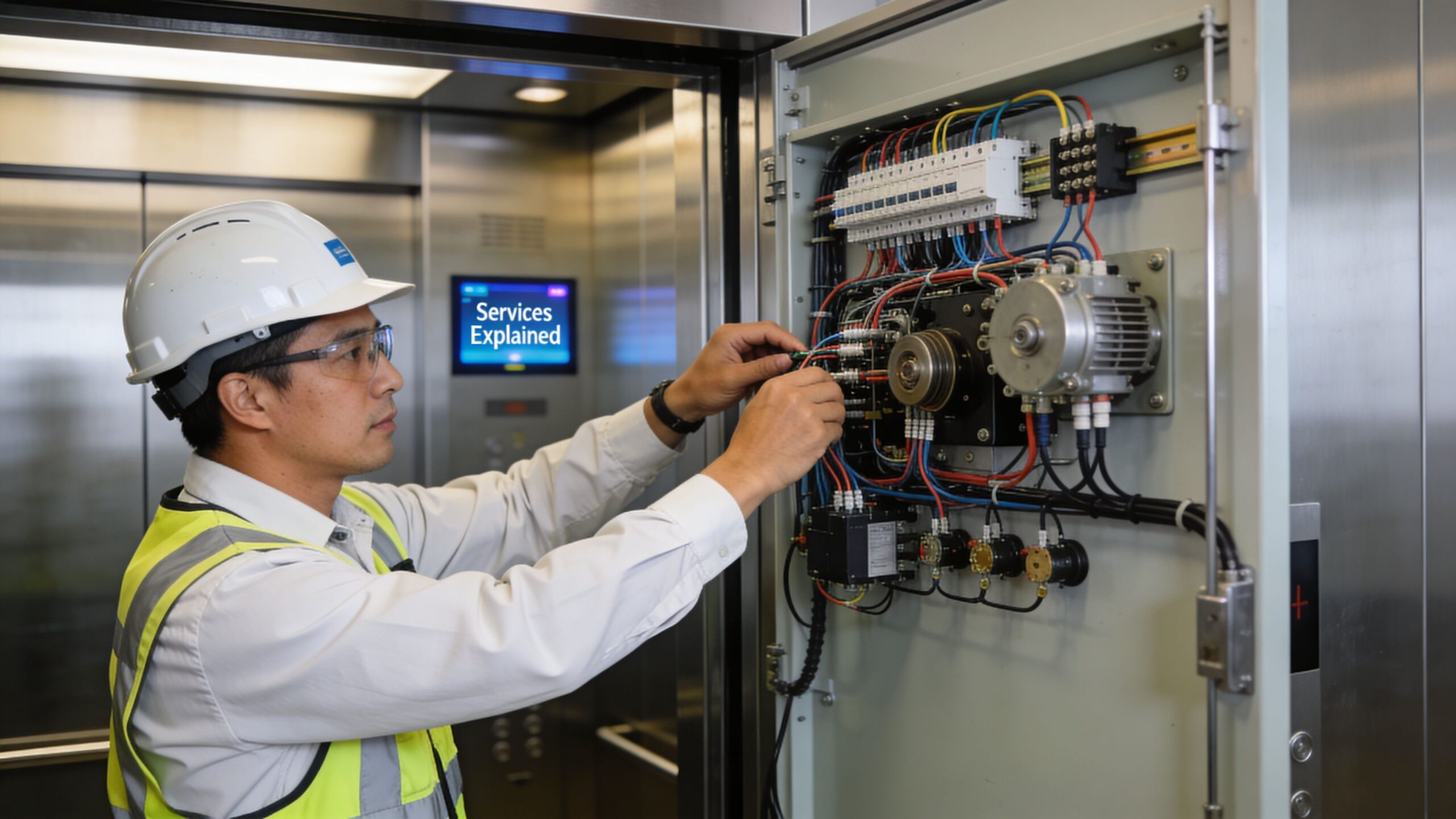
Repair work fixes a fault that's already affecting operation
Repair is what happens after a failure, shutdown, nuisance fault, rough ride, door issue, leak, or code-related defect has shown up. Good repair work isn't guesswork. It starts with cause.
A common example is hydraulic packing failure. When packings degrade, oil leaks and pressure loss follow. According to industry data on hydraulic packing failures and service outcomes, proactive replacement can reduce unplanned downtime by up to 40% and help avoid cylinder damage that can lead to rebuilds costing $15,000 to $25,000. That's why experienced mechanics don't treat oil in the pit as a cosmetic issue.
Another frequent repair category is door equipment. Misalignment, worn interlocks, and door lock monitoring problems can stop a unit repeatedly even when the rest of the system is still sound. That's the kind of issue that frustrates tenants because the elevator seems "almost fixed" for weeks.
Maintenance is what keeps repair calls from becoming routine
Preventative maintenance is regular, hands-on work done before a failure takes the car out of service. On a solid program, a technician isn't only lubricating parts and clearing minor adjustments. They're also looking for patterns.
That includes work such as:
- Machine room and pit clean-downs: Dirt, oil, debris, and moisture all shorten component life.
- Door operator and lock inspection: Small wear becomes a shutdown later.
- Lamp and signal replacement: Burned COP and PI lamps are minor until they hide bigger operational issues.
- Ride quality and leveling checks: Rough starts, drift, or inconsistent stops usually signal a larger issue developing.
A maintenance visit should leave a paper trail. If it doesn't, owners can't tell whether the equipment is improving or just being reset.
Testing keeps you compliant
In Michigan, code-required testing isn't optional administrative work. It's part of keeping the elevator legal and safe to operate.
The tests owners most often hear about include CAT 1, CAT 3, and CAT 5 elevator testing. The specific procedures differ by equipment and schedule, but the practical point is simple. These tests verify that safety components and operating systems perform as required. A contractor who repairs your equipment but can't support required testing is only solving part of the problem.
If your vendor handles repairs but not code-required testing, you'll eventually coordinate two companies for one system. That usually slows everything down.
Modernization replaces aging systems before they fail on their own schedule
Modernization isn't the same as repair. Repair restores a failed part. Modernization replaces older components or system groups because the equipment has become unreliable, unsupported, difficult to source, or too restrictive to maintain economically.
Examples include replacing controllers, machines, door equipment, fixtures, emergency communication hardware, or hydraulic components that have become chronic problem areas. In older Michigan buildings, modernization also helps when parts are obsolete or when owners want to move away from systems that only one vendor can service.
That's where the long-term decision gets important. The equipment you install now determines how flexible and affordable future service will be.
Choosing Your Maintenance Plan The Cost of Waiting
The biggest maintenance mistake isn't usually choosing the wrong lubricant or replacing the wrong relay. It's waiting until the elevator forces the decision.
Some owners run on a break-fix model because it appears cheaper month to month. That looks fine until the same unit starts generating callbacks, emergency labor, repeat tenant complaints, and avoidable shutdowns.
Two maintenance philosophies
The difference is straightforward. One approach plans work before the system fails. The other pays for failure after service is interrupted.
| Factor | Preventative Maintenance | Reactive Repair (Break-Fix) |
|---|---|---|
| Service timing | Scheduled around equipment condition and usage | Starts after the elevator is already down or acting up |
| Downtime impact | Lower because issues are caught earlier | Higher because faults are handled after disruption begins |
| Budgeting | More predictable | Less predictable, especially when failures stack up |
| Part replacement | Targeted before collateral damage spreads | Often urgent, with added damage discovered later |
| Tenant and staff impact | Fewer interruptions | More complaints, workarounds, and lost confidence |
| Recordkeeping | Usually includes recurring observations and recommendations | Often limited to isolated repair tickets |
| Long-term asset condition | Better preserved | More wear from deferred adjustment and cleaning |
What waiting usually looks like in the field
A door starts hanging up occasionally in a Southfield office building. Staff reset it mentally as "one of those things." Then the calls become weekly. Then a tenant gets stuck or a car is shut down during a busy period.
The same pattern shows up with hydraulic leaks, noisy machines, rough leveling, and intermittent faults. Owners often think they're delaying a small expense. What they're really doing is allowing one problem to involve more parts.
What preventative work buys you
Preventative service is less about polish and more about control.
It helps owners:
- Catch wear early: Small adjustments stay small when someone is looking regularly.
- Reduce emergency calls: Fewer surprise shutdowns means less after-hours disruption.
- Protect major components: Dirt, heat, poor alignment, and leakage don't stay isolated.
- Plan capital work: You can schedule upgrades before a failure creates urgency.
Deferred maintenance rarely stays deferred. It usually comes back as an emergency repair, a failed test, or a modernization you have to approve on a bad day.
For schools, municipal buildings, industrial sites, and apartment properties across Michigan, the cost of waiting is usually operational first and financial second. Then both get expensive.
What a Fair Elevator Repair Quote Looks Like
A good quote tells you what the contractor found, what they plan to do, what parts are involved, and what isn't included. A bad quote hides all of that behind a lump sum and a vague promise to "repair elevator."
If you're comparing proposals, read them like a scope document, not just a price sheet.
What should be itemized
A fair quote should break out the core elements clearly:
- Labor: The hours or service basis should be understandable.
- Parts: You should know what components are being replaced.
- Travel or trip charges: These shouldn't appear as a surprise after the work.
- Scope of work: The quote should describe the actual fault and corrective action.
- Exclusions: If testing, follow-up visits, or additional code corrections aren't included, that should be stated.
If the issue involves doors, hydraulics, controller faults, emergency phones, fire service, or generator-related functions, the quote should identify that area directly.
Red flags that cost owners later
Watch for language that leaves the contractor too much room to reinterpret the job after approval.
Common red flags include:
- Vague descriptions such as "repair as needed."
- No part detail when a major component is supposedly being replaced.
- No warranty language on labor or materials.
- Proprietary lock-in where only one vendor can supply or reset the equipment involved.
- No mention of follow-up when a repair may affect testing, violations, or safety functions.
A repair quote should also tell you whether the technician expects the work to restore service fully or whether it is a temporary measure pending larger corrective work.
Emergency response should be spelled out
A reliable company doesn't talk about emergency service in general terms. They explain how emergency calls are handled, what happens after hours, and how they separate entrapments from non-emergency shutdowns.
For owners evaluating commercial service options, Crane Elevator's commercial elevator repair page reflects the kind of scope clarity and service categories worth comparing against any other proposal.
The best quote isn't always the lowest one. It's the one that tells you exactly what problem is being solved and whether you're buying a repair, a temporary workaround, or the first step toward a larger project.
In cities like Troy, Monroe, and Ypsilanti, the companies worth keeping are the ones that write quotes clearly enough that your maintenance staff, property team, and ownership group all understand the same job the same way.
Financing Upgrades and The Non-Proprietary Advantage
Modernization is often delayed for one reason. Owners don't want to approve a large capital project under pressure.
That's understandable, but delaying a necessary upgrade can leave you paying for repeated repairs on equipment that no longer fits the building well. Financing can help spread that cost into a manageable operating plan instead of forcing one large hit at the worst time.
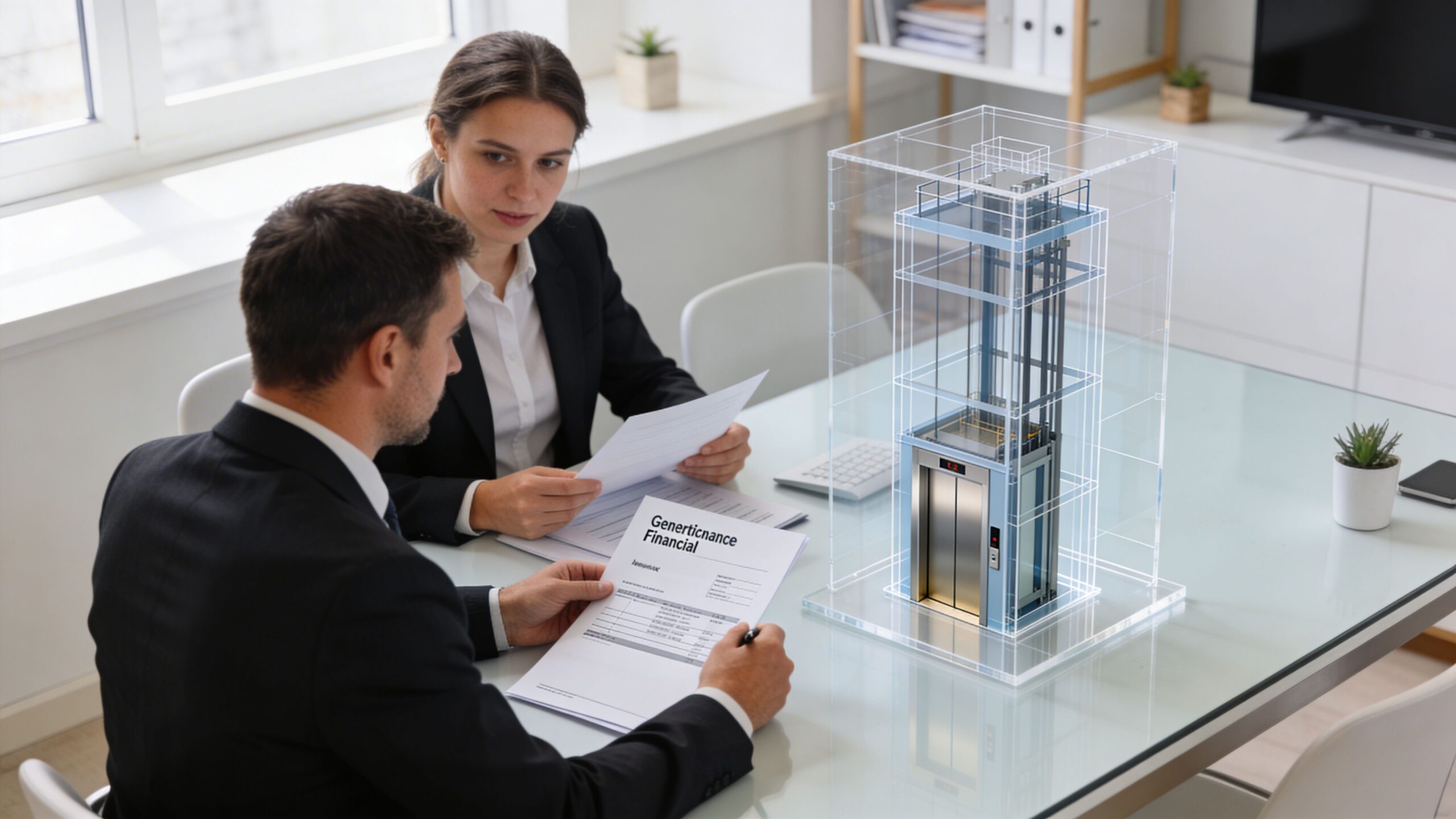
The bigger issue is future service freedom
The most important modernization decision usually isn't the paint, fixture style, or button package. It's whether the new system will be proprietary or non-proprietary.
According to industry data on proprietary maintenance contract cost inflation, being locked into a proprietary maintenance arrangement can inflate lifetime service costs by 20% to 30%. A non-proprietary setup allows any qualified technician to service the equipment, which gives owners more control over pricing, response, and future vendor choice.
That matters in Michigan because buildings change hands, maintenance teams change, and service expectations change. You don't want a system that forces every future repair decision through one narrow channel.
What owners should ask before approving an upgrade
Ask these questions in plain terms:
- Can any qualified elevator contractor service this system later?
- Will replacement parts be reasonably accessible?
- Are diagnostic tools restricted to one manufacturer?
- Does the modernization improve future bidding competition?
If a contractor can't answer those directly, the owner is taking on long-term risk.
For building owners comparing upgrade approaches, Crane Elevator's non-proprietary elevator modernization approach is one example of how this issue is framed in practical service terms.
Your Local Partner for Elevator Reliability in Michigan
The right elevator company does more than answer emergency calls. They should fit the full life of the equipment. Repair when something fails. Maintenance that reduces repeat trouble. Testing that keeps the building compliant. Modernization that doesn't trap the owner in a bad service position later.
For Michigan properties, that means looking for a contractor that can work across old and new equipment, from freight cars and hydraulic passenger units to wheelchair lifts and dumbwaiters. It also means finding a team that understands how different buildings use elevators. A school in Dearborn doesn't stress equipment the same way as an industrial site in Flint or a residential property in Ann Arbor.
What matters in practice
Owners usually benefit most from a partner that can handle:
- Routine maintenance with real inspections, clean-downs, and documented findings
- Repair work on all makes and models, including door equipment, hydraulics, machines, emergency communication, and code-related deficiencies
- CAT 1, CAT 3, and CAT 5 testing without handing you off to another company
- Elevator upgrades and modernizations planned around serviceability, not just immediate replacement
- 24/7 field response when shutdowns affect building operations
Crane Elevator Company fits that profile in Lower Michigan. The company is family-owned, has over 25 years of hands-on experience, and serves communities including Detroit, Lansing, Grand Rapids, Kalamazoo, Ann Arbor, and surrounding areas. Its work includes preventative maintenance, repair, code-required testing, non-proprietary modernization, and support for a wide range of vertical transportation equipment.
The long-term test
A reliable elevator contractor should make your building easier to run over time.
That means fewer recurring callbacks, clearer documentation, better planning around upgrades, and more freedom to choose who services your equipment later. If a vendor only solves today's shutdown but leaves you with vague reports, unsupported components, or repeated service gaps, the relationship is costing more than the invoice shows.
The owners who make the best long-term decisions usually focus on three things. Technical competence. Clear scope. Future flexibility.
If you need a repair partner, maintenance support, required testing, or a modernization plan in Lower Michigan, contact Crane Elevator Company for a direct conversation about your equipment, your building, and the service options that make sense.