
Most building owners hear stainless steel elevator doors described the same way, as if they're a fit-and-forget surface that only needs a quick wipe. That advice is incomplete. Stainless steel is a strong, sanitary, code-relevant material, but its appearance and service life still depend on the right alloy, the right cleaner, and the right maintenance discipline.
The trade-off is simple on the jobsite. Choose the correct grade for the environment, protect it during construction, clean it with the wrong chemistry, and the doors can look tired long before the structure fails. Treat the doors as a regulated safety component, not a decorative panel, and they stay presentable, compliant, and easier to service.
Why Stainless Steel Elevator Doors Are Not Maintenance-Free
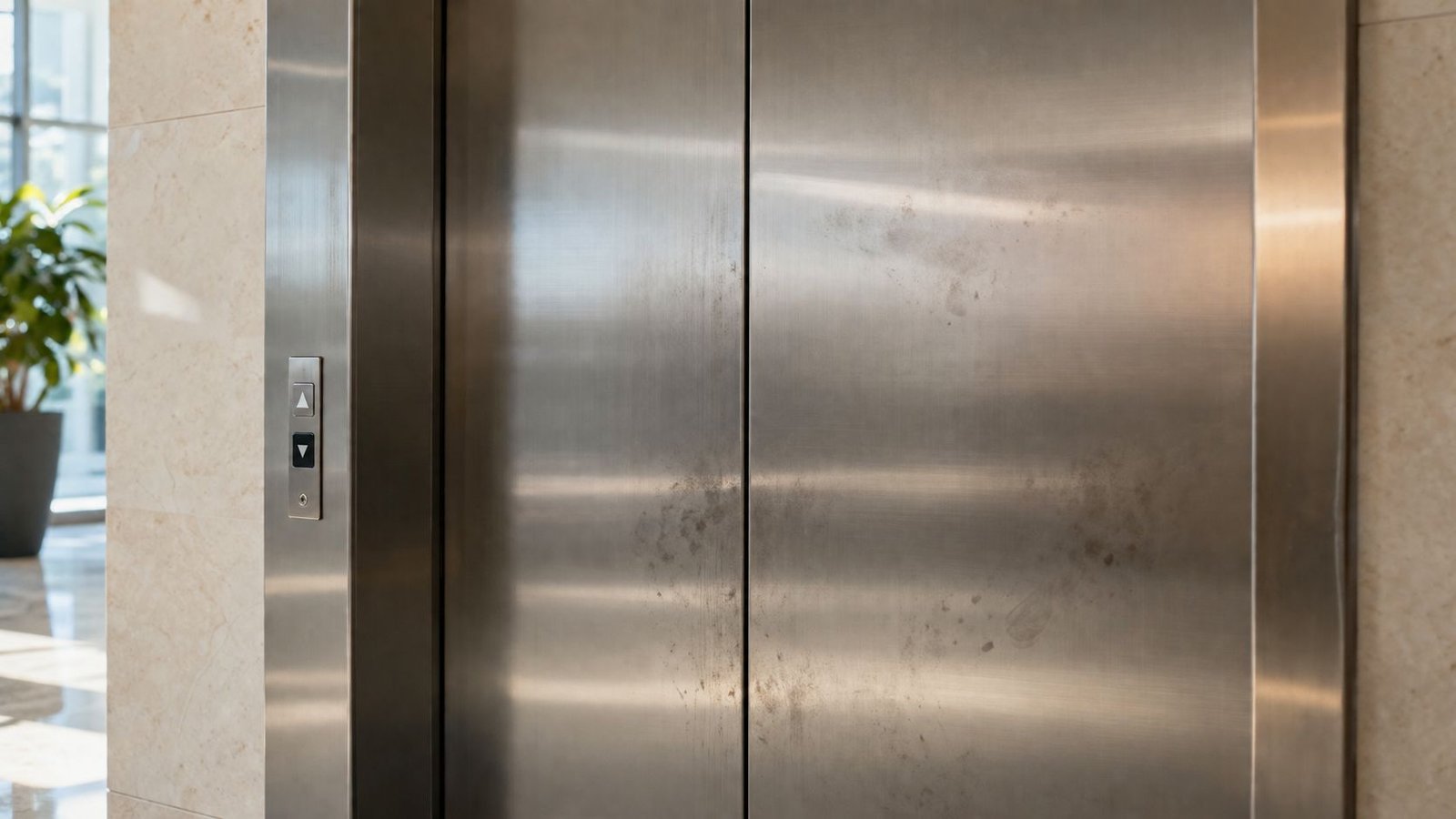
The first maintenance mistake is treating stainless steel elevator doors like they can absorb any cleaning routine. They cannot. The metal is non-porous and easy to wipe down, which is why it shows up so often on public-facing equipment, but the finish still takes abuse from fingerprints, carts, janitorial chemicals, construction dust, and repeated impact in busy traffic as explained in engineering guidance on stainless steel properties.
Appearance fails before structure does
That matters because elevator doors are touched, cleaned, and brushed against constantly. The door can stay mechanically sound while the finish develops scratches, tea-staining, and dull patches that make the entire cab look older than it is. In a lobby, that kind of wear tells tenants the building is being deferred on, even when the car still passes inspection.
Practical rule: if the cleaning crew is using whatever product happens to be in the cart, the doors are already at risk.
The historical side matters too. Elevator door protection has been a formal engineering concern for a long time, starting with early steel door patent work and continuing under modern safety frameworks like ASME A17.1 in most U.S. and Canadian jurisdictions as noted by the Elevator Museum. Door condition matters beyond appearance, because it is part of a regulated safety assembly.
The hidden lifecycle cost
Most owners budget for the first install or the modernization scope, then forget the finish. Wrong cleaners, poor construction protection, and delayed touch-up work all shorten the useful appearance life of the doors. An alloy that looks fine on paper can age badly in a humid building if the environment was never part of the selection decision, and deferred maintenance makes the problem show up faster.
The structural shell can still be fine while the building looks rough. Once that happens, the owner often pays twice, once for cleaning and again for premature refinishing or replacement.
Stainless Steel Grades and Thicknesses for Elevator Doors
Grade selection is where many projects start aging badly. For elevator doors, stainless steel is commonly specified in 304, 316L, 430, 439, 443, and 201, with 0.7, 0.8, 1.2, and 1.5 mm thicknesses commonly used for vertical door plates and car wall plates. That mix shows the market already treats alloy and gauge as application decisions, not as one-size-fits-all choices according to industry guidance.
Match the alloy to the environment
For dry indoor buildings, 304 is usually the practical baseline. It gives you the common balance of appearance, fabrication ease, and corrosion resistance. In humid, salt-exposed, or chemically harsher settings, 316L earns its place because the upgrade is about slowing the corrosion curve and reducing future replacement pressure.
The hidden cost shows up later. A grade that looks fine on paper can age badly if the building was never treated as a humidity or chloride exposure problem, and the doors usually show it before anything structural fails. If the building sees moisture, salty air, or frequent chemical exposure, cheaper alloy choices tend to cost more later.
| Grade | Best Environment | Suitability |
|---|---|---|
| 304 | Dry indoor buildings | Practical for most standard interiors, with good appearance and easy fabrication |
| 316 | Humid or salt-exposed locations | Better where moisture and chlorides shorten finish life |
| 430 | Controlled interior use where cost matters | Best for low-cost, low-exposure interiors |
| 439 | Interior applications needing a practical balance | Good for moderate-use interiors where appearance and budget both matter |
| 443 | Interior projects seeking improved corrosion behavior | Better where exposure is limited and maintenance is consistent |
| 201 | Budget-sensitive interior installations | Best only when exposure is well controlled and the owner accepts tighter maintenance discipline |
What the sheet thickness tells you
The common thicknesses, 0.7, 0.8, 1.2, and 1.5 mm, point to the trade-off between formability and abuse resistance. Thinner sheet is easier to fabricate and lighter, but it needs better handling during install and maintenance. Thicker material generally tolerates dents and panel distortion better, which is one reason door gauge deserves as much attention as the finish itself.
The scale of stainless in elevator work is larger than many owners expect. Industry guidance says about 80% of elevators need stainless steel, with an average usage of 320–350 kg per elevator. That is enough material to affect budgeting, freight, and on-site handling, especially on modernization jobs, and it is one more reason to verify the alloy choice before the order goes out PVD Stainless Steel buying guide.
Door Types, Fire Ratings, and Code Compliance
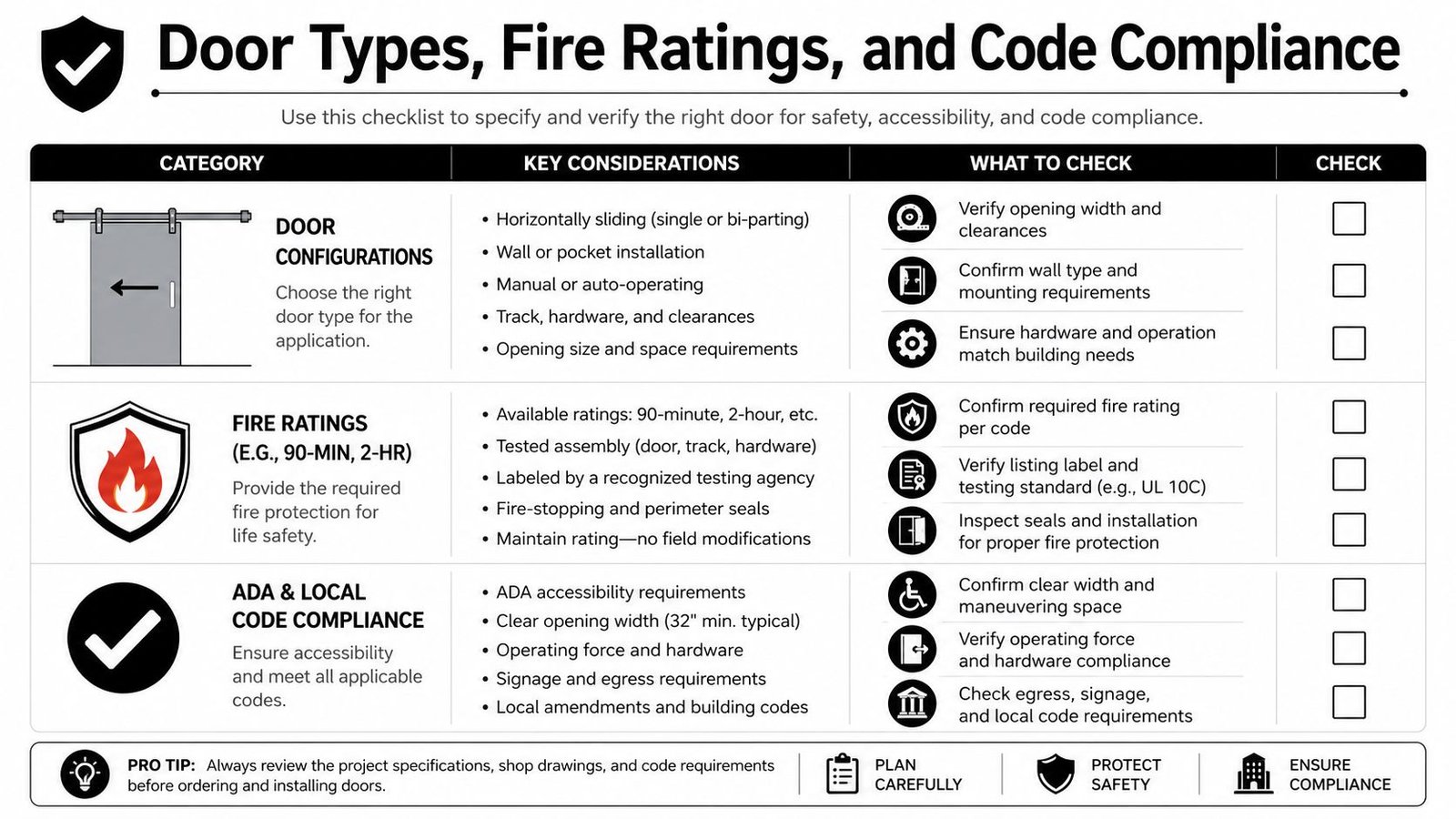
Door material doesn't exist apart from the rest of the elevator package. Technical lift specifications commonly call for horizontally sliding stainless steel doors with a clear opening of 800 mm × 2000 mm minimum, full-height car doors, and a fire-resistance rating of not less than 1 hour for both landing and car doors per the lift technical specifications. That's not cosmetic language. It's compartmentation language.
Start with the door geometry
The first thing I check on a site walk is whether the door set matches the actual car use. A door leaf that looks fine in a brochure can become a maintenance problem if the operator, opening width, or closure path doesn't fit the actual traffic pattern. The door has to close cleanly, engage correctly, and remain stable under repeated cycling.
If you want a practical code reference, a solid starting point is these elevator code requirements. The point isn't just finding a rule, it's making sure the door package you buy can be maintained and inspected without constant rework.
Fire and smoke protection aren't optional details
Landing doors and car doors are part of the building's fire and smoke strategy. When the fire-resistance requirement is specified, the door assembly has to hold up as an assembly, not just as a metal skin. That's why operator performance, leaf mass, and closure geometry all matter together. If the operator is under-sized or the door drags, the door system becomes harder to keep compliant in daily service.
A door that closes slowly, binds, or gets propped open during peak traffic is a maintenance problem and a safety problem at the same time.
For owners planning inspections or modernization scopes, the checklist is straightforward.
- Verify the door type: Confirm it's a horizontally sliding system, not a mismatched retrofit built around the opening.
- Check the clear opening: Make sure the car and landing openings fit the building use, not just the minimum mock-up.
- Confirm the fire rating: Ask for the rated assembly documentation, not a verbal assurance.
- Look at the door operator: The operator has to match the door weight and closure path.
- Inspect the full-height car door: Shortcuts here usually show up later as service calls.
Retrofit Versus Full Door Replacement
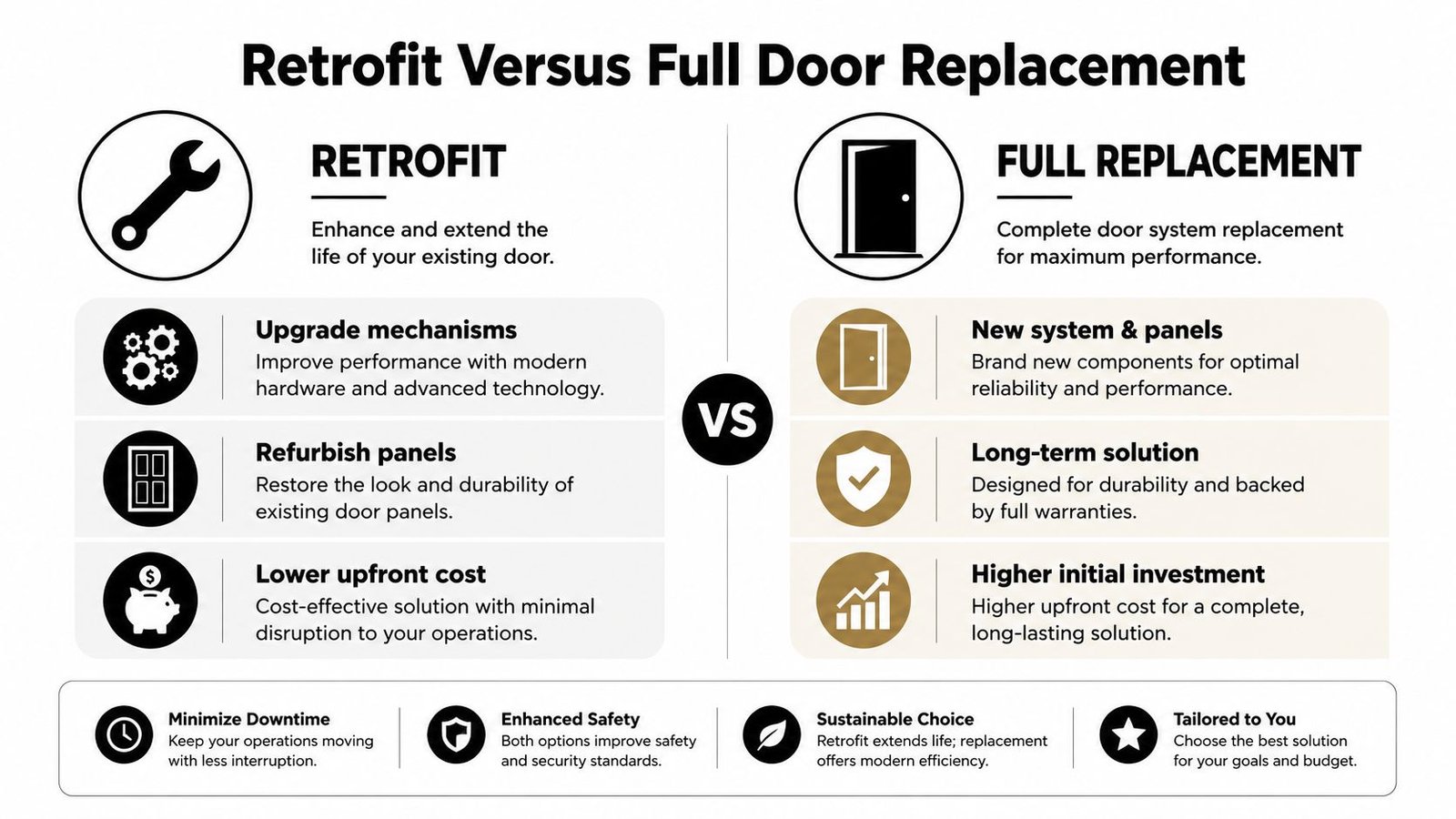
Not every bad-looking door needs a full swap. Some jobs can be stabilized with panel replacement, operator upgrades, closer tuning, or fire-rated component updates. Other jobs are already past the point where patching makes sense, especially when the doors have repeated damage, major fit issues, or a modernization scope that changes the whole elevator package.
Retrofit works when the bones are still good
Retrofit is the better answer when the door tracks are serviceable, the panels are mostly sound, and the problem sits in the operator, finish, or isolated hardware. It also makes sense when a building wants to improve reliability without tearing up lobbies or taking a cab out of service for long stretches. A targeted retrofit can preserve the existing architecture and keep the elevator usable during the work.
Full replacement wins when the system is already compromised
A full replacement becomes the smarter call when the door system is no longer just worn, it's inconsistent. If the panels are dented, the finish is tired, the operator is dated, and code-related corrections are piling up, the owner usually spends more money chasing symptoms than solving the underlying issue. At that point, new doors reset the maintenance baseline and create a cleaner path for future service.
The decision also comes down to serviceability. Non-proprietary work matters because it keeps more than one contractor able to service the system later, which helps avoid lock-in. That's a practical advantage in commercial properties where the owner may sell, refinance, or change maintenance vendors over time.
Use a simple decision filter
- Retrofit when the structure is sound and the problem is isolated.
- Replace when damage, age, or code corrections have spread through the whole assembly.
- Choose non-proprietary components when you want future service flexibility.
- Budget for disruption based on whether the work touches the operator only or the entire door set.
Cleaning and Maintenance Protocol for Stainless Steel Finishes
The finish on stainless steel lives or dies by what touches it. Independent guidance says elevator owners should use neutral-pH, non-bleach, non-ammonia cleaners, avoid scouring pads, and remove spills quickly because abrasive cleaning or the wrong chemicals can scratch stainless steel and create future corrosion sites maintenance guidance. That advice is more important than most owners realize, because the wrong janitorial routine can undo a good material choice.
Use the right chemistry and the right motion
A practical cleaning protocol is simple. Use a soft microfiber cloth, apply a neutral cleaner, wipe in the same direction each time, and dry the surface so residue doesn't sit on the metal. Don't let bleach, ammonia, or abrasive powders become the default because they're convenient. They can leave the door looking streaky now and vulnerable later.
Construction-phase protection matters too. Cambridge's maintenance guidance warns that acidic or high-chloride sealants can etch metal, while drywall dust and cement slurry can leave micro-scratches if they're wiped across the finish too early. If the elevator is still in a construction zone, the crew needs a protection plan, not just a cleaner.
Catch early finish damage before it becomes corrosion
One warning sign that gets ignored too long is tea-staining. Once that discoloration is visible, owners should report it early, because leaving it alone can move the finish toward pitting. At that point, the problem stops being cosmetic and starts turning into a restoration job.
Clean steel isn't the same as protected steel. The wrong cleaning habit can make the door look clean while quietly damaging the finish.
A maintenance routine should include quick visual checks for streaking, scratches, and edge wear, especially around pushbutton side jambs, handles, and lower door panels where carts and bags make contact. If a building has high traffic, the janitorial team should inspect doors regularly and escalate anything that looks like staining or abrasion instead of trying to buff it out with a harsher product.
This elevator door maintenance guide is useful as a companion reference when you're turning those cleaning habits into a site-specific checklist.
Cost Drivers, Lead Times, and Customization Options
A stainless steel door project is priced by the details that sit behind the panel. Alloy choice, thickness, finish, and the amount of fabrication all move the number. Fire ratings, operator matching, and specialty work like etched patterns, security glazing, or access-control integration push it further, because each one adds coordination, shop time, and field checking.
Upfront cost is only part of the decision
A lower-cost grade can look appealing on paper, especially when a modernization budget is tight. The core issue is the building environment. As noted earlier, 304 is usually suited to indoor dry spaces, while 316 is the safer pick for humid or salt-exposed locations, and that choice has a direct effect on how long the finish stays presentable and how often the building will face repair, refinishing, or replacement work. buying guide
That is where owners get burned. The cheapest option often wins the bid, then the door starts showing staining, surface wear, and cleaning-related dulling long before the rest of the system is ready for retirement. In coastal buildings or spaces exposed to chemicals, those extra cleanings and touch-ups eat into the savings, and deferred maintenance makes the appearance problem worse.
Customization should solve a problem, not just decorate the car
Etched finishes, security glazing, and access-control integration make sense when they support the way the building works. In a healthcare setting, the priority may be sanitation and damage resistance, not ornament. In a corporate lobby, a patterned finish can be worth it if it hides fingerprints and takes the edge off daily wear. The test is simple, ask whether the option reduces maintenance pressure or only adds fabrication steps.
Customization also affects serviceability. Once a door has specialty glass, unusual cutouts, or a nonstandard finish, replacement parts and matching work become harder to source cleanly. That matters later, when a panel needs repair and the owner does not want a visible mismatch.
Budget for the whole package
Owners often under-budget the pieces that make the install work. They think about the panel price and miss freight, field measurements, door operator coordination, and the labor needed to keep future maintenance access open. A better budget starts with three questions.
- What environment is the door living in?
- What finish will stay presentable with the actual cleaning crew?
- What service path remains open after the install?
A contractor who can still support the system after the sale is part of that answer, which is why owners should start with a reliable elevator company instead of treating installation as a one-time purchase. The short-term quote matters, but it should not hide the long-term cost of a door that is hard to maintain, hard to source, or hard to keep looking acceptable.
How to Vet Elevator Contractors and Plan Your Next Steps
A good contractor doesn't just install doors, they leave you with a serviceable system. That means clean documentation, clear component sourcing, and a non-proprietary approach that doesn't trap the building in one service channel. For owners who want a practical place to start, this guide to finding a reliable elevator company is the right mindset, ask who can still maintain the system five years from now, not just who can sell it today.
What to ask before you sign
Start with the basics. Ask whether the contractor can service the door brand long-term, whether the modernization is open to non-proprietary parts, and how they handle inspection corrections. If they can't explain how the door assembly will be maintained after install, you're not buying a solution, you're buying a future problem.
Then look at field habits. A contractor who cleans the machine room, pit, and car top, documents the work, and stands behind the quote is usually thinking about the whole asset, not just the sale. That approach matters more on doors than owners expect because door problems often show up first as nuisance calls and later as bigger code issues.
Make the next step concrete
Walk the current doors. Look for finish wear, drag marks, misalignment, staining, and repeated impact points. Then get a second opinion if the first proposal feels vague or overbuilt. Competitive quotes, financing options, and clear inspection priorities make the project easier to approve and easier to defend to boards or property partners.
If your doors are still structurally sound, a targeted maintenance plan may be enough. If they're already showing finish failure, code friction, or repeated service calls, it's time to move from patching to planning.
A CTA for Crane Elevator Company.