When your elevator starts showing its age, the conversation isn’t just if you should upgrade, but how. The single most critical choice you’ll make in any elevator modernization project is between proprietary and non-proprietary equipment. This decision has long-term consequences that directly impact your budget, your operational freedom, and your building’s future.
For Service or Questions Call
734-726-4247
Or
Fill Out a Contact Form Below
(Serving Lower Michigan)
The difference is straightforward: Proprietary systems lock you into a single manufacturer for all future service and parts. On the other hand, non-proprietary systems give you the freedom to choose any qualified contractor for the job.
The signs you need a modernization in the first place—frequent breakdowns, slow rides, and just plain old equipment—all point to the need for a reliable, easy-to-service system.

Proprietary vs. Non-Proprietary: The Core Difference
As a building owner in Southern Michigan, you have to weigh the immediate costs of a modernization against the total cost of ownership over the elevator’s entire lifespan. The choice between proprietary and non-proprietary systems is at the very heart of that calculation, influencing everything from maintenance bills to emergency repair times.
A proprietary system, typically from an Original Equipment Manufacturer (OEM), uses exclusive software, specialized tools, and unique parts. This means only that manufacturer or their authorized agent can perform maintenance, repairs, or any future upgrades.
In contrast, non-proprietary systems are built with universally available components and open-source software. This design allows any licensed elevator technician to service the equipment.
Breaking Down “Vendor Lock-In”
The biggest drawback of proprietary equipment is a costly problem known as “vendor lock-in.” Once that system is installed, you are contractually and technologically tied to that one company for the life of the equipment.
This complete lack of competition often leads to inflated service contract prices, long wait times for “exclusive” parts, and a total loss of leverage when negotiating your maintenance agreement. If service quality slips, you have almost no recourse.
For instance, a hospital with a proprietary elevator could face extended downtime waiting for a single-source part to arrive, directly impacting patient care. An office building in Ann Arbor with a non-proprietary system, however, could get multiple quotes from local providers like Crane Elevator and have the issue fixed much faster. You can dig deeper into these advantages in our guide on the benefits of non‑proprietary elevators.
Comparing Your Modernization Options
To make the right call, you need a clear, side-by-side comparison. Here’s how each system type will affect your building’s operations and finances for the next 20 to 30 years.
| Decision Factor | Proprietary Systems (OEM) | Non-Proprietary Systems (Independent) |
|---|---|---|
| Maintenance Flexibility | You are locked into a service contract with the original manufacturer. | You can solicit competitive bids from any qualified service provider. |
| Parts Availability | Parts are exclusive and must be sourced from the OEM, often at a premium. | Components are universal and can be sourced quickly from multiple suppliers. |
| Long-Term Costs | Maintenance costs are almost always higher due to a lack of competition. | Competitive bidding for service contracts keeps maintenance costs down. |
| Future Upgradeability | Future modernizations are limited to the OEM's technology and pricing. | You have the freedom to choose the best tech and contractor for future needs. |
| Technical Support | Requires specialized, manufacturer-specific tools and diagnostic software. | Serviceable with standard industry tools and accessible technical information. |
Ultimately, choosing non-proprietary equipment for your elevator modernization empowers you as the building owner. It ensures competitive pricing, faster service, and far greater control over one of your property’s most critical assets—securing its value and performance for the long run.
Understanding the Scope of Your Modernization Project
An elevator modernization isn’t a single, all-or-nothing job. Think of it as a strategic upgrade of specific systems, each picked to solve a real problem—whether that’s poor reliability, safety gaps, or sky-high energy bills. Knowing the different project types helps you figure out what you need and have a more productive conversation with your contractor.
This isn’t about gutting everything at once. It’s about finding the weakest links in your elevator and putting your money where it will count the most. For a building in Detroit or Ann Arbor, that might mean targeting the parts that boost performance and cut your operating costs.
The elevator controller is the “brain” of the whole system. It manages everything from floor calls to speed and leveling. If your elevator is constantly breaking down, taking forever, or giving jerky rides, an outdated controller is the most likely culprit.
Modernizing the controller is one of the single most effective upgrades you can make for reliability.
A new microprocessor-based controller gives you smooth acceleration and deceleration, making the ride far more comfortable for passengers. Most importantly, it slashes system faults and service calls, giving you an elevator you can actually depend on.
A controller upgrade is the foundation of a successful modernization. It not only improves current performance but also provides the digital platform needed for future upgrades like destination dispatch or remote monitoring.
Door Operator and Equipment Upgrades
Elevator doors and their operating system are the most used—and abused—parts of any elevator. In fact, they are directly responsible for over 70% of all service calls. All that opening and closing causes serious mechanical wear, leading to slow operation, doors that won’t close, or even entrapment risks.
Upgrading your door equipment is a critical safety and performance fix. New operators deliver quicker, quieter, and more reliable door movement. This cuts down on breakdowns and improves passenger flow, especially during your building’s busiest hours.
Cab Interior Refurbishment
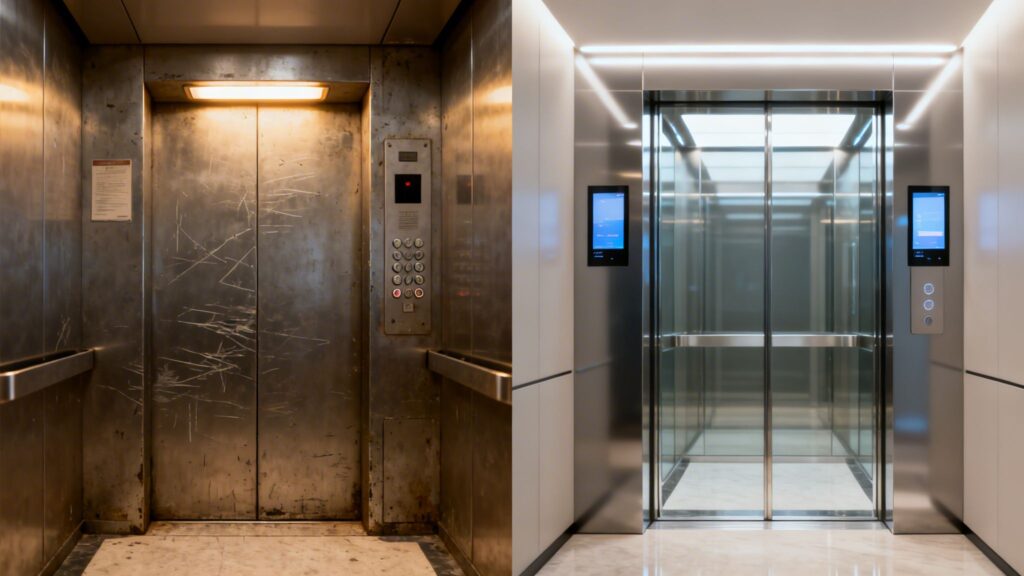
While controllers and doors improve how the elevator works, a cab refurbishment is about how it looks and complies with the law. A dated, worn-out cab interior leaves a bad impression on tenants and visitors, which can drag down your building’s perceived value.
A cab modernization project often includes:
- New wall panels, flooring, and ceilings for a clean, modern look.
- Upgraded LED lighting, which is brighter, more energy-efficient, and lasts much longer than old bulbs.
- New handrails and car operating panels to meet current ADA (Americans with Disabilities Act) requirements.
This upgrade completely changes the passenger experience while ensuring your elevator meets crucial accessibility codes. It’s a very visible way to show tenants you’re reinvesting in the property.
Machine and Drive System Upgrades
The machine is the heart of your elevator, providing the muscle to lift and lower the cab. Modernizing this core component can deliver huge returns, particularly in energy savings. For older buildings, one of the best projects is converting an old hydraulic system to a modern traction machine.
For instance, replacing an old geared machine with a modern gearless traction machine improves performance dramatically. Gearless machines are more compact, need less maintenance, and don’t use oil, making them a much cleaner solution.
Even better, adding a regenerative drive can cut elevator energy use by up to 40%. Instead of wasting braking energy as heat, a regenerative drive captures it and sends it back into the building’s power grid. This leads to real savings on your utility bills and makes your building more sustainable—an upgrade that eventually pays for itself.
Budgeting for Your Elevator Upgrade Project
Planning for an elevator modernization is really about creating a financial roadmap. You need to know the costs, timelines, and financing options upfront to make sure the project runs smoothly and causes the least amount of disruption to your Southern Michigan facility. Getting this right turns a huge, overwhelming process into a smart, manageable investment.
A solid budget begins with realistic expectations. Costs swing wildly depending on the job’s scope—from a simple component swap to a full system overhaul. If you know what you’re getting into from the start, you can line up the resources and avoid getting hit with surprise bills later on.
This is more important than ever. The global elevator modernization market is set to grow from USD 10.15 billion in 2025 to USD 18.50 billion by 2032, thanks to new regulations and building renewals. A recent 6.7% jump in U.S. construction spending shows just how much demand there is for efficient elevators. You can dig into more of the numbers behind these market trends and projections at 360iResearch.com.
What Do Elevator Upgrades Actually Cost?
The final bill depends entirely on the scope of work. A simple cab interior refresh is a drop in the bucket compared to a full hydraulic-to-traction conversion. Here are some general cost ranges to get your budget started.
- Minor Component Swaps: Projects like new door operators or updated car operating panels usually land between $15,000 and $30,000. These are quick, targeted fixes for specific performance or code issues.
- Controller Modernization: Replacing the elevator’s “brain” is a bigger deal, typically costing between $90,000 and $150,000. This is one of the best things you can do to improve reliability and ride quality.
- Comprehensive Overhaul: A full modernization—new controller, machine, doors, and cab—can run from $120,000 to $250,000 or more for each elevator. This is a complete system renewal that maximizes safety, efficiency, and your property’s value.
Keep in mind these are ballpark figures. Your final cost will hinge on your building’s height, the elevator’s capacity, and the specific equipment you choose. The only way to know for sure is to get a detailed quote from a licensed contractor.
How to Pay for a Major Upgrade
A full elevator modernization is a major capital expense, but you don’t have to cut a massive check all at once. Many contractors, including Crane Elevator, offer financing to make these critical upgrades more affordable for building owners.
Financing lets you spread the project’s cost over several years, turning a huge upfront expense into predictable monthly payments. This makes it far easier to fit a big project into your annual budget without wiping out your capital reserves. It also means you can get the work done now instead of putting it off and risking more breakdowns or safety problems.
What to Expect for Timelines and Downtime
The biggest worry for any building manager is how long the elevator will be out of commission. Minimizing downtime is everything, and a good contractor will work with you to create a schedule that limits how much it affects your tenants.
A typical project has four main phases:
- Assessment and Design (1-2 weeks): A technician does a full inspection of your current system to lock in the project scope and create detailed engineering plans.
- Procurement (6-12 weeks): After the design is approved, all the necessary equipment and parts are ordered. Lead times can be long, so this is often the phase that takes the most time.
- Installation (3-7 weeks per elevator): The crew arrives on-site. They’ll start by tearing out the old components and then install the new system.
- Testing and Inspection (1 week): Once the installation is finished, the elevator goes through intense testing to make sure it’s safe and meets all state and local codes. Only then is it put back in service.
From the first phone call to a running elevator, a full modernization can take anywhere from three to six months. But the actual time your elevator is shut down is usually just the 3-7 week installation phase.
If your building has more than one elevator, a smart contractor will modernize them one at a time. That way, you always have a working elevator for tenants and visitors.
Maximizing Your Return on Investment
An elevator modernization isn’t just about getting a smoother ride—it’s a strategic investment that pays for itself. For property owners in Southern Michigan, it’s the most direct way to fix outstanding code violations, get ahead of new regulations, and boost your property’s financial performance.
When you look at modernization as a financial decision, the business case is clear. It’s not just another expense; it’s a direct investment in your building’s value, safety, and efficiency that delivers measurable long-term savings.
Meeting Safety and Accessibility Codes
First, a modernization project is your opportunity to bring an older elevator up to current legal and safety standards. This is non-negotiable and addresses several key mandates.
Compliance includes:
- The Americans with Disabilities Act (ADA): This ensures your elevator is accessible to all passengers, covering everything from button height and braille signage to audible signals.
- Fire Service Operation: Modern codes dictate specific elevator functions that must be available to first responders during an emergency.
- Local Michigan Safety Codes: Regulations are updated constantly to improve passenger safety. A modernization project addresses these changes proactively, not reactively.
Failing to meet these codes can lead to fines, serious legal liability, or even a shutdown order from an inspector. A planned elevator modernization eliminates these risks and protects your tenants and your asset.
Calculating Your Financial Returns
Beyond just meeting code, the real value is in the quantifiable return on investment (ROI). This isn’t about avoiding penalties; it’s about generating real financial gains that hit your bottom line.
A successful modernization is a powerful tool for asset management. It directly reduces operational costs, enhances tenant satisfaction, and measurably increases your property’s market value.
There’s a reason the global elevator modernization market is projected to reach USD 14.4 billion by 2034. Owners are opting for upgrades because they can cut costs by 30-50% compared to a full replacement, all while getting a more reliable and efficient system. You can explore these elevator market statistics on imarcgroup.com to see the data for yourself.
Here are the key areas where you’ll see a direct return:
- Significant Energy Savings: Modern regenerative drives can slash your elevator’s energy use by up to 40%. These systems work by capturing braking energy and feeding it back into your building’s grid, resulting in lower utility bills month after month.
- Reduced Maintenance Costs: New equipment is reliable equipment. Fewer breakdowns mean fewer expensive emergency service calls, less tenant-disrupting downtime, and lower annual maintenance bills. To see how a modern system simplifies upkeep, you can learn more about upgrading your elevator control panel.
- Increased Property Value: A modern, dependable elevator is a huge asset. It makes your building far more attractive to high-quality tenants and prospective buyers, which lets you justify higher lease rates and a stronger sale price.
- Improved Tenant Satisfaction and Retention: Constant elevator breakdowns are one of the biggest complaints a building manager can get. A fast, smooth, and reliable elevator has a direct, positive impact on a tenant’s daily life, which boosts satisfaction and makes them far more likely to renew.
When you weigh these financial benefits against the project cost, it’s clear that elevator modernization isn’t just a repair—it’s one of the smartest capital improvements you can make.
How to Choose a Modernization Partner in Southern Michigan

Choosing the right partner for your elevator modernization is as important as the equipment itself. The contractor you hire will dictate the project’s success, its timeline, and its reliability for the next 20+ years.
For building owners in Southern Michigan, this means finding a company with both technical skill and deep local knowledge.
Your modernization partner shouldn’t just be an installer; they need to be an advisor who understands your building’s specific needs. Navigating a century-old freight elevator in Detroit is a different ballgame than upgrading a residential lift in Ann Arbor—local expertise is everything.
Key Criteria for Evaluating Contractors
When vetting potential partners, you need a clear framework. Look past the initial price tag and evaluate each company on a few core principles that signal quality and transparency.
A trustworthy contractor will always prioritize a long-term relationship over a quick sale. Their approach to maintenance, equipment philosophy, and emergency support reveals their true character.
Checklist of Essential Questions for Vendors
Arm yourself with the right questions. A contractor’s answers will tell you exactly what it’s like to work with them for years to come.
- Do you specialize in non-proprietary equipment? This is the most critical question. A partner committed to non-proprietary systems is a partner committed to your long-term freedom and financial control.
- What is your experience with local Michigan codes? Ask for specific examples of local projects. A contractor familiar with inspectors and requirements in your municipality can prevent expensive delays.
- What does your maintenance philosophy include? Look for transparency. Do they guarantee their visits? Are full clean-downs and bulb replacements included, or will you see them as extra charges on your invoice?
- What is your emergency response time? You need a partner with 24/7 availability and a proven record of fast service in your area. Ask for their average response time for an entrapped passenger versus a non-emergency shutdown.
A partner’s willingness to offer a free second opinion on a competitor’s quote is a strong sign of confidence. It shows they’re focused on providing genuine value, not just winning a bid.
Using this framework helps you identify a modernization partner who will protect your investment, ensure compliance, and keep your building running. Your choice of contractor is a 20-year decision—take the time to get it right.
Elevator Modernization: Your Top Questions Answered
Taking on an elevator modernization is a major capital project, and it’s smart for building owners and facility managers to have questions. Here are some quick, straightforward answers to the questions we hear most often from property owners across Southern Michigan.
How Long Does an Elevator Modernization Take?
The full project timeline, from the initial assessment to final sign-off, can run anywhere from three to six months. But the actual time your elevator is out of service is much shorter.
Getting the equipment manufactured and shipped often takes 6 to 12 weeks. The on-site installation, which is when the elevator is shut down, typically lasts only 2 to 6 weeks for each car. Any experienced contractor will phase the work in buildings with multiple elevators to make sure at least one car is always running.
How Much Does an Elevator Modernization Cost?
The cost depends entirely on the scope of work.
- Minor upgrades, like new door operators, might run between $15,000 and $30,000.
- A full controller replacement usually falls in the $40,000 to $80,000 range.
- A comprehensive modernization involving a new machine, controller, and cab interior can cost $100,000 to $250,000 or more per elevator.
Financing options are available to make these essential upgrades more manageable.
The biggest financial mistake a building owner can make is choosing proprietary equipment. It might look a little cheaper upfront, but the “vendor lock-in” that follows almost always leads to sky-high maintenance costs, wiping out any initial savings and then some.
What’s the Difference Between a Modernization and a Full Replacement?
Modernization means upgrading the critical components of your existing elevator system—think of it like a heart transplant, not a whole new body. We replace parts like the controller, door system, and cab finishes but keep the core structure. It’s a targeted, highly cost-effective way to boost performance, safety, and efficiency.
A full replacement is a massive, disruptive project that involves tearing out the entire system, including guide rails and other structural elements. It’s far more expensive and rarely ever necessary.
Will a Modernization Lower My Energy Bills?
Yes, and the savings can be substantial. Modern components are dramatically more energy-efficient.
For instance, swapping an old hydraulic system or a geared machine for a modern gearless machine with a regenerative drive can slash your elevator’s energy use by up to 40%. The regenerative drive works by capturing energy created during braking—which is normally just lost as heat—and feeding it directly back into your building’s power grid. You get real, measurable savings on your utility bills.
Ready to upgrade your building’s reliability and performance? The team at Crane Elevator Company specializes in non-proprietary elevator modernization, giving you freedom and control over your asset. Contact us for a free, no-obligation quote and see how we can bring your system up to modern standards. Learn more at https://www.craneelevator.com.