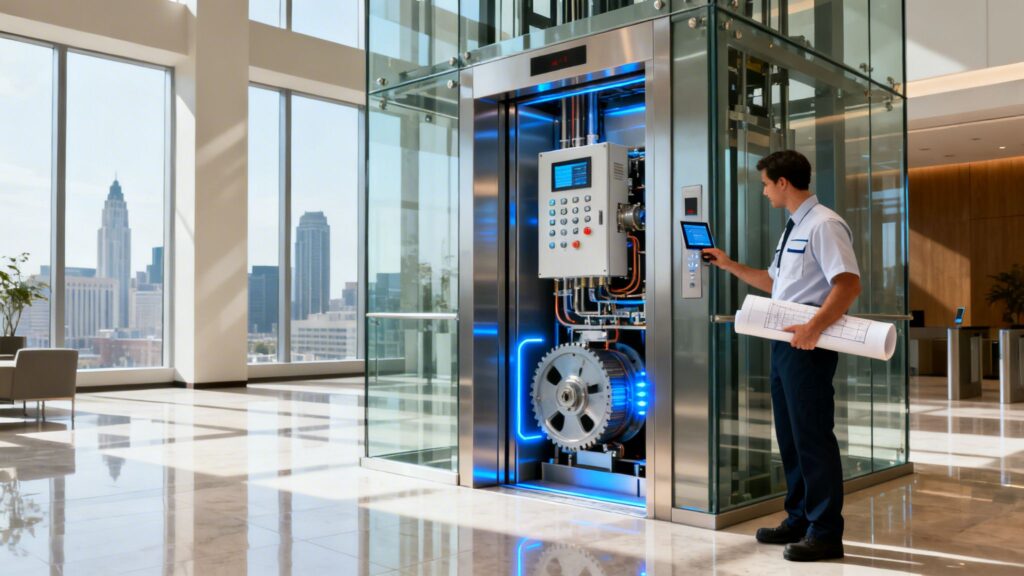
An elevator modernization is much more than a cosmetic facelift. It’s a complete overhaul of your elevator’s core systems to bring them up to today’s standards for safety, performance, and efficiency.
Think of it as swapping out the old, worn-out engine and electronics in your car for brand-new ones. This is about making sure the system that moves people through your building is reliable and safe for the long haul, preventing expensive emergency breakdowns and protecting your property’s value.
For Service or Questions Call
734-726-4247
Or
Fill Out a Contact Form Below
(Servicing Lower Michigan)
Why Proactive Elevator Modernization Is a Smart Investment

For anyone managing property in Michigan—from a historic Detroit high-rise to a commercial building in Grand Rapids—the elevator is a non-negotiable asset. But many of these systems are getting old.
The industry consensus is that an elevator’s useful lifespan is around 15-20 years. After that, key components start to fail, reliability plummets, and repair bills climb. So do the tenant complaints.
Waiting for a total breakdown isn’t a strategy—it’s a liability. An unexpected failure can trap passengers, grind your building to a halt, and force you into massively expensive emergency repairs. A proactive modernization lets you schedule the work on your own terms and budget.
From Core Systems to Passenger Experience
So, what gets upgraded during a modernization? It’s rarely about just changing the wall panels or flooring. The most critical work happens behind the scenes, targeting the machinery that keeps your elevator running.
Most projects focus on these key areas:
- Controllers: The “brain” of the elevator is upgraded from clunky, old-school relays to a modern microprocessor. This makes the elevator smarter, more reliable, and easier to troubleshoot.
- Motors and Drive Systems: Old, power-hungry motors are replaced with high-efficiency modern drives. The result is a much smoother ride and a significant drop in your building’s energy bills.
- Door Equipment: This is a big one. Old door operators are a major source of service calls. Modernizing them, along with the safety sensors, prevents jams and ensures you meet current ADA requirements.
- Signal Fixtures: This includes new call buttons, floor indicators, and in-cab communication systems that are compliant, reliable, and user-friendly.
Simply put, modernization swaps out sputtering, decades-old machinery for a finely-tuned, efficient system. It’s like trading a classic car that’s constantly in the shop for a brand-new vehicle with modern safety features and a reliable engine.
This isn’t just a local trend happening in towns like Fenton or Pinckney; it’s a global reality. The worldwide elevator modernization market is expected to surge from USD 10.15 billion in 2025 to USD 18.50 billion by 2032.
This growth is fueled by aging buildings and the need for better safety—a familiar story for Michigan property owners. In fact, the elevator safety systems market alone is projected to hit nearly $22 billion by 2030. These numbers prove one thing: keeping your vertical transportation up-to-date isn’t just a good idea, it’s a critical investment. You can learn more about the global market drivers for elevator modernization and see how these trends directly impact your property.
To put it in perspective, take a look at the clear differences between sticking with an aging system and investing in an upgrade.
Aging Elevator Risks vs Modernized Elevator Benefits
| Characteristic | Aging Elevator (Pre-Modernization) | Modernized Elevator (Post-Modernization) |
|---|---|---|
| Reliability | Frequent breakdowns and service calls | Drastically improved uptime; fewer failures |
| Safety | Outdated components; may lack modern safety features | Compliant with current safety codes (e.g., door lock monitoring) |
| Energy Use | Inefficient motor-generator sets; high electricity costs | 30-50% lower energy consumption with modern drives |
| Performance | Bumpy ride, slow doors, poor floor leveling | Smooth acceleration, accurate leveling, and quick door operation |
| Code Compliance | Likely non-compliant with current ADA and safety codes | Fully compliant with all Michigan and local codes |
| Tenant Experience | Frustration, complaints, and potential safety concerns | Increased satisfaction, perceived building quality, and safety |
| Operating Costs | High repair bills, hard-to-find parts, and energy waste | Lower maintenance costs, predictable budget, and energy savings |
The contrast is stark. Modernization isn't just an expense; it's a direct investment in your building's safety, efficiency, and reputation.
The True ROI of Elevator Modernization
It’s tempting to look at an elevator modernization and see only the upfront cost. That’s a mistake. The real value is the return on investment (ROI), which shows up in four key areas: improved safety, better performance, lower energy bills, and a higher property value.

For Michigan property owners, these aren't just abstract benefits. A modern, reliable elevator is a hard asset, whether you’re running a commercial building or a residential community.
Enhanced Safety and Code Compliance
The most important return you get is peace of mind. Older elevators often lack modern safety features like accurate door sensors or dependable emergency phones, making them a serious liability.
Upgrading brings your system up to all current Michigan and federal codes, including the Americans with Disabilities Act (ADA). This protects your passengers and shields you from fines and legal trouble. For a homeowners' association in a place like Fenton, a modern elevator gives residents—especially those with mobility issues—safe and reliable access to their homes.
Superior Performance and Tenant Satisfaction
Frequent breakdowns, slow rides, and jerky stops are the classic signs of an old elevator. These issues frustrate tenants and give your whole building a bad name. An elevator modernization fixes these performance problems for good.
Think about an office building in Farmington. A modernized elevator delivers:
- Faster and smoother rides: New controllers and drive systems handle traffic better, cutting down wait times during busy hours.
- Drastically fewer breakdowns: Reliable components mean less downtime and no more "out of service" signs.
- Accurate floor leveling: This gets rid of trip hazards and creates a seamless experience for everyone.
This kind of performance helps attract and keep high-quality commercial tenants. A dependable elevator isn't a luxury; it's a basic expectation that shows you care about your property. Fewer breakdowns also mean fewer expensive emergency service calls, which directly helps your budget.
Significant Energy and Operational Savings
Modern elevator technology is built for efficiency. When you replace old, power-hungry motor-generator sets with new drives and control systems, your elevator's electricity use drops significantly.
The numbers don't lie: modern systems with regenerative drives, smart controls, and LED lighting can cut operational energy costs by 30-50%. That's money that goes straight back into your operating budget, month after month.
This isn't just a local trend. The global elevator modernization market was valued at USD 9.9 billion in 2024 and is expected to reach USD 14.4 billion by 2034. The push for energy efficiency is a major reason why, as modernization can add 20-25 years to an elevator's life for about half the cost of a full replacement. Discover more insights about these market statistics and see how your project fits into this global shift.
Boosted Property Value and Marketability
At the end of the day, an elevator modernization is a capital improvement that makes your property worth more. In a competitive market, a building with a new, efficient, and reliable elevator stands out.
Whether it’s a residential complex in Pinckney or a commercial tower in Detroit, it tells potential buyers and tenants that the building is well-managed and up-to-date. This upgrade justifies higher rent and sale prices, making sure your investment pays off for years to come.
Budgeting for Your Elevator Modernization Project
Let’s get straight to the biggest question on every property owner's mind: How much does an elevator modernization actually cost?
The price tag can feel intimidating, but it’s not a one-size-fits-all number. The final cost depends entirely on the scope of work. For property managers from the high-rises in Detroit to the condos in Farmington, understanding what drives these costs is the first step to building a realistic budget.
Decoding Modernization Costs in Michigan
Think of it this way: a building in Pinckney, Michigan, with two elevators that are over 25 years old is facing constant "out of service" signs and expensive emergency repairs. It's time for a permanent fix.
When you get a quote from a Michigan elevator contractor, it should break the project down into clear options.
- Controller-Only Modernization: This is the most basic upgrade. You're replacing the elevator's "brain" with a modern microprocessor. It's the least expensive option and improves reliability, but it only fixes one part of an aging system.
- Partial Modernization: This is the most common and practical approach. It usually includes the controller, new door operators (a major source of breakdowns), and new signal fixtures (buttons, indicators) to meet ADA requirements. This route offers the best balance of cost vs. benefit.
- Full Modernization: This is the most comprehensive—and expensive—option. It means replacing the controller, drive system, motor, door equipment, and often the cab interior. You’re essentially getting a new elevator in your existing hoistway, maximizing reliability and energy efficiency.
For that building in Pinckney, a partial modernization targeting the doors and controls will likely solve over 80% of its current reliability issues. It delivers the best long-term value by addressing the most common points of failure.
Understanding Your Quote and Scope of Work
A transparent quote does more than just give you a price. It needs to detail the exact work being done, the type of equipment being installed—and critically, whether that equipment is non-proprietary—and a realistic timeline. This is the only way to compare different contractors apples-to-apples.
A good quote will also factor in required code compliance. Any modernization project must bring your elevators up to current safety standards. You can learn more about these mandates in our guide on the Michigan elevator code deadline. Budgeting for these non-negotiable updates from the start is crucial.
Financing Options That Make Modernization Achievable
For most building owners and HOAs, a five or six-figure capital expense is a challenge. That’s why many elevator contractors offer financing options.
These plans spread the cost over several years, turning a huge upfront investment into a predictable monthly payment. This allows you to get safer, more reliable elevators immediately without draining your capital reserves.
Plus, the new monthly payment is often partially offset by what you're no longer spending on frequent repair bills and high energy consumption. This approach turns an intimidating expense into a smart, manageable upgrade for your property.
How to Choose the Right Michigan Elevator Contractor
Picking the right elevator contractor for your modernization is the single most important decision you’ll make. This isn't just about the upfront cost—it’s a long-term partnership that dictates the reliability, safety, and future service costs of your elevator for decades.
Choosing a partner with deep roots in Michigan, who understands everything from historic Detroit high-rises to suburban office parks in Farmington, is essential. A rushed decision based on the lowest bid often leads to expensive problems, unexpected downtime, and years of headaches. You have to look past the initial price tag.
Verify Proven Local Experience
Your first step is to make sure the contractor has a real, verifiable presence in Michigan. A company that’s been working in cities like Detroit, Flint, and Kalamazoo for years knows the local codes, the buildings, and the logistical challenges inside and out.
When you’re vetting potential partners, ask them for:
- Local References: Get a list of elevator modernization projects they’ve completed in Michigan that are similar to yours.
- Team Location: Confirm their technicians are actually based here, not dispatched from hours away in another state. This is non-negotiable for fast service.
- Years in Business: A company that’s been around for a while shows stability and a real commitment to the local community.
A contractor with a proven local track record is simply more accountable. They live and work here, and their reputation depends on doing the job right.
Confirm 24/7 Emergency Service and Multi-Brand Expertise
Elevators don’t break down on a 9-to-5 schedule. Your contractor absolutely must offer true 24/7/365 emergency service with local technicians who can get to your building quickly. A call center in another time zone is useless when your tenants are stuck.
Just as important is their ability to work on all makes and models. Many buildings, especially older ones, have a mix of equipment from different manufacturers. A truly independent and skilled contractor won’t be stumped by another company's brand—they’ll have the expertise to service anything.
The Critical Choice: Non-Proprietary vs. Proprietary Equipment
Pay close attention here. This is the single most critical technical decision you will face, and it has massive financial consequences that will last for the next 20+ years.
Think of it like buying a cell phone. A proprietary system is like a phone that’s permanently locked to one carrier's expensive network. You’re stuck. You have to pay whatever they demand for service because no one else can work on it.
In the elevator world, a proprietary modernization locks you into a service contract with the original installer—usually one of the giant manufacturers. They use special tools, passwords, and software that no other company can access.
This "vendor lock-in" strips you of all future negotiating power. You’re at the mercy of their pricing, their response times, and their terms.
A non-proprietary system, on the other hand, is like an unlocked phone. You can switch to any service provider you want, anytime. This creates competition, which naturally drives down your costs and forces companies to provide better service.
By insisting on a contractor who installs non-proprietary equipment, you keep control over your asset. You can find more details about why this is so important in our guide on the benefits of non-proprietary elevator solutions. Making this choice ensures that you can always find a qualified technician, from Fenton to Pinckney, to service your elevator at a fair price for its entire lifespan.
The Modernization Process from Start to Finish
An elevator modernization can seem like a huge project, but when you know the steps, the process is much more manageable. Any good contractor follows a clear, phased approach to get the work done right while causing the least amount of disruption.
Knowing this process puts you in the driver's seat, whether you're running a busy hospital in Ann Arbor or a high-rise apartment building in Detroit. Let's walk through the five typical phases of a well-run elevator modernization here in Michigan.
Phase 1: Initial Assessment and Proposal
It all starts with a hands-on evaluation of your existing elevator. A technician will perform a deep dive, inspecting everything from the machine room down to the pit. They're looking for wear and tear, parts at risk of failing, and anything that doesn't meet current code.
Based on that inspection, the contractor builds a detailed proposal. This document needs to spell out the exact scope of work, why each upgrade is recommended, and the costs involved. It should also confirm the use of non-proprietary equipment—a critical point that gives you freedom and flexibility down the road.
Phase 2: System Design and Michigan Permitting
Once you green-light the proposal, the engineering work begins. Your contractor’s team designs a new system built specifically for your building, making sure every new part works together. They'll create the technical drawings and spec out the right controller, drive, and door equipment.
A huge piece of this phase is getting the permits. An experienced Michigan contractor will handle all the paperwork, submitting plans to the state and local authorities, whether you're in Farmington or Fenton. This step is non-negotiable; it ensures the project is 100% compliant before a single tool is picked up.
A solid design and permitting phase is the bedrock of a successful elevator modernization. It heads off expensive delays and guarantees that when the work starts, every component meets both your building's needs and Michigan's strict safety standards.
Phase 3: Equipment Sourcing and Staging
With approved plans, your contractor orders all the parts. This includes the big-ticket items like the new controller—the elevator's brain—and the door systems, plus all the smaller fixtures, wiring, and hardware. Getting this right is key to staying on schedule. To understand just how important this one component is, check out our guide on the modern elevator control panel.
Before anything arrives at your property, the equipment is staged at the contractor's shop. They organize all the components and even pre-assemble some parts. This keeps clutter and work time inside your building to a minimum.

Phase 4: On-Site Installation
This is when the real work starts at your building. The entire installation is carefully scheduled to cause as little disruption as possible. If you have multiple elevators, the work is done one car at a time so at least one is always running. For an office building, the noisiest work can often be scheduled for nights or weekends.
The installation itself usually follows these steps:
- Securing the work area to keep tenants and visitors safe.
- Methodically taking out all the old, outdated equipment.
- Installing the new controller, drive, door operators, and fixtures.
- Running new wiring and making all the electrical connections.
Good communication here is essential. Your contractor should be giving you regular updates so you and your tenants know what’s happening and when.
Phase 5: Final Testing and Handover
Once the installation is done, the elevator goes through intense testing. Technicians will run the car through hundreds of cycles to make sure everything—performance, safety features, ride quality—is perfect. They'll check the leveling accuracy, door speeds, and emergency systems.
Finally, a state-licensed inspector performs the final acceptance test to certify the elevator meets all Michigan codes. Once it passes, the car is officially turned back over to you. Your contractor will provide all the manuals, warranties, and any needed training. The process is complete, and your old, unreliable system in Pinckney is now a modern, efficient, and safe asset for your building.
Your Next Steps to a Safer Elevator
Throughout this guide, we've walked through why elevator modernization isn't just a line item—it's a critical investment in your property's safety, efficiency, and marketability. Whether you manage a commercial building in Farmington or a residential high-rise in Fenton, waiting isn't a strategy.
Don't let a major breakdown force your hand and paralyze your building. An old, unreliable elevator is more than just an annoyance for tenants; it’s a ticking clock on liability and a drain on your bottom line. Getting ahead of the problem protects your investment and gives you something priceless: peace of mind.
The next move isn’t signing a massive contract. It's much simpler: starting a conversation. The goal is to get a clear, expert assessment of your elevators so you know exactly where you stand. An evaluation gives you a real-world look at your equipment's health, taking all the guesswork out of the equation.
For building owners in towns like Pinckney and across Michigan, this is how you take back control.
A thorough assessment from a licensed Michigan elevator contractor will pinpoint your system’s weaknesses, lay out your options clearly, and give you a practical roadmap. Contact us today to schedule your complimentary evaluation and take the first real step toward a safer, more dependable elevator.
Frequently Asked Questions
When you're looking at a major capital project like an elevator modernization, you’re going to have questions. We get it. Here are the straight-up answers to the most common ones we hear from property owners and managers across Michigan, from Detroit to Fenton.
How Do I Know If My Elevator Needs Modernization or Just Repairs?
This is the big one. The answer comes down to one thing: patterns.
A single breakdown might just need a one-time repair. But if you're seeing the same problems over and over—frequent shutdowns, slow performance, or the car constantly missing the floor level—you're looking at a systemic issue. Those are classic signs that the core equipment is at the end of its life.
Think of it this way: are you just fixing a symptom, or is the underlying disease getting worse? If parts are getting hard to find or shockingly expensive, you're throwing good money after bad. At that point, a strategic elevator modernization isn't just an upgrade; it's the only financially sound path forward.
What Does Non-Proprietary Modernization Mean and Why Is It Important?
This might be the single most important question you can ask a contractor. Non-proprietary means the new controller, software, and parts are open-source. Any qualified elevator company can work on them.
Choosing a non-proprietary system is like buying an unlocked phone. You’re free to pick any service provider you want, which forces companies to compete for your business with better service and fair pricing.
A proprietary system, on the other hand, locks you into a service contract with the original installer for the 20-25 year life of the equipment. For owners in places like Farmington or Pinckney, demanding non-proprietary equipment is the best way to keep control over your building’s most critical asset and avoid decades of inflated service costs.
How Long Does a Modernization Project Take and Will It Disrupt My Building?
The timeline is tied directly to the scope of work. A simple controller swap might take a few weeks. A complete overhaul of the machinery, cab, and electronics could take several months per elevator.
A good contractor’s job is to minimize the headache for your tenants. We manage this by:
- Working one car at a time: If you have multiple elevators, we'll always leave at least one running for your tenants.
- Scheduling smartly: We do the loud, disruptive work during off-peak hours or on weekends whenever possible.
- Communicating constantly: You and your tenants will get regular, clear updates so no one is caught by surprise.
The goal is to keep your building running as smoothly as possible while the work gets done.
Are Financing Options Available for Elevator Modernization?
Yes, absolutely. An elevator modernization is a major capital expense, and we understand that.
Many independent contractors, including us, offer flexible financing plans. These options let you spread the cost out over several years, turning one massive invoice into a predictable monthly payment. This helps you get the safety and reliability upgrades you need now without draining your capital reserves.
Plus, the new monthly payment is often partially offset by what you stop spending on emergency repair calls and sky-high energy bills from old, inefficient equipment.
Ready to secure your building's future with a safer, more reliable elevator? The team at Crane Elevator Company has over 25 years of experience helping Michigan property owners navigate the modernization process with confidence. Schedule your free, no-obligation evaluation with us today.