
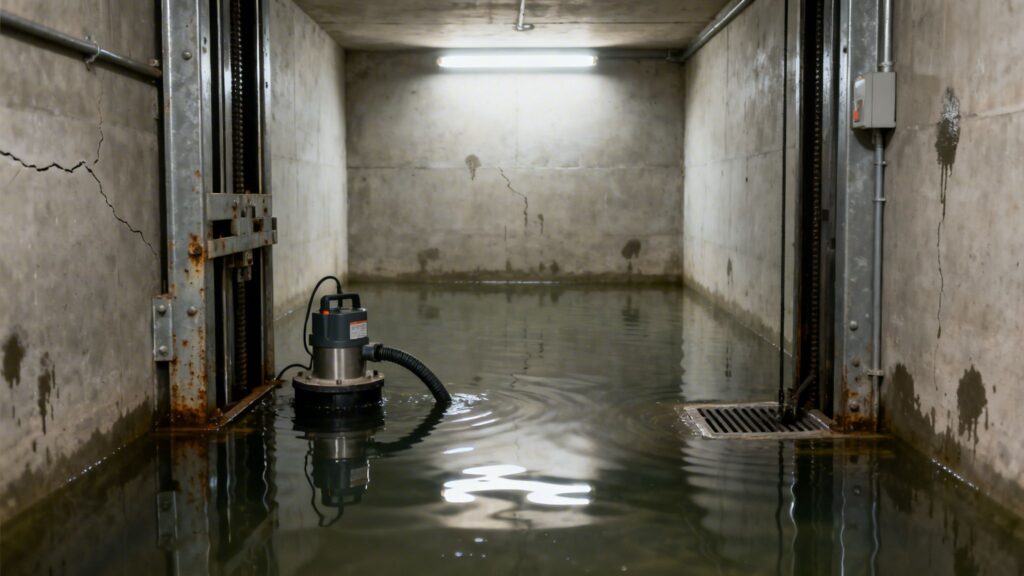
Picture this: a sudden spring thaw in Lansing or one of those heavy summer storms rolling off Lake Michigan. A flooded elevator pit isn’t just a maintenance headache; it’s a critical failure that triggers catastrophic equipment damage and creates serious electrical hazards.
For Service or Questions Call
734-726-4247
Or
Fill Out Contact Form Below
(Serving Lower Michigan)
The Hidden Danger Below Your Building

For property managers and building owners across Michigan, from Detroit to Lansing, the elevator is a lifeline. It ensures accessibility and keeps business operations running smoothly. But hidden from view, the elevator pit is the lowest point of the shaft—and its most vulnerable spot.
When water gets into this space, it’s not just an inconvenience. It kicks off a destructive process that quietly undermines your entire vertical transportation system. What starts as a little dampness in a Dearborn building can quickly escalate into a full-blown emergency.
Why Is a Flooded Pit So Dangerous?
The immediate risks of water in an elevator pit are severe. Water is a direct threat to the complex mechanics and electrical systems that an elevator needs to run safely and reliably.
While there’s no national database just for pit flooding, experienced technicians know that any significant building flood means the pit is also flooded. In Southern Michigan, where basements already fight hydrostatic pressure from Lake Erie snowmelt and heavy rains, this is a constant threat. You can discover more insights about this hidden danger and its consequences from our industry reports.
Water in the pit creates immediate, overlapping dangers. We’ve broken down the most critical risks every building owner in Michigan should know.
Immediate Risks of a Flooded Elevator Pit
| Risk Category | Specific Dangers | Potential Outcome |
|---|---|---|
| Electrical Hazards | Short circuits in safety devices, control wiring, and power feeds. | Sudden shutdowns, entrapments, or risk of electric shock for technicians. |
| Mechanical Damage | Corrosion of guide rails, buffers, and hydraulic jack components. | Compromised structural integrity, leading to jerky rides or component failure. |
| Hydraulic Contamination | Water mixes with hydraulic oil, degrading its performance. | Loss of lifting power, erratic movement, and permanent damage to the pump unit. |
| Safety System Failure | Water can disable critical safety circuits like door locks and emergency brakes. | Catastrophic failure, including uncontrolled car movement or door malfunctions. |
These risks aren’t theoretical—they represent the real-world consequences of delaying action in a building in Rochester Hills or anywhere else in Michigan.
The True Cost of Ignoring the Problem
Ignoring a flooded elevator pit is a gamble you can’t afford to take. The financial fallout goes far beyond the initial cleanup costs.
A single flooding incident can lead to thousands of dollars in repairs, replacing everything from rusted guide rails and hydraulic jacks to shorted-circuited control boards and safety devices.
These aren’t just line-item expenses; they are preventable losses. The longer water sits, the more it corrodes steel components and compromises electrical wiring, setting the stage for sudden, dangerous malfunctions.
For any Michigan building owner, protecting your asset and ensuring tenant safety starts with addressing this underground threat. Crane Elevator Company is the trusted local expert ready to help you secure your building from the bottom up.
What Causes Elevator Pits to Flood in Michigan
A flooded elevator pit is never a random event. It’s the direct result of water finding its way into the lowest point of your building, often through weaknesses you can’t even see.
For property owners in Michigan, from Ann Arbor to Kalamazoo, the causes are a familiar mix of our state’s unique environment and common building vulnerabilities. Understanding where the water comes from is the first step in stopping it.
The Force of Nature: Groundwater and Hydrostatic Pressure
Michigan’s Great Lakes geography means many areas have high water tables. After heavy rain or a big snowmelt, the ground gets saturated, creating immense hydrostatic pressure.
Think of it as a slow-motion hydraulic press pushing on your foundation from all sides. This relentless pressure seeks out any hairline crack or flaw in the concrete, forcing water through the pit’s walls and floor. What starts as minor seepage in a Holland property can quickly escalate, turning the pit into a collection basin.
This isn’t just a Michigan problem. Poor waterproofing and high soil saturation cause elevator pit flooding worldwide, especially in critical facilities like hospitals and hotels that can’t afford elevator downtime. You can learn more about this widespread risk by exploring global findings on elevator pit flooding.
Michigan’s Weather: Heavy Rain and Snowmelt
Our weather is a major factor. The lake-effect snow in western Michigan and the rapid spring thaws in cities like Flint can easily overwhelm storm drains and your property’s own drainage systems.
When that excess water has nowhere else to go, it pools against the foundation. This dramatically increases the hydrostatic pressure, forcing water into the elevator pit.
Hydrostatic pressure works like a slow-motion hydraulic press against your building. For every foot of water height against your foundation, it exerts over 62 pounds of pressure per square foot.
Common Equipment and Structural Failures
While outside water is a huge threat, system failures inside your building are just as likely to cause a flood.
- Failed Sump Pumps: A sump pump is your pit’s primary defense. If it breaks down, clogs, or loses power without a battery backup, water has no way to get out and will accumulate fast.
- Cracked Foundations and Walls: Buildings settle over time. This natural movement creates small cracks in the pit’s concrete, giving groundwater a direct path inside.
- Internal Plumbing Leaks: A burst pipe, a leak in a fire suppression line, or a backed-up drain near the hoistway can dump a massive amount of water into the pit very quickly.
For building owners in Detroit or Troy, the risk is often a combination of these factors. An older foundation, a heavy spring rain, and a sump pump that hasn’t been tested in years is a recipe for a flooded pit and a major service disruption.
How Water Destroys Your Elevator System from the Bottom Up
When water finds its way into your elevator pit, it kicks off a chain reaction that can take your entire system down. This isn’t just a minor nuisance; it’s an active threat that corrodes, shorts out, and contaminates the heart of your elevator.
For any building owner in Michigan, whether you’re in downtown Detroit or a quiet office park in Southfield, understanding this process is the first step in preventing a costly, dangerous failure. The damage happens in predictable stages, starting with a silent attack on metal and quickly escalating to electrical faults and health hazards.
The Attack on Steel and Iron
The first victim of a flooded pit is always metal. Any standing water, even just an inch or two, turns the bottom of the hoistway into a highly corrosive environment that immediately goes to work on your elevator’s steel and iron components.
It’s just like leaving your tools out in the rain for a few weeks—except these tools are responsible for passenger safety.
- Buffers: These critical safety devices, which are there to cushion an emergency descent, will rust solid. A seized buffer is a useless buffer.
- Guide Rails: The steel rails guiding the car will pit and corrode. This makes for a noisy, jerky ride and chews through the elevator’s guide shoes.
- Hydraulic Jack Assembly: For hydraulic elevators, this is a direct hit. Water attacks the jack’s casing, gets into the hydraulic fluid, and ruins the seals. This can cause the elevator to drift downward or lose lifting power entirely. You can learn more in our guide on understanding hydraulic elevators.
This isn’t just surface rust. Studies show steel’s corrosion rate can jump by up to 80 times when it’s sitting in water compared to just being in humid air. This structurally weakens parts, turning a reliable machine into a hazard.
Crippling Electrical Failure
While rust is eating away at the mechanicals, water launches a second assault on the elevator’s nervous system. The pit is full of essential wiring, safety switches, and junction boxes—and water and electricity don’t mix.
A flooded pit will short out critical safety circuits, trip breakers, and lead to shutdowns. A control panel in your building in Saline or Plymouth could go dark simply because a low-lying junction box in the pit got wet.
The biggest danger is the failure of the safety circuits themselves. Water can short out or bypass door interlocks and emergency brakes, creating a scenario where the elevator could move with the doors open or fail to stop in an emergency.
Once water compromises wiring insulation, the whole electrical system becomes unreliable. You’ll be stuck with frustrating, repeated service calls until the water is gone and the damaged wiring is completely replaced.
The Aftermath: Mold, Odors, and Pests
Even after you pump the water out, the damage isn’t over. The damp, dark pit is now the perfect breeding ground for problems that impact the entire building.
We saw this happen at an office building in Ann Arbor. A “minor” pit leak was ignored for months. The result? Over $30,000 in emergency repairs to the jack and electrical system, plus weeks of tenants complaining about a musty odor that spread through the ventilation. They also had to pay for professional mold remediation and pest control.
- Hazardous Mold: Spores grow fast in damp, dark spaces, hurting air quality and creating potential health issues for tenants and visitors.
- Unpleasant Odors: That stagnant, mildew smell will travel up the hoistway and into your lobbies and hallways. It’s impossible to ignore.
- Pest Infestations: A damp pit is a magnet for cockroaches, spiders, and even rodents. It becomes an unsanitary mess.
The lesson here is simple. The longer you ignore water in the pit, the more the problems multiply, turning one issue into an expensive, building-wide crisis.
Your Emergency Action Plan for a Flooded Pit
Discovering water in your elevator pit is a stomach-dropping moment. For any property manager in Michigan, whether you’re in a Detroit high-rise or a commercial space in Ann Arbor, your immediate response is what separates a manageable problem from a catastrophe. This is your playbook.
The first and only priority is safety. Water and high-voltage electricity are a lethal mix. As soon as you find water, you must take that elevator out of service. Period.
Immediate Safety Shutdown Procedures
First, lock the elevator car on the main floor to block access. Then, post large, clear “OUT OF SERVICE” and “DO NOT USE” signs at every single landing. This is non-negotiable—it stops tenants or guests from walking into an extremely dangerous situation.
Next, the power has to be cut. This isn’t a job for your maintenance staff and it’s not as simple as flipping a breaker. Proper lock-out/tag-out (LOTO) procedures are mandatory to ensure no one can accidentally restore power while the pit is being assessed. This is a critical safety step that must be handled by a qualified professional.
Here’s the bottom line: when you find a flooded pit, you do only two things. Take the elevator out of service, and call a certified elevator technician. Never try to pump the water out or diagnose the problem yourself. The risk of electrocution is far too high.
This flowchart shows just how fast things go wrong once water gets in.

As you can see, a simple water issue quickly becomes a corrosive attack on your equipment, leading straight to critical electrical failures. This is why a professional response isn’t just recommended—it’s essential.
To help you stay organized in a high-stress situation, we’ve put together a simple checklist.
Emergency Checklist for a Flooded Elevator Pit
| Step | Action Required | Who Is Responsible |
|---|---|---|
| 1. Isolate the Elevator | Lock the elevator car at the main floor. Post "OUT OF SERVICE" signs at all landings. | Building Manager / Maintenance Staff |
| 2. Make the Call | Immediately contact a licensed elevator service company. Do not delay. | Building Manager |
| 3. Professional Shutdown | A certified technician arrives to perform a formal lock-out/tag-out (LOTO) to de-energize the system. | Licensed Elevator Technician |
| 4. Assess the Source | If possible and safe, identify the source of the water (e.g., burst pipe, sump pump failure). | Building Manager / Plumber |
| 5. Do Not Interfere | Stay clear of the hoistway and machine room. Do not attempt to pump water or restore power. | All Personnel |
| 6. Document Everything | Take photos of the water level and any visible issues before work begins, for insurance purposes. | Building Manager |
Following these steps ensures everyone’s safety and gets the recovery process started on the right foot.
The Professional Remediation Process
Once a certified technician from a company like Crane Elevator is on-site, they’ll start a methodical process to safely bring your elevator back online. This requires specialized equipment and deep expertise.
- Professional Water Extraction: They’ll use industrial-grade pumps to get all standing water out of the pit, handling disposal according to local regulations in cities like Flint or Grand Rapids.
- Structural Drying and Dehumidification: Just because the water is gone doesn’t mean the pit is dry. High-powered fans and commercial dehumidifiers are brought in to pull moisture from the concrete and air, which is crucial for stopping rust and preventing mold.
- Detailed Equipment Inspection: This is the most important part. The technician will meticulously inspect every single component in the pit—buffers, guide rails, tension sheaves, wiring, and safety circuits—for any sign of rust, shorts, or water damage.
- Sanitization and Cleaning: Finally, the pit is professionally cleaned and sanitized. This gets rid of any contaminants, odors, or mold spores left behind by the stagnant water.
This systematic approach is how we ensure an elevator isn’t just working again, but is completely safe for use. To see what a comprehensive service call entails, you can learn more about professional elevator repair in Michigan and how experts handle these emergencies.
Handling a flooded elevator pit the right way from minute one is the best way to protect your building, your tenants, and your investment.
Implementing Long-Term Waterproofing and Prevention
Once the water is out and the immediate mess from a flooded elevator pit is handled, the real work begins. The focus has to shift from a one-time cleanup to a permanent, proactive defense. For any building owner in Michigan, this is the most important step to protect your property, keep tenants safe, and avoid another expensive emergency.
Think of these solutions not as costs, but as crucial investments in your building’s health and compliance.

Just pumping out the water and patching up the damage is like bailing out a boat without plugging the leak. To fix the problem for good, you need a layered strategy that addresses the pit’s structure and the systems that protect it.
Sealing the Structure from the Inside Out
Your first line of defense is creating a truly impermeable barrier against groundwater. With Michigan’s high water tables, especially anywhere near the Great Lakes, hydrostatic pressure is a constant enemy. Fortunately, modern waterproofing tech gives us some powerful ways to seal an elevator pit for good.
Two of the best methods we use are epoxy injections and crystalline coatings. They’re a powerful one-two punch against water intrusion.
- Epoxy or Urethane Injections: If a foundation in a Jackson or Adrian property has active leaks or cracks, this is the go-to solution. A technician injects a specialized resin straight into the cracks. The material expands to fill every tiny void and then hardens into a solid, waterproof plug. It basically welds the concrete back together and stops the leak right at the source.
- Crystalline Slurry Coatings: This isn’t just a fancy paint job. We apply a crystalline slurry to the pit’s interior walls and floor. It works by setting off a chemical reaction with the moisture and lime already in the concrete, growing microscopic, non-soluble crystals. These crystals block the concrete’s natural pores and capillaries, creating a waterproof barrier from the inside. The best part? It can be self-healing—if new hairline cracks form, moisture can reactivate the crystals to seal them up.
These methods stop water before it ever gets into the pit, protecting your concrete and steel from rot and degradation over time.
Your 24/7 Guardian: The Sump Pump System
No waterproofing job is truly complete without a solid mechanical system to get water out. A high-quality sump pump is the single most important piece of equipment for preventing a flooded elevator pit. It’s your silent guardian, ready to act the second water shows up.
But a cheap pump from a big-box store is not going to cut it. For a critical space like an elevator pit, you absolutely need a professional-grade system with built-in backup plans.
A standard sump pump is useless during a power outage—which often happens during the same severe storms that cause flooding. For true protection, a battery backup system is not optional; it is a fundamental requirement for ensuring your building in Muskegon or Saginaw remains protected.
A complete, professional sump pump system must include:
- A Primary Pump: This should be a heavy-duty, submersible pump built to move a lot of water, fast.
- A Battery Backup Pump: A second pump that automatically takes over if the primary one fails or—more critically—if your building loses power.
- A High-Water Alarm: This device is non-negotiable. It sounds a loud alarm locally and can be set up to send an alert to your phone or building management system if the water hits a critical level. It buys you time to act before it becomes a disaster.
Smart Technology for Ultimate Prevention
The final layer of your defense is smart technology that works directly with your elevator’s own control system. A pit water sensor is a small but powerful device we install at the lowest point of the hoistway pit.
When this sensor detects even a small amount of water, it can be programmed to take immediate, automatic action. Most commonly, it sends the elevator to the nearest safe floor and shuts it down, preventing it from ever descending into a flooded pit. At the same time, it fires off an electronic alert to your service provider, like Crane Elevator, and your building’s management team.
This automated response turns a potential catastrophe into a simple service call. It protects passengers, saves your equipment from catastrophic water damage, and makes sure you’re the first to know there’s an issue. For any commercial property, from a hospital in Detroit to a hotel in Lansing, this technology is a game-changer for safety and risk management.
Choosing the Right Elevator Service Partner in Michigan
Once you’ve dealt with a flooded elevator pit and put preventative measures in place, your next move is the most important one: picking the right service partner. This isn’t just about repairs; it’s your best defense against another disaster.
For property owners everywhere in Michigan—from industrial parks in Sterling Heights to campus buildings in East Lansing—the right partner is an asset, not just a vendor.
Choosing a company isn’t about the lowest price. It’s about finding a team you can trust, one that knows Michigan and is committed to keeping your elevators running for the long haul. A good partner understands our state’s unique climate and geography.
What to Demand From a Michigan Elevator Partner
Your elevator service provider absolutely must be a local expert. They need to understand Michigan’s unique environmental challenges.
That means knowing how high water tables near the Great Lakes impact foundations in Monroe, or how fast snowmelt in Port Huron can flood a drainage system. That kind of local knowledge is priceless.
Beyond that, here are the essentials:
- 24/7/365 Emergency Response: A flooded pit doesn’t keep business hours. Your partner needs technicians ready to go, day or night, whether you’re in Detroit or Jackson.
- Commitment to Non-Proprietary Equipment: Some manufacturers use special tools and software to lock you into their service contracts. A trustworthy partner like Crane Elevator Company insists on non-proprietary solutions. This gives you the freedom to hire any qualified company for future work.
- Clear, Comprehensive Maintenance: A vague contract is a huge red flag. Your provider should give you a clear plan that includes regular pit inspections, sump pump tests, and a full pit clean-down on every single visit.
A partner’s commitment to transparency is a direct reflection of their service quality. With Crane Elevator’s “No Show, No Pay” policy, you only pay for the work that is actually performed, ensuring accountability and building trust.
This is the kind of detail that stops small problems from turning into big, expensive ones. A technician who is always checking the pit is far more likely to find a small leak or a failing pump before it causes a major flood.
How to Vet Potential Service Providers
When you’re talking to potential partners, ask them direct questions about how they prevent a flooded elevator pit. Their answers will tell you everything you need to know about their expertise and whether they’re proactive or just reactive.
Ask them these questions:
- How often do your maintenance visits include a full pit inspection and sump pump test?
- What’s your average emergency response time to a city like Ann Arbor or Livonia?
- Can you give me references from other building owners in my area who you’ve helped with water issues?
Your elevator is one of your building’s most critical assets. The best long-term strategy is to find a partner who treats its protection as a shared responsibility. To learn more, check out our guide on finding the best elevator maintenance companies in Michigan for your property.
Frequently Asked Questions About Elevator Pits
Property managers and building owners across Michigan often run into the same issues with a flooded elevator pit. Here are the straightforward answers to the questions we hear most often.
How Often Should an Elevator Pit Be Checked For Water?
Your pit needs a professional inspection during every scheduled maintenance visit, which should be quarterly. Given Michigan’s weather—from heavy spring thaws in Grand Rapids to summer storms in Detroit—these regular checks are non-negotiable.
We also tell clients that their on-site staff should perform a quick visual check after any major rain or snowmelt. As part of our standard service, a Crane Elevator technician will always assess the pit for moisture, test the sump pump, and hunt for signs of new leaks.
Any moisture is a red flag. What looks like a small damp spot is proof that your waterproofing has been breached. That humidity corrodes vital steel and electrical components, creates a hazard for technicians, and invites mold.
Tackling dampness early is the only way to keep a minor issue from becoming a catastrophic, expensive failure. It’s about protecting the core of your vertical transportation system from decay.
My Building Is Brand New—Do I Need to Worry?
Absolutely. New construction offers no immunity to a flooded elevator pit. We’ve seen water issues in brand-new developments from Troy to Traverse City.
Even in a new building, problems come from a few common sources:
- Improper Waterproofing: A rushed or poorly executed job leaves gaps from day one.
- Settlement Cracks: As a new building settles into its foundation, small cracks can form and create a direct path for water.
- Construction Debris: Leftover materials can clog drainage systems or the sump pump itself, causing a failure right when it’s needed most.
Starting a proactive maintenance plan from the very beginning is the smartest way to protect your new investment and guarantee the long-term integrity of your elevator.
Is a Little Dampness in the Pit Really a Problem?
Yes, it is a serious problem. Even a small amount of dampness in an elevator pit in a city like Flint or Ann Arbor is a clear warning sign. It means water is getting past your building’s defenses.
This persistent humidity creates a corrosive environment that slowly eats away at expensive parts like buffers, guide rails, and wiring. It also fosters hazardous mold growth, which can impact your building’s air quality. Ignoring it is a gamble that almost always leads to bigger, more expensive repairs down the line.
Don’t wait for a small leak to become a major disaster. The team at Crane Elevator Company has over 25 years of hands-on experience protecting Michigan properties from the costly damage of a flooded elevator pit. Contact us today for a free, no-obligation assessment and a competitive quote.