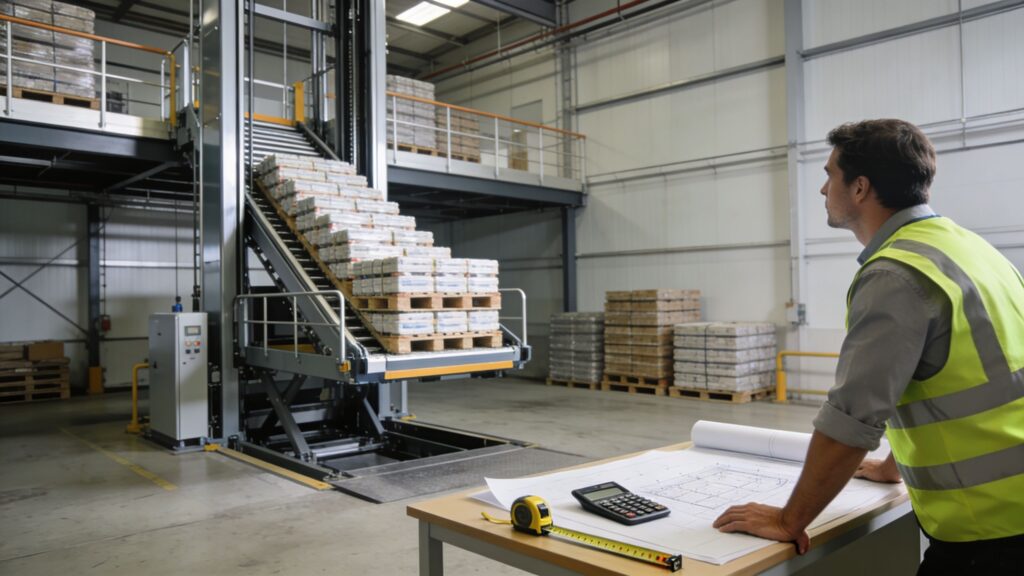
A commercial material lift project usually lands somewhere from $25,000 to over $100,000 all-in, depending on the lift type, the building conditions, and how much site work has to happen before the equipment ever arrives. Material lifts also sit inside a large, established vertical transportation market worth about 85.2 billion USD, with roughly 20 million elevators and escalators in operation worldwide according to Statista’s elevator and escalator market overview.
For More Info Call
734-726-4247
Or
Request Consultation
If you’re pricing one right now, you’re probably staring at a quote that looks simple on the surface and incomplete once you start asking real questions. The unit price might be clear. The total project price usually isn’t.
That gap causes most of the confusion. Owners think they’re buying a lift. In practice, they’re buying equipment, construction coordination, electrical work, permitting, testing, startup, and a maintenance obligation that will follow the lift for years. In Southern Michigan, local code interpretation, weather exposure, older building conditions, and access constraints all push the final number around.
Understanding the Full Cost of Material Lifts
Most material lift projects don’t get expensive because the platform goes up and down. They get expensive because the building has to be ready for that platform to operate safely, reliably, and legally.
A warehouse owner in Jackson, a hospital facility manager in Ann Arbor, and a school district in the Lansing area can all ask for “a material lift” and end up needing very different projects. One may need a simple low-rise hydraulic application. Another may need shaft work, door coordination, and access control tied into existing operations. A third may need the lift installed in a tight renovation footprint where every trade is working on top of each other.
The quote is only one part of the budget
The first number you get often reflects only the equipment package or only the installation scope. It may leave out electrical runs, hoistway construction, pit work, delivery coordination, permit handling, or final adjustments after inspection comments. That’s why two quotes can look far apart even when they’re not pricing the same job.
Practical rule: If the proposal doesn’t clearly separate equipment, site work, electrical, permits, and testing, you still don’t know your project cost.
Southern Michigan adds its own realities. Older industrial buildings around Detroit and Flint often need more prep than expected. Concrete can be uneven. Existing openings may not be square. Utility power may be available, but not where the lift contractor needs it. Municipal review timelines can also differ by jurisdiction, which affects labor scheduling and general conditions.
What owners should budget for mentally
The all-in range of $25,000 to over $100,000 is useful because it sets the right expectation before design starts. A basic application at the lower end is possible when the building already supports the layout and the lift requirement is straightforward. The upper end shows up when the project includes structural changes, finished-space coordination, custom gate or door conditions, or more involved compliance work.
What works is treating a material lift like a building system, not a piece of movable equipment.
What doesn’t work is comparing proposals by unit price alone.
A realistic budget conversation should account for:
- Equipment selection: Hydraulic, shaftless, VRC-style, or another configuration based on travel, load, and use.
- Building readiness: Pit, overhead, landing openings, electrical power, and code-compliant guarding.
- Installation conditions: Interior renovation, occupied facility scheduling, and access for rigging and delivery.
- Long-term ownership: Maintenance, wear components, inspection support, and future modernization planning.
tops being “What does the lift cost?” and becomes “What is the current method costing in risk, delay, and wear on the facility
Where material lifts make sense
Material lifts are often the smarter investment when the building has repeated vertical movement of goods and a predictable route between levels. Common examples include:
- Warehouses and light industrial buildings: Moving boxed inventory, parts, and supplies between floor levels without mixing that traffic with people.
- Healthcare and institutional facilities: Handling non-passenger material movement where control and consistency matter.
- Municipal and school buildings: Supporting maintenance operations, records storage, kitchen supply movement, or back-of-house logistics.
A lift pays for itself operationally when it removes a recurring workaround, not when it gets justified as a nice extra.
What works and what doesn’t
What works is matching the lift to the load and the traffic pattern. If the building has regular two-level material flow, a dedicated lift can reduce handling friction and make operations cleaner.
What doesn’t work is forcing a forklift, pallet stacker, or manual process into spaces with bad turning radius, shared pedestrian traffic, or awkward vertical movement. That approach usually looks cheaper only until someone tracks delays, near misses, product damage, or maintenance issues caused by using the wrong tool in the wrong place.
Owners also gain something less obvious. A properly designed lift project supports code compliance and serviceability from day one. That matters far more than a low quote that leaves you with a hard-to-maintain installation later.
Material Lift Types and Their Core Costs
The right lift type drives the rest of the project. If the technology is wrong, the quote may still look fine on paper, but the installation will fight the building and the maintenance plan will fight the owner.
Hydraulic systems are common in low-rise applications because they’re straightforward, durable, and well suited to many warehouse and service environments. Hydraulic material lifts are typically specified at 0.15 m/s (30 FPM) and can achieve 20,000 cycles mean time between failures in low-rise use when built with sturdy, non-proprietary components, based on the material lift spec reference on Scribd.
In plain terms, hydraulic works well when the lift doesn’t need to fly. It needs to move loads reliably, stop level, and hold up over time.
Hydraulic is usually a strong fit for:
- Low-rise warehouse movement
- Back-of-house commercial service
- Retrofit situations where simple service access matters
Geared traction and similar higher-complexity systems
Some buildings call for a more complex arrangement than a basic hydraulic setup. That can happen when travel, duty cycle, or building layout pushes the design in a different direction. These projects tend to involve more equipment complexity and more coordination with the building.
They can be appropriate, but owners should ask hard questions about service access, replacement parts, and whether the system locks them into one provider.
VRC and application-specific freight movement
In many industrial settings, owners compare material lifts against vertical reciprocating conveyor style solutions. These can be practical for moving goods between levels in controlled environments where passenger use isn’t part of the equation. The right answer depends on guarding, loading method, and how the building will use the system every day.
If you’re comparing categories, Crane Elevator’s overview of different lift types is a useful starting point for understanding where each system fits.
Before choosing a type, watch how a lift behaves in an actual working environment:
Shaftless and compact models
Shaftless and compact material lift configurations can solve very specific problems, especially in tight renovations or smaller commercial buildings. They can reduce some construction requirements, but they also come with limits on travel, enclosure conditions, and use case.
That trade-off matters. Less construction upfront can be attractive. It isn’t always the best long-term answer if the building’s handling needs are growing or if the application really belongs in a more sturdy enclosed system.
The cheapest lift category to install isn’t always the cheapest lift to own.
A good contractor should be able to explain not just how each type works, but where each type becomes a bad fit. That’s the conversation that prevents expensive corrections later.
A Detailed Line-Item Project Cost Breakdown
Most owners expect the unit itself to dominate the budget. Sometimes it does. Often it doesn’t.
Construction, electrical, permitting, coordination, and startup can take a modest equipment price and turn it into a much larger total project number. That’s normal. It’s also why the only quote that matters is the turnkey quote.
The main buckets in a real project
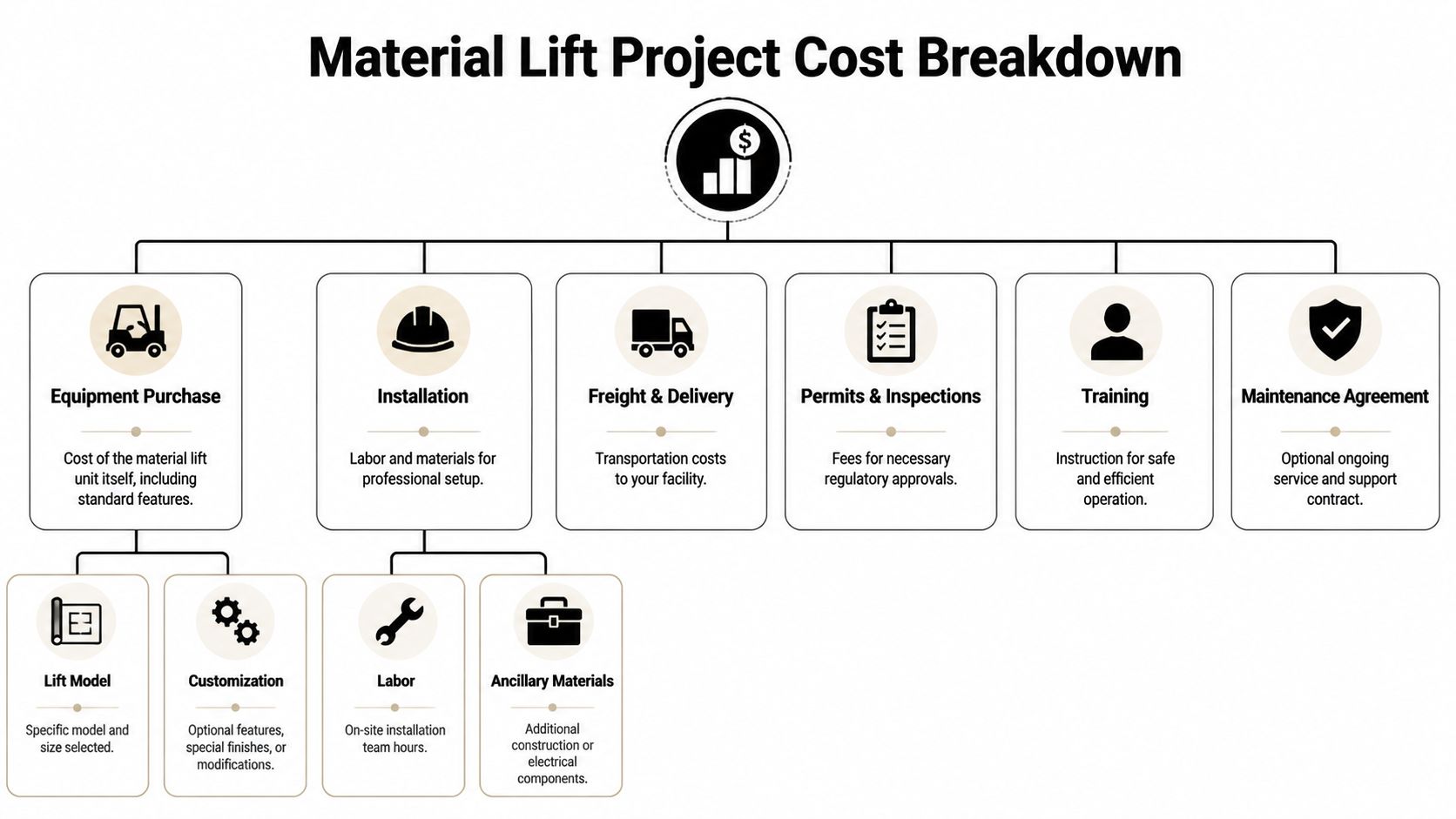
The final number usually comes from six practical categories.
- Equipment purchase: The lift itself, standard controls, platform or car, gates or doors, and any model-specific options.
- Installation labor: Field labor to unload, stage, assemble, align, wire, test, and adjust the system.
- Construction support: Hoistway framing, concrete work, pit preparation, wall modifications, guardrails, or landings.
- Electrical scope: Power feed, disconnects, conduit runs, control wiring coordination, and related electrical support.
- Permits and inspections: Submittals, plan review, local permit fees, state coordination where required, and inspection attendance.
- Freight, delivery, and closeout: Shipping, rigging access, operator training, and final documentation.
Sample cost allocation
The exact split changes by building, but this table gives owners a practical way to read a proposal.
| Cost Component | Percentage of Total Budget |
|---|---|
| Equipment Purchase | 35% to 50% |
| Installation | 20% to 30% |
| Freight & Delivery | 5% to 10% |
| Permits & Inspections | 5% to 10% |
| Training | 1% to 5% |
| Maintenance Agreement | 5% to 15% |
These percentages are planning guidance, not a universal formula. A simple installation in a ready building will lean harder toward equipment. A retrofit in an older facility may shift much more of the budget into prep work and labor.
Southern Michigan cost drivers
Local context matters more than many owners expect.
In Southeast Michigan, older industrial stock often means more field adjustment. Existing floor openings may not line up cleanly. Structural steel may need modification. Utility routing may be less convenient than the original walk-through suggested. In occupied buildings around Ann Arbor or Detroit, access windows can also be tighter, which stretches labor over more visits.
Permitting can also affect cost indirectly. The fee itself is only part of it. The bigger issue is the schedule effect if approval timing forces crews to remobilize or pushes work into a busier construction window.
If a contractor can't explain what happens when the existing conditions are worse than the drawings, the quote probably has a blind spot.
For owners comparing material lifts with more traditional heavy-duty options, it also helps to understand where a project begins to resemble a freight elevator installation rather than a simpler material-handling scope. That distinction changes both the budget and the compliance path.
Hidden costs that show up late
The most common surprises usually come from things that weren't clearly excluded or included.
- Building modifications: Wall openings, fire-rated assemblies, floor patching, and finish restoration.
- Access logistics: After-hours work, lift-gate delivery needs, indoor staging limits, or crane access.
- Inspection corrections: Small changes after authority review that still require labor and return trips.
- Operational safeguards: Barriers, signage, training, and lockout procedures for facility staff.
A clean quote doesn't just list a number. It shows where that number comes from, what assumptions were used, and what site conditions could change it.
What to Expect for Project Timelines and Disruption
Most owners don't just want a price. They want to know how long the building will be dealing with the project and how much normal work will be disrupted.
The honest answer is that material lift jobs are usually smoother when the planning is detailed early. The rough jobs are the ones where access, power, structural conditions, or operational restrictions get figured out in the field instead of before the schedule is set.
The project usually moves in phases
A material lift installation tends to break into four stages.
-
Design and permitting
The contractor confirms lift type, travel, openings, electrical needs, and code path. Submittals are prepared and reviewed. If the jurisdiction requests changes, that happens before field work starts. -
Site preparation
Many budget and timeline assumptions are tested during this phase. The building gets openings prepared, structural support confirmed, electrical rough-in coordinated, and site conditions made safe for installation. -
Equipment installation and testing
The actual lift arrives, gets set, assembled, wired, adjusted, and run through startup procedures. Any gate, interlock, or landing coordination gets checked here. -
Inspection and turnover
Final review happens, corrections are handled if needed, and the owner receives operating guidance and service recommendations.
What disruption actually looks like
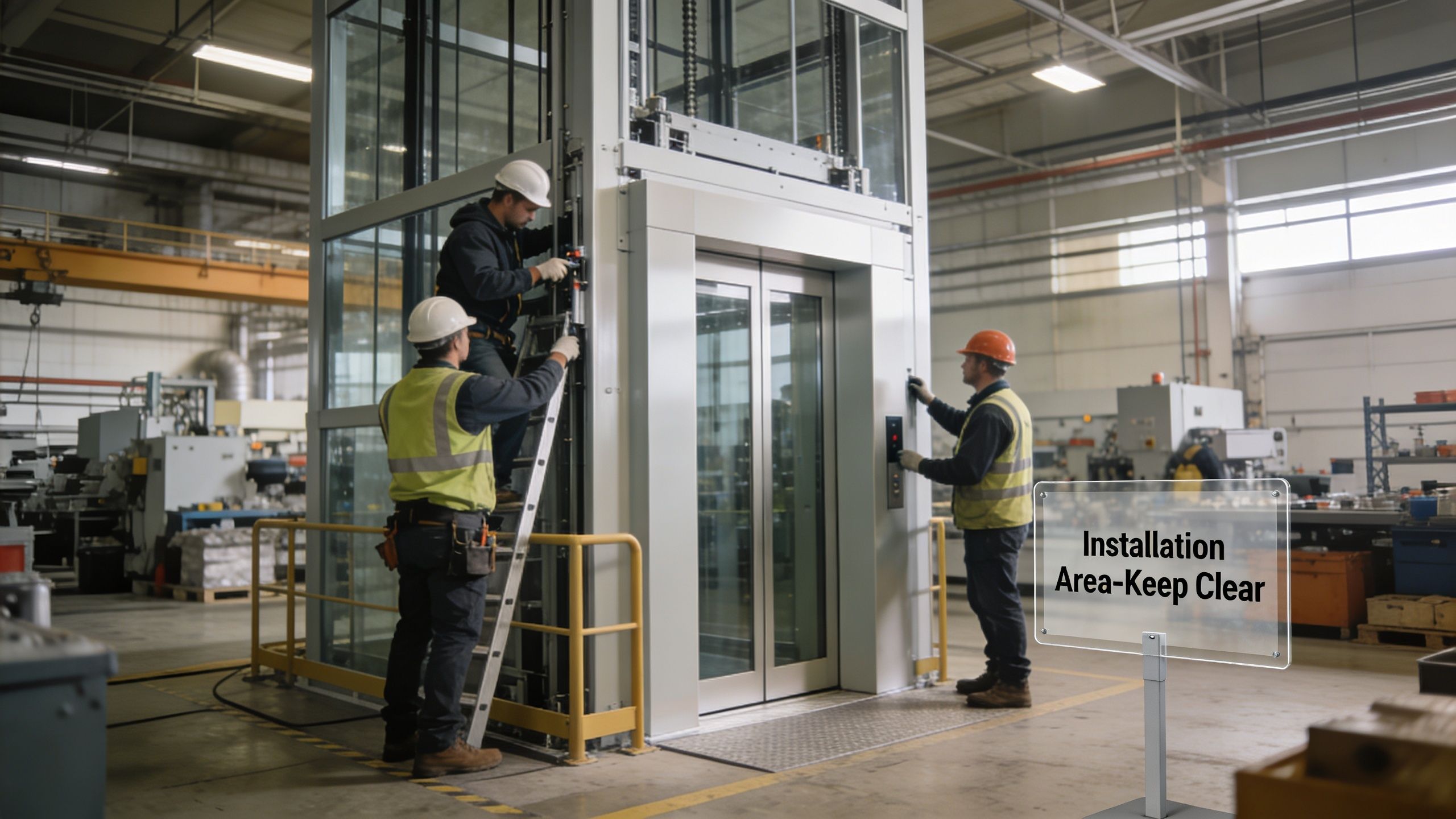
In an active warehouse or institutional building, the biggest disruption usually isn't noise. It's temporary loss of access, blocked pathways, and trade overlap.
That can be managed. Good sequencing helps a lot. So does being realistic about where equipment will be staged and how installers will move through the building. In occupied facilities, the cleanest jobs are the ones with clear work zones, a single point of contact on the owner side, and firm hours for shutdown-sensitive work.
What owners can do before work starts
Owners can reduce disruption by having a few things settled before mobilization:
- Confirm the load path: Know how material currently moves and what temporary workaround will be used during installation.
- Assign decision authority: One facilities contact should be able to answer field questions quickly.
- Review access windows: Loading docks, hallways, and secure areas should be scheduled, not improvised.
- Coordinate other trades: Electrical, framing, and concrete delays can hold up lift crews fast.
The installation itself is rarely the hardest part. Coordination is.
In Southern Michigan, weather can also affect staging, delivery timing, and exterior access, especially on projects that depend on open dock time or partial exterior work. That doesn't make the project risky by itself. It just means realistic scheduling beats optimistic scheduling every time.
Beyond Installation: Maintenance and Total Cost of Ownership
A low installation price can become an expensive ownership decision if the lift is hard to service, built around proprietary components, or left on a weak maintenance plan.
That's where owners need to slow down and think past the opening budget. Material lifts typically cost 40% to 60% less to install than freight elevators and can last 25+ years, according to Savaria’s material lift information. The catch is that many owners still don't get clear guidance on preventative maintenance, wear components, and long-range budgeting.
What total cost of ownership really includes
The long-term cost isn't just service calls. It's every decision that affects uptime and repair flexibility over the life of the lift.
A practical ownership view includes:
- Preventative maintenance: Regular visits, lubrication, adjustment, cleaning, and early detection of wear.
- Repair exposure: Cables, doors, interlocks, hydraulic components, switches, and electrical devices don't last forever.
- Downtime planning: A cheap repair that takes too long to source is not cheap.
- Modernization path: Controls and mechanical systems may need updating long before the full lift needs replacement.
Non-proprietary matters more than owners think
For many commercial buildings, the smartest choice is a system that qualified providers can service without being locked into one manufacturer or one service channel. That flexibility tends to improve response options and makes future repair decisions easier.
One local option is Crane Elevator’s industrial elevators and lifts service, which focuses on non-proprietary solutions and ongoing maintenance support across Lower Michigan. That model matters because serviceability is part of ownership cost, not a separate issue.
What works in the field
The lifts that age well usually have two things in common. First, the original installation was clean and properly aligned. Second, the owner kept up with maintenance before small issues turned into shutdowns.
What doesn't work is running the lift until something fails, then treating every repair as a surprise. That's how owners end up with more downtime, rushed part decisions, and repeated callbacks for problems that should have been handled in routine service.
A good maintenance plan should also include housekeeping around the equipment space. Dirt, moisture, debris, and neglected machine areas shorten component life and make troubleshooting harder. Owners often underestimate how much simple preventive attention affects long-term reliability.
Your Checklist for an Accurate Michigan Lift Quote
The fastest way to avoid hidden costs is to make every bidder answer the same detailed questions. If one contractor gives a short number and another gives a longer, more expensive proposal, the second one may be pricing the full job more accurately.
This is the checklist I’d use if I were reviewing quotes for a building in Southern Michigan.
Questions that expose missing scope
- What exactly is included in the base price? Ask whether the quote includes equipment, freight, installation labor, permits, electrical coordination, testing, and startup.
- Who handles building modifications? Find out whether hoistway work, opening prep, patching, and protection of adjacent finishes are included or excluded.
- Is the lift proprietary or non-proprietary? That answer affects who can service it later and how flexible your repair options will be.
- What assumptions were made about existing conditions? Older buildings often hide alignment, concrete, and access issues.
Questions that protect operations and safety
Industry guidance warns that improper handling of non-standard loads creates unnecessary safety risks, and there is still a knowledge gap around off-center picks and confined-space lifting conditions, which makes this a critical contractor discussion according to this guidance on lifting risks and eyebolts.
That means owners should ask directly:
- How do you evaluate off-center or irregular loads?
- What operating limits apply in tight spaces or enclosed lift paths?
- What training is provided to staff who will use the lift?
- How are interlocks, gates, and safety controls tested before turnover?
Questions about service after the install
Don't stop at warranty language. Ask what happens after the warranty period, how calls are handled, and whether maintenance is expected from the installing contractor only or from any qualified provider.
Ask for these items in writing:
- Service response expectations
- Recommended maintenance frequency
- Expected wear components
- Inspection and compliance support
- Documentation delivered at closeout
A good quote answers questions you haven't thought to ask yet. A weak quote gets cheaper by staying vague.
If you're comparing proposals and want a second set of eyes on the scope, ask for a line-by-line review instead of another one-page number. That's usually where the actual differences show up.
If you want a no-obligation second opinion on a material lift project in Southern Michigan, Crane Elevator Company can review your scope, help identify missing line items, and provide a competitive quote for installation, repair, or ongoing maintenance.