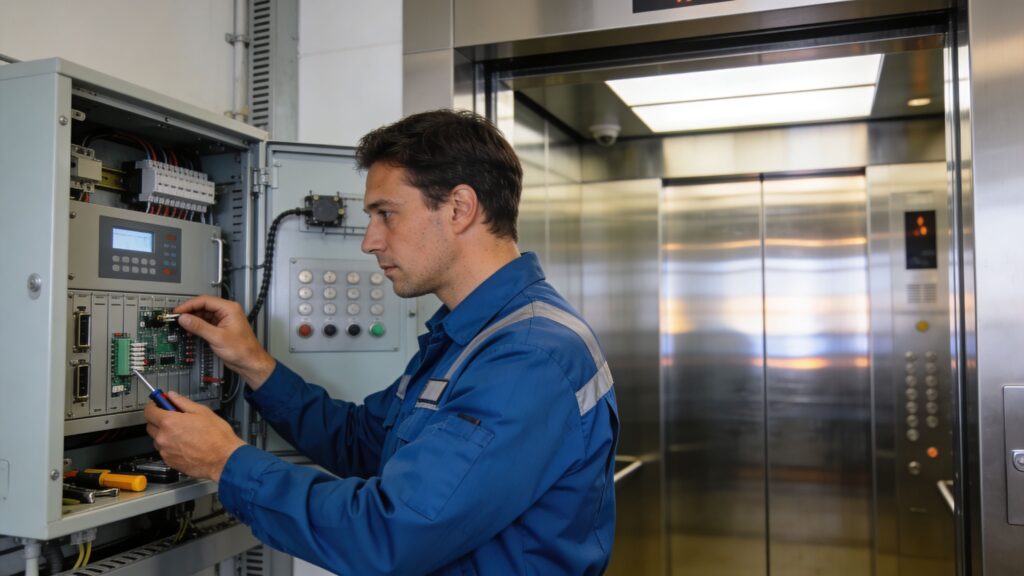
If you’re managing a building with elevator problems, you already know the actual cost isn’t limited to repair invoices. It shows up in tenant complaints, staff interruptions, delayed deliveries, accessibility issues, and the constant question from ownership: why does this keep happening?
That question gets sharper when you’re stuck with a system that only one manufacturer or one service chain seems able to touch. A shutdown turns into a waiting game. Parts take too long. Answers stay vague. The unit comes back online, then trips again a few weeks later. For many property managers, that’s the point where they start looking closely at the controller, because that’s usually where the service strategy either helps the building or works against it.
An mce elevator Control setup often enters the conversation at exactly that moment. Not because it’s trendy, but because it changes one of the biggest drivers of lifetime cost: who is allowed to service the equipment and how practical that service really is in the field.
Your Elevator Is Costing You More Than Just Money
A familiar scenario goes like this. One car in a medical office building starts faulting out during peak traffic. The current vendor resets it, replaces a few obvious parts, and the callbacks keep coming. Tenants stop trusting the elevator. Staff starts warning visitors which car to avoid. Management spends more time explaining the problem than solving it.

The repair bill matters, but the operational drag matters more. In a healthcare building, unreliable elevator service disrupts patient movement. In a school, it creates accessibility problems fast. In an apartment or condo setting, it turns into repeated resident complaints and board pressure. In an industrial building, it slows material flow and creates safety concerns around workarounds.
The hidden cost is loss of control
The biggest frustration usually isn’t one bad breakdown. It’s the feeling that the building owner has no control. If the system is proprietary, service options narrow. Competitive bidding gets harder. Troubleshooting often becomes parts swapping instead of fault isolation.
That changes the economics of every future service call.
Practical rule: If your elevator vendor can’t explain the root cause in plain language, you’re paying for uncertainty.
A good control system should help a qualified contractor diagnose, repair, and maintain the elevator without artificial barriers. That’s where MCE stands apart. For owners and managers, the issue isn’t whether the controller has a long feature list. The issue is whether the system supports dependable service over the life of the building.
What Is a Non-Proprietary MCE Elevator System
Motion Control Engineering was founded in 1983 and pioneered non-proprietary elevator control systems, growing into the largest independent supplier in North America with an installed base of approximately 200,000 units worldwide, according to this MCE industry history overview. That history matters because it explains the core value of an MCE elevator system: it was built around serviceability.
The controller is the brain, not the whole elevator
When property managers hear “MCE elevator,” they sometimes assume MCE built the entire elevator. Usually, what they’re really talking about is the controller, the dispatch logic, and the control architecture that coordinates the machine, doors, car calls, hall calls, safety inputs, and ride behavior.
That distinction matters in the field. The controller can be paired with other mechanical and electrical components, which means a qualified contractor can diagnose the whole system as a system, not as a sealed package that only one brand can touch.
A simple analogy helps. A proprietary elevator setup works a lot like a dealership-only vehicle with locked diagnostics and limited parts pathways. A non-proprietary setup works more like a well-supported commercial fleet platform. It still requires skill, but it doesn’t force the owner into one lane forever.
What non-proprietary means for the owner
For a building owner or manager, non-proprietary doesn’t mean “anyone can work on it.” It means any qualified provider can maintain it. That’s a major difference.
It gives you options such as:
- Competitive service bidding so you’re not trapped when pricing or performance slips
- Longer practical service life because the system isn’t designed around forced exclusivity
- Clearer modernization planning when you need to upgrade old relays, aging hydraulics, or worn traction controls
- Better accountability because a contractor can show settings, diagnostics, and component-level findings
MCE’s philosophy lines up with what building owners usually want but don’t always get: control over service decisions. That’s also why many owners researching non-proprietary elevator options end up focusing less on branding and more on maintainability.
An open service philosophy doesn’t eliminate elevator problems. It makes those problems easier to solve correctly.
Why this changes total ownership cost
The business case isn’t abstract. If your system supports qualified independent service, you’re in a stronger position every time you need maintenance, repairs, testing, or modernization. You can compare providers on competence instead of being cornered by access restrictions.
That doesn’t mean every non-proprietary job is automatically good. It means the owner has a better chance of getting a good result because the system itself isn’t fighting the service process.
Understanding Common MCE Controller Configurations
A property manager usually feels controller selection at the worst time. One car is down, tenants are complaining, and the service proposal on your desk has more brand language than useful answers. The controller choice affects more than ride performance. It affects who can service the elevator, how fast faults get diagnosed, and what your building will spend over the next 10 to 20 years.
Most MCE discussions in commercial buildings center on two controller families. Motion 4000 is typically used for traction applications. Motion 2000 is typically used for hydraulic applications. The right fit depends on traffic demand, building height, existing machine and door equipment, and how much of the current system you can keep without creating future service problems.
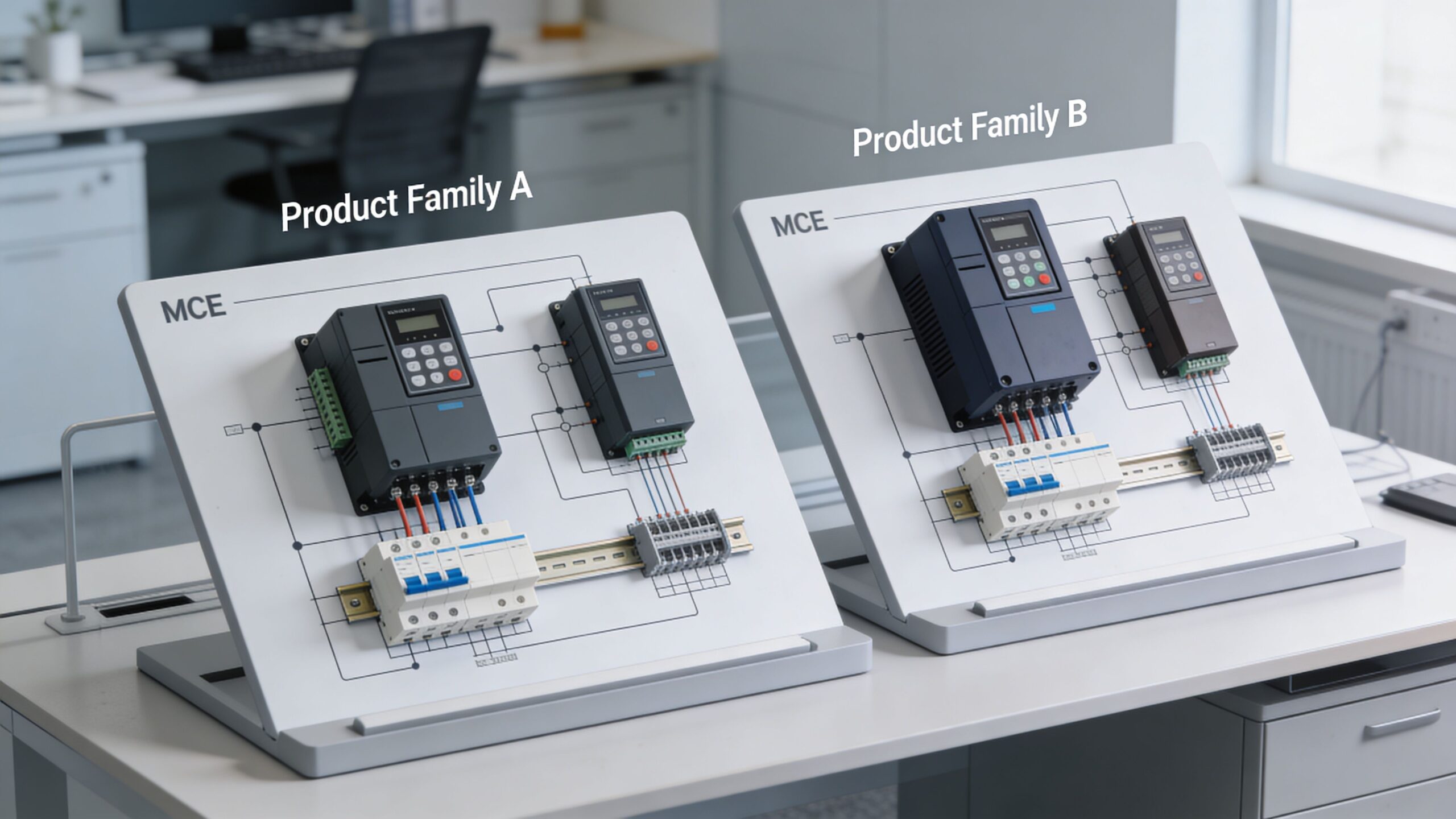
Motion 4000 for traction buildings
In a traction modernization, the controller has to do three jobs well. It has to manage motion cleanly, work with the existing field devices or their replacements, and stay serviceable after the installation crew leaves. That is where Motion 4000 often fits well in mid-rise commercial buildings.
The practical advantage is architecture. MCE’s traction platforms are designed around solid-state controls, clearer diagnostics, and less dependence on older discrete hardware arrangements than relay-era systems, as described in MCE product literature published by Nidec Elevator Group. For an owner, that usually means fewer odd legacy parts, cleaner fault tracing, and less time spent paying a mechanic to chase a problem through layers of outdated interface hardware.
A building manager should care about a few points:
- Cleaner troubleshooting path: Technicians can isolate whether the problem is in the controller, drive, door equipment, or field wiring faster when inputs, outputs, and fault history are organized clearly.
- Better fit for busier buildings: Traction systems are generally the right choice where ride quality and traffic flow affect tenant satisfaction and leasing performance.
- Lower long-term service friction: Standardized boards and documented setup tools matter after year five, when the original installer may no longer be your service company.
If you’re reviewing proposals, ask to see the actual elevator control panel modernization options and how the contractor plans to handle interfaces, not just the controller brand.
Motion 2000 for hydraulic buildings
Hydraulic buildings have a different cost profile. The issue is usually not top speed. It is floor-to-floor consistency, door timing, releveling behavior, heat, and how the controller works with an aging power unit and valve.
MCE’s hydraulic controller line is intended for low-rise applications, including simplex and duplex arrangements, according to the Motion 2000 hydraulic specification sheet. That makes it a practical option for medical office buildings, municipal properties, small apartment buildings, and older commercial sites where a full hydraulic replacement is not in the budget.
The business case is straightforward. A properly applied hydraulic controller can improve leveling performance and operating consistency, but it will not fix a worn valve, contaminated oil, poor door equipment, or a jack problem. Owners get the best result when the modernization scope addresses the controller and the supporting equipment that drives callbacks.
Here is the trade-off:
| Application type | Better fit | What managers usually care about |
|---|---|---|
| Mid-rise office, healthcare, education | Motion 4000 traction | Ride quality, traffic handling, cleaner troubleshooting, longer service life planning |
| Low-rise commercial, municipal, residential hydraulic | Motion 2000 hydraulic | Stable leveling, fewer nuisance shutdowns, practical retrofit cost |
Here’s a short visual that helps frame the difference in the field:
What works and what doesn’t
The right controller family should match the building’s actual duty and the condition of the equipment around it. A traction controller belongs in a building that needs traffic handling and ride quality. A hydraulic controller belongs where low-rise service, leveling stability, and modernization budget are driving the decision.
The expensive mistake is buying a controller as if it were a stand-alone fix. In the field, long-term cost comes from the whole package. Door operators, selectors, wiring condition, grounding, machine health, and code-required upgrades all affect whether the job stays reliable. A non-proprietary MCE modernization partner earns their value by scoping those items honestly up front, so you do not save money on bid day and lose it back in callbacks, shutdowns, and avoidable change orders.
Common MCE Reliability Issues and Maintenance Needs
MCE systems are serviceable, but they aren’t immune to neglect. Most recurring problems aren’t mysterious. They usually trace back to contamination, loose or aging field connections, grounding issues, door equipment problems, bad adjustment history, or component drift in an older installation.
Failures usually start outside the brochure
The first mistake many teams make is assuming a control issue always starts in the controller. In real buildings, the trigger is often somewhere else. A door lock issue can look like a controller problem. Electrical noise can create erratic behavior that wastes hours if grounding wasn’t handled correctly. A dirty machine room or pit can turn minor wear into repeat callbacks.
This is especially true in buildings where several vendors have touched the equipment over the years. Parameter changes get made without documentation. Temporary fixes become permanent. Small housekeeping failures build into hard-to-trace operating faults.
Most “unreliable elevators” are really a stack of unresolved small issues that nobody closed out properly.
The maintenance work that actually helps
A useful maintenance program for an MCE elevator system isn’t just a monthly walkthrough. It should include disciplined field tasks that reduce nuisance shutdowns and preserve adjustment quality.
That usually means:
- Full clean-downs: Machine rooms, pits, and car tops need to stay clean enough that debris doesn’t interfere with sensors, moving parts, or electrical components.
- Controller review: Settings, fault history, I/O status, and communication behavior should be checked by someone who understands what normal looks like.
- Door system attention: Many shutdown complaints begin with doors, not motion control. Rollers, locks, operators, and related inputs need regular inspection.
- Basic wear items: Burned-out COP or PI lamps, loose terminals, aging relays, and failing interface parts should be handled before they become callbacks.
- Hydraulic observation: On hydraulic units, slow drift, rough leveling, oil condition, and heat-related behavior need to be tracked, not ignored.
Compliance and reliability go together
Property managers often separate “maintenance” from “compliance,” but elevator service doesn’t work that way. Code-required inspections, testing, fire service functions, emergency phones, and violation corrections all intersect with controller behavior.
If the system is dirty, poorly grounded, or out of adjustment, passing an inspection gets harder and emergency repairs get more expensive. A contractor who understands MCE equipment should be able to connect those dots early, before a minor operating issue turns into downtime, tenant frustration, and a compliance problem at the same time.
How Crane Elevator Troubleshoots MCE Controllers
Troubleshooting MCE controllers is where experience starts to matter more than generic familiarity. The fact that MCE is non-proprietary doesn’t mean every technician will diagnose it well. It means the system gives a qualified specialist a fair shot at reaching the underlying cause without artificial barriers.
A good MCE diagnostic process doesn’t start with parts ordering. It starts with pattern recognition. Is the shutdown tied to door cycling, a specific landing, temperature, load condition, or a particular time of day? Does the fault history support the complaint, or is the field condition telling a different story?
That matters because an intermittent shutdown can come from several very different causes:
- a field input dropping out
- an I/O issue
- a communication problem
- bad grounding
- an integrated third-party component behaving inconsistently
- a parameter mismatch after earlier service work
The best troubleshooters move from evidence to isolation. They don’t jump from symptom to replacement.
Hydraulic MCE problems are where generalists get stuck
One of the more difficult MCE fault patterns shows up in hydraulic systems. Persistent relevelling problems can continue even after a valve block rebuild, and those faults often trace back to integration issues or incorrect pilot and spool adjustments that standard manuals don’t walk through, as discussed in this industry forum thread on MCE-Bucher relevelling issues.
That kind of call is expensive when handled poorly. A generalist may rebuild the same components again, chase the wrong electrical signal, or miss a mixed mechanical-control interaction. A specialist looks at the control side and the hydraulic side together.
Field advice: When a hydraulic elevator keeps relevelling after major valve work, stop assuming the rebuild failed. Check the integration, adjustment logic, and feedback chain.
What a specialist actually does differently
A contractor that knows MCE equipment well will usually combine controller diagnostics with physical inspection and adjustment verification. That includes reviewing fault logs, checking live inputs and outputs, confirming setup parameters, verifying grounding quality, and testing the associated door, motion, or hydraulic components under operating conditions.
The difference is discipline. Instead of replacing boards because the elevator is down, the technician asks what proof supports the board as the failed item. Instead of blaming “the controller,” the technician checks whether the controller is reacting correctly to a bad field condition.
For building owners, that’s the practical value of MCE expertise. The repair has a better chance of solving the actual problem once, instead of restarting the callback cycle.
Upgrading to an MCE System A Smart Modernization
A modernization decision usually lands on your desk after months of nuisance shutdowns, tenant complaints, and repair invoices that are getting harder to defend. The controller may still be running, but the elevator is no longer cheap to own. That is the point where smart owners stop looking only at bid price and start looking at total cost of ownership.
The comparison should be service freedom versus service lock-in
A proprietary upgrade can solve one problem while creating another. The equipment is new, but future service options stay limited, parts channels stay controlled, and pricing pressure on the maintenance side stays weak.
A non-proprietary MCE modernization changes that equation. It gives the building a current control platform that more qualified independent providers can support. That matters long after turnover, because every callback, annual test, repair visit, and contract renewal is affected by how open or restricted the system is.
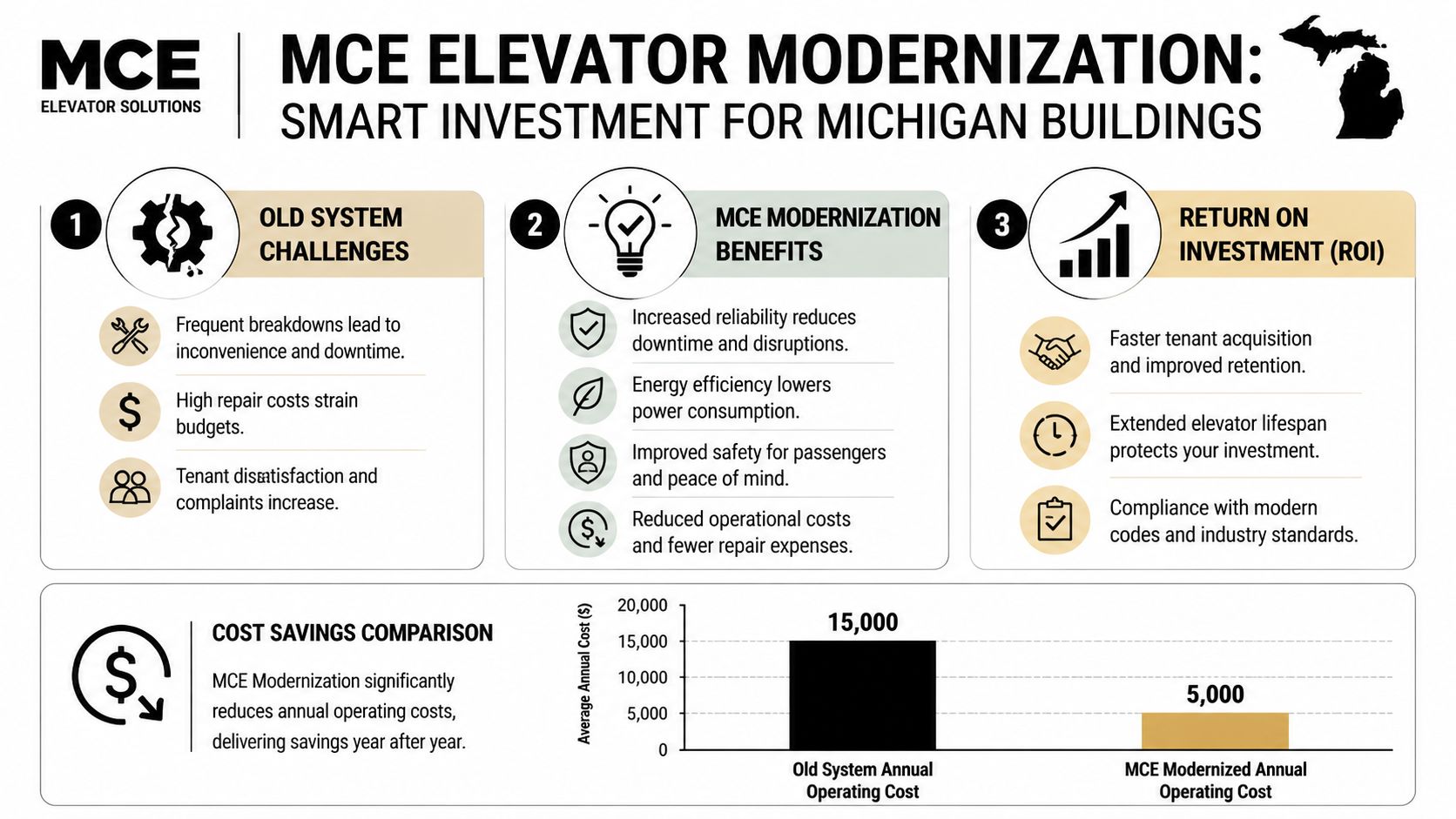
Owners comparing upgrade paths often review commercial elevator modernization options because the controller choice shapes service flexibility, future bidding, and how expensive the next ten years will be.
Installation quality determines whether the savings show up
I have seen good control packages blamed for problems caused by poor installation. Bad grounding, dirty cabinets, weak wire terminations, and unresolved door issues will follow a modernization if the contractor treats the job like a board swap instead of a system upgrade.
MCE training material puts plenty of attention on grounding, clean-down work, and maintenance discipline for a reason. Those details affect reliability, nuisance faults, and board life. For a property manager, that translates into fewer callbacks, less tenant disruption, and a better chance that the modernization performs like it was sold.
A lower-priced upgrade can become the expensive option if startup is rushed and field conditions are ignored.
What to evaluate before you sign
If an MCE modernization is on the table, review the proposal the same way you would review any other capital project that has to perform for years:
- Defined scope: The proposal should clearly show what is being replaced, what remains, and what existing equipment must be integrated.
- Electrical conditions: Grounding, incoming power quality, and machine room condition should be addressed before startup problems get blamed on the new controller.
- Door operator and field device condition: Old door equipment, selectors, travel cables, and limit devices can keep generating service calls after the controller is replaced.
- Documentation and turnover: The contractor should provide final prints, parameters, and adjustment records that make future service practical.
- Post-installation service plan: Someone needs to own the warranty period, call review, and follow-up adjustments after the job is accepted.
- Code and testing readiness: The modernization should support inspection, required testing, and reliable operation under normal building traffic.
Why MCE often makes business sense
MCE often fits buildings that want to reduce long-term service friction without giving up control of future maintenance decisions. The benefit is not just technical. It is financial. Owners usually get a better position when they rebid service, approve repairs, or push back on questionable recommendations because the system is not tied to a single manufacturer service channel.
That flexibility has value. It helps control labor pricing over time, shortens the path to qualified service, and reduces the risk that a simple repair turns into a sole-source event.
For many commercial properties, that is what makes an MCE modernization a smart move. It is a practical way to improve reliability, protect compliance, and lower ownership cost without trading one aging problem for a new form of vendor lock-in.
Your Partner for MCE Service and Modernization
An mce elevator system is a smart fit for owners who want service flexibility, practical modernization options, and a controller platform that qualified providers can maintain. But the controller alone doesn’t guarantee a good outcome. The result depends on diagnosis, installation quality, preventive maintenance discipline, and whether the contractor understands how MCE behaves in real buildings.
Crane Elevator Company is built for that work. The company specializes in troubleshooting MCE controllers, handling proactive maintenance, difficult repairs, code-required testing, and non-proprietary modernization across Lower Michigan. That includes the kind of detailed field work owners usually need most: clean-downs, root-cause troubleshooting, hydraulic and traction repairs, and responsive support when recurring issues need more than a reset.
If your building is dealing with repeat shutdowns, unresolved MCE faults, or an aging control system that needs a practical upgrade path, contact Crane Elevator Company for a free second opinion or a competitive quote. They provide 24/7/365 service, MCE troubleshooting expertise, and modernization support designed to lower long-term ownership cost without locking you into a proprietary future.