A tenant calls and says the elevator gave a slight jump at the landing. Another person says the cab didn’t line up perfectly with the floor in the morning. Maintenance wipes off some dust in the machine room and the complaints go quiet for a week.
That’s how brake problems often enter the conversation. Not as a dramatic shutdown, but as a small change in feel.
For a building manager, that matters for three reasons. First, passenger confidence drops fast when an elevator feels rough, even if it’s still running. Second, the brake system sits directly inside your safety and compliance picture. Third, minor brake issues are usually cheaper to diagnose early than to deal with after a shutdown, entrapment, failed test, or emergency repair call.
Modern elevators are very safe. The passenger fatality rate stands at approximately 0.00000015%, which is one reason elevators are considered one of the safest forms of transportation, according to PSEC's elevator safety overview. But that safety record doesn’t come from luck. It comes from engineering, testing, and consistent maintenance.
That "Slight Jump" When the Elevator Stops
A bumpy stop changes how people judge the whole building. Tenants may not know what a brake coil is or how spring tension affects stopping performance, but they know when the ride no longer feels normal.

In practice, that slight jump can point to several different conditions. Brake wear is one possibility. So is contamination on braking surfaces, improper adjustment, drift in electrical release behavior, or a machine that’s compensating for a brake that no longer applies cleanly and consistently.
Why small symptoms matter
The mistake many owners make is treating ride quality complaints as cosmetic. They’re often operational clues.
A brake system that’s beginning to degrade may still pass casual observation. The elevator runs. Doors open. People get where they’re going. But the signs usually show up before a major failure:
- A rough stop at one floor but not another can indicate inconsistent braking behavior under different load or travel conditions.
- Leveling that seems slightly off may reflect more than a controller issue. The brake may not be holding or releasing as cleanly as it should.
- A brief rollback sensation at startup often deserves immediate attention, especially on traction equipment.
Practical rule: If tenants notice a change in stopping feel, don’t wait for the next scheduled complaint. Treat it as an early service trigger.
The business side of the problem
Neglect doesn’t stay mechanical. It turns into tenant frustration, manager time, emergency dispatches, failed inspections, and avoidable pressure to approve rush repairs without enough options.
A good elevator brake service program protects more than hardware. It protects scheduling, budgeting, and liability control. It also gives your contractor a chance to catch wear patterns while replacement choices are still broad, instead of forcing a same-day decision around whatever part can be found first.
That’s the difference between managing an asset and reacting to it.
What Are Elevator Brakes and Why Are They Critical
An elevator brake isn’t like a car brake in the way most non-technical people assume. In a car, the driver applies braking force when needed. In an elevator, the brake is designed to be fail-safe. That means it’s engaged by default and released when the system energizes it.
That design principle goes back to Elisha Otis. The fail-safe concept dates to his 1854 invention, which automatically engaged if the hoisting cables failed, according to Metro Elevator's history of elevator safety. That shift made passenger elevator use practical in taller buildings because braking no longer depended on a person reacting at the right moment.
How the brake actually works
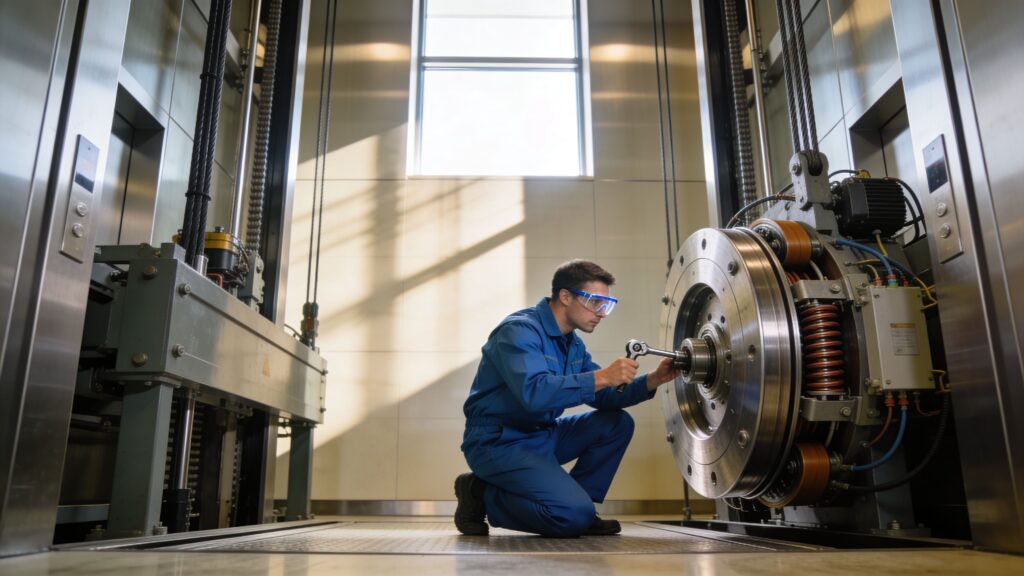
On most traction elevators, the brake assembly works with the machine that drives the ropes and sheave. When power is applied correctly, the brake releases and allows motion. When power is removed, springs force the brake into engagement so the machine stops and the car is held in place.
The main parts usually include:
- Brake shoes or pads that create friction against a braking surface
- Springs that supply the holding force
- Electromagnet coils that release the brake when energized
- Levers, linkages, or plungers that translate electrical release into mechanical movement
If you manage both hydraulic and traction units, the brake conversation usually applies more directly to traction systems. This overview of traction and hydraulic elevator differences is useful because the service approach, wear points, and modernization path can differ by system type.
Why fail-safe design matters
This isn’t just a technical distinction. It affects diagnosis and risk.
If a brake is fail-safe, then poor performance can come from either side of the equation. It may not be applying with the right force, or it may not be releasing cleanly. Those are different faults, and they produce different ride symptoms. One leads to slippage or creeping. The other can create drag, heat, noise, and rough travel.
The safest brake is not the one that only works in an emergency. It’s the one that applies and releases correctly every day, under normal traffic, without drift.
Common brake styles a manager may hear about
You may hear technicians refer to drum brakes or disc brakes. The exact style matters less to an owner than the practical service implications:
| Brake type | What it means for the owner |
|---|---|
| Drum brake | Older and still common in many traction applications. Wear, dust, adjustment, and surface condition matter. |
| Disc brake | Often associated with newer designs and different component layouts. Still depends on clean release, pad condition, and correct testing. |
What matters most is not the label. It’s whether the contractor understands the assembly on your specific machine, uses correct measurements, and documents what changed over time.
Warning Signs Your Elevator Brakes Need Attention
Most brake problems don’t begin with a shutdown. They begin with a pattern. One complaint, then two. A strange stop after lunch traffic. Dust where there wasn’t dust before. A machine room smell that no one can quite place.
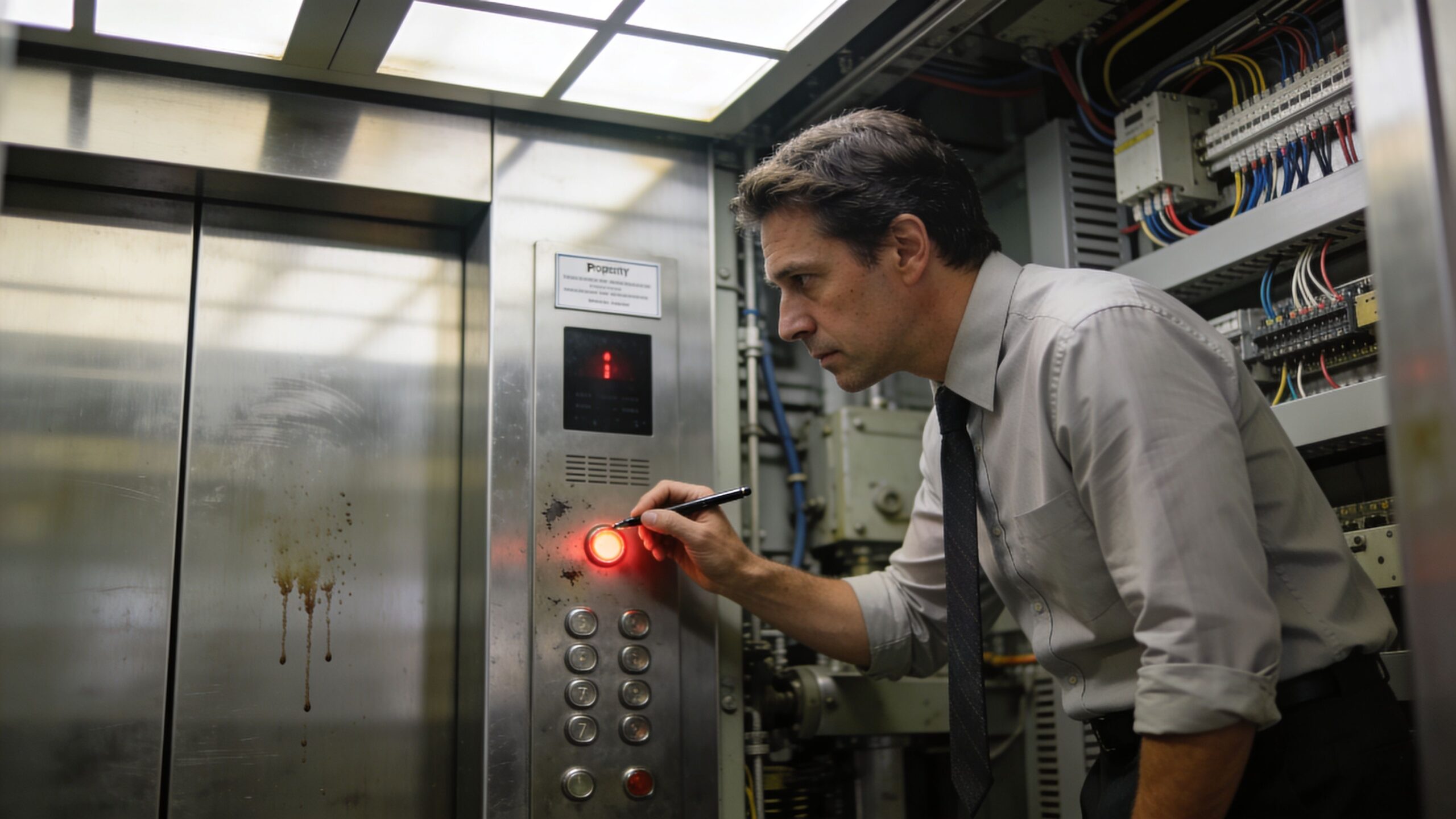
If you’re responsible for a commercial building, it helps to separate obvious warning signs from the quieter ones that get missed.
The signs people usually notice first
These are the complaints that reach the office fastest:
- Grinding or squealing during stopping or release
- Uneven leveling at the landing
- A stop that feels abrupt compared with the elevator’s usual ride
- Visible brake dust around machine components
- Intermittent rollback or creep at startup or landing
None of those symptoms prove a single fault on their own. But they all justify inspection. Waiting for a complete failure is a poor maintenance strategy because by then you’re not evaluating. You’re triaging.
The quieter issues that cause repeat service calls
The most overlooked brake problems are often tied to gradual component decline. Spring fatigue and coil decay are good examples. They don’t always create a dramatic event right away. Instead, they create inconsistency.
According to AFLY Elevator's brake maintenance guidance, measuring brake spring deflection can reveal fatigue, with a 1 to 2 mm loss indicating 20 to 30% fatigue. The same source notes that proactive diagnostics such as coil resistance testing can identify creeping issues that account for 15 to 20% of service calls, and that these checks can reduce unplanned downtime by up to 40% in commercial buildings.
That’s useful because it turns “the elevator feels a little off” into a measurable maintenance decision.
Here’s a short video that helps show why brake behavior deserves close attention during service and troubleshooting.
What to tell your staff to watch for
Building teams don’t need to diagnose brakes. They do need to report symptoms clearly.
Ask staff to record the floor, time, load condition, and exact behavior. “Jerks on down travel at mid-day” is more useful than “elevator acts weird.”
A simple observation checklist works well:
| What staff notices | Why it matters |
|---|---|
| Cab stops below or above floor level | Could point to holding or stopping inconsistency |
| Smell of overheating in machine room | May suggest drag or friction problems |
| Cab hesitates before moving | Can reflect delayed release or control interaction |
| Complaint happens only with heavier loads | Helps separate random noise from load-related brake behavior |
The goal isn’t to turn your team into mechanics. It’s to catch patterns early enough that elevator brake service stays planned instead of becoming urgent.
What Happens During a Professional Brake Service
A real brake service visit should look like a methodical inspection and adjustment process, not a quick glance followed by a signature on a ticket. If your invoice says “checked brakes,” you should expect that to represent actual measurements, testing, cleaning, and documentation.
The service visit, step by step
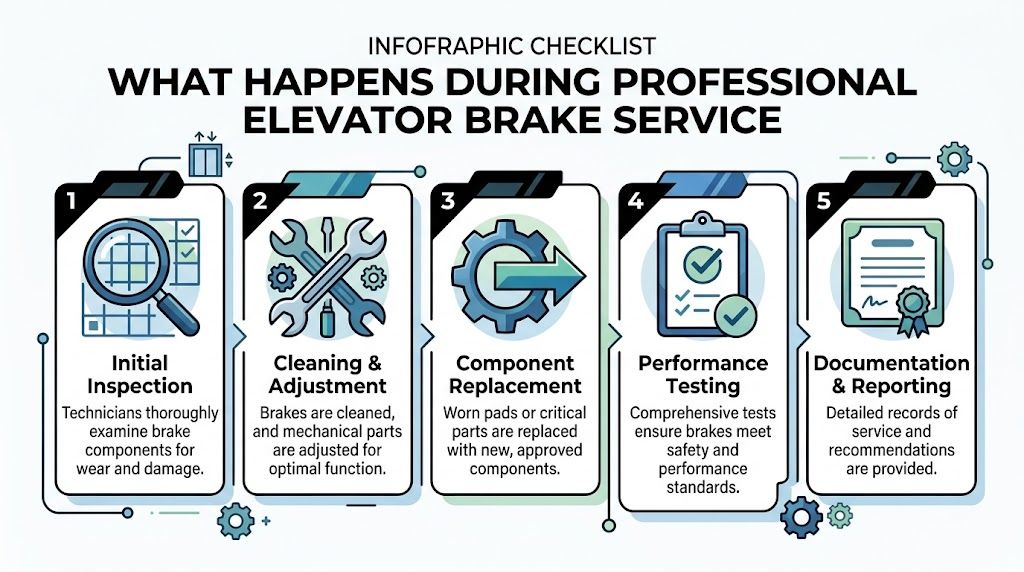
A qualified technician typically works through a sequence like this:
Initial inspection
The technician examines the brake assembly for wear, contamination, heat marks, looseness, damaged wiring, and signs of uneven contact.Cleaning and adjustment
Brake dust, debris, and residue are removed from relevant areas. Then the technician checks and adjusts components such as air gaps, linkages, and release behavior where the equipment design allows.Component replacement if needed
Worn linings, pads, springs, coils, or related hardware may need replacement. Good practice means using approved parts and matching them correctly to the machine and brake assembly.Performance testing
This can include static holding checks, release verification, and running tests to confirm that stopping is smooth, repeatable, and aligned with safe performance.Documentation and recommendations
The building should receive a clear record of what was inspected, what was adjusted, what was replaced, and what should be watched next.
Why each part of the service matters
Cleaning isn’t cosmetic. Brake dust buildup can interfere with inspection, trap contamination, and hide developing wear. Adjustment isn’t routine knob-turning either. If the brake air gap or release point drifts out of range, the elevator may still run while producing rough stops, extra heat, or holding issues.
Replacement decisions deserve nuance. Replacing a visibly worn part is straightforward. The harder judgment is whether to replace components preventively when measurements show drift but the unit hasn’t failed yet. That’s where experienced technicians save owners money over time. They know when a part can safely remain in service, and when “it still works” is the wrong standard.
What a good service report should include
Many owners never see enough detail after elevator brake service. That creates confusion later when a problem returns.
A useful report usually answers these questions:
- What condition were the brake surfaces in
- Were any measurements taken
- Was the release action normal
- Were springs, coils, or linkages showing signs of decline
- Did the technician recommend follow-up before the next test cycle
Field judgment: The value of brake service isn’t just the repair made today. It’s the record that helps the next technician understand what changed since the last visit.
When a contractor can show the progression of wear and adjustment over time, budgeting gets easier and surprises become less common.
Michigan's Elevator Brake Inspection and Testing Rules
For Michigan owners, brake service isn’t separate from compliance. It sits inside it. If your elevator is due for required testing, the brake system is part of the conversation whether you planned for it or not.
That’s one reason owners should understand the testing calendar, the equipment condition behind it, and the modernization choices that may become smarter than repeated repair.
Where brake service meets code
Michigan owners often hear about Category 1, 3, and 5 testing, but the practical issue is simpler. If the brake system isn’t performing correctly, testing can expose that fact at the worst possible time. That means a failed test, a violation, a repeat visit, and extra disruption.
If you need a practical overview of test planning and what owners should expect, this page on elevator testing in Michigan is a useful reference point.
Brake maintenance also connects to older equipment strategy. A building can spend years patching a legacy brake assembly, only to discover that the smarter path was an earlier modernization using accessible, non-proprietary components.
The emerging issue with older traction elevators
One of the most important trends for older traction equipment is the move toward dual-plunger brake assemblies for added redundancy. According to Liberty Elevator's review of brake code compliance, stricter 2025 to 2026 safety code updates are driving retrofits on older elevators, and the upgrade can reduce overrun risks by as much as 35%.
For owners, the key point isn’t just the number. It’s the planning implication. If you have older traction equipment, brake service should include a candid conversation about whether continued repair still makes sense.
A practical compliance mindset
Code compliance works best when you treat brake service as part of asset planning, not just a repair line item.
Consider the difference:
| Reactive approach | Proactive approach |
|---|---|
| Wait for failed test or shutdown | Inspect, measure, and trend brake condition in advance |
| Replace only what has already failed | Budget for staged upgrades when wear patterns justify it |
| Stay tied to hard-to-source assemblies | Evaluate non-proprietary modernization paths where possible |
| Handle code issues under deadline pressure | Address compliance before scheduling becomes urgent |
Older elevators rarely become cheaper to manage when the brake system starts aging out. They become more schedule-sensitive.
That matters in Michigan facilities with freight use, healthcare traffic, municipal demand, or educational buildings where downtime creates operational headaches beyond the machine room.
How to Choose the Right Elevator Brake Service Contractor
Most owners don’t need to know how to set brake air gaps or evaluate coil behavior firsthand. They do need to know how to tell a serious contractor from a vendor that only looks organized when the elevator is already down.
A strong elevator brake service contractor should make your risk lower, your records clearer, and your long-term options better.
Questions worth asking before you sign
Ask direct questions. The quality of the answers tells you more than the sales sheet.
Do you work with proprietary or non-proprietary solutions?
Proprietary setups can limit who can service your equipment later. Non-proprietary options usually provide owners with more control over pricing, future service choices, and modernization planning.What do your brake service records show?
Ask for a sample maintenance log or service report. If the paperwork is vague, the field process may be vague too.How do you handle recurring brake complaints?
A good answer includes trending, measurement, root-cause work, and follow-up. A weak answer jumps straight to “replace parts and see what happens.”What’s your plan when older brake assemblies start becoming a code or reliability problem?
You want a contractor that can explain repair, retrofit, and modernization paths without forcing a single expensive option.
What good answers sound like
A reliable contractor usually speaks in specifics. They’ll describe what they inspect, what they measure, how they document findings, and how they escalate recommendations. They won’t hide behind broad statements like “we’ll keep an eye on it.”
They should also understand your building type. A hospital, warehouse, apartment tower, and municipal building don’t use elevators the same way. Brake service planning should reflect traffic, load patterns, operating hours, and downtime sensitivity.
If you’re vetting local providers, this overview of a Detroit elevator company serving commercial properties shows the kind of service scope and regional familiarity owners should look for when comparing contractors.
Red flags that deserve caution
Some warning signs are easy to miss during bidding:
- Thin documentation that doesn’t identify actual brake work
- Overreliance on emergency repair instead of preventive scheduling
- No clear modernization path for aging traction equipment
- Parts conversations that feel opaque or overly restrictive
- Little interest in your inspection calendar or compliance exposure
Contractors earn trust when they explain trade-offs forthrightly. Sometimes repair is the right move. Sometimes it isn’t. The wrong contractor makes every problem look like a rush job. The right one helps you decide early, while choices are still open.
Partner with Crane for Proactive Elevator Safety
Brake service is one of those areas where owners pay either way. You can pay in a planned, documented, manageable way. Or you can pay through emergency downtime, failed testing, repeat callbacks, tenant complaints, and rushed decisions.
For Michigan buildings, the best results usually come from a proactive maintenance mindset. Inspect the brake assembly before symptoms become disruptions. Track recurring ride quality issues. Keep records that show what changed. Use modernization strategically when repairs stop making financial sense.
That approach matters even more if you manage older traction elevators, mixed equipment across multiple sites, or facilities where downtime affects operations immediately.
Crane Elevator Company serves Lower Michigan with a preventative maintenance model built around reliability, responsiveness, and non-proprietary solutions. Their team handles maintenance, repairs, code-required testing, modernization, violation correction, and emergency response across commercial, residential, and specialty lift applications. They also offer financing options that can make larger safety and modernization work easier to schedule instead of postponing it until the equipment forces the issue.
If your elevator has started stopping rough, drifting at landings, or showing signs that brake performance is changing, now is the right time to get a second opinion and a clear plan.
If you need practical help with elevator brake service, testing, repairs, or modernization in Lower Michigan, contact Crane Elevator Company for a free second opinion, a competitive quote, or a maintenance assessment built around long-term asset protection.