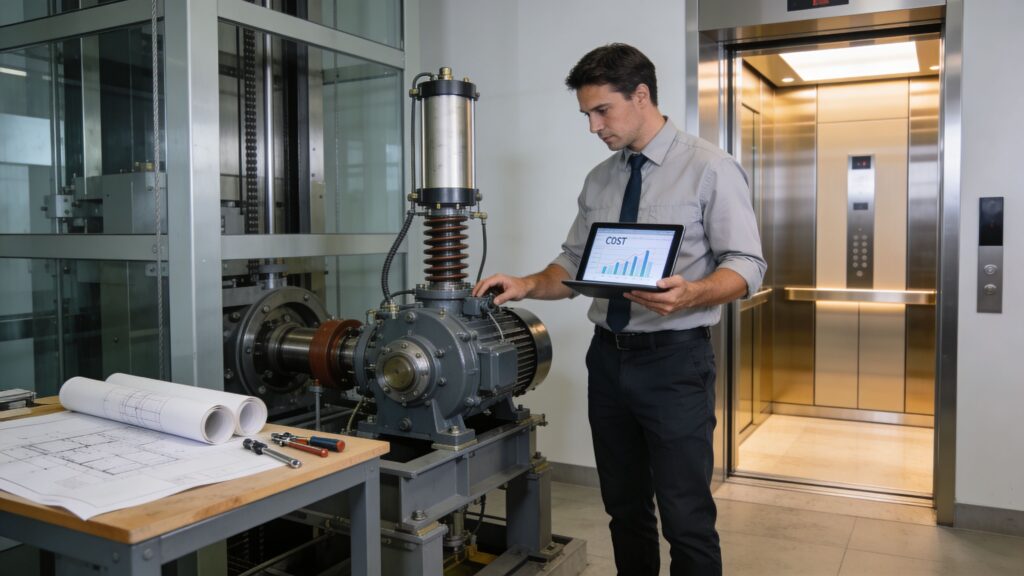
A full hydraulic elevator modernization cost in Michigan usually falls between $120,000 and $400,000+, while a major targeted upgrade like cylinder replacement alone typically runs $80,000 to $100,000. If you're managing an older low-rise building in Southern Michigan, the main question usually isn't just “what does modernization cost?” but “which parts need to be replaced, and which ones can still earn their keep?”
That’s the spot many property managers are in right now. The elevator still runs, but it’s slower than it used to be. Doors hesitate. Tenants complain. Service calls start stacking up. The car looks dated, the controller may be obsolete, and every repair starts to feel like throwing money at an aging system without a plan.
In Southern Michigan, that gets expensive fast. Labor conditions, building access, and local project realities can swing quotes more than owners expect, especially in and around Detroit, Ann Arbor, Lansing, and other busy markets. A lot of online guides skip the part that matters most to owners writing the check. They lump everything into one big number and leave you guessing which components are driving the cost.
That’s a mistake.
The practical way to price a hydraulic modernization is to look at it component by component. A smart modernization isn’t always a gut job. In many low-rise buildings, the best value comes from replacing the parts that are obsolete, failure-prone, or inefficient while retaining the parts that are still structurally sound and serviceable. That’s where owners can protect their capital budget and avoid getting locked into unnecessary future costs.
Is It Time to Modernize Your Hydraulic Elevator
A typical call starts the same way. The building manager says the elevator still works, but everyone’s tired of dealing with it. The doors reopen for no clear reason. The ride feels rougher. The fixtures look old. The maintenance log keeps growing. Nobody wants to shut the unit down, but nobody wants another year of unpredictable repairs either.
That’s usually the point where modernization becomes a business decision, not just a maintenance issue.
For low-rise commercial, residential, healthcare, and municipal buildings, hydraulic units often stay in service for a long time. That’s good news and bad news. The good news is the core system may still be worth keeping. The bad news is owners can live too long with outdated controls, worn door equipment, and aging hydraulic components because the elevator hasn’t completely failed yet.
What property managers usually notice first
The first warning signs are rarely dramatic. They’re operational.
- Recurring service calls: The same issues keep coming back, especially around doors, leveling, or controls.
- Tenant complaints: People may not know what part is failing, but they know the elevator feels unreliable.
- Appearance mismatch: The lobby gets updated while the cab still looks stuck in another decade.
- Vendor frustration: Parts are hard to find, lead times get longer, or you're hearing that existing equipment is no longer easy to support.
Those issues don’t all require a full overhaul. Some do. Some don’t. The hard part is knowing the difference.
A hydraulic elevator can be old without being a full replacement candidate. Age matters, but condition matters more.
Why this matters in Southern Michigan
In this region, many buildings use hydraulic elevators because they fit low- to mid-rise properties well. That includes office buildings, medical offices, schools, churches, apartments, and municipal facilities. If that sounds like your portfolio, the better approach is to understand your options before another failure forces a rushed decision.
If you’re comparing system types or maintaining older low-rise equipment, this overview of hydraulic elevator applications and service considerations helps put modernization in context.
A rushed project usually costs more. The owner has less room to compare scope, less influence on equipment choices, and less chance to retain components that still have useful life left. Planned modernization gives you options. Emergency modernization usually takes them away.
Understanding the Typical Modernization Price Range
The broad range is real because “modernization” can mean very different scopes. At one end, you may be replacing a single critical component. At the other, you may be rebuilding nearly every working part of the system except the hoistway structure.
What the big numbers actually mean
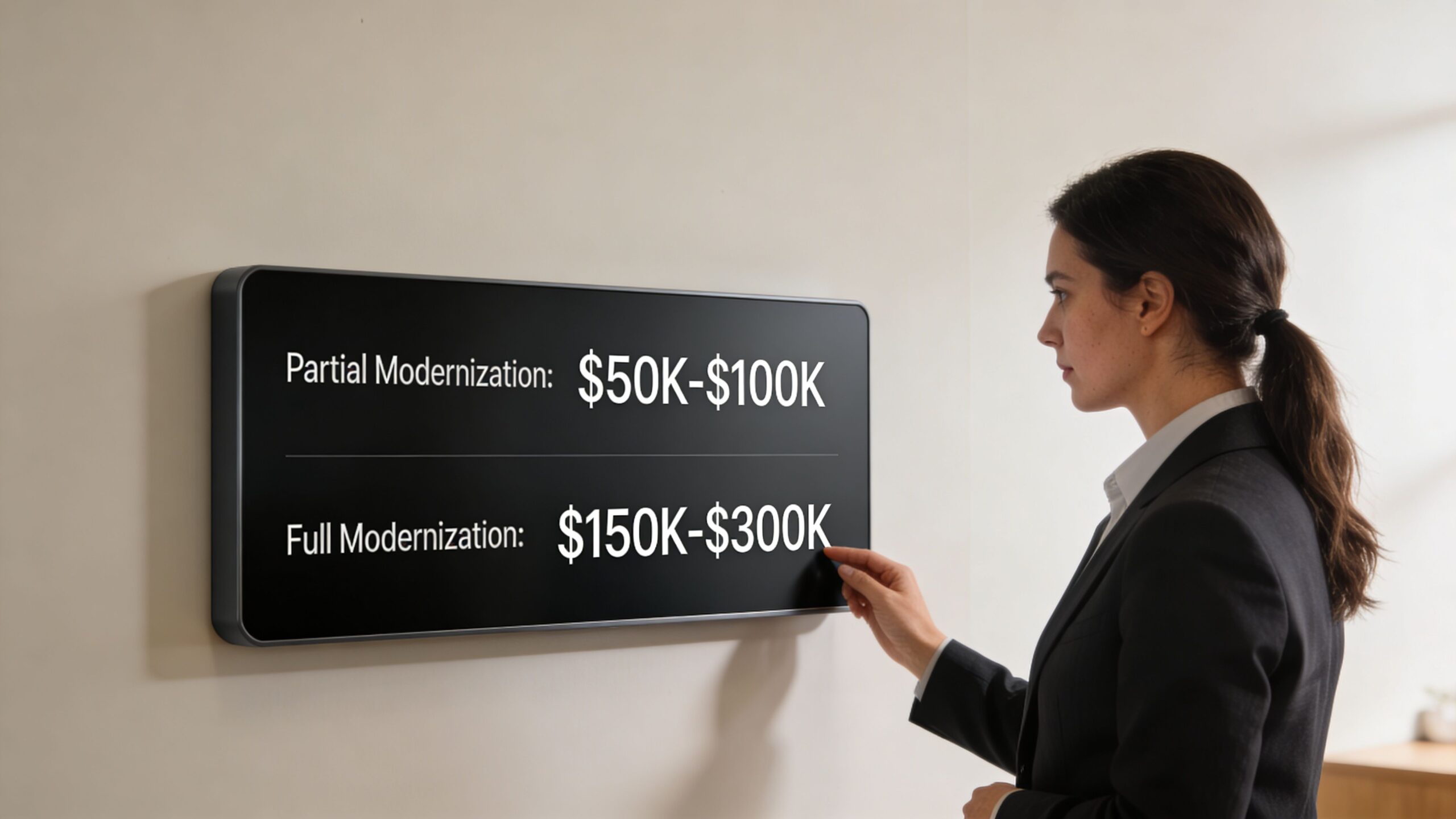
For Michigan owners, the headline number to plan around is this: full hydraulic elevator modernization costs can range from $120,000 to $400,000+, while cylinder replacement alone typically costs $80,000 to $100,000. Projects near major metros like Detroit can also see 15% to 25% premiums tied to labor, access, and site conditions, according to this hydraulic modernization cost breakdown.
That range sounds wide because it is. A basic low-rise project with manageable access and a limited scope lands in a very different place than a building with obsolete controls, difficult machine room conditions, code-related work, and multiple related upgrades bundled together.
Partial modernization versus full modernization
Here’s the practical distinction property managers need:
| Project type | What it usually means | Budget impact |
|---|---|---|
| Targeted modernization | Replace selected problem components while retaining sound major parts | Lower total project cost |
| Full modernization | Replace controller, door operators, safety systems, and other aging equipment as a package | Higher upfront cost, broader reset |
| Single major component replacement | Address one expensive item such as the cylinder | Can still be a large capital project |
A lot of frustration comes from owners hearing “you need modernization” when what they really need is a careful scope definition. That’s why line-item clarity matters more than labels.
For a broader local look at elevator modernization cost planning in Michigan buildings, it helps to compare full-package budgeting with selective upgrades before requesting final proposals.
If two contractors use the word “modernization,” they may still be proposing very different jobs.
Why quotes can differ so much
Two similar-looking buildings can receive very different proposals. One quote may assume retention of sound hydraulic components. Another may assume replacement by default. One may include cosmetic work. Another may focus only on the operating system. One may price around straightforward access. Another may account for difficult staging, restricted machine room conditions, or tighter labor conditions.
That’s why the first useful question isn’t “why is your price lower?” It’s “what exactly are you replacing, and why?”
A Detailed Breakdown of Modernization Costs
A proposal makes more sense once you separate the system into major parts. For hydraulic elevators, the cost centers usually aren’t evenly distributed. A few line items carry most of the budget, and those are the ones owners should review closely.
One of the biggest is the controller. Within a modernization project, controllers can cost between $50,000 and $70,000, and hydraulic modernization can be 20% to 30% less expensive upfront than traction modernization because major parts like pistons and jacks may be retained, as outlined in this hydraulic market and modernization analysis.
The line items that usually matter most
Think of a hydraulic modernization quote in layers. The control system handles logic and operation. The power unit drives the hydraulic side. Door equipment affects everyday reliability more than most owners expect. Then there are the visible finishes and the building-side items that support the job.
| Component / Service | Typical % of Total Cost | Notes for Michigan Property Owners |
|---|---|---|
| Controller | High | Often one of the largest drivers in the proposal. If parts are obsolete, this can move from optional to necessary quickly. |
| Power unit | Low to moderate | Can be a targeted upgrade if the rest of the system is still serviceable. Efficiency and ride quality both matter here. |
| Door operators and door equipment | Moderate | A common source of callbacks. If the elevator is “always acting up,” doors are often part of the story. |
| Cylinder or jack-related work | High | This is where budgets can jump sharply. If replacement is required, the job stops being a small project. |
| Cab interior and fixtures | Variable | Often owner-driven rather than function-driven. Good to separate from core operating work when budgeting. |
| Machine room and electrical coordination | Variable | Access, housekeeping, wiring condition, and related building work can all affect price. |
| Safety-related upgrades | Variable | Some are straightforward. Others can expand scope depending on the age and condition of the system. |
Those percentages are best treated as directional, not universal. Every building shifts the mix.
How to read a proposal without getting lost
When reviewing a quote, focus on three questions:
What problem is each line item solving?
If a contractor can’t explain that clearly, the scope may be padded or poorly developed.Is this item obsolete, failed, or just old?
Those aren’t the same thing. Plenty of old components still pass a sound inspection and don’t need automatic replacement.Can the component be retained without creating a future service trap?
Retention only makes sense if the part remains safe, reliable, and supportable.
If you’re weighing the mechanical side of the project, this overview of hydraulic power unit modernization and replacement work is useful because it isolates one of the most misunderstood parts of the quote.
Where owners often overspend
Owners usually overspend in one of two ways. First, they approve a broad replacement scope without challenging whether each retained component was properly evaluated. Second, they chase the cheapest number and end up keeping parts that should have been addressed while the system was already open.
The right middle ground is selective. Replace what drives breakdowns, obsolescence, poor performance, or code risk. Retain what still has real service life and won’t lock you into repeat problems.
The most expensive quote isn’t always the most thorough. The cheapest quote isn’t always the best value. The useful quote is the one that explains the scope in plain language.
Key Factors That Drive Your Final Project Cost
The final number doesn’t come from one part. It comes from the interaction between the equipment, the building, and the scope. That’s why two hydraulic jobs with the same number of stops can still price very differently.
The biggest pricing variables
Some cost drivers are obvious. Others don’t show up until the site visit.
- Age and technology type: Older relay-based or hard-to-support equipment usually pushes modernization scope upward.
- Access conditions: Tight machine rooms, difficult staging, and busy occupied buildings add labor complexity.
- Scope definition: A selective update prices very differently than a blanket replacement package.
- Code-related work: Safety upgrades can be simple or can pull in related components.
- Equipment philosophy: Proprietary selections can affect both today’s cost and tomorrow’s service flexibility.
The last point matters more than many buyers realize. A lower initial price tied to closed equipment can become a more expensive system to maintain later if only one provider can reasonably support it.
The power unit is a good example of cost versus value
Some upgrades pay their way better than others. A power unit modernization costing $3,500 to $6,000 can deliver a 3-year payback at $0.12/kWh Michigan commercial electricity rates, and pre- and post-upgrade data showed a 40% reduction in peak energy demand, according to this hydraulic power unit analysis.
That matters because not every modernization dollar produces the same return. Some work is defensive. It prevents failure or handles obsolescence. Other work improves ongoing operating cost.
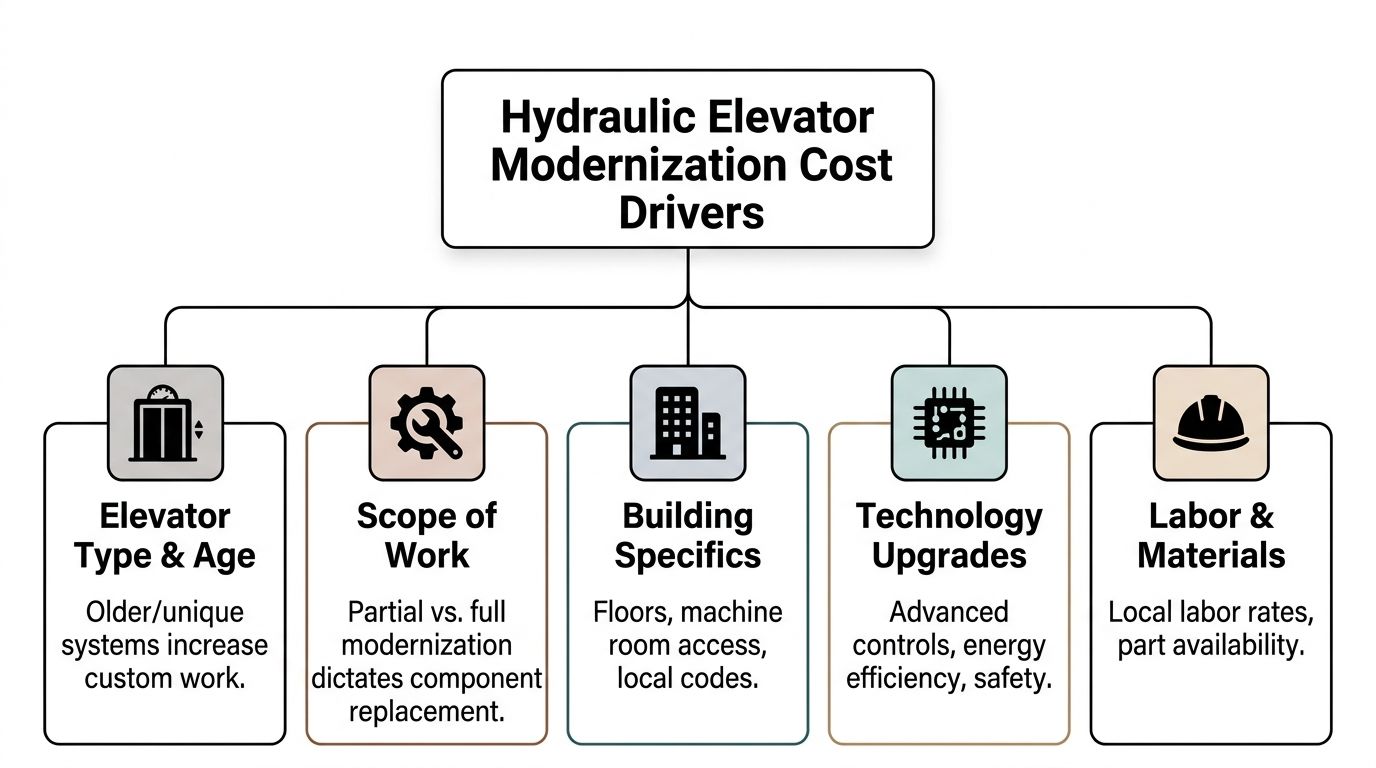
Five questions to ask before accepting a number
Elevator age and originality
If much of the original system is still in place, the contractor may be pricing around limited parts availability and higher labor time. Older one-off configurations usually create more field adaptation.
Scope of work
Replacing only what’s weak is different from rebuilding the package. Owners should insist on knowing which parts are being retained and why.
Building specifics
A clean, accessible machine room in a lightly occupied building is simpler than a cramped room in an active healthcare or municipal property. The building can make a straightforward elevator job harder.
Technology upgrades
Modern controls, power unit improvements, and updated safety devices can improve operation and supportability. They also add scope, and the owner should decide which upgrades are strategic versus cosmetic.
Labor and materials
Southern Michigan projects can vary based on market conditions, union environments, site logistics, and how easily equipment can be delivered and staged.
Practical rule: If a proposal doesn’t separate unavoidable cost drivers from elective upgrades, you can’t evaluate it properly.
What works and what doesn’t
What works is a quote built around the actual condition of the elevator and the building. What doesn’t work is copying a standard modernization package from another property and assuming it applies cleanly to yours.
That’s especially true when the building wants a non-proprietary path. If you want future service flexibility, parts access, and the ability to avoid being boxed into a single vendor, equipment selection should be part of the price discussion from day one.
How to Maximize ROI with Strategic Upgrades
A property manager gets two modernization numbers for the same hydraulic elevator, and one is $25,000 higher. In many cases, the difference is not better planning. It is scope. One proposal replaces nearly every major component. The other takes the time to identify what can stay in service safely and what is costing the building money through callbacks, downtime, or parts trouble.
Retention is where many owners either save money or overspend
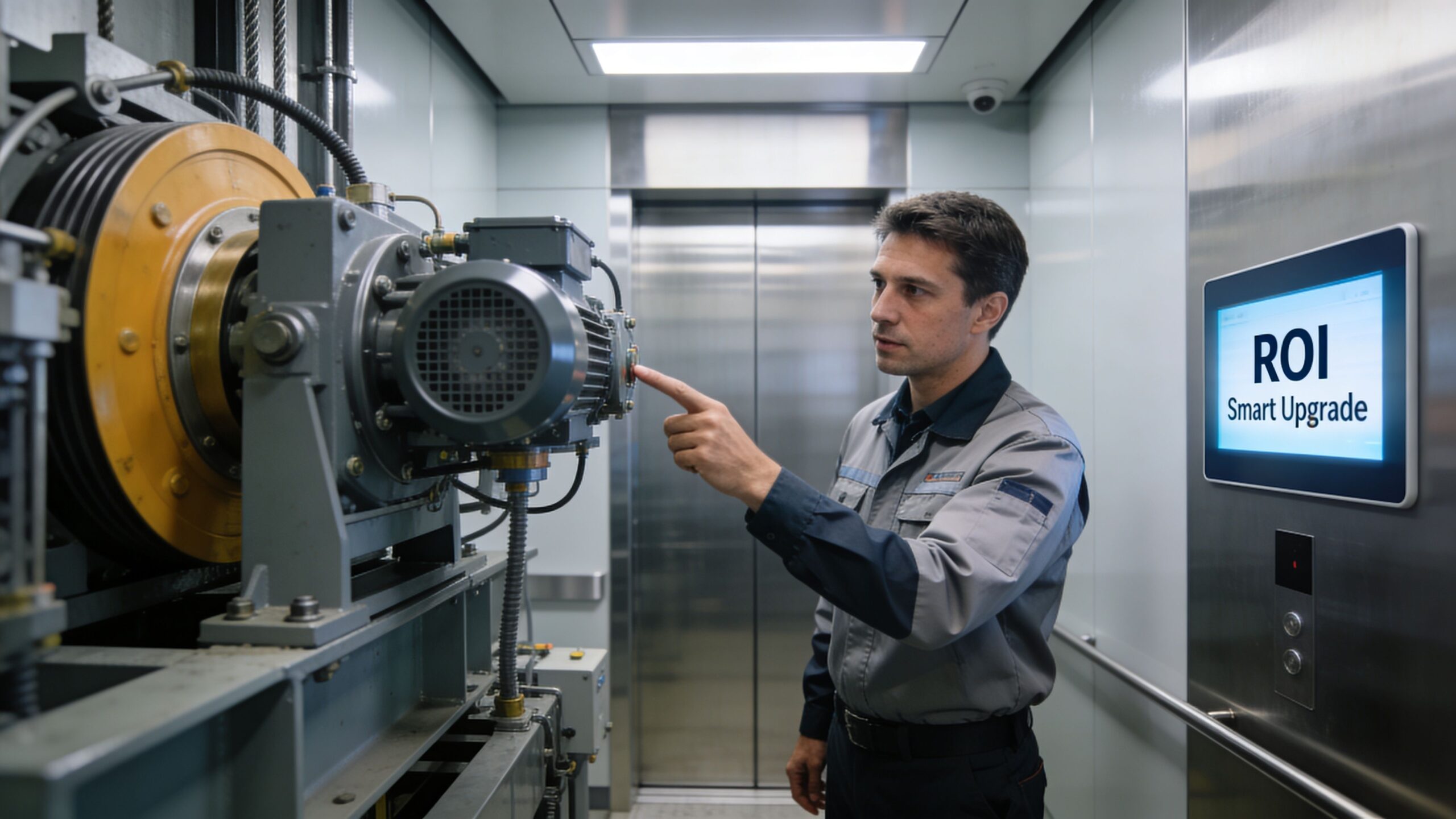
The highest ROI usually comes from a component-by-component decision, not from a full gut by default. That means checking the cylinder, jack, rails, cab structure, sling, machine room condition, door equipment, controller, power unit, and valve as separate cost decisions.
That level of review matters. A pricing guide published by Hosting Elevator notes that retaining a serviceable hydraulic cylinder can avoid a major replacement cost, and that poor retention decisions can push owners into unnecessary spending during modernization, based on their component-retention pricing review.
That does not mean "keep everything old." It means retain what still has service life, replace what is creating risk, and stop paying for work that does not improve reliability or supportability.
What a strong ROI approach looks like
Good modernization planning is disciplined. It usually has these traits:
- It fixes the components causing service calls first: door operators, controllers, valves, and power units often affect day-to-day reliability more than cosmetic items.
- It separates worn components from merely older components: age alone is not a scope decision.
- It protects future service flexibility: non-proprietary equipment can reduce long-term pricing pressure and parts access problems.
- It prices cosmetic work separately: interiors and finishes may be worth doing, but they should not hide the operating scope.
In Southern Michigan, owners often ask for a second opinion before approving a broad replacement package. Crane Elevator Company provides non-proprietary modernization, repair, maintenance, inspections, and second-opinion evaluations for all makes and models. That kind of review is useful when a building wants to know which parts are at the end of their useful life and which parts are old.
Keep the components still earning their place. Replace the ones driving shutdowns, obsolescence, or vendor lock-in.
Upgrades that usually earn their keep
Some upgrades pay back in fewer nuisance calls and easier long-term service.
Updated door equipment is high on that list. In older hydraulic elevators, doors are often the source of repeat complaints, stuck calls, and tenant frustration. Controls are another strong candidate. If the existing controller is hard to support or tied to outdated logic, replacement can reduce troubleshooting time and improve parts availability. A power unit upgrade can also make sense when the current unit is noisy, inefficient, or contributing to leveling issues.
This short video gives a useful field-level view of how upgrade decisions get made in practice.
Upgrades that often weaken ROI
A full replacement package with no clear retention logic is one of the most common budget drains. If the rails, cab shell, sling, or cylinder are in serviceable condition, replacing them anyway can add a lot of cost without giving the building much operational benefit.
Bundling cosmetic improvements into a reliability project can create the same problem. A new interior looks good, but it does not solve poor door performance, recurring valve issues, or obsolete controls.
Proprietary equipment can also hurt long-term value if the owner is not choosing it for a specific reason. What saves a little time during procurement can limit service options later.
The best modernization result is not the biggest scope. It is the one that cuts callbacks, keeps future service options open, and avoids replacing expensive components that still have years left in them.
Your Modernization Project Timeline and Process
A modernization project feels less disruptive once you know the sequence. Owners usually worry about downtime first, but confusion about process is often the bigger stress point. The clearer the roadmap, the easier it is to plan around occupancy, tenant communication, and budgeting.
What usually happens first
The job begins with a site survey and scope review. That includes looking at the controller, door equipment, hydraulic components, machine room condition, and anything in the building that could affect installation.
After that, the contractor develops a proposal. Owners should expect plain answers within this proposal on what’s being replaced, what’s being retained, and what building-side work may be required. Once scope is approved, permitting, equipment release, and scheduling follow.
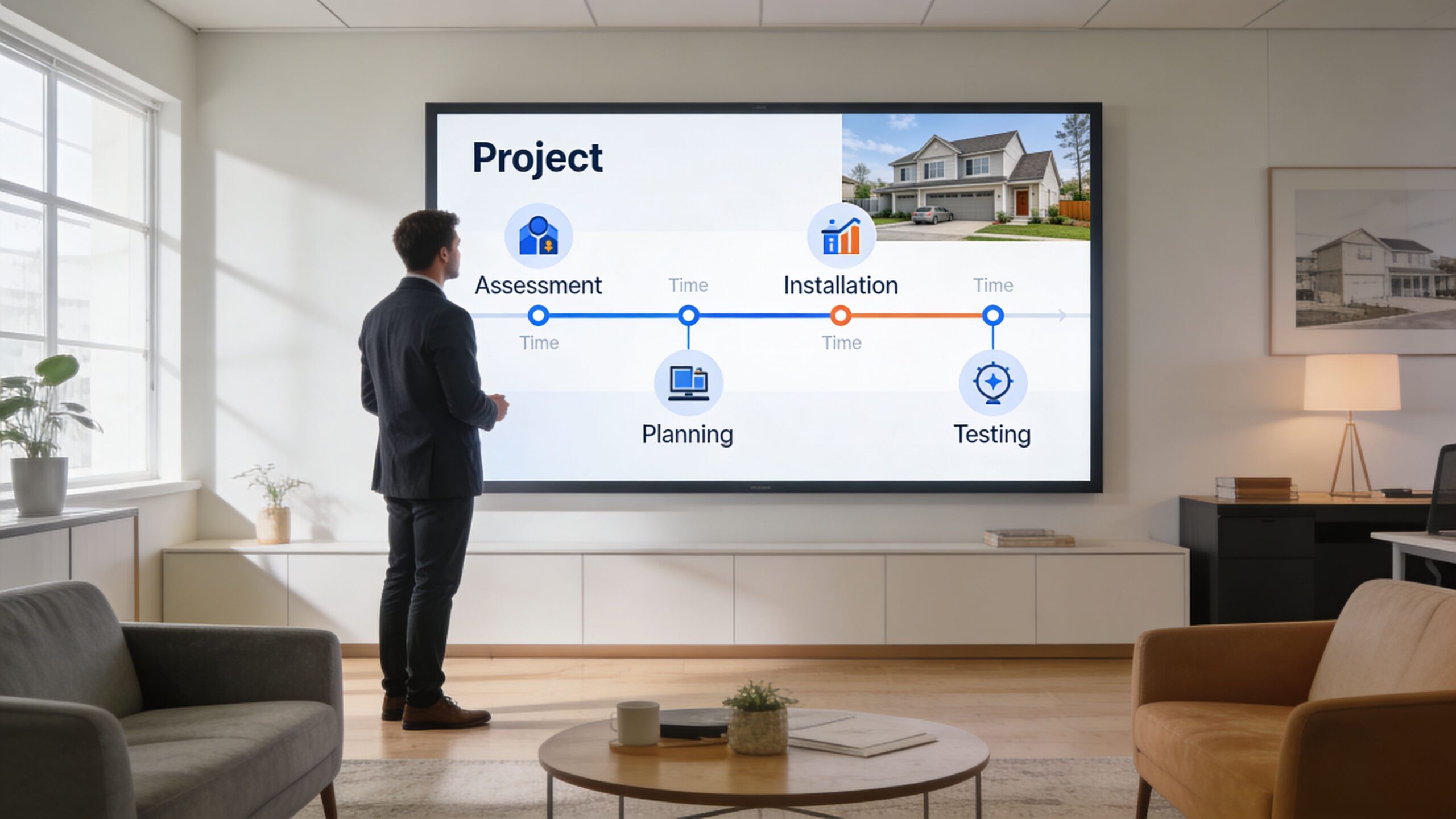
The project usually moves through these stages
Site assessment and documentation
The contractor checks existing equipment condition, identifies obvious scope drivers, and confirms whether selective retention is realistic.Proposal and scope alignment
Good proposals separate must-do work from elective upgrades. This is the point to remove cosmetic items if the budget needs to stay focused on reliability.Permits, submittals, and equipment ordering
Long-lead equipment can affect scheduling, so owners should ask early what parts control the timeline.Installation phase
This is the visible construction window. Coordination with building operations matters here, especially in occupied properties.Testing, inspection, and turnover
The system gets finalized, adjusted, and prepared for inspection before returning to normal service.
Owners should ask one scheduling question early: “What could delay this project after approval?” That usually surfaces the real timeline risks.
A practical sample snapshot
Take a hypothetical 3-story office building in Lansing with an aging hydraulic passenger elevator. The owner has recurring reliability complaints, older controls, worn door equipment, and a dated cab, but the building wants to avoid unnecessary replacement if the hydraulic structure is still sound.
A realistic approach would be to start with inspection and condition review, then decide whether the project should stay targeted or move toward a broader modernization. If the cylinder is sound, the owner may avoid the biggest single cost jump. If the controller and door equipment are beyond practical support, those may become the center of the scope. If the cab still functions acceptably, the owner might postpone cosmetic work and direct capital toward operating components first.
That’s a good example of why the process matters. The proposal shouldn’t start by assuming a gut job. It should start by proving what the building needs.
How to make the process easier on your building
- Notify tenants early: People handle downtime better when they know the plan.
- Separate essential scope from appearance upgrades: That gives you room to phase work if needed.
- Ask for non-proprietary options: Future flexibility starts during design, not after installation.
- Confirm post-project serviceability: The modernized system should be maintainable without vendor lock-in.
The best-run projects feel organized because the scope was organized first.
Frequently Asked Questions About Modernization
How long will my elevator be out of service during modernization?
The exact outage depends on scope, equipment lead times, building conditions, and inspection scheduling. A targeted upgrade is generally less disruptive than a broad overhaul, but owners shouldn’t assume “small scope” means no complications. Access, machine room condition, and hidden issues can all affect the schedule. The best way to plan is to ask for the expected shutdown window tied to your exact scope, not a generic promise.
What financing options do owners usually consider?
Most owners treat modernization as a capital planning item rather than a repair expense. Some prefer to phase work by component. Others finance a broader project so they can reset reliability at once and avoid staggered disruptions. The right path depends on building cash flow, tenant needs, and whether the elevator is operationally critical. What matters most is comparing the cost of planned modernization against ongoing reactive repair and the risk of a forced shutdown later.
Is full replacement ever better than modernization?
Yes, sometimes it is. If the system condition is poor across the board, if supportable equipment options are limited, or if the building’s goals have changed significantly, replacement may make more sense. But many low-rise hydraulic elevators are strong modernization candidates because major components can often be retained. That’s why owners need a condition-based review, not a canned answer.
What are the risks of delaying a necessary modernization?
Delay usually reduces options. Parts become harder to source, breakdowns become harder to predict, and the owner is more likely to approve work under pressure. The practical risk isn’t just one more repair bill. It’s losing the ability to choose a measured, component-level scope.
Should I modernize the cab interior at the same time?
Only if it supports your building goals and budget. A cleaner, updated cab can help perception, especially in tenant-facing properties. But cab work shouldn’t distract from the mechanical side. If the budget is tight, reliability and serviceability come first.
How do I know if a proposal is too broad?
Ask the contractor to identify which components are failed, which are obsolete, and which are older but still serviceable. If everything is being replaced without that distinction, the scope may be broader than necessary. A good proposal should justify the expensive items clearly.
If you’re budgeting for a hydraulic modernization in Southern Michigan and want a scope that’s based on actual equipment condition, not blanket replacement, Crane Elevator Company is one local option to contact for a site review or second opinion. A clear component-by-component assessment can make the difference between a smart investment and an oversized project.