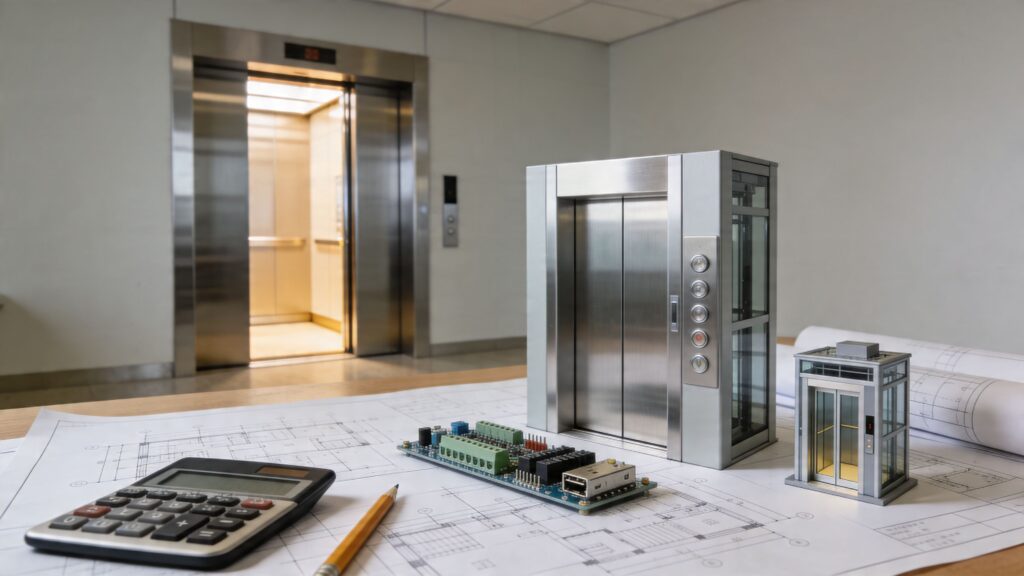
In Southern Michigan, elevator modernization cost can be relatively modest for a basic cab refresh and climb into the hundreds of thousands for a full system overhaul. Many commercial buildings land somewhere in the middle with phased upgrades, often starting with the controller and other high-failure components. The best long-term value usually comes from clear scope, realistic code planning, and non-proprietary equipment that more than one qualified company in the Michigan contractor market can service.
A typical call starts the same way. The elevator still runs, but it is becoming a weekly distraction. A tenant complains about rough leveling, staff keep resetting faults, or the doors hesitate long enough that everyone notices.
That is the point when many Southern Michigan owners start weighing repairs against modernization. They know the equipment is aging. They know service invoices are creeping up. What they often do not get is a straight answer on cost, what can be phased, and which choices will lower ownership cost over the next 10 to 20 years.
Local conditions matter here. A building in Detroit, Ann Arbor, Jackson, Monroe, or Toledo-adjacent Southern Michigan does not face the same contractor options, permit timing, labor availability, or financing choices as an owner reading a generic national guide. Around here, the difference between a proprietary package and an open, non-proprietary system can affect who is able to bid the work, how fast parts can be sourced, and what you will pay every year after the job is done.
That long-term ownership piece gets missed all the time.
The goal is not to buy the cheapest modernization. It is to avoid overpaying upfront, avoid getting boxed into one service provider later, and use tools like C-PACE financing when the project and property qualify.
Is Your Aging Elevator a Liability Waiting to Happen
An older elevator rarely gives you one dramatic warning. More often, it turns into a steady drain on time and budget. The service calls get more frequent. Parts become harder to source. Occupants lose confidence in the equipment long before the car stops running altogether.
In commercial buildings around Detroit, Ann Arbor, Lansing, and the rest of Lower Michigan, that matters more than many owners expect. A troublesome elevator doesn’t just create inconvenience. It affects tenant experience, staff workflow, accessibility, property image, and your exposure when something keeps falling out of compliance.
The pattern building owners usually see
Most modernization jobs start after one of these issues keeps repeating:
- Door problems: Doors reopen randomly, close too slowly, or fail to line up with traffic demands.
- Controller issues: The car responds unpredictably, dispatching becomes sloppy, or intermittent faults start chasing your service team.
- Leveling and ride concerns: Passengers notice rough stops, rollback, or uneven landings.
- Cosmetic wear: The car still runs, but the interior makes the whole building feel dated.
None of those problems automatically means you need a full rip-and-replace job. In many cases, you don’t.
Practical rule: Modernize because the equipment is becoming expensive to own, not just because it’s old.
That distinction matters. Some owners spend too much because they approve a full package when a targeted controls upgrade would solve the main reliability issue. Others spend too little by patching obsolete equipment over and over, only to pay more later in emergency calls, rush parts, and tenant frustration.
Liability isn’t just about breakdowns
Elevator modernization is partly a mechanical decision, but it’s also a business decision. If the unit serves a medical office, senior housing property, municipal building, school, warehouse office, or multifamily building, downtime creates more than annoyance. It changes how people use the building.
That’s why the right conversation isn’t just “What does a new elevator cost?” The better question is, “What scope fixes the underlying problem without locking me into higher ownership cost later?”
For Southern Michigan owners, that’s the point of getting specific. Scope, labor market conditions, equipment type, code requirements, and whether the system is proprietary all affect what you’ll pay and what you’ll keep paying.
Typical Elevator Modernization Cost Ranges in Michigan
A two-story office building in Jackson or Ann Arbor might need a straightforward controls update. A downtown traction elevator serving tenants all day can be a very different job. That is why elevator modernization cost in Michigan has such a wide spread.
For Southern Michigan owners, the practical range starts with a basic cab refresh and climbs into full six-figure work once controls, doors, safety items, and machine room equipment are involved. In real projects, I see owners save money by separating what improves reliability from what only improves appearance.
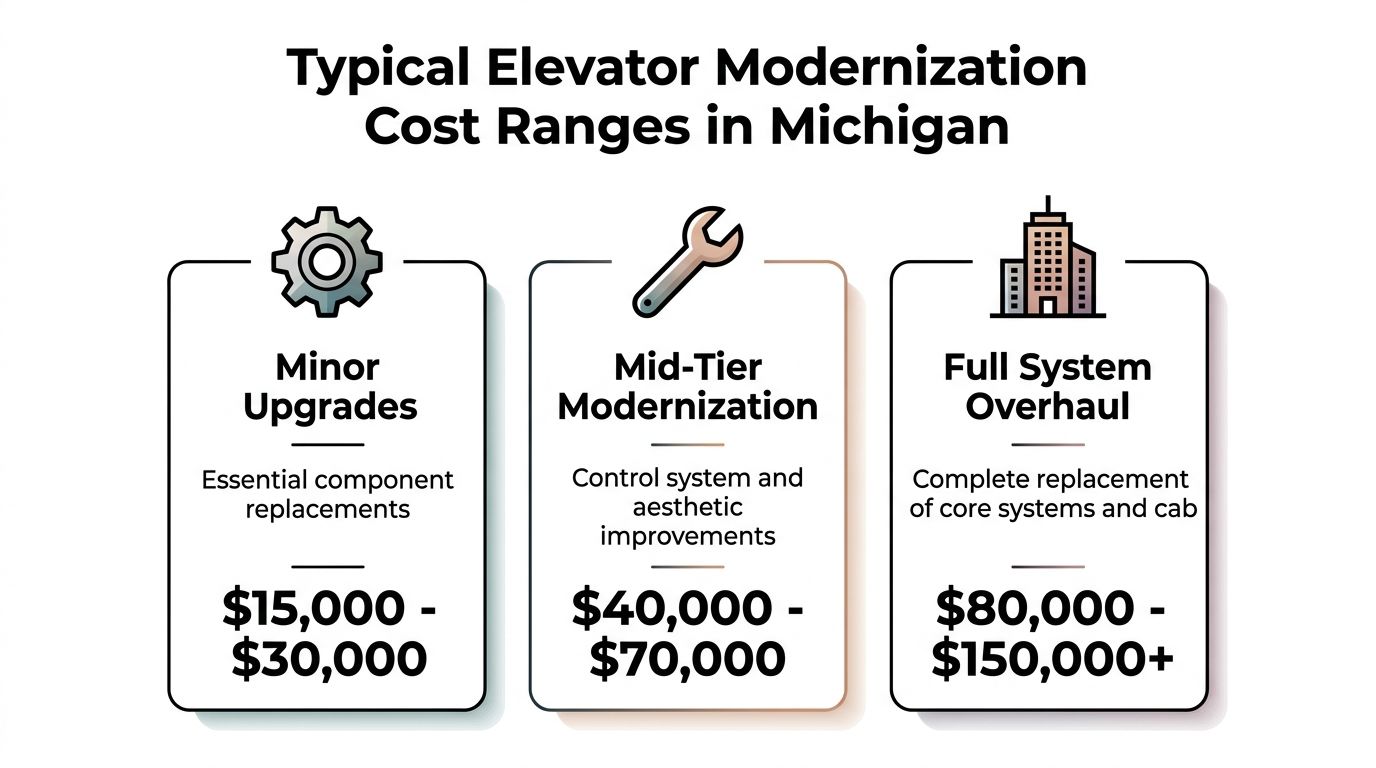
2026 Estimated Elevator Modernization Costs in Southern Michigan
| Modernization Scope | Typical Cost Range | Primary Focus |
|---|---|---|
| Basic cab interior refresh | $8,000 and up | Panels, flooring, lighting, handrails |
| Controls-first modernization | $50,000 to $70,000 | Controller and core operating updates |
| Controls-only modernization in comparable regional markets | $50,000 to $65,000 in suburban markets | Controller, selector, operating panel, call stations |
| Hydraulic cylinder replacement | $80,000 to $100,000 | Major hydraulic system work |
| Full modernization | Over $400,000 | Controller, doors, cab rebuild, machine room, safety systems |
What those ranges mean in the field
The low end usually covers visible items inside the cab. That work can help the building look better, but it does not fix recurring shutdowns, door faults, or obsolete electronics.
The middle range is where many commercial owners in Southern Michigan start. A controls-first project targets the part of the system that causes the most service frustration in older units. If you want a clearer picture of what that part includes, it helps to review the main elevator control panel components before comparing bids.
Full modernization pricing rises fast when multiple systems are aging at the same time. On hydraulic elevators, cylinder work can move the budget quickly. On traction units, costs increase once the scope includes drives, machine equipment, and major door work.
Why one Michigan quote can be far apart from another
Labor availability, lead times, building access, and the condition of the existing equipment all affect price. A hospital-adjacent medical office in Lansing with restricted work hours will not price the same as a small apartment property in a less busy market. The equipment itself matters too. Open, non-proprietary systems usually give owners more service options later, while closed systems can keep long-term costs higher even if the initial modernization quote looks competitive.
That is why line-item detail matters. Separate the cab work, controls work, door work, and code-related corrections so you can see what is being bought.
For owners looking at cash flow, phased modernization is often the smarter path. Handle the reliability issue first, then schedule appearance work or secondary components later. That approach is especially useful in Southern Michigan, where financing tools like C-PACE can make a larger project workable without forcing every upgrade into one contract.
What Really Drives Modernization Costs
Owners often look at a modernization quote and see one large number. The better way to read it is as a stack of decisions. Some components affect reliability right away. Others affect appearance, code compliance, service access, or long-term maintenance cost.
The controller usually drives the conversation
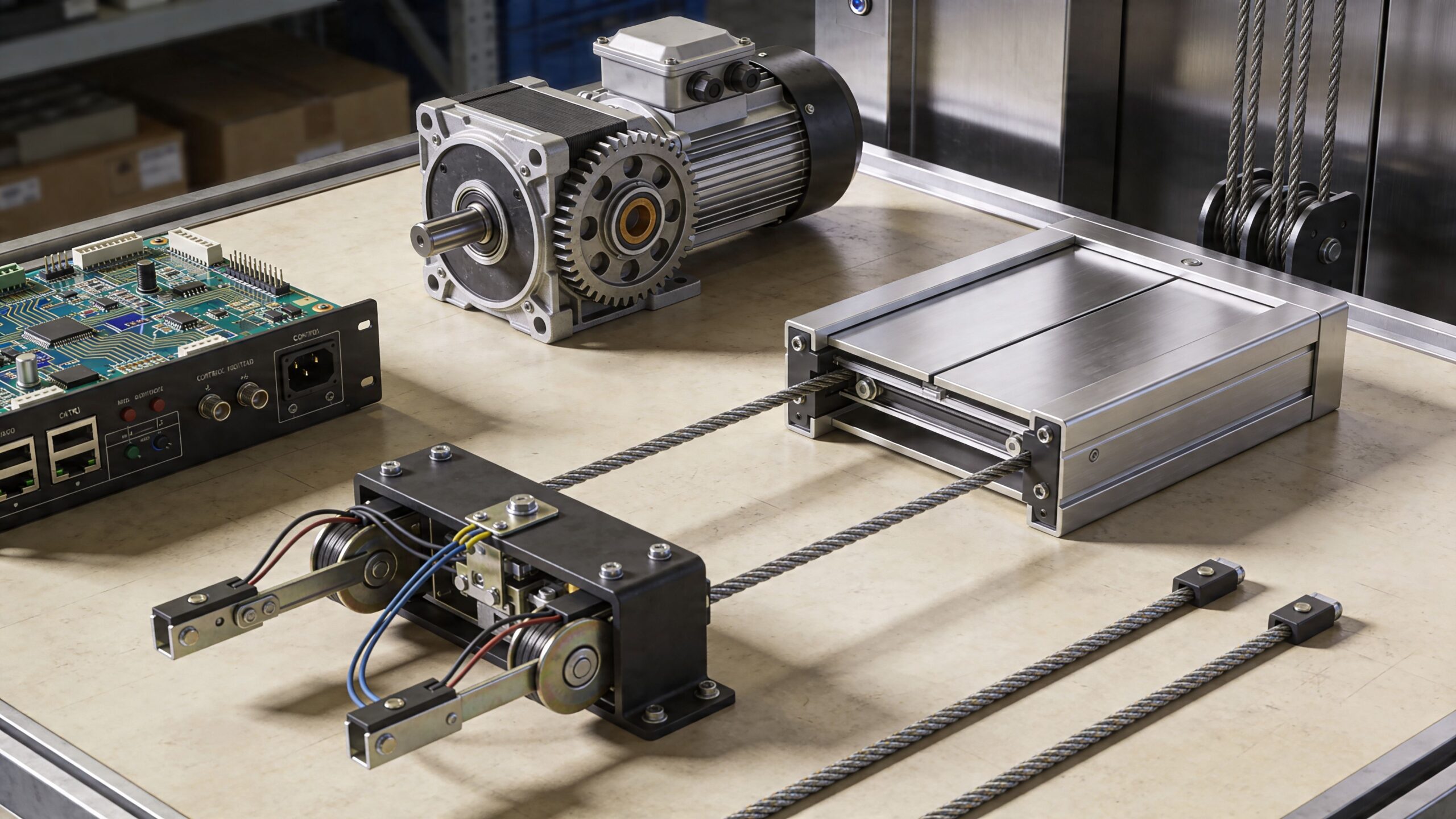
The controller is the elevator’s brain. When it ages out, you start seeing the weird problems owners hate most: intermittent shutdowns, poor floor response, rough starts, timing issues, and service calls that seem to fix one thing only for another issue to pop up.
For traction elevators, industry modernization benchmarks put controller and drive replacements at $75,000 to $150,000, and state that this scope can resolve 60% of reliability issues while retaining the existing car and doors. That same source says this type of modernization can come in at 30% of the cost of a full replacement, with full replacement ranging from $250,000 to $500,000.
If you want to understand what that part of a quote covers, it helps to look closely at the elevator control panel components involved in modernization.
The doors and operator affect daily performance
If the elevator is the face of the building, the doors are where occupants notice trouble first. Slow reopening, misbehavior at busy floors, and repeated door faults create the impression that the whole unit is unreliable.
Door work can be a smart middle-ground investment. It won't solve every problem if the controller is obsolete, but it often removes a major source of callbacks and passenger complaints.
Machine, drive, and hoist decisions are bigger-ticket items
On traction systems, machine and drive decisions affect both cost and scope. If the machine is structurally sound and serviceable, a contractor may recommend preserving it and updating surrounding controls instead of replacing everything. That’s where experienced judgment matters.
For older equipment, the quote may also include work tied to the machine room, selector system, brake interfaces, or safety hardware. Those items can look expensive in isolation, but they often determine whether the modernization is durable or just a temporary patch.
If the controller is obsolete but the car, rails, doors, and core machine components are still viable, replacing the whole system may be unnecessary.
The cab is visible, but it isn't always the priority
Owners naturally react to what they can see. Worn panels, dated lighting, damaged flooring, and scratched fixtures make the elevator feel overdue for replacement.
Cosmetic work has value. It improves first impression and rider experience. But if the primary pain point is downtime, a new interior alone won't solve it. A good quote separates appearance upgrades from operational upgrades so you can decide what to handle now and what to defer.
The Hidden Cost of Proprietary Elevator Systems
This is the part many owners only learn after they've signed the modernization contract. Two proposals can look similar on day one, but they can lead to very different ownership costs over the next service cycle.
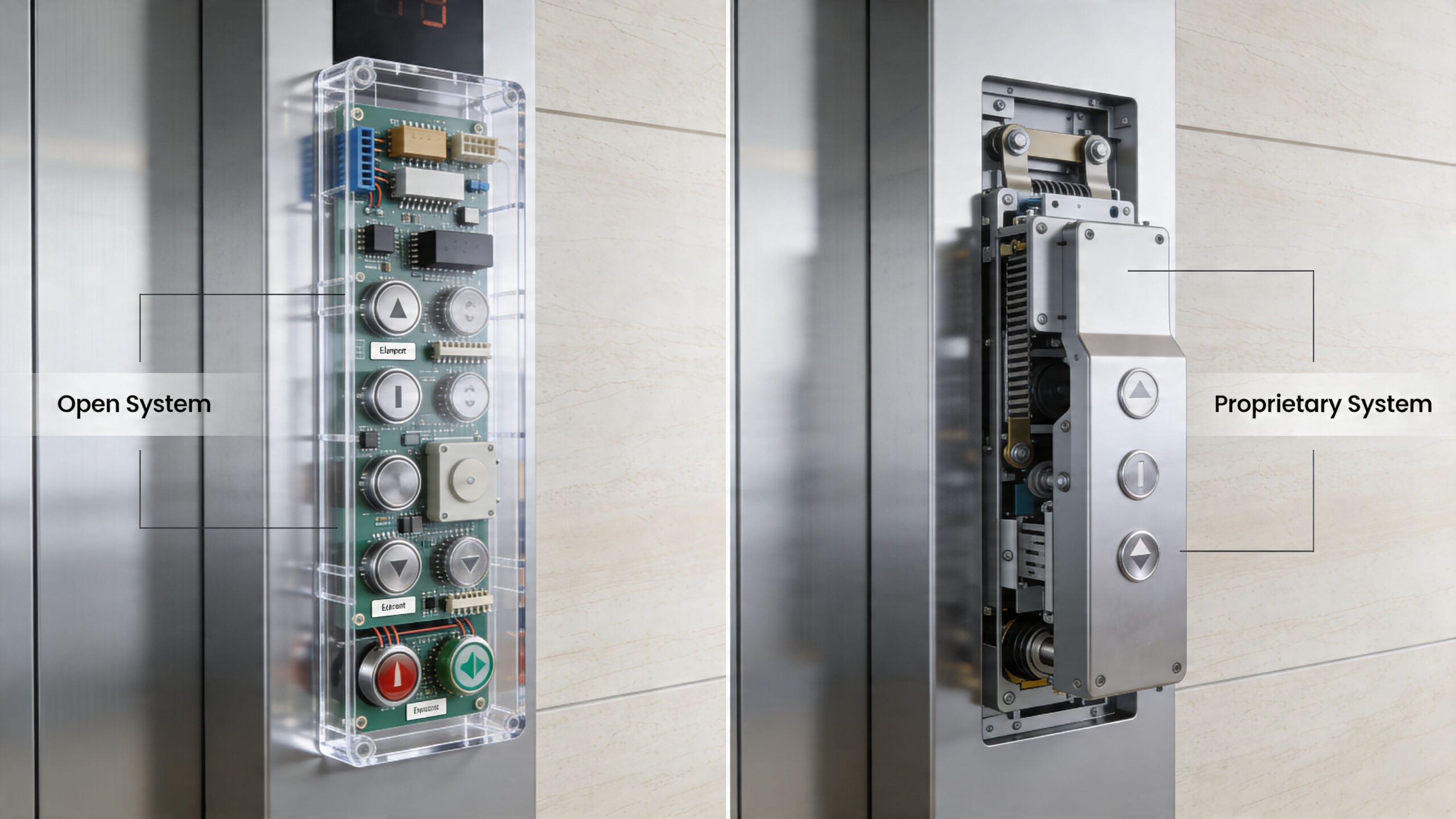
A proprietary system usually means one manufacturer or one narrow service channel controls parts, software access, and often the repair path. A non-proprietary system means qualified elevator companies can service the equipment without the building being trapped behind one vendor's closed ecosystem.
Why vendor lock-in gets expensive
According to budgeting guidance on proprietary versus non-proprietary elevator equipment, proprietary equipment can inflate long-term expenses by 20% to 50%, while non-proprietary modernizations can reduce future repair costs by up to 30% because any qualified technician can service them.
That difference doesn't always jump off the first quote. It shows up later in service contracts, parts pricing, response flexibility, and your ability to get competitive bids once the modernization is done.
What to ask before you approve the job
If you want to protect yourself, ask direct questions:
- Software access: Will future diagnostics require factory-only access?
- Parts path: Can multiple suppliers provide replacement components?
- Service freedom: Can any qualified independent contractor maintain this system?
- Documentation: Will you receive complete manuals, wiring diagrams, and programming records?
Those aren't technical trivia. They're ownership questions.
A low upfront number can become an expensive contract if the equipment only one company can touch.
For Michigan owners with older commercial, institutional, and residential buildings, non-proprietary equipment often makes the most sense because it preserves options. If one contractor’s rates rise or service quality slips, you aren't boxed in.
One local option in that category is non-proprietary elevator modernization from Crane Elevator Company, which focuses on open systems that qualified providers can service. That model isn't the only path, but it reflects the ownership approach many budget-conscious building operators prefer.
Financing Your Upgrade and Calculating ROI
Most owners don't argue about whether the elevator needs attention. The hard part is deciding how to pay for it without wrecking the capital budget for everything else in the building.
That’s why modernization planning works better when financing is part of the first conversation, not the last. A project may be technically justified months before it feels easy to fund.
Traditional financing keeps the budget predictable
For many properties, the straightforward route is commercial financing that spreads the cost into a predictable payment structure. That doesn't lower the project price, but it can turn a deferred headache into a scheduled improvement with known monthly impact.
This matters most when the elevator serves daily operations. Medical offices, municipal buildings, apartment properties, schools, and industrial facilities usually can't treat elevator downtime like a minor inconvenience. Predictability has value.
C-PACE is worth asking about in Michigan
Energy-focused modernization can open another path. According to C-PACE guidance for elevator modernization financing, U.S. elevators consume 5 billion kWh annually, and upgrades that cut energy use by 40% can qualify for 100% financing with no upfront capital, repaid through property taxes. That same source notes that Michigan has enhanced these programs for commercial buildings.
For owners who assume modernization has to be paid out of pocket, that can change the conversation completely.
How to think about return on investment
Don't calculate ROI on utility savings alone. For elevator work, the better approach is to stack all the financial effects in one place.
Consider these categories:
- Repair exposure: What are you spending on recurring service calls, obsolete parts searches, and emergency disruptions?
- Operational friction: How much staff time goes into complaints, lockouts, resets, or managing tenant frustration?
- Building perception: Does the elevator make the property feel maintained or neglected?
- Future flexibility: Will this modernization reduce or increase your dependence on one vendor?
A project can make sense even when the payback isn't simple to express on a spreadsheet. If the modernization stabilizes service, improves energy performance, reduces repair frequency, and keeps your property easier to lease or operate, the return is broader than one line item.
A practical financing mindset
If the full scope feels too heavy, phase it. Many owners start with the part of the system causing the most trouble, then tackle cab finishes or secondary components later.
That approach usually works best when the contractor builds the project around a long-term plan rather than a one-time patch. The key is making sure Phase One doesn't lock you into an expensive Phase Two.
Your Modernization Project Planning Checklist
The elevator modernization market is getting busier, not calmer. Market projections for elevator modernization show the global segment growing from USD 15.1 billion in 2024 to USD 39.0 billion by 2032 at a 12.53% CAGR, driven by aging infrastructure and new safety requirements. For building owners, the practical takeaway is simple: waiting rarely improves scheduling.
Start before the elevator forces the issue
Owners usually lose their advantage when they wait for a major failure. Emergency timing narrows your choices, compresses review time, and can push you toward the first available path instead of the right one.
If your building may be affected by upcoming compliance work, review the Michigan elevator code deadline guidance for January 1st, 2028 early while you still have options.
What a solid quote should include
Don't accept a one-line modernization number. Ask for a quote that lets you compare scope clearly.
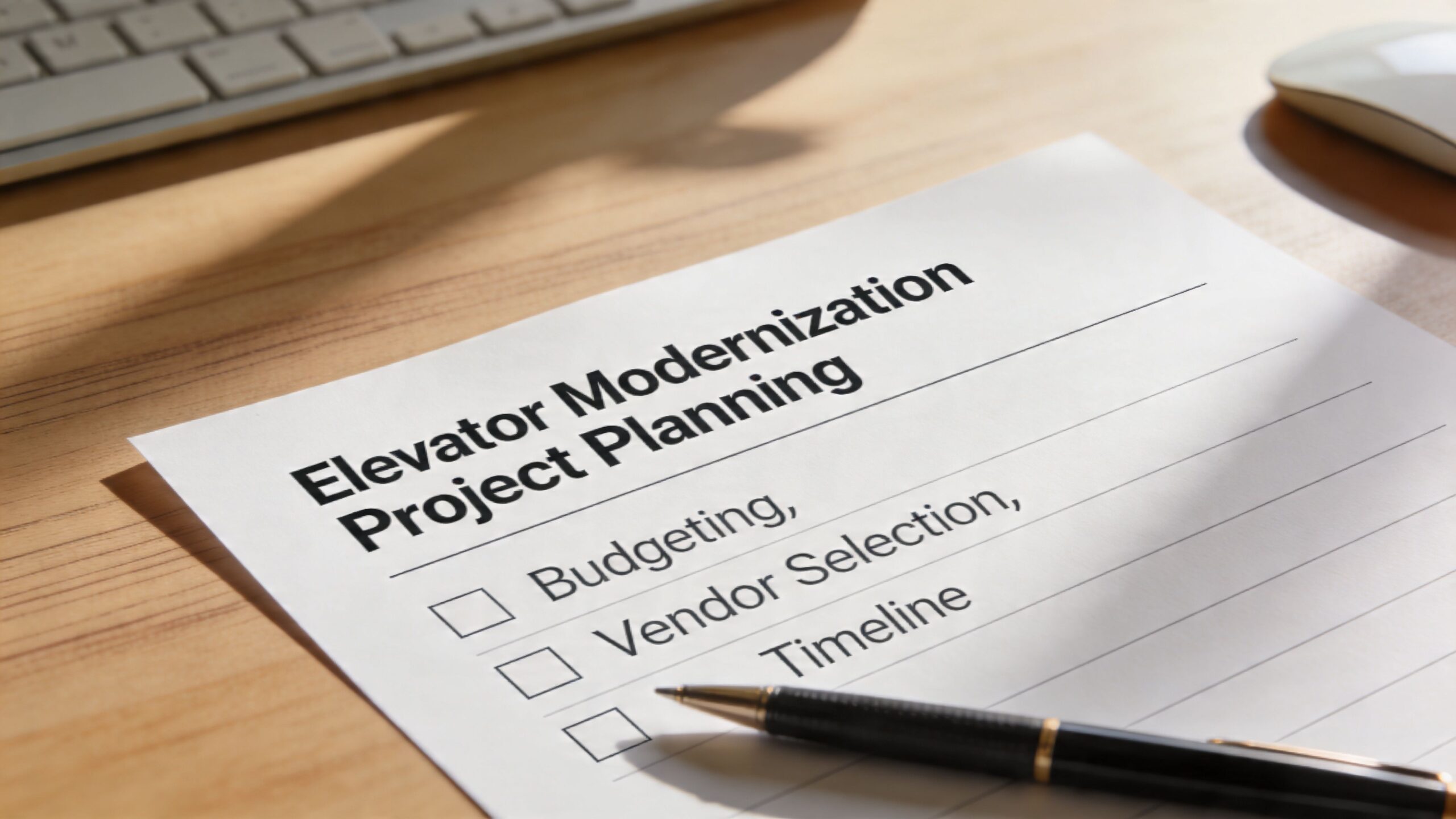
Use this checklist:
- Defined scope: Spell out whether the project includes controller, drive, selector, fixtures, door equipment, cab work, machine room work, and testing.
- Equipment type: Confirm whether the proposed equipment is proprietary or non-proprietary.
- Parts detail: Ask for the major components by name, not just "miscellaneous material."
- Labor detail: Request labor assumptions, access requirements, and any expected shutdown windows.
- Code work: Clarify what code-related corrections are included now and what could surface later.
- Exclusions: Ask what the quote does not include. That’s often where cost surprises hide.
The easiest way to compare bids is to make every contractor respond to the same written scope request.
A workable planning sequence
Modernization projects go smoother when owners follow a simple order:
- Assess the elevator thoroughly. Identify whether the main issue is controls, doors, hydraulics, traction equipment, cosmetics, or code-related work.
- Set priorities. Decide what must be solved now versus what can wait.
- Get comparable quotes. Make contractors bid the same scope.
- Review financing options early. Don't wait until after vendor selection.
- Plan for tenant communication. Occupants handle disruption better when they know the schedule and reason.
- Confirm closeout documents. Manuals, wiring, and service records should be part of turnover.
A quick visual can help owners think through that process before they start gathering proposals.
What works and what usually doesn't
What works is a phased plan tied to real equipment condition, transparent scope, and open serviceability. What doesn't work is cosmetic spending on a unit with failing controls, or approving closed equipment because the first quote looked tidy.
Planning ahead doesn't eliminate cost. It gives you room to control it.
FAQs for Southern Michigan Building Owners
Should I modernize or replace the whole elevator?
If the core structure of the system is still sound, modernization is often the better first path. Replacement makes more sense when the equipment condition, code scope, or configuration limitations make upgrades impractical. The right answer depends on what parts are obsolete, what can be retained, and whether the finished system will still be serviceable long term.
Are phased upgrades a smart idea?
Yes, when the phases are engineered to work together. A controller-first approach is common because it often addresses the most disruptive reliability issues. The mistake is doing piecemeal work without a full plan, then discovering the first phase boxed you into more expensive decisions later.
What should I look for in a Michigan elevator contractor?
Look for specificity. A good contractor should explain scope in plain language, identify what can be retained, state whether the equipment is proprietary, and give you a clear view of exclusions. If the quote is vague, the project usually gets more expensive after it starts.
Does local experience matter?
Yes. Southern Michigan buildings vary a lot by age, use, and inspection history. A contractor familiar with local building conditions, access issues, and regional permit and scheduling realities will usually scope the job more accurately than someone quoting from a template.
How do I compare two quotes that are far apart?
Put them side by side and strip them down to categories: controls, doors, cab, machine room, safety items, labor, and exclusions. If one proposal is much lower, find out what it left out. If one is much higher, make the contractor justify each added item in writing.
What if my elevator still runs most of the time?
That’s exactly when owners should start planning. You are in a stronger position before the shutdown becomes urgent. Once the system starts forcing emergency decisions, pricing, schedule, and equipment choices all get tighter.
Is non-proprietary equipment really that important?
For many owners, yes. Service freedom matters after the modernization is complete, not just during installation. If multiple qualified companies can maintain the system, you keep more control over future pricing and response.
If you're evaluating elevator modernization cost in Detroit, Ann Arbor, Lansing, Flint, Kalamazoo, or surrounding Lower Michigan communities, Crane Elevator Company can provide a practical second opinion, review your current scope, and help you compare non-proprietary modernization options, repairs, code items, and financing paths before you commit.