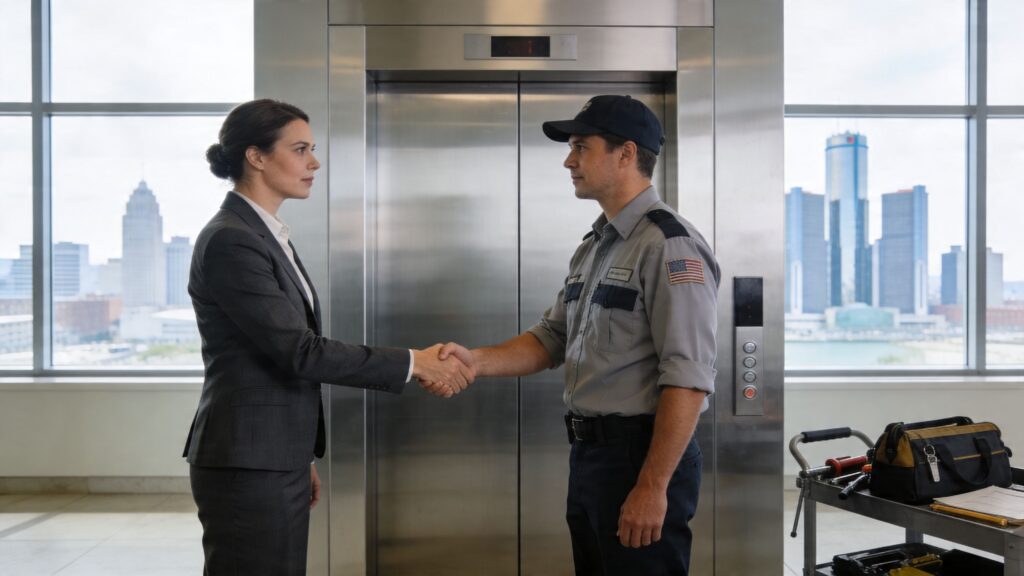
You’re probably dealing with one of two situations right now. Either the elevator still runs, but tenants complain about noise, leveling issues, door problems, or random shutdowns. Or the unit is already down, your phone keeps ringing, and every proposal on your desk looks different enough that it’s hard to tell who knows what they’re doing.
That’s where choosing the right detroit elevator company stops being a purchasing task and becomes an operating decision. The wrong provider can trap you in repeat service calls, weak maintenance, vague invoices, and equipment choices that limit your options for years. The right provider gives you a clear maintenance standard, honest modernization guidance, and enough transparency to control both downtime and long-term cost.
Why Your Choice of Elevator Partner Matters in Detroit
A lot of Southeast Michigan buildings are asking old equipment to do modern work. That mismatch shows up fast in apartment towers, medical buildings, schools, municipal properties, and older commercial stock where elevators were installed decades ago, then patched together over time.
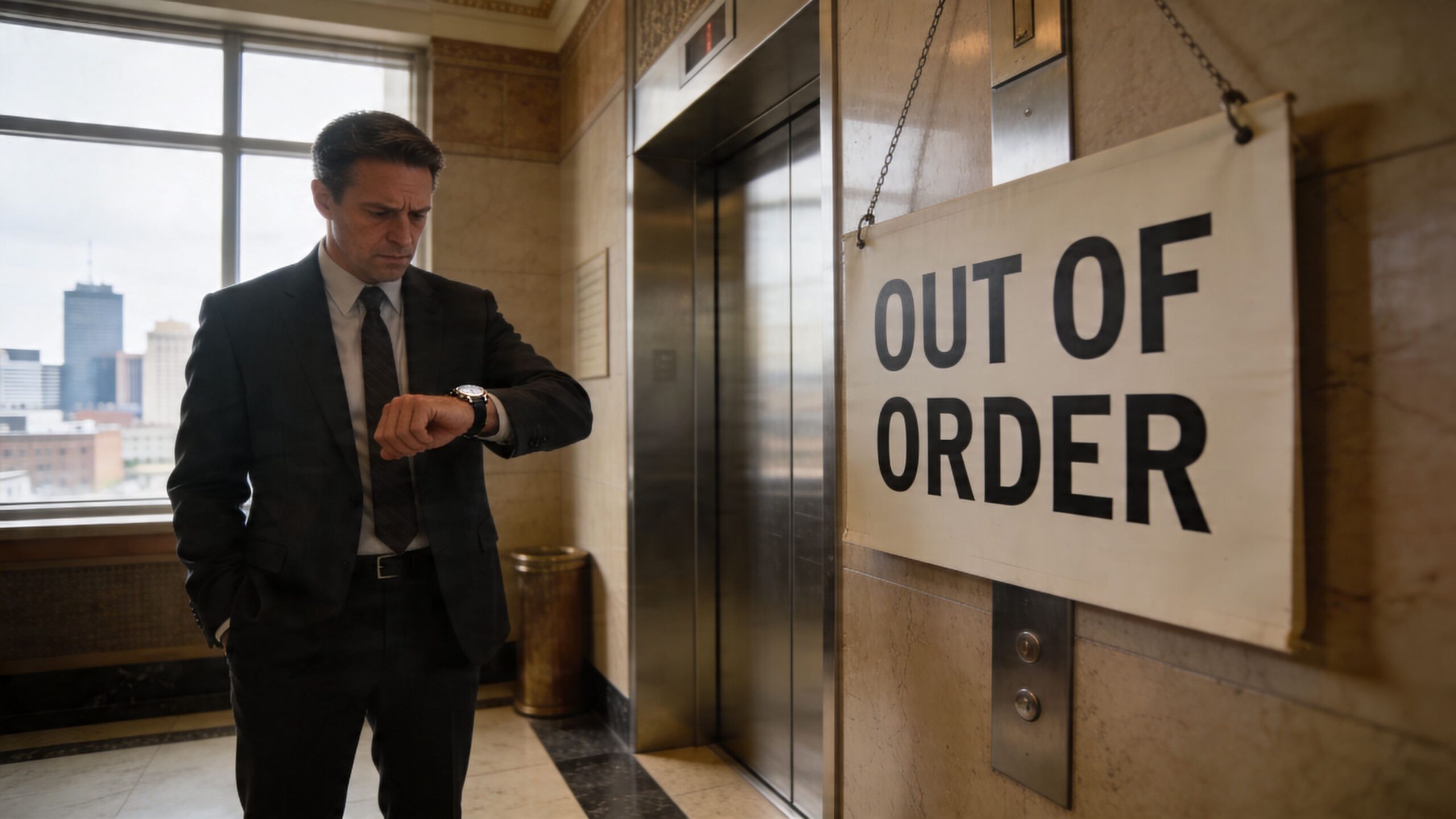
The risk isn’t theoretical. In Detroit’s high-rise apartment sector, four buildings accounted for 15% of all Detroit Fire Department emergency calls over the past year, according to Outlier Media’s reporting on broken elevators in Detroit. That tells you something important. A few badly maintained buildings can create a massive safety and operational burden.
What failure looks like on the management side
When an elevator keeps going down, the problem doesn’t stay in the machine room.
- Tenants lose patience: In residential buildings, that turns into complaints, lease pressure, and accessibility concerns.
- Staff lose time: Your team starts coordinating lockouts, callbacks, resets, vendor access, and after-hours emergencies.
- Budgets get distorted: Reactive repairs look smaller one invoice at a time, but they stack up.
- Liability grows: Missed code items, poor documentation, and weak follow-through become your problem, not the contractor’s.
A reliable partner treats elevator service as building operations, not as a stream of isolated repair tickets. That means they understand inspection timing, code issues, resident expectations, after-hours response, and the reality of keeping an older Detroit property moving in winter, during power events, and through heavy daily traffic.
The cheapest monthly contract often becomes the most expensive elevator decision in the building.
Detroit requires local judgment
Detroit and the surrounding market aren’t one-size-fits-all. A provider working on a downtown apartment tower, an industrial freight car in a legacy facility, and a suburban medical office building needs range. They also need process. That’s why a property manager should look closely at how a company handles preventative work, documentation, and accountability before signing anything.
If you’re comparing maintenance options now, reviewing a Detroit elevator maintenance program should start with one question. Are they building a plan to prevent shutdowns, or are they waiting for the next call?
Your Initial Elevator Company Screening Checklist
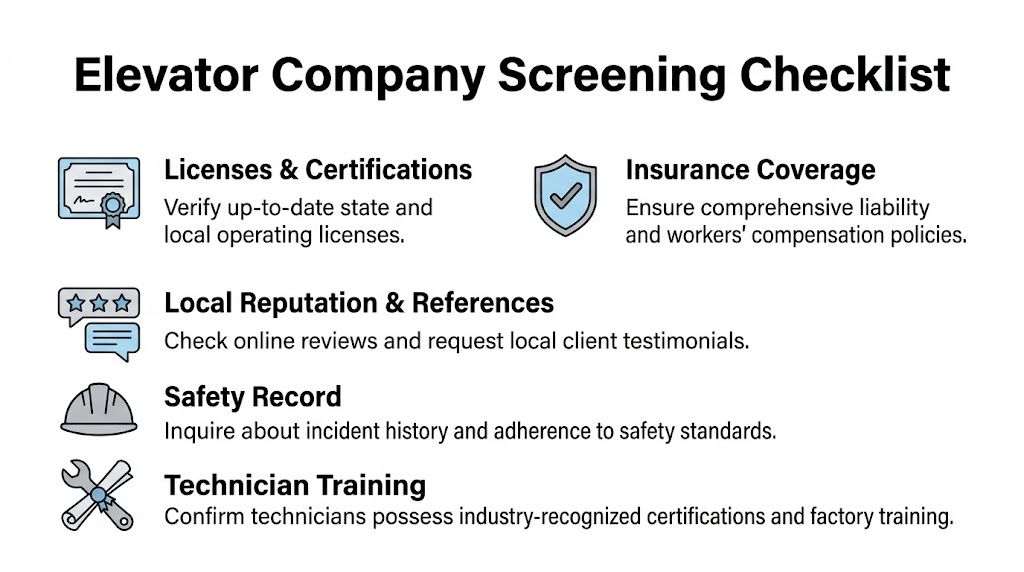
Before you compare price, compare legitimacy. A polished proposal doesn’t mean much if the contractor cuts corners on code work, sends underqualified technicians, or treats cleaning and documentation like optional extras.
Five things to verify before you go any further
Licenses and local operating authority
Ask whether the company is properly set up for elevator work in Michigan and whether it routinely handles the local permitting and compliance side of the job. You’re not just checking a box. You’re checking whether they work inside the rules every day or only when pushed.Insurance that protects you
Don’t settle for “yes, we’re insured.” Ask for proof of current coverage and make sure workers’ compensation and liability coverage are in place. If a technician gets hurt or property is damaged, vague answers become expensive answers.Technician capability
A good elevator mechanic in this market often needs more than one skill set. Detroit’s building stock mixes older relay logic, hydraulic systems, door equipment, and newer controls. Ask who will service your units, not just who sold the contract.Code and violation history
Ask how the company handles violations, failed tests, and correction work. Good contractors can explain the process clearly. Weak ones get slippery and blame “the inspector” or “the old building.”Maintenance scope in writing
The maintenance scope in writing often reveals weak vendors. If the agreement doesn’t spell out cleaning, testing, records, basic consumables, and callback expectations, expect disputes later.
One detail that tells you a lot
A common maintenance failure is simple neglect. Incomplete pit and car-top clean-downs contribute to 25% of recurring elevator failures due to debris-induced sensor faults, according to Michigan LARA rules guidance. That’s why I pay close attention when a contractor talks only about lubrication and adjustments but says little about full clean-downs.
Practical rule: If a company can’t explain how it cleans, documents, and verifies the condition of pits, car tops, door equipment, and machine spaces, it probably isn’t doing preventative maintenance well.
Questions worth asking on the first call
- Who handles emergency response after hours? A dispatcher, an answering service, or field personnel who know the account?
- Will you show completed work clearly? Photos, service logs, and itemized findings matter.
- Do you service all makes and models? This helps you spot whether they’re steering you toward lock-in.
- How do you approach recurring door faults, leveling issues, and nuisance shutdowns? The answer should sound diagnostic, not scripted.
A serious screening process saves time because it removes contractors who shouldn’t make your shortlist in the first place.
Beyond Price Evaluating Elevator Maintenance Programs
Most bad maintenance contracts look fine on the front page. The rate is low, the terms are simple, and the promise is broad enough to sound reassuring. The trouble starts after the signature, when “maintenance” turns out to mean little more than periodic oiling, a quick look around, and a repair quote every time something meaningful fails.
That approach is common, and it costs more than it saves. Rigorous preventative maintenance methodologies can reduce downtime by 40-60% compared to reactive service programs, as noted in the verified benchmark assigned to this topic. If your building depends on tenant movement, accessibility, or freight flow, that gap matters.
What a strong program includes
A real maintenance plan should cover the entire operating environment, not just a few moving parts. On older Detroit equipment, that means door systems, machine room condition, pit condition, car-top condition, safety devices, indicators, emergency communication, and power-related issues all need attention.
The strongest programs usually include:
- Scheduled visits with defined tasks: Not generic “check elevator” language.
- Full-system housekeeping: Machine room, pit, and car-top cleaning reduce preventable faults.
- Basic wear-item attention: Lamps, indicators, and minor adjustments should not require a mini crisis.
- Predictive thinking: Contractors should watch patterns, not just failures.
- Accountability terms: If they miss service, there should be a consequence.
One accountability term property managers should take seriously is a No Show, No Pay policy. It tells you the contractor is willing to tie revenue to attendance. A vendor that resists basic accountability often creates administrative friction later.
Maintenance Plan Comparison Basic vs. Comprehensive
| Feature | Basic 'Oil & Grease' Plan | Comprehensive Preventative Plan |
|---|---|---|
| Visit scope | Short visual check and lubrication | Structured inspection, cleaning, adjustment, and verification |
| Problem handling | Waits for failure, then quotes repair | Looks for developing issues before shutdown |
| Documentation | Minimal ticket notes | Clear logs, findings, and service history |
| Housekeeping | Often limited or skipped | Includes machine room, pit, and car-top attention |
| Consumables and small items | Commonly billed separately | Often built into routine upkeep |
| Accountability | Loose scheduling | Defined response standards and stronger follow-through |
| Budget impact | Lower monthly number, more surprises | More predictable operating cost |
| Tenant experience | More nuisance outages | Better uptime and fewer disruptions |
What to challenge in a proposal
Don’t ask only, “What’s included?” Ask, “What gets excluded so often that I’ll end up paying for it anyway?”
A weak contract often hides behind broad wording. A stronger one spells out practical work and gives you a way to compare proposals line by line. If you need context for the budget side, reviewing typical elevator maintenance cost factors helps, but cost only means something once scope is clear.
If one quote is dramatically lower, assume something is missing until proven otherwise.
The best maintenance programs aren’t flashy. They’re disciplined. They keep old equipment clean, adjusted, documented, and predictable enough that emergencies become less common.
Escaping Vendor Lock-In The Non-Proprietary Advantage
A lot of owners don’t think about proprietary versus non-proprietary equipment until they’re already stuck. By then, the signs are familiar. You need a repair, only one company can access the system properly, parts take too long, pricing feels one-sided, and every future decision starts from a position of weakness.
That’s why equipment choice is a business decision, not just an engineering one.

What proprietary really means in practice
With a proprietary setup, critical tools, software access, parts pathways, or controller logic may be tied closely to a single manufacturer or service network. That can limit who can diagnose, adjust, or repair the elevator efficiently.
On paper, that may sound manageable. In operation, it can mean:
- Less control over pricing when you request bids
- Fewer service options during staffing shortages or response delays
- Longer repair timelines when access or parts are restricted
- Higher lifetime dependence on one vendor’s service structure
Detroit’s fleet is mixed. Some buildings still have very old equipment. Others have modern controllers layered onto older door operators, machines, or hydraulic components. That’s one reason the region has seen growing interest in more flexible service approaches. This background piece on Detroit Elevator Company and the city’s equipment mix supports that point qualitatively, especially the challenge of servicing everything from century-old freight cars to computerized systems.
Why non-proprietary matters to owners
A non-proprietary system gives the owner more control over the life of the elevator. More qualified contractors can service it. Competitive quotes are easier to obtain. Modernization planning becomes more flexible because you’re not forced into one channel for every board, update, or diagnostic step.
That doesn’t mean every non-proprietary system is equal. Quality still matters. Parts support still matters. Controller selection still matters. But the owner keeps options, and options are valuable when budgets tighten or service expectations rise.
The best time to avoid vendor lock-in is before the modernization contract is signed.
If you’re sorting through upgrade options, studying the benefits of non-proprietary elevators can help you ask better questions. Start with a simple one. If your current provider disappeared tomorrow, how hard would it be for another qualified elevator company to step in and keep the unit running?
That answer tells you a lot about your future cost exposure.
Planning for Elevator Modernization and Upgrades
Modernization usually lands on a manager’s desk after years of delay. The elevator still runs often enough to avoid a capital request, but not well enough to stop complaints. Then parts become difficult to source, shutdowns get more frequent, leveling gets sloppy, door faults multiply, or a code-related issue forces the conversation.
That’s when a practical modernization plan matters.
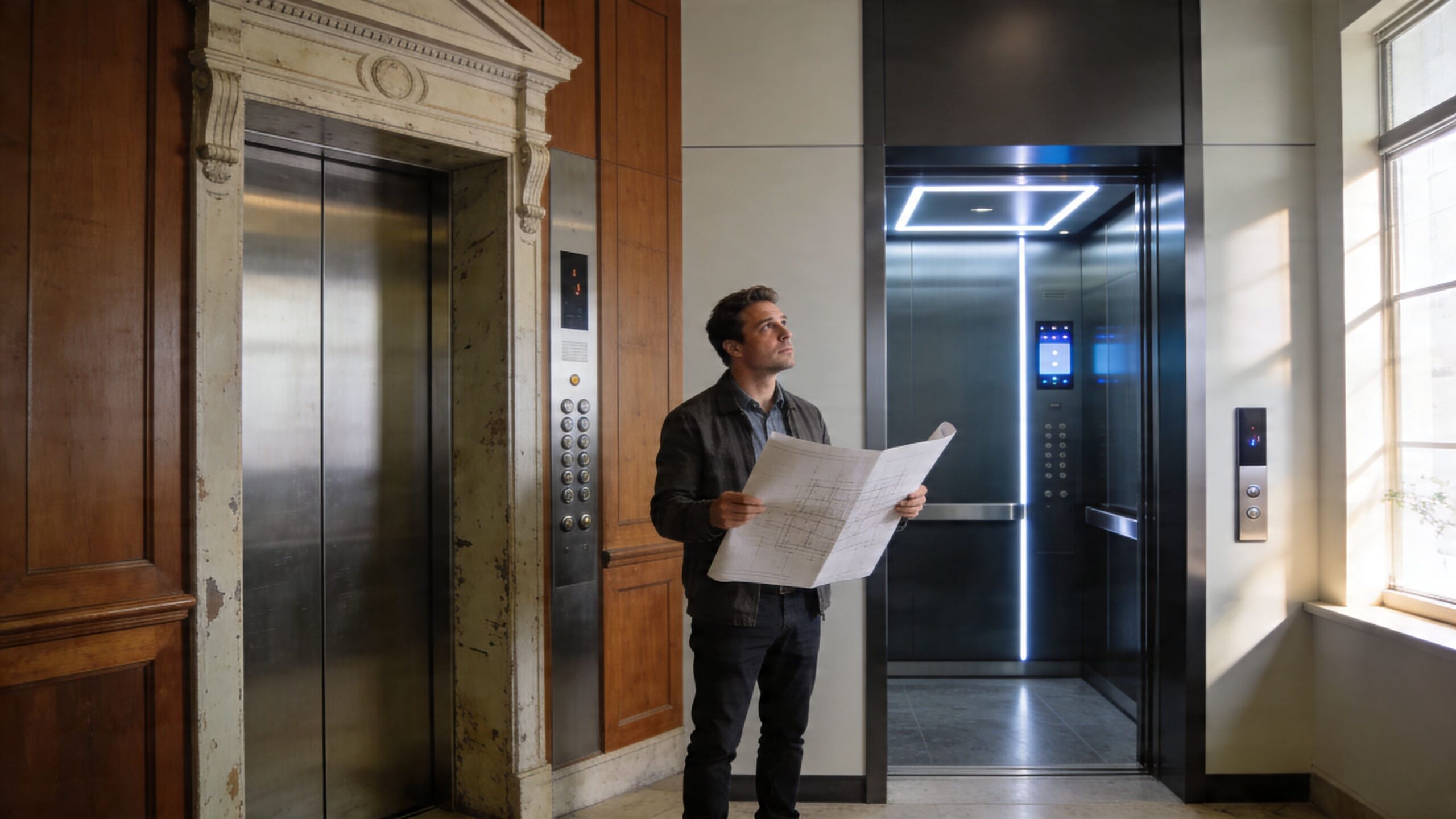
When repair is no longer the smart answer
Not every old elevator needs a full overhaul immediately. Some need disciplined maintenance and selective component replacement. Others have crossed the line where continued patchwork only drains the operating budget.
Common signs it’s time to consider modernization include:
- Recurring shutdowns from multiple causes
- Obsolete controls or poor parts availability
- Door operator issues that keep coming back
- Poor ride quality, leveling problems, or unreliable starts
- Open code items or required safety upgrades
- A major repair proposal that still leaves old core equipment in place
A solid contractor should tell you which category you’re in. If every problem somehow leads to a total replacement recommendation, be cautious. If every old system is declared “fine” with one more repair, be just as cautious.
What good modernization delivers
For traction and hydraulic systems, code-compliant modernization projects can achieve 85-95% success rates, deliver 25-35% energy efficiency gains, and reduce service calls by up to 50% post-upgrade, according to the University of Michigan specification reference for elevator modernization.
That matters because modernization should do more than make the cab look newer. It should improve reliability, code compliance, parts availability, serviceability, and power use. In many buildings, the biggest value is operational. Fewer service calls mean less disruption for staff and tenants.
Here’s a quick visual overview of what a modernization project can involve and why owners often phase the work carefully:
How to approach the project without losing control
Treat modernization as a scope review first, not a shopping exercise. Ask what must be replaced, what can remain, and what choices affect future service flexibility. Press for plain-English explanations of controller strategy, door equipment, fixtures, machine work, hydraulic components where applicable, testing, permit flow, and downtime planning.
Then ask about financing. Large elevator projects are easier to manage when the cost is predictable and tied to a useful life cycle, not dumped into an emergency budget. That’s especially important for multifamily owners, schools, and healthcare facilities that can’t tolerate long service gaps.
A good modernization plan should leave you with three things. A safer unit, a more serviceable unit, and a unit you can afford to maintain properly after the installation crew leaves.
Your Next Steps to Secure the Right Elevator Partner
Start by narrowing your field quickly. Screen for licensing, insurance, technician capability, and code competence. Then push deeper into the maintenance contract itself. If the scope is vague, if cleaning is brushed aside, or if accountability is missing, move on.
Next, separate price from value. A low monthly number can hide weak visit scope, poor follow-through, and expensive exclusions. A stronger proposal usually reads differently. It explains how the company prevents failures, documents work, handles callbacks, and supports your building over time.
How to compare quotes without getting misled
Use the same checklist for every bidder.
- Match the scope line by line: Don’t compare a basic service plan to a preventative one and call it apples to apples.
- Ask what stays proprietary: If modernization is involved, get a direct answer on future service freedom.
- Review exclusions carefully: Small excluded items can create a steady stream of surprise billing.
- Request a second opinion on major repairs: Especially if one company recommends a large replacement and another recommends piecemeal repair.
- Look at communication quality: The way a contractor answers questions before the contract usually predicts how they’ll behave after it starts.
Get at least one quote from a company that didn’t diagnose the original problem. Fresh eyes often expose padding, missed root causes, or a smarter repair path.
The standard to hold
A solid detroit elevator company should help you reduce uncertainty. You should know what they’re doing, why they’re doing it, what they found, and what comes next. You should also keep future options open, especially if modernization is on the table.
The best choice isn’t the company with the slickest brochure. It’s the one that gives you clean scope, honest technical judgment, consistent service, and equipment decisions that won’t corner you later.
If you need a competitive quote, a free second opinion, or a clearer path for maintenance or modernization, Crane Elevator Company is a practical place to start. As a family-owned elevator contractor serving Lower Michigan with over 25 years of hands-on experience, Crane handles preventative maintenance, repairs, inspections, and full non-proprietary modernizations for all makes and models. Their team works 24/7/365, offers a No Show, No Pay maintenance policy, provides full clean-downs of pits, car tops, and machine rooms, and can help property owners across Detroit and Southern Michigan compare options with straightforward advice and price-conscious proposals.