Commercial elevator maintenance commonly runs $3,500 to $10,000+ annually depending on building size, system type, and contract scope, while residential elevator maintenance usually falls between $300 and $760 per year, with an average of $510. Those numbers only tell part of the story. The full elevator maintenance cost depends on the condition of the equipment, whether the system is proprietary, and whether your contract is built to prevent failures or just respond after they happen.
Call UsToday!!
Competitive Rates
Outstanding Service
734-726-4247
Or
Fill Out a Contact Form
Most owners start with the wrong question. They ask, “What’s the lowest monthly rate I can get?”
That sounds practical, but it usually leads to the highest lifetime cost.
Elevator maintenance is not like shopping for janitorial supplies or office furniture. A low-price contract can leave out the work that properly protects the equipment. The result is familiar in this trade: dirty machine rooms, skipped adjustments, worn door equipment, nuisance shutdowns, after-hours callbacks, and repair proposals that somehow always arrive right after the “cheap” agreement is signed.
Property managers in Southern Michigan see this every year. A building changes providers or renews a bargain contract to save money on paper. Then the elevator starts to cost them in ways the invoice never showed upfront. Tenant complaints rise. Staff loses time managing outages. Parts wear faster. Eventually the owner pays for the same neglected work anyway, just under emergency conditions and at a worse time.
The True Cost of a Low Priced Elevator Contract
A cheap elevator contract usually shifts cost, not reduces it.
The monthly number looks good because the provider has cut time, scope, or simply doesn’t show up at all. In practice, that means less cleaning, fewer adjustments, weaker inspection habits, and more tolerance for worn parts that should have been addressed earlier. Owners in Southern Michigan often feel that gap after the contract is signed, not before.
Cheap service tends to create a predictable chain of expenses. The elevator stays in service, but reliability slips. Door equipment gets noisy. Leveling drifts. Small leaks, heat, vibration, and contamination go unchecked. Then the building starts paying in callbacks, tenant complaints, after-hours service, and repair approvals that could have been avoided with better routine work.
What low-price contracts usually cut
The first thing many bargain agreements remove is technician time. If the mechanic does not have enough time on site, the visit turns into a reset-and-leave call instead of actual preventive maintenance.
That usually shows up in a few places:
- Quick inspections instead of real maintenance: Faults get cleared, but recurring causes are left in place.
- Delayed wear-item replacement: Door rollers, interlocks, contacts, packing, belts, and other consumable parts stay in service too long.
- Minimal cleaning: Dirt in the machine room, pit, and car top keeps building up and starts affecting performance.
- Reactive service habits: The contractor waits for shutdowns and callbacks instead of correcting trends early.
- Limited parts flexibility: On some systems, especially proprietary equipment, a low monthly price can lead to very expensive repair decisions later.
That last point matters in this market. In Southern Michigan, many owners are managing aging hydraulic units, mid-life traction equipment, and mixed portfolios spread across suburban office, medical, senior living, and multifamily properties. Those buildings do not need the cheapest contract. They need a contract that keeps older equipment stable and gives the owner options when parts fail.
Where the real liability shows up
The hidden cost is not just one repair bill. It is shortened equipment life and loss of control.
Poor maintenance increases wear on the parts that are expensive to replace and hard to schedule around. It also makes budgeting harder because failures start arriving as surprises. A property manager may save a few hundred dollars a month, then face larger repair proposals, more tenant friction, and pressure to modernize sooner than planned.
I have seen this pattern repeatedly. An owner chooses the lowest monthly rate, then spends the next two years approving door work, troubleshooting intermittent faults, and dealing with avoidable outages. The contract looked cheap. The elevator did not stay cheap.
What better value looks like
A good contract buys time on the equipment. It gives the mechanic enough time to clean, inspect, adjust, document conditions, and recommend repairs before the elevator becomes unreliable. It also matters whether the provider can service non-proprietary equipment without locking the building into one source for parts and repairs.
That is where long-term return comes from. Quality maintenance usually costs more each month, but it lowers emergency calls, protects component life, and gives the owner more freedom to bid repairs competitively. Over the life of the elevator, that is often the lower-cost decision.
If a maintenance price comes in well below the rest of the market, the right question is simple. What work is missing, and what will that omission cost this building later?
Typical Elevator Maintenance Cost Ranges
Owners often ask for a simple monthly number. That is not how this market prices out, especially in Southern Michigan where building type, travel, and winter-related wear can put two similar-looking elevators in different service categories.
A useful range starts with whether the elevator is residential or commercial. After that, the quote tightens around traffic, equipment type, and how much labor the contractor is putting into the route.
Estimated annual elevator maintenance costs 2026
| Elevator Type | Building Use | Typical Annual Cost Range |
|---|---|---|
| Pneumatic | Residential | $200 to $700 |
| Winding drum | Residential | $300 to $600 |
| Traction | Residential | $300 to $900 |
| Hydraulic | Residential | $400 to $1,000 |
| Residential elevator, all types typical | Residential | $300 to $760 |
| Commercial small building preventive contract | Commercial | $3,500 to $5,000 |
| Commercial building typical range | Commercial | $3,000 to $8,000 |
| High-rise building preventive contract | Commercial | $8,000 to $10,000 |
| Hydraulic commercial elevator | Commercial | $4,200 to $6,000 |
| Traction commercial elevator | Commercial | $4,800 to $9,600 |
| High-speed or specialty freight elevator | Commercial | Can exceed $7,200 to $14,400 |
The residential figures align with widely cited homeowner cost ranges. The commercial type-based monthly and annual ranges come from this pricing analysis of recurring elevator and escalator maintenance services.
What these ranges mean in practice
Residential service usually stays lower because the elevator runs fewer cycles and has simpler operating demands. Commercial service costs more because the equipment is expected to perform every day, under heavier traffic, with less tolerance for downtime.
That gap gets even wider once you compare a lightly used private residence to an apartment building, medical office, school, or industrial property. On paper, both may have one elevator. In the field, they are not the same maintenance account.
For commercial owners, the biggest budgeting mistake is treating the range as if every contract includes the same labor and response standard. It does not. One proposal may cover basic preventive visits. Another may include more time on the unit, better documentation, and closer attention to wear items that turn into expensive repairs if ignored. For example, a contractor who catches rope wear early can help you plan elevator cable replacement before shutdowns force the job.
Benchmark, not promise: A cost range helps with budgeting. The final number depends on your actual equipment and what the contract covers.
Why monthly prices can mislead
Monthly pricing gets attention because it is easy to compare. Lifetime ownership cost is what matters.
A lower monthly number can still produce a higher annual spend if the contract excludes adjustments, callback labor, after-hours response, or enough preventive time to keep doors, controllers, and ride quality in line. That is where cheap service becomes a financial liability. The invoice looks controlled until repair proposals start showing up.
In Southern Michigan, owners also need to look at service access and parts strategy. A non-proprietary elevator with a solid maintenance program often gives you better long-term bidding power than a lower-priced contract tied to proprietary parts and limited service options. That difference may not show up in month one. It shows up when the elevator ages and the building needs repair pricing, modernization planning, or faster response during an outage.
Key Factors That Drive Your Maintenance Quote
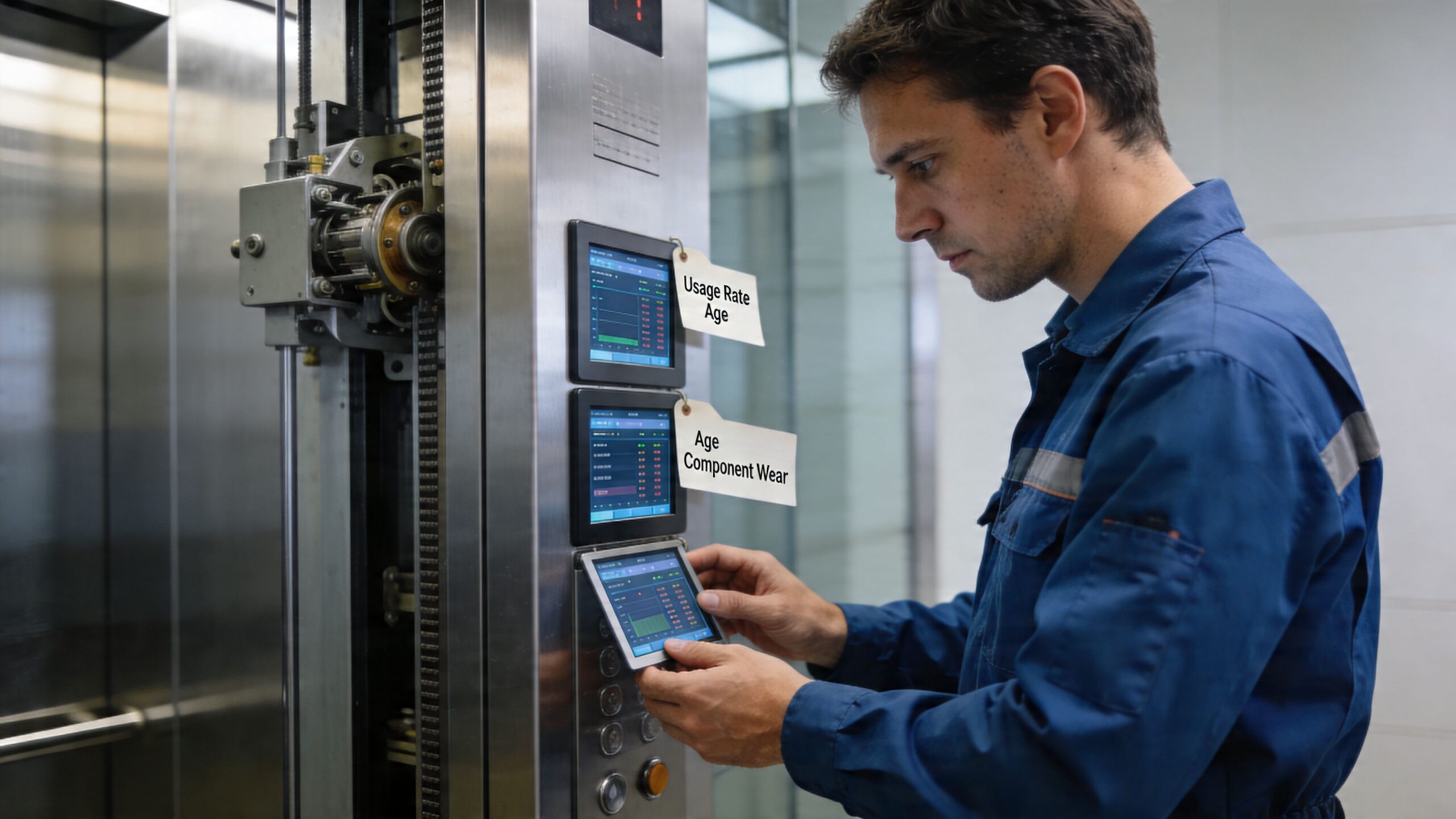
No two maintenance quotes should be identical unless the equipment, traffic, and contract scope are also identical. If your numbers seem far apart between providers, the difference usually comes from four places.
Age and current condition
Older equipment doesn’t always cost more just because it’s old. It costs more when wear has been allowed to accumulate.
A well-kept older hydraulic or traction unit can be steady and predictable. A newer unit with deferred care can be expensive fast. Technicians price for what they expect to walk into. If the controller room is dirty, the doors are out of adjustment, or the logs show repeat shutdowns, the contract will reflect that risk.
Make model and parts access
Many owners often lose their advantage without realizing it.
A proprietary system can lock you into one manufacturer’s ecosystem for software, boards, specialty tools, and replacement parts. A non-proprietary system gives you more service options and usually a better long-term negotiating position. According to this breakdown of elevator maintenance cost and serviceability, proprietary systems can inflate long-term service costs by 20 to 50%, while non-proprietary modernizations can cut replacement costs by up to 30% over a 10-year period.
If your building is already dealing with cable wear or related hoistway issues, reviewing the broader maintenance picture alongside a component-specific assessment matters. This guide on elevator cable replacement is one example of how a single wear item can affect budgeting beyond the immediate repair.
A proprietary elevator may look competitive at install. The service relationship often tells the real story later.
Traffic and use profile
An elevator in a quiet office building doesn’t live the same life as one in a school, medical building, or warehouse.
Usage changes everything:
- Door cycles increase wear
- Freight loading stresses components
- Peak-time traffic exposes leveling and dispatch issues
- Frequent starts and stops shorten the life of some parts
The quote should reflect actual use, not just the number of floors.
Contract scope
This is the most direct pricing driver. Some agreements cover routine visits only. Others include broader preventative care, minor consumables, and more detailed inspection work. If one proposal is much cheaper, compare scope line by line before you compare price.
Choosing Your Contract The High Price of Low-Quality Service
Cheap elevator maintenance is rarely cheap. It usually shifts cost out of the monthly line item and into callbacks, tenant complaints, deferred repairs, and earlier modernization.
That is the part many owners miss when they compare proposals side by side.
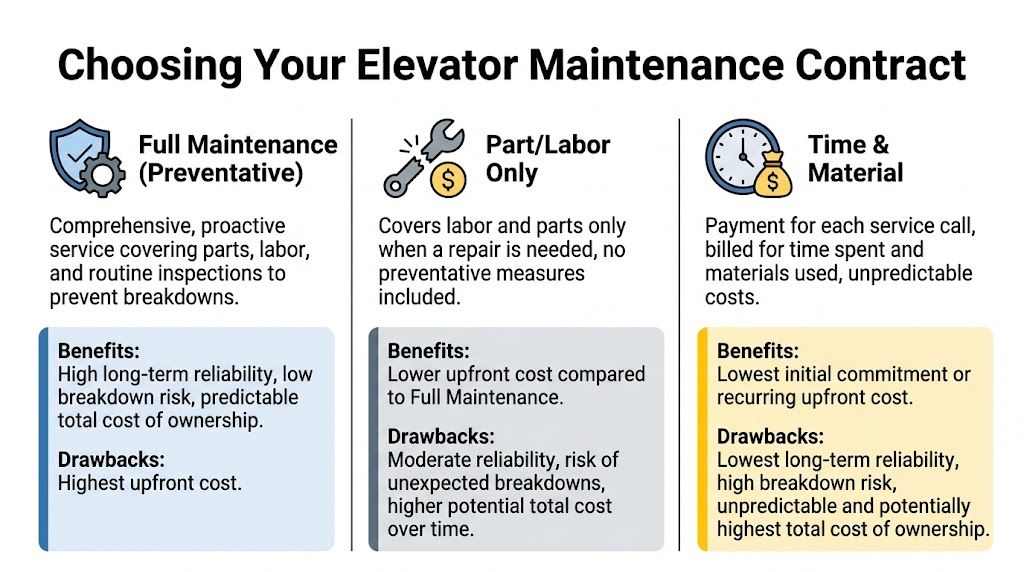
Three contract models with very different outcomes
| Contract Type | Upfront Cost | Predictability | Typical Risk |
|---|---|---|---|
| Full maintenance preventative | Higher | Higher | Lower risk of surprise repair exposure |
| Part or labor only | Mid-range | Moderate | Gaps in coverage create budget swings |
| Time and material | Lower upfront | Low | Breakdown-driven spending and hard-to-control annual cost |
On paper, a time-and-material contract can look efficient. In practice, it often works best for low-use equipment, owners who can tolerate downtime, or buildings already planning major work. It is a poor fit for properties where an outage becomes a management problem the same day.
A full preventative contract costs more each month, but it usually lowers total ownership cost. The reason is simple. More of the work happens before failure instead of after it.
What a good contract actually buys
For buildings that depend on reliable service, contract scope matters more than the headline rate. In Southern Michigan, that includes apartment properties, municipal buildings, medical offices, schools, and older commercial buildings where weather, age, and parts condition can turn a small issue into a shutdown fast.
A solid preventative agreement should cover scheduled visits with enough onsite time to do real work. That includes door operator adjustment, controller review, lubrication where required, cleaning, inspection of wear items, and follow-up on repeat trouble calls. If the mechanic is only resetting faults and leaving, the owner is funding decline, not maintenance.
Practical rule: If the contract only responds after the elevator fails, the building is paying for a repair program, not a maintenance program.
That trade-off becomes expensive over time.
Why low-quality service costs more
As noted earlier in the article, neglected maintenance can create a major long-term financial burden compared with consistent preventative service. The gap is not just repair cost. It also shows up in shortened equipment life, more tenant disruption, higher emergency call volume, and capital work getting pushed onto the budget sooner than expected.
I see the same pattern across Southern Michigan. A low bid gets approved, service visits get shorter, cleanup and adjustment work disappear, and the building starts seeing repeat shutdowns that should have been prevented months earlier. By the time ownership decides to change contractors, the elevator often needs more than better maintenance.
Questions owners should ask before signing
A property manager should press past the sales sheet and ask how the work will be performed.
- How much technician time is designated for on-site service
- What preventive tasks are included in each visit
- What parts, consumables, or minor repairs are excluded
- How are repeat callbacks documented and corrected
- Can the elevator be serviced by non-proprietary providers if ownership changes vendors later
That last question matters more than many owners realize. A contract tied to proprietary tools, restricted parts, or manufacturer-only access can limit your options later and drive service costs higher over the life of the equipment. A slightly higher monthly price for quality, non-proprietary service often produces a better return because it protects competition, parts access, and future bargaining power.
The hidden liability in the cheapest proposal
The cheapest agreement often wins because it is easy to approve. It also creates the most room for unpleasant surprises:
- Emergency callbacks that were predictable
- Repair proposals caused by deferred maintenance
- Tenant frustration and staff time spent managing outages
- Code-related corrections surfacing at the worst time
- Modernization timelines moving up before the owner planned for them
Owners do not need the highest-priced contract. They need one that fits the building, the traffic, the equipment condition, and the financial risk of downtime.
The best agreements are specific. They define scope clearly, leave less room for exclusions, and support long-term serviceability instead of trapping the building in a cheap cycle that gets expensive later.
Cost Examples for Southern Michigan Properties
A Southern Michigan maintenance budget can look reasonable on paper and still cost more over five years if the contract is thin, the service is reactive, or the equipment is tied to one provider.
Detroit office building
A multi-story office building in Detroit with a traction passenger elevator usually sits in the highest-risk category in this group. Weekday traffic is steady. Deliveries, start-of-day peaks, and tenant expectations put real pressure on door operators, dispatching, and ride performance.
Earlier pricing benchmarks place this type of building in a commercial range of roughly $3,000 to $8,000 per year, with many traction units falling in the $4,800 to $9,600 annual range depending on age, condition, and contract scope. In the field, the spread usually comes from three things: how much preventive work is performed, how often the car is already breaking down, and whether the contractor is pricing for future callbacks they expect to eat.
Cheap service gets expensive fast in this setting. One bad month of repeat shutdowns can burn more staff time and tenant goodwill than the annual savings ever justified.
Ann Arbor apartment property
An Ann Arbor apartment building with one hydraulic elevator has a different profile. Traffic is lighter than a downtown office property, but reliability matters just as much because residents use the elevator every day, move-ins are hard on doors, and accessibility complaints become management problems immediately.
Earlier benchmarks put hydraulic systems around $4,200 to $6,000 annually in many commercial settings. A smaller multifamily property in decent shape may land toward the lower end of that range if the controller, pump unit, and door equipment have been kept up.
I see owners miss the same cost over and over in apartment buildings. It is not just the invoice. It is maintenance staff coordinating around outages, residents calling the office, and deferred repairs turning into a larger capital problem a year earlier than expected. If the building has equipment that can only be serviced by one source, the owner loses pricing pressure later. That is why non-proprietary elevator service options deserve attention even on smaller properties.
Kalamazoo home elevator
A home elevator in Kalamazoo is a different budget conversation. As noted in Angi's residential data mentioned earlier, annual spending is much lower than commercial service, and hydraulic home elevators usually cost more to maintain than simpler residential configurations.
Travel time matters more in residential work than many homeowners expect. Outside denser service areas, labor availability is tighter and the trip charge can change the total more than the inspection itself. That is one reason the lowest annual plan is not always the lowest real cost. If the contract excludes adjustments, minor parts, or callback coverage, the owner ends up paying retail rates every time something small goes wrong.
What these examples show
The same monthly price can mean very different financial outcomes.
In Southern Michigan, the better question is not "What does elevator maintenance cost?" It is "What will this contract let me avoid?" A stronger agreement usually buys fewer shutdowns, better parts access, and more control over long-term service costs. That return is easy to miss if you only compare the monthly number.
How to Reduce Your Elevator's Lifetime Costs

Lowering lifetime cost doesn’t mean squeezing the contract until service quality breaks down. It means making decisions that preserve competition, reduce failure risk, and keep the asset serviceable for longer.
Choose serviceable equipment during upgrades
Modernization decisions shape future maintenance more than many owners expect. If you’re replacing controllers, operators, or key components, prioritize parts and systems that qualified independent providers can service.
This matters enough that it should be part of every modernization conversation. Owners comparing options should understand the long-term service implications of non-proprietary elevators, not just the upfront project number.
Fix obsolescence before it turns urgent
Waiting until a critical part fails leaves you with fewer choices. Emergency modernization is usually the worst time to negotiate scope, schedule, or downtime planning.
A better approach is to identify obsolete or failure-prone components early and replace them on your timeline. That keeps the building in control.
Use technology as a supplement not a substitute
Predictive maintenance tools can help, but only when they support real field maintenance. According to Elevator World’s analysis of maintenance trends, predictive IoT systems can cut emergency repairs by 25 to 40%, but some providers use them to reduce physical visits, which can raise long-term cost. A hybrid model combining IoT alerts with regular hands-on checks lowers true annual costs by 10 to 15% without sacrificing safety.
Remote monitoring should tell a technician where to look. It shouldn’t become an excuse not to look.
Keep compliance current
Code issues are expensive when they pile up. They’re manageable when they’re tracked and corrected in an orderly way.
Owners who control lifetime cost usually do three things well:
- They document service and inspection history
- They plan modernization before parts become a crisis
- They avoid locking themselves into one service source unless there’s a clear reason
Frequently Asked Questions for Building Owners
What’s usually excluded from a standard maintenance contract
Major modernization work, damage from misuse, and some specialty parts are commonly outside routine maintenance agreements. That’s why owners should ask for exclusions in writing before comparing bids. If the proposal is vague, the risk is yours.
How are emergency service calls typically billed
That depends on contract scope. Some agreements include certain callback response obligations. Others bill emergency visits separately, especially after hours. The important part is clarity. If a provider can’t explain how emergency labor and parts are handled, the contract isn’t clear enough.
Should I finance modernization work
Financing can make sense when it lets you replace obsolete equipment before failures start dictating your budget. The right approach depends on the age of the system, parts availability, and whether repeated repairs are delaying a larger capital decision.
How do I know if my building is heading toward a code issue
Review your inspection history, open violations, and modernization status regularly. If you operate in Michigan, code planning should already be on your radar. This overview of the Michigan elevator code deadline January 1st 2028 is a useful place to start.
What’s the best question to ask before signing a maintenance agreement
Ask this: “What work are you doing every visit that prevents the next shutdown?”
If the answer is thin, the contract probably is too.
If you need a practical review of your current elevator maintenance cost, Crane Elevator Company serves Lower Michigan with proactive preventative maintenance, non-proprietary modernization options, responsive repair service, and customizable maintenance agreements built around the actual condition and use of your equipment. For owners who want competitive rates without sacrificing maintenance quality, Crane offers the kind of direct, field-tested guidance that helps reduce lifetime cost instead of just lowering this month’s invoice.