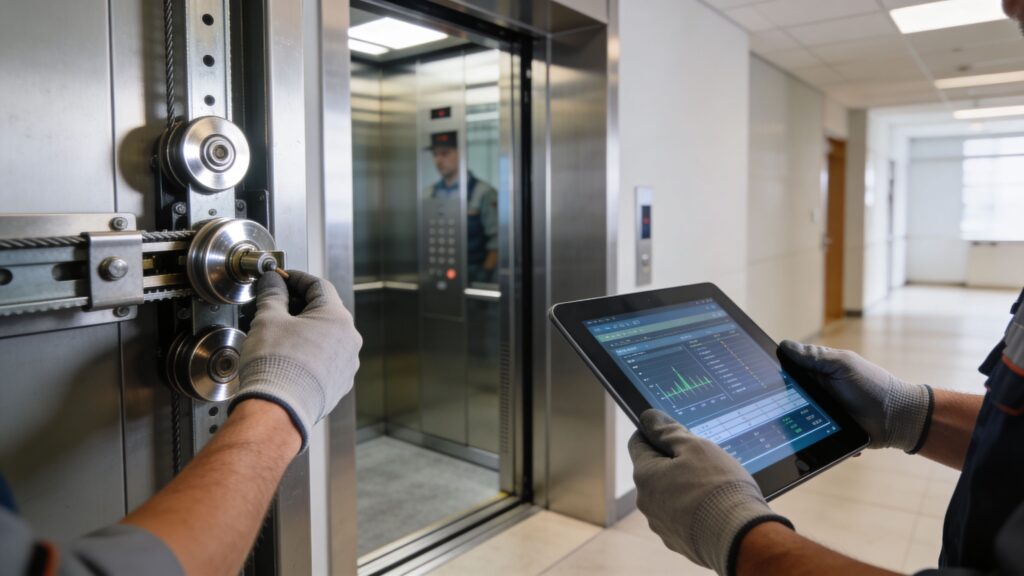
A tenant calls before 9 a.m. The elevator on the medical office floor is “making that scraping noise again,” and the doors took two tries to close. By lunch, someone from accounting emails about patients waiting too long in the lobby. By afternoon, you’re wondering whether this is a minor adjustment, a code issue, or the start of another expensive repair cycle.
That’s how elevator door problems usually show up. Not as a dramatic shutdown at first, but as small daily failures that chip away at safety, tenant confidence, and your maintenance budget. In Michigan buildings with steady foot traffic, the door system is the part that gets used, bumped, dirtied, and stressed every day.
A good elevator door maintenance program turns those warning signs into planned work instead of emergency calls. That matters because door and safety systems make up a significant share of elevator maintenance spending, and in the U.S. elevators handle over 18 billion trips annually. Door-related issues contribute substantially to incidents, while mechanical failures account for about 15.3% of accidents, according to Fortune Business Insights on the elevator maintenance market.
Why Your Elevator Doors Are a Top Priority
Most building managers don’t get complaints that say, “Your interlock is drifting out of tolerance.” They hear, “The doors are slow.” “They shudder.” “They opened and then closed again.” Those are operational complaints, but they point to a deeper issue. Elevator doors sit at the intersection of safety, code compliance, uptime, and tenant experience.
The part of the elevator everyone notices
Passengers don’t see the controller, governor, or machine. They see the doors. If the doors hesitate, scrape, reopen repeatedly, or close with obvious force, people assume the whole elevator is unreliable. In an office building, that creates friction. In healthcare, senior living, education, and municipal properties, it can affect movement through the building in a much more serious way.
Door systems also take more abuse than most owners realize. Dirt gets tracked into the sill. Hangers wear. Rollers flatten. Clutches fall out of adjustment. A cleaning crew can’t fix that, and waiting for a failure usually makes the eventual repair broader than it needed to be.
Practical rule: If the problem is visible to tenants, it’s already more than a cosmetic issue.
Small symptoms can become liability problems
A noisy door isn’t automatically dangerous. But a noisy door often means friction, misalignment, loose hardware, debris buildup, or worn components. Those conditions rarely improve on their own. They usually progress from annoyance to service interruption, and from service interruption to a safety inspection issue.
For Michigan property managers, that changes the conversation. Elevator door maintenance isn’t just a line item. It’s a way to control risk. Planned adjustments, clean-downs, and part replacement cost less in disruption than an after-hours entrapment call, a failed inspection item, or an upset tenant asking why the elevator has been “acting up for weeks.”
What works and what doesn’t
What works is routine attention to the full door system. That means inspection, cleaning, testing, adjustment, and replacing worn parts before they start damaging neighboring components.
What doesn’t work is treating each complaint as a one-off. When a contractor only resets the symptom and doesn’t address the root cause, the building ends up paying for the same door twice.
Understanding Your Elevator's Core Systems
If you manage multiple properties, you don’t need to become a mechanic. You do need enough system knowledge to ask better questions, approve the right work, and spot when a proposal is solving the wrong problem.
Two common elevator types
Most commercial managers in Michigan will run into traction elevators, hydraulic elevators, or both.
A traction elevator uses a machine, ropes or belts, and a counterweight to move the car. It operates as a balanced lifting system. The counterweight offsets much of the car’s load, which helps the machine move the car efficiently and with control over longer travel.
A hydraulic elevator raises the car by pushing it with fluid pressure. These are common in lower-rise buildings. They’re mechanically different from traction units, but the practical point for a manager is simple. The drive system changes how the car moves. The door system still has to open, close, align, lock, and protect passengers every trip.
The main parts that matter
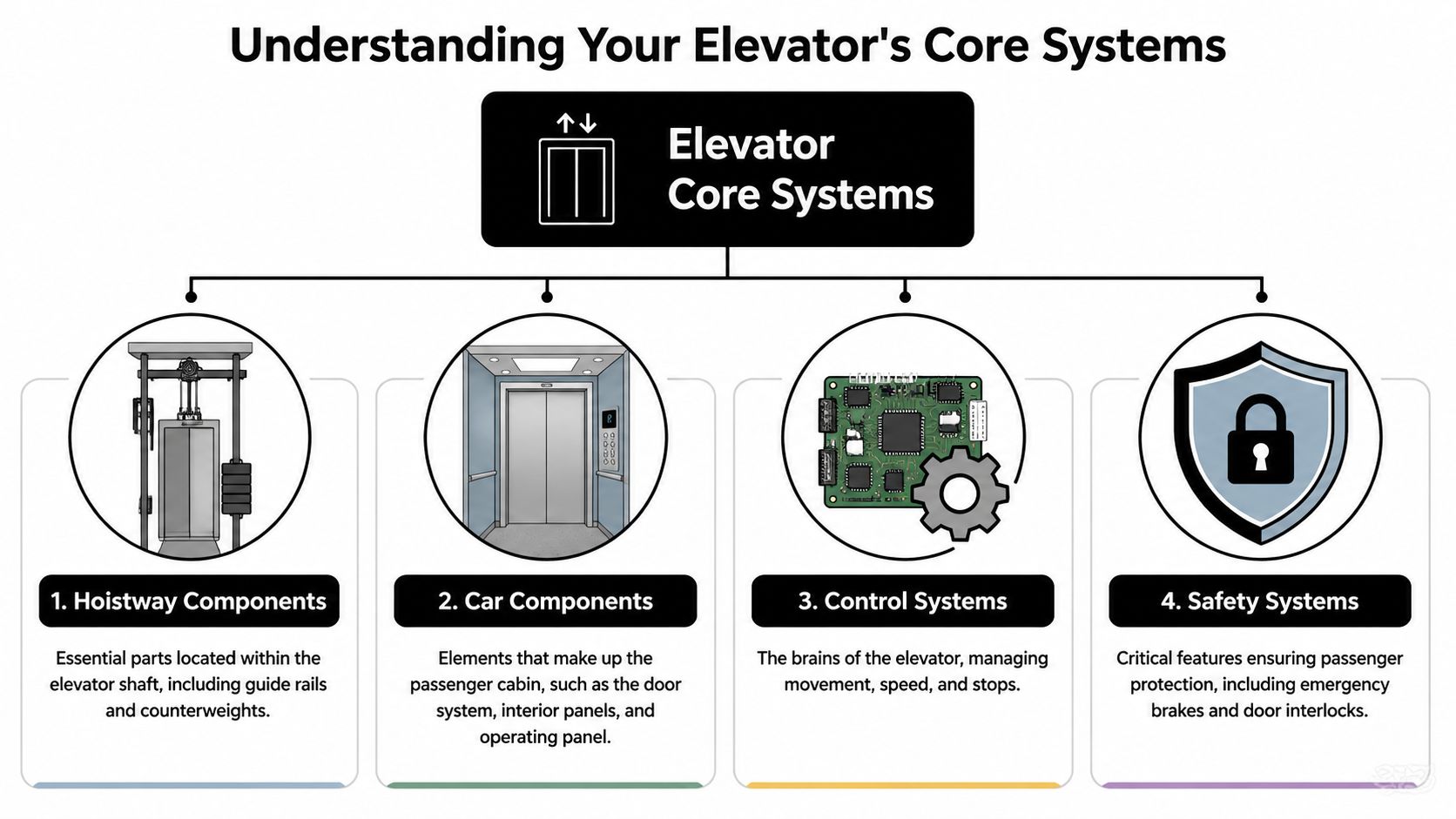
Here’s the plain-English version of the elevator’s core systems:
-
Machine or motor
This is the power source that moves the car. On traction units, it drives the lifting system. On hydraulic units, the pump and power unit do the heavy work. -
Controller
This is the decision-maker. It tells the elevator where to go, when to slow, when to level, and when the doors are allowed to open. -
Car and sling or frame
The car is what passengers ride in. The supporting frame carries that load and keeps the car aligned on its guide path. -
Guide rails
These keep the car and, where applicable, the counterweight traveling in a controlled path inside the hoistway. -
Governor and safeties
These are protective systems designed to respond if travel conditions become unsafe. -
Counterweight
In traction systems, this balances the car much like a seesaw balances weight on the other side. It reduces strain on the machine.
Where the doors fit into the bigger picture
The doors aren’t a standalone accessory. They’re tied directly to controls and safety logic. The controller won’t permit normal operation unless it gets the correct signals from the door equipment. If the car door, hoistway door, interlock, restrictor, or related circuits don’t behave correctly, the elevator may stop running, reopen unexpectedly, or go out of service.
That’s why a door issue can look larger than it is. A worn roller may seem minor, but if it causes poor alignment, that can affect clutch engagement, door closing, lock pickup, and ride availability.
A building manager doesn’t need to know every adjustment spec. They do need to know that elevator doors are part mechanical system and part safety circuit.
Why this matters during vendor conversations
When a contractor says the operator is weak, the interlocks are dirty, or the hanger assembly is worn, you’re in a better position to ask useful follow-ups:
- Is the issue isolated or part of broader wear?
- Is this a repair, a recurring adjustment, or a sign the door package is aging out?
- Will this work improve reliability, or just clear the current trouble?
Those questions usually separate maintenance thinking from patchwork thinking.
A Closer Look at Elevator Door and Safety Devices
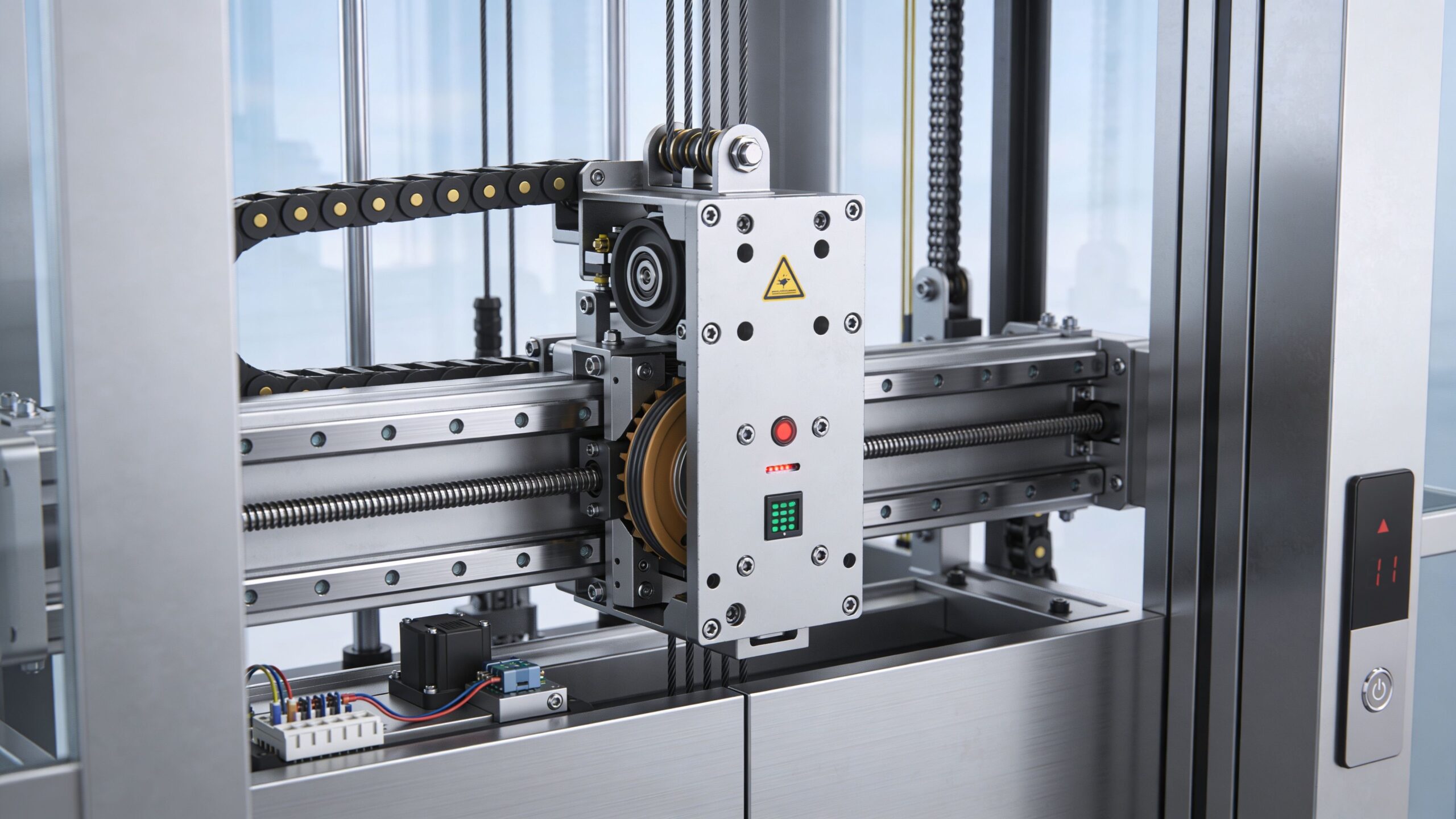
Once you narrow your focus to the entrance, you can see why so many service problems start there. The door system has moving mechanical parts, electrical contacts, alignment points, and passenger protection devices all working in sequence. If one part drifts, the whole opening cycle gets rough.
The hardware that makes the doors move
The door operator is the assembly that drives opening and closing. When managers describe doors as sluggish or jerky, the operator is one of the first places technicians look. It has to move the door panels consistently and with enough control to keep timing, force, and alignment within acceptable limits.
The hangers and rollers suspend the panels and let them travel along the track. As they wear, doors start to rattle, drag, or move unevenly. A single bad roller can make a healthy operator look weak.
The gibs guide the lower part of the door panel. If they wear down or loosen, the panel can wander instead of staying properly aligned. The sill at the threshold collects dirt, salt, grit, and small debris. When that material builds up, the door has to fight through it on every cycle.
The clutch is the device that allows the car door mechanism to engage the landing door system. If that engagement is off, you’ll see inconsistent opening, failed pickups, or doors that don’t behave the same way floor to floor.
The devices that protect passengers
The most important safety pieces are the ones many owners never see. Door interlocks and restrictors are safety-critical devices. Malfunctions are linked to 15% to 20% of entrapment incidents, and ASME A17.1 requires their mechanical and electrical integrity to be tested so they resist forced opening and maintain reliable electrical contact, as described by Adams Elevator’s maintenance guidance.
Interlocks make sure the hoistway door stays locked when the car isn’t there. Restrictors help prevent the car door from opening outside the proper zone. If either device fails, the risk isn’t just nuisance downtime. It becomes a serious exposure for the owner.
Passenger protection devices also matter. Depending on the equipment, that may include a safety edge or a light curtain. These systems detect a person or object in the opening and command the door to reopen. If you’re seeing nuisance reopenings or missed detections, the sensing side of the system needs attention. Managers dealing with repeat entrance faults often benefit from a focused look at elevator door sensor service.
Keep this distinction in mind. A smooth door is a comfort issue. A properly locking and protected door is a life-safety issue.
Why Door Lock Monitoring matters
Door Lock Monitoring, often shortened to DLM, matters because modern code expectations increasingly focus on proving the lock circuit is doing what the elevator thinks it’s doing. In practical terms, that means the system isn’t relying on assumption. It’s verifying that the doors are locked before movement is allowed.
For a building manager, the takeaway is simple. If you’re operating older equipment, especially equipment with recurring entrance issues, code-driven updates may push you toward electrical upgrades, lock circuit work, or modernization planning sooner than expected.
Common Signs of Wear and Impending Failure
Managers usually catch door trouble with their ears before they catch it in a service log. Scraping, chattering, repeated reopenings, or a slow close cycle are all useful clues. The value isn’t in diagnosing it yourself. The value is in reporting the symptom early and accurately.
Door-related malfunctions account for 42% of all elevator service calls, mainly from operator failures, clutch engagement problems, and alignment issues that worsen when maintenance is delayed, according to this elevator preventive maintenance checklist.
What the symptoms usually mean
A grinding or scraping sound often points to debris in the sill, worn rollers, or a panel that’s no longer tracking cleanly. A jerky start or stop can indicate operator strain, poor adjustment, or a mechanical bind in the travel path.
If the doors close, then pop back open, the system may be seeing resistance, misreading the protective device, or failing to complete the closing sequence cleanly. If one landing behaves worse than the others, that often suggests a floor-specific track, sill, clutch, or interlock issue rather than a building-wide controller problem.
A quick field table for property walks
| Symptom | Likely Cause | Recommended Action |
|---|---|---|
| Scraping at the threshold | Debris in sill, worn gib, misalignment | Request cleaning and door alignment inspection |
| Jerky opening or closing | Worn rollers, operator adjustment issue, track resistance | Schedule a door system service visit |
| Repeated reopening | Sensor issue, closing force issue, door drag | Have the protective device and operator tested |
| Door doesn’t close fully | Clutch engagement problem, track obstruction, interlock issue | Remove from normal use if needed and call for repair |
| One floor is worse than the rest | Landing-specific sill, lock, or track wear | Ask for a floor-by-floor entrance inspection |
| Loud rattling during travel cycle | Loose hardware, hanger wear, panel instability | Request mechanical tightening and component review |
What to watch during daily rounds
Use your routine building walk to notice patterns, not to perform mechanical work.
- Listen for repeat noise: If the same entrance makes noise every day, it isn’t random.
- Watch the panel gap: Uneven reveal or visible rubbing usually means alignment has drifted.
- Check the threshold area: Dirt, grit, and small trash in the sill create avoidable drag.
- Notice tenant behavior: If people hesitate before stepping in, they’ve already lost confidence in the entrance.
If you’re seeing those signs, don’t wait for a shutdown to confirm the problem. That’s the right time to arrange elevator door repair.
The earlier report is often the cheaper report. Doors usually announce wear before they fail.
Your Proactive Elevator Maintenance Checklist
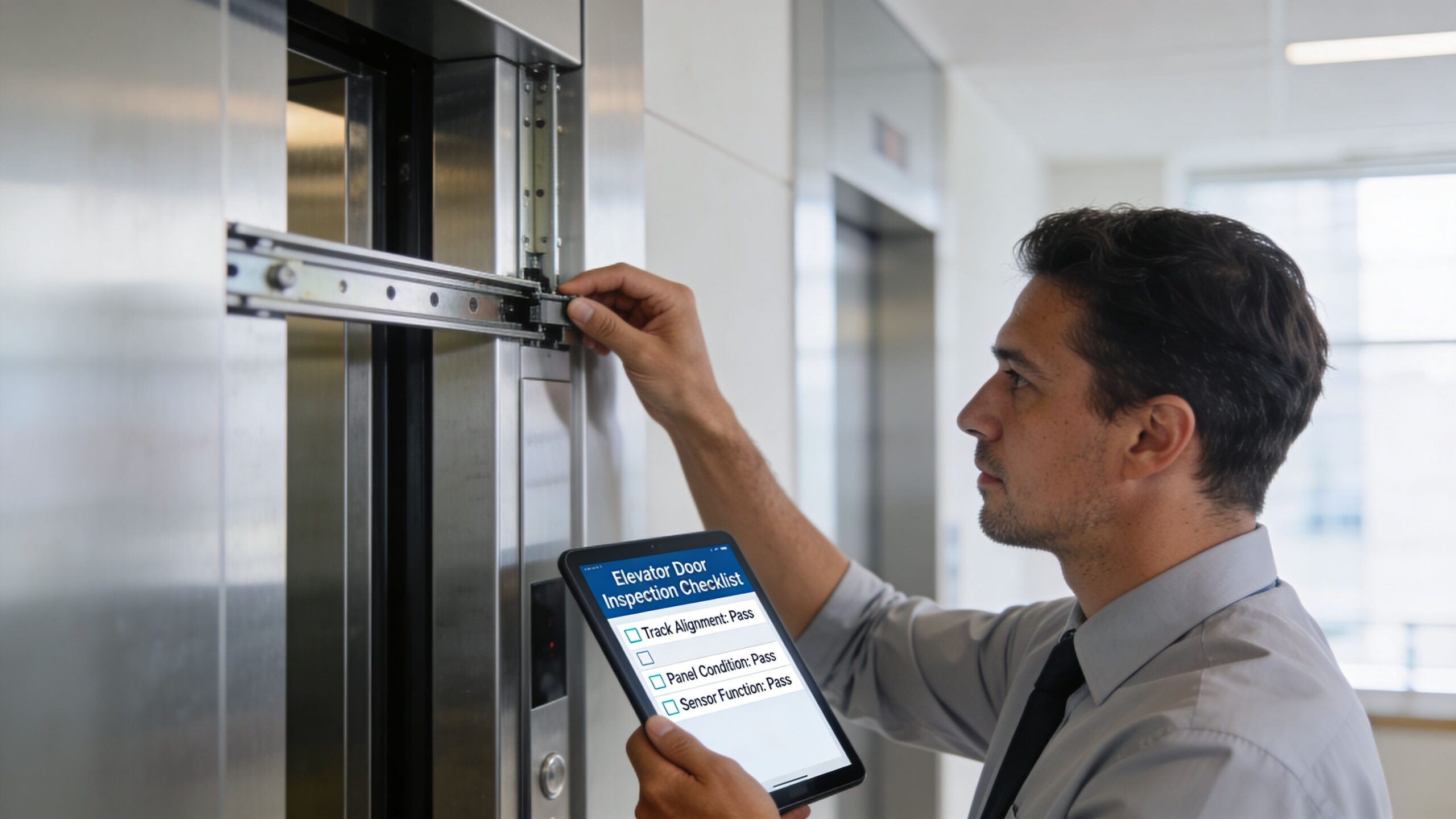
A strong elevator door maintenance program has two layers. The first is simple building-side observation. The second is professional preventive work that your staff should never try to replace.
What your staff can check safely
Your team can help by noticing conditions that create wear or signal trouble.
- Keep the sill area clean: Remove visible dirt and trash at the threshold so debris doesn’t get driven into the door path.
- Watch door timing: If the opening or closing cycle changes noticeably, report it.
- Look for damaged panels: Dents and impact damage can affect alignment.
- Check hall indicators and cab lights: Burned-out position indicators and related fixtures should be reported promptly.
- Document complaints by floor and time: Patterns help a technician isolate intermittent door faults faster.
That kind of observation improves service quality because it gives the mechanic better information. It doesn’t replace testing, adjustment, or code work.
What a qualified contractor should be doing
Professional maintenance is more than a quick glance at the entrance. It should include inspection, cleaning, adjustment, lubrication where appropriate, and testing of safety-related functions. On door systems, that means checking moving hardware, alignment points, protective devices, electrical contacts, and lock behavior.
For many Michigan properties, the highest-value work is the least glamorous. Full clean-downs of the car top, pit, machine room, and entrance areas prevent dirt from becoming a mechanical problem. Some contractors also include routine lamp or indicator replacement and digital service records, which helps during audits and recurring troubleshooting. Crane Elevator Company is one provider in Lower Michigan that offers preventive maintenance with full clean-downs and inclusive COP/PI bulb replacements as part of its service program.
Where managers should draw the line
Don’t let in-house maintenance lubricate random door components, bend tracks back into place, or bypass a sensor to “keep the elevator running.” Those short-term fixes often create larger liability problems and make the technician’s job harder later.
The right handoff looks like this:
- Building staff reports symptoms clearly.
- The elevator contractor inspects the full door cycle.
- Findings are documented in plain language.
- You decide whether the issue belongs in routine maintenance, targeted repair, or capital planning.
The Financial Decision Repair Maintain or Modernize
Most owners don’t struggle to understand that elevator doors need work. They struggle to decide which kind of work makes financial sense. That’s where a lot of budgets get trapped. Too much money goes into recurring repairs, but not enough certainty exists to justify a larger upgrade.
The industry content itself admits the gap. While many sources say elevator doors can drive the majority of service calls, they rarely put hard ROI numbers on preventive care. That leaves managers trying to defend maintenance spend against downtime, emergency repair disruption, and tenant frustration without a neat spreadsheet answer, as discussed in this analysis of smooth elevator door operation over time.
When repair still makes sense
Repair is usually the right move when the issue is localized and the rest of the entrance system is sound. Examples include a failed sensor, a worn roller set, isolated clutch adjustment, or damage tied to one landing. If the door system has been reliable and parts are still available, targeted repair is often the practical choice.
When maintenance is the smarter spend
Maintenance makes sense when the goal is to stop repeat calls before they become standard operating cost. That’s especially true in buildings where elevator downtime creates outsized operational headaches, such as medical offices, senior housing, mixed-use properties, and municipal facilities.
The mistake is comparing maintenance only to “doing nothing this month.” Instead, the comparison is maintenance versus recurring disruptions, emergency callouts, avoidable tenant complaints, and accelerated wear on related components.
A maintenance budget is easier to defend when you treat it as risk control, not housekeeping.
When modernization should move into the conversation
Modernization enters the picture when the doors are no longer just old, but expensive to keep old. Signs include chronic parts issues, repeated entrance faults across multiple floors, persistent code-related upgrades, and repairs that improve operation briefly but don’t hold.
At that point, the decision isn’t repair cost versus modernization cost in isolation. It’s total cost of ownership over the next several years. For owners evaluating that threshold, a review of elevator modernization cost considerations can help frame the discussion around lifecycle value, not just the next invoice.
Non-proprietary modernization also matters. Building owners generally benefit when future service doesn’t depend on a single vendor’s locked ecosystem.
Partnering with a Michigan Elevator Expert
For Michigan property managers, elevator door maintenance is rarely just about one noisy entrance. It’s about whether the building is managing a visible symptom or controlling a real operational risk. Doors affect safety, uptime, inspections, tenant confidence, and the pace of future capital decisions.
That’s why the right contractor relationship matters. You want a company that can separate a simple adjustment from a recurring defect, document findings clearly, respond when the elevator is down, and recommend modernization only when the pattern supports it. You also want a service approach that doesn’t lock your building into proprietary dependence later.
In Southern Michigan, that usually means looking for practical traits rather than sales language. Family ownership can matter because accountability stays close to the work. Round-the-clock availability matters because door failures don’t respect office hours. A clear maintenance standard matters because a “visit completed” note isn’t the same thing as cleaned entrances, tested locks, and documented conditions.
The best elevator door maintenance programs are the ones that make fewer surprises show up in your inbox. They reduce repeat complaints, help you plan spending earlier, and give you cleaner information when you do need to repair or modernize.
If you manage elevators in Lower Michigan and want a practical second opinion on recurring door issues, maintenance gaps, or modernization timing, contact Crane Elevator Company for a quote or site review.