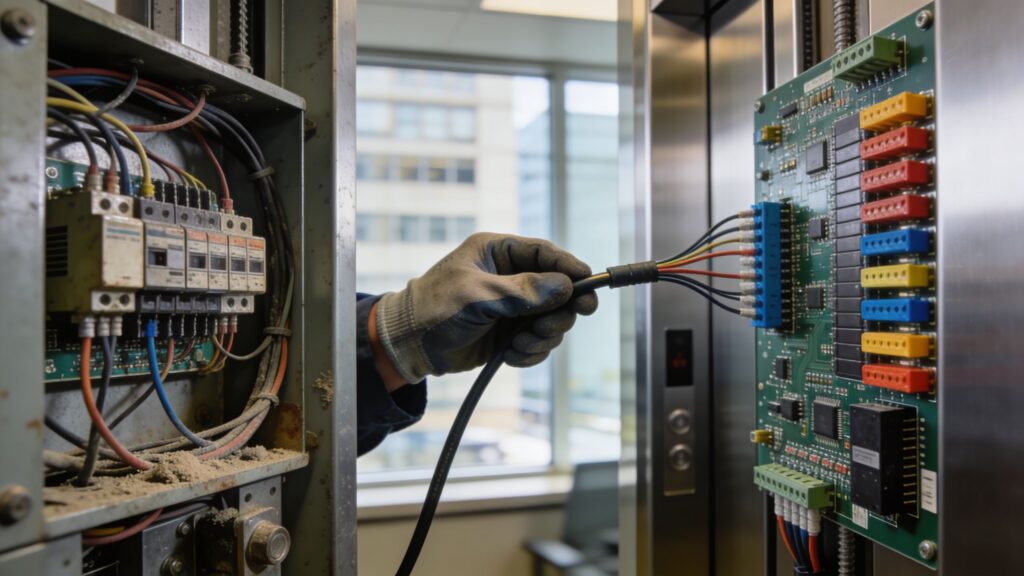
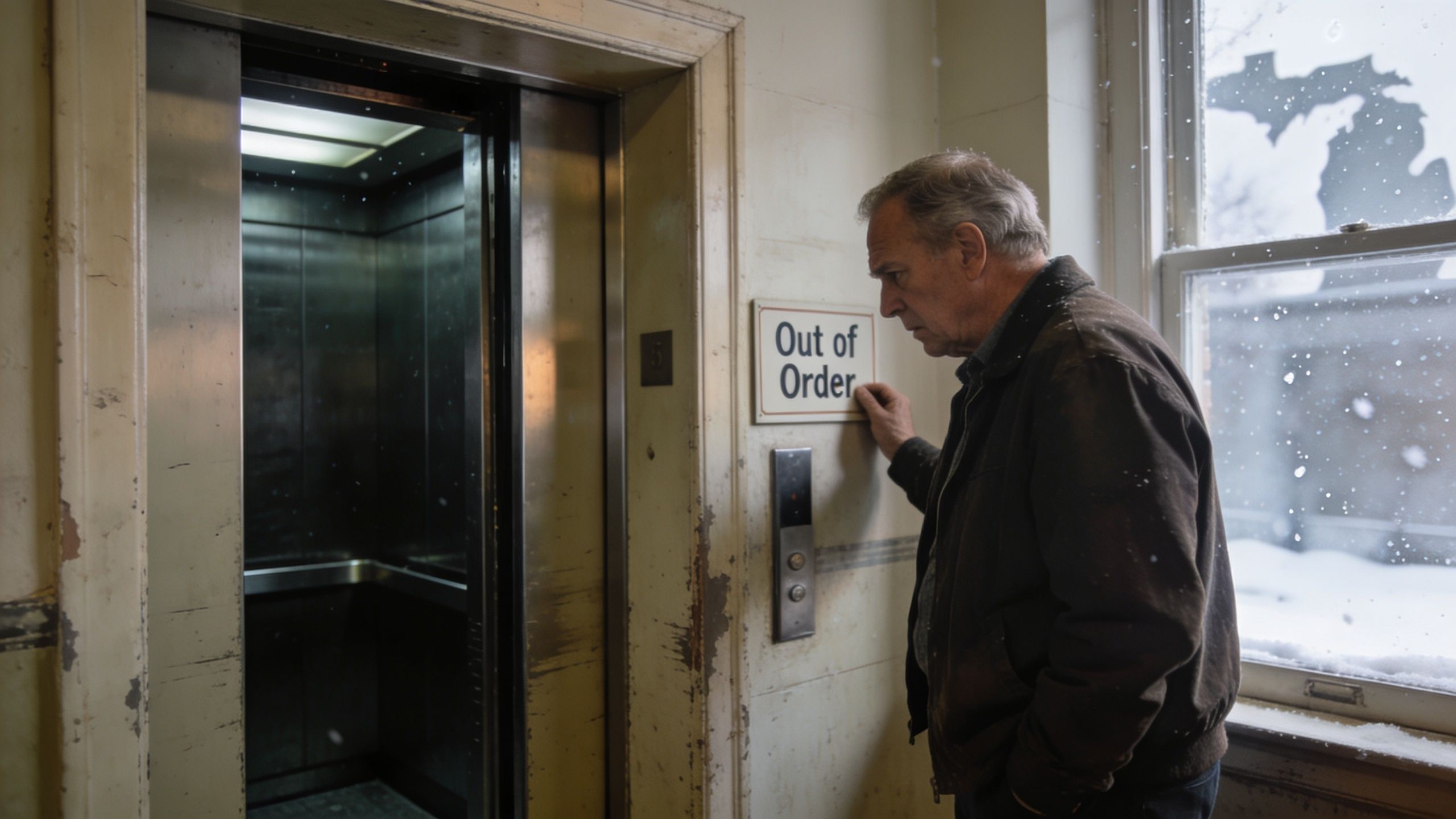
An elevator starts acting up in the worst possible way. Not a total failure you can immediately diagnose, but a string of small problems that keep turning into service calls. It mislevels on one floor, ignores a hall call on another, then randomly goes out of service after a power disturbance. One mechanic resets it. Another replaces a relay. A third says the controller is old and hard to support.
That’s usually the point where a Michigan building owner hears the name virginia controls and asks the right question. Not, “What brand of elevator is this?” but, “What exactly is controlling this unit, and can someone local fix it properly?”
Virginia Controls is not an elevator manufacturer. It’s a controller manufacturer, and an important one. The company was founded in 1967 and is described as one of the oldest independent elevator controller manufacturers in the United States, with a non-proprietary approach that makes service possible for qualified providers rather than locking owners into a single source, according to Virginia Controls company information.
Your Guide to Virginia Controls Elevators in Michigan
That distinction matters more than most owners realize. If the controller is non-proprietary, the elevator doesn’t automatically become hostage to one national OEM’s pricing, lead times, and service model. In the field, that changes how repairs are approached, how parts are sourced, and whether a modernization can stay practical instead of turning into a full replacement conversation.
What Virginia Controls actually means
Virginia Controls built its reputation around non-proprietary controllers. For building owners, that means the system is designed with serviceability in mind. A qualified elevator contractor can diagnose, repair, and maintain it without needing a factory gatekeeper for every problem.
That doesn’t mean every contractor is equally good at it.
A Virginia Controls system still needs someone who understands sequence, field wiring, door operations, safety chain behavior, and how the controller interacts with the rest of the equipment. When a mechanic doesn’t know the platform well, the repair often turns into guesswork. Boards get swapped. Temporary bypasses appear. Intermittent faults come back.
Practical rule: A non-proprietary controller gives you options. It doesn’t guarantee good troubleshooting.
Why Michigan owners should care
Southern Michigan has plenty of aging elevators in medical buildings, schools, factories, apartment properties, churches, and municipal facilities. Many of those units aren’t ready for full replacement, but they are overdue for better diagnosis and a realistic plan.
Owners usually need three things:
- Reliable repair: Not repeated resets that fail again next week.
- Cost control: A path that avoids unnecessary proprietary markups.
- Compliance confidence: Work that can stand up to inspection and modernization requirements.
Virginia Controls equipment can fit that need well, especially in older buildings where owners want a practical upgrade path instead of being forced into a single manufacturer’s ecosystem. The key is having a contractor who can separate a repairable issue from a controller that has reached the point where modernization makes more sense.
How Virginia Controls Systems Actually Work
A Michigan building owner usually sees the problem when the car starts missing calls, leveling gets inconsistent, or the elevator drops out for no obvious reason. The controller is often at the center of that conversation because it is the traffic cop for the whole system. If the panel is hard to read, poorly documented, or locked behind proprietary access, every service visit gets slower and more expensive.
Virginia Controls systems appeal to owners for a simple reason. A qualified elevator contractor can get into the controller, trace the sequence, and determine whether the fault is in the cabinet or somewhere else on the elevator. That matters in older schools, apartment buildings, churches, and commercial properties across Michigan where owners need serviceable equipment, not a panel that turns every repair into a manufacturer call.
What is inside the controller
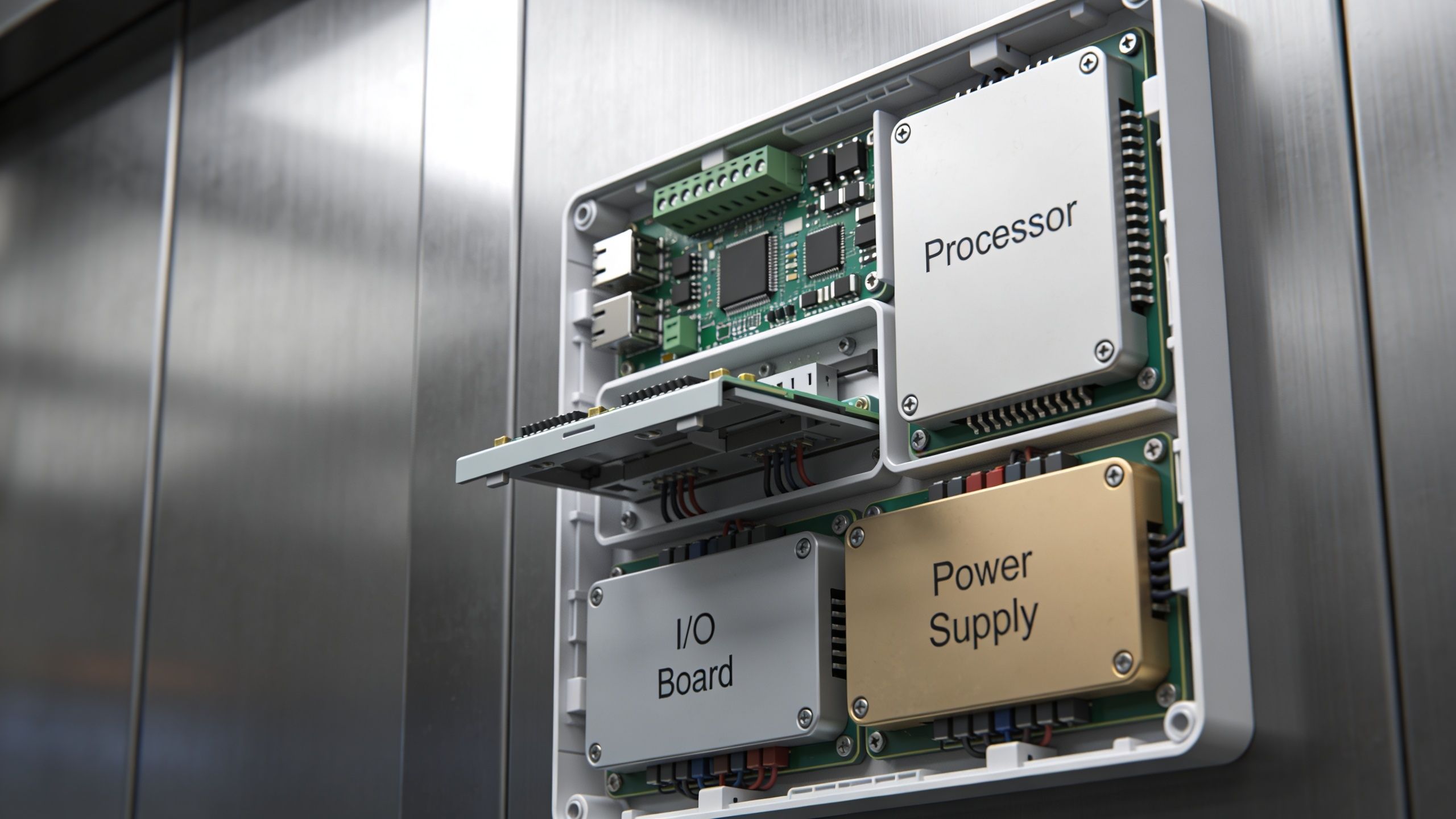
Virginia Controls builds microprocessor-based elevator controllers with organized I/O, field wiring, and documentation intended to simplify installation and troubleshooting. In day-to-day service, that means the mechanic is usually working through a defined control sequence instead of chasing a maze of aging relay logic spread across the job.
For an owner, the practical takeaway is straightforward. A newer controller can reduce downtime only if the next contractor can read it, test it, and get parts or equivalents without hitting a factory wall. That is why a replacement decision should focus on serviceability as much as age. A modern elevator control panel upgrade path should improve reliability and keep future service options open.
Why organized I/O and clean wiring matter in the field
Good wiring practices save labor. Clear terminal identification, readable schematics, and consistent I/O layout let a mechanic verify inputs, outputs, door locks, safety circuit status, and command flow without wasting hours sorting through undocumented changes from past service work.
That changes the cost of common calls.
A car that misses hall calls may have an input issue, a fixture problem, or a field wiring fault. A random shutdown may trace back to the safety chain, incoming power, or a weak component outside the main board. A door complaint may start in the operator, interlocks, or timing logic. With a serviceable Virginia Controls setup, an experienced contractor can separate those causes instead of guessing and swapping boards.
Crane Elevator sees that distinction matter a lot in Michigan. On older equipment, the controller gets blamed first because it is visible and expensive. In the field, the root cause is often elsewhere, and disciplined troubleshooting saves owners from paying for the wrong repair.
Here’s a quick look at the type of hardware many owners are dealing with in the field.
What works and what does not
What works is a controller with accessible logic, readable documentation, and standard service access. That gives the mechanic a fair chance to prove the failure before parts are ordered.
What does not work is treating every shutdown like a bad main board or assuming a new cabinet fixes worn door equipment, bad traveling cable conductors, loose terminations, or unstable power.
The best service call ends with a confirmed cause, a clear repair scope, and no guesswork billed to the owner.
That is the trade-off with Virginia Controls. The openness of the system gives owners more repair and modernization options. It also puts pressure on the contractor to know the platform, understand the sequence, and troubleshoot the entire elevator system correctly. Crane Elevator brings that local, hands-on approach to Michigan properties that need practical answers, not parts swapping.
Expert Troubleshooting for Common Controller Problems
A Michigan building owner usually calls after a rough week. The car misses the floor on Tuesday, the doors hang up on Thursday, and by Friday someone is asking whether the controller needs to be replaced. That is the point where disciplined troubleshooting matters most, because the wrong first move gets expensive fast.
On Virginia Controls equipment, the controller is central to every sequence. It also gets blamed for faults that start somewhere else. Crane Elevator approaches these calls by proving the failure before recommending parts, because a bad diagnosis can turn one repair into a string of callbacks.
Symptoms owners notice first
The complaints are usually familiar:
- Erratic leveling: The car stops high or low at a landing, or relevels too often.
- Frequent shutdowns: The unit returns to service after a reset, then drops out again.
- Door faults: Doors hesitate, reverse, fail to close, or do not reopen correctly.
- Unresponsive calls: Car calls or hall calls register inconsistently.
- Rough starts or rough stops: Common on older systems with aging components around the controller.
Those symptoms point to a sequence problem. They do not confirm a failed main board.
Where the problem often originates
A Virginia Controls cabinet can be healthy while the elevator still runs poorly. In the field, we often trace the fault to unstable incoming power, a weak relay, worn door operators, dirty contacts, loose terminations, damaged traveling cable conductors, or inconsistent feedback from hoistway devices.
Hydraulic units need extra attention. Heat, oil condition, valve performance, and run time all affect how the controller responds. If the car is slow to level or drops out after repeated runs, the right test is to review the full operating cycle, not just read the fault and order electronics.
Owners comparing support options across brands often see the same principle on systems built around MCE elevator controls. Good troubleshooting starts with sequence and field conditions, then works back to the controller.
A controller rarely fails by itself. Good service means finding the condition that pushed it into fault.
Root cause work versus board swapping
Board swapping is expensive when it becomes a habit. A technician replaces the obvious board, the elevator comes back for a few days or a few weeks, and the original cause stays in the system. The owner pays for parts, labor, and more downtime.
Crane Elevator handles Virginia Controls calls with a tighter process:
- Recreate the fault under the same conditions the building sees.
- Check incoming power and grounding before condemning electronics.
- Verify safety chain integrity and confirm field inputs are stable.
- Test door equipment and related circuits because door problems often trigger controller faults.
- Review sequence logic to determine whether the controller failed or responded correctly to a bad signal.
That process takes more discipline on the front end, but it usually lowers total cost. Michigan owners need fewer repeat calls, fewer unnecessary boards, and a clearer path if the system has reached the point where modernization makes more sense than another repair.
Deciding Between Repair and Full Modernization
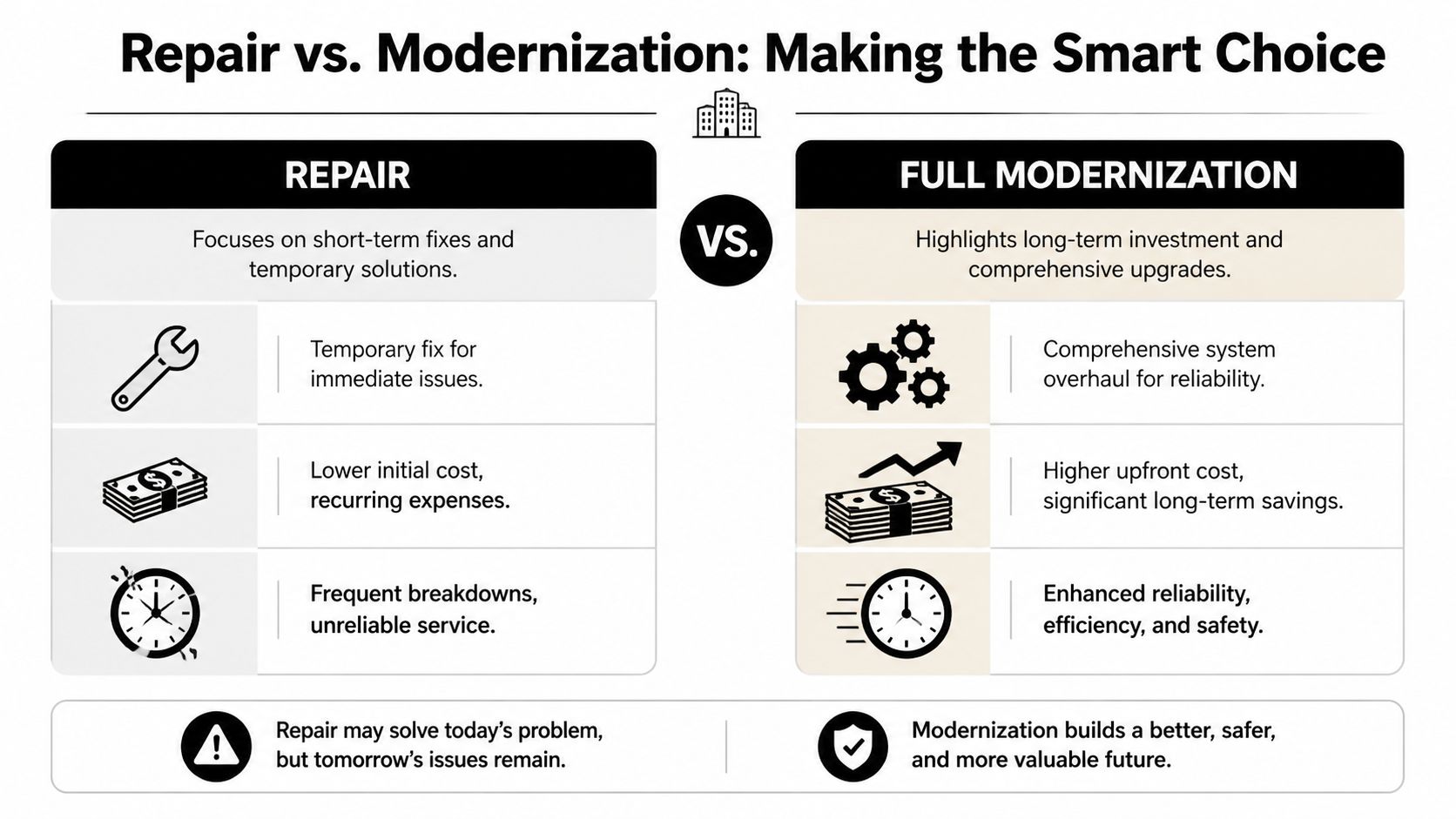
Not every old Virginia Controls system needs to be ripped out. Some need cleanup, selective replacement, and proper adjustment. Others have crossed the line where each new repair only delays the inevitable.
The decision should be based on operating reality, not on fear and not on sales pressure.
Signs repair still makes sense
Repair is still reasonable when the controller remains stable, the faults are isolated, and the rest of the equipment is sound. That usually means the elevator has a clear problem with a defined fix rather than a pattern of recurring failures across multiple subsystems.
Good candidates for repair often have:
- Consistent performance between failures
- Available replacement components
- A known issue tied to one part of the sequence
- No major compliance gap discovered during inspection or review
When modernization becomes the smarter move
Modernization is usually the better call when breakdowns are becoming normal, parts support is uncertain, and each repair exposes another weak point. That’s especially true in buildings where downtime creates tenant complaints, operational disruption, or safety concerns.
Public information from controller manufacturers also doesn’t always tell owners what they most need to know. There are documented gaps around customization timelines, modernization scope, and code coverage for legacy equipment. That lack of detail can make a repair decision look cheaper in the short term while hiding risk in the long term.
Owners get into trouble when they compare one repair invoice to one modernization quote. The real comparison is repeated disruption versus a stable system.
Repair versus Modernize Your Virginia Controls System
| Decision Factor | Consider Repair If… | Consider Modernization If… |
|---|---|---|
| Service history | Problems are isolated and infrequent | Calls keep stacking up and different faults appear over time |
| Parts support | Needed components are obtainable | Key parts are obsolete, scarce, or only available through uncertain channels |
| Ride quality | Performance is acceptable after repair | Tenants keep reporting rough operation, leveling issues, or nuisance shutdowns |
| Door performance | Door faults are traced to repairable wear items | Door problems continue after adjustments and component changes |
| Compliance risk | Existing equipment can be brought into line with limited updates | Code-related changes require deeper controller and safety integration |
| Budget planning | Short-term spending is the priority | Ownership wants predictable long-term operating costs |
| Building use | Downtime is inconvenient but manageable | Downtime affects tenants, patients, residents, staff, or public access |
A table won’t make the decision for you. It does keep the conversation honest.
Crane Elevator's Non-Proprietary Modernization Path
A Michigan owner approves a controller upgrade to stop nuisance shutdowns, then finds out two years later that routine service, software access, and replacement boards all depend on one vendor. That is the problem we work to prevent.
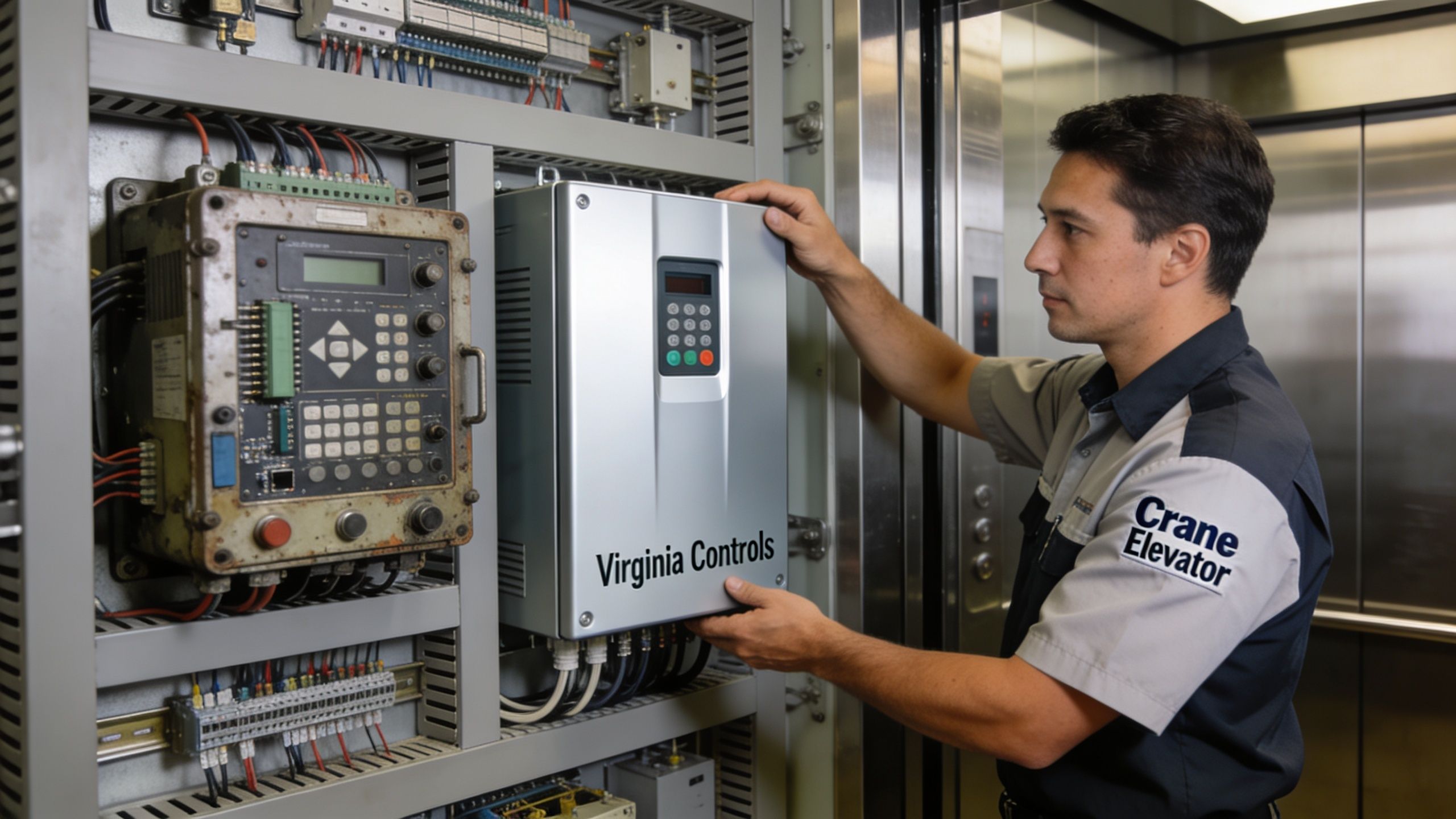
Crane Elevator modernizes Virginia Controls systems with a non-proprietary approach that keeps future service options open. The goal is straightforward. Improve reliability now without locking the building into one manufacturer or one service company for the next 15 years.
What owners gain from the non-proprietary route
The biggest benefit is control over long-term cost. If multiple qualified contractors can maintain the equipment, you are in a better position on service pricing, response time, and parts sourcing.
That matters in Michigan, where winter conditions, aging buildings, and limited downtime windows can turn a simple controller problem into a tenant issue fast. Owners usually feel the difference after the modernization is done. Fewer vendor restrictions. Fewer dead ends on parts. Less risk that a basic service call turns into a waiting game for one factory-specific answer.
Crane Elevator also builds these projects around what the building needs, not around a preset package. This overview of non-proprietary elevator modernization options explains the ownership model in more detail.
The trade-offs owners should understand
A non-proprietary modernization still requires judgment. Some existing components are worth keeping. Some are false economy.
We look closely at the machine, door operator, wiring, fixtures, traveling cable, and safety devices before we recommend scope. A controller replacement can improve dispatching, reliability, and diagnostics, but it will not fix worn door hardware, poor hoistway wiring, or a machine that is already at the end of its service life.
That usually leads to a scope like this:
- keep the machine if it is mechanically sound and performs well under load
- replace the controller and selected electrical devices to improve reliability and serviceability
- upgrade door equipment when recurring callbacks are really mechanical, not control-related
- replace fixtures, communication equipment, or position indicators where tenant expectations and current inspection requirements justify it
- schedule the work around occupied conditions, freight use, resident traffic, or medical office hours
Local experience matters. We troubleshoot Virginia Controls systems in Michigan buildings every week, so we know where legacy equipment can be preserved and where it becomes an ongoing expense. Owners do not need a theoretical modernization plan. They need a scope that reduces callbacks, passes inspection, and can be serviced by qualified local mechanics for years.
Navigating Michigan Elevator Codes and Inspections
A Michigan owner approves controller work to stop recurring shutdowns. The elevator runs again, but the inspector tags the job because the scope triggered code requirements nobody addressed. Now the owner is paying for return visits, added parts, and more tenant frustration.
That happens more often than it should.
Code questions around Virginia Controls systems are rarely about the controller alone. In the field, the issue is how the repair or modernization affects the rest of the elevator, what the inspector expects to see, and whether the contractor planned the job around Michigan enforcement from the start. Crane Elevator handles that upfront because a low repair price loses its value fast if the work creates inspection problems.
Why code questions get complicated fast
Owners usually start with a reasonable question. Can we replace the failed controller components and keep the rest? Sometimes yes. Sometimes that limited scope still pulls in safety functions, documentation requirements, testing, or related equipment upgrades that affect cost and schedule.
Public manufacturer material rarely answers those Michigan-specific questions in a way an owner can act on. As noted earlier, even controller manufacturers acknowledge that jurisdiction-specific guidance is often limited. That leaves the contractor responsible for translating a general product into a code-compliant project that will pass inspection locally.
This is one of the biggest differences between generic elevator advice and jobsite experience. We do not treat compliance as paperwork at the end. We review it before the proposal is finalized, because the wrong scope can turn a repair into a second project.
What Michigan owners should ask before approving work
Before approving major controller work, owners should get clear answers to a few practical questions:
- What code requirements does this scope trigger? A targeted repair, a controller replacement, and a larger modernization do not carry the same inspection burden.
- Who is coordinating the inspection process? Owners should know who is responsible for testing, documentation, and communication with the local authority.
- Which existing components are staying, and why? Keeping older equipment can save money up front, but weak door equipment, wiring, or safety devices often come back as callbacks or inspection corrections.
- What records will we receive at turnover? Good documentation matters for future service, troubleshooting, and repeat inspections.
- What is the cost risk if the inspector requires related changes? That conversation should happen before work starts, not after the controller is already installed.
A good elevator project is built around reliability, serviceability, and compliance at the same time. Crane Elevator helps Michigan owners sort out those trade-offs before they commit, so the finished job is easier to maintain, easier to inspect, and less likely to turn into another capital request six months later.
Virginia Controls FAQ for Building Owners
Is my older Virginia Controls system obsolete and does it have to be replaced
Not necessarily. Age alone doesn’t decide the issue. What matters is condition, service history, parts support, ride performance, and whether the controller still fits the building’s compliance needs.
Some older systems remain very serviceable. Others have reached the point where recurring failures and uncertain parts support make repair a poor investment.
If my system is non-proprietary, can any elevator company work on it
In principle, yes. That’s one of the main advantages of a non-proprietary controller. A qualified elevator contractor isn’t blocked by manufacturer lock-in the way they often are with proprietary platforms.
In practice, capability still varies. A contractor may be allowed to work on the equipment and still not be especially good at diagnosing it.
Are Virginia Controls systems good candidates for modernization work
Often, yes. They can fit well in buildings that want an open-service approach and practical long-term support. They’re also relevant in projects where the owner wants to avoid getting trapped in a closed maintenance ecosystem after the upgrade.
The key is matching the controller strategy to the rest of the elevator. The modernization should reflect how the machine, doors, fixtures, and safety devices perform in the building.
What usually pushes an owner from repair into modernization
A few things tend to tip the decision:
- Repeat shutdowns: The elevator becomes unpredictable.
- Obsolete or questionable parts support: Downtime stretches because parts are hard to secure.
- Growing tenant complaints: Reliability problems start affecting the property.
- Inspection and code pressure: The owner needs a more current solution, not another patch.
What is the timeline and cost for a controller modernization
That depends on the elevator type, building conditions, equipment scope, inspection requirements, and whether supporting components also need to be changed. Public information is limited on standard timelines for custom Virginia Controls applications, so it’s better to treat each building as a site-specific planning exercise rather than rely on a generic promise.
A serious proposal should spell out scope, shutdown expectations, and what stays versus what gets replaced.
Will a modernization lock me into one service company afterward
It shouldn’t if the project is built around a true non-proprietary approach. That’s one of the most important ownership questions to ask before signing anything.
Ask for a direct answer in writing. Can any qualified elevator contractor service the completed system? If the answer gets vague, keep asking.
If you own or manage a building in Lower Michigan and need real answers on a Virginia Controls repair, code issue, or modernization path, Crane Elevator Company is the local team to call. They bring over 25 years of hands-on experience, troubleshoot all makes and models, and specialize in non-proprietary solutions that keep long-term service options open for the owner. If you want a second opinion before approving another expensive repair, they’re a strong place to start.