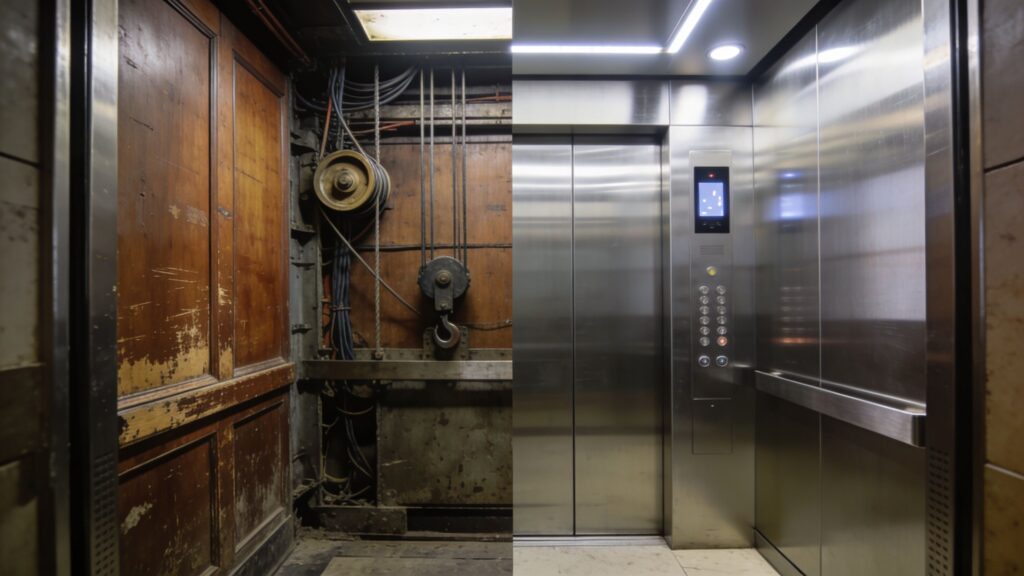
If you're reading this, you're probably already dealing with the signs. The elevator is still running, but not well. Tenants mention rough starts, the doors hesitate, somebody complains about leveling, and your maintenance invoices keep getting less predictable. Nobody wants to authorize a major project too early, but waiting too long usually costs more.
That’s the issue with modernizing elevator systems in Michigan. It isn’t just a mechanical decision. It’s a financial and operational one. For mid-sized commercial buildings, schools, municipal properties, medical offices, and mixed-use buildings, the best projects aren’t the cheapest up front. They’re the ones that keep the building serviceable, compliant, and maintainable by more than one vendor for years after the work is done.
The broader market points the same way. The global elevator modernization market is projected to reach $20.0 billion by 2030, driven by aging infrastructure, and modernization often avoids full replacement costs that can run 50 to 70% higher than upgrade work in many cases, according to Allied Market Research on elevator modernization. In practice, that lines up with what building owners here face every day. Most don’t need a brand-new elevator. They need a smarter plan for the one they already have.
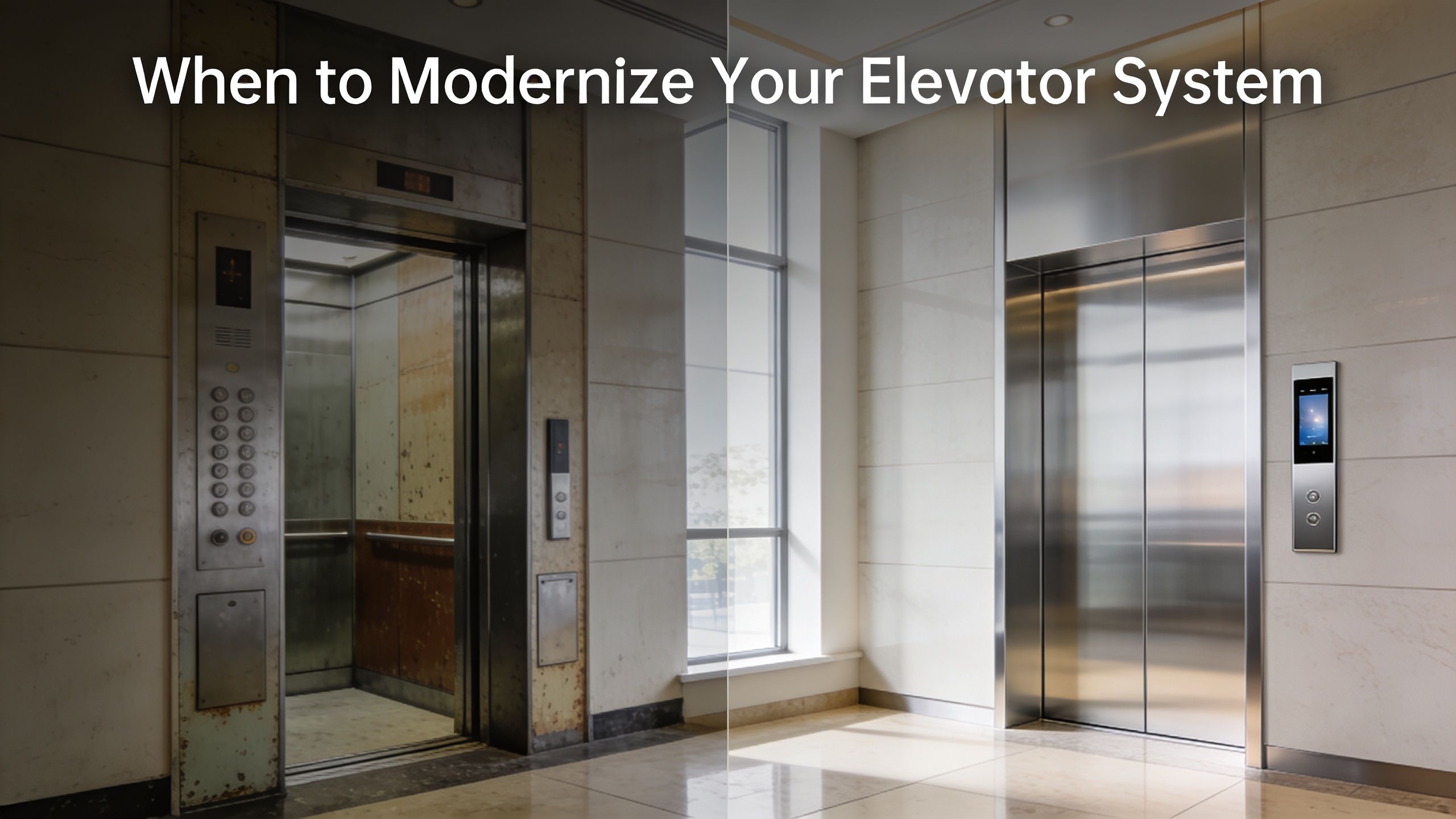
When to Modernize Your Elevator System
Most owners wait for a hard failure. That’s understandable, but it’s usually the expensive route. Elevators usually give you warnings before they force your hand.
Five signs owners should take seriously
Start with the subtle stuff. These are the patterns that tell you the system is aging out of reliable service:
Leveling is inconsistent. If passengers step in or out and notice the car isn't landing cleanly, that’s more than an annoyance. It points to control or drive issues that rarely improve on their own.
Door operation has become hesitant or erratic. Doors that reopen without reason, close too slowly, or hit repeated faults create tenant complaints fast. They also tend to be one of the first places repeated service calls start piling up.
Ride quality has changed. A rough takeoff, abrupt stop, extra vibration, or more noise than usual often means core components are aging beyond routine adjustment.
Repairs are becoming repetitive. If the same category of problem keeps coming back, you’re not fixing root cause anymore. You’re managing decline.
The system feels dated from a safety and usability standpoint. Older fixtures, poor lighting, worn interiors, and outdated communication features don’t just affect appearance. They tell tenants and inspectors the system is behind the times.
A practical owner walk-through
You can do a useful first pass yourself before calling for proposals. Don’t diagnose the elevator. Just document what you see and hear.
- Check the doors: Watch whether they open and close smoothly, chatter, reverse often, or pause before responding.
- Ride the car several times: Pay attention to starts, stops, noise, vibration, and floor leveling.
- Look at the fixtures: Worn buttons, dim indicators, and outdated phones or communication devices often show the age of the control package.
- Review the cab condition: Ceiling panels, flooring, wall damage, and poor lighting matter because modernization often bundles functional and cab improvements efficiently.
- Pull your maintenance history: Look for repeated callbacks, recurring shutdowns, and parts that are getting harder to source.
Practical rule: If your elevator keeps inconveniencing people in small ways, it’s usually on its way to inconveniencing you in a big, expensive way.
When a professional evaluation becomes non-negotiable
A self-check helps you spot patterns. It won’t tell you what’s reusable, what must be replaced, or what code issues are hiding in the background.
A proper modernization plan starts with a field evaluation. Certified technicians inspect control systems, drive systems, doors, cab components, and safety equipment, then sort the work into three buckets: what can stay, what should be upgraded, and what can’t remain if you want reliable service and code compliance. That structured process is what keeps owners from buying too much work or, just as often, too little.
In regional markets like Southern Michigan, that distinction matters. Plenty of buildings can get years of reliable service from a focused modernization instead of full replacement. But plenty of others waste money patching systems that should’ve been re-scoped months earlier. The right answer starts with an honest condition assessment, not a sales pitch.
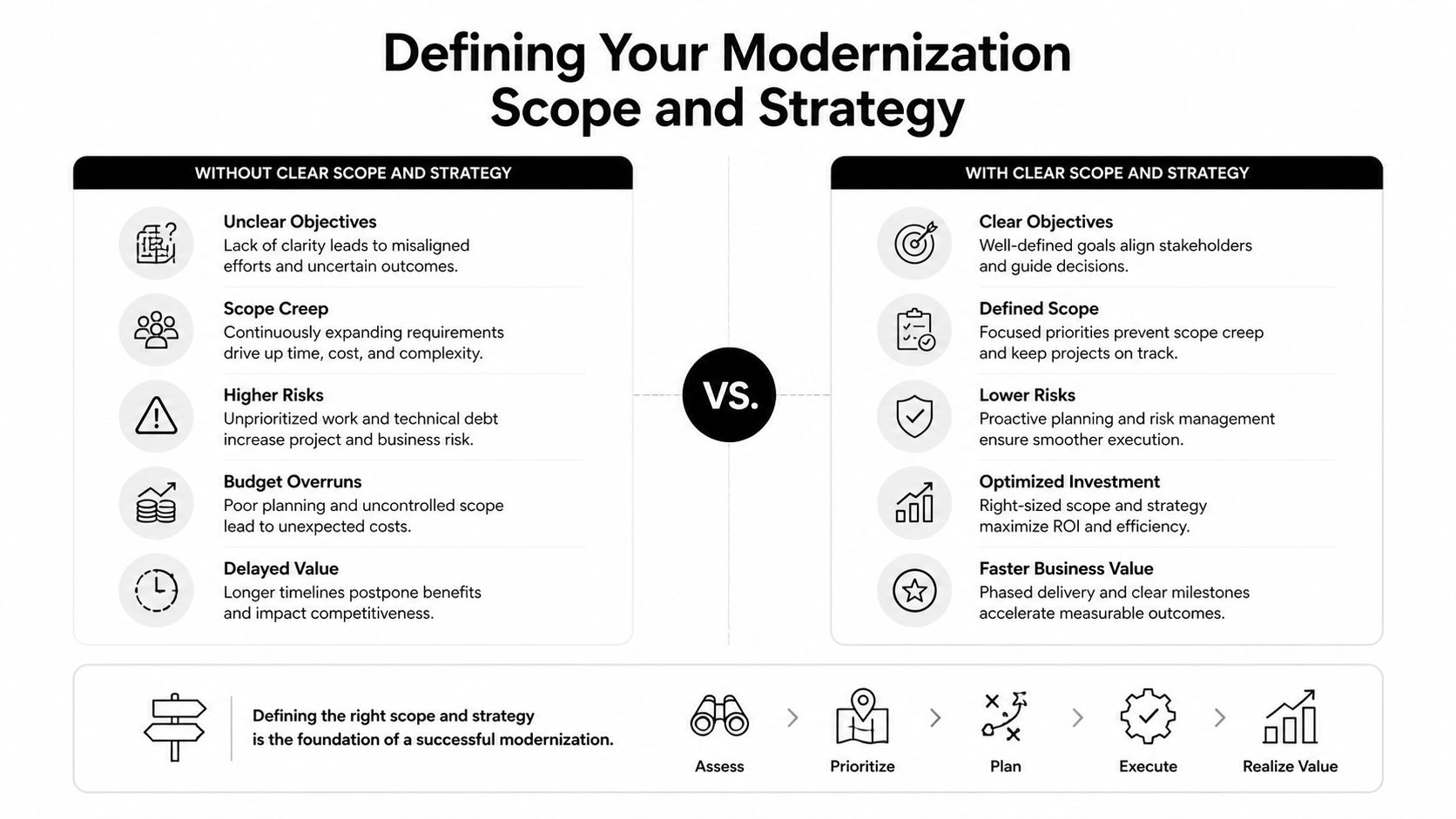
Defining Your Modernization Scope and Strategy
A common Midwest owner scenario goes like this. The elevator is still running, tenants are complaining, and one proposal says to replace nearly everything while another offers a small patch that looks cheap today. The essential task is deciding which components are still worth keeping and which ones are draining money through callbacks, shutdowns, and hard-to-find parts.
Partial modernization versus full modernization
Scope should follow condition and service goals. It should also reflect the building type, tenant expectations, and how much shutdown time the property can tolerate.
A partial modernization usually fits when one or two systems are driving the trouble. In Michigan office, medical, and mixed-use buildings, that often means an aging controller, unreliable door equipment, outdated fixtures, or communication hardware that no longer matches current requirements. If the jack, machine, rails, and other major mechanical components are still in good shape, focused work can improve reliability and service without paying to remove sound equipment.
A full modernization makes more sense when the elevator is old across the board and the failures are spread across several systems. If controls, drive equipment, doors, signal fixtures, and safety devices are all near the end of service life, staged repairs can become an expensive habit. Owners end up paying for repeated downtime, repeated mobilization, and repeated disruption.
The cost difference is large enough that the scope decision deserves real analysis. McKinsey notes in its global elevator and escalator industry review that modernization work is often more attractive than full replacement because it can improve performance at a lower installed cost. That aligns with what we see in regional markets. A well-scoped controller-and-door package often solves the problems owners live with every week, while a full tear-out is justified only when the platform underneath is worn out.
Owners who are still sorting out numbers can compare the scope options against typical elevator modernization cost factors for commercial buildings before they ask for final proposals. That usually leads to better bid comparisons and fewer surprises after demolition starts.
Why non-proprietary matters in regional markets
The biggest strategy decision is often not cab finishes or fixture style. It is whether the modernization leaves the building open to multiple service companies or ties it to one manufacturer’s parts and software channel.
A proprietary package can look tidy on paper. It may even come in with a competitive first price. The trade-off shows up later. If diagnostics, boards, software access, or replacement parts are controlled by one source, the owner has fewer service options and less pricing pressure on future maintenance.
A non-proprietary modernization keeps the building easier to service over the long run. Independent providers can bid maintenance. Parts access is broader. Response planning is simpler in markets like Southern Michigan, where owners may want more than one qualified contractor available within a practical travel radius.
That is not a theoretical concern. In a large coastal city, a locked-down system may still have several factory-authorized service teams nearby. In a regional Michigan market, the vendor bench is usually thinner, winter access can complicate emergency response, and waiting on specialized parts can turn a short outage into a long one. Open equipment gives owners better odds of keeping the elevator running and the maintenance budget under control.
How to set the right scope
The best proposals break the job into decision categories. That keeps owners from paying for cosmetic work when the problem lies in the controller, and it keeps them from underbuying on safety or code-related items.
| Situation | Usually the better fit | Why |
|---|---|---|
| Repeated controller faults, intermittent shutdowns, and obsolete electronics, while major mechanical components remain serviceable | Partial modernization | Replaces the equipment causing most callbacks without tearing out healthy components |
| Door faults drive tenant complaints and service calls | Micro-modernization or door package | Door equipment causes a large share of operational problems, so targeted work can produce a fast operational return |
| Multiple systems are aging at the same time and parts availability is getting worse | Full modernization | Resets the platform instead of stacking short-term repairs on a worn-out system |
| Owner wants competitive maintenance bidding after the project | Non-proprietary equipment selection | Preserves service flexibility and reduces the risk of vendor lock-in |
One more practical point. Scope should account for local code exposure and field conditions before contracts are signed, not after crews open walls and machine-room panels. In Michigan, older mid-sized commercial properties often have enough deferred work hiding behind the finished surfaces that a vague proposal becomes expensive fast.
A good modernization strategy is specific. It names what stays, what goes, what must be brought up to code, and what future service model the owner is buying into. That is how building owners get a system that works for the next 15 to 20 years instead of a project that only looks cheaper on day one.
Budgeting and Financing Your Elevator Upgrade
Owners usually ask for a price first. That’s fair, but one flat number isn’t useful unless the scope is already defined. Elevator modernization costs move based on what’s being replaced, how difficult access is, how the building operates during the work, and how much code-related work gets pulled into the job.
What actually drives the budget
In real projects, the price is shaped less by the words "modernization project" and more by the contents of the proposal. A few examples:
- Scope depth: A controller-and-door package costs very differently than a job that also includes drive work, fixtures, cab updates, safety components, and communication equipment.
- Elevator type: Hydraulic and traction systems present different modernization paths, different risks, and different labor demands.
- Building logistics: Tight machine rooms, occupied corridors, restricted hours, and limited shutdown windows all affect labor planning.
- Compliance work: Once a project starts, code-required items can’t be wished away. If the system is behind, budget has to reflect that reality.
- Procurement choices: Open-market, non-proprietary components often give owners more flexibility not just in future service, but in how current bids are assembled.
How to budget without fooling yourself
The cleanest budget is built in layers, not guesses. Start with the core modernization scope. Then separate likely code items, owner-requested cab finishes, and any building-side work that might involve electrical, fire service coordination, or access improvements. That keeps the bid review honest.
If you need a more detailed breakdown of how owners typically think through the numbers, this guide on elevator modernization cost planning is a useful reference point.
A practical budget worksheet should answer these questions:
- What work is essential for reliability?
- What work is being added for appearance or tenant experience?
- Which items are code-driven?
- What has to happen during off-hours?
- What contingency is needed if concealed conditions show up once demolition begins?
The cheapest number on bid day often becomes the most expensive number by closeout if the proposal skipped real conditions.
Financing changes the decision
A lot of owners delay upgrades because they’re thinking only in capital expense terms. That’s too narrow. A financed modernization can turn an unpredictable string of repairs and emergency calls into a planned payment with a defined outcome.
Common financing approaches for commercial owners include term financing tied to modernization scope, equipment financing, and lender structures that spread cost over the useful life of the upgrade. The best use of financing isn’t to justify overspending. It’s to let you fix the right things now instead of paying repeatedly for the wrong things later.
For mid-sized properties in Michigan, that can be the difference between staying on a repair treadmill and resetting the elevator into a reliable service cycle. A good financing plan also gives ownership room to choose non-proprietary equipment, which protects the building long after the project is paid off.
Navigating Compliance, Timelines, and Disruption
Most modernization problems in occupied buildings aren’t caused by the wrench work itself. They’re caused by weak planning around compliance, access, tenant communication, and outage sequencing.
Compliance issues you need on the table early
Owners sometimes treat code review like a final checkbox. It needs to be part of project design from the beginning. If the elevator serves the public, accessibility issues matter. If the building has aging equipment, safety updates matter. If the state or local authority expects a specific upgrade path, that has to be built into the job before materials are ordered.
For Michigan owners, code deadlines and required upgrades can directly affect modernization timing. This overview of the Michigan elevator code deadline and January 1st, 2028 requirements is the kind of resource worth reviewing before scope is finalized.
A better way to plan work in occupied buildings
The right schedule depends on the building type. Offices, schools, medical buildings, apartment properties, and municipal facilities all tolerate disruption differently. A courthouse and a suburban office park might each have two elevators, but they cannot absorb outages the same way.
In active facilities, phased work is usually the safer approach. According to Nona Elevator’s discussion of modernization in active buildings, phased micro-modernizations in 24/7 facilities can reduce tenant disruptions by as much as 75% compared with a traditional full overhaul.
That matters well beyond hospitals. It applies to any building where elevator downtime affects operations, deliveries, accessibility, or public access.
A practical disruption plan
Use a simple sequence and make everybody follow it:
- Map traffic patterns first: Identify peak hours, service needs, move-in windows, and any time-sensitive occupant use.
- Phase the work: If the building has more than one car, keep as much capacity online as possible.
- Schedule noisy or access-heavy work carefully: Early morning, evenings, weekends, or school breaks can make the difference between a manageable job and a constant complaint stream.
- Coordinate with other building systems: Fire service interfaces, emergency communication, and generator-related items should be tested in a coordinated sequence.
- Communicate in plain language: Tenants don’t need every technical detail. They do need dates, outage expectations, alternate routes, and who to call.
In occupied buildings, schedule discipline is a safety issue, a tenant-relations issue, and a budget issue all at once.
Timelines are rarely just installation time
Owners often hear installation windows and assume that’s the whole schedule. It isn’t. The total timeline includes evaluation, engineering, approvals, submittals, procurement, permit coordination, installation, testing, inspection, and punch-list closeout.
That’s why rushed starts usually backfire. If you compress the front end too hard, you pay for it in change orders, idle labor, or avoidable downtime later. Good modernization planning doesn’t eliminate disruption. It contains it.
Choosing Your Partner and Calculating Long-Term ROI
A modernization contractor shouldn’t be selected the same way you’d buy paint or flooring. The wrong partner can leave you with a workable-looking installation that’s hard to maintain, hard to service, or hard to get through inspection cleanly.

What to look for in a modernization partner
Start with questions most proposals hope you won’t ask.
- Do they regularly install non-proprietary systems? That’s different from saying they can service many brands.
- Can they explain the scope line by line? If they can’t tell you why each component is included, the bid probably isn’t fully thought through.
- Do they work in occupied buildings well? Hospitals, schools, municipal buildings, and active commercial properties need phasing discipline.
- Will they coordinate testing and code-related work clearly? If responsibility is vague, delays usually follow.
- Do they have local presence and follow-through? In regional markets, local field support still matters.
One Michigan-based option owners evaluating open-market solutions may review is Crane Elevator Company’s non-proprietary elevator modernization approach, which describes non-proprietary serviceability across different equipment types. The key point isn't the brand name. It's whether the contractor is building future service flexibility into the job.
ROI is bigger than the repair log
Owners often try to calculate return only through avoided breakdowns. That’s too narrow. A modernization pays back through several channels at once.
First, reliability improves. Less downtime means fewer disruptions to tenants, staff, visitors, and operations. Second, energy use can improve when outdated drive and control equipment is replaced with more efficient components. Third, maintainability improves when parts access and service access aren’t trapped inside a proprietary structure. Fourth, the building presents better to tenants and buyers.
The broader market pressure is real. According to Cohesion’s elevator management modernization article, more than 70,000 elevators in New York City alone require updates, and modernization increasingly includes IoT and AI-driven predictive maintenance to reduce downtime and support compliance.
A simple ROI frame for owners
Use a before-and-after review that includes both hard and soft costs.
| ROI category | Before modernization | After a well-scoped non-proprietary modernization |
|---|---|---|
| Service calls | Repetitive and reactive | More predictable and easier to manage |
| Maintenance pricing | Narrow vendor leverage | Competitive bidding remains possible |
| Tenant experience | Complaints about ride, wait, doors, or appearance | Better ride quality and stronger building perception |
| Compliance posture | Greater risk of falling behind | Cleaner path to inspections and required updates |
| Asset planning | Hard to forecast | Easier to budget over a longer horizon |
A good modernization doesn’t just replace parts. It changes the economics of owning the elevator.
In practical terms, the best ROI usually comes from a project that is correctly scoped, non-proprietary, and installed by a contractor who understands how the building operates. That combination lowers friction for years.
Common Modernization Pitfalls and FAQs
A building owner in Grand Rapids or Lansing usually calls after the same pattern shows up. Tenants are complaining, service calls are stacking up, parts are getting harder to find, and every proposal seems to push the owner in a different direction. The costly mistakes usually start there, when the job is defined by urgency instead of by the condition of the equipment.
Is partial modernization just kicking the can down the road
Partial modernization makes sense when the retained equipment still has useful life and the new scope fixes the actual failure points. A good example is a car with solid mechanical hardware but recurring controller, door operator, or relay issues. In that case, targeted modernization can improve reliability and serviceability without paying to replace parts that are still doing their job.
It becomes a bad investment when owners keep obsolete components only because the bid looks lower on paper. If the machine, door equipment, selector, or wiring is already near the end of its life, deferring that work often means a second shutdown, another mobilization, and another round of inspection coordination a few years later.
Why do modernization projects go over budget
The biggest reason is bad scoping at the start. The second is assuming the elevator room, hoistway, entrances, or power conditions are better than they are.
In older Michigan properties, hidden conditions are common. Field wiring may have been altered over decades. Machine rooms may have clearance or ventilation issues. Fire recall, door restrictors, pit access, lighting, or disconnects may need to be brought up to current expectations once the job is opened up. Owners pay more when those items are discovered after materials are ordered and the elevator is already out of service.
A real preconstruction survey saves money. It should include equipment condition, code exposure, access limits, material lead times, and a plan for inspections.
How long will the elevator actually be out of service
Outage time depends on the scope, the age of the equipment, material availability, and how well the building can support the work. A straight controller and signal package is one schedule. A job that also includes doors, machines, wiring, cab work, and power changes is a different schedule entirely.
For a mid-sized commercial property with one or two cars, owners should ask for a schedule broken into procurement, demolition, installation, startup, state inspection, and punch work. That matters more than a broad promise. In occupied buildings, phasing the work usually protects operations better, especially when the property still needs accessible access, freight movement, or tenant deliveries during construction.
What if I ignore code-related upgrades for now
That decision usually gets expensive.
Code items rarely stay isolated. Once a modernization starts, deferred safety work has a way of surfacing at the worst time, during inspection, after a violation, or after a shutdown that puts pressure on everyone to get the car back online fast. Then the owner is approving change orders under deadline instead of reviewing options calmly.
For regional markets like Michigan, the practical approach is to identify likely code exposures early and price them before award. That gives owners a cleaner capital plan and fewer surprises during construction.
Is the lowest bid the safest place to start
Lowest bid often means the scope is thinner, not that the contractor found magic savings. Owners should read proposals line by line and compare what is included, what is excluded, and what is left vague.
Ask every bidder the same questions:
- Which components are proprietary and which are open market
- Which code items are included in the base price
- What assumptions were made about machine room condition, power, and building access
- What lead times could affect the schedule
- How are hidden conditions handled
- Who coordinates testing, state inspection, and final closeout
A short proposal can turn into a long argument once the elevator is down and the owner has fewer options.
What works best in mid-sized Michigan properties
For many office, medical, municipal, and mixed-use buildings in this region, the best answer is a non-proprietary scope tied to the elevator's real weak points and the property's hold period. An owner planning to keep the building for ten years should make different decisions than an owner preparing for a sale in eighteen months.
That usually means balancing three things. Current failure patterns. Local service support. Future bidding flexibility.
Some properties need door equipment first because that is where the callbacks are coming from. Some need a controller and dispatch package because the old logic is the main source of downtime. Some are past the point of piecemeal work and need a broader reset to stabilize maintenance costs. The right answer comes from condition, usage, and ownership goals, not from the cheapest immediate fix.
If you’re weighing whether to repair, partially modernize, or fully upgrade, Crane Elevator Company works with building owners across Lower Michigan on non-proprietary modernization, maintenance, inspections, and code-related elevator work. A practical next step is getting a second opinion on your current equipment condition, your real modernization scope, and whether there’s a way to improve reliability without locking your building into a closed service platform.