

A lot of Grand Rapids property owners arrive at the same point from different directions. One family is trying to make a longtime house workable for aging in place. Another owner manages a multi-level residence and is tired of treating stairs as a permanent constraint. Someone else is remodeling and realizes that carrying laundry, groceries, or mobility equipment between floors is turning a good house into a harder house to live in.
That’s usually when home elevators stop looking like a luxury item and start looking like equipment. Useful equipment. In the field, that shift matters, because the right conversation isn’t “Should I buy something fancy?” It’s “What system fits this building, this budget, and this long-term maintenance plan?”
In Grand Rapids, elevator decisions are tied to more than the cab and the controls. You’re dealing with structural conditions, State of Michigan requirements, inspections, service access, and the simple question of who will maintain the unit years after installation. A good installation solves movement. A smart installation also avoids service lock-in, inspection surprises, and expensive callbacks.
Your Guide to Home Elevators in Grand Rapids
A typical Grand Rapids project starts after the house stops working the way it used to. A parent is moving in. A long-term owner wants to stay put. A remodel opens the question nobody wanted to answer earlier. Can this home handle daily life across multiple floors for the next ten or twenty years?
That is usually the point where owners start searching for elevator services grand rapids with a different mindset. They are no longer pricing a convenience item. They are planning a piece of permanent equipment that has to fit the building, pass inspection, and stay serviceable after the installer leaves.
Local support shapes the whole job. A good-looking unit is not enough if parts are hard to get, if service depends on one distant dealer, or if routine repairs turn into long outages. In residential work, I would rather see an owner choose a simpler non-proprietary system with solid local support than a branded package that locks them into one source for boards, diagnostics, or replacement components.
Practical rule: Buy the elevator you can get serviced locally, not the one that only looks good in a brochure.
Owners who get good results usually make four decisions early and make them with the full life of the equipment in mind:
- Start with the use case: Aging in place, wheelchair access, carrying household loads, resale, or a mix of those goals.
- Choose the system around the house: Available space, machine location, ride quality, noise, and future repair access all affect the right answer.
- Treat the install like real construction: Hoistway framing, pit depth, overhead clearance, electrical work, finishes, permits, and inspection all have to line up.
- Plan for ownership, not just startup: Maintenance intervals, testing, wear items, and eventual controller or fixture updates should be part of the first budget.
That approach keeps the project grounded. It also helps owners avoid the two mistakes I see most often: buying on brochure language, and treating service as an afterthought.
What Is a Home Elevator and Is It Right for You
A home elevator is best understood as a vertical transportation appliance built for a residence. It isn’t the same thing as a commercial passenger elevator, and it isn’t the same thing as a stairlift. A stairlift solves one person's trip on one stair path. A residential elevator changes how the house functions.
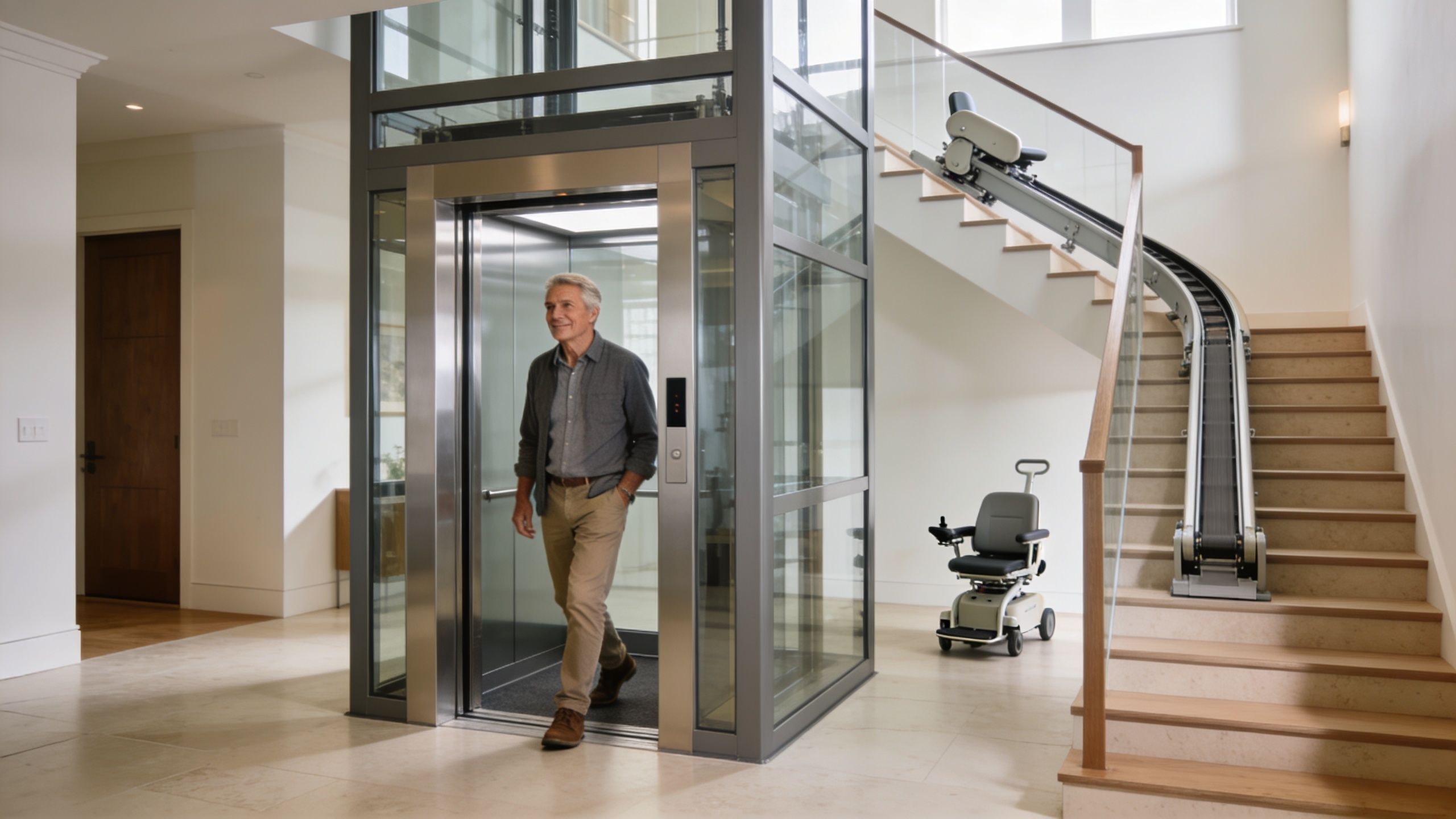
What it is and what it isn't
A residential elevator is enclosed, integrated into the home, and designed to move people and everyday household loads between levels in a controlled way. It usually becomes part of a larger accessibility plan that can include entry transitions, door widths, and safe circulation on each floor.
It isn't a substitute for good planning. If the house layout forces long travel distances after you exit the cab, or if the lift only works for one narrow use case, the owner often ends up with expensive equipment that doesn’t solve the original problem very well.
The biggest reason owners choose one is simple. They want the house to remain usable without making stairs the deciding factor.
Who usually benefits most
Some buyers know on day one that they need a home elevator. Others get there after trying smaller fixes first.
A residential elevator often makes sense when:
- Aging in place is the priority: Owners want to keep using all floors of the home instead of relocating or restricting daily life to one level.
- Mobility needs are changing: A family member uses a walker, wheelchair, or has difficulty with repeated stair use.
- The house carries too much vertical traffic: Groceries, laundry, equipment, or caregiving routines keep moving between levels.
- The renovation is already open: If walls, framing, or floor systems are already under construction, that’s usually the best time to evaluate elevator readiness.
- Accessibility needs may expand later: It’s easier to plan for future use than to retrofit under pressure.
Here’s a quick visual overview before you compare systems in detail.
Signs you might be ready for a home elevator
Use this as a working checklist, not a sales checklist.
- You avoid parts of your own house: If a bedroom, laundry area, or living level is becoming harder to reach, the problem is already affecting daily use.
- A stairlift feels too narrow a fix: Stairlifts work in the right situation, but they don't carry multiple users well and they don't integrate the way an elevator does.
- You're planning a serious remodel anyway: Open walls and coordinated trades make the installation path cleaner.
- You need long-term flexibility: Families change, mobility changes, and the house should adapt with them.
- You want one solution, not a stack of workarounds: Owners often spend money on temporary fixes before choosing the system they needed from the start.
If several of those sound familiar, it’s worth getting a site review before another round of remodel decisions gets locked in.
Comparing Home Elevator Types for Michigan Homes
The drive system shapes almost everything that follows. Ride feel, space requirements, noise, installation complexity, and service strategy all change with the equipment you choose. In Michigan homes, the best fit usually comes down to structure first and preference second.
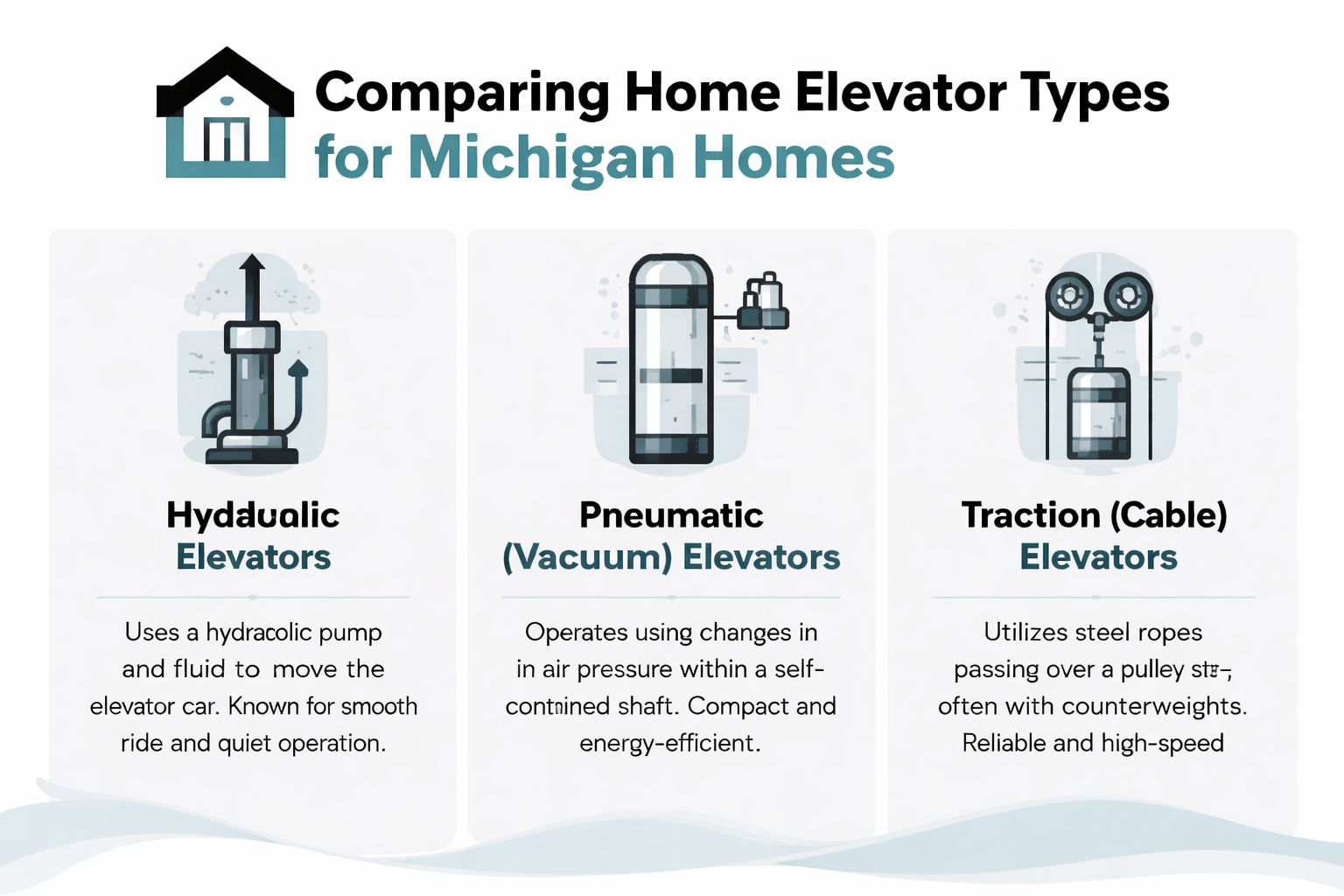
The three main categories
Hydraulic elevators use fluid pressure and a pump system to raise and lower the car. In residential work, owners often like them because they feel solid and ride smoothly. They can be a very practical choice where the home can accommodate the required construction details.
Pneumatic or vacuum elevators operate by changing air pressure in a self-contained shaft. These are often considered when the owner wants a compact footprint and a more self-contained installation path, especially in retrofit situations where building a conventional shaft is a bigger challenge.
Traction elevators use ropes or belts moving over a sheave, often paired with a counterweight. They’re a familiar solution in the broader elevator trade, and in residential settings they can be a strong option when owners want dependable travel characteristics and have a layout that suits the equipment. If you want a deeper look at the trade-offs, traction vs hydraulic elevators is a useful side-by-side reference.
Home Elevator Technology Comparison
| Type | Mechanism | Typical Cost | Space Needs | Pros | Cons |
|---|---|---|---|---|---|
| Hydraulic | Pump and hydraulic fluid move the car | Varies by layout, finishes, and site work | Often needs pit, overhead, and supporting equipment space | Smooth ride, familiar technology | Can require more construction accommodation |
| Pneumatic | Air pressure moves the car inside a self-contained tube | Varies by model and home conditions | Often attractive where compact footprint matters | Compact profile, simpler fit in some retrofits | Different look and feel than conventional systems |
| Traction | Ropes or belts move over a sheave, often with counterweight | Varies by travel, design, and installation complexity | Usually needs planned shaft and overhead conditions | Reliable operation, strong long-term platform | Structural and layout details need to be right |
What works well in Michigan homes
Climate and building style matter. In Grand Rapids, you’ll see older homes, custom builds, lake-area properties, and multifloor residences with very different framing and finish conditions. That means no single drive system is “best” in the abstract.
A retrofit in a finished home may favor a compact solution. A larger planned renovation may open the door to a more traditional shaft-based system. A house with limited available interior area may force tighter design choices than a new custom home where the shaft can be built into the plan from the beginning.
The right question isn’t “Which elevator is most popular?” It’s “Which system fits the building without creating service headaches later?”
Why non-proprietary equipment matters
This point gets missed far too often. Non-proprietary systems matter because they affect ownership long after installation. According to KONE’s Grand Rapids market page, non-proprietary systems can reduce lifetime maintenance costs by 20 to 40% because they use standardized components that qualified technicians from different providers can service.
That trade-off is practical, not theoretical:
- More service options: You’re not tied to one manufacturer for routine support.
- Stronger position for pricing: Owners can compare maintenance proposals without artificial lock-in.
- Fewer part-access surprises: Standardized components are generally easier to support across providers.
- Lower long-term risk: If your installer changes direction, retires, or stops supporting a line, the building isn't trapped.
For a Grand Rapids owner thinking beyond installation day, that’s one of the smartest decisions in the whole project.
Navigating Grand Rapids Code and Site Requirements
A home elevator stops being a product decision the day someone has to cut floor framing, pour a pit, or sign off on the final inspection. In Grand Rapids, the owners who avoid delays are the ones who treat code, structure, and access as part of the elevator decision from the start.
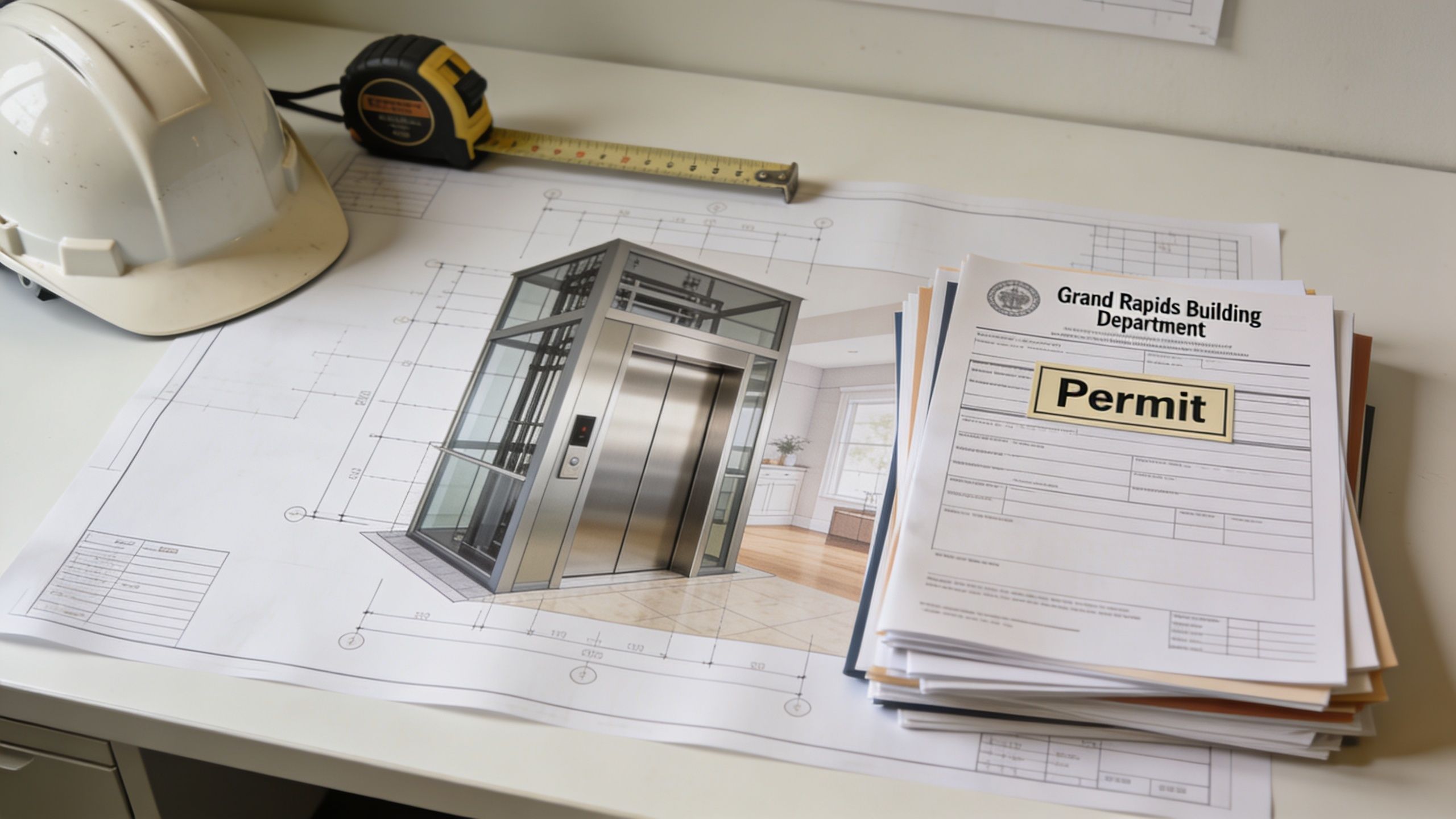
What contractors look at during a site survey
A good site survey answers one question first. Can this house take the system you want without creating structural or service problems later?
That review usually starts with the full travel path, from the lowest landing to the top stop. A location that looks workable on the main floor can fail once ceiling framing, roof lines, or lower-level conditions are checked. I have seen owners pick a perfect-looking closet stack that fell apart as soon as overhead clearance was measured.
Contractors usually review:
- Travel path between floors: The alignment has to work at every stop, with clear entry and exit conditions.
- Pit requirements: Some systems need little or no pit, while others need more excavation or slab work.
- Overhead clearance: Top-floor framing and roof structure often decide which models are even possible.
- Hoistway construction: Shaft-based units need framing, backing, fire-related details where applicable, and finished dimensions that stay true through construction.
- Machine and equipment space: Some drives need a separate control or machine area. Others reduce that requirement but may impose tighter placement limits.
- Electrical service: Power supply, disconnects, lighting, phone or communication provisions, and controller location all need early coordination.
The practical trade-off is simple. A system that looks cheaper on paper can become the expensive option if it forces major framing changes or concrete work.
Permits, inspections, and Michigan compliance
Grand Rapids area projects involve more than a building permit and a delivery date. Residential elevator work usually requires coordination among the elevator contractor, builder or remodeler, electrician, and the authority that will review and inspect the installation under Michigan rules.
Owners should expect questions about shaft construction, clearances, door protection, emergency features, and equipment listings. The exact requirements depend on the type of elevator and the scope of work, but the pattern is consistent. If the drawings are vague, the job slows down. If the framing differs from the approved plan, the inspection gets harder.
For owners planning long-term compliance, review this Michigan elevator code deadline guidance for January 1, 2028. Even when a residential project is smaller than a commercial job, checking current code direction early helps prevent redesign and change orders.
Field note: If a contractor spends the meeting on cab finishes and avoids talking about pit depth, overhead, electrical coordination, or inspection sequence, keep interviewing.
Pre-consultation site prep checklist
Owners do not need to engineer the job before the first meeting. They do need enough information for a contractor to give a real opinion.
Bring or send:
- Floor plans or sketch layouts: Even rough dimensions help identify a workable vertical path.
- Photos of each landing area: Include floors, ceilings, door swings, and nearby walls.
- Basement or crawlspace details: Lower-level access and slab conditions matter if pit work is possible.
- Attic or upper-floor framing information: This often decides whether the preferred system will fit.
- Electrical panel location: It helps the contractor and electrician map a realistic route for service.
- Renovation timing: Planned framing, drywall, flooring, or trim work affects installation sequencing.
Good prep saves time, but it also improves bid quality. When contractors are pricing from the same site facts, owners get proposals they can compare.
Understanding Your Project Timeline and Costs
Most elevator jobs feel long to owners because several trades are involved and the visible equipment arrives late in the process. The elevator itself is only part of the timeline. Design decisions, permitting, framing, electrical work, finish coordination, installation, and inspection all have to line up.
In Grand Rapids, that process usually moves better when the owner treats it like a managed project instead of a specialty add-on. The market is active enough that there are established contractors competing for installation and modernization work. Elevator Service Inc. generates over $10 million in annual revenue according to Business View Magazine’s company profile, which points to a healthy regional market rather than a one-contractor environment.
What the project sequence usually looks like
The first phase is consultation and design. In this phase, the contractor confirms feasibility, discusses drive options, and coordinates with the homeowner, architect, or builder. The most important outcome is not a glossy rendering. It’s a realistic plan that fits the house.
Then comes permitting and approvals. That step depends on project scope and local scheduling. It also depends on how complete the submitted information is. Incomplete drawings or unresolved structural questions slow the process more than owners expect.
After that, the project moves into site preparation and construction. This is often the longest and messiest part because it may include framing a hoistway, preparing pit conditions if needed, adjusting floor openings, and coordinating electrical and finish trades. Once the physical space is ready, the actual elevator installation is much more straightforward.
The final step is inspection, testing, and handover. That’s the point where a good contractor closes out paperwork cleanly, confirms operating basics with the owner, and explains what happens next for service and support.
What drives the final cost
There’s no honest one-number answer for residential elevator pricing in Grand Rapids because the system itself is only part of the budget. Owners should think in categories.
A final proposal is usually shaped by:
- Elevator type: Hydraulic, pneumatic, and traction systems bring different equipment and construction demands.
- Number of stops: More floors usually mean more complexity.
- Retrofit versus new build: Working inside an existing finished home is often more labor-intensive than planning for the elevator from the beginning.
- Structural work: Shaft construction, floor modifications, and overhead conditions all affect scope.
- Interior finishes: Cab finishes, fixtures, and door treatments can move the price meaningfully.
- Electrical and ancillary work: Power, communication features, and related building work add up fast.
What owners get wrong about budget planning
The biggest budgeting mistake is focusing only on the elevator package and ignoring building work. The second mistake is picking a system that looks less expensive up front but creates harder service conditions later.
A practical budget conversation should separate three buckets:
| Budget area | What it includes | Why it matters |
|---|---|---|
| Equipment | Elevator system, controls, doors, fixtures | This is the visible product, but not the whole project |
| Construction | Shaft work, framing, electrical, finishes, access prep | Site conditions often determine whether the proposal is realistic |
| Ownership | Service, testing, future repairs, modernization path | Cheap decisions up front can become expensive ownership later |
If a quote looks dramatically lower than the rest, check what it excludes before you celebrate.
Long-Term Maintenance and Modernization Needs
A residential elevator starts aging on day one. In Grand Rapids, I see the same pattern over and over. The unit runs fine for a while, service gets deferred, and the first real warning shows up as an intermittent door fault, a leveling issue, or a callback after a power event. By the time the owner treats it as a maintenance problem, it is often a reliability problem.
That matters because long-term ownership cost is shaped less by the initial install than by the service path you set up afterward. A home elevator has interlocks, controllers, door equipment, safety circuits, ride components, and communication devices that need periodic inspection and adjustment. Good maintenance keeps small mechanical drift from turning into shutdowns, entrapments, or hard-to-source repair work.
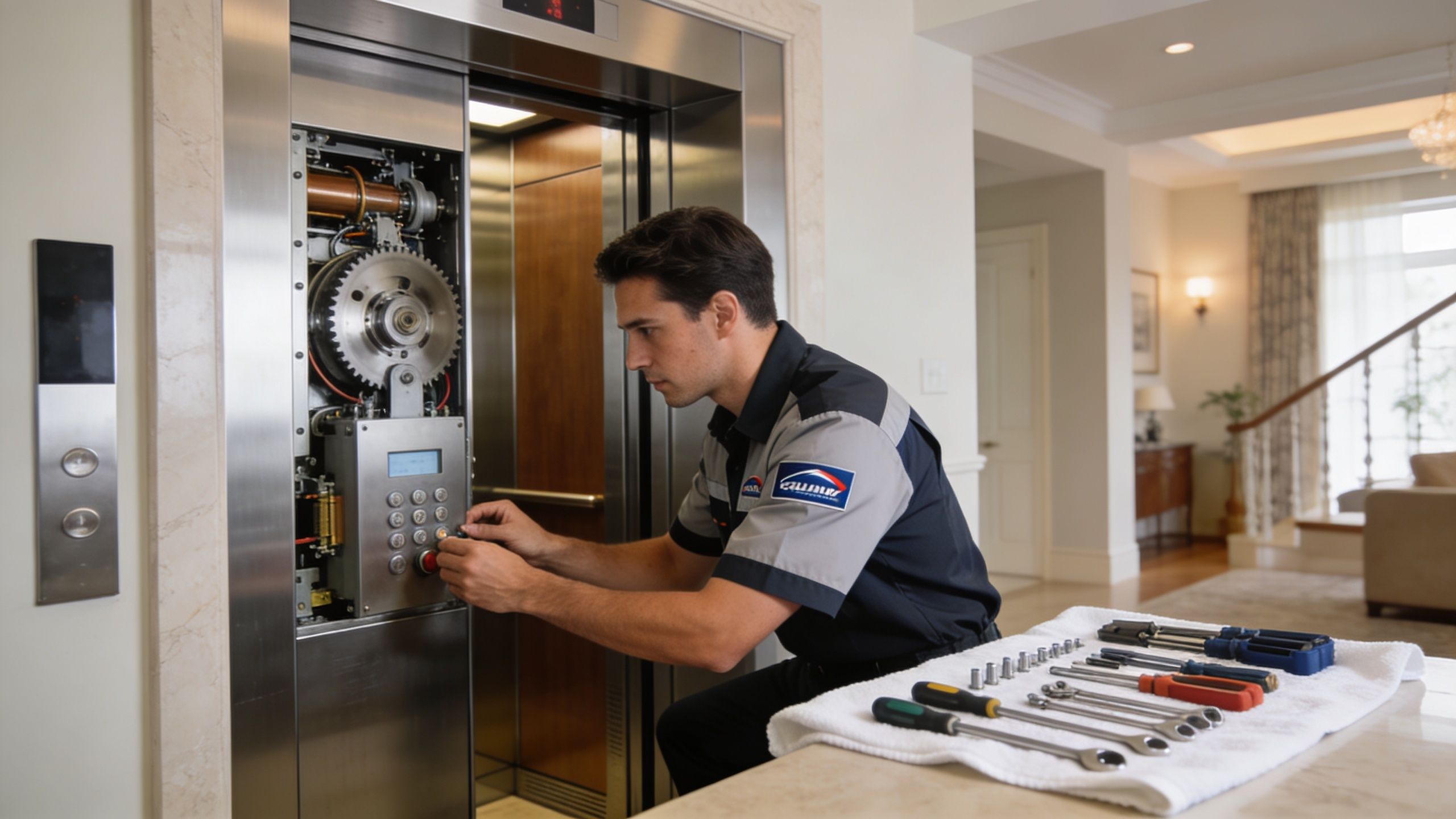
Why preventative maintenance beats reactive service
Reactive service is the expensive way to own an elevator. It also creates the most tenant frustration in multi-level residences and managed homes.
Most failures do not arrive without warning. Doors start dragging. Contacts get dirty. Batteries age out. Hydraulic units can show leaks or soft leveling. Traction equipment can develop noise, wear, or adjustment issues that a trained mechanic will catch long before the car goes out of service. If those items are ignored, a simple visit turns into an after-hours call, a stranded passenger, or a repeat service cycle because the root cause was not addressed early.
Preventative maintenance should reduce breakdown risk, document the condition of the equipment, and keep the elevator serviceable with standard parts whenever possible. That last point matters. Non-proprietary equipment usually gives owners more flexibility on who can service the unit and how quickly parts can be sourced.
What a quality maintenance plan should include
Ask for the actual scope of a maintenance visit. If the answer is vague, expect a light-touch contract.
A useful plan usually includes:
- Cleaning in the right places: Pits, car tops, controller areas, and door tracks collect dust and debris that cause recurring faults.
- Door equipment inspection and adjustment: Residential elevators often fail at the doors first, not the drive system.
- Safety circuit checks: Interlocks, alarm functions, emergency communication, and battery-backed features need testing, not assumptions.
- Ride and leveling review: Poor floor leveling is more than an annoyance. It can become a safety issue and a code issue.
- Wear-component inspection: Belts, cables, packing, rollers, guides, contacts, and related hardware need periodic review based on the system type.
- Service records: A property owner should be able to see what was found, what was adjusted, and what may need attention next visit.
Crane Elevator Company is one local option in Lower Michigan that provides non-proprietary maintenance, repairs, inspections, and modernization work across different makes and models. If you are comparing contracts, this guide to residential elevator maintenance cost is a practical way to benchmark service scope and ask better questions.
Cheap maintenance often means deferred work. Deferred work usually shows up later as nuisance shutdowns, repeat calls, and parts failures that could have been handled earlier.
When modernization becomes the smarter move
Every elevator reaches a point where repair-by-repair ownership stops making sense. That does not always mean full replacement. In many homes, the better answer is targeted modernization.
The decision usually comes down to three things. Parts availability, control reliability, and the condition of the core equipment. If the rail system, cab, and basic hoistway arrangement are still sound, replacing outdated controls, fixtures, communication devices, door operators, or other aging components can extend useful life without tearing out the entire unit.
Owners should start that conversation when they see patterns such as:
- recurring faults in the same subsystem
- discontinued or hard-to-get parts
- repeated inspection corrections
- unreliable leveling or door performance
- a controller that few local mechanics want to touch
I usually tell owners to modernize before the elevator forces the decision. Waiting for a complete failure narrows your options, increases downtime, and can push you into a rushed replacement instead of a planned upgrade. The best long-term results come from choosing equipment that local technicians can service, documenting its history, and updating aging components before they become a liability.
How to Choose Your Grand Rapids Elevator Partner
By the time you’re selecting a contractor, the elevator itself is only half the decision. The other half is choosing the company that will handle installation cleanly, support compliance, and remain useful when the first service issue shows up. In elevator services grand rapids, the safest choice is usually the partner who answers hard operational questions clearly, not the one with the flashiest pitch.
10 questions to ask your potential elevator contractor
- How much local experience do you have with residential and multi-level properties in the Grand Rapids area? Local code familiarity and permit habits matter.
- Do you install and service non-proprietary equipment? You want long-term flexibility, not service lock-in.
- Who handles permits and inspection coordination? The contractor should own that process.
- What site conditions could disqualify my preferred system? A serious contractor will talk about pit, overhead, shaft, and electrical realities.
- What does your maintenance program include during a normal visit? Ask for specifics, not general promises.
- How do you handle emergency calls and after-hours issues? Response process matters more than marketing language.
- What brands and systems can your technicians service? Broader service capability usually means fewer long-term limitations.
- How do you approach annual safety tests and compliance records? Homeowners should ask specifically about annual safety tests, inspection documentation, and violation correction workflow, as noted by ESI’s Grand Rapids service guidance.
- What happens if parts for this system become difficult to source? This question reveals how they think about lifecycle risk.
- Can you explain the modernization path before I need it? Good contractors plan beyond installation day.
What a good answer sounds like
A good contractor speaks plainly. They’ll tell you where the house is easy, where it’s tight, what code issues apply, what they can and can’t service, and what ownership looks like after installation.
A weak contractor usually leans on generalities. If they can’t explain compliance, site prep, or maintenance in concrete terms, that usually shows up again after the contract is signed.
Choose the company you’d still trust when the elevator is ten years into service, not just the one you trust during the sales call.
If you’re planning a residential elevator, evaluating service options, or dealing with maintenance and compliance questions in Lower Michigan, Crane Elevator Company is one contractor to consider. They work with non-proprietary systems, repairs, inspections, maintenance, and modernization, which is the kind of full-lifecycle support Grand Rapids property owners usually need once the project moves from idea to long-term ownership.