
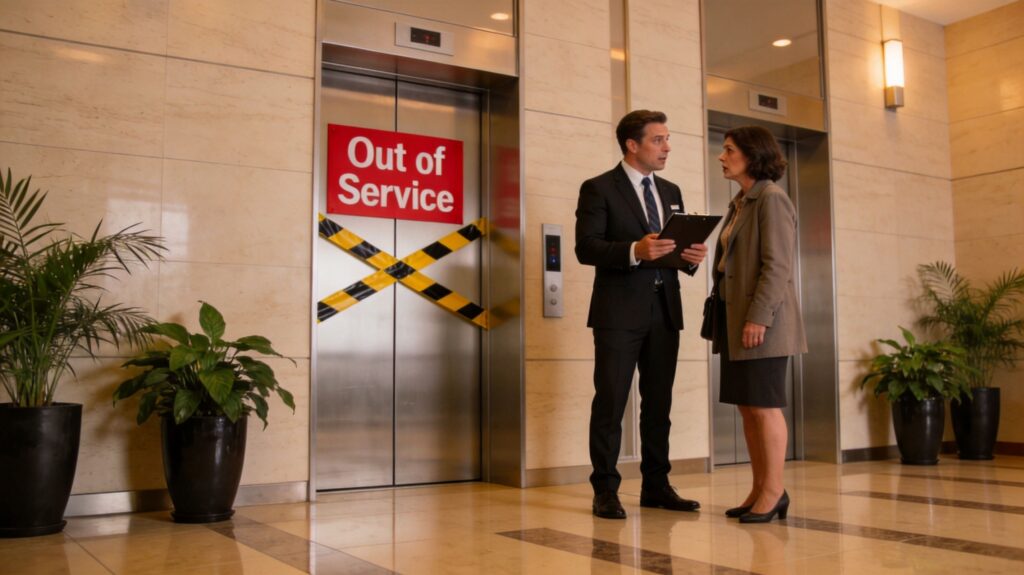
The call usually starts the same way. A tenant says the car won't move, the hall station shows a fault, or someone texts a photo of an Out of Service sign already taped to the entrance. At that point, the problem isn't just the equipment. It's access, safety, upset occupants, delivery delays, and the question every owner asks first: how long is this going to take?
That pressure is intensifying rather than easing. The U.S. has about 1 million elevators in service, and aging equipment plus technician shortages are making outages harder to resolve quickly, especially in older building markets like Detroit, according to Axios reporting on the national elevator crisis. When a car goes down in a commercial building, a school, a medical facility, or a multi-story residential property, the true cost starts running before the technician even arrives.
A building manager's job in that moment is simple in theory and easy to mishandle in practice. Protect people first. Control the scene. Gather the right facts. Then make a service call that gives the mechanic the best chance to fix it on the first visit. That last part matters more than most generic troubleshooting guides admit. A vague call creates delays. A precise call gets the right person, tools, and likely parts moving sooner.
First Steps When Your Elevator is Out of Service
The first mistake people make is treating every outage like a routine inconvenience. It isn't. The right response starts with assuming there may be a safety issue until you prove otherwise.
If your elevator is out of service, work in this order:
- Determine whether anyone is inside. Don't assume an empty landing means an empty cab.
- Take the car out of public use. That means signs and barriers at every affected landing.
- Notify the right people. Occupants, front desk staff, security, and your elevator service provider all need accurate information.
- Document what happened. Time of failure, observed symptoms, and any reports from users matter later.
- Set expectations early. People get more frustrated by silence than by bad news delivered clearly.
Treat it like an access problem, not just a repair ticket
In older buildings, one disabled elevator can turn upper floors into a serious access problem fast. That's why a breakdown in a residential property feels different from a breakdown in a warehouse with redundant lifts. The equipment issue may be the same. The operational impact is not.
A calm, structured response protects you in three ways:
- Safety protection for riders, visitors, and staff
- Liability control through documented action and restricted access
- Downtime reduction because the service team gets cleaner information from the start
Practical rule: The first ten minutes after an elevator stops matter more than the next ten phone calls about it.
If you need immediate professional help, use an actual emergency service line, not a general inbox or a maintenance request form. Building managers in Michigan dealing with an urgent outage should contact a provider equipped for emergency elevator service rather than waiting for standard dispatch.
Keep people away from improvised fixes
This stage of the process often sees difficult situations deteriorate. Staff members try to cycle power without understanding the cause. Someone pries at doors. A well-meaning superintendent tries to “help” a trapped rider out of the car. That creates exposure you don't want.
What works is a narrow response. Confirm occupancy. Secure access. Report facts. Let a qualified elevator technician diagnose the equipment.
Immediate Safety Actions and Communication Protocols
If there's any chance a passenger is trapped, that becomes the priority. A lot of owners worry first about repair time. The first concern is life safety and controlled communication.
Well-maintained elevators typically experience 0.5 to 2 breakdowns per year, and about 20% of those incidents result in entrapments, based on elevator accident statistics summarized here. That doesn't mean every outage involves a trapped rider. It means you can't treat entrapment as rare enough to ignore.
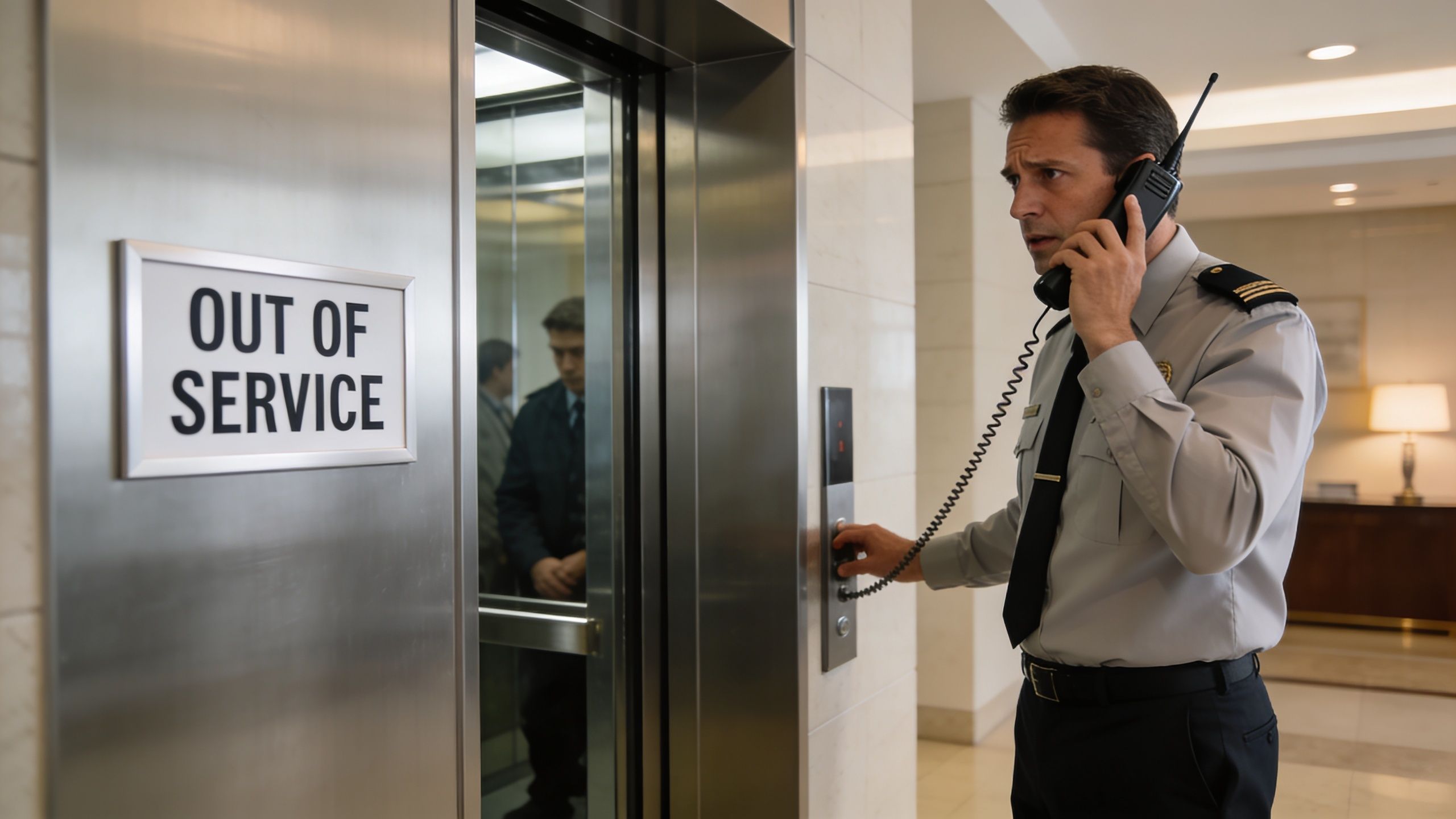
If a passenger is trapped
Use a tight script and keep the rider calm.
- Make contact immediately. Use the intercom, emergency phone, or speak through the door if communication is possible.
- Confirm the basics. Ask how many people are inside and whether anyone has a medical issue.
- Tell them help is on the way. Keep the message short and specific.
- Tell them not to force doors or try to climb out. People do this when they panic.
- Call the elevator service provider and state clearly that this is an entrapment. That is not the same as a normal shutdown.
If your property still has unreliable in-car communication, that needs attention outside the immediate incident. Functional elevator emergency phones are part of managing these events safely.
Stay in contact with trapped passengers if you can. Silence increases panic. Calm, repetitive instructions reduce the chance of a bad decision inside the car.
Secure the area at every landing
One sign on the main floor isn't enough. People approach from multiple floors, loading areas, and parking levels.
Put controls in place that physically interrupt use:
- Post clear signs on every landing served by that elevator
- Use barriers if traffic is heavy or the entrance is visually confusing
- Brief staff so nobody tells occupants to “just try it again”
- Check adjacent elevators so you don't accidentally redirect everyone to another unit with an unresolved issue
This matters for liability. If someone gets hurt after a known outage and access wasn't controlled, the problem is no longer just mechanical.
Communicate like an operator, not a bystander
Occupants don't need speculation. They need direct information.
A workable notice sounds like this:
The elevator serving Floors 1 through 6 is currently out of service. We've notified our elevator contractor and are awaiting technician response. Please use the alternate elevator or stairs if able. If you need accessibility assistance, contact building management at the front desk or posted number.
For residential buildings, add practical details. Package accommodations, move-in delays, and mobility assistance requests should be addressed immediately, not after complaints start. In offices and schools, front-load alternate route instructions and delivery procedures.
What to Check Before You Call for Service
A building manager can do useful work before making the call, but only if that work stays on the safe side of the line. The purpose here is information gathering, not repair.
You are not trying to diagnose the machine room. You are trying to give the dispatcher and the technician a cleaner picture of what failed.
Safe checks you can make
Look for plain, non-invasive clues.
- Check the hall display or car operating panel. Note any fault message or unusual display behavior.
- Look at the landing doors. Are they closed, partially open, or not aligned?
- Ask recent users what they saw. Leveling issue, door reopening, odd noise, burning smell, sudden stop, or no response to calls.
- Verify whether the outage affects one car or a group. That changes the likely cause.
- Check for obvious building-wide issues. If other systems are affected, the elevator problem may be related to power conditions.
If you've had recurring door problems, that history matters. Door issues cause a large share of service calls, and recurring misalignment or contamination can point to maintenance gaps. That's why many managers review elevator door maintenance practices after repeated shutdowns.
What not to touch
This list is short because it needs to be.
- Don't pry doors open
- Don't enter the machine room unless you're authorized and trained
- Don't reset equipment repeatedly
- Don't let building staff ride the car “to test it”
- Don't attempt to remove trapped passengers
People often want to help. On elevator equipment, unqualified help creates secondary failures and dangerous conditions.
Information to gather before calling your elevator contractor
| Information Item | Where to Find It | Why It's Important |
|---|---|---|
| Elevator ID | Posted permit, controller label, or building equipment list | Helps dispatch identify the exact unit quickly |
| Building address and entry instructions | Management records or front desk | Prevents access delays when the technician arrives |
| Time the outage started | Security log, tenant call, staff report, or camera review | Helps isolate whether the issue followed a power event, usage spike, or earlier fault |
| Current car position if known | Hall indicators, occupant report, or visual observation | Helps determine whether it may be an entrapment or door zone issue |
| Specific symptom | User reports and on-site observation | “Won't move” is vague. “Doors reopen on Floor 3” is useful |
| Any error code or display message | Hall station, COP, or controller display if safely visible | Gives the technician a starting point before arrival |
| Unusual sounds or smells | Witness reports | Can suggest motor, brake, or door operator issues |
| Whether this is repeat trouble | Service history or staff memory | Recurring faults often point to an unresolved root cause |
| Accessibility impact | Your building use and affected floors | Helps prioritize response and interim accommodation planning |
Better notes don't replace a mechanic. They do help the mechanic arrive prepared.
Reporting the Issue for a Faster Repair
A good service call shortens downtime because it allows dispatch to treat the outage correctly from the start. A bad one sounds like this: “The elevator's down again.” That tells the technician almost nothing.
When a building manager provides a clear timestamp, specific symptoms, and the elevator ID, the service team can anticipate the problem better, and in urban markets like Detroit that can reduce response time by up to 30 minutes, based on technical response guidance for elevator out-of-service incidents. That same guidance notes that technicians may need to check the safety chain, test motor megger resistance, and inspect cables. In other words, the mechanic is already thinking several steps ahead. Your report should help, not slow that process down.
What dispatch needs to hear first
Lead with the situation, not the story.
Say it in this order:
- Is anyone trapped?
- What is the exact elevator ID and building address?
- When did the issue start?
- What is the visible symptom or fault?
- Can the technician access the machine room, controller, or service areas immediately on arrival?
That order helps the dispatcher classify the call properly. Entrapment gets handled differently from a shutdown with no passengers inside. A noisy machine room with no shutdown may be triaged differently from a car that won't level at the landing.
Use specific language
These reports are useful:
- The car is stuck between floors and a passenger is inside.
- The elevator answers calls, but the doors reopen and it won't leave the floor.
- The hall display is dark, and the outage started after a building power event.
- The car leveled below the landing earlier in the day and is now out of service.
- This is the third door-related issue in the same week.
These reports aren't:
- It's not working.
- It's acting weird.
- The elevator is broken again.
- Somebody should come look at it.
Ask the questions that help a first-visit fix
Don't just place the call and wait. Ask for operational details.
- Confirm call classification. Is this logged as entrapment, emergency shutdown, or routine outage?
- Ask whether the technician needs escort or keys. Access delays waste response time.
- Ask whether photos of the display or fault condition would help. Sometimes they do.
- Ask whether they want prior service history pulled. Recurring faults matter.
- Ask who will update you if parts are needed. Don't let that become a surprise hours later.
A first-visit fix depends on getting the right mechanic there with the right probable parts and enough context to avoid starting from zero. The service call is where that begins. If you manage several properties, create a standard outage report form and train your staff to use it. Consistency improves response quality.
Managing Expectations for Repair Timelines and Accessibility
The hardest conversation usually comes after the call is made. Occupants want a repair time. Management wants certainty. The technician wants room to diagnose the problem properly. Those three things rarely line up neatly.
In high-traffic buildings, a well-maintained elevator should ideally be out of service for no more than 4 to 8 hours per incident, and a structured response with post-incident diagnostics can reduce unplanned downtime by 70% to 80% compared with a purely reactive approach, according to guidance on elevator downtime benchmarks. That benchmark is useful, but it isn't a promise. Real timelines depend on what failed.
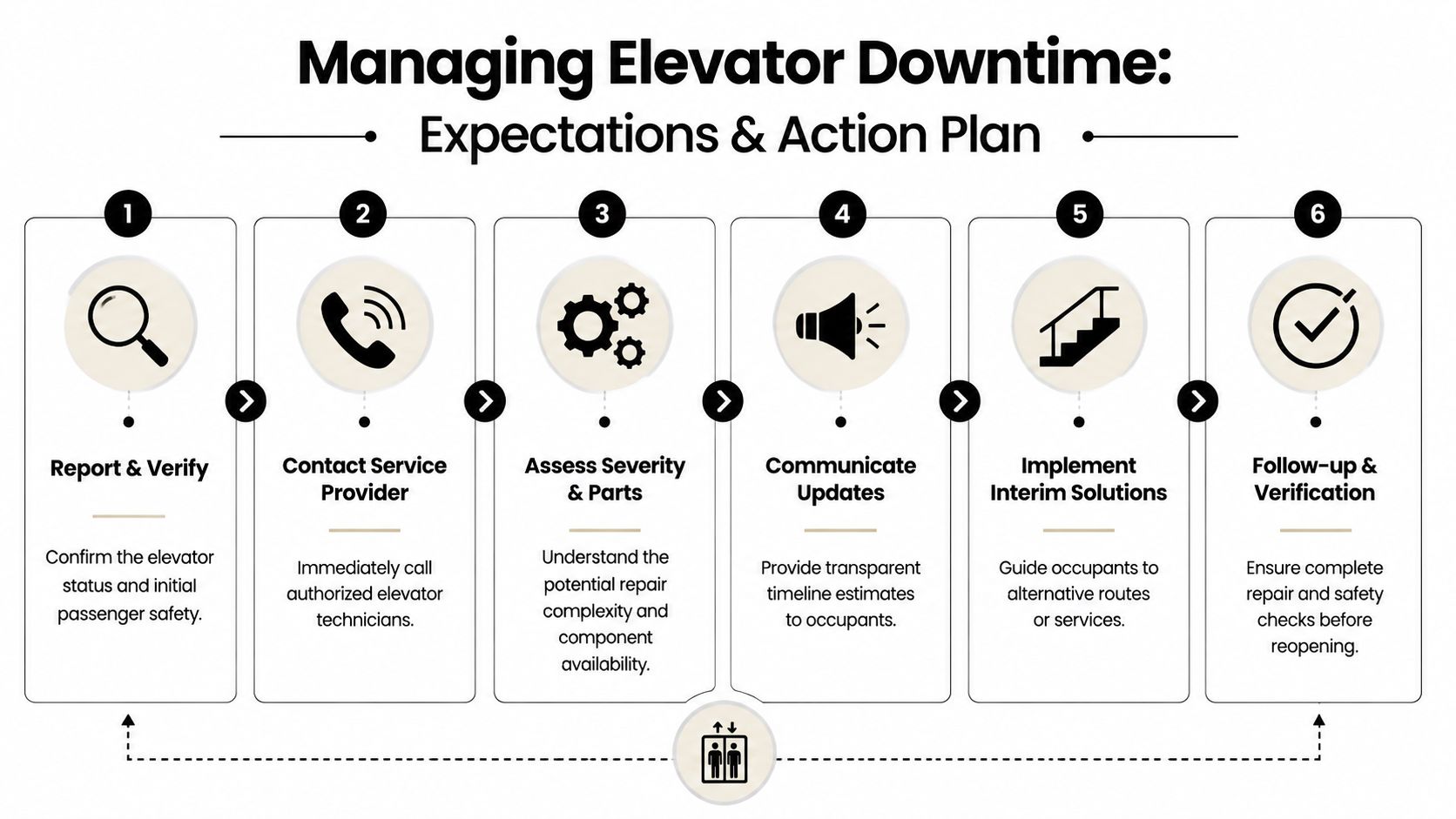
Why some outages clear quickly and others drag on
A basic reset or adjustment may be resolved on the first visit. A repeat door fault may require a deeper look at wear, contamination, alignment, or control issues. A shutdown tied to a failed component can move into parts logistics, return scheduling, and final testing.
The main variables are usually:
Diagnosis complexity
The symptom you see at the landing may not be the failed component.Parts availability
Older and proprietary systems often create the longest delays.Access and scheduling
If the technician can't get into the machine room, the clock keeps running.Required testing before return to service
A proper release back to service matters as much as the repair itself.
If the first diagnosis changes after inspection, that doesn't automatically mean the wrong technician showed up. It often means the visible symptom wasn't the root cause.
Give occupants a realistic message
Don't promise a completion time unless the service provider has confirmed one. Use staged communication instead.
A solid update format is:
- Initial notice that the elevator is out of service and the call has been placed
- Status update once the technician is en route or on site
- Repair outlook after diagnosis, especially if parts are needed
- Access instructions for anyone who can't use stairs
Downtime costs widen at this stage. A silent management team gets repeated calls, lobby conflict, tenant complaints, and more pressure on front desk staff. Clear updates won't repair the elevator, but they do reduce disruption.
Interim accessibility measures that actually help
If the outage extends beyond a short service window, put temporary accommodations in writing.
Consider:
- Package handling adjustments for residents who can't reach lower-floor pickup points
- Visitor routing instructions for offices, schools, and public buildings
- Alternative meeting locations on accessible floors
- Staff assistance procedures for deliveries or mobility-related requests
- Temporary operational changes such as moving critical functions to accessible levels where feasible
In healthcare, education, and municipal settings, this planning needs to happen immediately. In residential properties, the impact becomes personal fast. Groceries, medication deliveries, and home access can't wait for a parts backorder.
Moving from Reactive Repairs to Proactive Reliability
An elevator out of service event always feels urgent, but the long-term lesson is usually visible afterward. Most costly outages don't begin as sudden disasters. They begin as ignored patterns. Door calls that keep returning. Rough leveling that gets written off. Dirty pits, neglected machine rooms, weak communication, and a maintenance program built around dispatching someone only after tenants complain.
That approach gets expensive. Industry data indicates that poorly maintained U.S. commercial elevators can average 12 to 15 unplanned outages yearly, with each incident costing thousands of dollars, while proactive maintenance programs can cut outages by 40% to 60%. The same industry summary says non-proprietary solutions such as Crane Elevator Company's No Show, No Pay approach can prevent up to 70% of service calls and produce a 2 to 3 year payback, according to this overview of common causes, fixes, and maintenance ROI.
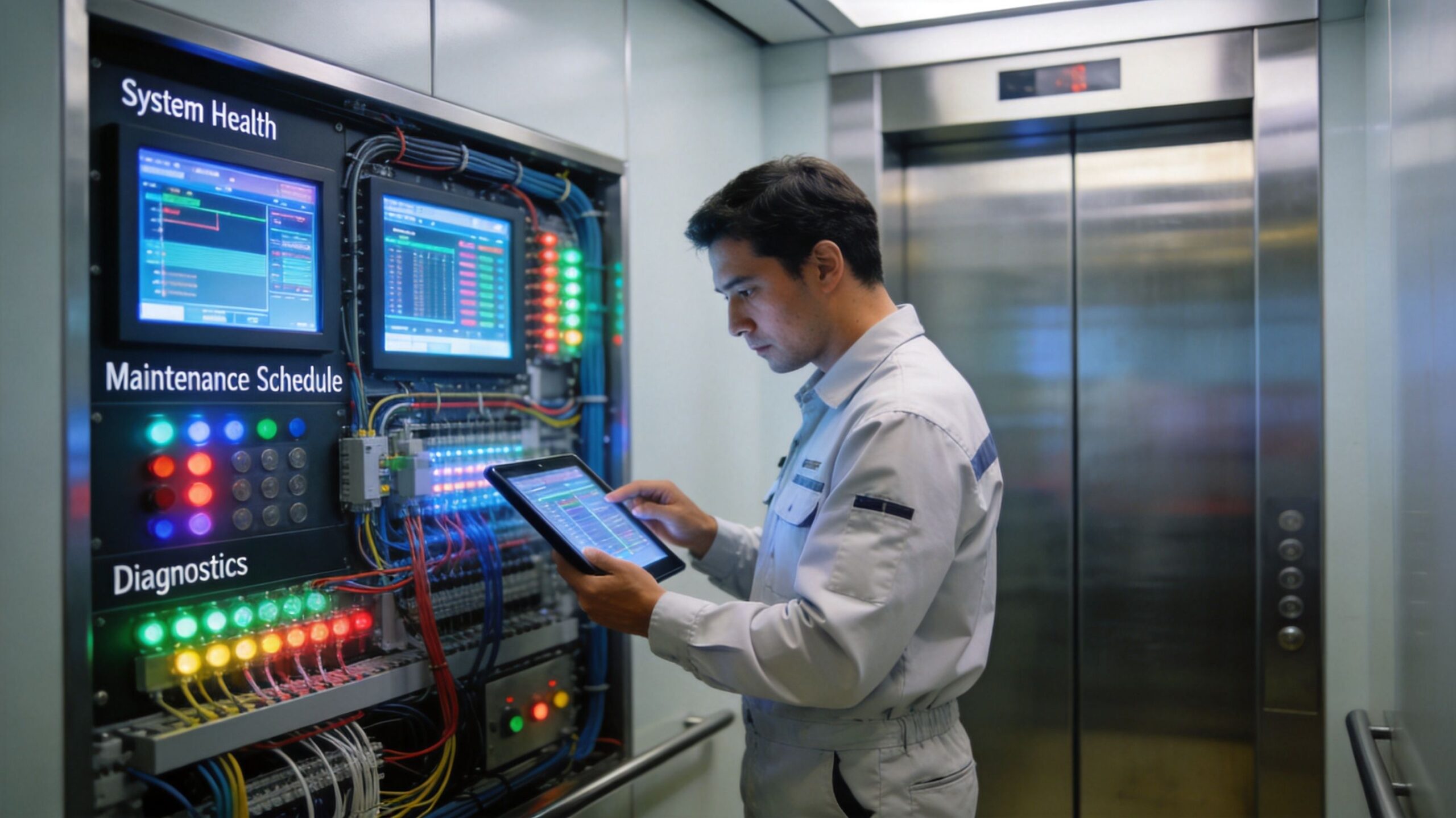
The real cost of downtime
The repair invoice is only one line item. Owners also absorb:
- Tenant dissatisfaction when people lose trust in building operations
- Staff time spent fielding calls, posting notices, escorting visitors, and managing workarounds
- Delivery and operational delays in office, industrial, healthcare, and education settings
- Liability exposure if entrapments, access failures, or poor scene control create claims
- Reputational damage when outages become part of the building's identity
That's why the cheapest maintenance contract often becomes the most expensive operating decision.
What actually reduces repeat outages
The best maintenance plans aren't passive. They are specific, documented, and tied to common failure points.
Look for programs that include:
- Routine inspections with real notes, not checkbox service
- Full clean-downs of machine rooms, pits, and car tops where contamination contributes to repeat faults
- Attention to door systems, because recurring door trouble rarely fixes itself
- Non-proprietary modernization paths when controls or components are making service slower and parts harder to source
- Post-incident diagnostics so the technician addresses root cause, not just the symptom that got the car running
Reactive repair restores service. Proactive maintenance protects uptime, access, and credibility.
A building with older equipment doesn't always need a full modernization immediately. Sometimes the right move is targeted correction. Sometimes the pattern of calls says the system is past that point. The practical question isn't whether the elevator can be restarted one more time. It's whether your current approach is controlling total downtime cost over the next several years.
When your elevator goes down, the right service partner should help you do more than reopen the car. They should help you control risk, communicate clearly, diagnose the underlying cause, and reduce the chance of another outage next week. If you need support with repair, maintenance, inspections, modernization, or emergency response in Lower Michigan, contact Crane Elevator Company for a practical review of your equipment and service options.