A building owner usually starts paying attention to elevator controls after the third or fourth nuisance shutdown, not the first one. One tenant complains the car leveled low again. Another says the doors hesitated on a busy morning. Then the service invoice arrives, and it's another mix of troubleshooting time, reset calls, and a part nobody seems to stock anymore.
That cycle is expensive because the visible problem often isn't the underlying problem. The doors, ride quality, and dispatching issues are symptoms. In many aging systems, the control package is the underlying cause of downtime, callback frequency, and compliance risk.
The Hidden Cause of Your Elevator Problems
If you manage a commercial building in Detroit, this probably sounds familiar. The elevator runs fine for a week, then it faults out during tenant traffic. A technician resets it, maybe changes a relay, maybe tightens a terminal, and the car goes back into service. Then the same pattern returns.
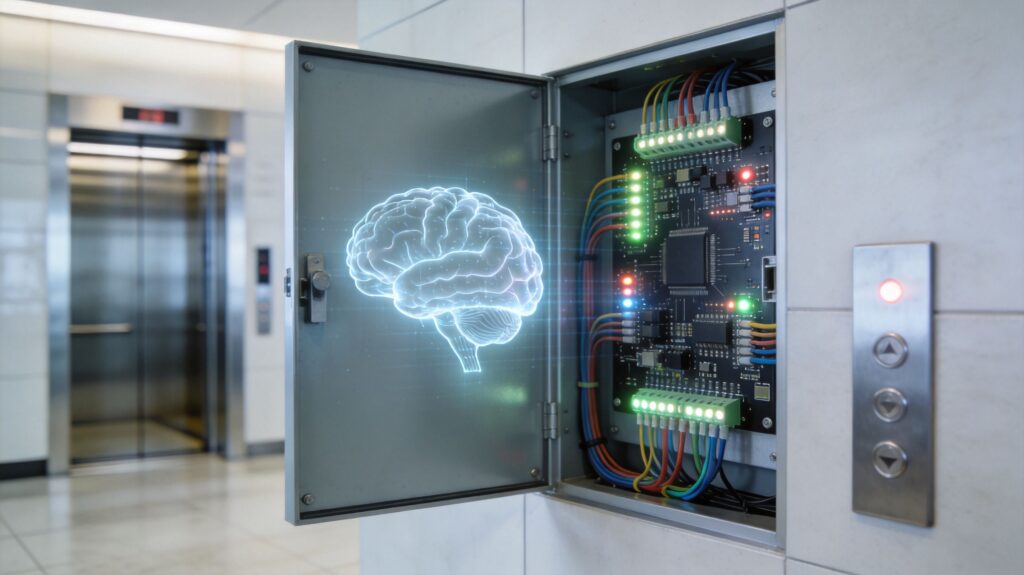
Owners often focus on what they can see. A rough stop. A delayed door close. A car that seems to ignore a hall call. Those are real problems, but they're usually the end of the story, not the start of it. The root issue is often the elevator control system, the brain that tells the machine what to do, when to do it, and whether it's safe to move.
Why the brain matters
A control system coordinates the call buttons, door operation, speed changes, floor position, and safety checks. When that brain is outdated, unstable, or poorly maintained, the whole elevator starts behaving like a healthy body with a bad nervous system. The motor may still be sound. The rails may be fine. But the car still rides poorly because the commands are inconsistent.
The industry has been moving toward smarter automation for a long time. The first operatorless elevator was installed in 1950, and by 1979 microprocessor-controlled systems such as the Otis Elevonic™ 101 were coordinating elevator functions with building traffic, helping support the 18 billion passenger trips per year in the U.S. described by the NCBI overview of elevator automation history.
Old elevators rarely fail in a dramatic way first. They usually fail in a repetitive, expensive way.
The owner's bottom-line problem
The cost subtly accumulates. Not one catastrophic event. A long run of smaller hits:
- Tenant disruption: complaints, delayed access, and a building that feels less dependable
- Service inefficiency: repeated callbacks that solve the symptom but not the cause
- Budget unpredictability: repair bills that arrive in bursts instead of a planned maintenance path
- Liability exposure: poor leveling and recurring shutdowns create risk that owners can't ignore
When owners understand elevator controls, they stop treating downtime as random bad luck. They start seeing the system as an asset that can either produce stable operating costs or drain the budget year after year.
What Are Elevator Controls
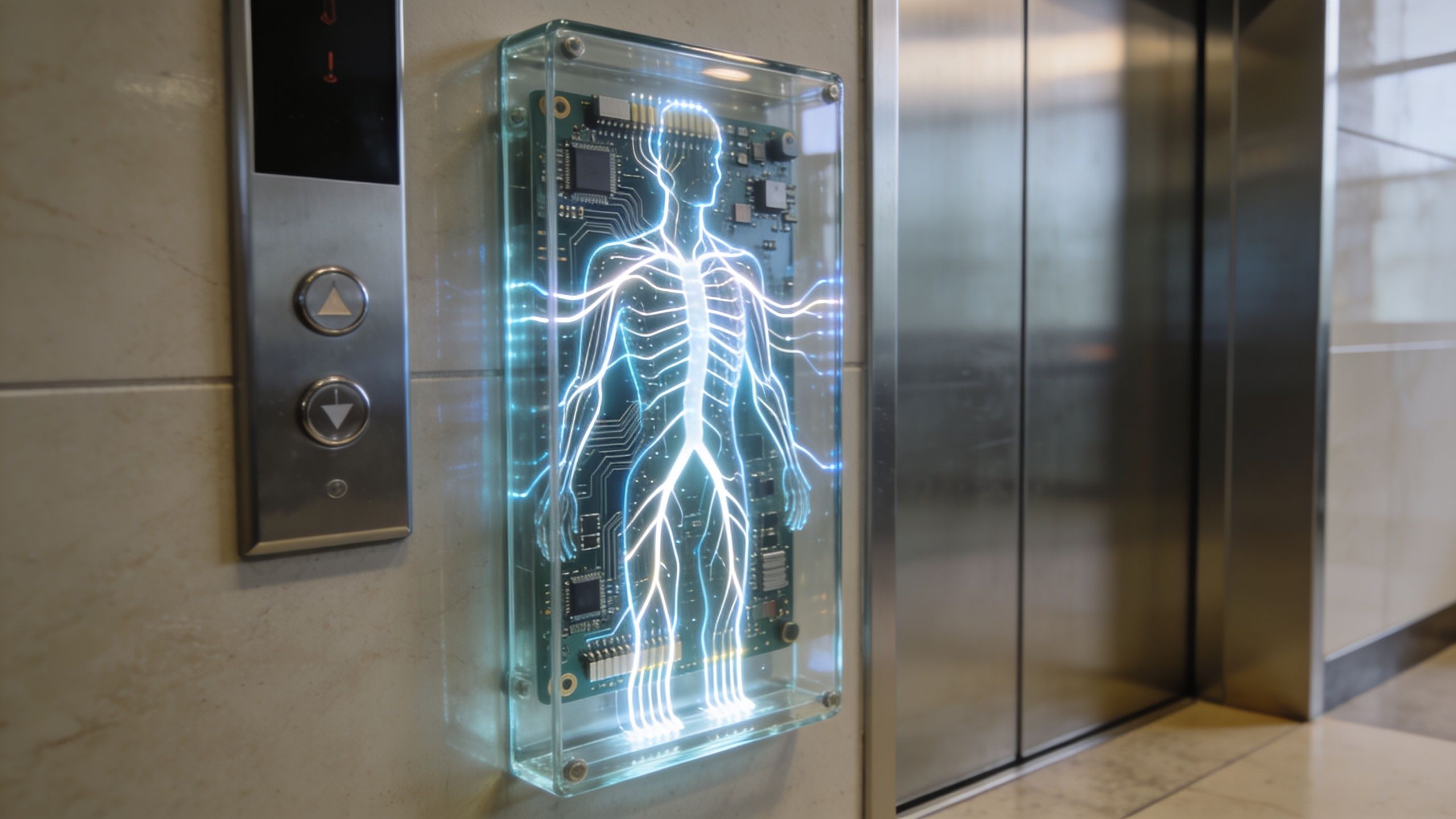
An elevator control system is the machine's nervous system. The controller is the brain. The wiring and sensors are the nerves. The drive and motor are the muscles. If one part sends a bad signal or reacts too slowly, the whole trip feels wrong to the passenger.
What happens during one normal elevator trip
A passenger presses a hall button. The controller receives that input and decides which car should answer. The drive tells the motor how to accelerate, travel, and slow down. Position devices confirm where the car is. Door circuits verify that the entrance is safe to open and close. Safety circuits keep checking whether the car is allowed to move at all.
If any one of those pieces is weak, the rider experiences it immediately. That's why owners can't think of elevator controls as one circuit board in a cabinet. It's the logic that ties the entire machine together.
The main parts that owners should know
Here's the practical version of the system:
- Main controller: this is the decision-maker. It processes calls, direction, car position, and operating logic.
- Drive: this regulates motor speed and power. It has a direct effect on ride quality and leveling.
- Inputs and outputs: buttons, sensors, limit devices, door contacts, and indicators all feed information in and carry commands out.
- Safety circuit: this is the permission chain. If the safety circuit doesn't see what it expects, the car shouldn't run.
A building owner doesn't need to diagnose board-level faults. But you do need to understand what each part does, because service recommendations make more sense once you know whether the problem is logic, motion control, or safety verification.
Practical rule: If a contractor can't explain whether your issue is in the controller, the drive, or the safety circuit, you probably don't yet have a root-cause diagnosis.
Why newer controls are more dependable
Modern systems aren't just newer versions of the same idea. They're built differently. According to the Pixel Elevator Control System specifications, modern elevator controls use a dual-processor safety architecture in which two processors cross-check each other, paired with forced-guided relays that provide mechanical proof of operation. For owners, that matters because it reduces the chance that one failed processor takes down the whole safety function and makes ASME A17.1 compliance verification more straightforward.
That's a big shift from older systems that rely on more limited logic and fewer diagnostic tools. In practical terms, newer controls usually make troubleshooting faster, shutdowns easier to trace, and preventive service more meaningful.
Comparing Key Elevator Control Systems
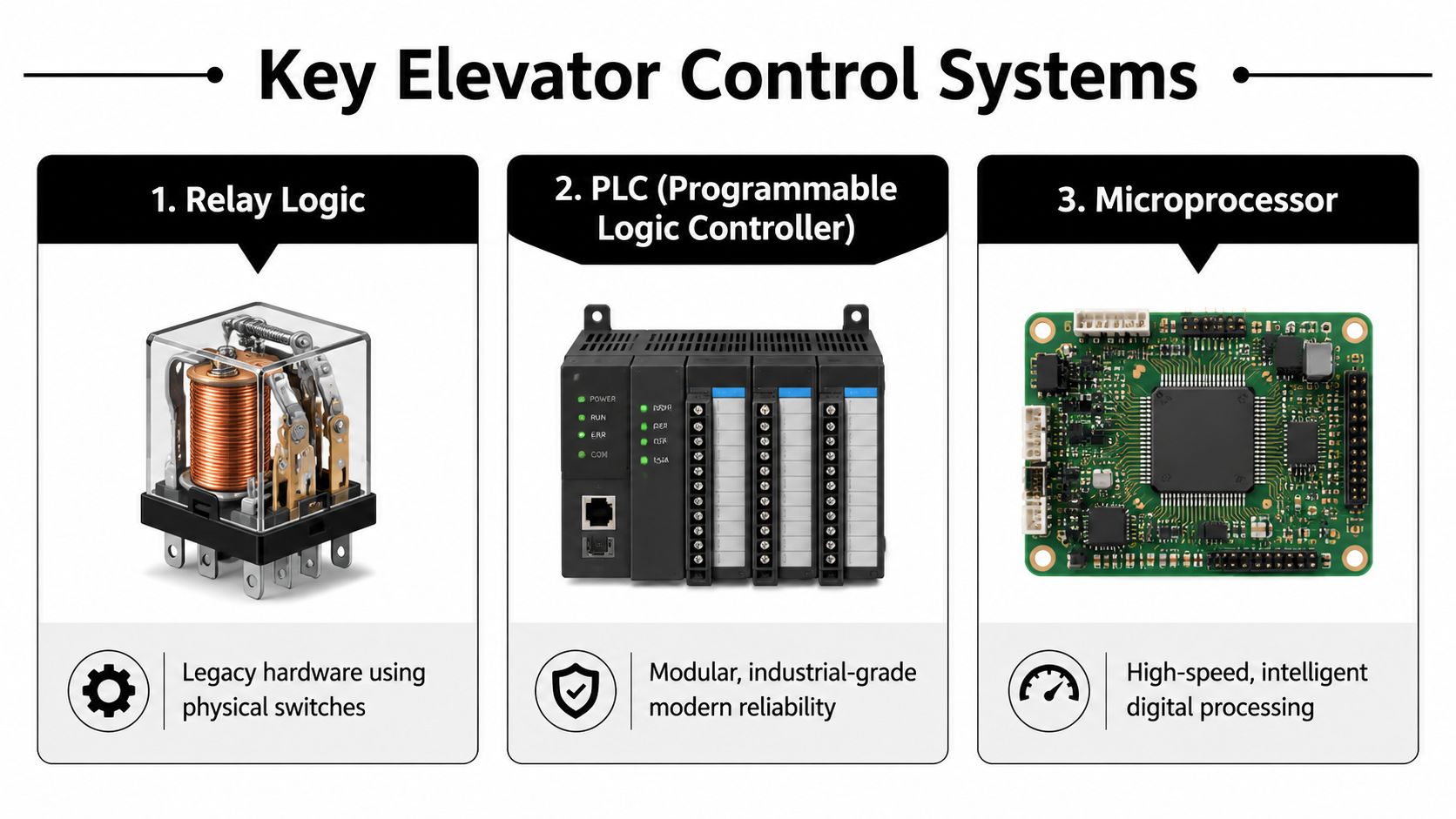
Owners usually run into three broad categories of elevator controls in the field: relay logic, PLC-based systems, and microprocessor or drive-based modern controls. They don't carry the same risk profile, and they don't produce the same long-term cost.
Relay logic
Relay logic is old-school hardware control. It uses physical relays, contacts, and electromechanical sequences to run the car. These systems can still operate, and some have lasted a long time, but age is the problem.
Relays wear. Contacts pit. Wiring gets brittle. Troubleshooting takes longer because technicians may need to chase faults one component at a time. Owners often pay for labor-heavy diagnostics on systems with shrinking parts availability.
PLC systems
A programmable logic controller, or PLC, is a more structured industrial control platform. It gives technicians cleaner diagnostics, better logic handling, and more flexible updates than relay logic. In the field, PLC systems are often easier to maintain because they combine industrial durability with clearer fault tracking.
They're not magic. A bad installation or poor maintenance program can still create repeat trouble. But from an ownership standpoint, PLC controls usually offer a better balance of reliability, maintainability, and service access.
Microprocessor and modern drive-based systems
These are the systems most owners should be considering when reliability and passenger experience matter. Modern digital controls work with advanced motor drives to manage acceleration, deceleration, floor leveling, and traffic logic more precisely.
That precision shows up in daily use. The Vantage Elevation control specifications note that older systems often use Open Loop Vector control suitable for speeds up to 150 FPM with speed regulation accuracy of 2% to 6%. At 6%, actual speed can vary by 9 FPM, which can lead to noticeable jolts and inaccurate leveling. Modern closed-loop systems hold tighter tolerances, which is why passengers usually describe them as smoother and more predictable.
Owner-focused comparison
| System type | What owners like | What owners end up paying for |
|---|---|---|
| Relay logic | Existing equipment may still run without full modernization | More troubleshooting labor, obsolete parts, recurring intermittent faults |
| PLC | Modular logic, clearer diagnostics, broader serviceability | Still depends on build quality and disciplined maintenance |
| Modern microprocessor and drive controls | Better ride quality, stronger diagnostics, cleaner compliance pathway | Higher upfront modernization cost, but usually lower long-term friction |
What works and what doesn't
What works is choosing a system that local technicians can maintain, troubleshoot, and support over the life of the building. What doesn't work is treating the lowest initial proposal as the cheapest option. Owners do that all the time, then spend years paying for locked-down parts, slow diagnostics, and recurring callbacks.
The wrong control package is like putting a bargain computer in the center of a critical building system. It may turn on. That doesn't make it a good business decision.
If your building still runs relay logic, the key question isn't whether it can be repaired again. It's whether another repair buys meaningful life or just delays an inevitable modernization while costs keep stacking up.
Recognizing Signs of Control System Failure
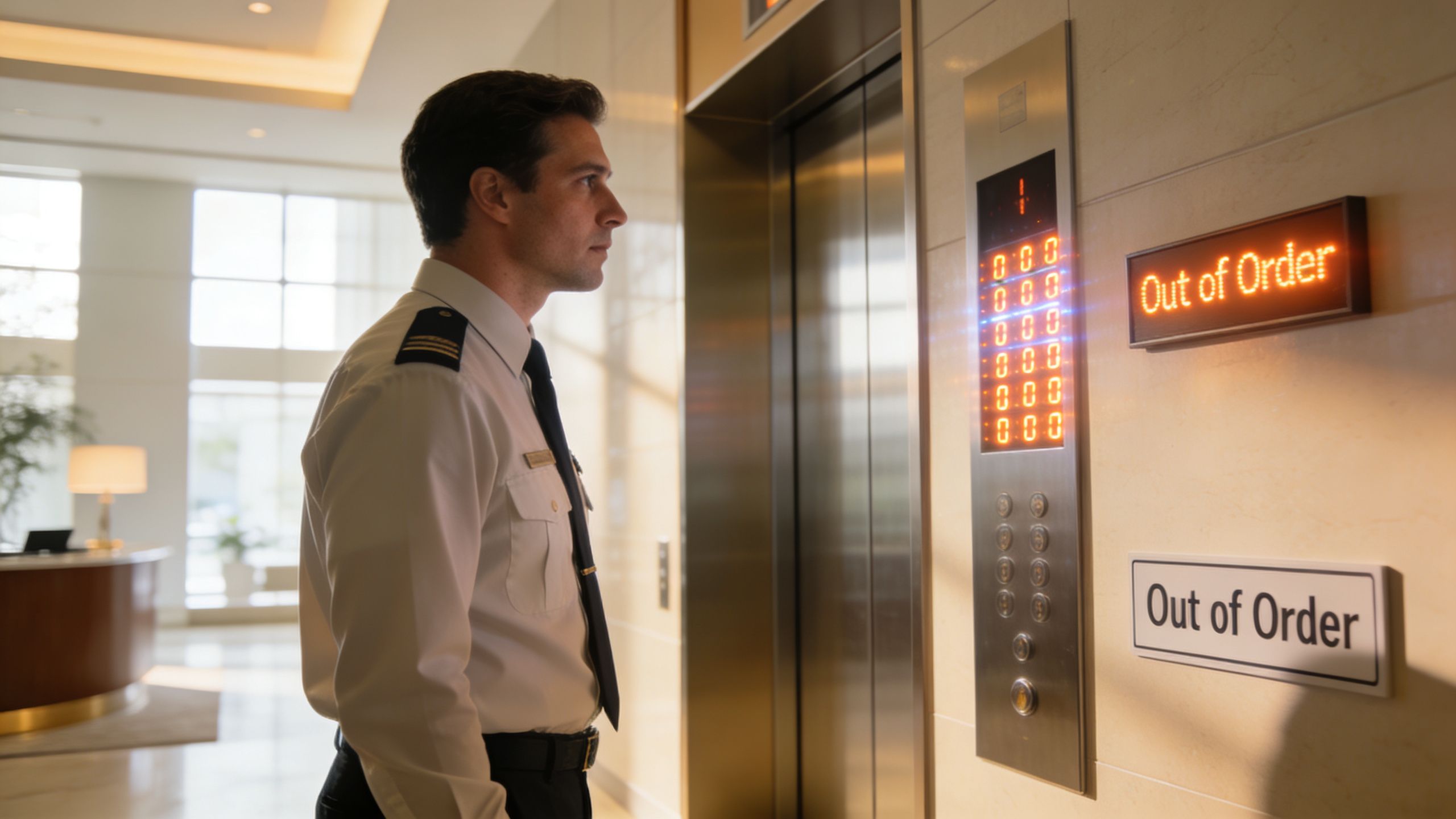
A failing control system usually gives warnings before it gives up. The trouble is that owners and staff often log those warnings as isolated complaints. They're not isolated. They're patterns.
Red flags you shouldn't brush off
- Poor floor leveling: if the car lands high or low, the issue may involve speed control, position feedback, or command timing. This is a ride-quality problem and a trip-hazard problem.
- Jerky starts or stops: rough acceleration often points to drive tuning issues, degraded feedback, or inconsistent control output.
- Door hesitation or nuisance reopening: doors that stall, reverse, or fail to respond cleanly often trace back to input problems, timing issues, or weak control logic.
- Longer wait times: when dispatching gets sloppy, owners sometimes assume the building is just busy. In reality, the controller may be processing calls poorly or parking the car inefficiently.
- Shutdowns that require reset: intermittent faults are classic control trouble. If the car returns after a reset but no root cause is documented, expect the problem back.
What to tell your elevator contractor
Specific observations cut diagnostic time. Instead of saying “the elevator acts up,” say the car leveled low at one floor, or the doors reopened twice before closing, or the shutdown happened during morning traffic after a rough stop. That gives the technician a starting point.
For owners evaluating upgrade options, it also helps to understand the basics of Virginia elevator controls and modernization considerations because the same control principles apply across many commercial systems: repeat shutdowns, poor leveling, and inconsistent response usually point to control-related issues, not just random wear.
The best service call starts with a symptom timeline, not a vague complaint.
When symptoms become a financial issue
A rough ride isn't just a comfort issue. It affects tenant perception. A leveling problem isn't just an annoyance. It creates exposure. A recurring reset call isn't just maintenance. It's proof that the building is spending money reactively instead of solving the root cause.
If the same symptoms keep returning, stop asking whether the elevator can be restarted. Ask whether the control system is still a serviceable asset or a budget liability.
Proactive Maintenance for Your Control System
Reactive maintenance feels cheaper right up until it isn't. Owners skip deeper control-system care because the elevator is still running, then one avoidable failure turns into an after-hours shutdown, an angry tenant call, and a repair authorization that couldn't be planned.
Control maintenance should be deliberate. It's not just grease and a quick visual check. A proper visit includes cleaning the controller, checking terminals, reviewing fault history, verifying safety-circuit operation, and looking at the drive's cooling and condition. Those tasks matter because dirt, heat, loose connections, and ignored fault patterns are what turn a manageable issue into downtime.
What a useful maintenance visit looks like
A strong preventive program should include work such as:
- Controller clean-down: dust and debris trap heat and interfere with reliable electrical performance.
- Terminal checks: loose connections create intermittent faults that waste hours in callbacks.
- Safety-circuit verification: the car should only run when all required safeties prove correctly.
- Drive inspection: fans, filters, and heat-related wear affect performance and life.
- Fault-log review: recurring codes often show a trend before they show a failure.
The traction problem owners often miss
One of the biggest maintenance gaps is watching for traction-related early warnings. The Elevator World material on traction loss conditions notes that hard braking and car overloading are among the causes of traction loss, and that modern controls can track warning signs such as uneven rope tension and changes in acceleration. For owners, the practical takeaway is simple: don't wait for slippage or a shutdown to become obvious before asking questions.
Why the maintenance partner matters
The value of a maintenance company is not just that it shows up. The value is whether the technician can read the machine's behavior and turn that into action before failure. A provider such as Crane Elevator Company works with proactive maintenance programs, full clean-downs, and non-proprietary equipment support. That matters because control systems reward consistency and punish neglect.
Good elevator maintenance is pattern recognition. The technician should be looking for trends, not just replacing what failed today.
From an ROI standpoint, preventive control work does three things. It reduces emergency labor, extends usable component life, and makes modernization planning less urgent and more strategic. Owners who maintain the controls well usually get to choose the timing of capital work. Owners who don't usually get forced into it.
Planning Your Elevator Modernization Pathway
Modernization isn't a vanity project. It's a business decision about whether the current controls still make financial sense. If the machine spends too much time in troubleshooting, uses hard-to-source parts, or delivers poor ride quality that tenants notice, the owner is already paying modernization costs in slow motion.
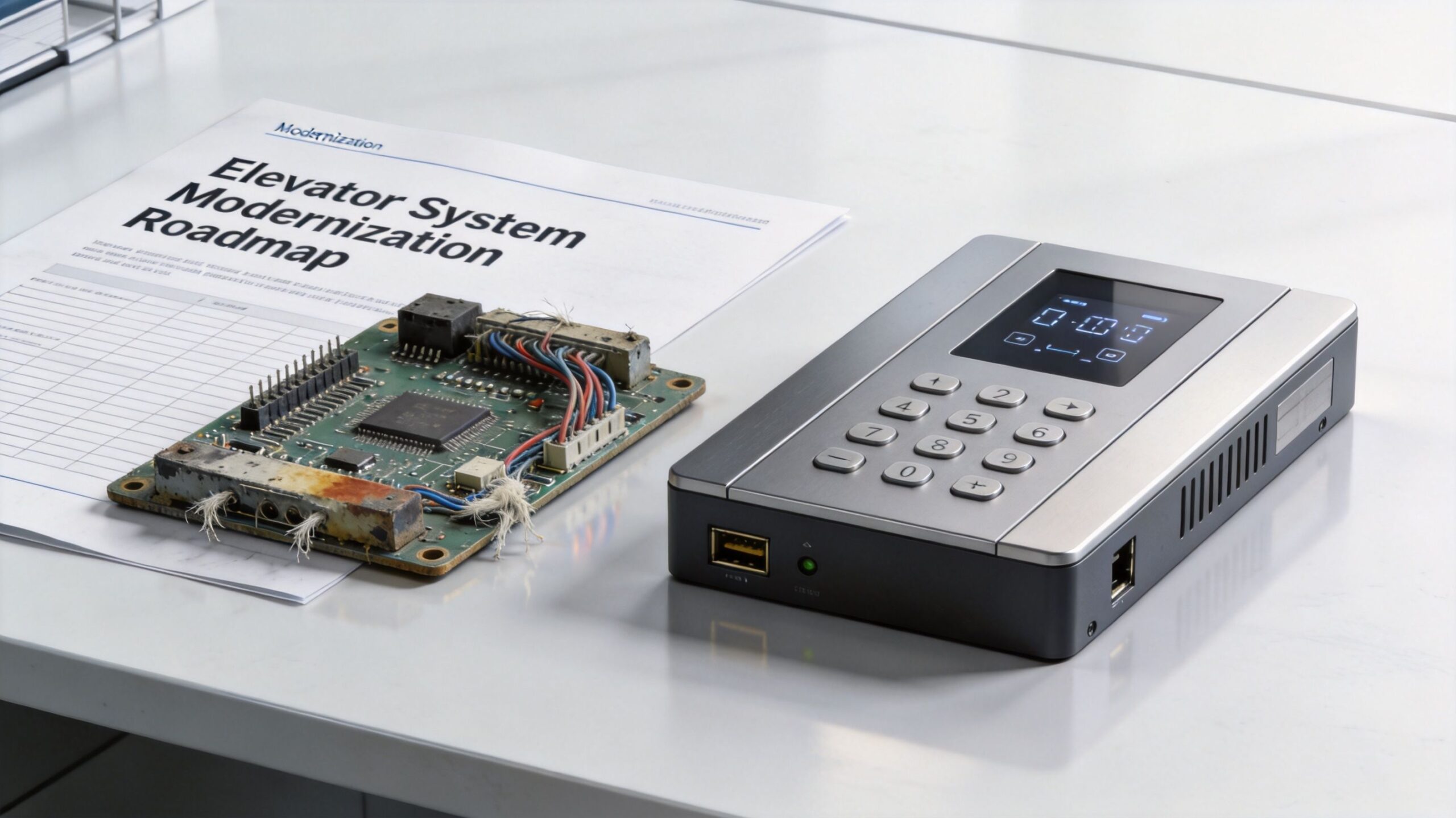
The industry has gone through this kind of transition before. Push-button control systems developed over a 12-year period from 1886 to 1898, replacing manual operation and changing how riders used elevators, as described in Elevator World's history of push-button control. The same logic applies now. A building with aging relay logic is often carrying technology that's out of step with current expectations for reliability and serviceability.
Repair or modernize
Use a repair-first mindset when the issue is isolated, parts are available, and the system still has stable support. Move toward modernization when the pattern looks like this:
- Repeat callbacks on the same symptom
- Parts delays or obsolete components
- Poor leveling, rough operation, or sluggish response
- Escalating labor on diagnostics
- Compliance upgrades that don't fit cleanly into the old platform
If you're reviewing options, a good starting point is understanding what a modern elevator control panel upgrade changes in practice. It's not just replacing a cabinet. It's usually a broader change in logic, diagnostics, safety handling, and maintainability.
The ROI question owners should actually ask
The wrong modernization question is “Can I get one more year out of this?” The better question is “What will that extra year cost me in downtime, tenant irritation, and labor-heavy repairs?”
A control modernization can improve safety handling, stabilize performance, and reduce the friction of code compliance. Just as important, it can turn a hard-to-budget asset into one with more predictable operating costs.
Here's a useful walkthrough on the modernization process and what it affects in the field.
Don't lock yourself into one provider
A non-proprietary system usually provides owners greater control over the life of the equipment. More qualified contractors can service it. Pricing stays more competitive. Parts and support decisions are less likely to revolve around a single manufacturer's approval chain.
That matters because modernization is not just a capital purchase. It's a long service relationship. The best ROI often comes from choosing controls that are practical to support for years, not just attractive on bid day.
An Owner's Checklist for Choosing a Service Partner
The contractor you choose will affect your elevator costs long after the first proposal. That's why owners should evaluate service partners the way they evaluate any other critical vendor. Look at serviceability, transparency, and whether the company helps you avoid future lock-in.
Questions worth asking before you sign
- Do you support non-proprietary equipment? Owners should ask this directly. If the answer is vague, future service costs may not stay competitive.
- What experience do you have with my specific type of elevator? A traction passenger car, a hydraulic unit, and an old freight elevator don't create the same service issues.
- What does your maintenance scope include? Ask whether the contract includes clean-downs, diagnostic review, and basic consumables, not just a quick monthly visit.
- How do you handle emergency response? You want to know how the company staffs after-hours calls and how it communicates with building personnel.
- How do you approach modernization planning? A serious contractor should be able to explain whether your system is a repair candidate or a modernization candidate, and why.
What separates a useful partner from a callback vendor
A callback vendor waits for the phone to ring. A useful service partner documents trends, explains recurring faults in plain language, and shows you where your money is going. That matters because owners don't need more jargon. They need enough clarity to make an operating decision.
Here's another practical screening point. Review whether the contractor builds around non-proprietary elevator solutions. That one decision affects who can work on your system, how competitive your future maintenance pricing stays, and whether a control upgrade improves flexibility or reduces it.
If a contractor can only keep your elevator running by keeping you dependent on them, that's not a service strategy. It's a lock-in strategy.
The contract details owners often skip
Read the maintenance language. If the agreement is thin, the service usually is too. Owners should look for clear scope, not broad promises.
A practical contract review should confirm:
- Cleaning responsibilities: machine room, pit, car top, and control areas don't stay healthy on neglect
- Inspection support: the provider should be ready to address code issues, not just point them out
- Communication standards: who gets notified, how issues are documented, and what happens after a shutdown
- Capital planning input: your contractor should help you see when repairs stop making business sense
The best choice is usually the partner that gives you options, documents patterns, and keeps the elevator serviceable without forcing future dependence.
Frequently Asked Questions About Elevator Controls
How do I know if my elevator controls need repair or full modernization
Look at the pattern, not one event. If the system has isolated issues and parts are still available, repair may be reasonable. If you're seeing repeat shutdowns, poor leveling, recurring diagnosis time, and outdated components, modernization usually becomes the better financial choice.
Are proprietary controls always a bad idea
Not always, but they can limit your options. Owners should think about who can service the system after installation, how parts are sourced, and whether future maintenance pricing stays competitive. The problem is rarely the label alone. The problem is losing service flexibility.
Can newer controls really change tenant experience
Yes. Tenants notice waiting time, ride smoothness, door behavior, and how often the elevator is out of service. They may never see the control cabinet, but they feel its quality every day.
What should I ask for during a maintenance review
Ask for recurring fault history, leveling observations, door-performance concerns, and any signs of traction-related anomalies or heat-related wear in the controller and drive. You want trend information, not just a note that the elevator was “running at departure.”
Is the cheapest maintenance contract usually the best value
Usually not. Cheap contracts often leave out the work that prevents expensive failures. If a company only resets faults and keeps moving, the owner ends up paying the true cost later through downtime and emergency repair.
If your building is dealing with repeat shutdowns, rough ride quality, or aging controls that are getting harder to support, Crane Elevator Company can provide maintenance, repair, inspection support, and non-proprietary modernization guidance for elevators across Lower Michigan. A practical review of your current control system can help you decide whether the smarter move is targeted repair, preventive maintenance, or a planned upgrade with better long-term operating value.