Your Schindler renewal notice usually shows up at the wrong time. Budget season is tight, tenants are complaining about a car that's been temperamental, and the last thing you want is to make a service decision that locks you into higher costs for years.
That's why schindler elevator service shouldn't be treated as a routine renewal. For Southern Michigan owners and facility teams, this is an asset-management decision. It affects uptime, code compliance, contractor flexibility, modernization options, and how much control you keep when the next major repair lands on your desk.
The hard part is that both paths can sound reasonable on paper. Staying with the OEM offers factory alignment and integrated tools. Moving to a qualified independent opens the door to non-proprietary service, wider parts options, and more control over long-term cost. The right choice depends on the building, the equipment, and how much freedom you want later.
Is Your Schindler Service Contract Up for Renewal
A common scenario goes like this. A property manager in Detroit or Ann Arbor opens the renewal packet, scans the monthly fee, then flips straight to the exclusions. After that comes the primary question: keep the current arrangement, or test the market before signing another term.
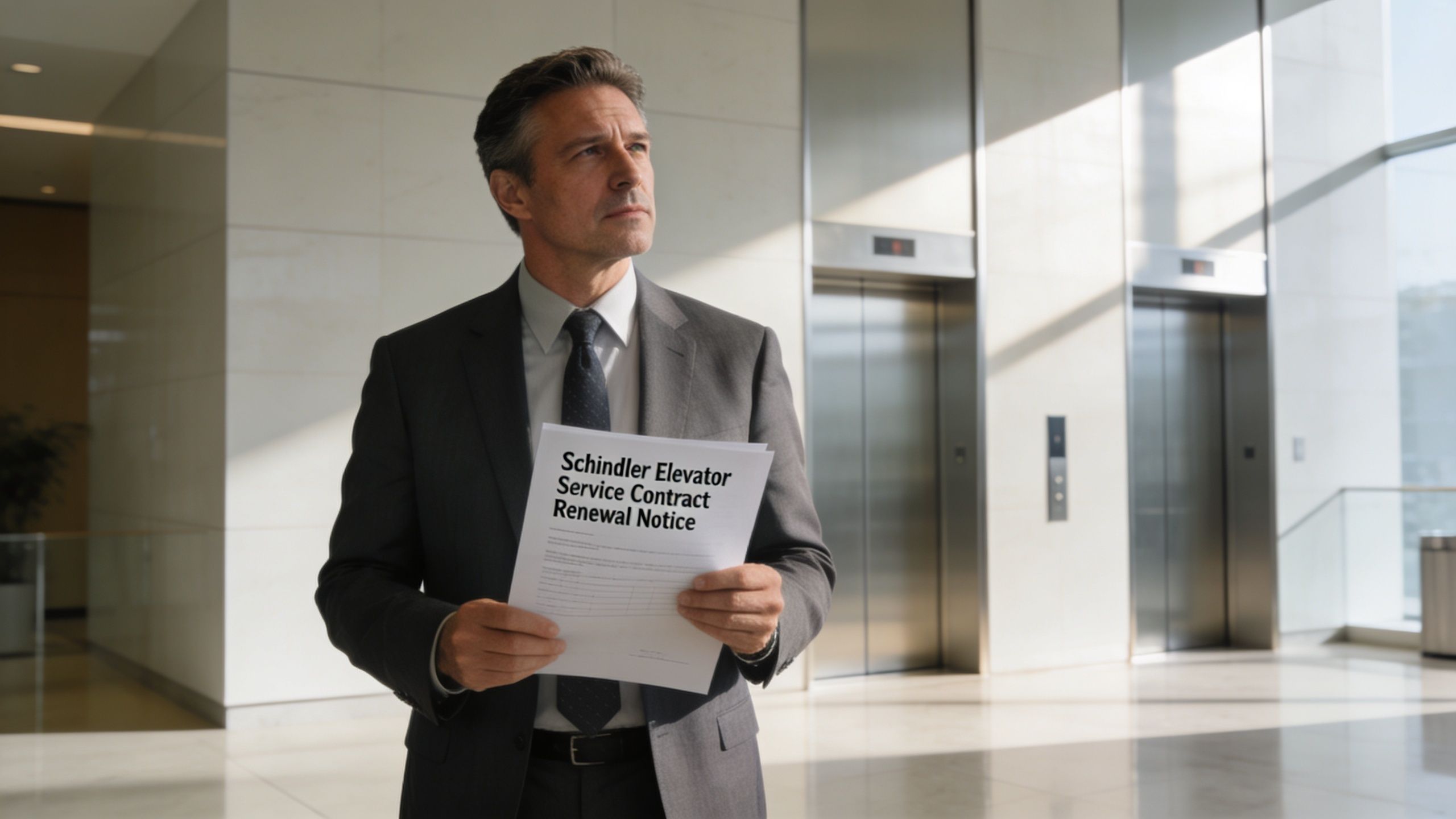
That question gets more serious when the elevator serves a medical office, school, municipal building, senior housing property, or an older downtown commercial building. In those settings, downtime isn't just inconvenient. It disrupts access, frustrates occupants, and can create immediate operational pressure on staff.
What owners usually find during renewal
Most renewal reviews uncover the same practical concerns:
- Coverage language: The headline price may not tell you which repairs are excluded, how callbacks are billed, or whether wear items are treated as routine service or extra work.
- Modernization pressure: If your equipment is aging, the service discussion can quickly turn into a recommendation for upgrades.
- Control over future options: The contract you sign now can shape who's able to work on the equipment later.
Practical rule: Review the service agreement and the modernization roadmap together. A cheap service contract can become an expensive long-term position if it pushes you toward proprietary upgrades.
This isn't only about monthly price
Owners often compare line items first. That's understandable, but it's incomplete. The bigger issue is service philosophy.
One model keeps you close to the manufacturer and its systems. The other keeps the equipment serviceable by a wider field of qualified contractors. In Michigan, where many buildings mix old and new equipment and need dependable local support, that distinction matters more than most renewal letters admit.
Understanding Your Two Service Models
Before comparing providers, separate the two models clearly. Many owners hear “OEM” and “independent” as if one means premium and the other means discount. That's not how the work plays out in the field.
OEM service
Schindler is a major player. The company holds 7.1% market share in the US Elevator Installation & Service industry, and that position is supported by a large installed base and recurring maintenance revenue, according to IBISWorld's Schindler Group industry profile.
That scale brings real advantages. OEM service usually means direct alignment with factory documentation, access to manufacturer systems, and a service process built around Schindler equipment and Schindler-approved workflows. For some owners, especially those with newer equipment or a portfolio already standardized around one OEM, that simplicity is appealing.
In practical terms, OEM service tends to mean:
- Integrated tools: Platforms such as Schindler Ahead are part of the value proposition.
- Factory pathway: Parts, software, and modernization recommendations stay within the manufacturer's ecosystem.
- Single-source accountability: One company handles service, diagnostics, and upgrade planning.
Independent non-proprietary service
Independent service follows a different logic. The goal isn't to keep the building inside one manufacturer's ecosystem. The goal is to keep the elevator reliable, code-compliant, and serviceable by qualified technicians without unnecessary restrictions.
A good independent contractor typically works across multiple makes and models, including Schindler equipment. That matters in Southern Michigan because many facilities have mixed equipment portfolios, older controllers, and buildings where a one-size-fits-all OEM plan doesn't fit actual usage.
Independent service works best when the contractor knows how to separate what's truly proprietary from what's simply specialized.
Where the trade-off starts
OEM service often wins on integration. Independent service often wins on flexibility.
That's the basic split. One model is built around the manufacturer's platform. The other is built around maintaining your control as an owner. If you're reviewing schindler elevator service, that's the decision underneath the contract language.
Core Comparison OEM versus Independent Service
Contract language rarely shows the practical difference until the first shutdown, the first disputed repair, or the first modernization quote. For Southern Michigan owners, the better service model is usually the one that keeps the equipment running, clears state-required testing, and leaves room to control cost over the next ten years.
| Service area | OEM service | Independent service |
|---|---|---|
| Maintenance scope and technology | Manufacturer-specific procedures, factory diagnostics, tighter alignment with proprietary systems | Maintenance built around the actual condition of the unit, with mixed-brand experience and broader repair options where access allows |
| Cost profile | More likely to follow OEM parts channels and packaged repair paths | More likely to separate repairable items from replacement items and price work case by case |
| Response and support | Large organization, but coverage may depend on branch staffing and route density | Often stronger local dispatch continuity if the contractor is established in your service area |
| Modernization path | Tends to keep the building inside one product family | Can preserve open service options if the scope is designed that way |
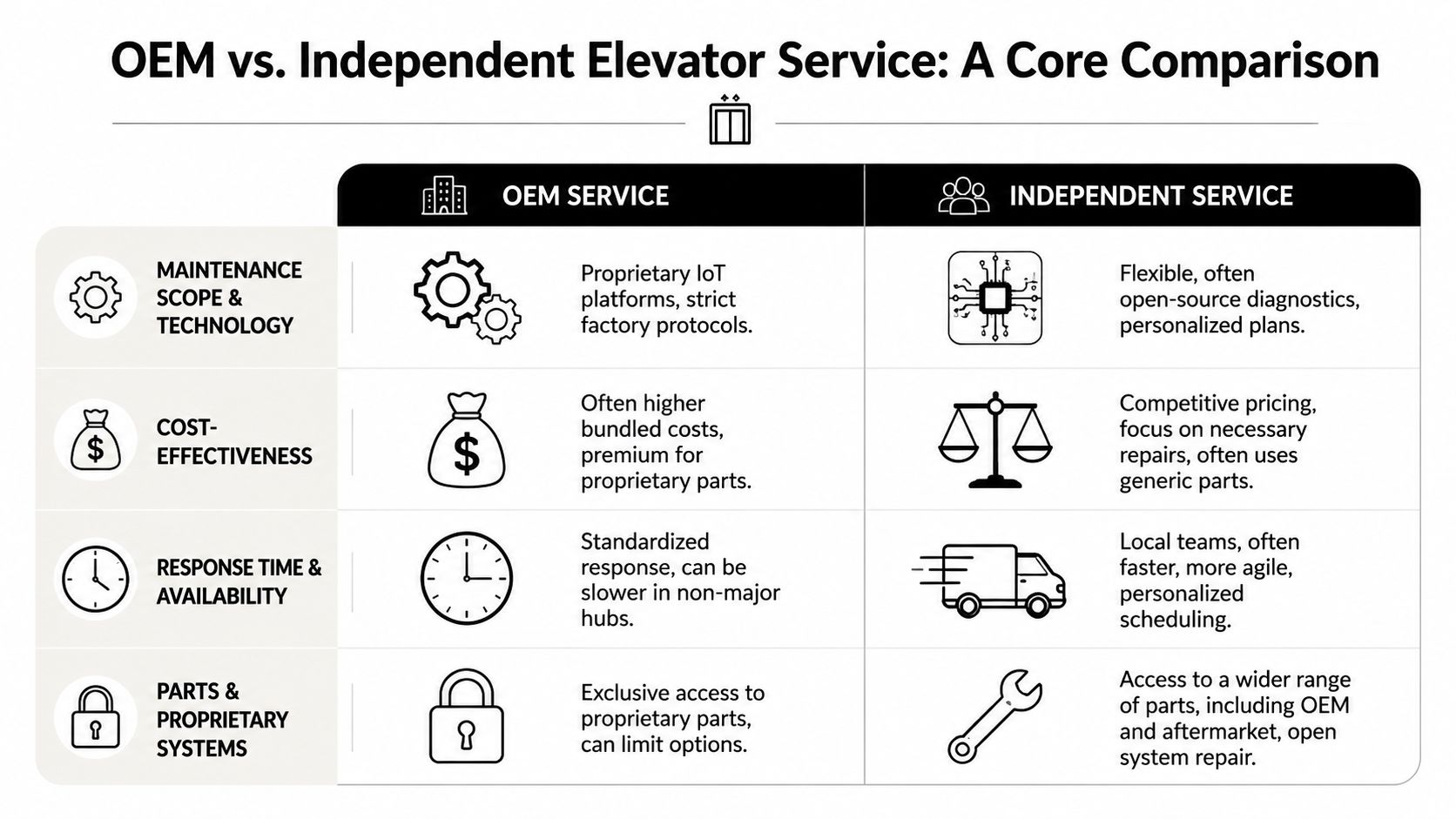
Maintenance scope and technology
On newer Schindler equipment, OEM service usually has the advantage in software access, embedded diagnostics, and manufacturer workflow. That matters on systems with proprietary boards, firmware, or remote monitoring features already built into the maintenance plan. If the elevator is in a Class A office building, hospital, or high-visibility residential property, that level of integration can reduce service friction.
Independent service earns its value in a different way. The better firms are disciplined about the basics that drive callbacks in Michigan buildings. Door equipment, selectors, leveling, rollers, contacts, pit condition, machine room heat, and battery lowering systems cause far more trouble than marketing language suggests. On older hydraulic units and mixed-equipment portfolios, careful field maintenance often does more for reliability than another layer of software.
The question is not which model sounds more advanced. The question is which model fits the actual age, traffic, and condition of your equipment.
Response times and local support
After-hours coverage is where owners feel the difference fast. A national service platform can work well if your building sits inside a strong local branch territory with enough technicians on call. If it does not, you may wait while dispatch works through a larger route structure.
Independent contractors are not automatically faster, but the stronger ones usually tell you exactly who covers nights, weekends, and entrapments. That transparency matters. In Southern Michigan, winter weather, long suburban drives, and scattered account density can turn a respectable response promise into a long outage.
Ask direct questions before renewal:
- Who is on call for my building after 5 p.m.?
- Is that technician based near Ann Arbor, Jackson, Monroe, Lansing, or farther out?
- How many units are on that route?
- If the first mechanic cannot clear the fault, who has the authority and parts access to finish the job?
Those answers matter more than a brochure.
Parts access and repair cost
At this stage, owners either maintain control or gradually lose it. Certain Schindler components can only be handled effectively through OEM channels. Other parts can be repaired, rebuilt, or sourced through established suppliers without altering safety or code compliance. The distinction depends on the controller, door operator, fixtures, and modifications made over the years.
A good independent contractor will tell you where the line really is. If a board is proprietary, say so. If a door operator problem can be fixed with adjustment, contacts, rollers, and labor instead of a larger assembly quote, say that too. Owners do better when the recommendation matches the fault, not the sales path.
That is why many building managers start by reviewing how non-proprietary elevator systems preserve future service options before approving repair strategies that narrow bidding later.
Modernization options
Modernization is where the cost spread gets serious. An OEM package can make sense when the building already depends on that platform, the equipment is relatively current, and ownership wants one manufacturer responsible for the whole stack. There is less finger-pointing in that arrangement, and some owners are willing to pay for that.
Independent modernization usually makes more sense when the owner wants competitive service bidding after the job is done. That approach needs careful design. The contractor has to choose controllers, drives, fixtures, and interfaces that qualified firms can support later without specialized lockout. Done right, that gives the owner more pricing pressure at renewal and fewer surprises when a local service relationship changes.
Michigan owners also need to keep code and testing in view. Any modernization has to support compliance with state elevator rules, periodic inspections, and required Category testing. The wrong package can solve one problem and create a harder service problem two years later. The right package improves reliability and keeps future choices open.
Procurement Risks and Long-Term Value
A service contract doesn't only buy maintenance. It shapes your future negotiating position.
That's the part many owners see too late. Once a building adopts proprietary software, boards, diagnostic tools, or modernization packages, every later conversation changes. Service becomes harder to bid competitively. Repairs become harder to compare. The owner loses bargaining power because fewer firms can fully support the system.
What proprietary lock-in looks like in real life
Lock-in rarely starts with a dramatic warning. It usually arrives as a series of reasonable decisions:
- A controller upgrade that only certain tools can access
- A monitoring platform tied to one service ecosystem
- A parts pathway that narrows your alternatives
- A contract structure that keeps major system knowledge with one vendor
Those decisions can make sense individually. Together, they can leave the owner with very little room to negotiate.
The concern isn't theoretical. A contrarian market view noted on Schindler maintenance information states that proprietary upgrades can increase lifetime elevator costs by 20% to 30%, and that Google Trends showed a 15% rise in searches for “elevator de-proprietization” over the last year.
Total cost of ownership isn't the service fee
The monthly contract number is only one piece of the picture. Long-term value comes from four things:
- How often the elevator goes down
- How expensive each repair becomes
- How many contractors can bid the work later
- Whether modernization preserves or eliminates future choice
Owner's test: If a future board replacement, dispatcher issue, or modernization proposal can only be solved by one vendor, your cost risk has already increased.
Contract flexibility matters
Read the cancellation language, excluded work language, and diagnostic access language closely. If the agreement is hard to exit, vague on billable extras, or paired with a modernization track that narrows future service options, the apparent convenience can cost more over time than a more flexible arrangement.
For Michigan owners with aging assets, a service model that preserves competition usually produces better procurement outcomes than one that narrows the field.
Local Considerations for Southern Michigan
A Jackson property manager gets a shutdown at 7:40 a.m. An Ann Arbor medical office gets one at 1:15 p.m. The mechanical problem may be similar, but the business impact is not. In Southern Michigan, service quality depends as much on local response, code familiarity, and parts strategy as it does on the name on the controller.
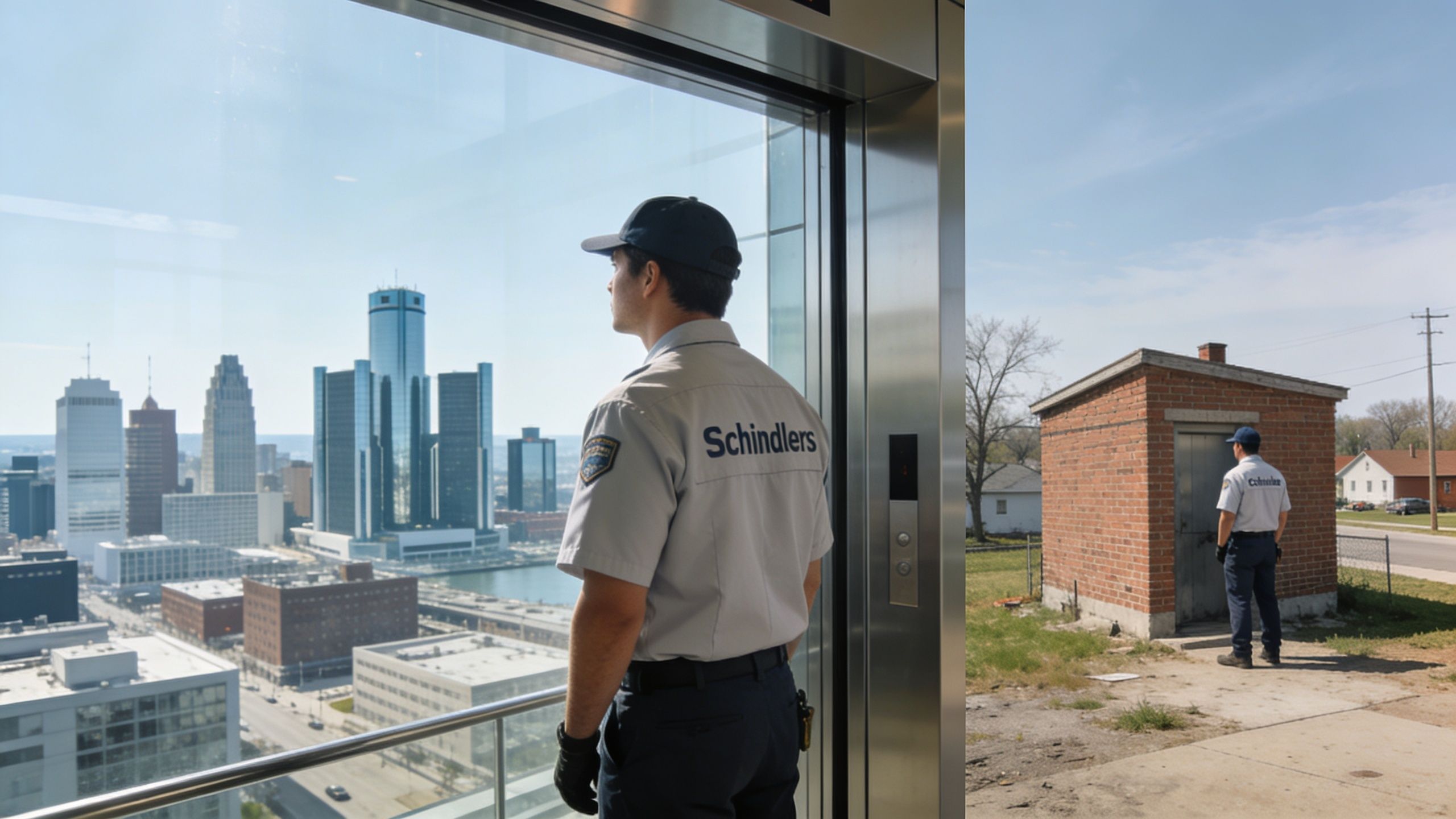
The region is full of older buildings with mixed equipment histories. I see cars that have had one operator replaced, another patched, a phone line changed twice, and a controller updated only enough to pass the last round of work. That matters. A contractor serving Southern Michigan needs to handle equipment that is not cleanly "original" anymore, and do it in a way that keeps future repair options open.
Code pressure and practical compliance
Michigan owners deal with more than callbacks. They deal with inspections, required testing, and correction deadlines under the elevator rules enforced through the state. On older Schindler equipment, common pressure points include door protection, firefighter service, emergency communications, and recurring door lock or retiring cam issues that turn into violation items if they sit too long.
Local field experience pays off in a very practical way. A technician who knows the building stock in Detroit, Ann Arbor, Lansing, and the surrounding markets will usually diagnose recurring problems faster because the same patterns show up building after building. A provider who understands the inspection process in Michigan can also help owners separate true safety work from optional upgrades that may be presented as urgent.
Weather, travel, and response times
Southern Michigan adds another layer. Winter weather, spread-out service territory, and after-hours staffing all affect how long a shutdown lasts. Owners should ask where the mechanics are dispatched from, who covers nights and weekends, and whether common parts are stocked locally or ordered through a factory channel.
That issue gets expensive fast in smaller cities and suburban properties. A contract can look fine on paper and still produce long outages if every non-routine repair waits on proprietary parts access or distant technical support.
Building type changes the right answer
Traffic patterns also vary sharply across the region. A downtown office building, a senior housing property, a school, and a light industrial facility do not need the same service model. Some Schindler installations benefit from OEM tools and software access. Others are better served by an independent contractor focused on maintainability, code compliance, and practical repair options for aging equipment.
Owners comparing local providers should look past marketing claims and review how firms approach staffing, callbacks, and modernization planning. A useful starting point is this guide to choosing the best elevator maintenance company in Lower Michigan.
In Southern Michigan, elevator problems usually come from familiar causes. Door issues, deferred maintenance, obsolete communication equipment, water intrusion, and slow follow-up on inspection items. The right contractor is the one who can address those problems quickly without boxing the owner into one service path later.
Making Your Decision A Checklist and Key Questions
Good decisions start with the building, not the sales presentation. A suburban office with moderate use has different needs than a hospital-adjacent medical building or a housing property where downtime creates daily hardship.
Your building checklist
Use this as a working filter before you review proposals.
- Equipment age and condition: Newer Schindler units may benefit more from integrated OEM tools. Older equipment often benefits from a contractor focused on practical maintainability.
- Traffic and tenant sensitivity: If people notice every shutdown, ask which model gives you the best local response and the clearest escalation path.
- Portfolio mix: If your organization owns several buildings with different brands, a multi-brand service model may simplify operations.
- Capital plan: If modernization is likely, decide now whether you want an open future bid environment or a tighter OEM pathway.
- Risk tolerance: Some owners prefer factory alignment. Others care more about cost control and service flexibility.
Questions to ask every bidder
Don't stop at price. Ask these in writing.
- Who will service this building? Ask for the local branch, after-hours coverage plan, and technician familiarity with your specific equipment.
- What isn't included? Have them identify excluded parts, diagnostic charges, callback billing, and code-related corrective work.
- How do you handle Schindler-specific components? You want a direct answer on parts sourcing, software access, and what triggers a recommendation to modernize.
- What's your plan for recurring shutdowns? A good answer should include root-cause diagnosis, not repeated resets.
- If we modernize, will the system remain broadly serviceable? That answer tells you a lot about future negotiating power.
One question owners skip too often
Ask for examples of how the provider handles older mixed-condition equipment in your area. That's often more revealing than the proposal template.
If you're collecting local options, it helps to compare national OEM proposals against a contractor with established regional coverage such as a Detroit elevator company serving multiple Lower Michigan markets. The useful comparison isn't brand versus brand. It's service model versus service model.
Frequently Asked Questions About Schindler Service

Can an independent company service a Schindler elevator properly
Yes, in many cases.
The essential question is whether the contractor has worked on that specific Schindler controller, door equipment, and safety circuit, and whether they can support it without guessing in the field. A competent independent should be clear about what they can service directly, what requires OEM parts, and what conditions justify a modernization recommendation.
That matters to Michigan owners because service quality shows up fast. It shows up in call-back frequency, tenant complaints, and how often a shutdown turns into an expensive repeat visit.
Can an independent get the right parts
Often yes, but parts access is not the same across every Schindler unit.
Older and more conventional equipment usually gives an independent more room to source parts through OEM channels, aftermarket suppliers, or approved equivalents. Newer or more proprietary setups can narrow those options. That can increase lead times and put the owner in a weaker position during emergency repairs.
Good contractors explain that before the contract is signed. If a bidder acts like every Schindler part is easy to get, that is a warning sign.
Will using a non-OEM company void my warranty
Usually no, but owners should read the actual warranty terms on the original installation or modernization documents.
In practice, the risk is highest on newer equipment or recently completed modernization work. Review the warranty language, confirm what remains covered, and ask the servicing contractor what records they will keep if a warranty claim comes up later. That paperwork matters.
What does Schindler Ahead change for the decision
Remote monitoring can be useful, especially in buildings where avoiding service interruptions has a direct operating cost.
As noted earlier, Schindler promotes its connected monitoring platform as a reliability benefit. Owners still need to weigh that against the loss of contractor flexibility, the service terms tied to the platform, and the long-term cost of staying inside one manufacturer's service path. For some properties, remote diagnostics justify the OEM premium. For others, faster local response and broader bidding options are worth more.
What is a non-proprietary modernization
It is a modernization designed to improve reliability, code compliance, and parts availability without tying future service to one manufacturer.
That has practical value in Southern Michigan. If your equipment stays broadly serviceable, more contractors can bid maintenance, repairs, and future upgrades. That usually improves pricing discipline over the life of the system and reduces the chance that one service contract controls your next major capital decision.
When should you stay with the OEM
Stay with Schindler if the equipment is relatively new, the local branch performs well, and the building benefits from keeping one manufacturer responsible for service, software, and parts coordination.
That can also make sense if your risk tolerance is low and you want fewer handoff arguments when a problem involves multiple systems. Some owners will pay more for that alignment.
When should you look hard at an independent
Look hard at an independent if annual costs keep climbing, response times are weak, or you are being pushed toward upgrades that reduce future bidding options.
This comes up often with older Michigan buildings where owners are balancing code compliance, reserve planning, and tenant expectations. If the current arrangement limits competition and still does not deliver reliable uptime, the service question becomes a purchasing question.
Crane Elevator Company brings a practical non-proprietary approach to elevator maintenance, repair, inspections, and modernization across Lower Michigan. If you want a second opinion on a Schindler contract renewal, modernization proposal, or recurring shutdown problem, talk with the team at Crane Elevator Company about your building, your equipment, and the service model that gives you the most control over cost and uptime.