
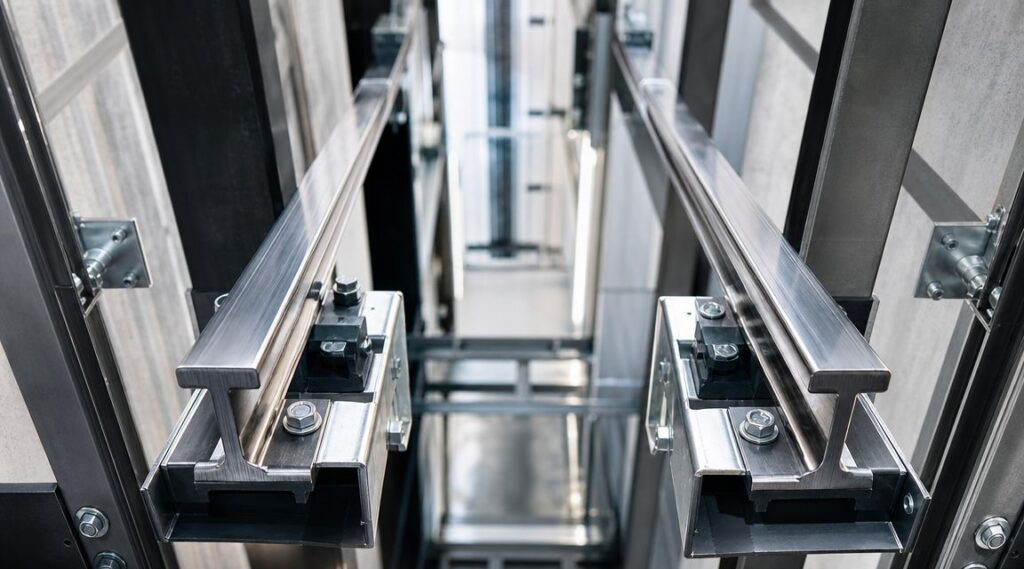
You usually don't notice a guide rail for elevators until the elevator starts telling you something is wrong.
It starts small. A light scrape as the car leaves a floor. A faint shudder tenants can't quite describe. A low hum that wasn't there last month. Then the service calls get closer together. One technician adjusts a guide shoe. Another tightens hardware. The elevator runs better for a while, then the complaint returns.
That pattern matters.
Owners often treat ride-quality complaints as isolated annoyances. In practice, they're often the first visible signs of a guide system drifting out of tolerance. The rail itself may not be cracked or obviously damaged. More often, the problem is in the full rail line: brackets, joints, alignment, shoe contact, or movement in the hoistway that shows up as noise, vibration, and repeat shutdowns.
A bad guide-rail system rarely announces itself with one dramatic failure. It becomes expensive slowly. First through callbacks. Then through premature shoe wear, rough leveling, door-zone issues, tenant frustration, and avoidable downtime.
If you own or manage a building, that's the question. Not just “what is a guide rail?” but “how do I know whether this rail system is becoming a liability?”
The Subtle Sounds of Elevator Trouble
A property manager hears it before anyone else does. The elevator reaches the third floor and gives off a quick click. Not loud enough to alarm passengers, but noticeable if you're listening for it. A week later, a tenant says the car feels rough near mid-travel. A few days after that, the service log shows another call for vibration.
None of those symptoms automatically means the steel rail is failing. That's why owners get misled. The elevator still runs. Doors still open. The inspection sticker is still on the wall. It's easy to assume the issue is minor.
But guide-rail trouble often shows up that way. Subtle. Repetitive. Easy to dismiss until the pattern becomes costly.
What makes this tricky is that the rail is out of sight, and many elevator complaints sound the same from the lobby. A worn shoe, a stepped rail joint, a loose bracket, or shaft alignment drift can all feel to a passenger like “the elevator shakes a little.” If no one looks at the full system, the building ends up paying for temporary fixes instead of solving the underlying cause.
Small ride issues don't stay small when the same car makes the same trip all day.
The owners who manage this well don't wait for a shutdown. They pay attention to changes in sound, feel, and frequency of service calls. They ask where in the travel the problem occurs. They want to know whether the issue repeats at the same floor or in the same zone of the hoistway.
That's the shift from reactive to proactive management. Once you understand what the guide rail for elevators does, those small warnings make a lot more sense.
The Unseen Backbone What a Guide Rail for Elevators Really Does
A guide rail for elevators is often described as a track. That's true, but it's incomplete. The better comparison is a vertical railway with strict alignment demands and a built-in safety function.
The car and the counterweight both rely on rails to travel in a controlled path inside the hoistway. Without that guidance, the car would sway, twist, and lose the precise alignment needed for smooth stops and reliable door operation. In a busy building, that turns into passenger discomfort and wear that spreads into other components.
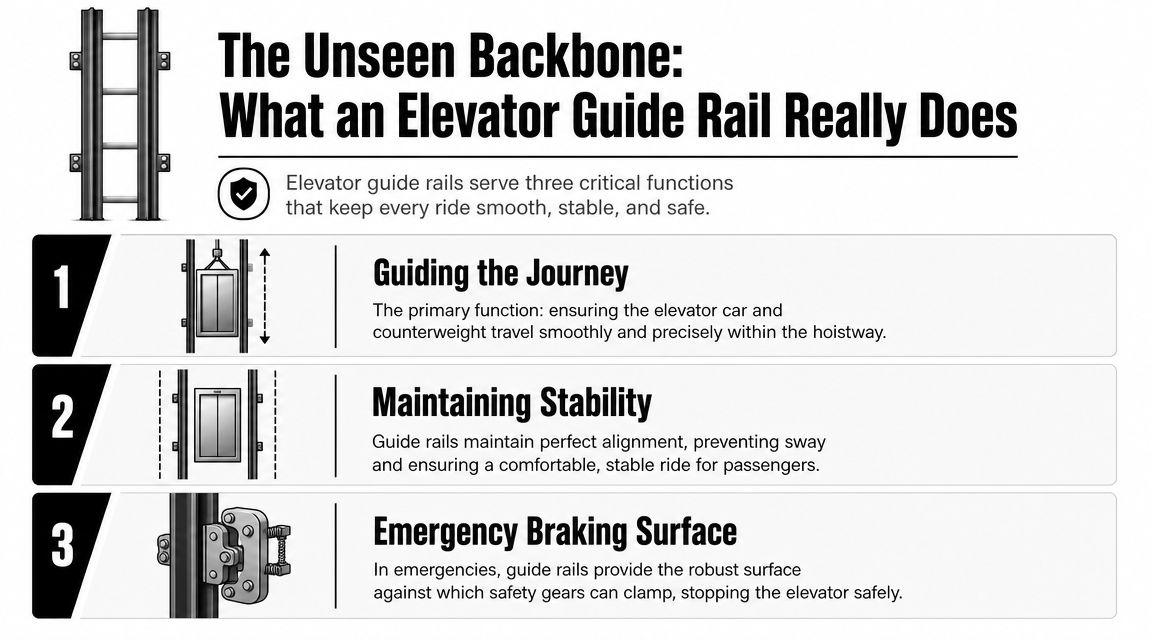
Guiding the car and counterweight
The rail line controls where the moving equipment can go. Guide shoes or rollers ride along the rail faces and keep the car frame and counterweight properly aligned. That alignment affects more than comfort. It supports accurate leveling at landings and helps the doors stay in the right zone when the car stops.
When owners hear “it's just a little rough,” this is usually where the conversation should begin. Roughness often points to guidance quality, not just motor or controller behavior.
Providing stability under load
Rails also deal with side forces. An elevator car isn't always loaded evenly. People crowd one side. Freight shifts. A cart rolls in off-center. The guide system has to control lateral motion and torsion so that those forces don't turn into sway, vibration, or binding.
That's why rail quality and geometry matter. ISO 7465 requirements for T-type guide rails specify steel raw-material strength between 370 and 520 N/mm², along with dimensional characteristics and tolerances for passenger and service lift rails. In the field, that strength and precision are what keep the ride controlled instead of loose and noisy.
Acting as the safety gear surface
This is the function many owners never hear about. The guide rail is part of the stopping system in an emergency. Safety gear engages the rail to stop the car during an overspeed or other fault condition. That means the rail isn't passive structure. It's a working safety surface.
A useful way to think about the main parts:
- T-rail means the rail profile itself, typically a steel rail shaped for guidance and safety engagement.
- Guide shoes are the contact points on the car or counterweight that ride the rails.
- Brackets anchor the rail line to the building structure and keep it rigid and aligned.
- Rail joints connect rail sections and have to stay smooth and true.
Practical rule: If the car is noisy, don't assume the rail is bad steel. Check how the whole guidance system is interacting.
That's the owner's takeaway. The guide rail for elevators is a structural guidance system, a ride-quality system, and a safety system all at once.
Choosing the Right Track Common Guide Rail Types and Materials
A lot of expensive rail decisions are made from a catalog page instead of a building's actual duty. That is how owners end up paying for precision they will never feel, or cutting costs on rails that later drive callbacks, ride complaints, and avoidable shutdowns.
The right choice starts with use case. Travel height, car speed, loading pattern, tenant expectations, and the condition of the hoistway all matter. A lightly used mid-rise office elevator can perform well with a different rail specification than a high-rise passenger car that runs all day and gets judged on ride quality every trip.
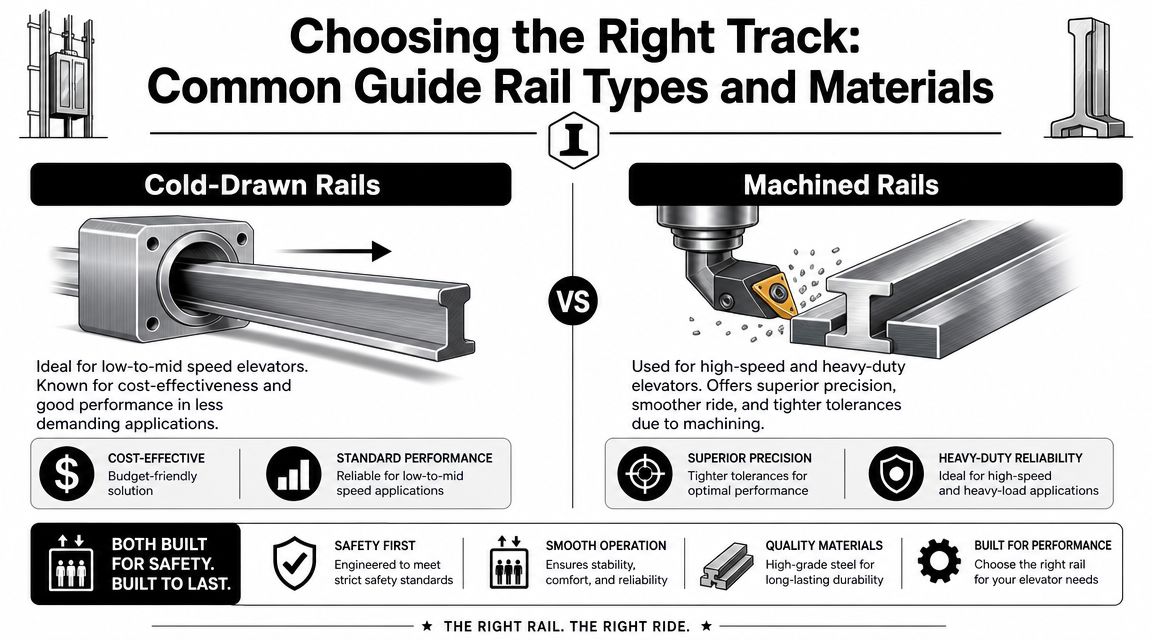
Cold-drawn versus machined
Owners usually hear two terms first: cold-drawn and machined rails. The manufacturing method matters because it affects surface finish, dimensional consistency, and how much alignment tolerance the rail system gives you once it is in the shaft.
| Rail type | Best fit | What owners usually like | Where it falls short |
|---|---|---|---|
| Cold-drawn | Low-to-mid-speed service | Lower purchase cost and acceptable performance in less demanding service | Less margin for premium ride expectations or more demanding conditions |
| Machined | High-speed or heavy-duty service | Better precision and surface finish for tighter-running systems | Higher upfront cost |
The low bid is not always the low-cost option over ten or fifteen years.
Cold-drawn rails can be a sound choice in the right building. If the hoistway is reasonably true, speeds are moderate, and the owner is not chasing top-tier ride quality, they often do the job well. Machined rails cost more, but they can reduce the risk of persistent vibration complaints, shoe wear, and repeated adjustment visits in faster or more heavily loaded systems. That trade-off becomes more important during modernization, where owners expect visible improvement after spending real money.
Material choice is simpler in most commercial projects. Steel remains the standard because it gives the rail the strength, stiffness, and wear characteristics the application needs. The primary variable is usually not exotic material selection. It is rail quality, section size, and whether the full system, including brackets, joints, shoes, and alignment work, matches the duty of the elevator.
That last point affects total cost of ownership more than many owners expect. I have seen buildings buy better rails and still get mediocre results because the bracket layout, joint finishing, or installation tolerances were weak. I have also seen modest rail packages run for years with few issues because the shaft conditions were understood early and the installer held alignment properly. A good elevator testing and performance review process helps confirm whether the rail specification fits the building before small guidance issues turn into a service pattern.
Why the standard T-rail won
The industry settled on the T-rail form for a reason. It gives a reliable guiding surface and a workable safety engagement surface in one profile, which is why it became the standard shape across passenger and service applications.
That design history still matters to owners. Rail selection is not a cosmetic spec and it is not just a material line item. The profile, finish, and manufacturing quality affect how the whole elevator behaves over time, especially once wear starts to show elsewhere in the guidance system.
A historical review of 19th-century elevator guides and guide rails shows how guide design developed as the industry worked to keep cars aligned and controllable. The lesson for modern buildings is straightforward. Choose the rail for the service the elevator performs, not the service you hope it performs on paper. That is how owners avoid turning the rail system into a hidden liability.
Wear Tear and Safety How Rails are Inspected and Why It Matters
Most “rail problems” aren't discovered because someone sees dramatic damage. They're found because the elevator starts behaving differently.
A proper inspection starts with the whole guidance path, not just the steel face of the rail.
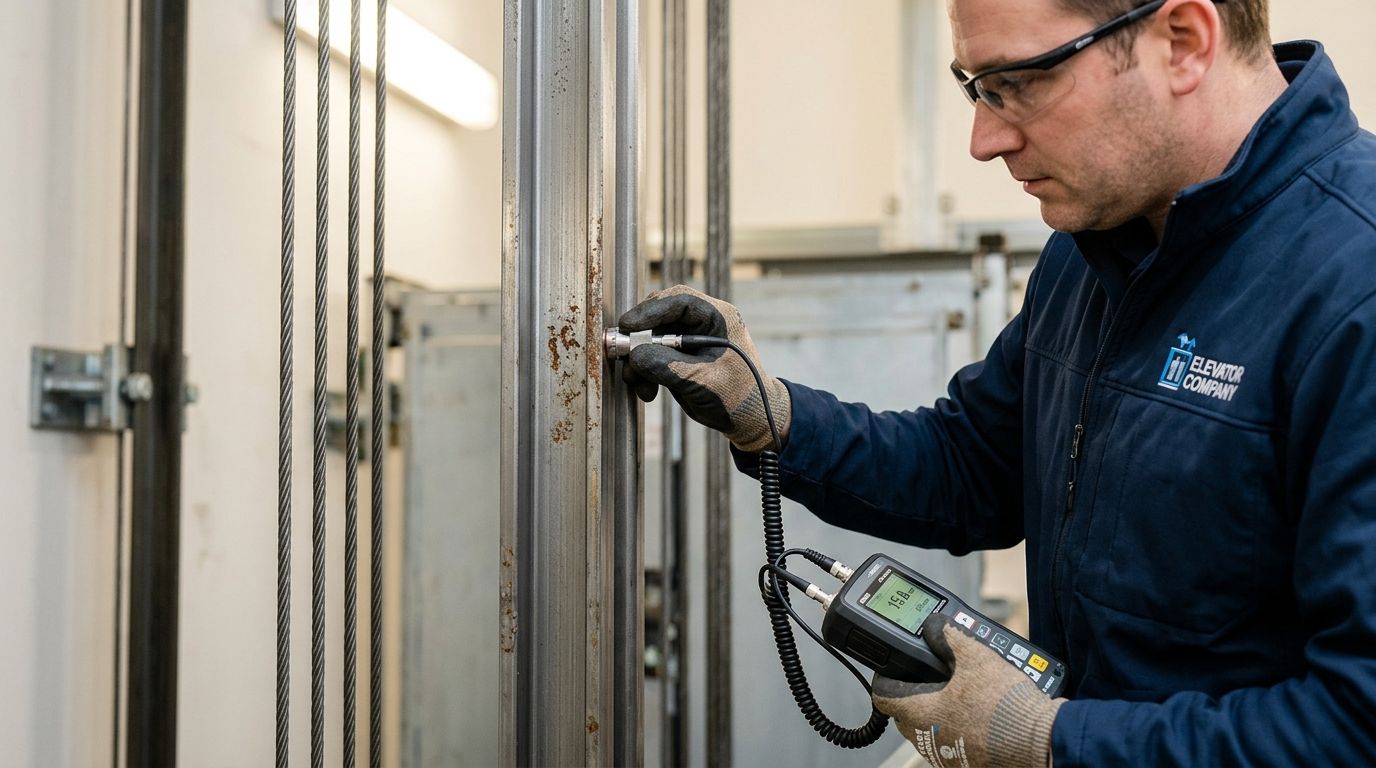
What inspectors look at first
TK Elevator's overview of rail guides makes an important point: guide rail failures are rare, but system issues are common. In practice, inspectors focus first on bracket integrity, plumb deviation, and joint steps because those are early indicators of car sway, abnormal noise, and alignment trouble.
That lines up with what experienced mechanics see in the field. The rail itself is often durable. The problems start around it.
Here are the first places a good inspection pays attention to:
- Bracket condition: Loose or shifting brackets can let the rail line move under load.
- Plumb and straightness: A rail line can be intact and still be out of alignment enough to affect ride quality.
- Joint quality: A small step at a rail joint can create a repeating click or bump every trip.
- Guide shoe contact: Shoes or rollers can wear unevenly and transfer that wear pattern into the ride.
- Signs of car movement: Sway, rub marks, and recurring vibration complaints all point to guidance issues.
Why callbacks multiply
Owners often approve a single repair and assume the issue is solved. Sometimes it is. Sometimes it isn't.
If a technician replaces a worn shoe but the bracket looseness or rail-line deviation remains, the new shoe starts wearing into the same bad condition. The building pays twice. First for the part. Then for the next callback.
That's why elevator testing and inspection practices matter so much during troubleshooting. A meaningful assessment doesn't stop at “the car is running again.” It asks whether the rail system is holding alignment and whether the corrective work addressed the source of the disturbance.
A noisy elevator is often giving you location data. If the sound repeats at the same point in travel, have the provider inspect that zone of the rail line closely.
Video can also help owners understand what smooth rail guidance is supposed to look like in operation:
What doesn't work
The worst maintenance habit is treating rail complaints as isolated comfort issues.
It doesn't work to keep lubricating around a symptom that's caused by misalignment. It doesn't work to replace guide shoes repeatedly without checking the joints and brackets they run against. It doesn't work to wait until a shutdown forces a deeper investigation.
A rail-related issue is usually progressive. Catch it while it's still presenting as noise, not after it becomes downtime.
Installation Tolerances and Modernization Implications
A guide rail system can be made from good material and still perform badly if the installation is sloppy.
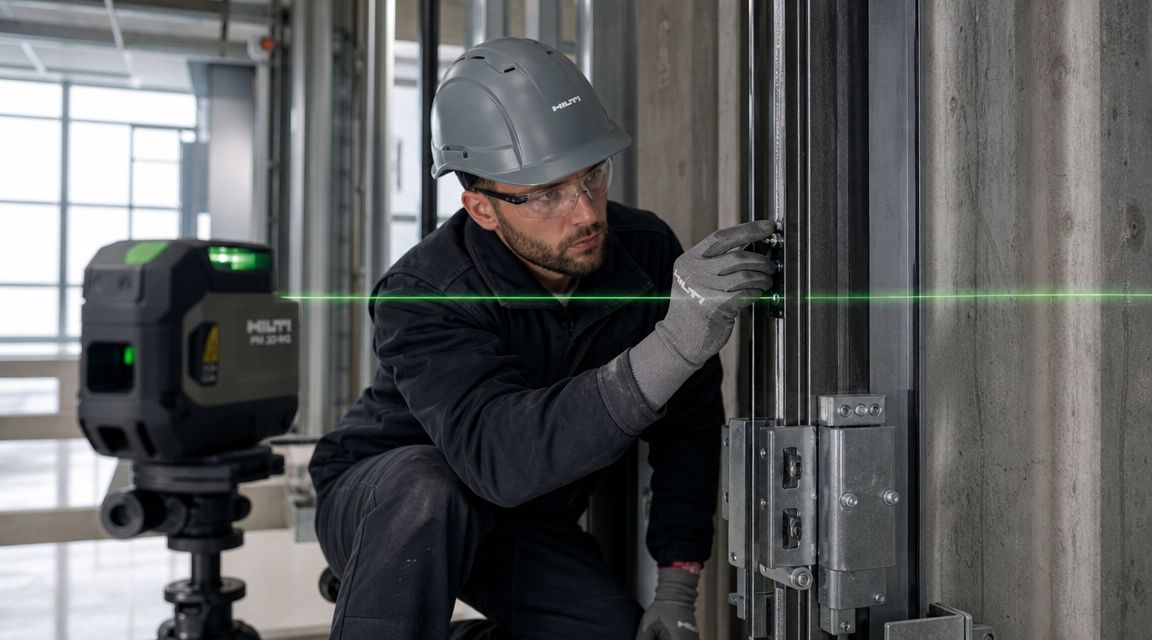
That's the part many owners don't see during construction or modernization. Rail performance depends on millimeter-level placement, bracket rigidity, fastening details, and a hoistway that lets the installer hold alignment from bottom to top. If that work is rushed, the elevator may never ride as well as the new equipment should.
The tolerances that matter
One practical installation benchmark calls for at least two guide-rail brackets per rail, spaced about 2 to 2.5 meters apart, with bracket horizontal alignment not exceeding 1.5%, anchor-bolt or embedment depth of no less than 120 mm, and car-rail top-of-rail tolerances of +2 mm to 0 mm. Those details are summarized in this guide rail installation reference.
Those numbers aren't paperwork. They affect how the car behaves every day.
When bracket spacing gets too wide, or a bracket isn't rigid enough, the rail can deflect. When the rail deflects, guide shoes work harder. When shoes work harder, you get wear, vibration, noise, and the kind of recurring service calls owners hate because each one sounds minor on its own.
Reuse or replace during modernization
Owners can make an expensive mistake here by focusing only on what's visible.
If you're replacing the controller, machine, door equipment, or drive components, the temptation is to leave the rails alone if they “look fine.” Sometimes that's the right call. A sound, properly aligned rail system may be reusable. But if the modernization is expected to deliver a noticeably better ride, old rails and old brackets can become the limiting factor.
A practical evaluation should ask:
- Is the rail line still plumb and stable?
- Are the joints smooth enough for the upgraded ride expectation?
- Are the existing brackets rigid and correctly anchored?
- Does the hoistway condition support the new package without constant adjustment?
Old rails can support new equipment. Old rail problems will undermine it.
Modernization planning works best when the guide system is assessed as part of the package, not as an afterthought. Owners considering broader upgrades should look at non-proprietary elevator modernization options with the rail line in mind, especially in older buildings where shaft tolerances and anchorage details may be less consistent.
What a bad modernization looks like
The elevator gets a new controller. Starts and stops feel sharper. Interior finishes improve. But a month later, the same old complaints remain. There's still a shake in one section of travel. Shoes are wearing faster than expected. The building spent capital money but kept the old ride problem.
That usually means the modernization solved the electrical side while leaving the guidance side compromised.
Decoding Downtime Troubleshooting Common Guide Rail Problems
Most tenants don't report technical defects. They report sensations.
They say the elevator “feels off,” “sounds rough,” or “jumps a little.” For a facility manager, the job is to turn those vague complaints into useful information before the next service call. The better your notes, the faster your elevator provider can narrow the issue.
What to listen for and what it may mean
Use the table below as a field guide when complaints come in.
| Symptom (What you hear or feel) | Potential Guide Rail Cause | Recommended Action for Owner/Manager |
|---|---|---|
| Rhythmic clicking at the same point in travel | Rail joint step or worn guide shoe passing over a joint | Ask staff to note the floor area where it happens. Report that repeat location for targeted joint inspection |
| Light scraping or rubbing noise | Shoe contact issue, alignment drift, or debris affecting the guidance path | Take the car out of heavy service if the noise worsens. Request inspection of guide shoes and rail faces |
| Car feels shaky side-to-side | Rail-line misalignment, bracket looseness, or excessive play in the guide system | Report whether the sway occurs when the car is full, empty, or both. Ask for bracket and plumb checks |
| Rough stop with poor floor leveling | Rail deflection or guidance resistance contributing to inconsistent travel behavior | Document the landing where it occurs most often and ask for a full ride-quality review, not just a leveling adjustment |
| Repeating bump between floors | Irregularity at a rail joint or local alignment issue in the hoistway | Keep a log of direction of travel and location. That helps isolate the affected rail section |
| Complaints increase after recent repair work | Root cause may not have been corrected, or a new part is now wearing against an existing alignment issue | Ask what was replaced, what was measured, and whether the rail line itself was checked |
The questions that save time
When you call for service, don't just say the elevator is noisy. Give the provider information they can use.
A strong trouble report includes:
- Location: Which floor or travel zone seems involved?
- Direction: Does it happen going up, going down, or both?
- Load condition: Is it worse when the car is empty or occupied?
- Pattern: Every trip, first trip of the day, or only occasionally?
- Recent work: Did the problem start after shoes, door parts, or other components were adjusted?
When to escalate quickly
Some symptoms deserve immediate attention rather than routine scheduling.
Escalate faster if you notice a sudden increase in sway, a harsh scraping sound, repeated door-zone issues, or a pattern of shutdowns tied to the same car. Those conditions don't prove rail damage, but they do suggest that the guidance system may be affecting safe and reliable operation.
If tenants can describe the sound, your mechanic can usually use that description. Ask for details instead of dismissing the complaint as “just noise.”
Owners gain an advantage. You don't need to diagnose the elevator yourself. You do need enough vocabulary to tell the difference between a one-time adjustment and a rail system that keeps generating cost.
Managing Your Asset Cost Compliance and Maintenance Strategy
A building can go months with a rough ride, an occasional callback, and one or two shutdowns that seem unrelated. Then the repair bills start stacking up. A rail system often becomes expensive long before it becomes an obvious failure, and owners who wait for a major stoppage usually pay more for labor, tenant disruption, and rushed corrective work.
Guide rails should be managed like a long-life building asset with clear inspection, repair, and replacement decision points. Owners who treat rail issues as isolated service calls usually end up paying for the same problem more than once. Owners who track rail condition over time can plan work, control downtime, and avoid pushing a worn guidance system into a larger safety and reliability problem.
What lowers total cost of ownership
The cheapest invoice is not always the lowest-cost decision.
Repeated minor adjustments can keep a troubled elevator running for a while, but they also hide the cost of drift, wear, loose support points, and poor alignment. That cost shows up in callbacks, car vibration, accelerated shoe or roller wear, nuisance shutdowns, and tenant complaints that keep returning. A planned correction usually costs more upfront, but it reduces repeat labor and gives the rest of the system a better operating baseline.
A practical strategy includes:
- Rail condition reviews during routine service: Ask whether the mechanic is checking rail joints, bracket stability, fasteners, and visible wear, not just ride performance.
- Written trend tracking: Keep records of repeat complaints by car, floor range, direction of travel, and time of day. Patterns matter.
- Parts-wear correlation: If shoes or rollers are being replaced often, ask whether rail condition is contributing to that wear.
- Modernization scope review: Before approving controls, door equipment, or car upgrades, confirm whether the existing rail line is good enough to support the ride quality and reliability you expect after the work is done.
What owners should ask their provider
Good questions change the quality of the service visit. They also make it harder for a recurring rail problem to be written off as random noise or normal aging.
Ask these directly:
- Are the rails within acceptable alignment for the current equipment and speed?
- Are any brackets loose, corroded, shifted, or showing movement under load?
- Do the rail joints show steps, wear, or damage that explain repeat ride complaints?
- Are shoe or roller replacements happening because the rails are wearing the parts out early?
- If we postpone rail correction, what failure pattern do you expect next?
- If we modernize this elevator, will the current rail system limit the result?
Those answers help separate routine maintenance from deferred capital work. They also help owners budget accurately. A useful starting point is a clear review of elevator maintenance cost planning, especially if the building has frequent callbacks or equipment that is aging unevenly.
Compliance and budget planning
Rail work has a timing problem. If you wait until a failed inspection, a shutdown, or a serious ride complaint forces action, the schedule is no longer yours. You are paying premium rates to solve a problem under pressure, often with occupants already frustrated and building staff asking for daily updates.
A better approach is simple. Document condition. Track repeat issues. Ask for measurements when problems recur. Then decide whether the rail system needs monitoring, corrective work, or inclusion in the next capital plan.
The owner mindset that saves money
A healthy rail system supports ride quality, part life, and predictable service. A weak one keeps creating small costs until it turns into a large one.
If the same elevator keeps generating complaints, ask whether the guide rail system is still an asset or whether it is starting to become a liability. That question usually gets to the underlying financial issue faster than another temporary adjustment.