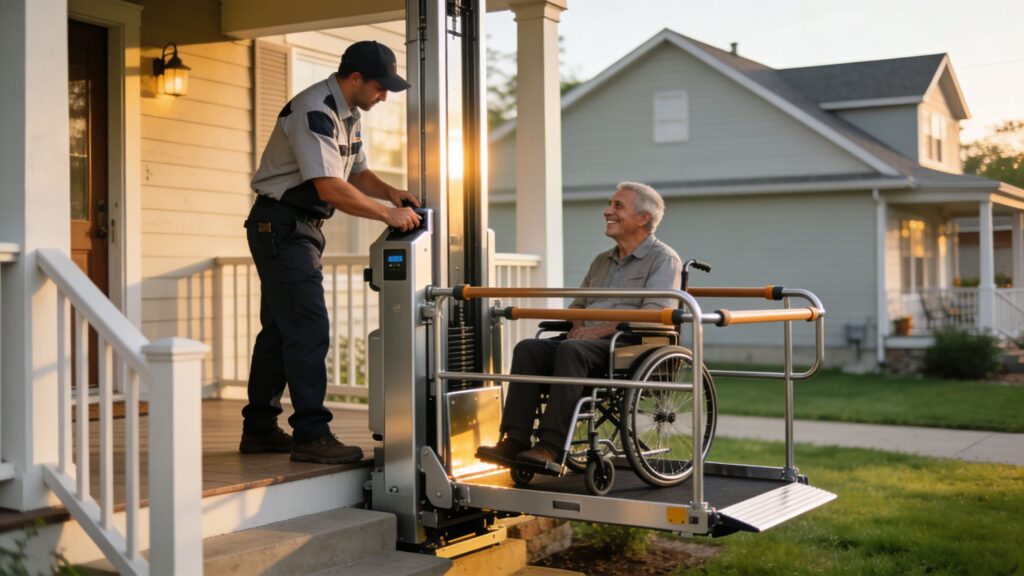
If you're searching wheelchair lift installation near me, you're probably already dealing with a real access problem. A tenant can't reach the entrance safely. A patient wing needs a compliant route. A church, school, office, or home has stairs where there shouldn't be a barrier. What looks simple from the outside, “buy a lift and install it,” usually turns into questions about structure, permits, electrical work, inspections, and long-term service.
That confusion is normal. A wheelchair lift project isn't just equipment delivery. It's a building modification with liability attached to it.
In Michigan, that matters even more because weather, existing building conditions, and local approval processes can change what looks feasible on paper. A lift that fits the space may still fail at the permitting stage. A low quote may leave out concrete work, framing, or electrical rough-in. A model that works today may become a maintenance headache later if parts are hard to source or only one company can service it.
Your Guide to Wheelchair Lift Installation in Michigan
Building owners usually start with the wrong question. They ask, “What lift should I buy?” The better question is, “What will this site support, and what will the authority having jurisdiction approve?”
That shift matters because a successful install depends on three things working together:
- The site conditions have to support the equipment safely.
- The code path has to be understood before work starts.
- The service plan has to make sense for the life of the lift.
Most local pages about wheelchair lift installation near me focus on speed, free estimates, and product photos. That's not enough. A lift becomes part of your building infrastructure. Once it's installed, your team owns the inspection burden, the downtime risk, and the repair decisions.
Practical rule: If a contractor talks about model options before talking about structure, power, permits, and inspection, the job is already being framed too narrowly.
In practice, the cleanest projects are the ones scoped correctly at the beginning. The messy ones usually involve one of three problems. The installer quoted from photos. The owner learned about permit requirements late. Or nobody addressed who would maintain the equipment after turnover.
Michigan owners need a contractor who can think beyond the day of installation. That means looking at access, code, electrical coordination, weather exposure, landing conditions, and future serviceability as one connected problem, not separate tasks handed off to different people.
The First Step Your Site Survey and Project Scope
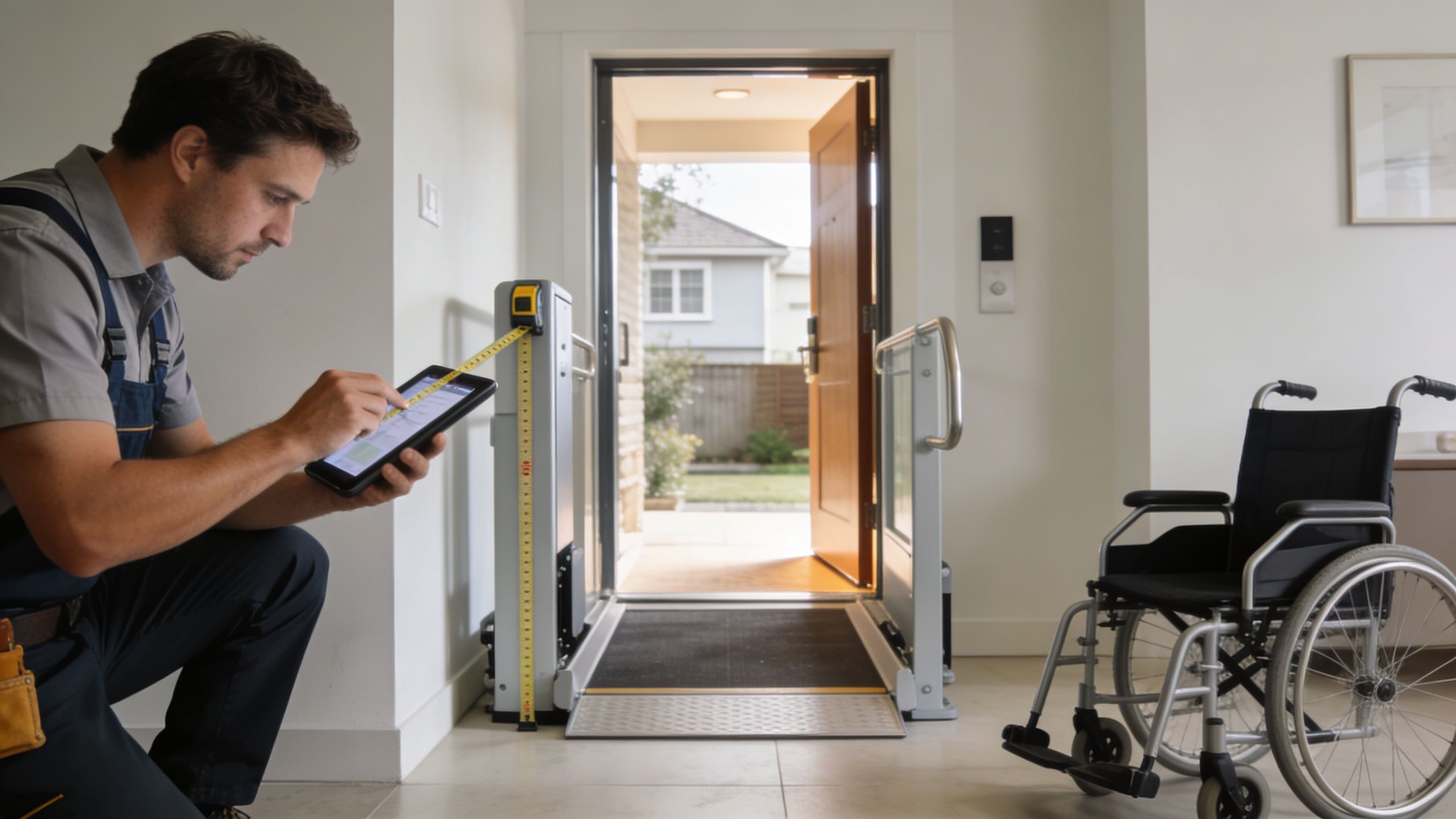
A real site survey does more than confirm dimensions. It establishes whether the project is buildable, what kind of lift makes sense, and what hidden work will drive the final price.
What a qualified survey actually checks
A contractor should inspect the full path of travel, not just the stair or porch edge. A wheelchair lift installation is entirely a site-preparation and code-compliance project. For a vertical platform lift, the area must be structurally capable of supporting the unit with either a concrete base or adequately supported walls; indoor jobs often require a shaftway, 2×4 or 2×6 wall framing, and a pit below the lift. Common installations also require 110-volt power and potentially a phone line, as outlined in this wheelchair lift installation process guide.
That means the survey should answer questions like these:
- Where will the unit land: The upper and lower landings need usable space, clear door or gate swing, and safe approach for wheelchair users.
- What supports the lift: Outdoor vertical units often need a concrete pad. Indoor work may require framing, pit planning, or hoistway construction.
- Where is power coming from: If electrical service has to be extended, that changes both scope and schedule.
- How will materials move through the building: Tight corridors, finished surfaces, and occupied spaces affect installation planning.
- What else is tied to the job: Door hardware, gate layout, drainage, snow exposure, and lighting all affect performance.
A phone quote can't answer those questions well.
Red flags during early quoting
Owners can save themselves trouble by watching for shortcuts during the first meeting. If an installer gives a firm number before seeing the site, they're guessing. If they ignore the approach to the lift and only measure travel height, they're missing the part that often causes redesign.
The lift itself is rarely the whole job. The surrounding conditions decide whether the installation goes smoothly or turns into a change-order project.
This kind of overview helps owners know what a proper field review looks like:
Questions worth asking on the survey
Use the visit to get specific answers. Good contractors won't mind.
- What construction is required before the lift arrives?
- Who handles electrical coordination and permit pull?
- Will the layout need a gate, door, pit, pad, or hoistway?
- What inspection steps happen before turnover?
- Who services this equipment after installation, and are parts broadly available?
The site survey is where the job becomes real. Until that happens, every schedule and price is provisional.
Navigating Compliance ADA Rules and Michigan Codes
The code question is where many wheelchair lift projects slow down. Owners often find a nearby installer quickly. What they don't get is a clear answer on approval, permit scope, and who is responsible for getting the installation signed off.
ADA and local code are not the same thing
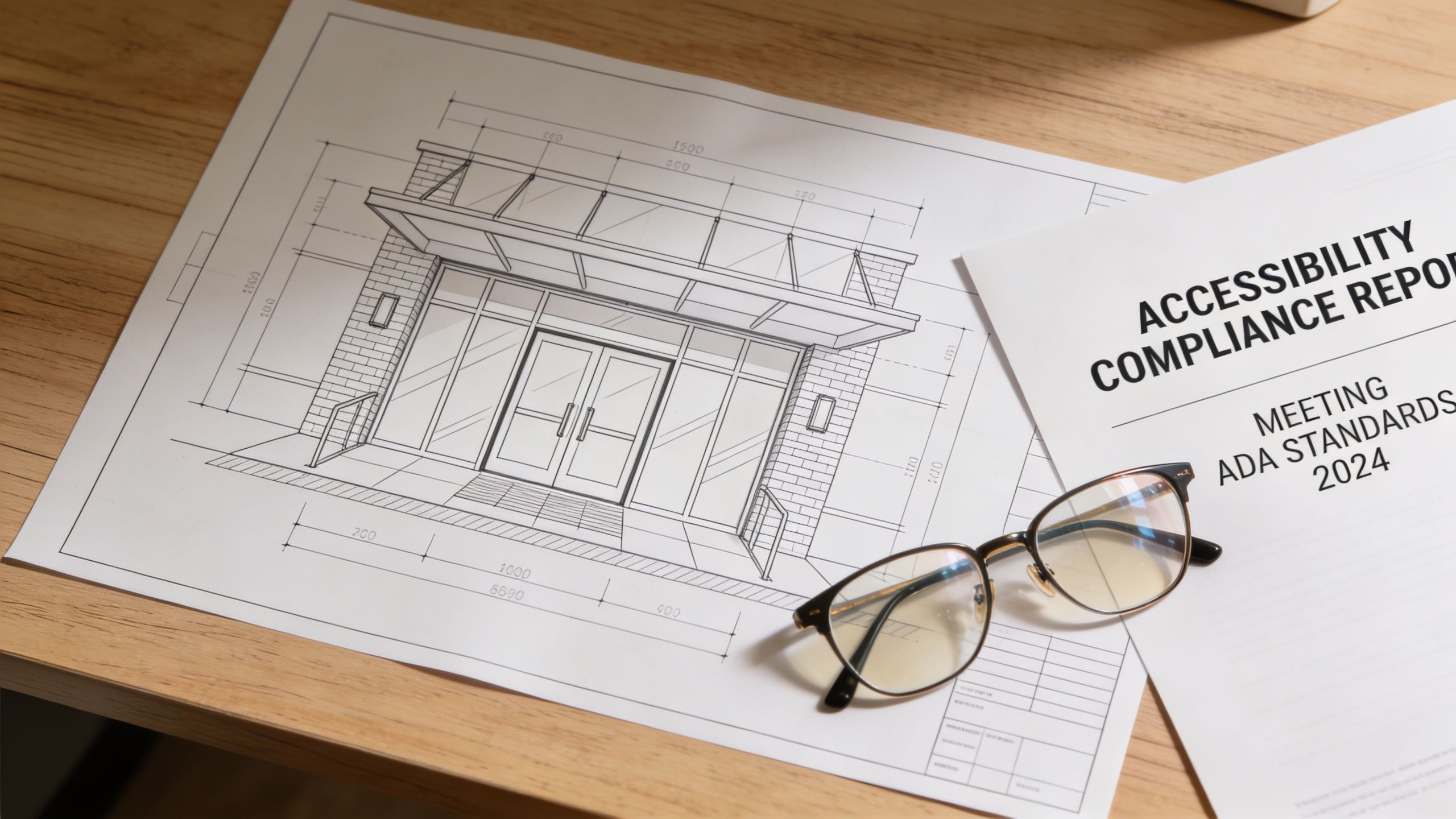
In the United States, accessible route requirements are governed by the ADA Standards, while local authorities may also require permits and inspections. A major gap in local search content is that it usually answers the buying question, but not the permitting and code question, as noted in this discussion of the approval path for accessibility projects.
For a Michigan owner, that means two separate issues have to be handled correctly:
| Topic | What it affects |
|---|---|
| ADA accessibility requirements | Whether the solution provides an appropriate accessible route for the building use |
| State and local code enforcement | Whether the installation, electrical work, construction, and final setup are approved and inspected |
A lift can be marketed as ADA-capable and still be installed incorrectly for the building. That's why compliance can't be reduced to a product brochure.
What owners should expect from the approval path
A competent contractor should explain, in plain language, what approvals the job will likely require and who is responsible for each one. The exact path varies by municipality and project type, but owners should expect review of some combination of building work, electrical work, and final inspection.
The important thing is clarity. If no one can explain who submits drawings, who coordinates with the local authority, and who handles corrections if the inspector flags an issue, the project isn't being managed tightly enough.
For a broader overview of accessible vertical transportation obligations, this page on ADA elevator compliance requirements is a useful starting point.
What usually causes compliance problems
The common failures aren't exotic. They're basic coordination mistakes.
- Late layout changes: Door swing, gate location, or landing size gets discovered too late.
- Incomplete permit scope: The lift is considered, but the related electrical or construction work isn't.
- Assumed approvals: Someone says “we've done these before,” but no one confirms the local process.
- Mismatched responsibilities: The installer expects a general contractor to handle prep. The general contractor expects the lift company to define it.
Owner's checkpoint: Ask who signs off on the completed installation, not just who installs the equipment.
That's the difference between a company that sells lifts and one that manages accessibility projects responsibly.
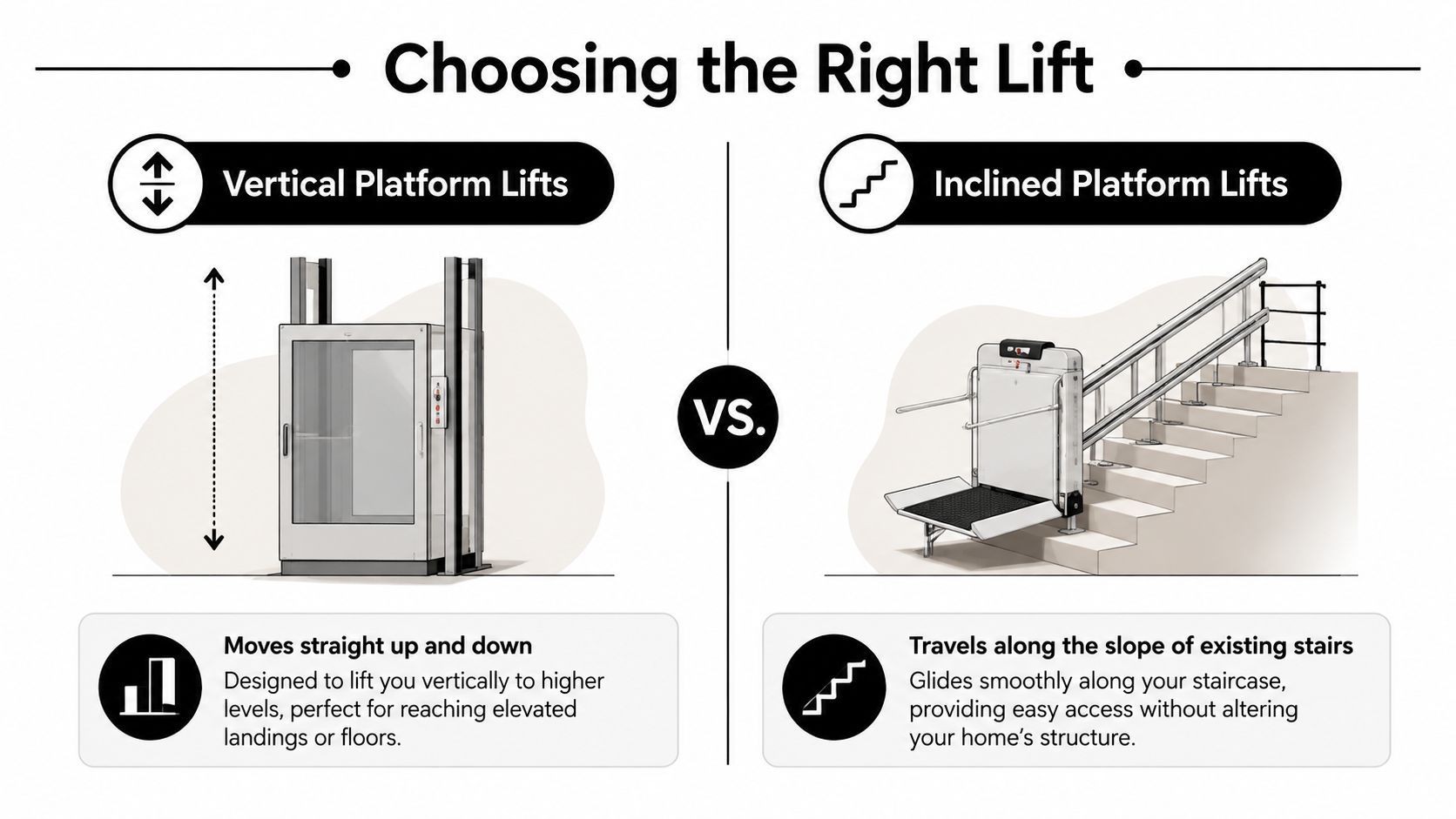
Choosing the Right Lift Vertical vs Inclined Platforms
Once the site and code path are understood, the equipment choice gets easier. Most owners deciding between lift types are really deciding between two different ways to solve one access problem.
When a vertical platform lift makes sense
A vertical platform lift, often called a porch lift in residential settings, moves straight up and down. It's usually the right answer when you need to overcome a level change at an entrance, connect a few levels, or create an accessible route where a ramp would take too much space.
It works well when:
- Space is tight: A vertical path often uses less site area than a long ramp.
- The rise is direct: Entrance stoops, stages, lobby changes, and short floor-to-floor travel are common applications.
- The route needs to be obvious: Users can approach, enter, ride, and exit without navigating a stair run.
The trade-off is that vertical units usually ask more from the site. They may require concrete work, framed enclosures, or closer coordination with electrical and other trades.
When an inclined platform lift is the better fit
An inclined platform lift travels along the slope of an existing stair. It can be a practical option when the building layout makes a vertical unit difficult or when preserving the original structure matters.
It's often considered when:
- A historic or constrained building limits new construction
- The existing stair is the only realistic travel path
- The owner wants to reduce structural alteration
But inclined units bring their own constraints. Stair geometry matters. Folded platform location matters. Other stair users still need safe passage. In buildings with heavy traffic, the stair can become awkward if the layout isn't handled well.
Side-by-side decision criteria
| Decision point | Vertical platform lift | Inclined platform lift |
|---|---|---|
| Travel path | Straight up and down | Along the stair slope |
| Typical fit | Entrances, porches, small level changes | Existing stairs where a new shaft or platform area is hard to create |
| Site demands | Often more structural prep | Often more dependent on stair layout and clearances |
| User flow | Usually more direct | More dependent on stair conditions and platform storage position |
| Best question to ask | Can the site support the required prep and landing layout? | Can the stair accommodate the equipment without creating a circulation problem? |
A useful overview of equipment categories is this page on different types of lift systems.
Don't choose the lift that looks simplest in a brochure. Choose the one that works with the building, the users, and the approval path.
In practice, owners get into trouble when they force a preferred product into a bad location. The right lift is the one that can be installed safely, inspected cleanly, and serviced without constant workarounds.
Understanding Costs Timelines and Financing
Owners usually want a simple number. The market doesn't work that way because the lift is only part of the job.

What the price actually covers
In the U.S. market, wheelchair lift installation costs commonly run from about $3,600 to $15,900, with standard projects often reaching $20,000 or more when demolition or construction work is involved. Most homeowners spend an average of $8,800, and labor alone typically accounts for 15% to 25% of the total project cost, according to Angi's 2026 wheelchair lift cost guide.
Those numbers only make sense when you understand what's inside them. A quote may include:
- The lift equipment itself
- Site preparation, such as concrete, framing, enclosure, or finish removal
- Electrical work for required power
- Permit and inspection coordination
- Labor for assembly, setup, and testing
That's why two projects with similar travel height can price very differently. One site is ready. The other needs construction before the installer can even begin.
Why low quotes often grow later
A low proposal isn't always wrong. Sometimes the site really is simple. But owners should verify whether the quote excludes key pieces that will surface later as added cost.
Look closely at these items:
| Scope item | Why it changes the budget |
|---|---|
| Concrete or structural prep | Required support conditions can add outside trades |
| Electrical rough-in | Distance to power source affects labor and coordination |
| Permitting | Fees and review steps vary by jurisdiction |
| Finish restoration | Indoor work may affect walls, flooring, or trim |
| Inspection corrections | If details are missed, rework costs time and money |
A more detailed breakdown of budget components is available on this page about wheelchair lift installation cost factors.
Timeline expectations and payment planning
The schedule depends on design decisions, permit review, site prep, equipment lead time, installation, and final inspection. That sequence is why owners should be skeptical of any contractor who promises a fast install before scoping the prep and approval path.
Some owners finance accessibility upgrades because it keeps a necessary capital project from disrupting cash flow. That can be reasonable, especially for commercial buildings managing multiple compliance and maintenance priorities at the same time. The important thing is to finance the whole project realistically, not just the equipment line item.
The Crane Elevator Difference Beyond the Installation
A wheelchair lift purchase is not finished when the unit passes final inspection. For the building owner, that is the point where the actual obligation starts.
Lifts stay compliant and usable only if someone handles the service side correctly. That includes scheduled maintenance, annual and periodic inspections where required, repair response, documentation, and a practical plan for parts availability. Owners who focus only on the install price often find the problem later, when a minor failure turns into extended downtime because the equipment uses hard-to-source proprietary components.
That serviceability issue is often missing from local lift marketing, as discussed in this review of serviceability gaps in local lift content. The result is predictable. Owners compare platform size, travel, and finish options, but never get a clear answer on who will keep the equipment running five or ten years from now.
What to look for in a service partner
Ask these questions before awarding the job:
- Are replacement parts proprietary: If the answer is yes, future repair options may be limited to one provider or one supply chain.
- Does the company have active field technicians in your area: A local sales presence is not the same as local service capacity.
- Who handles after-hours calls: Accessibility equipment failures create operating and liability problems outside normal business hours too.
- Who tracks inspections, testing, and correction items: If that responsibility is vague, problems get missed.
This matters in schools, medical offices, apartment buildings, municipal properties, churches, and private homes. If the lift is down, the owner still carries the access problem, the complaint risk, and the pressure to restore service fast.
Why non-proprietary matters
Non-proprietary equipment gives an owner options. If service quality drops, response times slip, or a contractor leaves the market, another qualified elevator company can usually step in without a full equipment replacement. That protects uptime and gives the owner more control over long-term maintenance costs.
That is one reason some Michigan property owners consider Crane Elevator Company for wheelchair lift installation and ongoing support. The company states that it works with non-proprietary equipment where practical and provides inspections, maintenance, modernization, and 24/7 service across Lower Michigan. From an asset-management standpoint, that model reduces the risk of getting locked into one vendor after the install is complete.
Buy with the service life in mind.
A low install number can turn into a high ownership cost if the lift is difficult to service, difficult to inspect, or tied to a narrow parts pipeline.
Frequently Asked Questions About Lift Installation
Can an outdoor wheelchair lift handle Michigan weather
Yes, if the unit is selected and installed for outdoor use and the site is planned correctly. The problem usually isn't just the weather. It's drainage, snow accumulation at the landings, exposure at controls, and whether the concrete pad or anchoring area was designed for the environment.
Owners should also think about winter access as part of operations. If snow removal blocks the approach or packed ice forms at the lower landing, the lift may be mechanically functional but still difficult to use safely.
Is a residential installation different from a commercial one
Yes. The equipment may look similar, but the risk profile and compliance burden are different. Commercial owners need to think about public use, inspection responsibility, documentation, uptime, and how the lift fits into the building's accessible route obligations.
Residential owners usually focus more on fit, convenience, and household construction impact. Commercial buyers should focus harder on approval path, maintenance support, and response if the unit goes down.
What utilities should I expect to provide
The accessibility market is mature, not experimental. Lifeway Mobility says it has been installing wheelchair platform lifts since 1991, which reflects more than three decades of field history in North America. Its installation guidance notes that a platform lift typically needs 110-volt power, and if it uses a hoistway, a phone line, which is why integrated planning matters so much on these projects, according to Lifeway Mobility's vertical platform lift installation guidance.
That means owners should plan utility coordination early, not after the unit is ordered.
Should one contractor handle prep and installation
In many cases, yes. Separate trades can work, but only if someone owns coordination tightly. If the concrete crew, framer, electrician, and lift installer all assume someone else is verifying the details, that's when dimensional mistakes and schedule slips happen.
A single point of responsibility often reduces finger-pointing. It also makes permit response and final adjustment easier.
What should I ask before choosing a local installer
Use this short screen:
- Who handles permit coordination
- What site prep is excluded from the quote
- What power and communication requirements apply
- Is the equipment serviceable by more than one qualified provider
- Who performs maintenance and emergency repair after turnover
Those questions usually tell you more than the sales brochure will.
If you're planning a lift project in Lower Michigan, talk to Crane Elevator Company about the site conditions, code path, and long-term service plan before you commit to equipment. A clear field survey, realistic scope, and serviceable installation will save more trouble than a fast quote ever will.