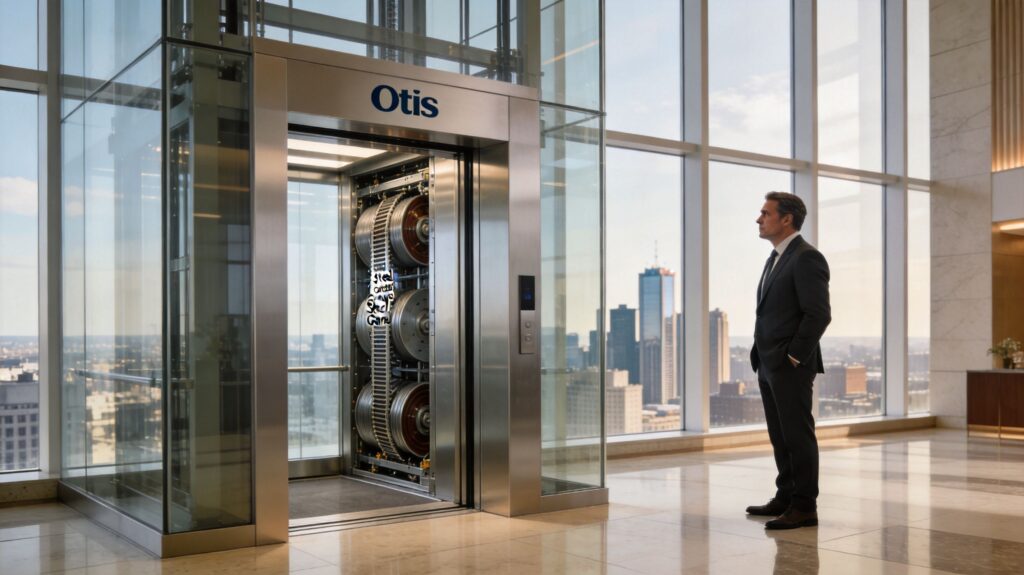
You get the repair quote. The elevator is down again, tenants are asking questions, and the number on the proposal is higher than you expected. If it's an Otis elevator, the next frustration usually follows fast. You start wondering whether you have options, or whether you're stuck calling the same provider every time something fails.
That's a common place for Michigan building owners to end up. Otis equipment is everywhere for a reason. The brand has deep history, broad market presence, and a long track record in vertical transportation. But ownership and service are two different issues. A well-known name on the car operating panel doesn't automatically mean you're getting the right maintenance strategy, the right modernization plan, or the right long-term cost structure.
Most owners don't need a history lesson. They need answers to practical questions. Why does this unit keep having door issues? Why does a simple repair turn into a big invoice? At what point does patching an older unit stop making financial sense? And most important, can you get out of a service model that limits your choices?
If you own or manage an otis elevator, the primary job is simple. Keep it running, keep it compliant, and keep it from turning into a budget problem. That starts with understanding what you have, what typically fails, and where proprietary service can drive up total cost of ownership over time.
Your Otis Elevator An Asset or a Liability
An Otis elevator can be a solid building asset. It can also become a recurring source of downtime, tenant complaints, and surprise expense if the service approach is wrong.
The difference usually isn't the badge on the fixture plate. It's the condition of the equipment, the quality of maintenance, and whether the owner still has control over service decisions. A lot of building managers don't realize how quickly control slips away when the elevator's maintenance history is thin, parts are becoming obsolete, or the service relationship has turned into a one-way conversation.
The first question to ask
Start here. Is your elevator being maintained to extend its useful life, or is it being kept alive month to month?
Those are not the same thing. A month-to-month approach fixes the shutdown in front of you. A lifecycle approach tracks repeat failures, code exposure, worn components, and whether the current setup still makes sense for the building. If you don't know which one you're getting, assume you need a closer look.
Practical rule: If the same complaint keeps returning, the issue probably isn't just a bad part. It's a system problem, a maintenance problem, or a modernization problem.
What liability looks like in practice
An otis elevator starts acting like a liability when you see patterns like these:
- Repeat shutdowns: The unit gets reset, comes back online, then fails again within a short period.
- Escalating repair scope: One service call turns into multiple recommended items because related components are worn.
- Inspection pressure: Violations, callback items, or deferred corrections start piling up.
- No service negotiation power: You feel like every quote has to be accepted because nobody has explained your alternatives.
That last point matters more than most owners think. Elevators are technical systems, but ownership decisions are still business decisions. If you can't compare service models, compare modernization paths, or get a credible second opinion, your elevator is no longer just equipment. It's an unmanaged risk.
The good news is that most of this can be corrected. You don't need to guess. You need a clear read on the technology in the building, the actual failure points, and whether the current service structure is helping or hurting long-term value.
Understanding Your Otis Elevator Technology
At 2 a.m., the elevator is down again, a tenant is calling, and the service mechanic says the controller is old, the boards are hard to get, and the next step depends on exactly which Otis system is in the building. That is the point where brand history stops mattering and equipment details start driving cost.
Otis holds an important place in elevator history. Elisha Graves Otis introduced the safety elevator in the 1850s, and that breakthrough helped make passenger elevators commercially viable, as outlined in this history of the Otis safety elevator. For an owner, the practical takeaway is simpler. Otis has been in the market long enough to leave a wide range of legacy equipment in service, and those systems do not all age or get serviced the same way.
Why the technology matters to owners
If you do not know what technology is in the hoistway and controller room, you cannot judge service recommendations properly.
That affects three things immediately. First, parts availability. Second, who can work on the unit without calling the manufacturer. Third, whether you are budgeting for ordinary repairs or setting yourself up for a forced modernization on someone else's timeline.
An older Otis hydraulic elevator usually brings one set of issues. Oil, valves, leveling, and aging relay or solid-state controls are common pressure points. A conventional traction unit has a different profile. Ropes, machine components, brake wear, selector or encoder issues, and controller support tend to drive the conversation. A newer machine-room-less system changes it again, especially if the building has an Otis Gen2 package.
If you are unsure what you have, this guide to an old Otis elevator and its common upgrade issues is a useful starting point before you approve major work.
What changed with Gen2
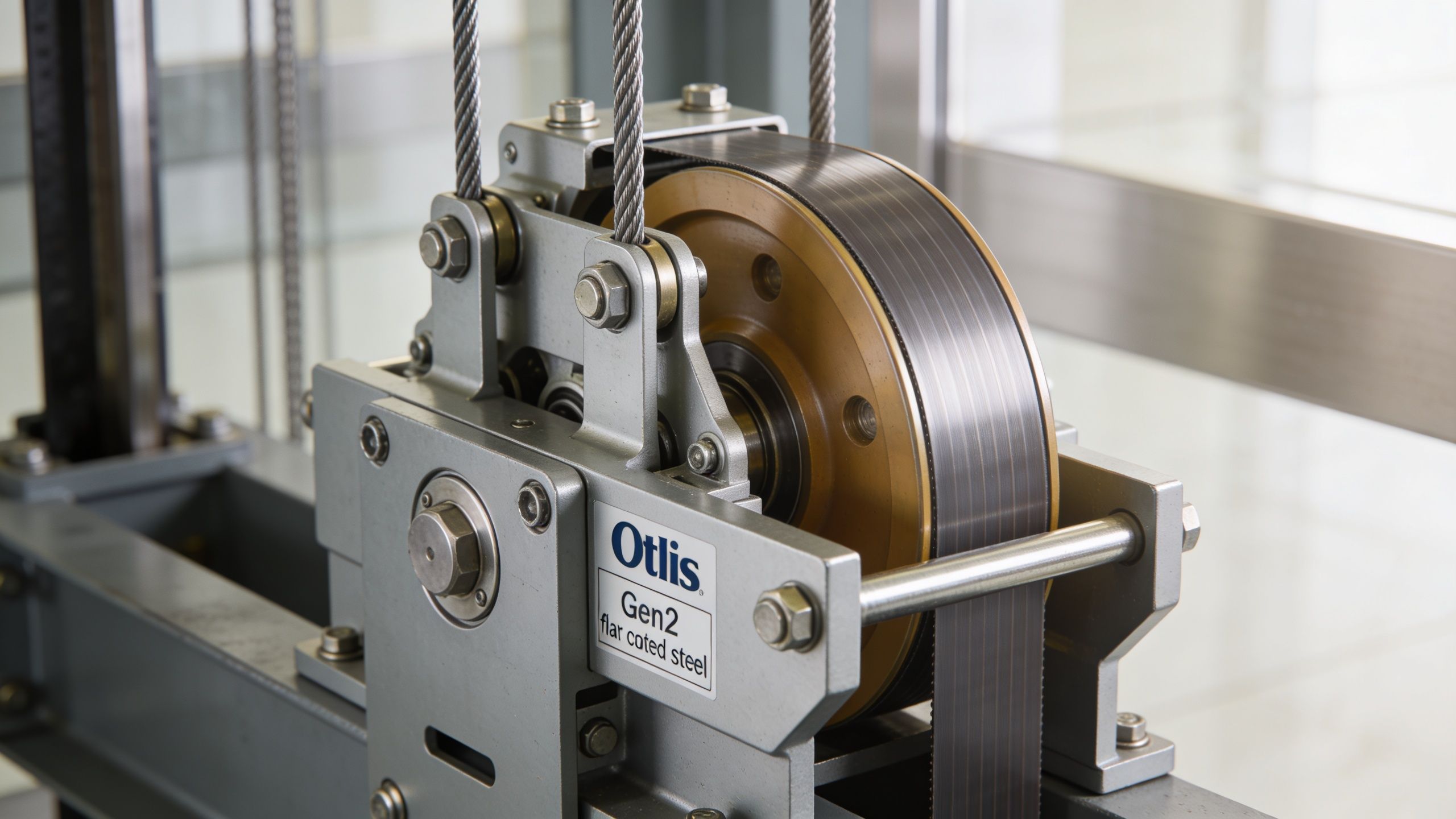
Gen2 mattered because it changed both the mechanical package and the service model around it. Instead of traditional wire ropes, Gen2 uses flat coated steel belts and a gearless permanent magnet machine. In many installations, it also reduces or eliminates the need for a separate machine room.
For owners, that creates real trade-offs.
- Space efficiency: Machine-room-less layouts can free up building area and simplify some layouts.
- Different wear points: Belts, sheaves, drive components, and related monitoring requirements are not the same as a conventional rope traction system.
- Different service access: Some Gen2 configurations are straightforward for experienced independent contractors. Others become expensive if diagnostics, tooling, or parts access are restricted.
- Long-term planning: A system that looks modern on day one can still become costly if key components tie the owner to one service channel.
That last point gets missed all the time. A proprietary setup can turn a manageable repair into a pricing problem. The elevator may still be physically sound, but the owner loses options on troubleshooting, replacement parts, and contract negotiation.
What works and what does not
The right service strategy starts with an accurate read on the equipment, not the logo on the hall station.
A supportable hydraulic unit can run for years with disciplined maintenance and targeted upgrades. A conventional traction elevator may justify selective controller, door operator, or fixture work instead of a full rip-out. A Gen2 system can perform well, but the owner should know in advance which parts of the package are open to competitive service and which parts may keep them tied to Otis pricing.
The mistake is treating every Otis elevator as if it belongs in one bucket. It does not. Some systems are still good candidates for repair-first ownership. Some are one expensive failure away from a larger decision. Some can be converted to more open, non-proprietary controls during modernization, which usually improves bidding power and lowers long-term service risk.
Understanding the technology provides substantial value. It gives you a way to judge proposals, challenge vague recommendations, and decide whether the current setup is protecting the building budget or draining it.
Common Service and Modernization Triggers
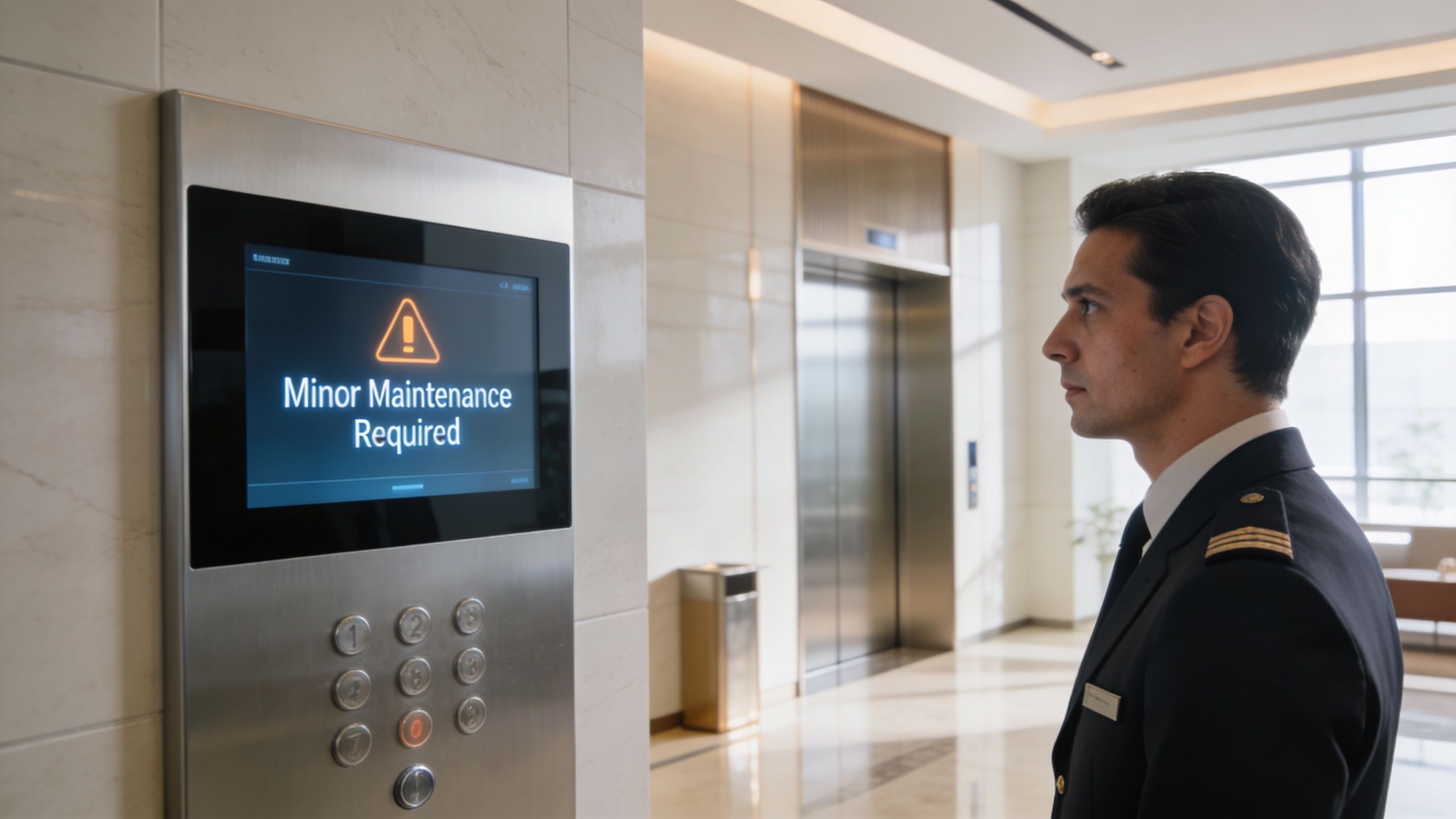
Most Otis problems don't begin with a catastrophic failure. They start small. Doors hesitate. The car levels unevenly. A controller fault clears, then comes back. The ride gets rougher, or the unit starts making noises that weren't there before. Owners often pay for these issues one visit at a time until the pattern becomes too expensive to ignore.
Repair issue or modernization trigger
A repair makes sense when the failed component is isolated, the surrounding system is still supportable, and the unit returns to stable operation after the fix. A modernization trigger shows up when the problem is no longer isolated.
Look for these warning signs:
- Door system problems that keep returning: Repeated door faults, sluggish opening, nudging behavior, or intermittent reopening complaints usually point to wear across more than one component.
- Poor floor leveling: If the car regularly stops high or low, you're dealing with more than convenience. That can become a safety and accessibility issue.
- Controller age and obsolescence: Faulty relays, aging boards, or unsupported controls can turn minor service into long downtime because diagnosis and parts access get harder.
- Hydraulic system decline: On older hydraulic Otis units, packing wear, oil loss, valve issues, and eventual jack concerns can shift the economics away from repair and toward a planned upgrade.
The gap with older Otis units
There's another practical issue owners run into with older equipment. Many owners of older Otis models, including Series 1 or Series 5 hydraulics, face a gap in guidance around adding modern IoT monitoring for predictive maintenance without doing a full modernization, as discussed on Otis's page about smart elevator technology and connected systems.
That matters because a lot of owners would prefer a middle path. They don't want to over-invest in a failing unit, but they also don't want to wait for a major shutdown before acting. On legacy equipment, that middle path is often less defined than it should be.
For owners dealing with aging hydraulic equipment, this guide to an old Otis elevator can help frame what to look for before repeated repairs turn into a larger capital issue.
If your provider is only talking about the failed part in front of them, you may be missing the bigger financial decision. Good service should tell you whether the unit is still repairable in a sensible way or whether you're funding delay.
When the math changes
Modernization becomes the stronger option when three things happen at once. Reliability drops. Compliance pressure rises. Parts and labor stop producing durable results.
At that point, the repair itself isn't the whole cost. You also pay for disruption, repeat callbacks, staff time, occupant frustration, and the uncertainty of not knowing what fails next. That's where many Otis owners get trapped. They spend enough on repeated corrective work to justify a better long-term plan, but they never get that recommendation clearly.
The Proprietary Versus Non-Proprietary Service Model
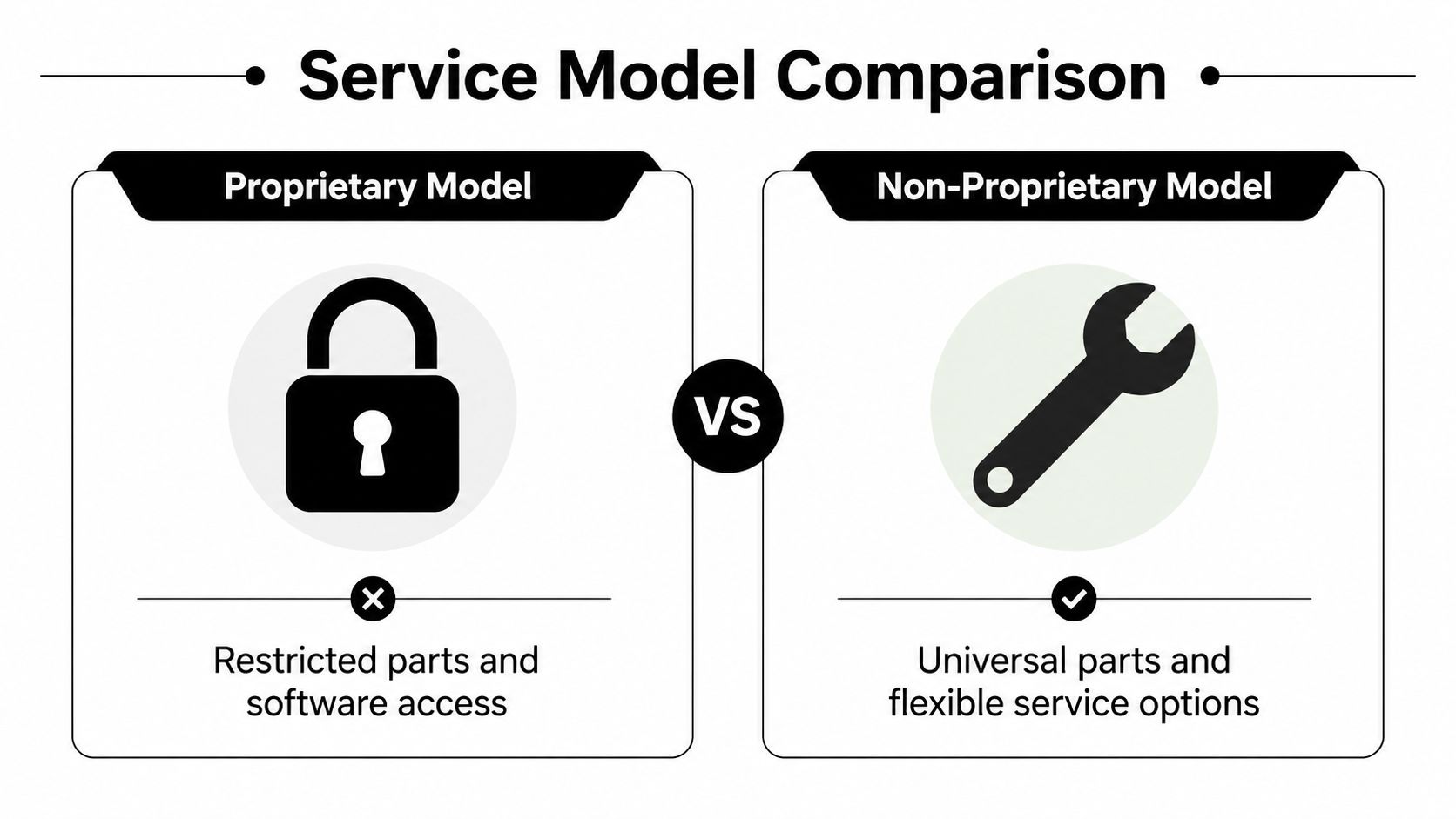
This is the decision that drives total cost of ownership more than any single repair. If you service an otis elevator under a proprietary model, the manufacturer or a manufacturer-aligned channel often controls key parts of the maintenance relationship. If you move to a non-proprietary model, an independent contractor maintains the unit with broader service flexibility and without tying the owner to one source whenever possible.
The easiest comparison is car service. You can bring every issue back to the dealership, or you can use a qualified independent shop that understands the equipment, has access to the right parts, and gives you room to compare pricing and repair strategy. Elevators are more regulated and more specialized than cars, but the ownership logic is similar.
Why lock-in changes the economics
There's a documented knowledge gap here. There is little transparent public data comparing long-term total cost of ownership between manufacturer-exclusive service and competitive non-proprietary service, and that lock-in can lead to significant overpayment for services and parts, as noted on this Otis page about low-rise elevators and service pathways.
That lack of transparency works against owners. If you can't easily compare service models, it's harder to know whether your maintenance agreement is solving problems efficiently or just preserving dependence on one vendor.
Owner takeaway: The biggest risk with a proprietary setup isn't just price. It's loss of leverage. When you lose the ability to compare, negotiate, or shift service strategy, cost control gets harder every year.
Otis Elevator Service Models Compared
| Factor | Proprietary Service (Manufacturer) | Non-Proprietary Service (Independent Contractor) |
|---|---|---|
| Service flexibility | Often tied closely to the original manufacturer ecosystem | Broader ability to support mixed equipment and adapt service strategy |
| Parts access | May depend on manufacturer channels, approved tools, or platform-specific access | Focuses on serviceable, broadly supportable components where feasible |
| Owner leverage | Fewer practical alternatives if the relationship becomes one-sided | More room to compare contracts, pricing, and modernization scope |
| Modernization approach | Can lean toward staying inside one brand ecosystem | Often emphasizes open, serviceable modernization paths |
| Long-term control | The provider usually keeps more control over the maintenance environment | The owner keeps more control over vendor choice and lifecycle planning |
What independent service does better
A non-proprietary strategy usually works best when the owner wants options. That means competitive maintenance proposals, clearer modernization planning, and fewer situations where a software, parts, or tooling issue turns into a forced sole-source relationship.
For Michigan owners trying to understand that difference, this overview of non-proprietary elevators shows how independent service models are structured around broader serviceability.
That doesn't mean every Otis unit can be handled the same way, or that every independent contractor has equal skill. It means the goal should be restoring owner control wherever the equipment allows it.
What owners should ask before signing anything
Ask direct questions:
- Can another qualified contractor service this equipment realistically?
- Does this proposal solve the root problem, or does it preserve dependence?
- If modernization is recommended, will the result expand or restrict future service options?
- Are we buying reliability, or are we buying temporary continuity?
Those questions matter more than sales language. The right service model lowers friction over time. The wrong one turns every repair and every renewal into a negotiation you can't win.
Actionable Troubleshooting and Inspection Guidance
Monday morning, a tenant calls because the car stopped hard at the lobby and the doors reopened twice before closing. By itself, that report does not tell you whether the problem is a door operator issue, a leveling problem, a controller fault, or just a one-time nuisance. The way you document it can save hours of troubleshooting and keep a small repair from turning into a larger, more expensive service cycle.
You do not need to open a controller cabinet or enter locked spaces to spot useful warning signs. A building manager can catch a lot from normal daily use. The key is to compare the elevator to its own usual behavior, not to a different unit in another building. A newer Otis system may sound and ride differently than an older hydraulic car. What matters is the change.
Start with the passenger experience. Ride the car. Wait for it at different floors. Use hall calls and car calls the way tenants do.
Watch for these patterns:
- Door problems: Doors that hesitate, strike, reopen without a clear obstruction, or take longer than usual to close often point to developing operator or sensor issues.
- Poor leveling: If the car lands above or below the floor, record the floor, direction of travel, and whether the condition repeats. Leveling problems carry both liability and code exposure.
- Ride changes: Jerking on startup, bounce at the stop, or a rough slowdown usually means the issue is progressing, not improving on its own.
- New noise: Scraping, bumping, grinding, or a hum that shows up at a certain floor or time of day gives a mechanic something specific to chase.
- Fixture issues: Missed hall calls, delayed button response, flickering indicators, or intermittent lantern problems can point to control or communication faults.
Good notes reduce wasted callbacks. Bad notes lead to parts swapping and guesswork.
Write down three things every time an issue happens:
When it happened
First run of the day, heavy traffic periods, hot afternoons, after a storm, or at random.What the elevator was doing
Opening doors, answering a hall call, traveling up, traveling down, or stopping at a landing.Whether it repeated
A single event matters less than the same event on the same floor over several days.
Photos and short phone videos help if they can be captured safely from public areas. That record matters even more on equipment where the service provider controls access to diagnostic tools or event history. Clear documentation gives you a distinct advantage in the practical sense. It helps you push for root-cause work instead of another vague service ticket.
A quick visual refresher on elevator operation can also help staff recognize normal behavior versus warning signs:
Inspection prep should be handled the same way. Keep it practical and specific.
- Access and housekeeping: Keep machine spaces, pit access, and approaches clear and clean so the inspector and mechanic can work without delay.
- Emergency communication: Test the phone or other required communication device before inspection week, not during it.
- Fire service and recall: If your building requires these functions, verify operation early and correct problems before they become violations.
- Lighting and damaged fixtures: Replace burned-out lamps, secure loose plates, and address broken indicators. These items may look minor, but they signal how closely the equipment is being managed.
If repeated shutdowns, chronic leveling issues, or door faults keep showing up, stop treating them as isolated maintenance events. That is usually the point where owners should compare ongoing repair exposure against a more durable scope of work. This guide to elevator modernization cost planning can help frame that decision before another year of reactive spending slips by.
Budgeting for Elevator Repairs and Modernization
Monday morning, the elevator is down again. Tenants are calling, staff is stuck managing complaints, and a proposal lands on your desk for another repair that does nothing to change the pattern. That is the budgeting problem with many Otis elevators. The fundamental question is whether you are paying to restore service for a few weeks or paying to reduce failure risk over the next five to ten years.
Owners often ask for a simple price sheet for common elevator repairs. That is not how this work prices in the field. Cost depends on the age of the unit, the controller and door equipment in place, code deficiencies, site access, parts availability, and whether the elevator is still tied to a proprietary service model that limits who can diagnose and support it.
That last point matters more than many budgets reflect. A proprietary setup can make an ordinary repair more expensive than it should be because you have fewer service options, less pricing pressure, and less flexibility in how the scope is handled. If you only budget for the immediate invoice, you miss the larger ownership cost.
A practical budget starts by separating work into the right category.
- Routine service and minor corrections: door adjustments, hall call or cab fixture problems, small electrical faults, ride quality corrections, and other normal wear items.
- Major component repair: door operator replacement, hydraulic unit repairs, motor or machine work, repeated controller troubleshooting, and safety circuit failures.
- Modernization or partial modernization: controller replacement, new fixtures, door equipment upgrades, power unit replacement, or a larger package intended to improve reliability and future serviceability.
This is accounting, but it is also strategy. Routine service belongs in operating expense. Repeat failures on major components usually belong in capital planning, especially if the same subsystem keeps generating callbacks. If a controller, door package, or power unit is driving the service history, treating each visit as ordinary maintenance hides the true cost of ownership.
Modernization should be evaluated the same way. The point is not to make the elevator look newer. The point is to reduce repeat labor, improve parts access, address code exposure, and put the building in a better service position. In some Otis applications, owners also use modernization to get away from closed equipment choices that keep them tied to one service path.
That is where many budgets go off track. They compare one repair proposal against one modernization proposal and stop there. A better comparison looks at three years of callbacks, shutdowns, temporary fixes, tenant disruption, violations, and the service limitations created by proprietary equipment. Once those costs are put on paper, the cheaper short-term repair is often the more expensive ownership decision.
If you are trying to frame that choice, this guide to elevator modernization cost planning is a useful starting point.
One question usually clarifies the decision: will this spending give the building a more supportable elevator, or will it buy another round of dependence on the same failure points?
Financing can help, but it should support a sound scope, not excuse a weak one. Spreading out the cost of a modernization can make sense for a property that cannot absorb a large capital hit in one year. It does not make sense to finance work that leaves the building with the same service restrictions, the same chronic faults, and the same exposure to expensive proprietary support.
Good budgeting is less about guessing the next invoice and more about deciding what kind of asset you want to own. If the current setup keeps forcing high-cost repairs with limited vendor choice, the budget should reflect a path back to control, not another year of reactive spending.
How to Regain Control of Your Elevator Service
If your Otis elevator has become a recurring problem, the fix usually starts with a change in how you manage the asset, not just a change in one failed part.
Control comes from a few basic moves. Know what equipment you have. Track repeat problems. Separate true repairs from modernization triggers. Review whether your current maintenance agreement gives you an advantage or takes it away. Then get an outside opinion before approving expensive work that locks you further into the same cycle.
A practical path forward
Start with a document review. Pull the maintenance agreement, recent repair proposals, violation history, and service call log. You're looking for patterns, not just isolated invoices.
Then walk the unit from the owner's point of view:
- Reliability history: Is the elevator available when occupants need it?
- Service transparency: Are recommendations clear, or does every issue feel opaque?
- Supportability: Are you dealing with a maintainable system or creeping obsolescence?
- Future flexibility: Will the next repair or modernization increase your options, or reduce them?
The decision owners usually avoid
Many owners wait too long to challenge the existing service structure because the elevator feels too specialized to question. That hesitation is expensive. Elevators are specialized, but they are still managed assets. You are allowed to test the market, request a second opinion, and ask whether a non-proprietary approach would reduce long-term exposure.
In Lower Michigan, one available option is Crane Elevator Company, which services all makes and models, performs non-proprietary modernizations, offers free second opinions, and operates with a No Show, No Pay maintenance policy and 24/7/365 field response based on the company background provided above. That kind of independent review is useful even if you stay with your current vendor, because it gives you a clearer benchmark for cost, scope, and serviceability.
A building owner regains control the moment service stops being a one-vendor conversation and becomes a documented business decision.
The right next step is low risk. Have a qualified independent contractor review the maintenance arrangement, the open repair recommendations, and the long-term modernization outlook. If the current plan is solid, that review will confirm it. If it isn't, you'll know before more money disappears into reactive work.
If you want a practical second opinion on an Otis elevator repair quote, maintenance agreement, or modernization plan, contact Crane Elevator Company. They work with building owners across Lower Michigan and can review whether your current setup supports long-term reliability, compliance, and service flexibility without obligating you to a proprietary path.