
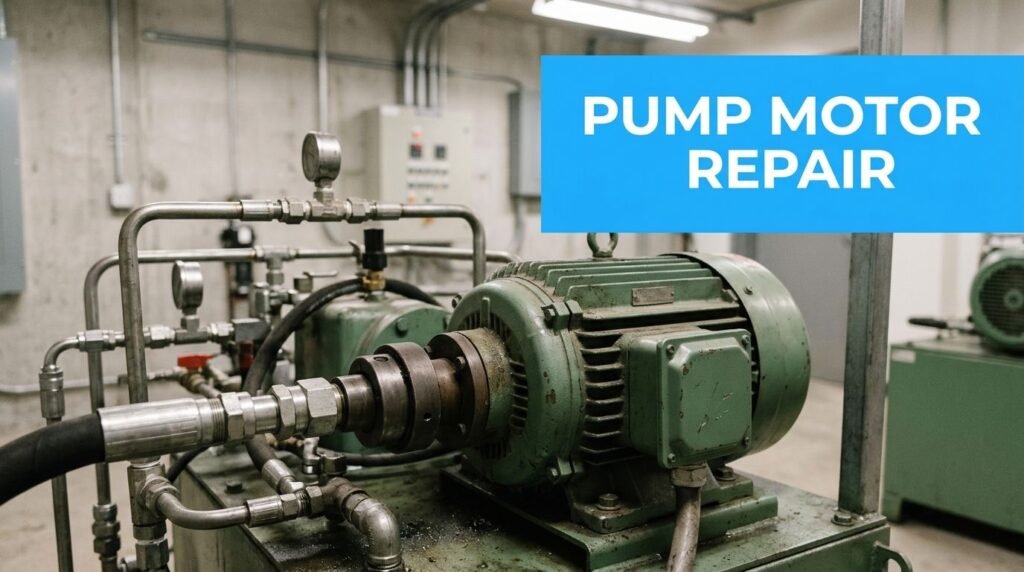
A motor that hums but doesn't turn, or trips its breaker on a hot day, gives the technician a diagnostic clue that deserves investigation before replacement. In a large motor-driven pump dataset [source link unavailable in supplied text], 1,227 failures occurred across 4,797 motors, and 335 were repeat failures. The numbers reinforce a practical point: identify the cause before ordering a part.
The call often comes from a facility manager beside a silent freight elevator, with pallets waiting at the dock. Older hydraulic equipment can make the pump motor look responsible when the actual fault is a seized pump, lost phase, contaminated oil, restricted suction line, or malfunctioning valve.
Hydraulic contamination deserves close attention. Dirty or water-laden oil can increase resistance, strain the pump, and return as a motor complaint. Michigan and Ohio inspection cycles also make clear service records useful, especially when a repair must be explained during an inspection.
Good elevator pump motor repair starts with isolation. A qualified technician establishes whether the fault is electrical, mechanical, or hydraulic before selecting a repair. Record the findings, measurements, and parts used in plain terms, so any qualified contractor can continue the work without depending on proprietary information.
When a Freight Elevator Goes Quiet on a Hot Afternoon
The machine room in Detroit is warm, loud, and suddenly too quiet. A freight elevator has stopped answering calls, pallets are waiting at the dock, and the facility manager is trying to explain the same symptoms to the elevator company that the shipping crew has already reported: the car moved slowly, the motor made a low hum, then the breaker opened.
The first useful observation is the symptom sequence. A motor that hums without rotation might have lost a phase, or the pump shaft might be locked. A breaker that trips during a hot afternoon might point toward thermal overload, but it could also reflect a pump working against abnormal resistance. Neither symptom proves that the motor windings are burned.
Practical rule: Treat the first symptom as evidence, not a parts order.
The mechanic arrives, reviews the recent service history, and listens before touching the starter or coupling. Is the oil foamy? Is there a sharp electrical odor? Does the tank show a falling oil level? Did the elevator become slow over several weeks, or did it fail on one start? Those details often separate a developing hydraulic problem from an abrupt electrical failure.
The first three questions
A responsible service call answers three questions in order:
- Is the fault electrical? The technician checks the disconnect, contactor, overload protection, control circuit, and voltage at the motor terminals.
- Is the fault mechanical? With power isolated, the coupling and shaft are checked for free rotation.
- Is the hydraulic system loading the motor? Oil condition, suction integrity, pump pressure, valve behavior, and abnormal noise all matter.
Hydraulic elevators have been treated as safety-critical equipment for generations. The first American national elevator code appeared in 1921, and hydraulic requirements in the 1930s included periodic inspection of components such as plunger shoes, bypasses, and piston rods, along with hydrostatic testing expectations for pressure tanks, as documented in this history of elevator maintenance and inspection codes. That history explains why a pump motor repair belongs in a documented maintenance process rather than an improvised machine-room fix.
What the Pump Motor Does Inside a Hydraulic Elevator
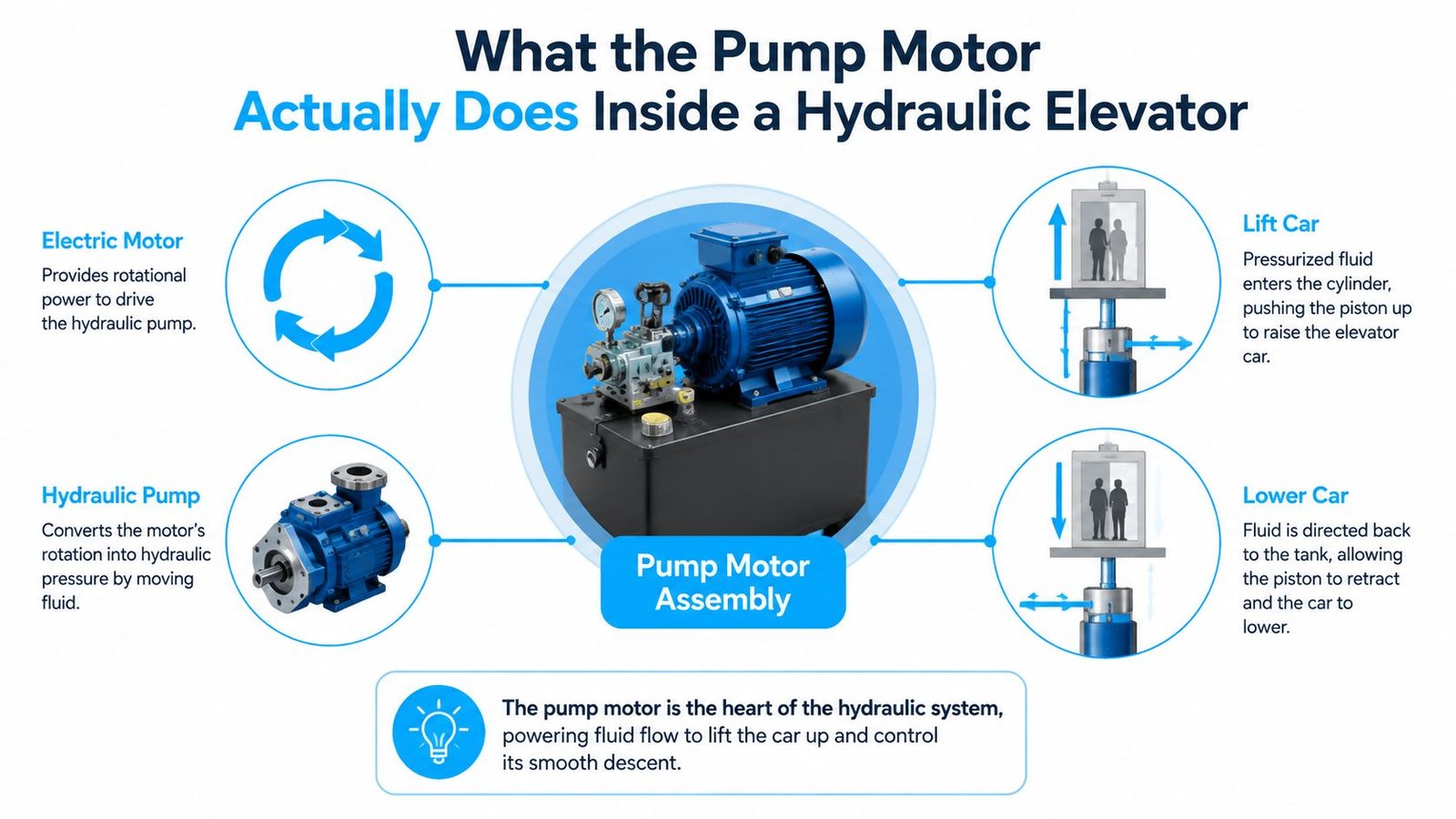
A hydraulic freight elevator rises when the electric motor turns the hydraulic pump. The pump draws oil from the reservoir and sends it into the cylinder circuit, where pressure raises the plunger and car. During descent, the control valves route oil back toward the tank. The motor supplies rotation, but the pump, oil path, valves, and cylinder must work together for the car to move and level properly.
Each part leaves different evidence when it starts failing. A loose or misaligned coupling causes vibration as the motor starts. A scored pump or locked gear set loads the motor and may produce an overload trip. A cracked suction tube, loose fitting, low oil level, or blocked screen allows air into the oil stream, causing cavitation noise, foamy oil, vibration, longer run time, and heat. Valve wear can create rough leveling even when the motor current is normal. The pressure gauge and cylinder connection help show whether pressure is being generated and reaching the jack.
The rotating parts
Older industrial freight elevators often use motors operating around 1,750 RPM, reservoirs in the 30 to 50 gallon range, and motors rated between 20 HP and 75 HP. These figures describe common equipment, not a repair specification. The nameplate, controller data, and measured operating conditions determine what replacement or repair is appropriate.
The coupling transfers torque from the motor shaft to the pump shaft. A motor can sound healthy while a worn coupling slips, a pump shaft binds, or internal pump damage creates excessive load. Checking shaft rotation and coupling condition before condemning the motor prevents an expensive misdiagnosis.
The oil path
The reservoir stores hydraulic fluid and provides space for some heat and air separation before oil returns to the pump. Contamination can score pump surfaces, restrict the suction screen, and accelerate valve wear. Cleaning or replacing a motor without correcting dirty oil or a damaged suction line leaves the root cause in place.
Hydraulic elevator pump troubleshooting guidance connects vibration, heat, and cavitation with suction and contamination problems. Crane's hydraulic elevator pump service information explains the relationship among the pump, valves, and tank. A non-proprietary service record should identify readings, parts, oil condition, and adjustments so any qualified contractor in Michigan or Ohio can continue the work during the next inspection cycle.
Five Symptoms That Point to Pump Motor Trouble
Symptoms are valuable because they reveal how the system failed. They become misleading when a facility treats each one as a direct replacement recommendation. The same breaker trip can come from a motor, pump, coupling, valve, or operating condition, so technicians compare the symptom with electrical readings and hydraulic evidence.
| Symptom | Most Likely Root Cause | Typical Severity |
|---|---|---|
| Motor hums but won't turn | Lost phase, failed starting component on a single-phase motor, or seized pump shaft | High, because repeated starts can damage the motor |
| Breaker trips on a hot day | Thermal overload, restricted pump, stiff bearings, poor ventilation, or excessive hydraulic load | High if the elevator is repeatedly restarted |
| Slow or rough leveling | Valve wear, aerated oil, leakage, or unstable pressure | Moderate to high, depending on ride and safety findings |
| Whining or knocking | Cavitation, low oil, blocked suction screen, air entering the suction line, or internal pump wear | High if operation continues |
| Burning smell | Winding insulation breakdown, overheated connections, or prolonged overload | High and requires immediate isolation |
Humming without rotation
On a single-phase motor, a failed start capacitor or centrifugal switch can leave the motor humming without developing enough starting torque. On a three-phase elevator motor, phase loss is a primary electrical suspect. A seized pump shaft can produce the same sound, which is why a technician compares current draw across the phases and checks shaft rotation before condemning the motor. This hydraulic power-unit troubleshooting reference describes that separation between electrical fault and mechanical seizure.
Heat, noise, and rough travel
A breaker trip on a hot day deserves more than a reset. Heat can expose a stiff pump, poor alignment, overloaded motor, restricted suction, or inadequate cooling. Whining and knocking often point toward cavitation, while rough leveling may reflect aerated oil or valve wear rather than a defective motor.
A burning smell is different. It can indicate winding insulation damage or overheated terminals, and continued operation can turn a repairable condition into a motor replacement. The service record should identify what smelled, what tested abnormally, and whether the motor was isolated before further damage occurred.
How Technicians Separate Motor Failure from Pump Failure
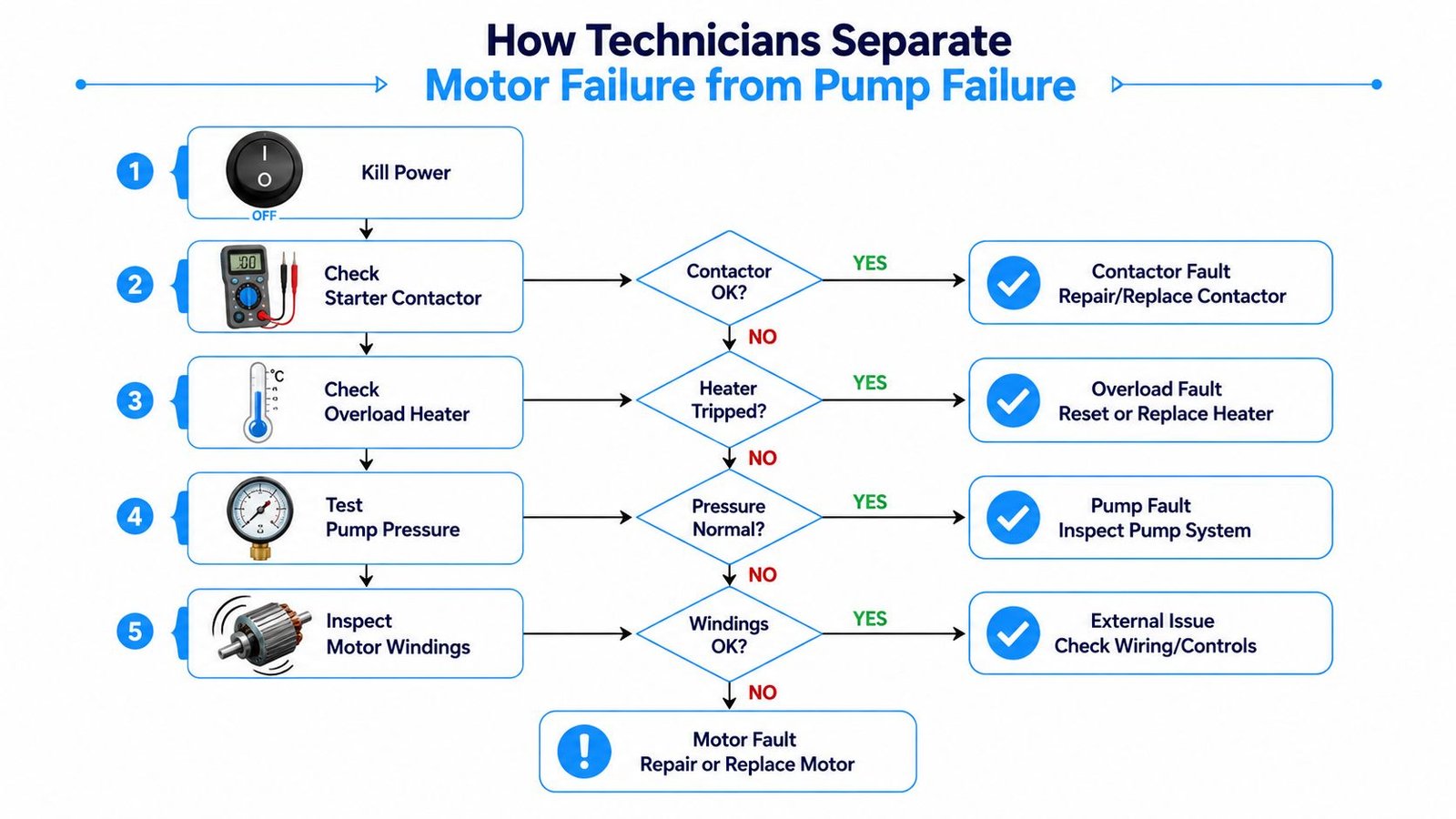
The diagnostic sequence begins with safety, not a meter reading. The disconnect is opened, locked, and tagged before the technician works around the coupling, starter, or pump. Once the equipment is safe, the service ticket should show a line-by-line path from incoming power to motor behavior and hydraulic load.
Electrical checks first
The technician checks the starter contactor, overload heater, control transformer, and motor leads. Voltage should be verified at the appropriate points, and current should be measured across all phases while the unit runs, if it can be operated safely. The readings are compared with the motor nameplate full-load amperage, not guessed from the breaker size.
A motor that receives proper voltage but won't rotate may be seized or single-phased. With power removed, a hand-spin check at the coupling helps identify mechanical lockup. If the motor turns freely by hand but draws locked-rotor current when energized, the pump may be binding or the hydraulic circuit may be imposing an abnormal load.
Hydraulic checks before ordering parts
A pressure gauge tap helps establish whether the pump is producing the expected pressure and whether the valve circuit is behaving properly. The technician also checks the suction screen, tube, fittings, oil level, oil appearance, and signs of air ingress. Contamination can create cavitation and overheating, so a new motor installed into a dirty or starved system may fail again.
Insulation resistance testing with a megohmmeter at 500 VDC can help evaluate motor winding condition, provided the test is appropriate for the equipment and controls are protected. The completed ticket should identify the test method, readings, current draw, shaft condition, pressure findings, oil observations, and the reason for the recommended repair.
A clear report gives the property team a targeted choice. It also allows another qualified contractor to continue the work without repeating every diagnostic step.
Repair, Partial Replacement, or Full Power Unit
The right decision depends on the condition of the entire hydraulic package. A motor can be rebuilt successfully while the pump remains worn, or a new motor can be installed only to discover that contaminated oil and a restricted suction path caused the original overload. The cheapest invoice is not always the lowest-cost repair.
Three practical paths
Motor-only repair fits a unit where the windings test acceptably, bearings or connections are the main defect, the coupling is serviceable, and the rest of the power unit remains in sound condition. It preserves familiar equipment and limits the scope of work, but it won't solve a worn pump or deteriorated valve stack.
Pump or valve replacement makes more sense when the motor passes insulation testing, the oil shows varnish or contamination, and the hydraulic symptoms point to pressure control or internal pump wear. A technician should still inspect the cylinder, packing, suction line, and tank before approving the partial repair.
Full power-unit replacement becomes more defensible when the tank is pitted, motor and pump problems are occurring together, fluid condition is unacceptable, or the controls are no longer supported. The condition of the valve stack, silencer, cylinder packing, and piping matters more than the brand printed on the motor nameplate.
| Decision Factor | Motor-Only Repair | Pump or Valve Only | Full Power Unit Replacement |
|---|---|---|---|
| Best fit | Localized motor fault with healthy hydraulic components | Hydraulic fault with a serviceable motor | Broad deterioration or unsupported controls |
| Downtime | Usually limited to motor access and testing | Depends on valve or pump availability | Requires planning, installation, and acceptance testing |
| Main trade-off | Lowest scope, but limited correction | Addresses hydraulic cause without renewing the whole unit | Greater scope, but resets multiple aging components |
| Inspection effect | Documentation and testing remain essential | Pressure, leakage, and control performance need review | New equipment data and testing must be recorded |
A modern submersible unit may outperform a repaired older dry-unit, but that comparison is incomplete without checking the cylinder and valve condition. Crane's hydraulic elevator pump replacement service is one route for evaluating that broader decision, alongside repair and partial replacement options.
Michigan Code, ASME A17.1, and What Inspectors Look For
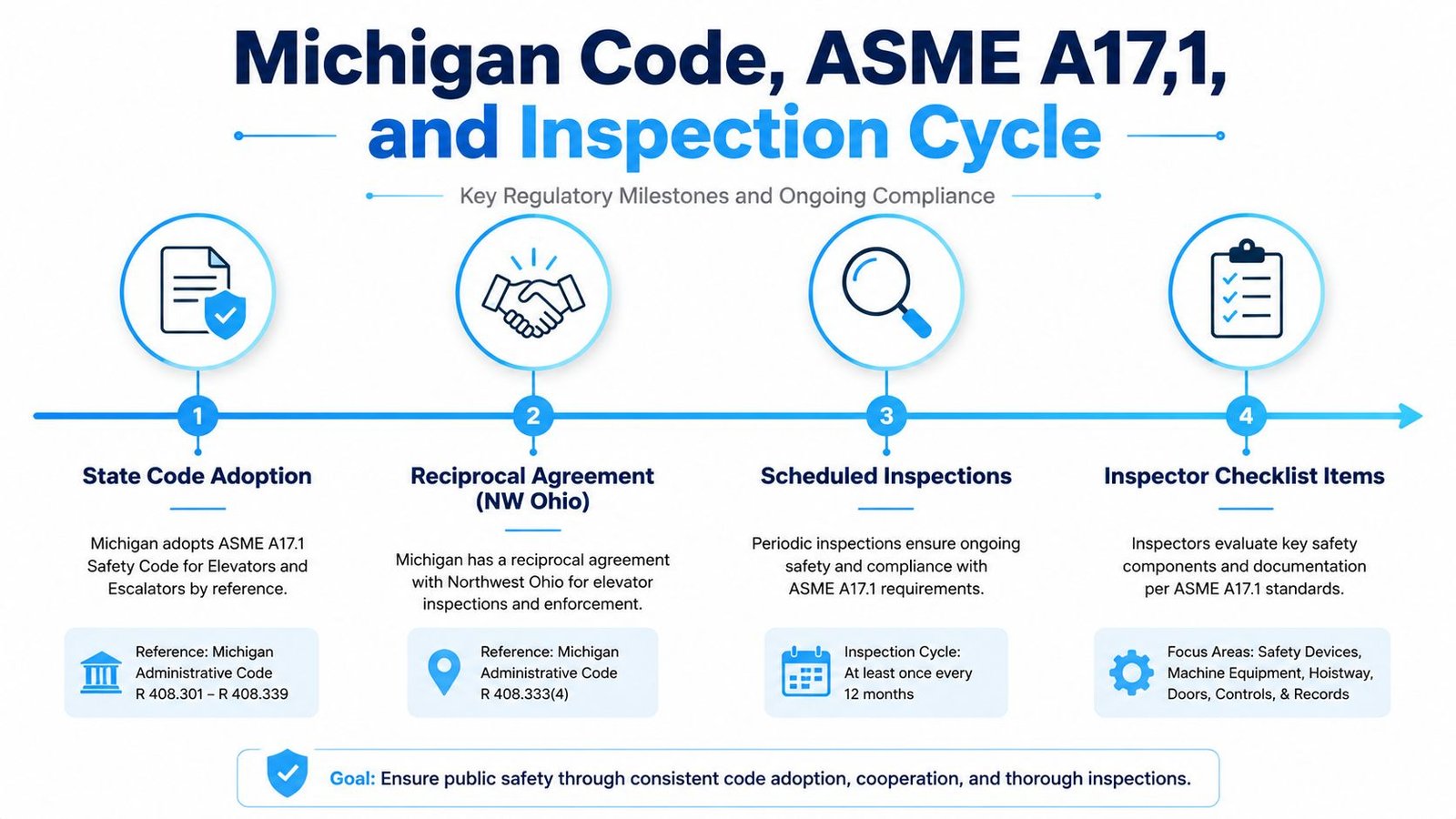
Michigan service decisions sit inside a code and inspection process. ASME A17.1/CSA B44 covers elevator design, installation, operation, inspection, testing, maintenance, alteration, and repair, and its maintenance, inspection, and repair provisions apply to new and existing installations, as described by the ASME A17.1 safety code reference.
Michigan rules require many elevator categories, including passenger and freight elevators, to be inspected at least once every 12 months, while several other device categories use a 24-month interval. Temporarily installed personnel hoists use a 90-day interval, according to the Michigan elevator code rules.
What poor workmanship leaves behind
A sloppy pump motor repair may appear later as an oil leak at the tank base, a missing gasket, an unmarked disconnect, loose coupling hardware, or starter protection that doesn't match the listed equipment data. Inspectors and maintenance personnel also need evidence that the repaired equipment was tested and returned to service correctly.
For older equipment, the contractor may need to address fluid sampling and environmental questions, including PCB concerns on pre-1979 equipment. The plunger stop valve should be properly identified and secured, and a replacement motor must match the controller and certificate information rather than being selected only by horsepower.
A complete work package should include the service ticket, test results, coupling torque record, updated one-line schematic where changes were made, and confirmation of load testing. Crane's elevator code requirements resource provides a useful starting point for coordinating the repair with the applicable authority and inspection requirements.
How Crane Elevator Handles Pump Motor Repair Across Michigan and Ohio
A Toledo-area call starts with questions, not a truck dispatched on a guess. The facility manager describes the failure timing, recent symptoms, elevator use, and any breaker or controller indications. A technician then travels from the Maumee area, reviews the machine room, and establishes a safe lockout and tagout before opening the power unit.
The inspection follows the evidence. Oil is checked and sampled when contamination is suspected. Motor current is measured, the windings are evaluated with a megohmmeter when appropriate, and the starter contactor is examined for pitting or poor contact. If the contactor is the problem, reseating or replacing that component may restore operation. If the motor is locked or tests poorly, the recommendation may shift to removal and repair.
Documentation that travels with the equipment
The service report uses plain language. It identifies what failed, what was tested, what remains serviceable, and which conditions could cause a repeat outage. Labor, motor work, oil handling, disposal, travel, and related components are itemized so the facility manager can compare the repair scope rather than approve an unexplained lump sum.
Crane Elevator Company provides Maintenance, Repair, and Modernization services in Michigan and Ohio, including Toledo and surrounding cities. Its non-proprietary approach means the equipment isn't treated as dependent on one contractor or one brand. OEM-agnostic parts sourcing, complete documentation, and a willingness to pick up a job another qualified contractor left mid-repair make the service record useful beyond the current call.
Testing after the repair
The job isn't finished when the motor starts. The technician checks coupling alignment, runs the elevator under load, observes pressure and leveling, reviews controller behavior, and cleans the machine room and work area. Follow-up inspection coordination can then be handled with the relevant Michigan Bureau of Construction Codes process or the Ohio Department of Commerce process, depending on the equipment location and inspection requirement.
Ohio also structures inspection work around scheduling. The state's inspection request page asks applicants to allow 48 hours for a response, as stated in the Ohio elevator device inspection request process. That administrative detail belongs in the maintenance plan when a repair affects inspection timing.
A Simple Maintenance Checklist and Quick Answers
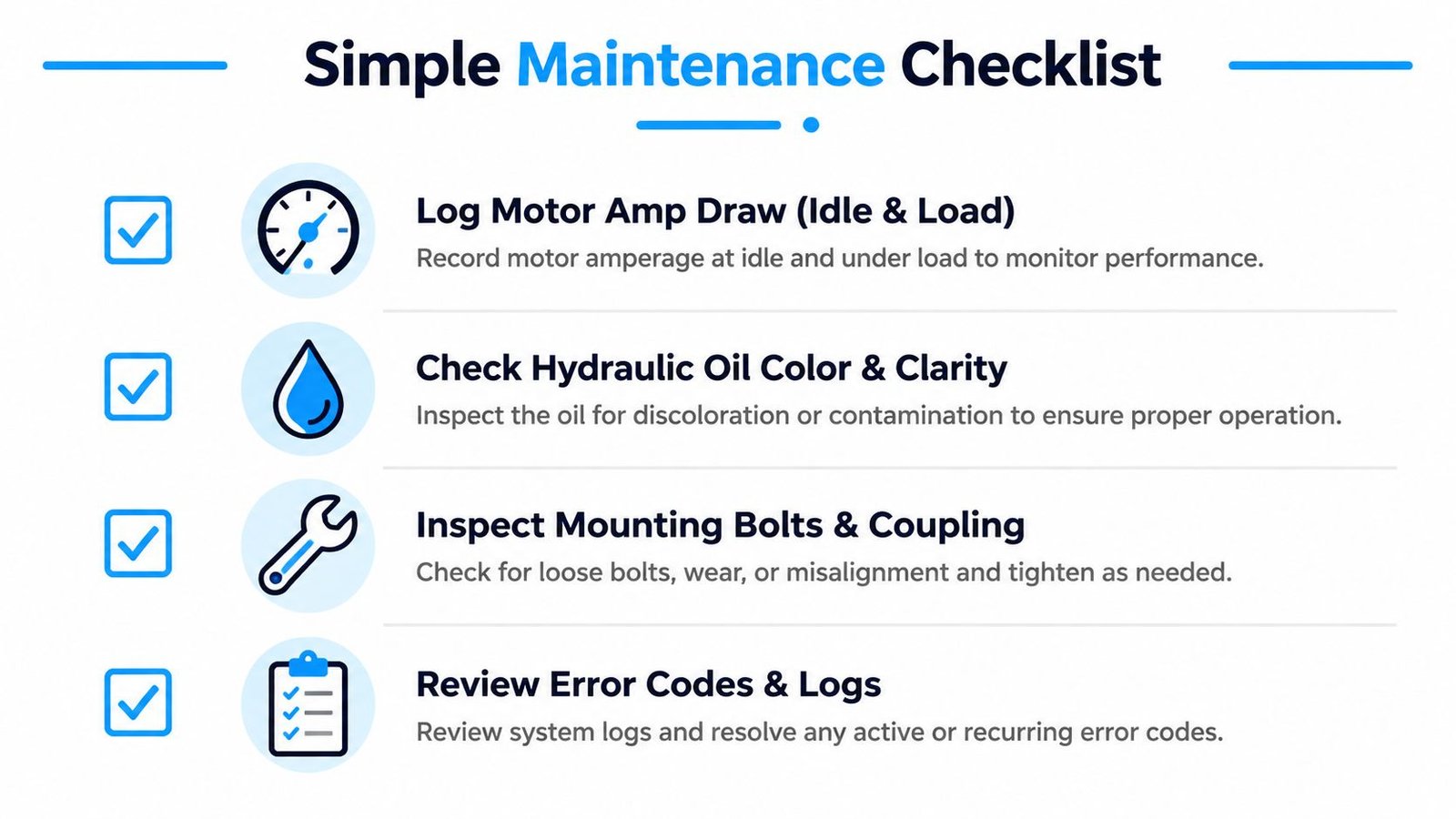
Facility staff don't need to diagnose a pump motor, but they can preserve useful evidence between contractor visits. Record motor current at idle and under load, note changes in hydraulic oil color or clarity, listen for cavitation during startup, and report changes before the elevator becomes unavailable.
Quarterly checks for the contractor
- Log amp draw: Compare idle and loaded readings with the motor nameplate and prior service records.
- Inspect the oil: Use the sight gauge to note color, clarity, foam, and level changes.
- Listen at startup: Whining, knocking, or a rough start can point toward suction or cavitation problems.
- Check alignment: Verify coupling condition, mounting hardware, and shaft alignment.
- Review temperature: Record machine-room conditions and investigate overheating instead of repeatedly resetting overloads.
- Inspect starter contacts: Look for pitting, discoloration, loose connections, and signs of heat.
- Review the logs: Match error codes, run time, and service history with the current symptom.
Questions facility managers ask
How long does pump motor repair take?
The duration depends on access, testing, motor size, parts availability, and whether the pump or hydraulic circuit also needs work. A diagnostic visit can establish the scope before removal is approved.
What does a freight hydraulic motor repair cost in Michigan or Ohio?
There isn't a responsible universal average. The total depends on labor, motor construction, rewinding or bearing work, oil handling, travel, controls, and whether the pump caused the overload.
Does a seized motor require a new power unit?
No. A seized motor can be a motor-only repair if the tank, pump, valves, oil, cylinder, and controls remain serviceable. Testing should establish that condition.
What does contaminated oil do?
It can interfere with valves, restrict suction, promote cavitation, increase heat, and accelerate pump wear. Correcting the oil condition is part of the repair, not an optional cleanup step.
What warranty applies to a rebuilt motor?
Warranty terms depend on the contractor, rebuilder, parts, and repair scope. Ask for the coverage in writing, including exclusions and whether the warranty covers only the motor or related damage.
How often do Michigan inspections find pump motor deficiencies?
There is no verified universal rate for those findings. A contractor should review inspection reports and correct documented issues rather than rely on a general assumption.
What does repeat failure indicate?
It often indicates that the original cause was missed. The broader motor dataset recorded 335 repeat failures among 1,227 failures, supporting a root-cause approach rather than repeated part replacement, as shown in this motor-driven pump failure dataset.
Should the building wait for the next inspection?
No. A failing motor, overheating pump, oil leak, or unstable leveling should be evaluated when noticed. Inspection timing doesn't replace maintenance.
Crane Elevator Company provides hydraulic elevator pump motor repair, preventive maintenance, modernization, testing, and code-related service across Michigan and Ohio, including Toledo and surrounding communities. Visit Crane Elevator Company to request a service evaluation, a second opinion, or a documented repair plan for your elevator equipment.