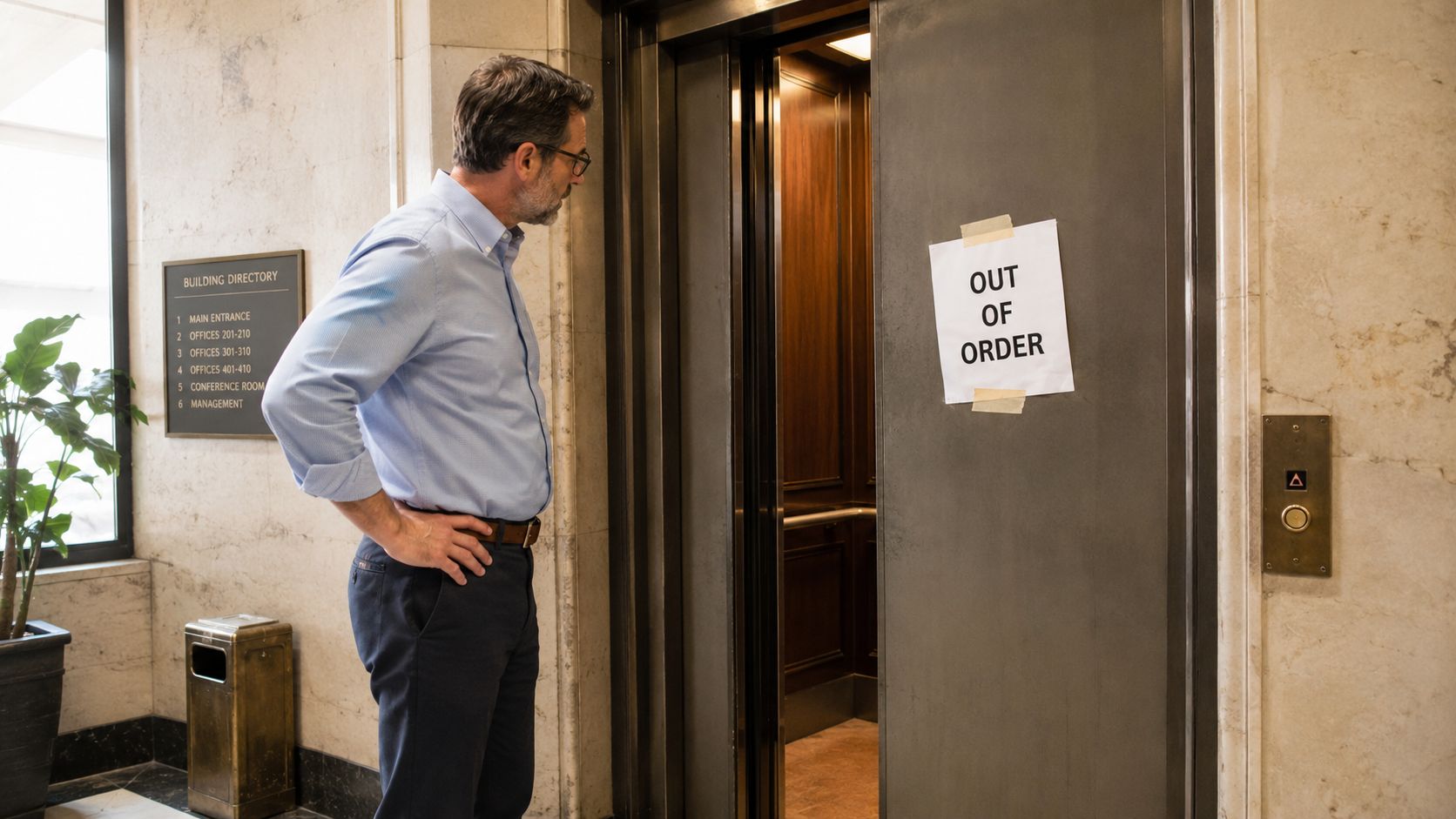
If you're managing a building in Michigan, you already know the pattern. The hydraulic elevator starts the day a little slower than it used to. Then tenants mention a louder start, rough leveling, or longer waits. Then the service calls get closer together. Before long, someone is taping an Out of Order sign to the lobby wall and asking whether this is a simple repair or the start of a much bigger problem.
That question matters because a pump issue can be straightforward, but it can also be misdiagnosed. A noisy hydraulic unit doesn't always need a new pump. A slow car doesn't always point to the motor. And if the pump really is failing, the smarter decision isn't always a pump-only swap. In plenty of buildings across Detroit, Ann Arbor, Lansing, Flint, Kalamazoo, Dearborn, Troy, Novi, Grand Blanc, and surrounding communities, the right answer depends on age, usage, oil condition, valve performance, and how much downtime the property can tolerate.
Your Guide to Hydraulic Elevator Pump Replacement
At 7:30 on a Michigan winter morning, the elevator is still running, but the first trip up sounds rough, the car hesitates off the floor, and the property manager is already getting texts from tenants. The hard part is not spotting that something is wrong. The hard part is deciding whether the building needs a pump replacement, a different repair, or a larger update that will stop the same shutdown from happening again.
That decision has real cost behind it. Authorize the wrong repair, and you pay for labor, parts, tenant complaints, and another round of downtime when the original problem comes back. Wait too long, and a manageable machine-room issue can turn into a service interruption that affects residents, staff, deliveries, and accessibility.
Hydraulic elevators remain common in low-rise Michigan buildings, so this question comes up often in medical offices, apartments, schools, municipal properties, and older commercial sites. For owners and managers, the business case is straightforward. Confirm the root cause first. Then compare a pump-only replacement against the condition of the rest of the power unit, the age of the equipment, and how much risk the property can carry.
That is the frame for this guide. The goal is not to push every noisy unit into a full modernization. It is to determine whether the pump is the failing component, and if it is, whether replacing that single part is the smart spend or just a short-term patch.
If you want a quick overview of the full system before getting into replacement decisions, Crane's page on hydraulic elevator systems is a useful reference.
A pump replacement should fix a confirmed failure, lower callback risk, and make sense against the remaining life of the power unit.
Why Hydraulic Pumps Fail and What They Do
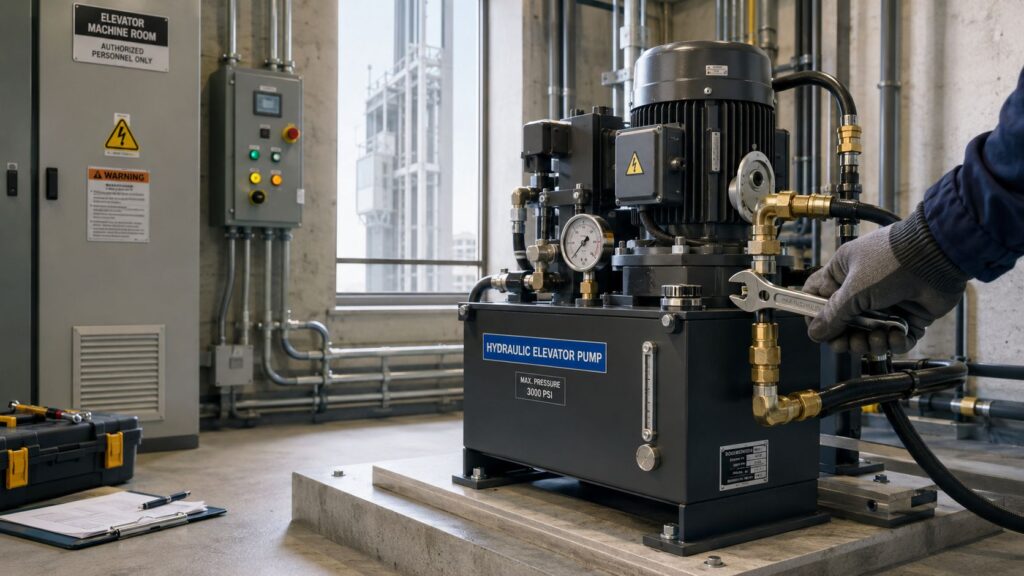
The hydraulic pump does one job that owners feel immediately. It creates the oil flow and pressure that lifts the car on up travel. If that output gets weak, inconsistent, or noisy, the elevator starts showing it in ride quality, leveling, and callback frequency.
In the field, a failing pump rarely starts as a complete shutdown. More often, the unit still runs, but it runs hotter, louder, or slower than it should. That is when costs start stacking up.
What the pump is responsible for
The pump is a working part of the power unit, not a stand-alone item. Its condition affects how the elevator performs every day:
- Up travel performance, because the pump has to deliver the flow and pressure needed to raise the car under load
- Ride quality, because unstable pump output can cause rough starts, vibration, or uneven acceleration
- Leveling consistency, especially when pressure changes show up at the floor line
- Service cost, because a weak pump often leads to nuisance calls before it leads to a no-run condition
Replacement choice matters for that reason. Elevator-duty pump and motor packages are built around specific operating demands, including starts-per-hour expectations and stable output under changing load, as shown in this elevator-duty pump motor reference. In practice, that means a replacement has to fit the building's traffic pattern and the rest of the hydraulic system. Horsepower by itself is not enough.
What causes failure
Most pump failures trace back to a few common conditions that show up again and again in older hydraulic equipment.
- Wear over time. Bearings, internal surfaces, couplings, and seals do not last forever. In a lightly used building, that wear can take years to become obvious. In a busy medical office or apartment building, it shows up sooner.
- Contaminated oil. Dirty or degraded fluid damages the pump and everything around it. If the oil is dark, overheated, or carrying debris, replacing the pump alone may not solve the problem.
- Air in the system. Air causes noise, erratic movement, foaming, and poor pressure control. Owners often hear this as a loud or harsh start and assume the pump is bad.
- Heat and poor application match. A unit that is undersized, overworked, or poorly matched to the building's duty cycle will break down faster.
- System problems that overload the pump. A leaking valve, restricted line, or jack issue can force the pump to work harder than it should. In older systems, that is one reason we also look at related hydraulic components such as the hydraulic elevator jack replacement process before treating the pump as the only problem.
What owners should take from that
A pump can fail on its own. It can also be the part that shows the stress from a larger problem in the power unit or hydraulic circuit.
That distinction matters. If the pump is worn out but the tank, motor, valve, controller interface, and oil condition are still in good shape, a pump replacement can be a sound repair. If the pump has been running hot because the whole unit is aged, contaminated, or mismatched to the building, replacing that one component may only buy a short period of relief.
Field rule: A pump replacement should match the building's usage, the existing power unit condition, and the real cause of the failure. Otherwise the elevator may return to service, but callback risk stays high.
Diagnosing Problems Is It Really the Pump
The most expensive mistake in hydraulic work is replacing the wrong part. Slow travel, rough starts, oil loss, noisy operation, and bad leveling all can point toward the power unit. They don't automatically prove the pump is the failed component.
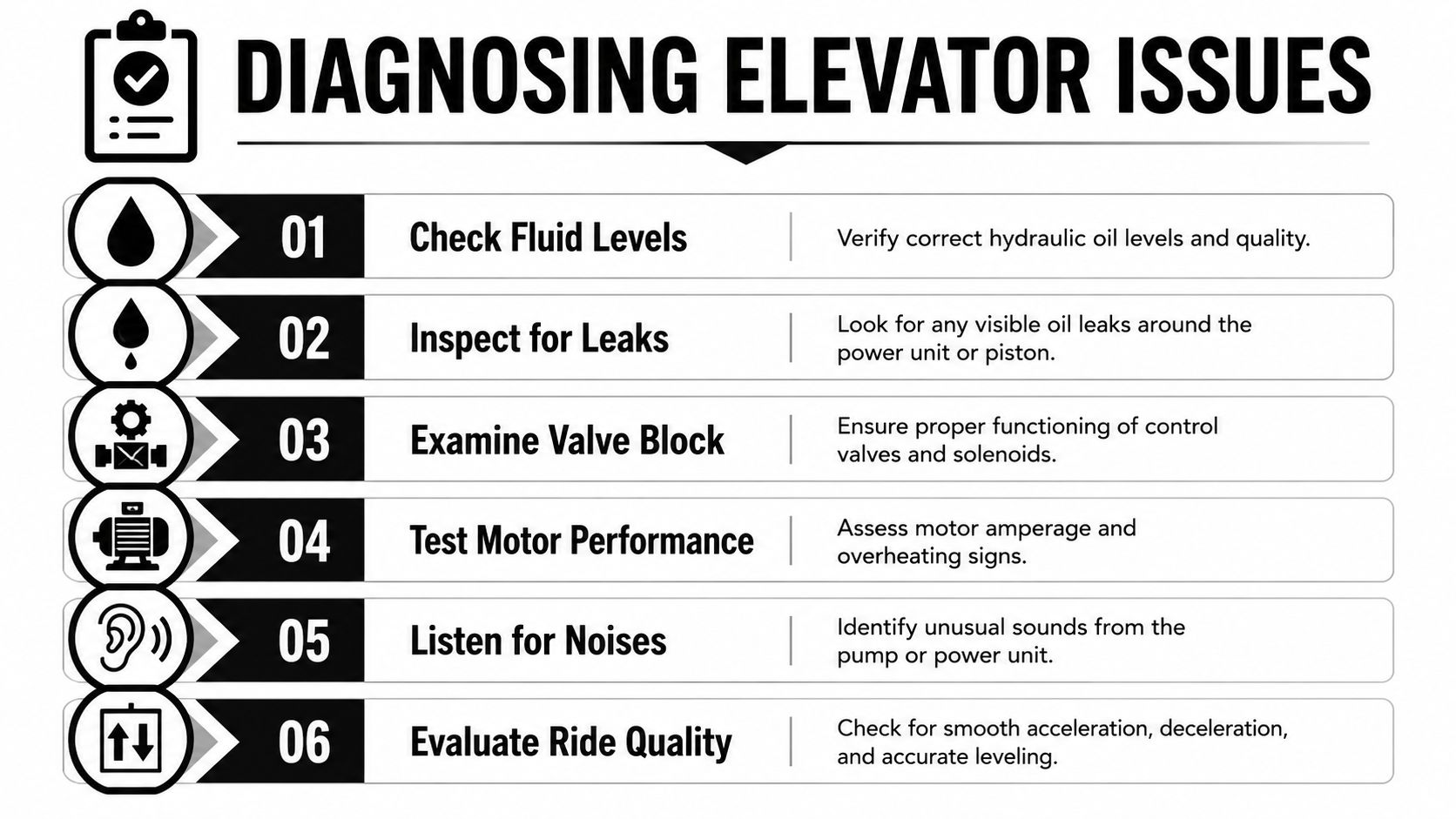
A good diagnosis starts with the whole hydraulic circuit, not with a purchase order for a new pump.
Symptoms that look like pump failure
Owners often report the same warning signs:
- The car is slow going up
- The start sounds louder than normal
- The ride feels uneven
- The elevator doesn't level cleanly
- The machine room seems hotter or harsher during runs
Those complaints are valid. The problem is that several other failures can produce the same pattern.
A maintenance guide from Paramount Elevator specifically warns that pump replacement is often authorized when the true issue is elsewhere, and recommends checking for hydraulic cylinder leakage, main valve problems, oil line leaks, and fluid contamination before replacing the pump. That point is laid out in their discussion of hydraulic elevator repair diagnosis.
What a proper diagnosis checks first
Before anyone commits to Hydraulic Elevator Pump Replacement, the inspection should answer basic system questions.
| Check area | What the technician is looking for | Why it matters |
|---|---|---|
| Oil condition | Dirty, degraded, or aerated fluid | Bad oil can mimic pump wear |
| Cylinder and jack area | Leakage or loss of hydraulic integrity | Pressure loss can look like weak pump output |
| Valve block | Sticking or unstable valve operation | Control problems affect speed and leveling |
| Oil lines and fittings | External leaks or pressure loss | A system leak changes performance |
| Motor behavior | Heat, draw, and starting condition | The motor may be the issue, not the pump |
If the unit is losing pressure somewhere else in the system, a new pump won't fix the root cause. It may even mask it for a short time, which is worse from a budgeting standpoint because the building pays for a major repair and still ends up with more downtime.
Real-world decision points
In a suburban office building, a loud machine-room startup may come from aerated oil after a leak issue. In a school or municipal building, slow up travel may come from a valve problem that only shows up under traffic. In an older apartment property, poor leveling may trace back to contamination and general wear across the power unit, not just one failed pump element.
That diagnostic difference is why owners should ask direct questions before approving the work:
- What tests point to the pump itself
- Was the oil inspected
- Were valve and line leaks ruled out
- Was cylinder leakage considered
- Is the motor still performing as expected
For buildings with known cylinder concerns, it also makes sense to review whether the issue overlaps with jack condition. Crane's page on hydraulic elevator jack replacement is relevant when the symptoms involve leakage or broader hydraulic integrity concerns.
If the contractor can't explain why it's the pump and not the valve, oil, cylinder, or motor, the diagnosis isn't finished.
Your Options Replace the Pump or the Full Power Unit
A Michigan property manager usually sees this decision after a shutdown, a tenant complaint, or a service report that finally forces a capital discussion. Once the diagnosis points to the pump, the next question is straightforward. Do you replace the failed component and get the car back in service, or do you replace the whole power unit and reduce the odds of doing this again next year?
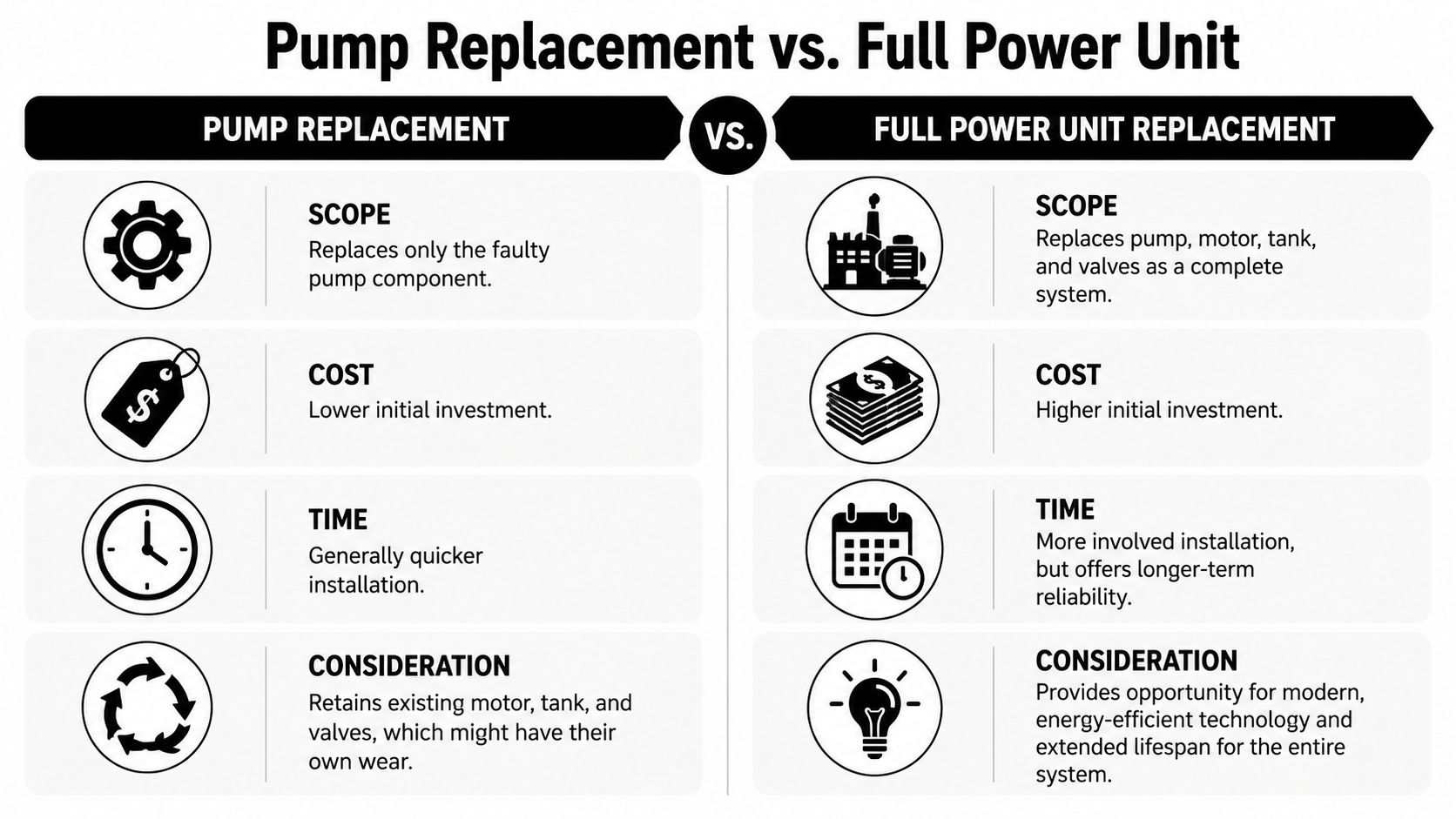
The right answer depends on what is still worth keeping.
When a pump-only replacement makes sense
Pump-only work is the better value when the failure is isolated and the rest of the hydraulic package still has useful life. If the motor tests well, the valve is performing properly, the tank is clean, and the unit has not been stacking up repeat hydraulic issues, replacing the pump can be a sound repair.
That approach usually fits buildings that need to control immediate spend and avoid a wider outage. A small apartment building, medical office, or two-stop commercial property may not need a full unit change if the equipment history supports a targeted repair.
Pump-only replacement usually makes sense when:
- The pump failure is confirmed. The scope is based on testing, not symptom chasing.
- The motor is still in good condition. You are not pairing a new pump with a weak drive motor.
- The valve assembly is stable. No sticking, drift, or heat-related performance problems are showing up.
- The oil and tank condition are acceptable. Contamination is not setting up the new pump for an early failure.
- The unit has a decent service history. The building is not already paying for repeated hydraulic callbacks.
When the full power unit is the smarter move
A full power unit replacement changes the pump, motor, tank, and valve arrangement as one package. That costs more up front, but it often saves money over a few budget cycles when the existing unit is old, dirty, noisy, or showing wear in several places at once.
I usually recommend owners look hard at the full unit when the pump is only one item on a longer list. Hot motor starts, recurring noise, valve issues, oil contamination, and a tank that has seen decades of service are signs that a pump-only repair may buy limited time.
| Option | Short-term cost | Installation scope | Long-term risk |
|---|---|---|---|
| Pump only | Lower upfront | Narrower job | Older motor, valves, and tank stay in service |
| Full power unit | Higher upfront | Broader job | More of the hydraulic package is reset at once |
The fundamental cost question is not the proposal total on day one. It is how much risk stays in the machine room after the work is done.
For owners comparing both scopes, this overview of hydraulic elevator power unit replacement options helps define what is included beyond the pump itself.
Installation quality decides whether the repair holds
A good replacement can still turn into a bad outcome if the startup is handled poorly. Elevator-duty hydraulic pump guidance from CIRCOR calls for proper oil fill before startup, air bleeding, pressure adjustment to the lowest level that still provides satisfactory operation, and rigid mounting of the pump and motor as an integral unit on a baseplate, as outlined in this elevator pump data book from CIRCOR.
That shows up in the field.
When a new pump is noisy right after installation, the cause is often not the pump itself. It is air left in the system, poor alignment, bad adjustment, or contamination that was never addressed. Those mistakes lead to the callbacks owners hate most:
- Cavitation and startup noise
- Rough or erratic travel
- Early wear on the new component
- Unplanned shutdowns
- Return visits that should have been avoided
Practical rule: The job is not finished when the pump is bolted in. It is finished when the unit is aligned, bled, adjusted, and running properly under load.
A simple decision framework for owners
Use pump-only replacement when the diagnosis is clean and the rest of the unit is worth keeping.
Use full power unit replacement when the pump failure is part of a broader age and reliability problem.
That is the business case. A smaller repair protects cash now. A larger replacement can cut repeat service calls, reduce tenant disruption, and give the building a more predictable maintenance picture. For many Michigan owners, the better choice comes down to one question. Are you fixing one failed part, or are you trying to stabilize an aging hydraulic system that has already started costing too much to carry piece by piece?
The Case for Modernization Beyond a Simple Fix
A common Michigan scenario goes like this. The pump fails, the car is down, tenants are calling, and everyone wants the fastest possible repair. That urgency is real. It can also push an owner into replacing one part when the larger problem is an aging power unit that has been getting more expensive to keep alive.
Modernization makes sense when pump trouble is part of a pattern, not a one-time event. If the unit has old controls, recurring valve issues, heat-related performance problems, oil leaks, or hard-to-find components, a pump swap may restore service but still leave the building exposed to the next shutdown. In that case, the better business decision is often to replace the power unit or expand the scope while the machine room is already open.
Why owners pair pump work with upgrades
The question is not whether newer equipment is newer. The question is whether it lowers the total cost of ownership over the next five to ten years.
A pump-only repair usually carries the lowest upfront cost. That matters, especially for smaller properties or buildings with tight annual budgets. But if the existing motor, controller, starter, tank, valve assembly, and piping condition are all showing age, the savings can disappear fast through repeat service calls, tenant disruption, and emergency labor.
I tell owners to look at the service history, not just the failed part in front of them. If the elevator has already had a string of hydraulic and control-related issues, the pump failure is often the point where piecemeal repair stops making financial sense.
What modernization changes for a property manager
A broader power-unit upgrade can solve management problems that never show up on the parts invoice.
- Fewer nuisance shutdowns because the main wear items are addressed together
- More predictable budgeting because capital work replaces recurring emergency repairs
- Better ride performance from matched components instead of old and new parts fighting each other
- Less operational disruption in buildings where downtime affects tenants, patients, staff, or residents
That matters in occupied properties across Michigan. A school cannot wait around for repeated callbacks. A medical office needs dependable access. A multifamily building feels every outage immediately because residents do not care which component failed. They care that the car is out of service.
When a narrow repair is still the right call
Some units should be repaired and left alone. If testing shows the rest of the hydraulic package is in good shape, the elevator has a stable service record, and the owner plans to hold the property only a few more years, a direct pump replacement can be the disciplined choice.
The decision comes down to this:
Replace the pump only when it fixes the problem you actually have. Replace the power unit when the pump failure is one symptom of a system that is aging out.
That is the difference between a repair decision and an asset decision.
The industry has increasingly treated hydraulic work as part of a longer modernization plan rather than a series of isolated part swaps. Stanley Elevator's discussion of hydraulic elevator modernization reflects that shift in owner priorities around maintenance cost, system age, and updated equipment.
Your Elevator Partner in Detroit Ann Arbor and Lansing
A property manager in Detroit may be dealing with resident complaints after another shutdown. An office owner in Ann Arbor may be hearing a pump that suddenly sounds louder than it did six months ago. A municipal building in Lansing may have one question above all others: fix the problem without creating a bigger one next budget cycle.
That is why local support matters. Michigan owners do not need a generic sales answer. They need a contractor who can inspect the unit, separate pump problems from valve, motor, or oil issues, and recommend a scope that fits the building's use, age, and service history.

What owners should expect from a contractor
A good hydraulic contractor should do more than quote a replacement.
They should confirm the failure first. Noise, slow starts, heat, and rough leveling can point to the pump, but they can also come from contaminated oil, worn valves, electrical problems, or a motor under strain. If the diagnosis is weak, the repair decision will be weak too.
They should also explain the business case in plain terms. Owners need to know what a pump-only replacement will solve, what it will not solve, and when a full power unit change makes better financial sense over the next several years. Service flexibility matters too. In many Michigan buildings, non-proprietary equipment is still the practical choice because it keeps future maintenance and parts sourcing more manageable.
Crane Elevator Company is one Michigan option for hydraulic repair, parts replacement, and non-proprietary modernization work across Lower Michigan, including Detroit, Ann Arbor, Lansing, Flint, Kalamazoo, Dearborn, Novi, Troy, Jackson, and nearby communities.
Why timing matters
Timing affects cost. Wait too long after a pump problem is confirmed and the owner usually pays for it through emergency calls, tenant frustration, rescheduled work, and longer outages. Move too fast without a proper diagnosis and the building can end up paying for a pump that was never the root cause.
Owners usually need a contractor who will give a straight answer. Does the current power unit still have useful life left? Is the pump the actual failure, or just the loudest symptom? Will a broader scope reduce repeat service calls enough to justify the higher upfront number?
As noted earlier, hydraulic systems often remain a sound long-term fit for low-rise Michigan buildings when the equipment is maintained and updated at the right time. The savings come from making the right repair at the right stage of the system's life.
A practical decision framework for Michigan properties
Use this sequence before approving work:
Confirm the failure
Do not approve Hydraulic Elevator Pump Replacement based on sound, slowdown, or ride quality alone.Inspect the full hydraulic package
Review the motor, valve assembly, tank, oil condition, piping, and electrical controls before treating the pump as an isolated part.Match the scope to the building's risk
A healthcare site, senior living property, or busy apartment building usually has less tolerance for repeat shutdowns than a lightly used commercial office.Compare short-term cost against ownership cost
A lower invoice today can lead to more callbacks, more downtime, and a second capital decision sooner than expected.Protect future serviceability
Equipment choices should support straightforward maintenance and parts access for years, not create unnecessary dependence on a narrow service channel.
Good hydraulic decisions come from diagnosis first, then scope selection. That is how owners avoid paying twice for the same problem.
If your elevator in Detroit, Ann Arbor, Lansing, Flint, Kalamazoo, or another Lower Michigan community is getting noisy, slow, or unreliable, contact Crane Elevator Company for a professional assessment, a competitive quote, or a free second opinion on whether you need a pump replacement, a full power-unit change, or a broader modernization plan.