
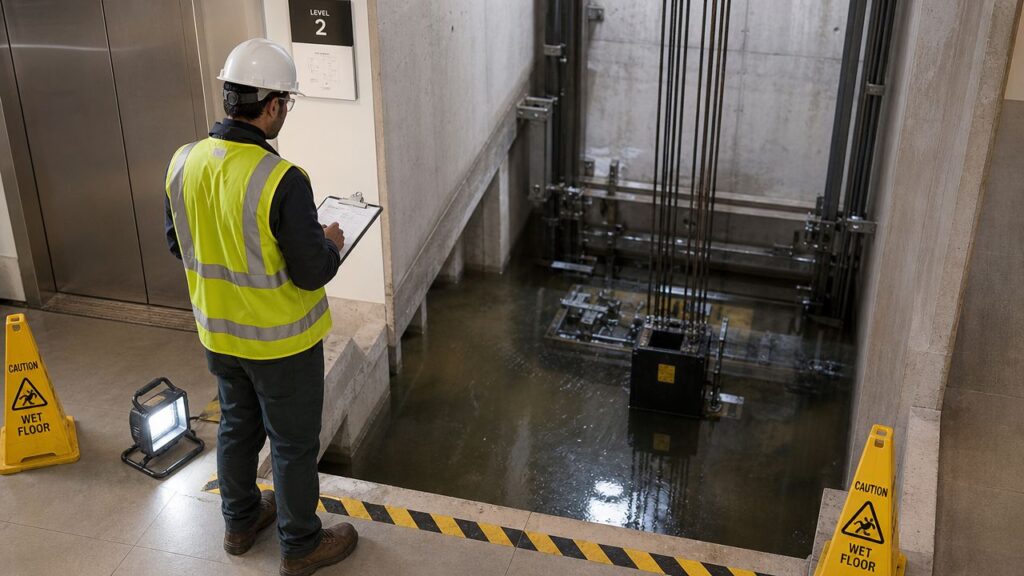
It usually starts with a call nobody wants. A tenant says the elevator is out. Maintenance opens the landing door or checks the pit access, and there it is. Standing water at the bottom of the hoistway, damp pit walls, a smell that tells you this didn't happen five minutes ago.
For a facility manager in Southern Michigan, this is a building emergency with safety, downtime, repair cost, and insurance consequences all tied together. In Detroit, Ann Arbor, Lansing, Flint, Kalamazoo, Grand Rapids, Dearborn, Novi, Troy, Southfield, Jackson, and the smaller towns in between, elevator pits take abuse from heavy rain, spring thaw, groundwater, failed sump pumps, leaking domestic lines, and old drains that don't keep up.
If you're dealing with elevator water damage right now, the right response is simple in principle. Make it safe. Document everything. Dry it properly. Test it thoroughly. Then fix the weak points that let water in the first time.
When Your Elevator Pit Becomes a Pool
The moment you find water in an elevator pit, stop thinking of it as a janitorial problem. It's an electrical hazard, a mechanical reliability problem, and a risk management event all at once. The biggest mistake managers make is treating pit flooding like any other wet basement issue. An elevator shaft isn't just a low spot in the building. It contains safety circuits, pit switches, buffers, guide rail brackets, wiring, and in many buildings, equipment that doesn't tolerate moisture well.
In Michigan, this isn't rare bad luck. In Midwestern metro areas like Detroit, nearly 32% of all non-fire-related elevator outages in commercial buildings with basements are linked to water intrusion. In low-rise buildings without floodproofing, pits flood at least once every 7–10 years in roughly 44% of cases, with an average of 2.1 weeks of downtime per incident, according to this Elevator Consultant review of elevator water damage.
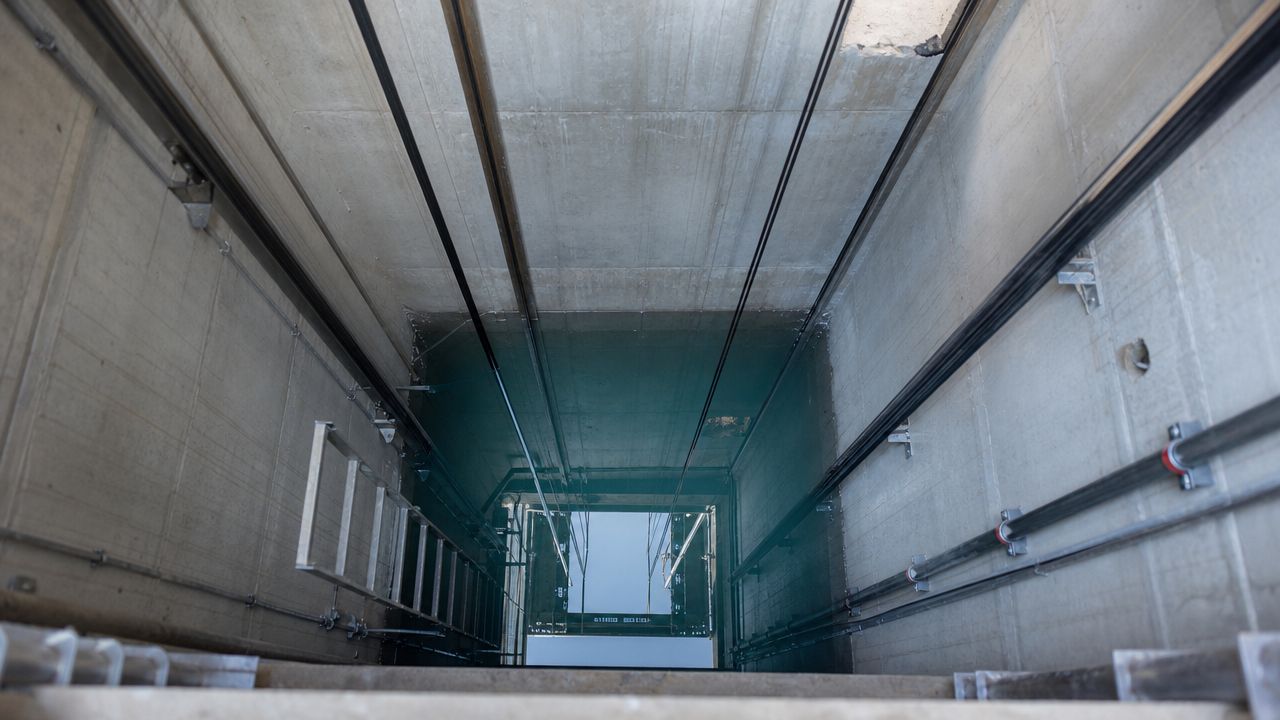
That's why a flooded pit has to be handled with a set process, not improvisation. The first hour matters, but so do the next few days. If you need a quick primer on the basics of a flooded pit event, Crane Elevator has a useful resource on flooded elevator pit response.
What's at risk first
Three things are usually in play right away:
- People near the equipment: Water and energized elevator components are a dangerous mix.
- The controller and low-voltage circuits: Moisture gets into places you can't see from the landing.
- Your outage timeline: A short delay in proper shutdown can become a long delay in repair.
Practical rule: If water is in the pit, assume the elevator is unsafe until a qualified technician proves otherwise.
That mindset helps you avoid the two bad extremes. One is panic. The other is casual confidence. Neither helps when you're trying to protect tenants, keep a property compliant, and avoid turning a recoverable incident into a major loss.
Immediate Emergency Response and Shutdown
The first job isn't repair. It's control.
If there's any chance the car is still in service, remove it from service immediately. Don't let tenants “try it once.” Don't let staff send it to another floor. Don't let anyone open doors to inspect further unless they're trained and the area is secured.
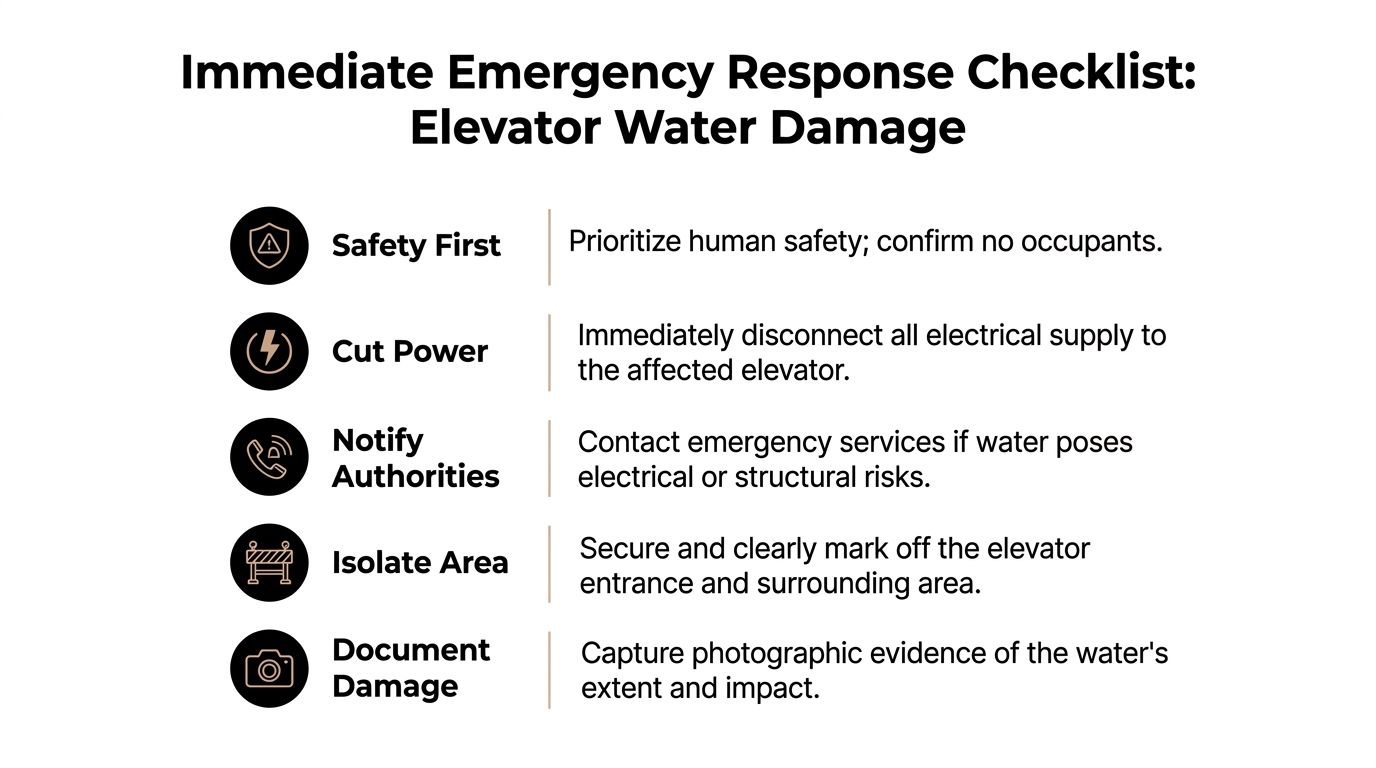
What to do in the first few minutes
Use a simple sequence and stick to it.
Confirm no one is in the car
If there's any uncertainty, treat that as the first priority. Verify occupancy before anything else.
Take the elevator out of service
Post clear notices at the main landing and any other floors the elevator serves. If the building has multiple cars, identify the affected unit clearly so nobody mistakes one for another.
Shut off main power at the proper disconnect
This is the critical step. Power has to be isolated at the machine room disconnect or other designated main disconnect point for that unit. Don't rely on normal controls or hall call shutdown. They are not the same as electrical isolation.
Apply lockout and tagout
A proper Lockout/Tagout procedure prevents someone from restoring power while water is still present or while a technician is working. In a busy hospital, municipal building, school, or office property, this matters more than people realize.
Secure the area
Barricade entrances if foot traffic is heavy. Keep tenants, staff, and vendors away from the landing area and machine room.
Why power isolation matters
Water damage gets much worse when someone keeps trying to run the car. Energized components can arc, short, or fail in stages. A part that might have been cleaned, tested, and returned to service can become a replacement item if it was powered while wet.
Don't reset a tripped elevator after a flooding event. A reset doesn't diagnose anything. It can make the final repair bill larger.
When outside help is needed immediately
Some flooding events are bigger than the elevator itself. If water is still rising, if there's visible structural damage, or if building electrical systems are also involved, contact emergency services and your building electrician along with your elevator contractor.
A quick incident checklist helps keep everyone aligned:
- Human safety: Confirm occupants are clear and access is controlled.
- Electrical control: Main disconnect off, then lockout/tagout.
- Building response: Notify onsite engineering, security, and management.
- Hazard perimeter: Tape off or physically block the affected entrance area.
- Evidence capture: Start photos before cleanup begins.
That sequence is plain, but it works. In a crisis, simple beats clever.
Damage Assessment and Your Critical First Calls
Once the elevator is shut down and secured, start acting like the claim may be disputed later. That sounds cynical, but it's practical. Water incidents get expensive because the damage isn't always obvious on day one, and the paper trail often starts too late.
There's a real guidance gap here. Property owners are often left without a clear framework for the financial and insurance side of elevator flooding, especially in Southern Michigan. That gap is noted in this discussion of elevator pit flood prevention and owner risk, and it's one reason so many managers struggle to justify prevention work before the next incident.
Document before the water disappears
Before anyone pumps the pit out, capture the scene thoroughly if it can be done safely.
Record:
- Water level: Show how high the water reached on pit walls, components, and door sills.
- Likely source: Burst pipe, sump failure, drain backup, groundwater seepage, roof drain issue, or another cause.
- Affected areas: Machine room, controller room, hoistway doors, pit ladder, buffers, and adjacent basement spaces.
- Time and discovery details: Who found it, when it was discovered, and whether the elevator had faulted earlier.
Video helps because it captures context that still photos can miss. A slow walk-through of the machine room, adjacent mechanical spaces, and the pit entrance can be valuable later when adjusters or contractors ask how water may have traveled.
Make these calls in order
Your first call should be your elevator contractor. This isn't because they'll handle the insurance side. It's because they can take control of the technical side before well-meaning cleanup efforts create new problems. If you need rapid help, Crane Elevator provides emergency elevator repair support for properties across Lower Michigan.
Your second call should be your insurance agent or carrier. Early notice matters. The claim file should begin while evidence is fresh, not after the pit is dry and the cause is harder to prove.
Then notify any internal stakeholders who will need records later:
| Contact | Why they matter |
|---|---|
| Property ownership | Approval authority and capital planning |
| Risk or compliance staff | Incident documentation and reporting |
| Building engineer | Source isolation and related building systems |
| Tenants or occupants | Access planning and service disruption communication |
The quality of your documentation often shapes the quality of your claim outcome.
What not to do
Don't let a general cleanup crew start dismantling elevator components. Don't throw away wet parts before the contractor and insurer have seen them. Don't decide too early that “it was just a little water.” Small flooding events can still damage low-voltage circuits, connectors, and safety devices.
Professional Water Removal and Drying
Pumping water out of a pit is the easy part. Removing the moisture that causes later failure is harder.
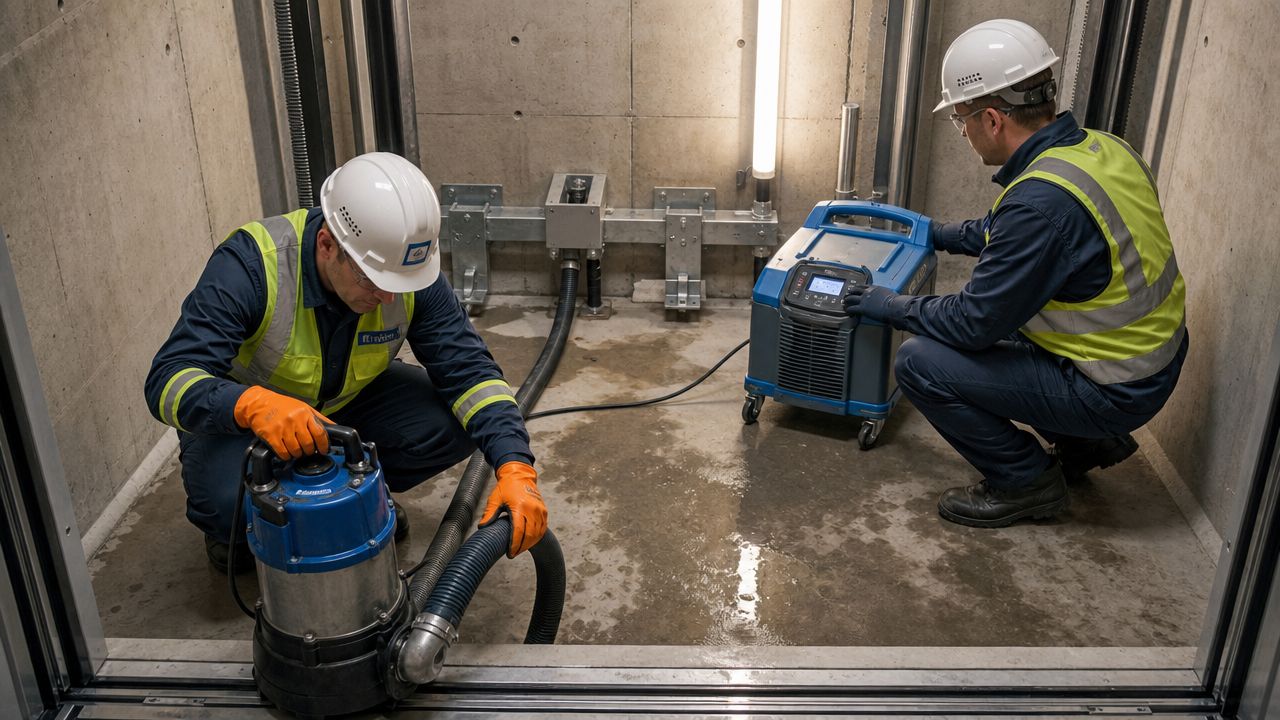
An elevator pit is a confined, equipment-heavy space. Depending on the system, the water may contain sludge, rust, lubricants, masonry debris, or hydraulic contamination. If someone treats that like an ordinary mop-up job, they can leave behind conductive residue, corrosive moisture, and a false sense that the area is “dry enough.”
Water removal isn't the same as remediation
A proper drying phase usually includes several separate tasks:
- Controlled pump-out: Remove standing water without creating unsafe conditions around electrical equipment.
- Pit cleaning: Clear mud, debris, and residue from the pit floor, buffers, rails, and lower components.
- Surface drying: Dry concrete, brackets, boxes, and exposed hardware.
- Moisture reduction in the air: Use dehumidification and air movement to bring the space back toward normal ambient conditions.
- Follow-up verification: Recheck after initial drying because moisture migrates out of concrete and enclosed spaces over time.
That last point is where rushed projects go sideways. A pit can look clean and feel dry while hidden moisture remains inside junction boxes, cable jackets, or behind covers.
Where hidden moisture causes trouble
Concrete holds water. So do cable pathways, enclosures, and low points in conduits. Pit lighting fixtures, stop switches, and lower landing devices can all be exposed to sustained humidity long after visible water is gone. Mold is one problem. Corrosion is the bigger one for elevator reliability.
If the pit took on dirty water, the cleanup standard needs to be higher. Drying a contaminated component without fully cleaning it can leave behind residue that supports future leakage paths and intermittent faults.
This walk-through gives a visual sense of the kind of environment technicians are dealing with after a flooding event:
What works and what usually doesn't
A few practical comparisons help.
| Approach | Result |
|---|---|
| Shop vac and fan only | Removes visible water, often leaves hidden moisture behind |
| Pump-out plus pit cleaning | Better, but still incomplete if enclosures stay damp |
| Structured drying with dehumidifiers and air movers | Gives technicians a real chance to inspect accurately |
If a contractor wants to test and re-energize equipment before the pit, enclosures, and surrounding air are actually dry, slow the job down.
That delay is frustrating, especially in a busy building in Ann Arbor or Detroit where one elevator outage can disrupt everyone. It's still cheaper than bringing a car back online and chasing nuisance failures for months.
Comprehensive Inspection and Component Repair
Once the pit is clean and dry, the technical work starts. Managers often want a simple answer at this point. Replace what got wet, clean what didn't, and move on. In reality, the line between salvageable and non-salvageable depends on location, exposure, and component type.
The best way to think about the inspection is in two tracks. Electrical integrity and mechanical condition.
Electrical components need a hard standard
Sensitive electronics and low-voltage control parts are the least forgiving pieces in the system. Water intrusion may leave no dramatic burn marks, yet corrosion begins anyway. Connectors oxidize. Printed circuit assemblies develop leakage paths. Contacts stop behaving consistently.
That's why control equipment gets close scrutiny. After Hurricane Sandy, 41% of the 3,200+ flooded elevators in New York City required complete replacement of control panels and wiring due to saltwater corrosion, and studies cited by CLIMB found that relocating critical controls above the Design Flood Elevation can reduce catastrophic water-related failures by roughly 60%, according to CLIMB's resilient elevator findings.
For a Michigan property, the water may not be saltwater, but the lesson still holds. Don't judge electronics by appearance alone.
Typical electrical inspection points include:
- Main controller and associated boards
- Door operator electronics
- Pit stop switch and pit lighting circuits
- Leveling sensors and terminal devices
- Traveling cable lower sections
- Landing door contacts near the lowest served floor
- Junction boxes and connection terminals
Mechanical parts may be recoverable, but not automatically
Some mechanical components tolerate temporary wetting better than electronics do. That doesn't mean they get a free pass.
Technicians should inspect for:
- Guide rail rust and bracket condition
- Buffers and their mountings
- Hydraulic components exposed to water
- Ropes or compensation components near the pit
- Door tracks and sill contamination
- Counterweight area debris or corrosion
A rusty guide rail isn't just ugly. It can affect ride quality and long-term wear. Mud in door tracks creates later callbacks that look unrelated to the flood but aren't.
Why “it dried out fine” isn't a repair strategy
A soaked switch or wiring run may function during a quick test and still fail weeks later. That's the hard part for facility managers. The recommendation to replace a “working” part can feel excessive until you've lived through repeat shutdowns.
Use this rule of thumb:
- If the part is electronic and submerged, replacement is often the safer call.
- If the part is mechanical and exposed, cleaning, corrosion control, and inspection may be enough.
- If there's uncertainty about hidden deterioration, the burden is on the component to prove it's safe, not on the building to gamble.
The cheapest repair on flood day often becomes the most expensive repair over the next year.
This is also the point where a building should start asking a bigger question. Not just “What failed?” but “Why was that component placed where water could reach it in the first place?”
Testing Compliance and Returning to Service
An elevator that survived cleanup and repair still isn't ready for passengers until it passes a disciplined return-to-service process. Rushed decisions during this critical period can create the worst kind of problem. The car runs, everyone relaxes, and then an intermittent fault shows up under load, on fire service, or during normal traffic weeks later.
That's avoidable if the testing is done in the right order.
Start with electrical proof, not optimism
Flood recovery has to be test-driven. Under EN 81-20 Chapter 6 and related standards discussed by Elevator World, flooded or wet systems should undergo insulation and continuity testing across live conductors, safety contacts, landing-door contacts, overhead terminals, car-top circuits, pit lighting, controllers, and grounding paths. The article notes that up to 40% of apparently dry electronics fail to meet minimum insulation resistance thresholds of at least 1 MΩ and require replacement, and that following proper testing protocols can reduce the probability of an in-service failure within the first year from over 15% to under 5%, according to Elevator World's review of flood impacts on elevators.
That's why megger testing matters. It tells you whether the insulation system is sound, not whether the equipment merely powers up.
A methodical re-energization sequence
Good technicians don't restore everything at once. They bring systems back in stages and watch for trouble.
A practical sequence looks like this:
- Secure the car and isolate power
- Complete visual inspection after drying
- Run insulation-resistance and continuity tests
- Restore basic lighting circuits first
- Bring safety circuits online
- Reintroduce controller and drive functions
- Perform operational checks through the full travel range
- Verify safety features individually
Each stage gives the team a chance to catch leakage current, shorts, or unstable components before those faults cascade into additional damage.
Compliance in Michigan matters
In Michigan, return to service also has a compliance layer. A repaired elevator may require coordination with a state-licensed inspector, depending on the scope of work and local conditions. For buildings in Flint, Detroit, Ann Arbor, Lansing, Saginaw, or Monroe, that documentation matters just as much as the wrench work. You need records that show what was found, what was repaired or replaced, what was tested, and what was approved.
A clean closeout package should include:
- Photos from the incident
- Technician findings and repair notes
- Test results
- Parts replaced
- Any inspection or approval records
- Claim-related paperwork for the insurer
A fast return to service feels good for a day. A documented return to service protects the building for years.
If a contractor can't explain what was tested and in what order, the elevator isn't ready.
Long-Term Prevention and Your Path Forward
Once a building has had one flood event, prevention becomes easier to justify. The conversation is no longer theoretical. It's tied to a real outage, real tenant disruption, and real cost.
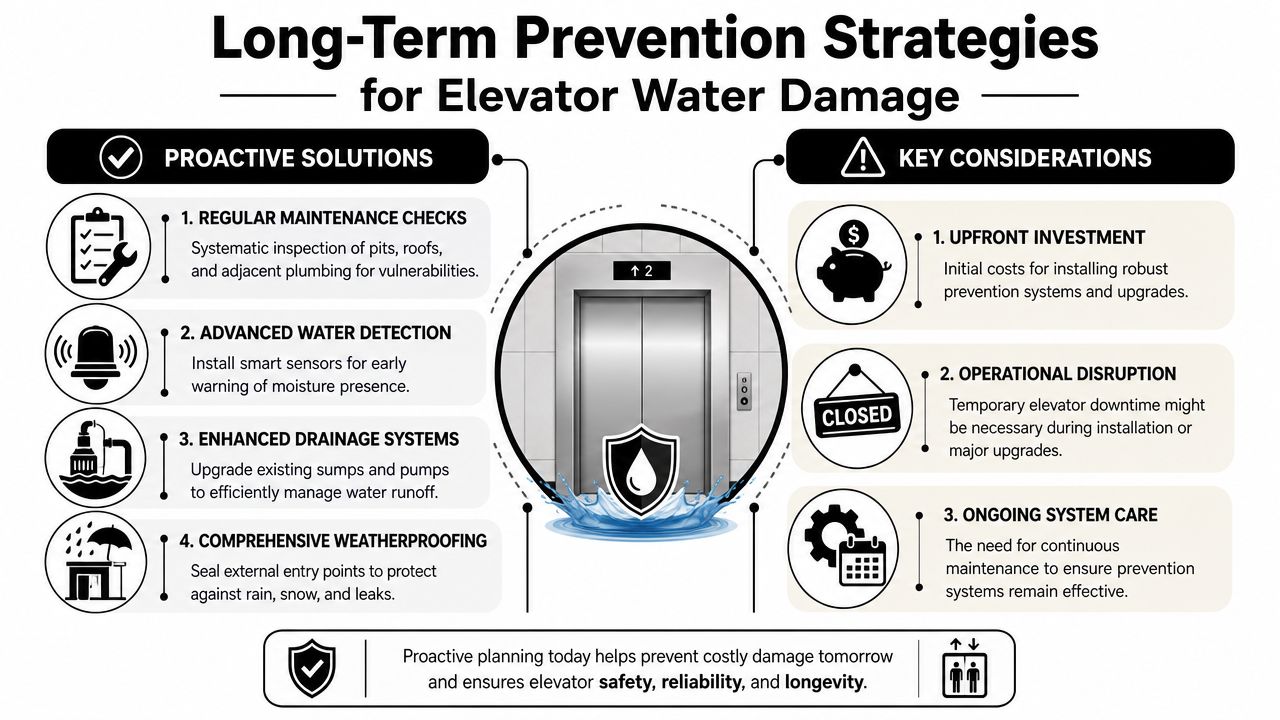
The most effective prevention work usually combines water management, equipment relocation, and material upgrades. FEMA guidance is clear that elevator components below the flood line should use flood-damage-resistant materials, and field analysis shows that over 60% of major flood-related outages stem from submerged controllers and drives. The same guidance emphasizes placing critical electronics at least 12–18 inches above the Base Flood Elevation, as outlined in FEMA Technical Bulletin 4 on elevator installation in flood hazard areas.
Prevention measures worth considering
For Michigan properties, especially older buildings in Detroit, Ann Arbor, Ypsilanti, Jackson, Battle Creek, and Kalamazoo, the practical options usually include:
- Dedicated pit sump protection: Preferably tied to alarm notification and maintained on schedule.
- Waterproofing work at the pit and adjacent foundation areas: This is often necessary when seepage is chronic. For background on that approach, Crane Elevator offers information on elevator pit waterproofing options.
- Relocating vulnerable control equipment: If the controller, hydraulic power unit, or related electronics sit too low, that design decision keeps exposing the building to avoidable loss.
- Corrosion-resistant component choices during modernization: Coated or stainless pit hardware holds up better in wet conditions.
- Exterior drainage and grading corrections: Sometimes the elevator problem starts outside the building envelope, not inside the hoistway.
The trade-offs are real
Prevention work has costs and can mean planned downtime. But unplanned downtime is almost always harder on occupants and budgets.
| Prevention choice | Main trade-off |
|---|---|
| Sump and alarm upgrades | Equipment and maintenance cost |
| Waterproofing | Construction access and disruption |
| Relocating controls | Larger project scope |
| Material upgrades during modernization | Higher upfront parts cost |
The right answer depends on the building. A hospital in Dearborn won't weigh downtime the same way a small office property in Howell will. A university building in East Lansing may have very different traffic demands than a municipal building in Flint.
What matters is having a clear path forward after the emergency. Elevator water damage can be managed. It just can't be managed casually.
If your building in Detroit, Ann Arbor, Lansing, Flint, Kalamazoo, or anywhere across Lower Michigan is dealing with elevator water damage, Crane Elevator Company can help with emergency response, repairs, inspections, modernization planning, and long-term prevention. We're a family-owned contractor with over 25 years of hands-on experience, 24/7/365 availability, non-proprietary service for all makes and models, and practical support for the full cycle from flooded pit response to code-compliant return to service.