Most owners ask the wrong first question about a machine room less elevator. They ask whether it saves space. It usually does. The better question is whether that space savings still looks smart after years of maintenance calls, parts decisions, shutdowns, and eventual modernization.
That matters in Michigan, where owners in Detroit, Ann Arbor, Lansing, Flint, Kalamazoo, Grand Rapids, Jackson, Dearborn, Novi, Troy, and smaller communities often have to balance tight building footprints with practical service realities. In a new project, an MRL layout can help the architect. In an existing building, it can also solve a space problem that a traditional machine room makes harder. But the hoistway layout that helps construction can complicate service later.
A lot of marketing around MRL systems stops at the clean architectural story. Owners need the operating story. They need to know who can maintain the unit, how accessible the equipment will be, whether the system is proprietary, and what happens when the controller or machine becomes the next major capital decision.
Is a Machine Room Less Elevator Right for Your Building
A machine room less elevator can be the right move. It can also be the wrong move for the right-looking reasons.
One of the most under-asked issues in this market is lifecycle serviceability. Independent industry discussion has noted that MRL systems place the machine and controls in the hoistway, which can make access tighter and maintenance more complex than a traditional layout, as discussed in KONE's overview of machine-room-less elevator design. That doesn't automatically make MRL a bad choice. It means owners need to judge it as a long-term operating asset, not just a design feature.
In practice, the decision usually comes down to what your building needs most.
When MRL makes sense
- Space has real value: If your project in Ann Arbor or downtown Detroit has a tight roofline or limited back-of-house area, giving up a separate machine room may not make sense.
- The building is low- to mid-rise: MRL systems are commonly positioned for that range, where they fit the building envelope without forcing a larger traction setup.
- You want traction performance in a compact layout: For many commercial and mixed-use properties, that combination is attractive.
When owners should slow down
- Service access is a top priority: If your facility team wants the easiest possible access for repairs, a traditional machine room still has practical advantages.
- You want maximum vendor flexibility: Some MRL packages can steer owners toward narrow service options if the system is heavily proprietary.
- Downtime risk hurts operations: In medical offices, municipal buildings, schools, and senior housing, repair speed matters as much as floor area.
Practical rule: If two elevator options both fit the building, choose the one your maintenance strategy can actually support for the long haul.
Owners in Michigan don't need another glossy summary. They need a clear view of what works, what creates headaches, and what usually costs more later.
What Exactly Is a Machine Room Less Elevator
A machine room less elevator is a traction elevator that puts the hoisting machine inside the hoistway instead of in a separate machine room. Technical descriptions also note that these systems typically use a gearless or permanent-magnet motor, controller, and safety devices inside the shaft, and that they are best suited to low- and mid-rise buildings, as outlined in this technical description of MRL elevator systems.
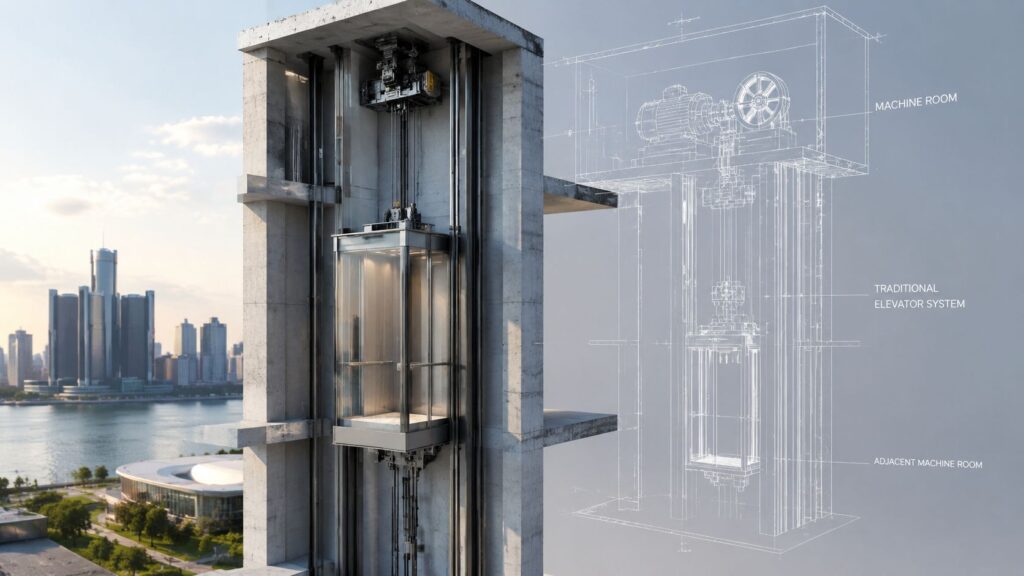
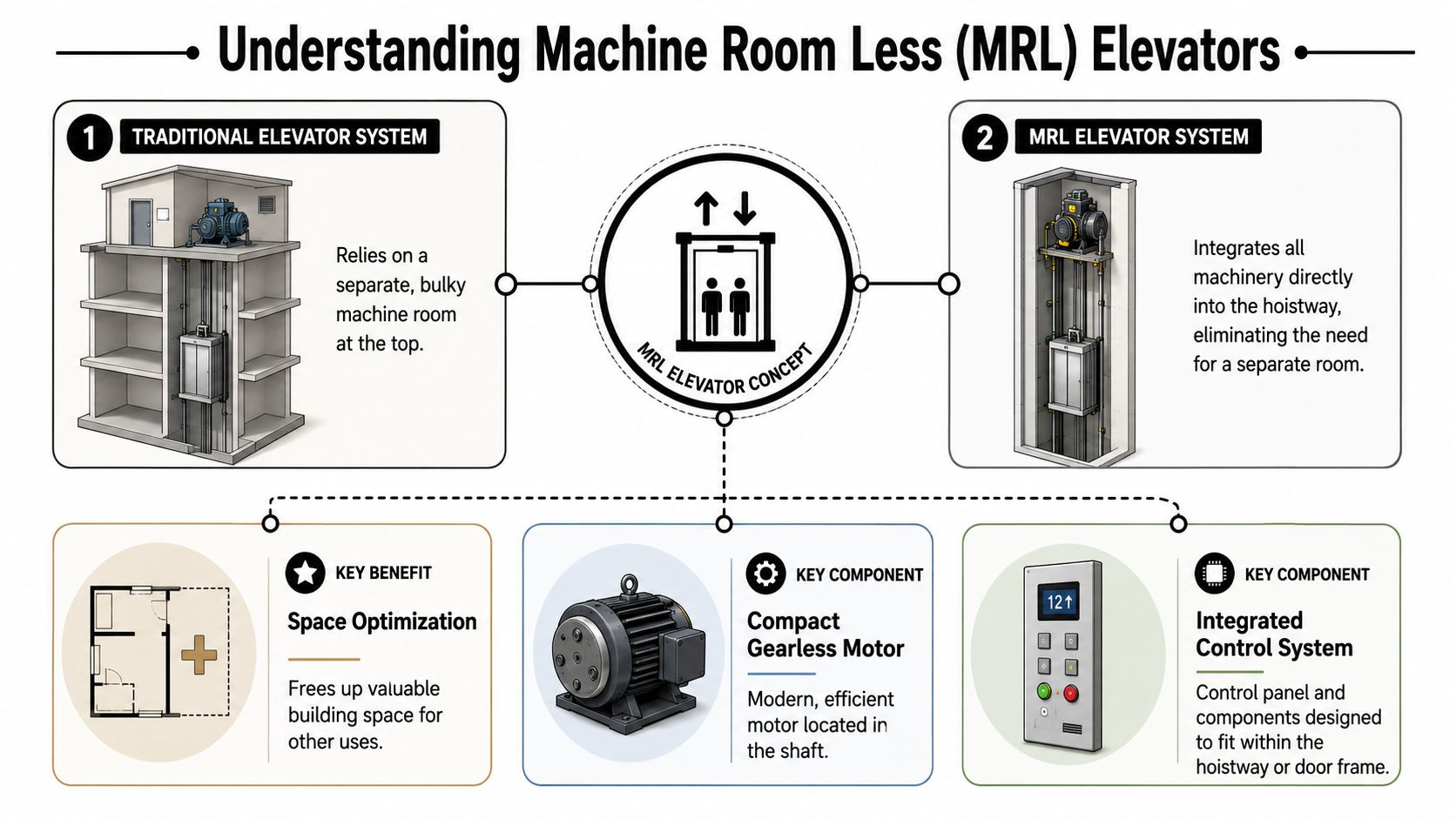
If you've dealt with older elevator layouts, the simplest way to think about MRL is this. Traditional traction has a separate equipment room. MRL moves the critical hardware into the shaft area or into a much tighter adjacent arrangement.
How the layout changes the building
A traditional traction setup usually reserves dedicated space for the machine and controls. An MRL design removes that separate room from the plan. For a developer, that can open up usable area. For an architect, it can simplify roof and penthouse planning.
That doesn't mean the equipment disappears. It means the equipment gets packed into a more compact location. The motor, controller, and related components still need code-compliant placement, access, and service planning.
What sits where
Here's the practical breakdown:
- Hoisting machine: Mounted in the hoistway rather than in a separate penthouse room.
- Controller and controls: Integrated into the overall compact system, often in a tighter service arrangement.
- Safety devices: Located within the shaft assembly as part of the traction system.
The MRL concept is simple. You trade a separate machine room for a tighter, more integrated package.
Why owners sometimes misunderstand it
Some owners hear "machine room less" and assume "less equipment" or "less maintenance." Neither is the right takeaway. You're still buying a traction elevator with real mechanical and electrical components. The difference is where those components live and how a mechanic reaches them.
That distinction matters on service day. A design that looks efficient on paper may be less forgiving when a technician needs room to diagnose a problem, replace a part, or work safely around the equipment. That's why the MRL conversation shouldn't stop at architecture.
MRL vs Traditional Hydraulic and Traction Elevators
Owners usually aren't choosing MRL in a vacuum. They're comparing it to a traditional traction elevator with a machine room, or to a hydraulic elevator in a lower-rise building.
Each type solves a different problem. The right choice depends less on trends and more on the building's height, traffic pattern, service expectations, and tolerance for future maintenance complexity. If you want a broader side-by-side breakdown of the main system types, this overview of traction vs hydraulic elevators is a useful starting point.
The real comparison points
An MRL system usually appeals to owners because it offers traction performance without requiring a separate machine room. A traditional traction system gives the mechanic better access to major components. A hydraulic system often remains attractive in the right low-rise application because the layout and service approach can be more familiar and straightforward.
The trade-offs show up fastest in three places:
- Building space: MRL wins when every square foot matters.
- Maintenance access: Traditional traction usually gives technicians a more workable service environment.
- Application fit: Hydraulic can still make sense in lower-rise properties where speed and rise demands are modest.
MRL vs Traditional Elevators at a Glance
| Feature | MRL Elevator | Traditional Traction | Hydraulic Elevator |
|---|---|---|---|
| Equipment location | In the hoistway or compact adjacent arrangement | Separate machine room | Typically uses separate hydraulic equipment space |
| Space impact on building | Frees space otherwise used for a machine room | Requires dedicated machine room area | Usually needs equipment room space |
| Best general fit | Low- to mid-rise buildings | Mid-rise to high-rise or buildings prioritizing service access | Lower-rise applications |
| Ride system type | Traction | Traction | Hydraulic |
| Service access | More constrained | More accessible | Often more straightforward than MRL in service layout |
| Long-term owner concern | Vendor lock-in and access complexity | Machine room space requirement | Operating profile depends on building use and owner goals |
What tends to work in Michigan properties
In a suburban office building in Novi or Troy, MRL often gets serious consideration because owners want usable area and a modern traction solution. In an institutional building in Lansing or Flint, the conversation often shifts quickly to serviceability, because the elevator has to stay available and maintainers need practical access.
Hydraulic still has a place. Traditional traction still has a place. MRL isn't a replacement for every older layout. It's one option, and it works best when the owner accepts the compact design and plans around its maintenance realities from day one.
If your consultant only compares first cost and floor space, the analysis is incomplete.
Key Benefits and Practical Limitations of MRL Systems
The strongest case for a machine room less elevator is straightforward. It can save space and cut energy use. One industry source states that MRL systems can reduce electricity use by 30% to 80% compared with conventional arrangements, and that removing the dedicated machine room frees rentable or usable floor area, especially where space is tight, according to TK Elevator's explanation of MRL elevators.
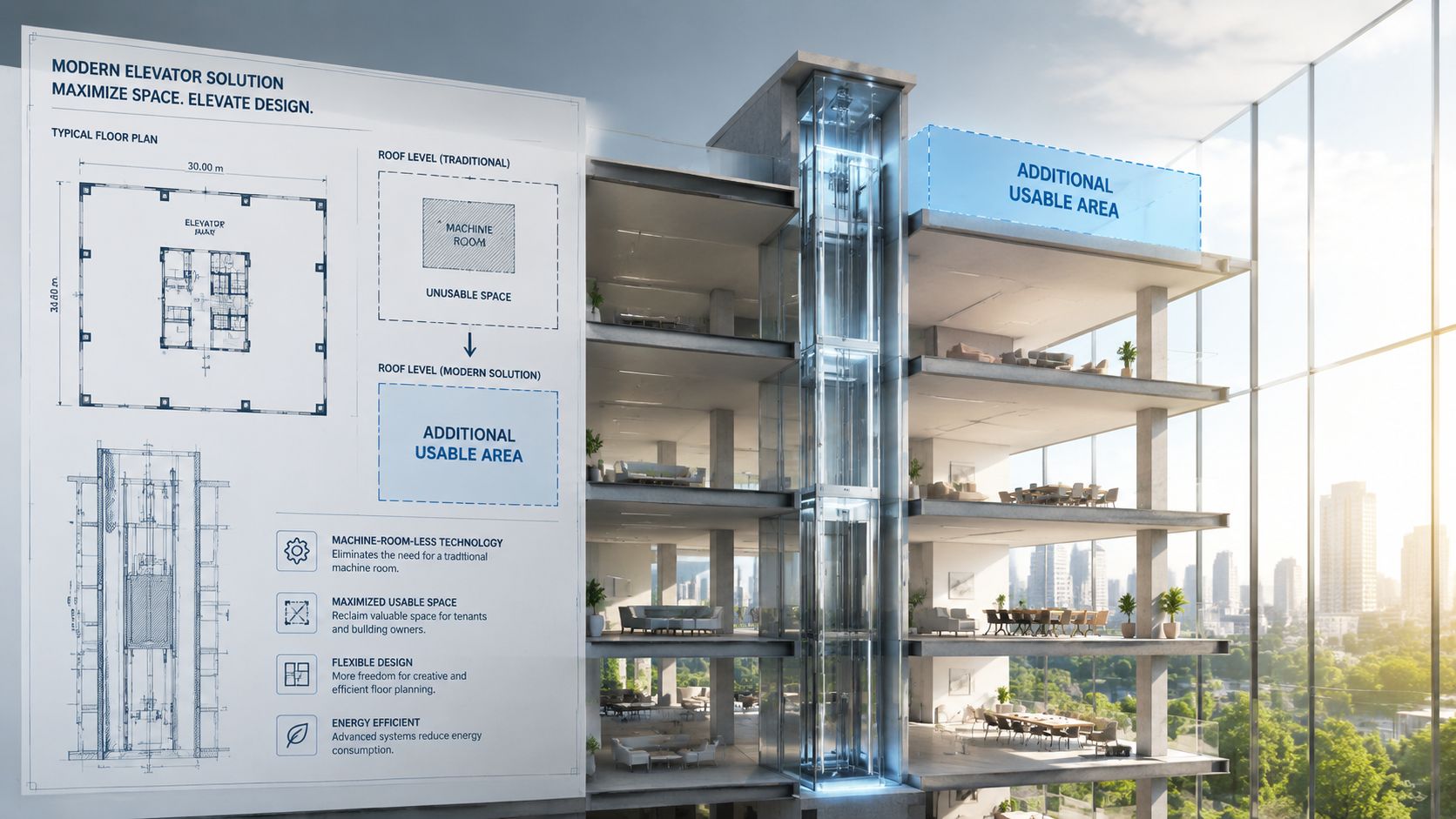
For an owner, those are real advantages. In dense projects, especially mixed-use and commercial low- to mid-rise buildings, recovering building area isn't a cosmetic benefit. It can improve layout flexibility and preserve space for tenant use, storage, amenities, or leasable functions.
Where MRL delivers real value
The best MRL applications usually share a few traits:
- Tight architectural envelope: Buildings that don't want a penthouse machine room or don't have spare floor area for one.
- Energy-conscious ownership: Owners focused on long-term utility performance often like the traction efficiency story.
- Modern low- and mid-rise design: Hotels, offices, apartment buildings, and mixed-use properties often fit the profile well.
The space benefit is easy to understand. The more important point is that it can affect the entire building plan, not just the elevator core.
Where MRL can disappoint owners
The weak point isn't usually the sales pitch. It's what gets left out of the sales pitch.
MRL systems can be space-efficient but not always service-efficient. When major equipment sits in the hoistway, technicians may have a tighter working area. That can complicate troubleshooting, repairs, and parts replacement. If the system is proprietary, the owner can also lose bargaining power on service pricing and response options.
That doesn't mean every MRL is a service problem. It means you need to ask harder questions before the purchase order is signed.
- Who can maintain it after warranty ends
- Whether parts and diagnostic access are open or restricted
- How major repairs are handled in a confined layout
- Whether the design fits actual traffic and usage, not just plan drawings
A quick visual helps show why compact design appeals to so many projects.
The practical owner takeaway
MRL is often a smart building design choice. It isn't automatically the smartest ownership choice. If your project values space above all else, MRL may fit perfectly. If your project values broad service access, simpler repair logistics, and less dependence on one manufacturer, the answer isn't as automatic.
MRL Elevator Maintenance and Modernization
The maintenance discussion is where many owners finally see the full picture. Industry facilities guidance associates MRL elevators with 15 to 20-year service life expectations and also notes that, because equipment is less accessible than in a traditional machine-room layout, MRL systems may require more specialized maintenance planning, as described by FacilitiesNet's review of MRL pros and cons.
That combination matters. If the system is expected to serve the property for years, then maintenance access and modernization flexibility can't be treated as minor details.
Why maintenance is different on MRL
On a traditional machine-room traction unit, technicians often have more direct access to major equipment. On an MRL, that access is tighter by design. Routine service can still be handled well, but the planning has to be disciplined.
The owner's checklist should include:
- Preventive maintenance discipline: Compact systems don't reward neglect. Small issues can become larger outages if inspections slip.
- Qualified technicians: MRL work requires mechanics who are comfortable with tight access conditions and manufacturer-specific details.
- Documentation control: Keep records on controller type, drive components, door equipment, and past repairs. That helps when service responsibility changes.
Owner advice: Don't buy an MRL package unless you understand who will still be able to service it years from now.
Modernization is where proprietary choices show up
A lot of owners focus on the new-install decision and ignore the modernization decision that follows years later. That's a mistake. When an MRL system ages, the key question becomes whether the building can modernize on practical terms or whether it must follow one narrow path set by the original equipment arrangement.
That's why non-proprietary strategy matters. Owners who want more control over long-term repair and upgrade options should evaluate that issue before the elevator is installed, not after the first major capital event. If you're reviewing upgrade paths, this page on modernizing elevator systems covers the kinds of decisions owners should address early.
What good planning looks like
For Michigan property owners, good MRL planning usually means matching the system to the building and matching the maintenance strategy to the system.
In practical terms:
- Choose a layout that fits the building's actual rise and use.
- Ask whether service access is acceptable for your risk tolerance.
- Clarify whether future modernization can stay non-proprietary.
- Put maintenance expectations in writing before turnover.
If those answers are vague, the elevator choice isn't finished yet.
Cost ROI and Building Suitability
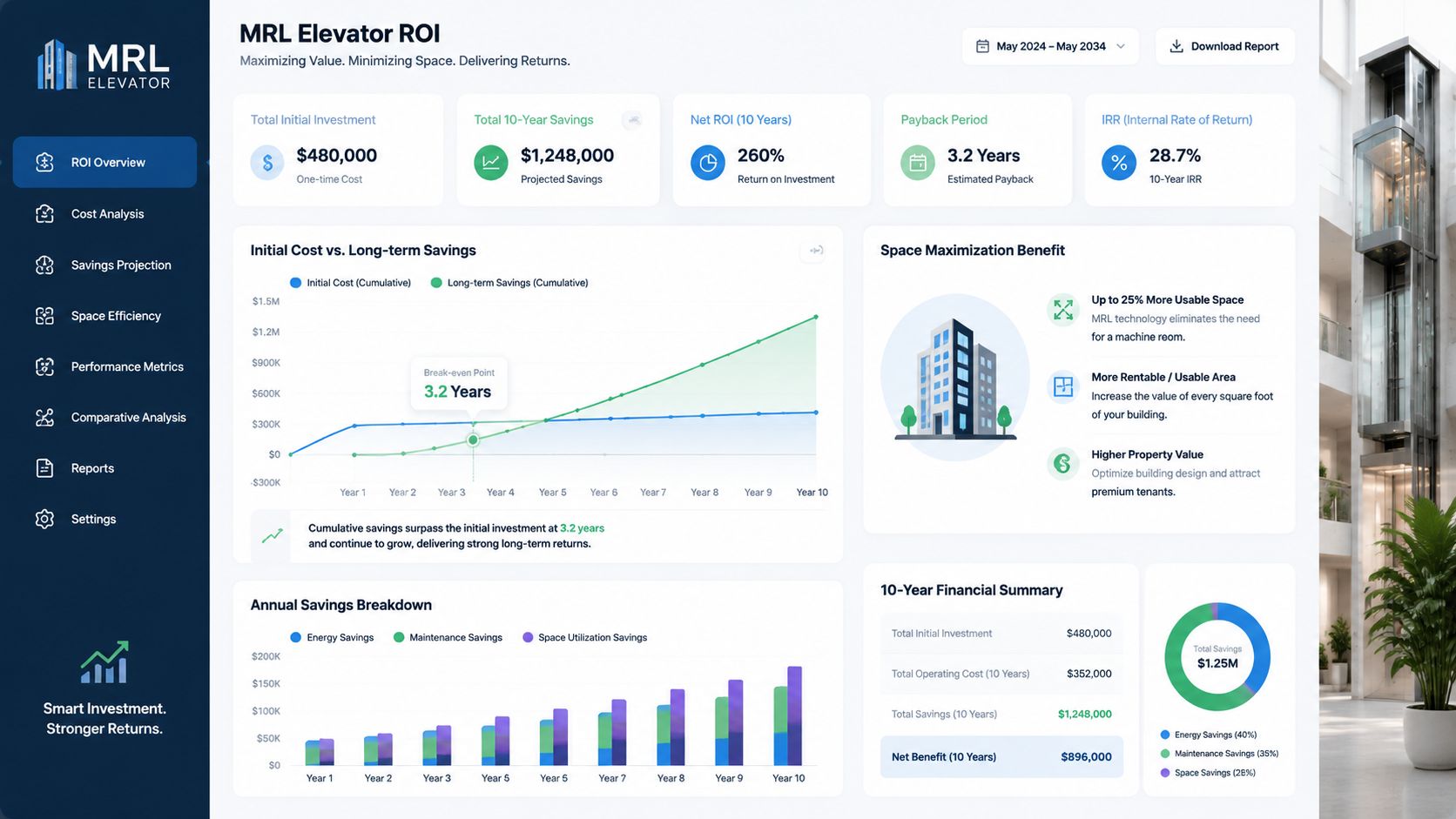
Owners often want a simple ROI number for a machine room less elevator. Real life isn't that clean. The right calculation combines construction impact, usable space, utility performance, service complexity, and how well the system fits the building's operating profile.
A machine room less elevator tends to make the most sense when the building can benefit from the compact traction layout without pushing beyond the system's normal envelope. Published technical references list a typical maximum travel of about 250 ft (76 m) at up to 500 ft/min (152 m/min), while other specification examples show lower-range options as well, which is why rise and speed validation should happen early in design, as summarized in Dimensions.com's MRL elevator planning reference.
How to judge suitability
A good owner-side review usually starts with building fit, not brochure benefits.
- Rise and speed needs: If the project pushes the upper edge of MRL capability, verify the application before committing.
- Traffic pattern: A modest-use office or residential building may fit MRL well. A property with more demanding service expectations needs closer review.
- Service strategy: Compact design only pays off if your maintenance plan can support it.
Where MRL often pencils out
MRL tends to be most attractive in projects where the eliminated machine room creates meaningful planning value. That can apply to office buildings, mixed-use projects, apartment properties, hotels, and certain institutional buildings across Southern Michigan.
The return isn't only on the utility bill. It can also show up in cleaner building design and better use of the floor plate. But owners shouldn't count those gains without also pricing the operational side. A service-friendly traditional system may cost building space while saving headaches later.
A machine room less elevator should fit the building twice. Once on the drawings and again during years of maintenance.
A practical decision filter
Use this quick screen before selecting MRL:
| Question | If the answer is yes | If the answer is no |
|---|---|---|
| Is building space unusually valuable? | MRL gets stronger | Traditional options may be easier to justify |
| Are rise and speed within published MRL limits? | Continue evaluation | Reassess system type |
| Can ownership tolerate tighter service access? | MRL may fit | Traditional traction may be safer |
| Is non-proprietary serviceability important? | Vet the equipment package carefully | You may accept a more closed system |
For owners in Grand Rapids, Kalamazoo, Southfield, Auburn Hills, or smaller Michigan markets, that's usually the right way to frame ROI. Start with suitability. Then weigh long-term operating control against the space you gain.
Expert MRL Elevator Service in Michigan
Michigan owners don't just need elevator equipment. They need reliable support after turnover, after warranty, and after the first major repair. That's especially true with MRL systems, where compact layouts can make service planning more demanding.
For properties in Detroit, Ann Arbor, Lansing, Flint, Kalamazoo, Jackson, Dearborn, Troy, Novi, and surrounding communities, local response matters. So does the ability to work across different makes and models without steering every owner into the same proprietary path. Fast field response, disciplined preventive maintenance, and a modernization plan that preserves future flexibility usually matter more than sales language about innovation.
A good service partner should be able to handle routine maintenance, emergency repairs, code issues, modernization planning, and honest second opinions. They should also understand the practical differences between an MRL installation that looks good on bid day and one that stays supportable years later. If responsive local support is part of your decision, review fast elevator service in Michigan before you commit to a provider.
The best outcome for an owner is simple. Choose the right elevator type for the building, then make sure the service strategy is just as sound as the install strategy. That's how you protect uptime, control long-term cost, and avoid getting trapped by design decisions that looked better on paper than they do in the field.
If you're evaluating a machine room less elevator for a property in Michigan, or trying to get more life and better serviceability out of an existing unit, talk with Crane Elevator Company. They serve Lower Michigan with hands-on maintenance, repair, inspections, and non-proprietary modernization support designed to keep owners in control of long-term cost.