Monday starts badly when a tenant calls before coffee, the cab is sitting between floors, and the fire inspection paperwork is already on the desk. In Toledo, that's not a theoretical problem, it's a building operations problem, a tenant safety problem, and a reputation problem all at once. The smart way to think about Toledo elevator repair is not “what broke today,” but “what parts have been wearing down for months, what's on the shelf, and who can get the right component in the shortest possible time.”
That's the part owners usually miss. A stalled car is the visible symptom, but the cost sits in the long tail, repeated callbacks, scarce parts, compliance issues, and downtime that spreads from one machine room into the rest of the building. If you manage property in Toledo or across the state line in Southeast Michigan, the question is whether your service model treats elevators like a one-off emergency or like a lifecycle system that needs inventory, inspection discipline, and sane modernization planning.
When a Toledo Elevator Stops, Everything Stops
A property manager opens the lobby door on a Monday and gets hit with the same three things at once. Residents want answers, maintenance wants access, and an inspection notice is already sitting in the queue. This is what Toledo elevator repair is about, because once the car stops carrying people, every floor above it feels farther away.
A local provider with deep roots matters here. Toledo Elevator is listed by PitchBook as founded in 1923 and later acquired by Elevator Service, and its business profile places headquarters at 1402 Jackson St., Toledo, OH 43604. The company is described as serving commercial, municipal, industrial, and residential customers, which fits the way elevator problems show up in the field, across asset types, not in one neat category. PitchBook profile and company background
Practical rule: a stalled elevator is never just a stalled elevator. It is a safety issue, a scheduling issue, and sometimes a documentation issue that has been building in the background.
The regional equipment base helps explain why this keeps happening. The Toledo Chamber says there are more than 4,000 elevators, lifts, escalators, and similar systems operating across Northwest Ohio and Southeast Michigan, which means one failed unit is part of a very large installed base that keeps demanding repair, inspection, and modernization work. In 2026, the Better Business Bureau still listed weekday hours of 8:00 AM to 4:30 PM and a local service presence, which is another sign that this is day-to-day maintenance work, not a rare specialty call. Toledo Chamber market snapshot
The parts side is what really decides the outcome. A building that keeps the right spares on hand, or has a service partner that can supply them quickly, usually gets back in service faster and spends less over the full life of the equipment. That is why Ohio elevator services from a non-proprietary shop matter to Toledo owners and to buildings across the Michigan, Ohio line. When the service model is not locked to one brand's closed inventory, the repair decision gets simpler, the sourcing gets faster, and the machine room stops turning into a waiting room.
A stalled cab is the visible problem. The cost sits in the parts drawer, the call history, and the hours lost while the wrong component is ordered twice.
The Parts That Drive Most Repairs
A stalled cab gets attention fast. The parts that caused it usually show their age long before the shutdown, and the first clue is often in the repair history, not the breakdown itself.
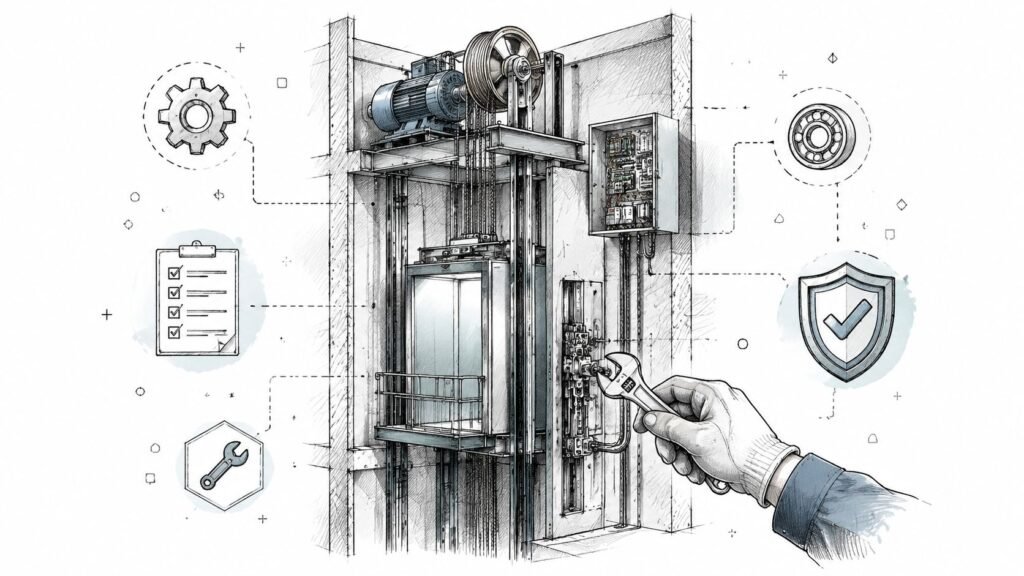
Owners often describe elevators as a single machine, but they function as interconnected systems. One weak component can throw off timing, ride quality, door movement, or leveling, and that is where the repair cost starts to build.
Think in systems, not symptoms
The controller manages the calls, tells the car when to move, and coordinates responses from the doors, leveling circuit, and safety inputs. When it starts to fail, the signs are usually messy, odd resets, inconsistent travel, or a car that behaves differently from one trip to the next. Toledo Elevator controls overview
The drive motor and hoisting machine handle the load. The cables and belts carry that load, the sheaves guide what they ride on, and the door operator is often the first part riders notice because slow, jerky, or noisy doors feel wrong even when the rest of the system is still running. Door locks and interlocks sit on the safety side of the job, they keep a moving car from opening into an empty shaft, and that is not a place to guess or keep resetting until something gives.
Hydraulic equipment has its own wear points. Jack components, packing, and seals matter because leaks and pressure loss lead to drift, slow response, and poor leveling. Selector and limit switches tell the system where it is, and the COP/PI fixtures are the user interface, so dead buttons or dark indicators can hide a deeper control problem instead of being a simple cosmetic issue.
A mechanic learns to read those patterns quickly. If the car feels normal one week and sloppy the next, the change usually started as timing, noise, or door behavior, not a random failure.
The sourcing side matters just as much as the mechanical side. The tighter the parts ecosystem, the more a building depends on one catalog and one labor pool. Open-architecture components let qualified contractors stock, swap, and service the parts that wear out in the field, which is exactly why a non-proprietary service model helps buildings across the Michigan, Ohio line keep repairs moving and parts inventory under control. That approach fits the way Crane Elevator Company's elevator controls work in the field, with parts planning tied to lifecycle upkeep instead of a one-off fix.
What a mechanic watches first
- Door motion: hesitation, bouncing, or forceful closing usually points to rollers, operators, locks, or track wear.
- Ride quality: rough stops or leveling drift usually send you toward the machine, drive, or hydraulic side.
- Cab controls: missing lights or dead buttons can hide an electrical or fixture problem, not just a bad bulb.
The main job is sorting the subsystem before ordering parts. Once the noisy, slow, or drifting section is identified, the repair stops being guesswork and becomes a clear inventory decision.
Warning Signs That Show Up Before a Major Failure
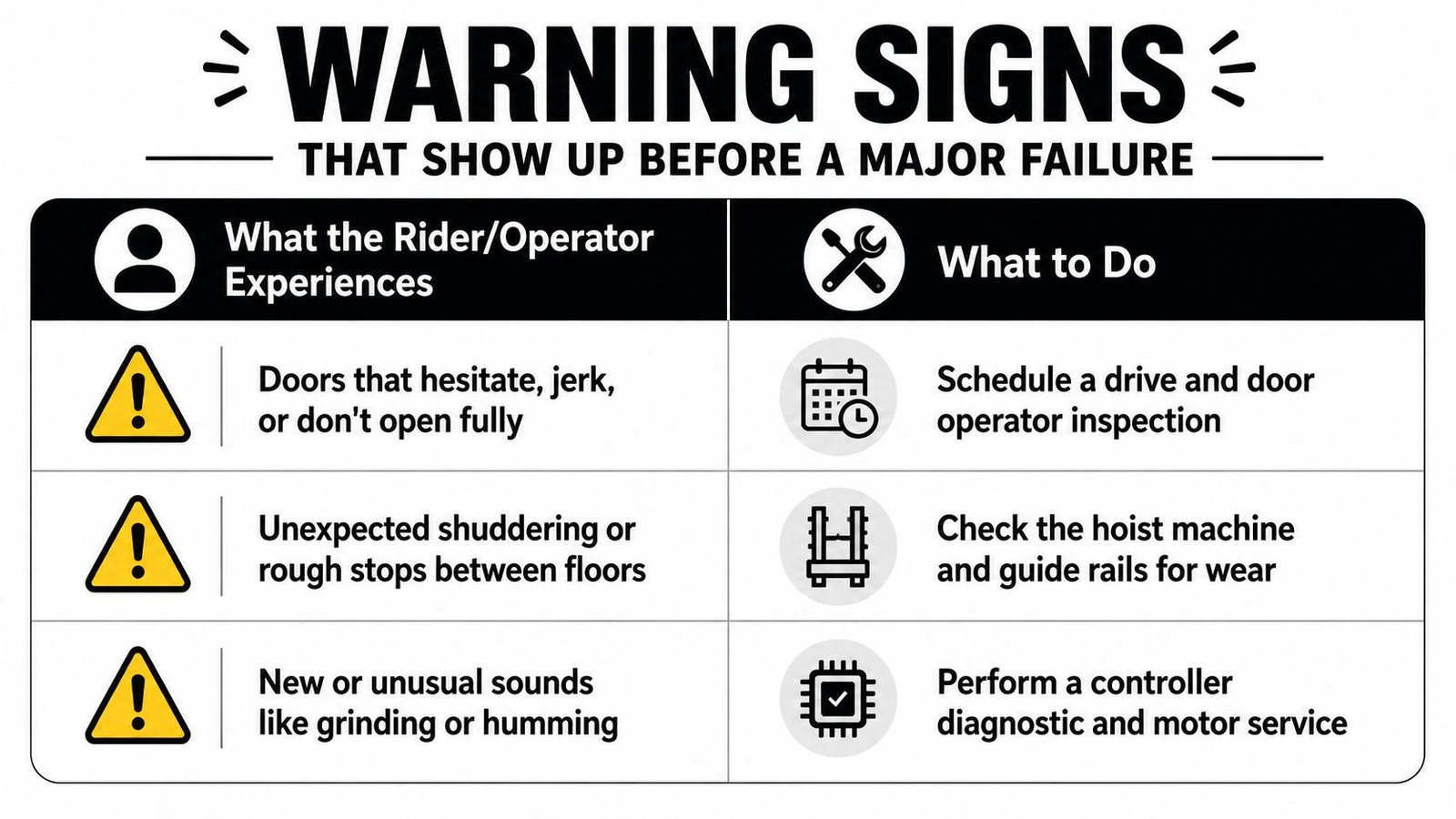
Building managers don't need a full teardown to spot trouble early. They need to know which patterns mean “watch it” and which ones mean “get someone here today.”
Read the symptoms in clusters
When doors hesitate, reverse, or bang, the first suspects are the door operator, rollers, tracks, locks, and interlocks. That's not a cosmetic annoyance. Door behavior usually gets worse because parts are worn, out of alignment, or contaminated, and if the door is fighting itself, the rest of the system is often compensating in the background.
When the car drifts on leveling or settles rough between floors, the problem often sits in the drive, machine, or hydraulic side, depending on the elevator type. If the ride quality gets rougher, especially with shuddering or a change in stopping feel, you're usually looking at a mechanical wear pattern instead of a one-time glitch. Unusual sounds from the machine room or pit, grinding, humming, clunking, deserve fast attention because noise is usually a sign that friction, alignment, or electrical stress is already present.
Nuisance trips, flickering cab lights, and emergency phone test failures point you toward controls, power, bulbs, relays, or batteries. The service mistake here is waiting for a second or third failure before calling. These are leading indicators, not isolated quirks, and repeated trouble creates a measurable burden for operations because people start using stairs, dispatch starts taking calls, and staff lose time documenting the same fault over and over.
Practical triage: if the symptom changes how the ride feels, affects door safety, or knocks out communication, treat it as same-day service.
Use the internal maintenance calendar as your reference point, too. A good corrective call often follows a pattern that preventative maintenance should have caught earlier, which is why elevator preventative maintenance matters long before an outage becomes visible. If the same warning signs keep coming back, the issue isn't one bad part. It's a wear cycle that's already outrunning the maintenance plan.
Proprietary Parts Versus Non-Proprietary Sourcing
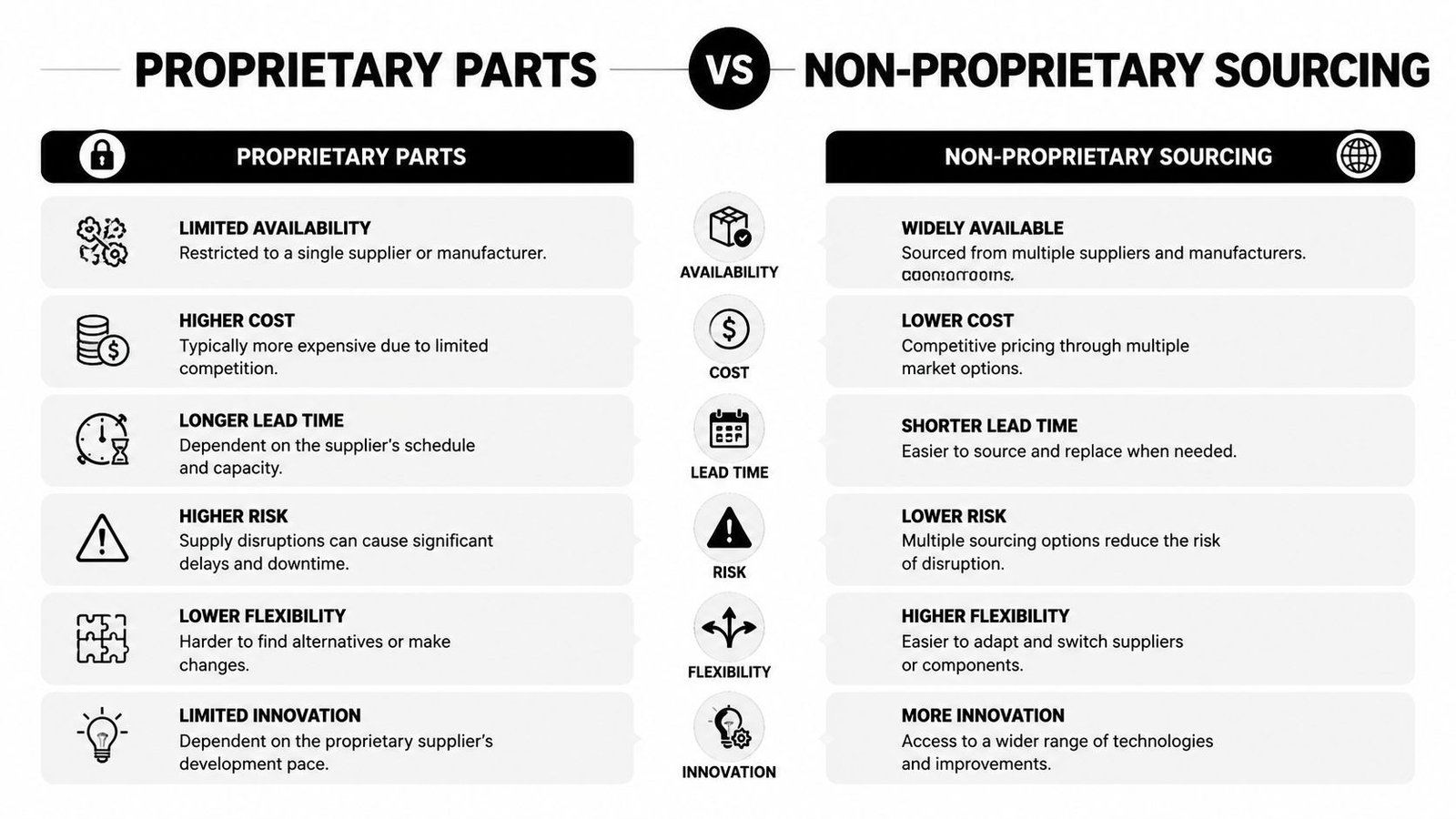
A lot of long-term cost gets decided here. A building can buy service the way it buys emergency response, or it can buy service the way it buys a lifecycle plan.
What proprietary usually does to a building
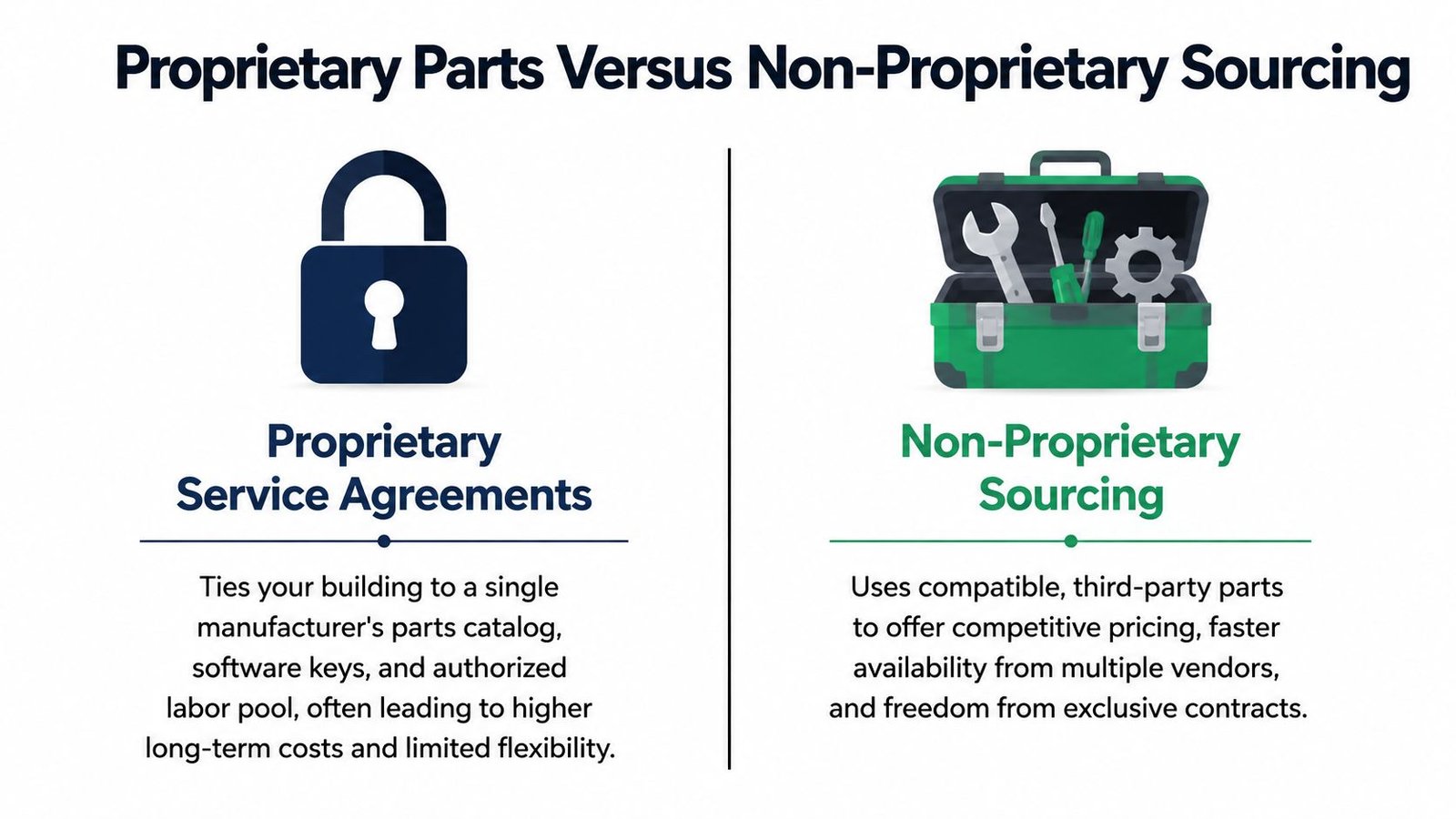
A proprietary agreement often ties the building to one manufacturer's parts catalog, software keys, and approved labor pool. That can work fine when the equipment is young and every part is still available, but the trouble starts when a part is discontinued, a board is reissued under a new number, or a software lock turns a simple swap into a waiting game. Then the owner is not just paying for labor. The owner is paying for access.
Non-proprietary sourcing works differently. Qualified contractors can stock compatible controllers, drives, fixtures, door operators, and safety parts without forcing the building into a closed channel. That gives owners room to get a second opinion, compare quotes, and keep the elevator on a more predictable modernization path. It also helps when one vendor's lead time gets ugly, because the repair stops depending on one supply chain.
The practical advantage shows up during emergencies. If a door board fails on a Friday, a non-proprietary system gives the service provider more ways to solve the problem without waiting for a single manufacturer's queue. If the building needs modernization later, the same approach usually makes planning cleaner because the parts ecosystem isn't locked to one brand's aging catalog.
Why open architecture changes the conversation
Open-architecture components don't remove the need for skilled labor. They make skilled labor usable. A mechanic can diagnose, stock, and replace parts across multiple makes and models without spending half the day chasing a proprietary workaround, and that matters when downtime is the enemy.
The point isn't that proprietary equipment is always bad. The point is that owners should know the trade-off before they sign. If a service agreement limits labor, parts, and diagnostics all at once, the building is giving up flexibility in exchange for convenience, and that trade can get expensive fast when a system starts aging.
Building a Smart Parts Inventory and Emergency Plan
A good elevator room has a small, sensible shelf of parts and a clear trigger for calling in a stocked service partner. It does not have a random pile of leftovers from three different jobs.
What should stay on hand
Keep the things that fail often enough to justify fast access. Door rollers, contact kits, fuses, relays, COP/PI bulbs, hydraulic packing, common limit switches, and emergency phone batteries belong in the conversation because they're the sort of items that can turn a same-day repair into a multi-day outage if nobody has them close by. Those are also the parts a building engineer can usually identify quickly without opening up every system in the machine room.
Some items should be sourced on demand. Boards, drives, machine assemblies, jack work, and specialized door gear are better handled through a provider that keeps regional inventory and knows what can be swapped safely under the equipment's code constraints. That's where a non-proprietary service model helps, because the provider isn't waiting on one narrow channel to solve the problem.
A simple decision tree
- If the issue is a lamp, battery, or known consumable, check the shelf and document the swap.
- If the issue is a repeat door fault, nuisance trip, or leveling drift, call for service before the fault spreads.
- If the issue involves the controller, brake, sheave, hydraulic system, or door lock circuit, stop treating it like a maintenance task and route it to a qualified mechanic.
Before signing any service agreement, ask direct questions. Who answers after hours, what gets stocked locally, how fast can someone arrive, and what's included in the clean-down of machine rooms, pits, and car tops after service? Those details tell you more than a glossy brochure ever will.
Crane Elevator Company is one example of the kind of regional provider that works across Lower Michigan and the Ohio side of the market with a non-proprietary approach. That matters because emergency stocking only helps if the service model can use the parts it has.
Costs, Inspections, and the Code Clock
The biggest repair invoice usually starts with a missed maintenance item. A worn door part turns into repeat callbacks. Repeat callbacks turn into a shutdown. Once the car is out of service, the owner is paying for access, labor, and paperwork at the same time.
The calendar controls the budget
Toledo owners are dealing with a heavy equipment base, not a few isolated cars, so parts demand and inspection windows tighten when multiple buildings try to catch up at once. That is part of why breakdowns turn into scheduling problems so fast. City violation guidance also points to missed or expired inspections, worn safety mechanisms, missing signage or lighting, nonfunctioning emergency phones, excessive door force, and obsolete equipment that no longer meets current safety standards. A lot of so-called repairs are really compliance recovery work.
Labor pressure adds another layer. The Bureau of Labor Statistics reports a median annual wage of $106,580 for elevator and escalator installers and repairers in May 2024, with employment projected to grow 5% from 2024 to 2034 and about 2,000 openings per year on average. BLS occupational outlook for elevator and escalator installers and repairers For Toledo owners, that means skilled labor is not cheap, and a quick fix is not always quick to schedule.
Repair categories at a glance for Toledo buildings
| Repair Category | Typical Work | Cost Tier |
|---|---|---|
| Door systems | Rollers, operators, locks, interlocks | Lower to mid |
| Controls | Diagnostics, relays, boards, fixtures | Mid |
| Hydraulic components | Packing, seals, jack-related work | Mid to higher |
| Drive and machine work | Motors, sheaves, brake-related service | Higher |
| Compliance recovery | Inspection issues, signage, phones, code corrections | Varies, often higher than a simple repair |
A key point is clear. A worn component can usually be handled with planned service and the right part on hand. A code issue changes the job completely, because now the work includes records, access, correction, and retest, and that is a different budget line altogether.
When DIY Makes Sense and When It Does Not
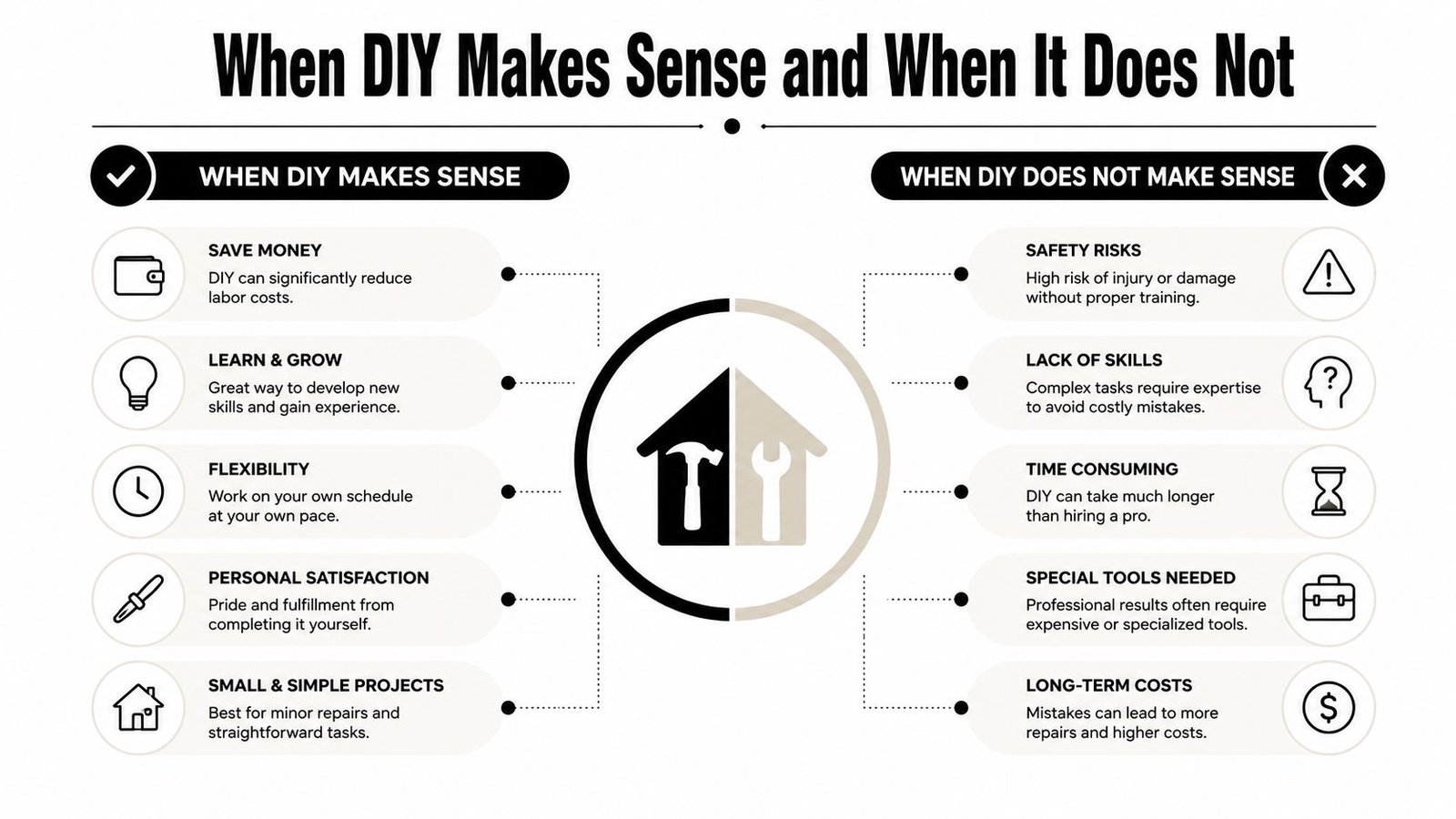
A lot of buildings waste time by letting small issues sit too long, then handing the job to the wrong person. The other mistake is the opposite, treating every nuisance as if a general handyman can sort it out in an hour.
The narrow lane for building staff
A trained building engineer can usually handle a few limited tasks safely. Cleaning fixtures, resetting after a known transient event, testing emergency phones, and replacing COP/PI bulbs with the correct parts are reasonable examples. Those jobs help keep the building functional, and they support the maintenance record without crossing into mechanical tampering.
Everything else needs a licensed elevator mechanic the first time. If the issue touches the controller, door locks, hydraulics, brake, sheaves, or jack, stop there. Those parts aren't just expensive, they're tied to safety and code, and a guessed-at fix can turn a manageable service call into a shutdown with documentation attached.
The liability piece is bigger than most owners admit. When an elevator has repeated failures, it's not just inconvenient, it becomes a measurable emergency-response burden and a resident-safety issue, especially in multifamily buildings and properties that serve older adults or people with mobility limits. That's why waiting it out is usually the wrong trade.
If the fault affects motion, door safety, or emergency communication, the building already has a service problem, not a maintenance preference.
The clean rule is this. Let staff handle the obvious consumables and tests. Let a qualified provider handle everything that changes the machine's motion, access, safety circuit, or code status.
How the Right Service Partner Reshapes Lifecycle Costs
The service partner you choose determines whether each failure becomes a scramble or a managed event. A non-proprietary Maintenance, Repair and Modernization model changes the economics because it treats parts, inspections, and upgrades as one lifecycle rather than separate emergencies.
What a practical program should do
A solid regional provider should be able to keep the building moving with preventative maintenance, fast repairs, code-required inspections, and modernization work on all makes and models. It should also be able to answer the two questions owners care about most, how fast can you get here, and can you source the right part without tying the building to one manufacturer's closed ecosystem.
Crane Elevator Company fits that model in the market by offering proactive preventative maintenance, fast reliable repairs, code-required inspections, full non-proprietary modernizations, free second opinions, a price-beat guarantee, and 24/7/365 response across Lower Michigan and Northwest Ohio, including Toledo and surrounding cities. It also operates with no-show, no-pay discipline in its maintenance program and includes clean-down work that matters more than a lot of owners realize, because dirty machine rooms and pits create their own repair problems over time.
The lifecycle benefit is straightforward. Better parts access shortens downtime, faster diagnostics reduce repeat callbacks, and non-proprietary modernizations keep the building from being trapped by one brand's aging catalog. That gives owners a path to plan upgrades instead of reacting to failures until the car is out of service and the inspection clock is already running.
Questions worth asking any provider
- What parts do you stock locally, and what do you source on demand?
- Do you provide free second opinions on repair or modernization quotes?
- How do you handle clean-downs of machine rooms, pits, and car tops after service?
- Can you support non-proprietary equipment across multiple makes and models?
- What's your response model after hours, on weekends, and on holidays?
Those questions cut through the sales language fast. If the answers are vague, the building is probably buying a short-term fix, not a lifecycle plan.
If you're dealing with recurring elevator calls, compliance headaches, or a machine room full of parts you can't match to anything current, Crane Elevator Company can help you sort out the repair, maintenance, and modernization side of the problem. Visit Crane Elevator Company to talk through a non-proprietary service plan that fits Toledo, Northwest Ohio, Southeast Michigan, and the surrounding cities.