If you're searching for elevator repair companies near me in Southern Michigan, the problem usually isn't abstract. A tenant has called. A nurse can't move a patient floor to floor. A freight car is down and deliveries are backing up. Or a state inspection is coming, and you already know the elevator has unresolved issues.
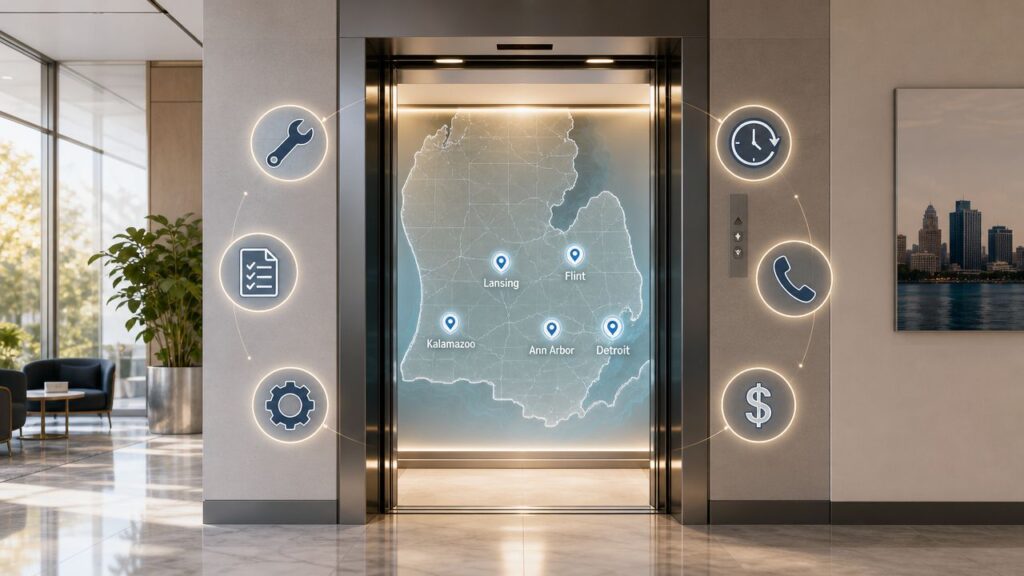
In that moment, a generic directory isn't enough. You need a way to judge who can fix the problem, who can keep the equipment compliant, and who will help you avoid getting trapped in a cycle of repeat callbacks, rushed parts orders, and preventable downtime. That's especially true in Southern Michigan, where building types vary widely across Detroit, Ann Arbor, Lansing, Flint, Kalamazoo, and the surrounding communities.
The right contractor isn't just the one who answers the phone. It's the one who can diagnose the fault correctly, document the work, support inspection readiness, and maintain equipment in a way that lowers long-term risk.
What to Do When Your Elevator Is Down
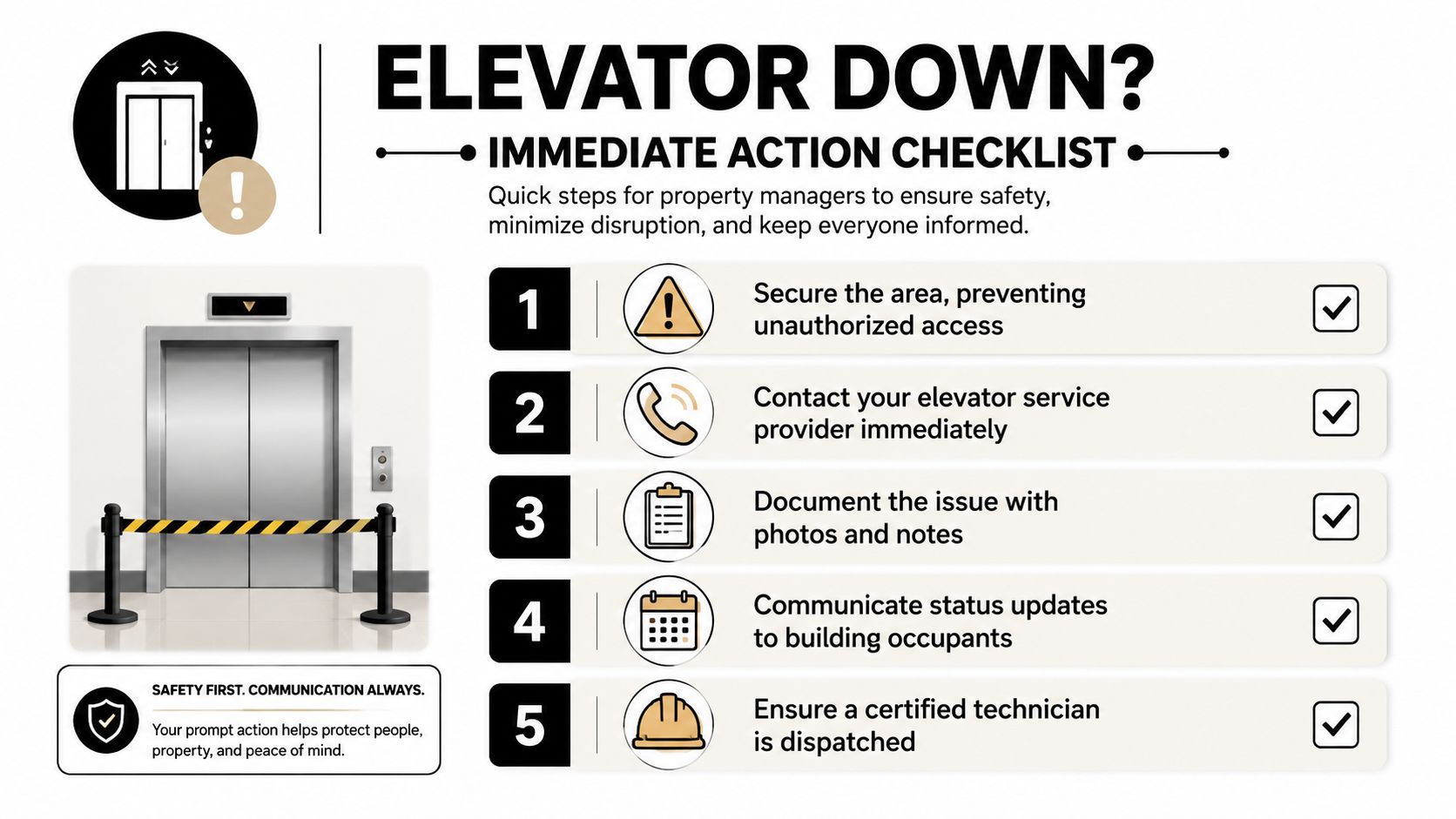
When an elevator goes out of service, the first priority is safety. The second is information. Property managers who handle both well usually get faster, more accurate dispatch and avoid making the problem worse.
Immediate actions that matter
Secure the landing areas.
Put the car out of service, block unauthorized use, and make sure occupants don't try to force doors or reset anything on their own.Confirm whether anyone is inside.
If there's a passenger entrapment, treat that as a life-safety event and tell the service provider immediately. The dispatch priority changes.Stop amateur troubleshooting.
Building staff shouldn't open doors, access machine spaces, or start cycling breakers unless they're specifically authorized and trained to do so.
Practical rule: A shut-down elevator is inconvenient. An improperly handled shut-down elevator becomes a liability problem.
What to gather before you call
Have these details ready:
- Equipment identity: Building name, elevator number, type of unit, and where it is stuck or parked.
- Failure symptoms: Door won't close, car won't move, leveling issue, fault light, unusual noise, burning smell, intermittent shutdown.
- Recent history: Any storms, power events, inspection failures, prior callbacks, or ongoing door problems.
- Access conditions: Is the machine room accessible, are keys available, and who will meet the technician?
A clean handoff saves time. If you need a practical reference for handling an outage, Crane's elevator out of service guidance is the kind of resource building staff should already have bookmarked.
What to communicate to occupants
Don't leave people guessing. Tell tenants or staff that the elevator is out of service, whether one or all units are affected, and when the next update will come. Clear communication reduces pressure on front-desk teams and cuts down on unsafe attempts to use the equipment.
Essential Elevator Contractor Services Explained
Most owners think they're buying “repair.” In practice, they're buying a mix of technical labor, compliance support, and risk management. If you don't separate those pieces, it's hard to compare contractors.
Emergency repair
Emergency repair is the visible part of the business. It covers shutdowns, entrapments, door failures, controller faults, hydraulic leaks, drive issues, and the other problems that stop service now.
What matters isn't just whether a contractor offers 24/7 response. It's whether they can isolate the fault quickly, carry out a safe corrective repair, and tell you whether the issue is a one-time event or the start of a pattern. Fast arrival helps. Correct diagnosis matters more.
Preventive maintenance
Preventive maintenance is where good providers separate themselves from callback vendors. A solid program doesn't just lubricate and clean. It tracks wear, identifies recurring faults, and replaces vulnerable components before they fail at the worst possible time.
That's the practical reason maintenance lowers ownership risk. It reduces surprise outages, limits after-hours service calls, and gives the owner a clearer picture of what needs repair versus what needs budgeting.
Passing inspection and running reliably are not the same thing. A contractor should help you achieve both.
Modernization
Modernization is not just “the elevator is old.” It's a capital decision made when repairs stop being efficient, parts are hard to source, controls become obsolete, or the equipment can no longer meet operational expectations without repeated intervention.
For owners, modernization affects more than uptime. It touches tenant satisfaction, leaseability, energy use, serviceability, and long-term vendor flexibility. A weak contractor treats modernization as a sales event. A strong one explains what can still be repaired, what should be upgraded, and why.
Inspections and testing
Inspection support is one of the most misunderstood contractor services. A competent elevator company should do more than restore ride function. For commercial buildings, a critical benchmark is support for code-compliant service and inspection readiness. In practice, that means documenting corrective work, verifying safety systems like door interlocks and emergency phones, and keeping the installation ready for state inspection cycles rather than only making the unit run again, as described in Quality Elevator's discussion of compliance-focused service.
What owners should listen for
When you interview elevator repair companies near you, listen for whether they talk about these services as connected or separate.
- Reactive-only mindset: “Call us when it breaks.”
- Asset-management mindset: “Here's what failed, here's why, here's what to monitor next, and here's what should be budgeted.”
The second approach usually produces fewer surprises.
The Elevator Repair Landscape in Southern Michigan
Southern Michigan buyers are operating inside a large, mature service market, even if the local experience sometimes feels tight when an elevator is down. The national backdrop matters because it explains why contractor quality varies so much.
The U.S. Elevator Installation & Service industry is projected at $53.9 billion in 2026 and includes 32,787 businesses, according to IBISWorld's industry overview. That scale tells you two things. First, elevator service is not a niche trade. Second, competition is real, but it doesn't erase the importance of local labor, dispatch coverage, and parts access.
What that looks like on the ground
In Southern Michigan, the practical service map usually runs through Detroit, Ann Arbor, Lansing, Flint, and Kalamazoo, plus the smaller cities and industrial corridors around them. That creates a mixed market:
- Urban commercial buildings need uptime, tenant communication, and inspection readiness.
- Healthcare and municipal facilities need dependable response and strong documentation.
- Industrial and freight applications need technicians who understand older, harder-worked equipment.
- Residential and accessibility lifts need service teams who won't treat small equipment as an afterthought.
OEMs and independents
Most buyers are choosing between two broad categories.
| Contractor type | Typical strength | Typical trade-off |
|---|---|---|
| OEM branch | Deep familiarity with its own systems | Can limit flexibility on parts and service pathways |
| Independent contractor | Broader mixed-fleet support, often more flexible | Capability varies widely by company |
That distinction matters most when you manage a mixed portfolio. A property group with different makes, ages, and controller types usually benefits from a contractor that can work across brands without turning every older unit into a modernization pitch.
In Southern Michigan, the best local fit often isn't the biggest name. It's the company whose field operation matches your building type and equipment mix.
Company Spotlight Crane Elevator Company
A useful benchmark for evaluating Southern Michigan providers is the independent, non-proprietary service model. That model matters because many owners don't just need a repair. They need continued control over who can service their equipment in the future.
Why non-proprietary support matters
One of the most important questions a buyer can ask is whether the contractor can support different brands and ages of equipment without steering the owner into unnecessary replacement. That issue is bigger than marketing language like “all makes and models.”
As explained in Tri State Elevator's discussion of non-proprietary repair paths, the primary issue is parts availability and serviceability. Contractors that work in non-proprietary systems give owners more freedom because any qualified provider can maintain or repair the equipment later. That reduces vendor lock-in and can improve long-term cost control.
What to look for in a benchmark provider
Crane Elevator Company fits that benchmark in a few practical ways that buyers should pay attention to when comparing firms in Lower Michigan.
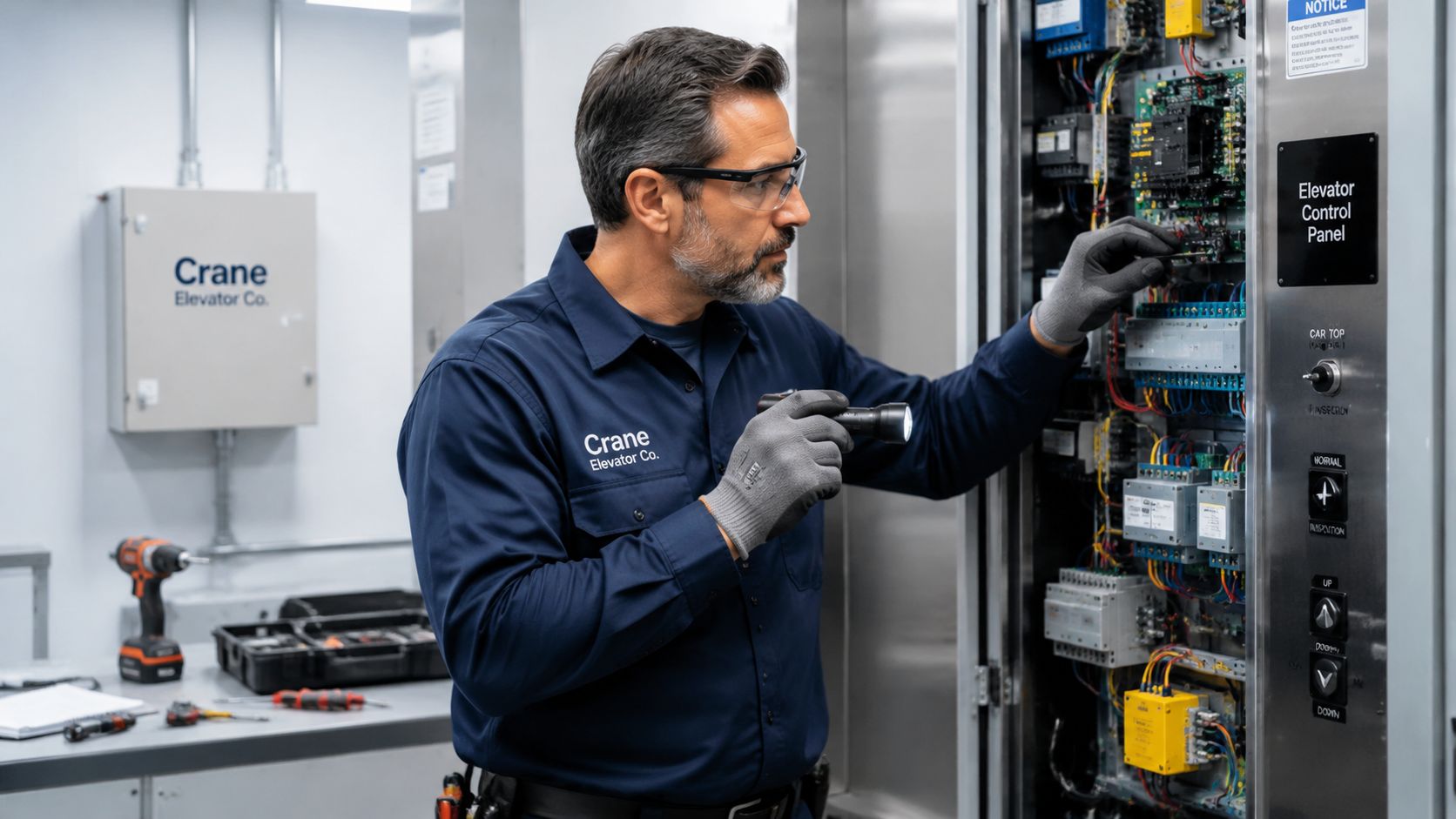
- Mixed-equipment capability: The company handles passenger elevators, freight cars, residential elevators, wheelchair and material lifts, and dumbwaiters.
- Non-proprietary modernization approach: That matters for owners who want service flexibility after the upgrade is complete.
- Repair depth: The work scope includes door lock monitoring, hydraulic packing, jack, cable, tank and power unit, motor, sheave, machine replacement, emergency phones, fire service, generator testing, safety tests, and violation corrections.
- Continuous field availability: 24/7/365 coverage matters for buildings that can't wait until normal business hours.
Maintenance details worth comparing
Many elevator company descriptions often become vague. Buyers should pay close attention to what a maintenance plan includes operationally.
Crane's published maintenance approach includes a No Show, No Pay policy, full clean-downs of machine rooms, pits, and car tops, plus COP and PI bulb replacements. Those details are useful not because they sound impressive, but because they signal how the company defines maintenance. A contractor that cleans, documents, and handles small recurring items tends to see more of the equipment's condition than one that only performs a quick visit and leaves.
Why financing changes the conversation
A lot of owners delay major repairs or modernization because the decision gets framed as all-or-nothing capital spend. In practice, financing can turn a disruptive project into a planned operating decision.
Crane also offers commercial elevator financing and modernization financing. That doesn't make every project cheap. It does make timing, scope, and cash flow easier to manage when a building can't keep absorbing repeated repair events.
Quick Comparison of Southern Michigan Providers
If you're sorting through elevator repair companies near you under pressure, a simple comparison helps. The point isn't to produce a perfect market map. It's to isolate the handful of criteria that affect service experience immediately.
Southern Michigan Elevator Service Provider Comparison
| Provider | Key Service Areas | 24/7 Emergency Service | Specializes In | Offers Financing |
|---|---|---|---|---|
| Crane Elevator Company | Detroit, Ann Arbor, Lansing, Flint, Kalamazoo, surrounding Lower Michigan communities | Yes | Commercial, residential, lifts, dumbwaiters, non-proprietary modernization, mixed-fleet service | Yes |
| OEM branch provider | Major metro corridors and selected regional accounts | Usually | Brand-specific systems, larger portfolios, proprietary equipment pathways | Varies |
| Local independent repair firm | One metro area plus nearby counties | Often | Repair and maintenance for mixed local accounts | Varies |
| Inspection-focused regional contractor | Municipal, institutional, and compliance-heavy accounts in select territories | Sometimes | Testing, code corrections, inspection prep, limited repair depth at some firms | Varies |
How to use this table
Don't treat “24/7 emergency service” as the deciding factor by itself. Many companies answer phones after hours. Fewer have the staffing, parts strategy, and mixed-brand experience to resolve faults efficiently.
A better test is this: if your elevator is older, has recurring door issues, or sits in a building with strict uptime expectations, ask which provider can both repair today's problem and support the equipment sensibly over the next few years.
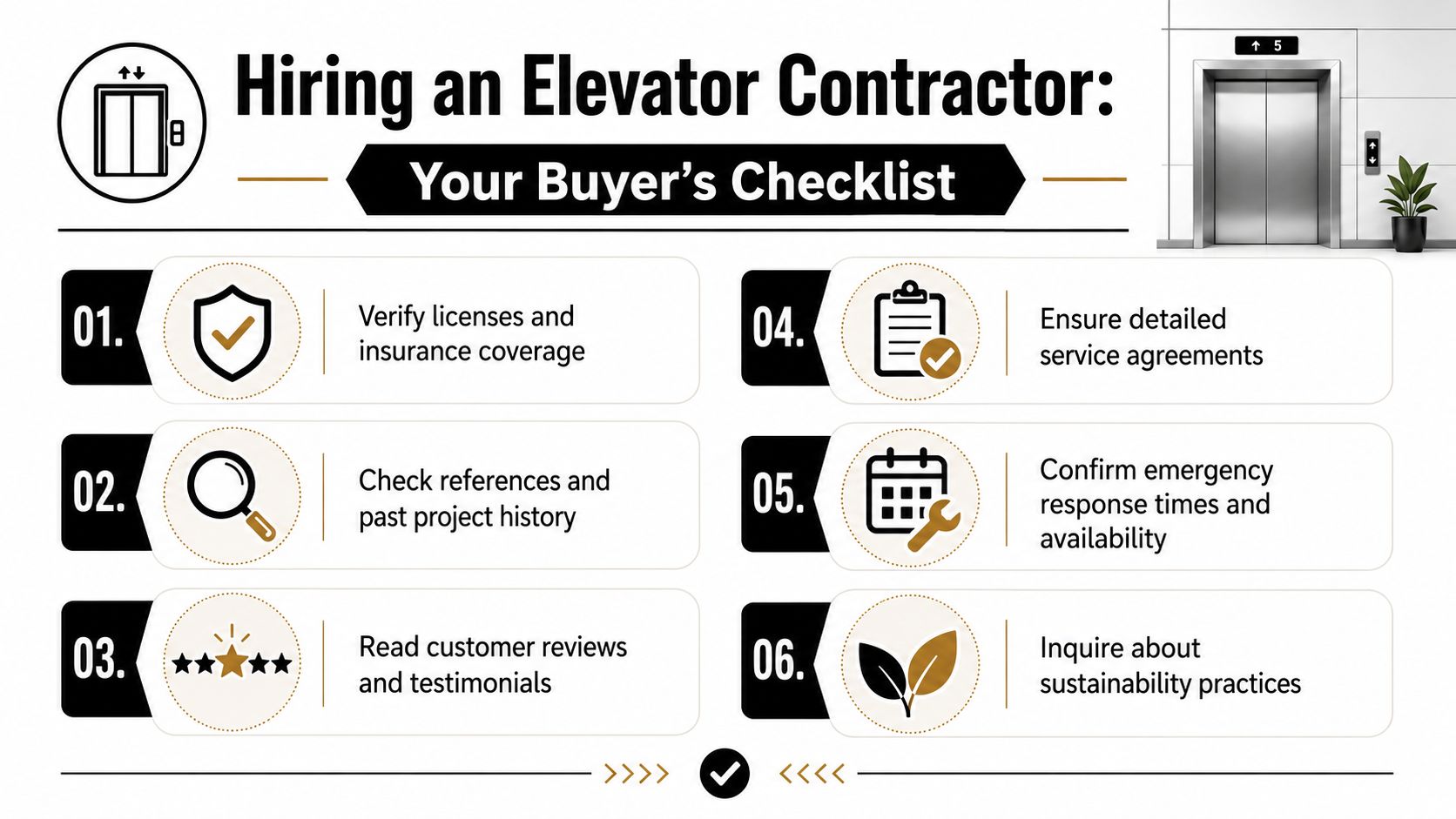
A Buyer's Checklist for Hiring an Elevator Contractor
Most bad elevator vendor decisions happen before the first repair. They happen during procurement, when the owner accepts vague promises instead of pinning down scope, response expectations, and service philosophy.
Questions that reveal contractor quality
Ask these directly, and listen for specific answers.
Are you licensed and insured for the work you perform in Michigan?
If the answer is fuzzy, move on. You're hiring for life-safety equipment.Can you service our exact equipment type and controller?
“We work on everything” isn't enough. Ask what they've done on similar units recently.Do you support non-proprietary repairs and upgrades?
This matters if you want future freedom to change vendors without replacing major systems.What happens on an emergency call?
Ask who answers, who dispatches, whether a mechanic or a call center screens the problem, and what access the tech will need.What is included in the maintenance plan?
You want details on cleaning, adjustments, testing, small parts, recordkeeping, and callback handling.
The maintenance contract questions owners skip
Preventive maintenance quality is one of the clearest dividing lines between decent service and expensive service. As noted in US Elevator's overview of proactive repair and maintenance, modern elevator repair is judged less by emergency response alone and more by whether the contractor diagnoses root causes, replaces wear-prone parts proactively, and keeps detailed records that reduce repeat failures.
Use that standard when reviewing contracts.
- How do you document recurring issues?
- What do you consider normal wear versus billable repair?
- How do you handle chronic door faults or intermittent shutdowns?
- Do you provide service records that a property manager can read and use?
Buyer warning: If the agreement describes maintenance in broad language but says very little about documentation, callback patterns, or excluded parts, expect disputes later.
Questions about accountability
References still matter, especially from similar buildings in your area.
Ask for:
- Comparable properties: Same building type, traffic profile, and equipment age.
- Examples of solved recurring issues: Not just emergency rescues.
- Inspection support history: Can they help close violations and prepare for testing cycles?
- Contract terms: Auto-renewal, cancellation notice, and billing clarity.
For owners who want a practical model of what a service-focused contractor looks like, Crane's reliable elevator company overview is worth reviewing as a comparison point for scope and responsiveness.
How Elevator Repair Pricing and Financing Work
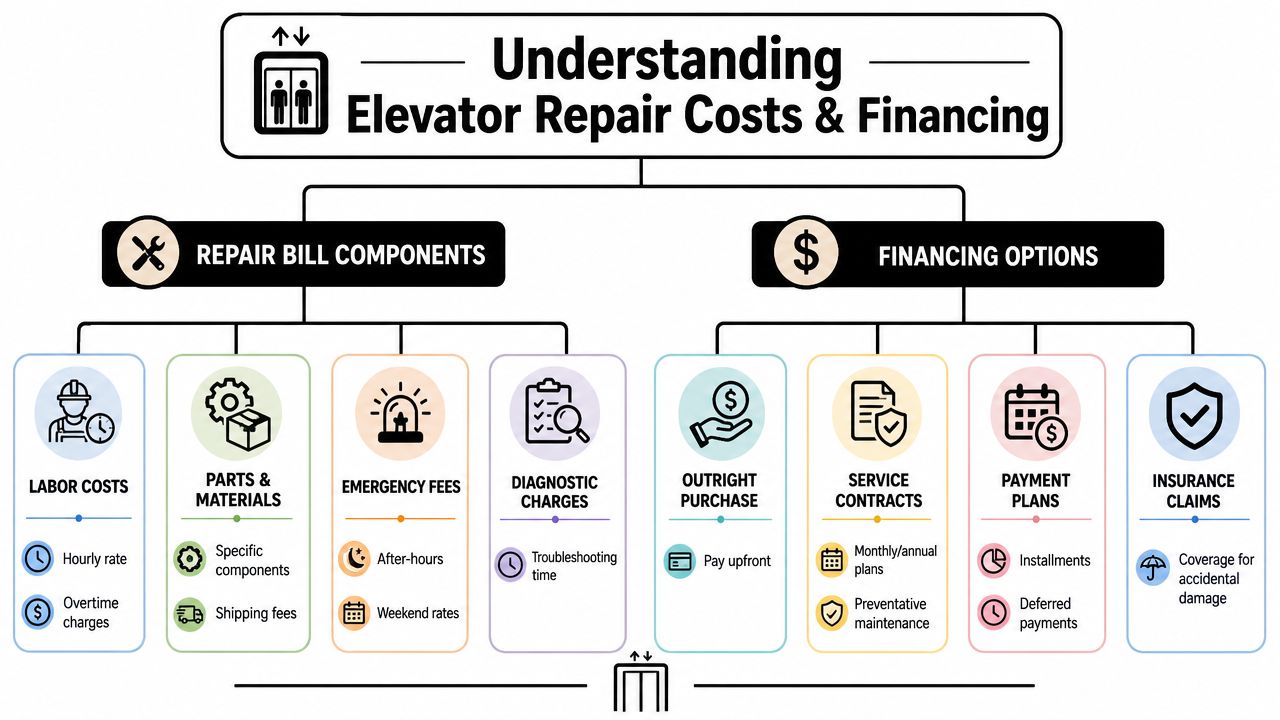
Most elevator repair invoices come down to four variables. Labor, timing, parts, and diagnostic complexity. Owners who understand those drivers make better decisions about when to approve a repair, when to insist on a broader fix, and when to move a recurring problem into a capital plan.
Why elevator repair labor is expensive
Elevator work is specialized, regulated, and often urgent. The labor market reflects that. The U.S. Bureau of Labor Statistics reports that elevator and escalator installers and repairers earned a median annual wage of $106,580 in May 2024, with about 2,000 openings per year projected on average, and notes that many technicians are on call 24 hours a day and may work overtime, according to the BLS occupation profile for elevator installers and repairers.
That helps explain why emergency service costs more than scheduled work. You're not just paying for minutes on site. You're paying for access to scarce skilled labor at the moment you need it.
What usually drives the invoice
| Cost driver | What it means for the owner |
|---|---|
| Diagnostic time | Intermittent faults and unclear symptoms take longer to isolate |
| After-hours dispatch | Nights, weekends, and holidays usually cost more |
| Parts and materials | Lead times, sourcing difficulty, and shipping affect the total |
| Return visits | A temporary fix today can become a larger bill later |
The most expensive repair isn't always the one with the biggest single invoice. It's often the problem that keeps coming back because no one addressed the underlying cause.
Repair versus contract economics
A one-off repair can be reasonable when the issue is isolated and the equipment is otherwise stable. It becomes expensive when the building relies on repeated reactive calls.
Maintenance contracts shift part of the spend into predictable recurring service. That doesn't eliminate repair bills, but it usually gives owners better visibility into wear trends, deferred items, and upgrade timing. It also helps avoid the premium pricing that comes with avoidable after-hours failures.
Where financing fits
Financing makes sense when the work improves reliability in a lasting way and the alternative is repeated disruption. That often includes larger component replacements, code-related corrections, or modernization work that has moved from optional to necessary.
If you're budgeting a bigger project, Crane's elevator modernization cost guide can help frame what influences project scope and how owners typically think about funding options.
Common Questions About Elevator Repair and Maintenance
How often does my elevator need to be inspected in Michigan
Inspection timing depends on the equipment type, use, and applicable jurisdictional requirements. The practical move is simple. Ask your contractor to tell you your next required inspection and test dates in writing, and ask what open issues could cause a failed or delayed approval.
What's the difference between a repair and a modernization
A repair restores function to a failed or worn component. A modernization updates significant parts of the system because continued repair no longer makes operational or financial sense. Choose repair when the fault is isolated and parts support is still practical. Choose modernization when downtime, obsolescence, or repeat failures keep coming back.
What does non-proprietary equipment mean
Non-proprietary equipment can be serviced by qualified elevator contractors without locking the owner into one manufacturer or one service path. For owners, that usually means more vendor flexibility and fewer long-term constraints when maintenance or repairs are needed.
Can a small issue like a slow door lead to a bigger problem
Yes. Slow or inconsistent doors are one of the most common signs that something needs attention. Sometimes the issue is minor. Sometimes it points to wear, misadjustment, contamination, or a component beginning to fail. The mistake is waiting until the car starts faulting out regularly.
Should I call multiple companies when the elevator is already down
If you have no service relationship in place, yes, but do it in an organized way. Give each company the same information and ask the same questions about dispatch, equipment familiarity, and access needs. If you already have a contractor who knows the unit well, parallel calling can create confusion unless you clearly control who is authorized to work on the equipment.
What should I expect after the first service visit
You should expect more than “it's running now.” A competent contractor should tell you what failed, what was done, whether the fix is temporary or complete, and what needs monitoring next. If that explanation never comes, you're not getting enough value from the service relationship.
If you need help evaluating elevator repair companies near you in Southern Michigan, Crane Elevator Company is one option to review for repairs, maintenance, inspections, non-proprietary modernization, and financing support across Lower Michigan.