
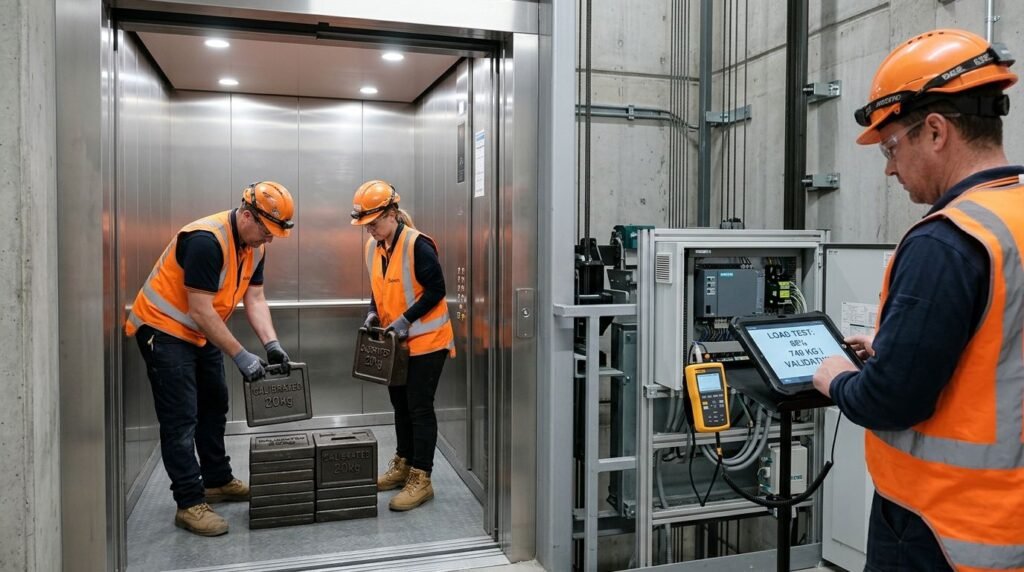
You're often dealing with elevator load capacity testing because a notice landed on your desk, a modernization just wrapped up, or an inspector asked for documentation you don't have at hand. In most buildings, the immediate questions are practical. Does this unit need a full load test? Does it have to be done with physical weights? How much disruption should you expect, and what happens if the elevator doesn't pass?
That confusion is common because owners hear “5-year test” and assume the same rule applies to every elevator in the building. It doesn't. Some units require a traditional Category 5 load test. Some are exempt based on their configuration. Some periodic testing can now be handled with safer electronic methods instead of hauling heavy test weights through an occupied property.
If you manage a commercial, municipal, healthcare, education, or multifamily building, the right move is to treat elevator load capacity testing as a compliance decision first and a logistics project second. Get the code requirement right. Match the method to the equipment. Then prepare the site so the test goes smoothly and the paperwork is clean.
What Is Elevator Load Capacity Testing
A facility manager usually hears about load testing when a deadline is close, a state inspector asks for records, or a recent repair changes the compliance picture. The first correction I make in those conversations is simple. Load capacity testing does not automatically mean every elevator in the building gets a traditional 5-year physical weight test.
Elevator load capacity testing is the controlled process used to verify that an elevator can carry, move, stop, and hold the load its code requirement calls for without unsafe behavior. In a traditional full-load test, that often means proving performance above the posted rated load so the brake, machine, safeties, and supporting components are tested under real stress, not ordinary passenger service.
For a full physical load test, the common benchmark is 125% of rated capacity. A car rated for 2,000 lbs would be tested with 2,500 lbs. The point is straightforward. The test checks whether the equipment still performs correctly when the car is heavily loaded, after years of wear, adjustments, repairs, or modernization work.
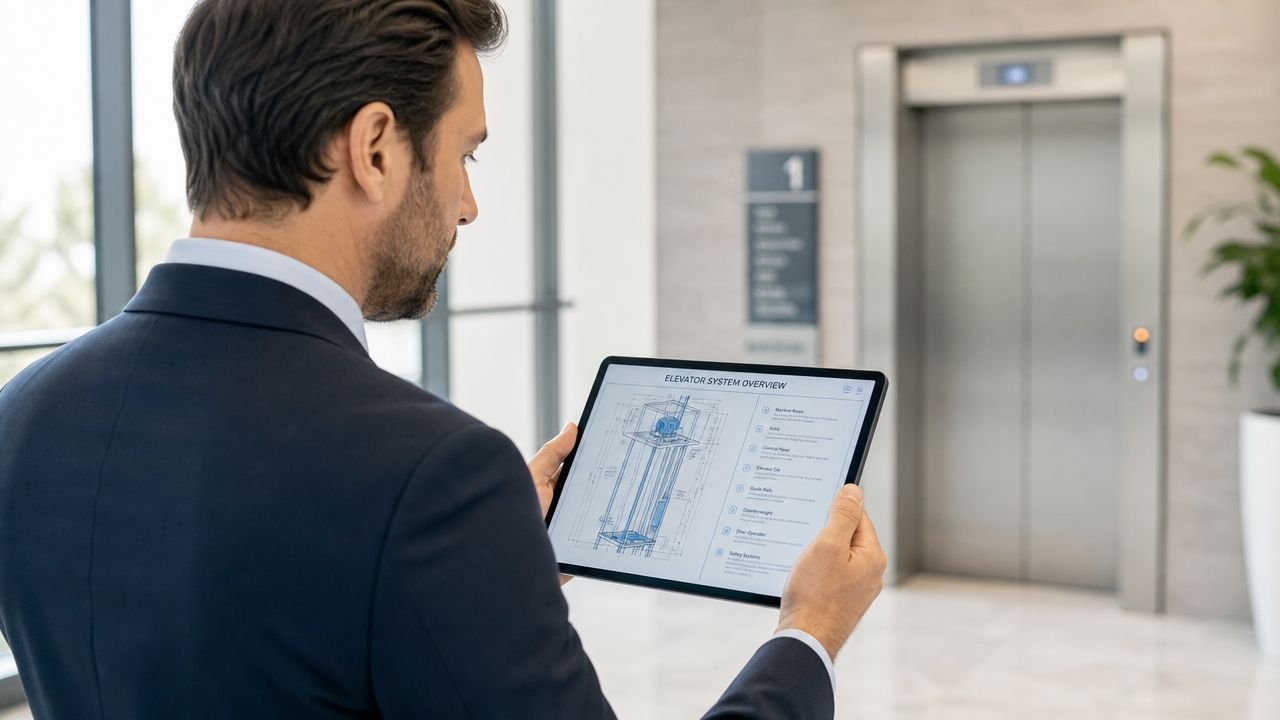
Why building managers shouldn't treat it like routine paperwork
Load testing goes beyond an annual inspection. It is a performance test under load, and that distinction affects safety, scheduling, and liability. If the car does not level correctly, the brake does not hold, or the system shows abnormal behavior under test conditions, the problem has to be addressed before anyone should be relying on that unit.
This test is important for three reasons:
- Passenger safety: It confirms that the elevator can control motion and stop as designed when the system is heavily loaded.
- Code compliance: It documents that the unit has met the testing requirement that applies to that specific configuration.
- Operational risk: A failed test can trigger repairs, retesting, and downtime that disrupt tenants, staff, and deliveries.
There is also a practical trade-off owners need to understand. Traditional weight testing can be disruptive, labor-heavy, and harder to stage in occupied buildings. In some cases, electronic testing is an accepted alternative and reduces handling risk, setup time, and site disruption. In other cases, code or equipment type still points you back to a physical test. The right method depends on the unit and the jurisdiction, not on habit.
What the test is really checking
From the contractor side, the test answers a short list of questions that matter in the field:
- Will the car start, run, and stop properly under heavy load?
- Will the brake hold the car as designed?
- Do the machine, hydraulic or traction components, and related safety devices respond correctly under test conditions?
- Is there any sign that wear, misadjustment, or recent work has changed how the unit performs?
The capacity plate on the car only states the designed rating. It does not prove present-day performance. Load testing is the step that confirms whether the elevator still operates within safe limits for the requirement that applies to that specific unit.
That is why good building teams treat load testing as a targeted safety verification, not a box to check. The first job is identifying which elevators require a full Category 5 test, which are exempt, and which can be tested using a safer modern method.
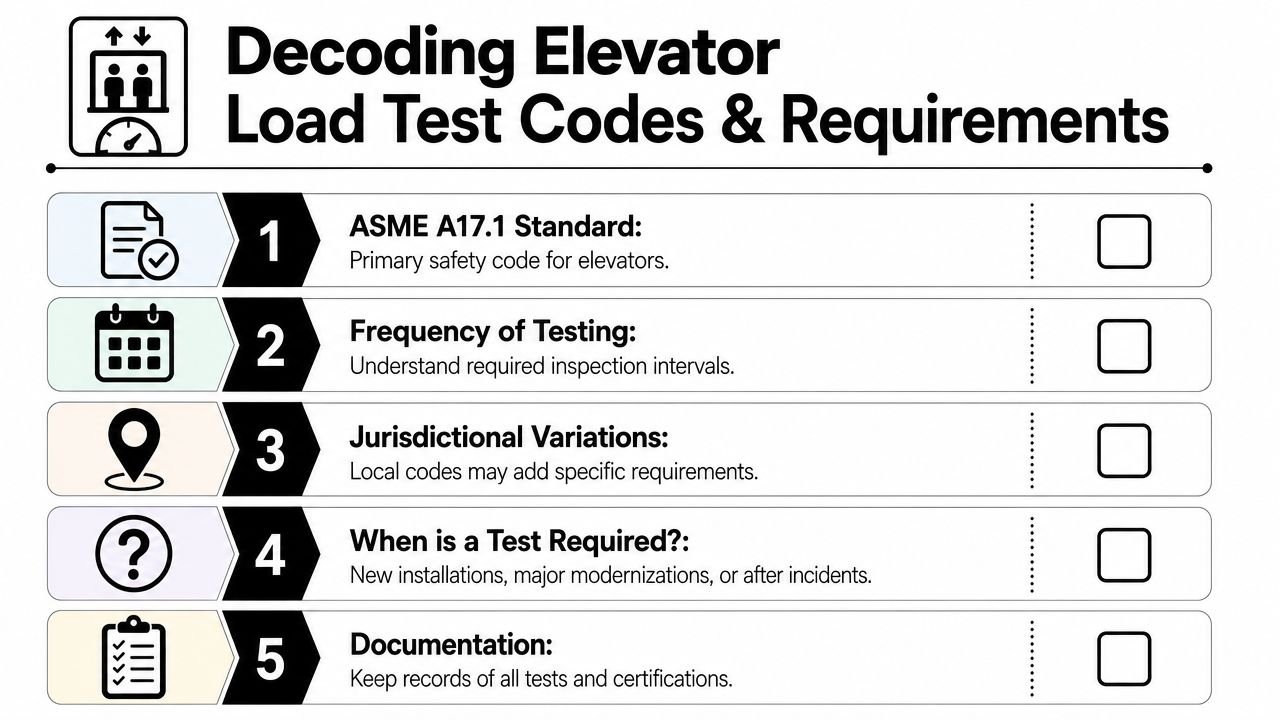
Decoding Load Test Codes and Requirements
A facility manager calls to schedule a five-year weight test for every elevator in the building. Before any date gets set, the first question should be simpler: which units require a Category 5 load test under the adopted code, and which do not?
That distinction matters because ASME A17.1 does not treat every elevator the same. The code framework is broad, but enforcement always runs through the local authority having jurisdiction. Michigan owners need to confirm the adopted edition, any state amendments, and how the inspector applies those rules to the specific equipment on site.
Which units typically require the full Category 5 test
The biggest mistake I see is treating the five-year physical weight test as universal. It is not. Whether a full Category 5 test applies depends on the elevator's design, safety devices, and service condition.
In practice, the review starts with the equipment record and the field configuration:
- Type of unit: traction, hydraulic, passenger, freight, LU/LA, or other specialty equipment
- Installed devices: governor, safeties, oil buffers, overspeed valve, and related protection components
- Code trigger: new installation, alteration, repair, modernization, or periodic compliance interval
- Local interpretation: what the state or local inspector requires for that exact setup
Owners who skip that review often order the wrong test. That creates unnecessary cost, avoidable disruption, and in some cases added handling risk from bringing physical weights into an occupied building.
When testing is mandatory
Some triggers are straightforward. New elevators and elevators returning to service after certain alterations or major code-triggering work typically require acceptance testing before use. Periodic testing may also apply on a recurring cycle, but the interval and method are tied to the unit classification and the adopted rules, not to a blanket building-wide assumption.
That is why the right compliance question is equipment-specific. Start with, “What does this elevator have, and what test does that configuration require here?”
For owners who need a plain-language overview before they schedule anything, this guide to elevator testing services lays out the broader process.
Why electronic testing has changed the decision
Electronic testing has changed this conversation for good reason. In many applications, it gives the contractor and inspector a way to verify performance without moving large quantities of test weights through tenant areas, lobbies, finished floors, and freight paths.
Elevator World's review of electronic and traditional Category 5 methods explains how electronic testing is being used as an accepted alternative in applicable cases. The practical benefit for owners is clear. Less staging. Less labor tied to weight handling. Less chance of damage to interior finishes or testing-related strain on the equipment from a poorly managed physical load setup.
That does not mean electronic testing replaces every physical test. Some units, some jurisdictions, and some inspection circumstances still call for traditional weight testing. Good contractors do not push one method out of habit. They verify what the code allows, what the inspector will accept, and what makes sense for the equipment in front of them.
The expensive mistake is not a failed test. It is approving the wrong test because nobody verified the elevator's actual configuration first.
The Load Testing Procedure From Start to Finish
A lot of owners still expect test day to mean pallets of weights, a long shutdown, and extra risk to finished spaces. Sometimes that is exactly what the job requires. Sometimes it is not. The right procedure depends on the elevator type, the code requirement, and whether that unit qualifies for an accepted alternative such as electronic testing.
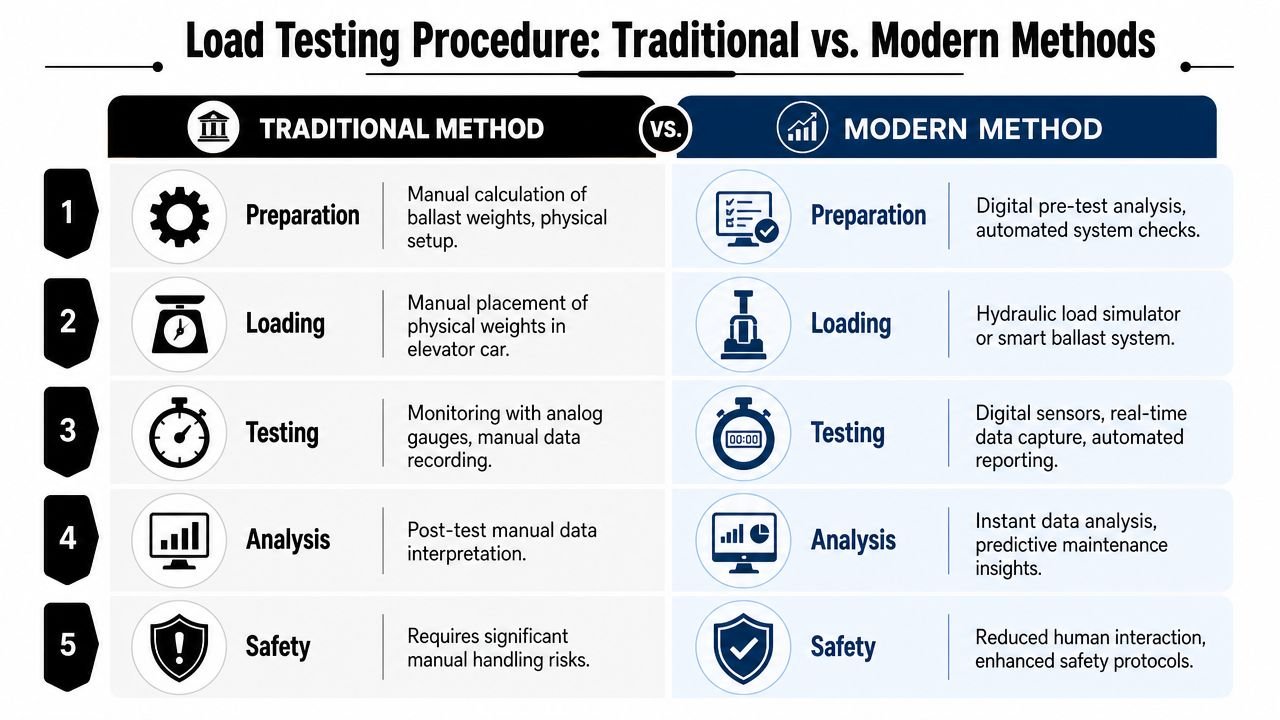
How the traditional physical-weight test works
For a traditional load test, the target is typically 125% of rated load. A 2,000 lb elevator is tested at 2,500 lb. The contractor brings certified weights, loads the car in a controlled sequence, and runs the test while mechanics and, where required, the inspector observe operation.
The field sequence usually follows this order:
Pre-test verification
The team confirms the elevator identity, rated load, test type, access to the machine room or control space, pit access, and the general condition of the equipment.Weight staging and building protection
Weights are brought into the property and staged carefully. This part affects the building almost as much as the elevator. Floor protection, wall protection, cab pads, and a clear travel path matter.Loading the car
The weights are placed evenly to reach the required test load without creating a poor distribution inside the platform.Operational test runs
The car is run under the required conditions so the crew can observe starting, running, stopping, leveling, brake action, and control response.Safety checks and documentation
The mechanic records the results, notes any abnormal behavior, and prepares the documentation needed for the inspector and owner records.
The loading itself is not the hard part. Handling the building, the schedule, and the equipment correctly is what separates a controlled test from a messy one.
What the crew is watching closely
A proper load test is an observation job as much as a pass or fail exercise. The crew is watching for signs that the equipment is carrying the load safely and responding the way the code requires.
| Test focus | What the team is checking |
|---|---|
| Brake performance | Whether the brake holds the car and stops it properly under test load |
| Machine response | Whether the drive and related equipment operate normally during the run |
| Ride and control behavior | Whether the car starts, runs, levels, and answers calls consistently |
| Equipment condition | Whether the test exposes wear, adjustment problems, or unsafe operating conditions |
Here's a useful visual overview of the process in action.
How electronic and weightless methods differ
Electronic testing changes the day completely. Instead of moving physical ballast through the property, the contractor uses approved testing equipment and documented measurement procedures to verify performance on units and test categories where that method is allowed.
That difference matters in occupied buildings. Hospitals, offices, schools, and senior living properties usually have more to lose from weight handling than from the actual elevator downtime. Less material movement means less chance of damaged thresholds, chipped finishes, blocked corridors, and scheduling problems with tenants or staff.
[E
levator World's overview of alternative weightless testing under newer code developments](https://elevatorworld.com/article/alternative-weightless-testing-an-overview/) explains how these methods are being adopted in applicable situations as the code evolves. For owners, the practical point is simpler. Electronic testing can reduce labor, shorten site disruption, and avoid the property risk that comes with hauling test weights through a finished building.
It does not apply to every elevator, and it does not remove the need to verify code acceptance first. That is the trade-off. Physical testing remains common for some acceptance tests, some modernizations, and some jurisdiction-specific requirements. Electronic testing is a strong option only when the unit, the code, and the inspector all line up.
What works on a real job
The best process starts before test day. The contractor identifies the exact elevator, confirms the required test category, verifies whether an exemption or alternate method applies, and clears the approach with the authority having jurisdiction if needed.
That step gets skipped more often than owners realize.
From a facility standpoint, the best process is the one that matches the actual requirement, protects the property, and produces documentation the inspector can use without delays or a retest.
A Building Owners Preparation Checklist
Most test-day problems are preventable. The elevator contractor can handle the technical work, but the building team controls access, coordination, tenant communication, and the records that keep the day moving.
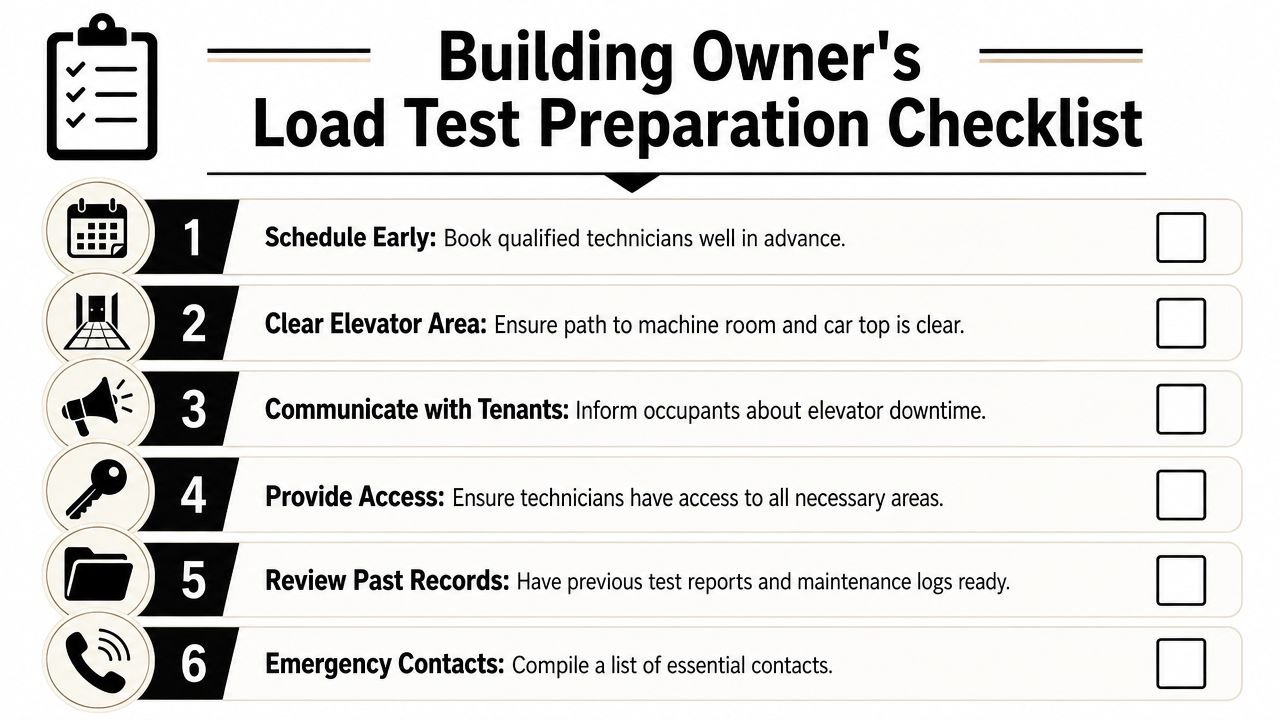
What to do before the crew arrives
Use this as a working checklist, not a rough idea.
Confirm the exact scope: Ask whether the appointment is for a traditional load test, an electronic test, a witnessed test, or a related safety test. A lot of delays start because the building expected one thing and the inspector expected another.
Schedule around the building's peak use: Hospitals, schools, offices, and senior living properties need a plan for elevator downtime. Pick a window that limits disruption and gives the testing team room to work.
Notify tenants and staff early: Don't rely on a lobby sign alone. Notify occupants, security, maintenance, and anyone responsible for deliveries or patient transport.
Site readiness matters more than owners expect
The crew loses time when they can't get to the spaces they need. Before test day, verify:
- Machine room or control room access
- Pit access and keys
- Roof or overhead access, if applicable
- Clear path to the elevator and surrounding work area
- No stored material blocking doors, ladders, or panels
If the test uses physical weights, also think through building protection. Floor finishes, wall corners, and cab interiors may need temporary protection if the route is tight.
Gather the right paperwork
A clean document package saves a lot of back-and-forth. Have these ready:
- Prior test reports
- Maintenance records
- Past violation notices or correction records
- Permit or modernization documents if the unit was recently altered
- Current contact list for building management and on-site staff
On-site reminder: Put one building representative in charge for the entire day. When access questions, tenant complaints, or paperwork issues come up, a single point of contact keeps the work from stalling.
Small details that prevent large delays
These items sound minor, but they're the reasons tests get pushed:
- Keys missing
- No one available to escort the crew
- Tenants unaware of shutdown
- Machine room used as storage
- Records scattered across email chains
If your building has more than one elevator, label the units clearly and make sure everyone is talking about the same car. Misidentifying equipment is more common than owners think, especially in older buildings with mixed service histories.
A prepared building doesn't just make the contractor's job easier. It shortens downtime, reduces confusion, and makes it far easier to resolve any issue that shows up during the test.
Understanding Test Results and Common Issues
The test is over, the car is back in service or tagged out, and now the paperwork matters. This is the point where owners find out whether they paid for a real code test or just watched a crew go through motions. A proper report should identify the exact unit, state the test method used, record what was observed, and make the pass or fail decision clear.
That matters even more because not every elevator is in the same category. Some units do require a physical full-load Category 5 test. Others do not, and some can be tested with approved electronic methods that reduce handling risk, labor, and disruption. If you need a plain-language reference on that distinction, this overview of Category testing for elevators is a useful starting point.
What a passing result should tell you
A passing result should show more than a box checked on a form. It should confirm that the elevator completed the required procedure under the applicable code and that the documentation is strong enough for the authority having jurisdiction to accept.
A useful report usually includes:
- Elevator identification, including building, unit number, and type
- Test category performed
- Test method used, such as physical weights or electronic testing
- Date of test and location
- Observed operating conditions
- Pass or fail conclusion
- Deficiencies found, if any
- Required filings, certificates, or follow-up steps
If electronic testing was used, the report should also show the instrument-based readings and the baseline used to support the result. That is one of the practical advantages of modern testing. Good electronic documentation can be clearer than a rushed handwritten note from a traditional weight test.
What a failed result usually means
A failed test means the unit did not demonstrate safe operation under the required conditions. It does not automatically mean the elevator is worn out. In many cases, the issue is specific and repairable. What matters is whether the deficiency affects continued operation.
Ask that question first.
Some failures allow the elevator to stay in service until repairs are scheduled. Others require the car to be removed from service immediately. The contractor and inspector should be clear about that decision, and the report should match it.
Common problems usually look like this:
| Common issue | What it usually points to | Typical next step |
|---|---|---|
| Brake slippage or weak stopping | Brake wear, poor adjustment, or related component problems | Inspect, adjust, repair, then retest |
| Poor leveling or inconsistent control response | Controller, feedback, drive, or setup issues | Troubleshoot controls and verify operation |
| Hydraulic performance concerns | Pressure loss, valve trouble, or other hydraulic faults | Diagnose the hydraulic system and correct the fault |
| Visible wear in critical components | Aging parts that affect safe operation | Replace or repair the affected components |
On older equipment, I also watch for reports that stay too vague. "Needs adjustment" is not enough. The owner should know whether the problem is a brake issue, a controller issue, a valve issue, or a code item that requires replacement.
How owners should respond after a deficiency
Separate code deficiencies from maintenance recommendations right away. They are not the same, and they should not be priced or presented as if they carry the same urgency.
Then ask three direct questions:
- Can the elevator remain in service?
- What correction is required before re-test or approval?
- Who files the corrected paperwork with the jurisdiction?
If the answers are unclear, press for detail in writing. A vague report creates delays, especially when the building, service company, testing provider, and inspector all assume someone else is handling the next step.
The best test reports do two jobs at once. They document compliance, and they show where the equipment is starting to drift before it becomes a shutdown, a violation, or a tenant safety problem.
How to Hire a Qualified Testing Partner in Michigan
A bad testing partner usually shows up after the mistake has already been made. The wrong test gets scheduled, weights get ordered for a unit that did not need them, tenants lose elevator service longer than expected, and the owner pays for avoidable work.
That happens most often when a contractor treats every elevator like it needs the same 5 year physical weight test. That is not how the code should be applied. A qualified Michigan testing partner should review the actual elevator configuration first, identify whether the unit is subject to a Category 5 test, and confirm whether a physical load test or an electronic method is permitted.
What to look for in a testing company
Start with scope control. If a provider cannot explain why your specific unit does or does not need a full load test, do not let them set the schedule.
A qualified company should be able to answer these points clearly, in writing if needed:
- Whether your elevator requires a Category 5 test, a different periodic test, or no 5 year load test at all
- Which code edition and Michigan enforcement requirements apply to your equipment
- Whether physical test weights are required, or whether electronic testing is allowed for that unit
- How they protect finishes, flooring, door equipment, and tenant access during testing
- What report, deficiency list, and compliance paperwork you will receive after the test
- Who handles re-test coordination if corrections are needed
Mixed portfolios matter here. Many Michigan buildings have older hydraulic elevators, newer traction units, freight cars, LU/LA equipment, wheelchair lifts, and partially modernized systems in the same property group. A testing firm that only knows one equipment type tends to over-scope the job or miss code distinctions that affect cost and scheduling.
Questions worth asking before you sign
Ask direct questions and listen for direct answers.
- Will you review our device list and elevator type before proposing the test scope?
- Do you perform or coordinate electronic testing where code allows it?
- Who coordinates with the inspector or jurisdiction?
- What access, shutdown time, and building support do you need from our team?
- Can we see a sample final report before we approve the work?
It also helps to review how a provider explains its field process. A reputable elevator testing company in Michigan should show that it handles code review, test planning, site protection, documentation, and follow-up, not just the test itself.
Price matters, but scope accuracy matters more. The low bid gets expensive fast if the contractor orders unnecessary weights, misclassifies the unit, or leaves your staff to sort out paperwork with the inspector after a failed test.
Choose the company that applies the code correctly, uses the safest permitted test method, and gives you a clear path from scheduling to final documentation. That is how owners avoid over-testing, avoid repeat shutdowns, and keep the property in compliance with less disruption.
If you need a practical review of your building's testing requirements, Crane Elevator Company can help determine whether your units require a full Category 5 load test, whether modern electronic alternatives may apply, and what it will take to complete the work with minimal disruption. Their team serves Lower Michigan with hands-on field experience across passenger elevators, freight cars, hydraulic systems, traction equipment, lifts, and modernization projects, giving building owners a clear path to compliance instead of a one-size-fits-all answer.