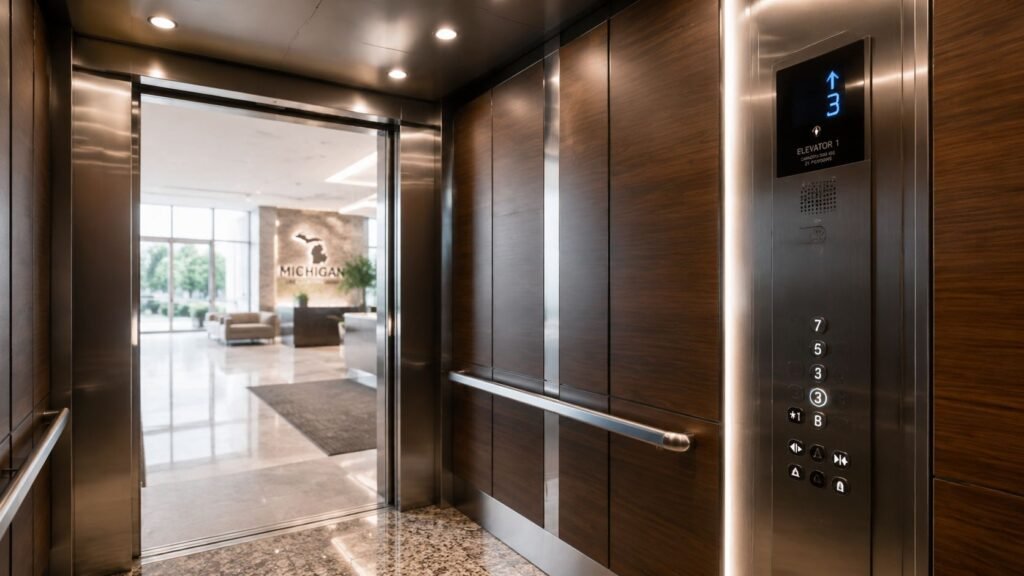
If you're managing a building in Detroit, Ann Arbor, Lansing, or anywhere else in Southern Michigan, you may already know the pattern. The elevator still runs, but not well. Tenants mention the worn wall panels. Visitors notice the poor lighting. Service calls keep coming. Leveling gets inconsistent, doors hesitate, and every shutdown creates another round of complaints, schedule changes, or access issues.
That's usually the point where owners ask a fair question. Should you just update the cab interior, or is it time to modernize the elevator properly?
That distinction matters more than most building owners realize. A cab can look new and still have an aging controller, noisy door operator, outdated safety circuits, and hard-to-source components behind the walls. In practice, that means you can spend real money and still keep the same reliability problem.
Is Your Elevator Showing Its Age
A common situation looks like this. A property manager budgets for new wall panels, fresh flooring, better lighting, and a new ceiling because the cab looks tired. The work gets approved, the cab comes back looking cleaner, and for a few weeks everyone is happy.
Then the elevator starts missing floors again. Or the doors reopen for no clear reason. Or the unit goes out of service during a busy part of the day, and now the owner has a newer-looking elevator with the same old mechanical headaches.
What owners usually notice first
Most owners don't start with the machine room. They start with symptoms:
- Tenant complaints: The cab feels dated, dim, noisy, or rough.
- Operational problems: Doors drag, starts and stops feel abrupt, or the car doesn't level cleanly.
- Service frustration: Repairs feel repetitive instead of corrective.
- Compliance concerns: Accessibility, emergency communication, and safety upgrades may no longer line up with current expectations.
Those issues rarely stay isolated. A worn interior affects first impressions. A tired operating system affects uptime. Together, they drag down the user experience and make budgeting harder because you're reacting instead of planning.
An old elevator usually tells you what's wrong long before it completely fails. Owners get in trouble when they fix the visible symptom and ignore the operating system behind it.
Why modernization keeps moving up the priority list
This isn't a niche issue. The global elevator modernization market is projected to grow from $7.8 billion in 2020 to $20.0 billion by 2030 at a 9.4% CAGR, which tells you owners everywhere are dealing with the same problem: aging vertical transportation systems that still need to serve occupied buildings safely and reliably.
In Michigan, that pressure is easy to understand. Many commercial, institutional, municipal, and multifamily buildings are working with older equipment that wasn't designed for today's expectations around accessibility, uptime, ride quality, and serviceability. A modernization project isn't just a repair with nicer finishes. It's often the moment when an owner decides whether to keep patching an aging asset or make it dependable again.
The business question behind the elevator question
The main decision isn't whether your cab needs new panels. It's whether your elevator is still supporting the building the way it should.
If the answer is no, elevator cab modernization should be evaluated in two layers. First, what riders see and touch. Second, what controls motion, door performance, safety functions, and future service access. Owners who separate those two layers make better capital decisions. Owners who don't often pay twice.
The Two Paths Cosmetic vs Comprehensive Modernization
A lot of expensive mistakes start with one assumption: if the elevator looks better, the problem is solved. It usually isn't.
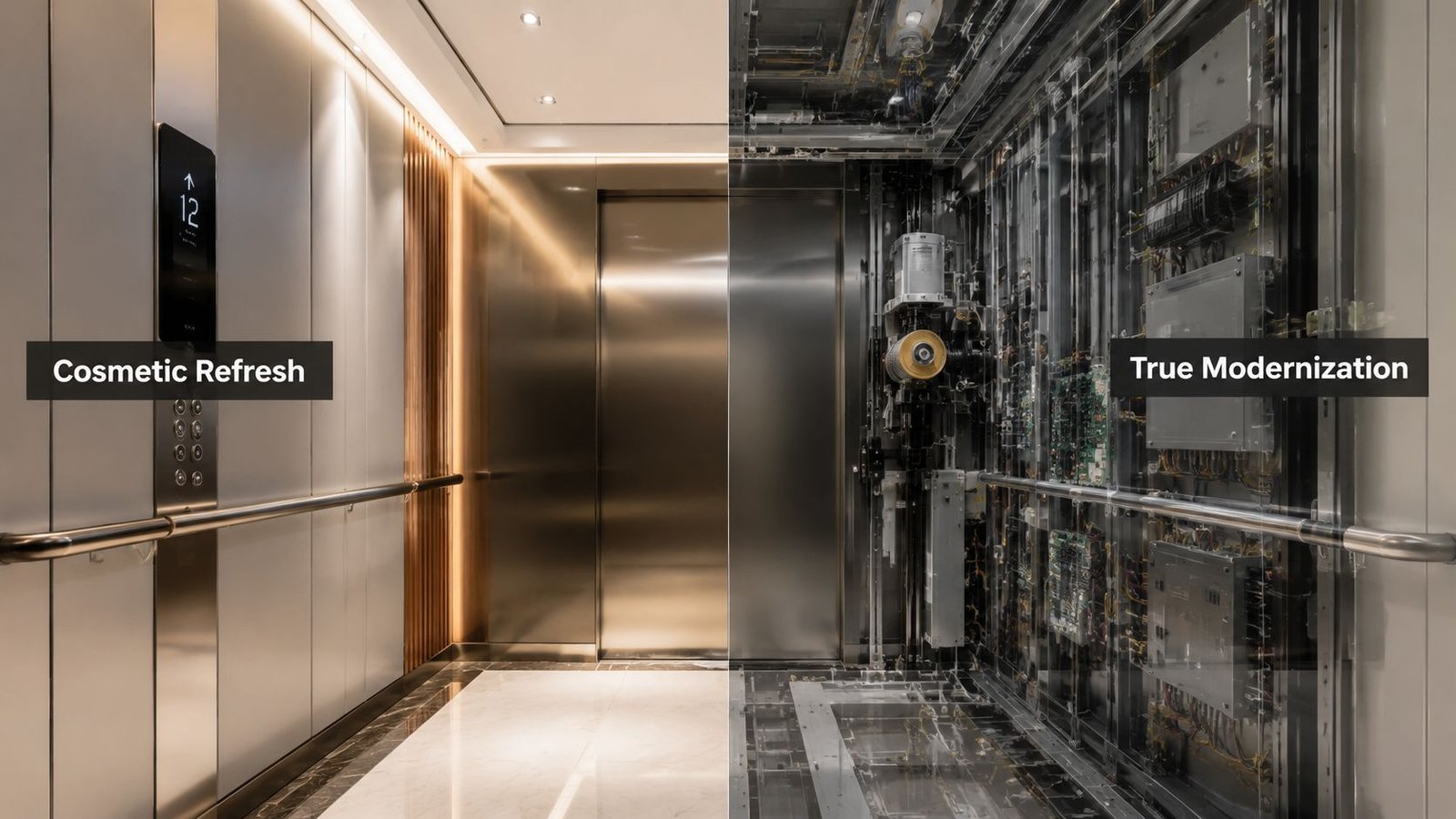
A cosmetic cab refresh and a full modernization are not the same project. One improves appearance. The other addresses the systems that determine whether the elevator runs properly.
What a cosmetic cab refresh actually includes
A cosmetic project usually focuses on visible finishes and passenger-facing surfaces, such as:
- Wall panels: New laminate, metal, veneer, or decorative panel systems.
- Ceilings and lighting: Updated fixtures, lens covers, and brighter presentation.
- Flooring: Replacement of worn carpet, rubber, tile, or other finish materials.
- Handrails and mirrors: New accessories that improve appearance and function.
- Car operating panel appearance: Faceplate refresh, engraving updates, or a cleaner layout.
There's nothing wrong with that work when the underlying equipment is in good shape. In a building with reliable controls and healthy mechanical systems, a cab refresh can be the right move. It improves the rider experience and helps the elevator match the rest of the property.
The problem is when owners use cosmetic work as a substitute for system renewal.
What a true modernization includes
A thorough modernization reaches beyond what the passenger sees. It deals with the control and operating components that make the elevator safe, smooth, code-aligned, and serviceable over time.
According to Stanley Elevator's guide to elevator modernization, many building owners confuse cab modernization with full elevator modernization, while true modernization involves replacing controllers, drives, and safety circuits. The same source notes that neglecting those operational systems is a primary cause of recurring breakdowns and poor long-term reliability.
That lines up with what contractors see in the field. A cab can be spotless and still have obsolete controls, weak door performance, inconsistent leveling, and recurring shutdowns.
A practical way to think about the difference
A cosmetic refresh is like repainting a vehicle and reupholstering the seats. An extensive modernization is rebuilding the systems that make it dependable to drive.
If your elevator has any of the following issues, cosmetics alone usually won't fix the underlying problem:
- Frequent callbacks for the same symptoms
- Noticeable ride roughness or stop-start jerk
- Door operator problems
- Hard-to-find replacement parts
- Outdated emergency communication or accessibility components
- Concerns about future code compliance
Practical rule: If your elevator's biggest problem is how it looks, start with the cab. If its biggest problem is downtime, leveling, door performance, or obsolete parts, start with the system.
Where owners lose money
The most common waste happens when an owner installs new interiors first, then learns later that the controller, drive, or safety equipment also needs replacement. That can mean tearing into finished work, revising scope, and accepting disruption twice.
A better approach is to decide early which path you're really on:
- Appearance-only upgrade for an elevator that is mechanically sound.
- System-led modernization with cab upgrades integrated into the larger plan.
- Phased work if budget timing matters and the contractor sequences the scope correctly.
The right answer depends on condition, not preference. Owners get the best long-term value when they accurately diagnose the elevator, not when they choose the least disruptive option and hope it holds.
Designing a Durable and Appealing Cab Interior
Once the operating side of the project is defined, the cab interior deserves careful planning. It is at this stage that many owners either overspend on finishes that don't hold up, or underspend and end up with an interior that looks tired too quickly.
In Southern Michigan, usage matters more than trends. A medical office, municipal building, student housing property, and Class A office tower shouldn't be using the same finish strategy. The right interior is the one that fits traffic, cleaning practices, abuse level, and the image you want the building to present.
Start with use, not style
Before choosing finishes, answer a few blunt questions.
- Who rides this elevator every day? Patients, residents, office tenants, delivery staff, students, or the public all wear a cab differently.
- How often is the building cleaned? Some materials only look good if housekeeping stays ahead of scuffs and fingerprints.
- Is vandalism or impact damage a concern? If yes, fragile decorative choices become expensive quickly.
- Does the elevator support freight-like traffic even if it's a passenger unit? Carts, hand trucks, and maintenance equipment change the finish equation.
A handsome design that can't survive normal traffic is a bad specification.
Common material choices and their trade-offs
The most practical finish packages usually combine appearance, replaceability, and resistance to abuse. Here's a working comparison owners can use during planning.
| Material | Durability/Vandalism Resistance | Relative Cost | Maintenance Level | Best For |
|---|---|---|---|---|
| High-pressure laminate | Good for everyday traffic, less forgiving under hard impact | Lower | Moderate | Offices, multifamily, budget-conscious upgrades |
| Stainless steel | Strong resistance to dents, scratches, and heavy public use | Higher | Moderate, fingerprints need attention | Hospitals, public buildings, schools, transit-adjacent properties |
| Wood veneer | Attractive but less forgiving in hard-use environments | Higher | Higher | Premium offices, clubs, higher-end residential settings |
| Solid surface panels | Durable and clean-looking, depending on application details | Higher | Moderate | Healthcare, contemporary commercial interiors |
| Plastic laminate with metal accents | Balanced option for appearance and value | Moderate | Moderate | General commercial use |
| Textured metal finishes | Strong visual depth with practical toughness | Moderate to higher | Moderate | Modern office and mixed-use buildings |
Where owners often make the wrong call
Wood veneer looks impressive in the showroom. In a high-traffic building with carts, strollers, winter salt, and cleaning crews moving fast, it may not stay impressive for long.
Stainless steel is often the safer commercial choice. It takes abuse better, fits a wide range of building types, and doesn't create the same maintenance sensitivity. Laminates still have a place, especially when the budget is tight, but the better grades matter. Cheap laminate systems can age poorly around edges, seams, and impact points.
For the floor, don't treat it like an afterthought. Flooring takes the most punishment in the cab, and it's usually the first finish riders notice after the doors open. If you're weighing options, this guide to elevator flooring replacement is a useful starting point for thinking through wear, cleaning, and fit by building type.
The cab floor should be chosen like a lobby floor in a small moving room. If it can't handle dirt, moisture, and repeated rolling traffic, it won't age well.
Design choices that age well
A lot of elevator interiors fail because they chase a look instead of a service life. In most commercial settings, the finishes that age best share a few traits:
- Balanced contrast: Light enough to feel open, dark enough to hide routine wear.
- Simple panel patterns: Fewer complicated seams usually means fewer visual failures later.
- Replaceable components: Individual panels, corners, and accessories should be service-friendly.
- Lighting that flatters the material: Even good finishes look poor under weak or harsh cab lighting.
Matching style to building type
Different buildings call for different visual priorities.
Commercial office and municipal settings
Clean lines, durable panel systems, brushed metal accents, and neutral flooring usually perform best. These spaces need to look current without becoming dated too fast.
Residential and mixed-use properties
Warmer tones, decorative laminates, selective mirrors, and softer lighting often make sense. The goal is comfort without sacrificing durability.
Healthcare and education buildings
Easy cleaning, impact resistance, straightforward signage, and clear operating panels matter more than decorative flair. Function should lead.
A strong cab interior does two jobs at once. It supports the brand and image of the property, and it survives daily use without becoming a maintenance problem. If a design can't do both, it isn't finished yet.
Upgrading Cab Systems for Performance and Safety
A modern cab shouldn't just look better. It should feel better to use, sound better in motion, and work more reliably day after day. That comes from the systems tied to the cab, not only the finishes attached to its walls.
The biggest shift owners notice after a well-planned modernization is often ride quality. The elevator starts cleaner, stops more accurately, opens doors more consistently, and feels less strained. That change comes from integrating the cab with updated controls, operators, communication components, and lighting.
The components riders interact with every trip
Passengers judge an elevator by what they can see and feel. That makes these cab-side components worth more attention than they usually get.
- Car operating panel: The COP should be readable, logically arranged, accessible, and durable. Sloppy labeling, poor button response, and dated fixtures make the whole elevator feel neglected.
- Hall stations: Call buttons and indicators need to be clear, responsive, and easy to understand for all users.
- Emergency communication: Riders need reliable two-way communication in the event of a problem. This isn't a decorative upgrade. It's a life-safety expectation.
- Cab lighting: A proper LED conversion improves visibility, lowers maintenance burden, and gives the interior a cleaner presentation.
Where smooth performance really comes from
The visible fixtures inside the cab only perform as well as the control package behind them. If the controller is outdated or the drive system is inconsistent, new buttons and brighter lights won't fix rough starts, uneven acceleration, or noisy operation.
A stronger modernization package typically addresses:
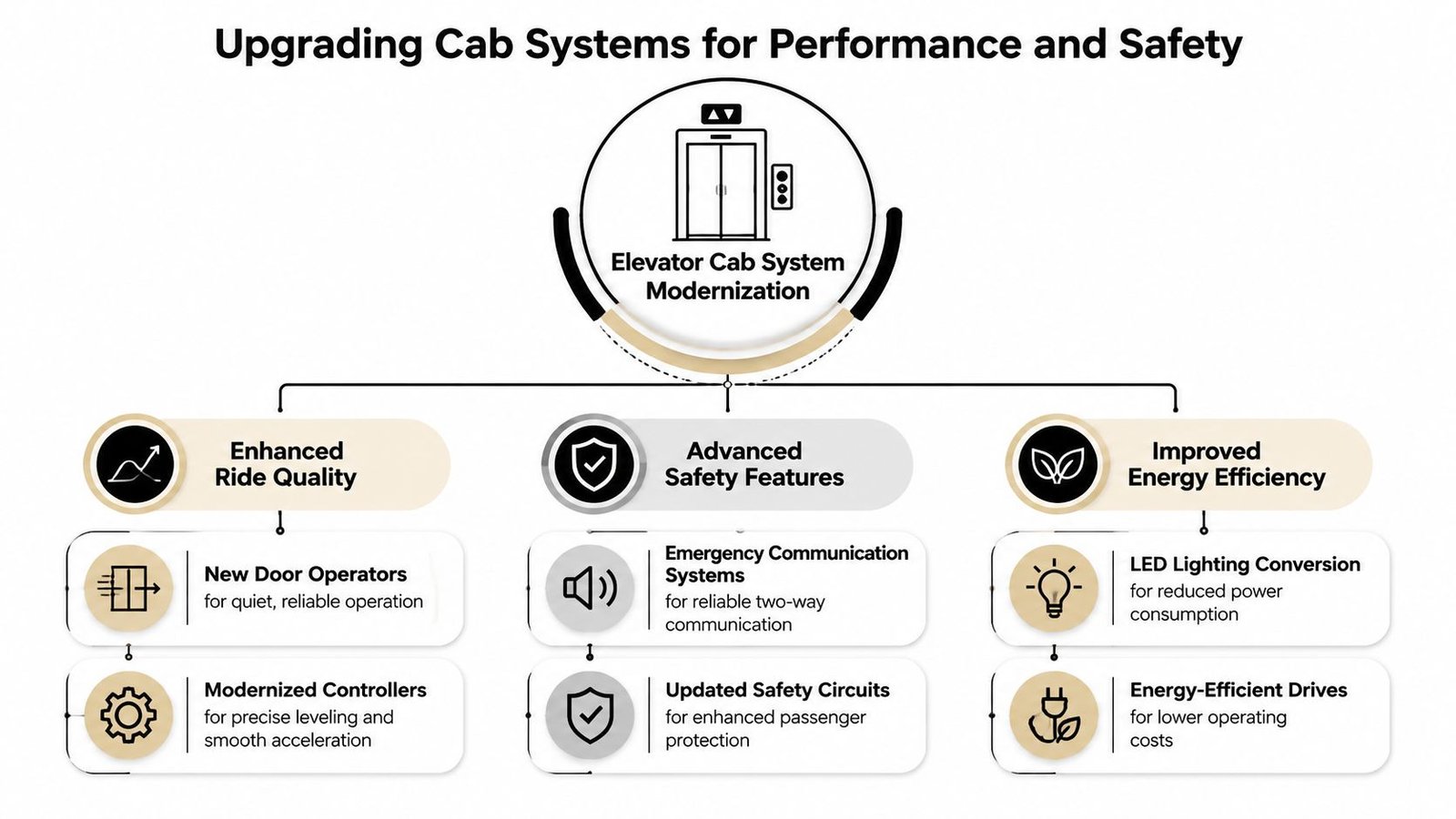
- Controller upgrades that improve logic, response, and diagnostic capability.
- Door operator upgrades that reduce hesitation, slamming, nuisance reopenings, and inconsistent cycling.
- Drive modernization that improves acceleration, deceleration, and leveling behavior.
- Safety circuit updates that align with current operating expectations and inspection standards.
That's where business outcomes show up. Fewer nuisance issues. Better passenger confidence. Less frustration for staff who depend on the elevator every day.
Energy use and ride quality are connected
A lot of owners still think efficiency upgrades are separate from performance upgrades. In elevator modernization, they're often the same decision.
According to this elevator modernization overview, modernizing with a Variable Voltage Variable Frequency drive and microprocessor controller can reduce energy consumption by 30 to 50 percent compared with older systems, while also improving ride comfort by minimizing jitter and noise. That matters because it translates technical equipment into operating results: less wasted power, smoother travel, and lower stress on components.
Here's a useful visual summary of those system relationships:
What works and what doesn't
Some upgrades pay off quickly in day-to-day use. Others look modern on paper but don't solve the owner's real problem.
What usually works:
- Replacing tired door operators when the elevator has repeated door-related service trouble.
- Modernizing controls and drives together so the system behaves as one package.
- Converting to LED cab lighting when lamps are dated, uneven, or maintenance-heavy.
- Updating communication hardware so emergency response capability is dependable.
What usually disappoints:
- A new interior without system work when downtime is already a problem.
- Partial electronic upgrades that leave old components trying to work with new ones in a patchwork setup.
- Appearance-first decisions in buildings where users care more about reliability than luxury finishes.
Riders may compliment the new wall panels once. They notice smooth starts, clean leveling, and dependable door operation every day.
Meeting ADA and Michigan Elevator Code Requirements
Compliance work is where many projects either stay on track or get expensive fast. If your elevator cab modernization doesn't account for accessibility and code requirements from the start, you can end up redesigning details after fabrication, delaying permits, or failing inspection on issues that were predictable.
Owners don't need to memorize every technical standard, but they do need to know what to ask and what can't be treated as optional.
The checklist owners should use early
For most building owners, the most important compliance items inside the cab include:
- Cab dimensions and layout: The available interior space has to support required access and usability expectations for the elevator type and building use.
- Door opening considerations: Clear access matters. Decorative updates can't interfere with the function of the opening.
- Car operating panel placement: Buttons, layout, and reach range need to work for accessible use.
- Button identification: Controls typically need tactile and visual clarity, including features such as Braille where required.
- Visual indicators and signals: Floor position and call response need to be understandable for riders.
- Emergency communication: The in-cab communication system must be reliable and appropriate for current requirements.
- Fire service and safety-related features: These are not cosmetic items. If they're outdated, they need direct evaluation during planning.
A useful background reference for owners reviewing these issues is this page on elevator code requirements, especially if you're trying to understand what inspectors and contractors will focus on before work begins.
The difference between code discussion and code execution
Many owners hear “ADA compliant” or “code compliant” too early in the conversation. That language should be earned, not assumed.
A good contractor should be able to walk you through:
- What currently exists in the cab
- What can remain
- What must change as part of the modernization
- What permitting authority will review
- What final inspection is likely to focus on
That matters because code isn't just about dimensions on paper. It shows up in device placement, signaling, emergency communication, operating panel design, and the way a modernized cab interfaces with the rest of the system.
Why cosmetic work can create compliance problems
Owners sometimes assume interior work is simple because it feels architectural. In reality, cab renovations can affect accessibility, fire-related components, signaling, fixture layout, and permit scope. A new wall panel system can change dimensions. A new COP can change mounting and reach. A new ceiling and lighting package can affect visibility and access for service.
If your contractor can talk at length about finishes but gets vague about permits, inspections, or accessibility details, stop and ask harder questions.
Michigan owners should expect local permitting and inspection requirements to influence the schedule and scope. That's normal. What isn't acceptable is finding out late that a design choice created a code issue that should have been caught during the field survey.
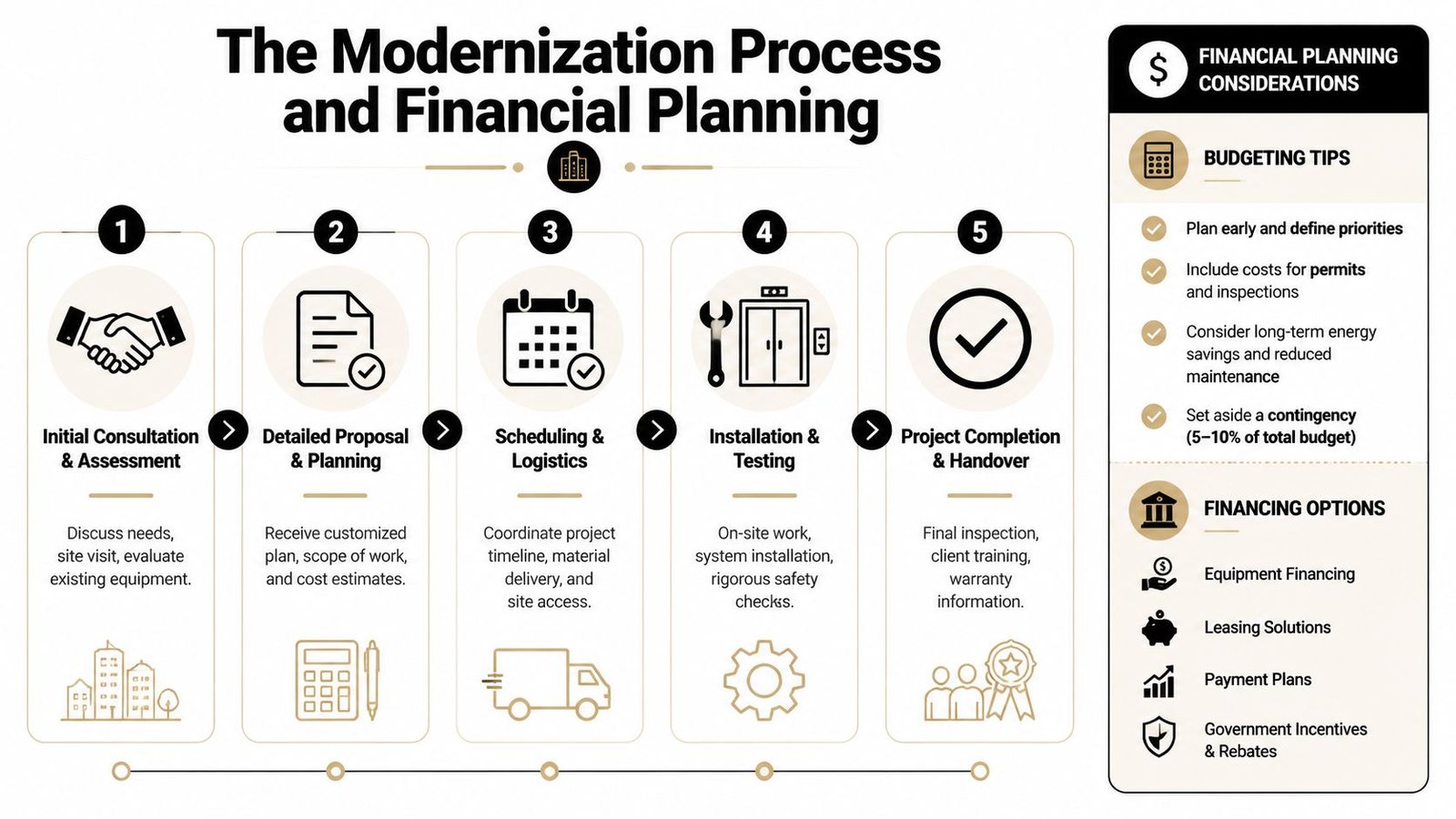
The Modernization Process and Financial Planning
A solid modernization project doesn't start with finishes. It starts with condition assessment, honest scope definition, and a financial plan that matches the building's actual needs. Owners get into trouble when they budget for a surface refresh and discover halfway through that the equipment condition points to a broader project.
That doesn't mean every job has to be all-or-nothing. It does mean the work should be sequenced intelligently, priced transparently, and built around long-term serviceability.
What the project usually looks like
Most elevator cab modernization projects move through the same basic stages, even when the scope varies.
Field assessment and condition review
The contractor identifies what's cosmetic, what's operational, what's obsolete, and what may trigger permit or code work. A useful survey should cover the cab, controller, drive equipment, door system, safety devices, and communication features.
Scope development and proposal
The proposal should separate must-do work from elective upgrades. If the owner is deciding between a cab refresh and a broader modernization, the proposal should make that distinction plain. If it doesn't, the quote is too vague.
Permitting and scheduling
Permits aren't a side task. Jurisdiction, inspection timing, material lead times, and building access all affect the schedule. This stage is also where tenant communication and downtime planning should be addressed.
Installation, testing, and handoff
The installation phase should end with testing, inspection coordination, turnover documentation, and a clear explanation of what was replaced and how the updated equipment will be serviced.
The financial question owners should ask first
Don't start by asking, “What does a new cab cost?” Start by asking, “What problem am I trying to stop paying for?”
If your building is losing time to repeat shutdowns, nuisance repairs, callbacks, and tenant frustration, the cheapest proposal may be the one that preserves those costs. If your elevator is mechanically healthy and only looks tired, a limited cab project may be enough. But that should come from inspection results, not wishful budgeting.
Owners comparing budget scenarios can use a guide like this overview of elevator modernization cost to frame the discussion, especially when balancing short-term capital limits against long-term operating expense.
Why non-proprietary equipment matters financially
One of the biggest long-term decisions in modernization has nothing to do with panel color or lighting style. It's whether the updated system locks you into one service path.
According to the University of California Health non-proprietary elevator scope document, choosing non-proprietary control systems during modernization can reduce lifecycle service costs by 20 to 35 percent and help owners avoid vendor lock-in, which can inflate future repair quotes by over 40 percent. For owners of healthcare, municipal, education, and commercial properties, that's not a technical footnote. It's a capital planning issue.
Good planning usually includes these decisions
- How much downtime can the building tolerate
- Whether to phase the work or complete it in one modernization cycle
- Which components are mandatory versus elective
- Whether the updated system can be serviced by qualified providers without proprietary barriers
- How future maintenance will be handled after turnover
The cheapest modernization is often the one that leaves you with the fewest restrictions five years later.
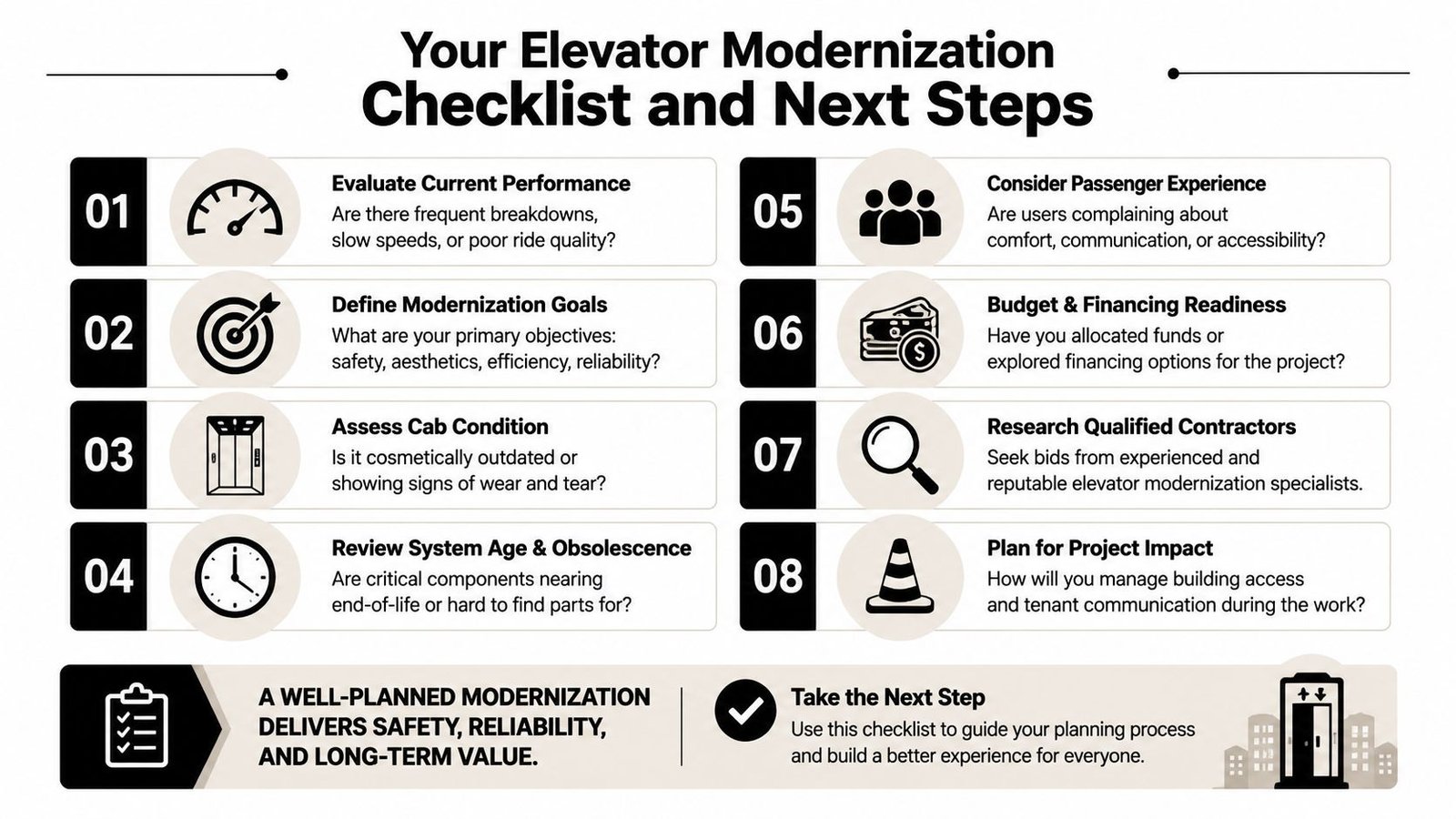
Your Elevator Modernization Checklist and Next Steps
If you're weighing elevator cab modernization right now, the goal isn't to buy the biggest project. It's to buy the right one. That starts with a clear look at condition, risk, and long-term use.
Many owners already know something is off. The elevator looks dated. Riders complain. Parts are getting harder to source. Service calls feel repetitive. The next move is to turn those observations into a decision framework instead of waiting for a shutdown to make the decision for you.
A practical checklist before you request proposals
Use this list to organize your thinking before you talk with contractors.
- Evaluate performance: Are breakdowns recurring, doors acting up, or ride quality getting rough?
- Separate looks from operation: Is the problem mainly cosmetic, or are you also dealing with reliability and obsolescence?
- Check the rider experience: Look at lighting, controls, emergency communication, noise, and accessibility.
- Identify building use: A public-facing municipal building, a medical office, and a private residential property don't need the same finish and durability strategy.
- Ask about code and permitting: The contractor should be able to explain how your city or jurisdiction handles permit filing and final inspection.
- Ask whether the modernization is non-proprietary: Future service flexibility matters after the install is done.
- Plan for disruption: Know how you'll communicate downtime, reroute access, and protect building operations during the project.
- Require scope clarity: The proposal should tell you exactly what is cosmetic, what is system modernization, and what is excluded.
Questions worth asking any contractor
Some questions reveal very quickly whether you're talking to a serious modernization partner or just a finish seller.
- Can you explain the difference between a cab refresh and full modernization for my specific elevator?
- Which components are obsolete or likely to drive future downtime?
- What parts of this project affect code compliance or accessibility?
- Will the updated system be non-proprietary and serviceable by qualified providers?
- What's the permit path for my location?
- How will you handle testing, inspection, and turnover documentation?
- If I phase the project, what sequence protects the investment best?
A well-executed modernization improves more than appearance. It supports uptime, helps protect compliance, improves rider confidence, and puts the owner back in control of future maintenance decisions. A poorly scoped project does the opposite. It spends money without removing the risk that caused the project in the first place.
If you need a practical second opinion on an elevator in Southern Michigan, Crane Elevator Company can help assess whether you need a cab refresh, a full modernization, or a phased plan that protects your budget and your long-term service options. Their team serves Lower Michigan with non-proprietary modernization expertise, code-focused guidance, and free consultations for owners who want a clear answer before committing to the wrong scope.