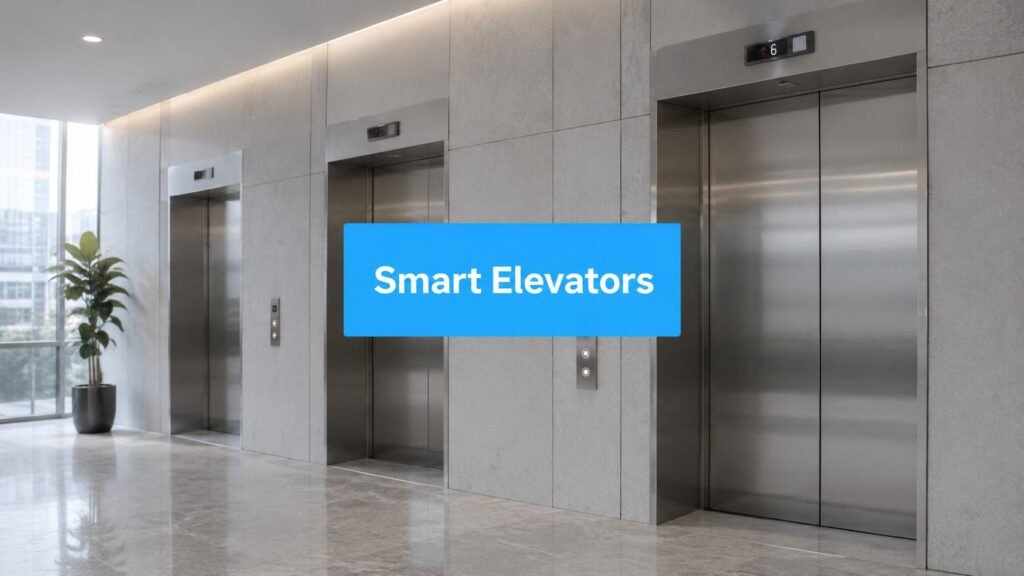
A 1980s hydraulic elevator in a Kalamazoo office building can look fine on Monday and strand tenants by Friday. The owner gets another service call, the property manager explains the outage, and staff starts routing visitors to a freight car or a stairwell. The immediate question is how to restore service. The better question is whether the building needs a smarter control system, a broader modernization, or a complete replacement.
Smart elevator technology helps owners answer that question with operating data instead of guesswork. The technology has grown well beyond experimental building controls. One industry analysis estimated the global market at USD 18.75 billion in 2019, with a projection of USD 38.27 billion by 2027 and a 9.1% compound annual growth rate. A separate report valued the market at USD 10.8 billion in 2023 and projected USD 17.34 billion by 2030. The underlying market analysis connects that expansion to AI-assisted dispatching, IoT monitoring, and condition-based predictive maintenance in vertical transportation (Scientific Reports analysis of smart elevator technology).
For an owner in Michigan or Ohio, the decision isn't whether smart features sound impressive. It's whether the existing equipment can support them, whether the upgrade improves the building's actual problems, and whether the investment can be maintained securely and inspected properly.
What Smart Elevator Technology Actually Means
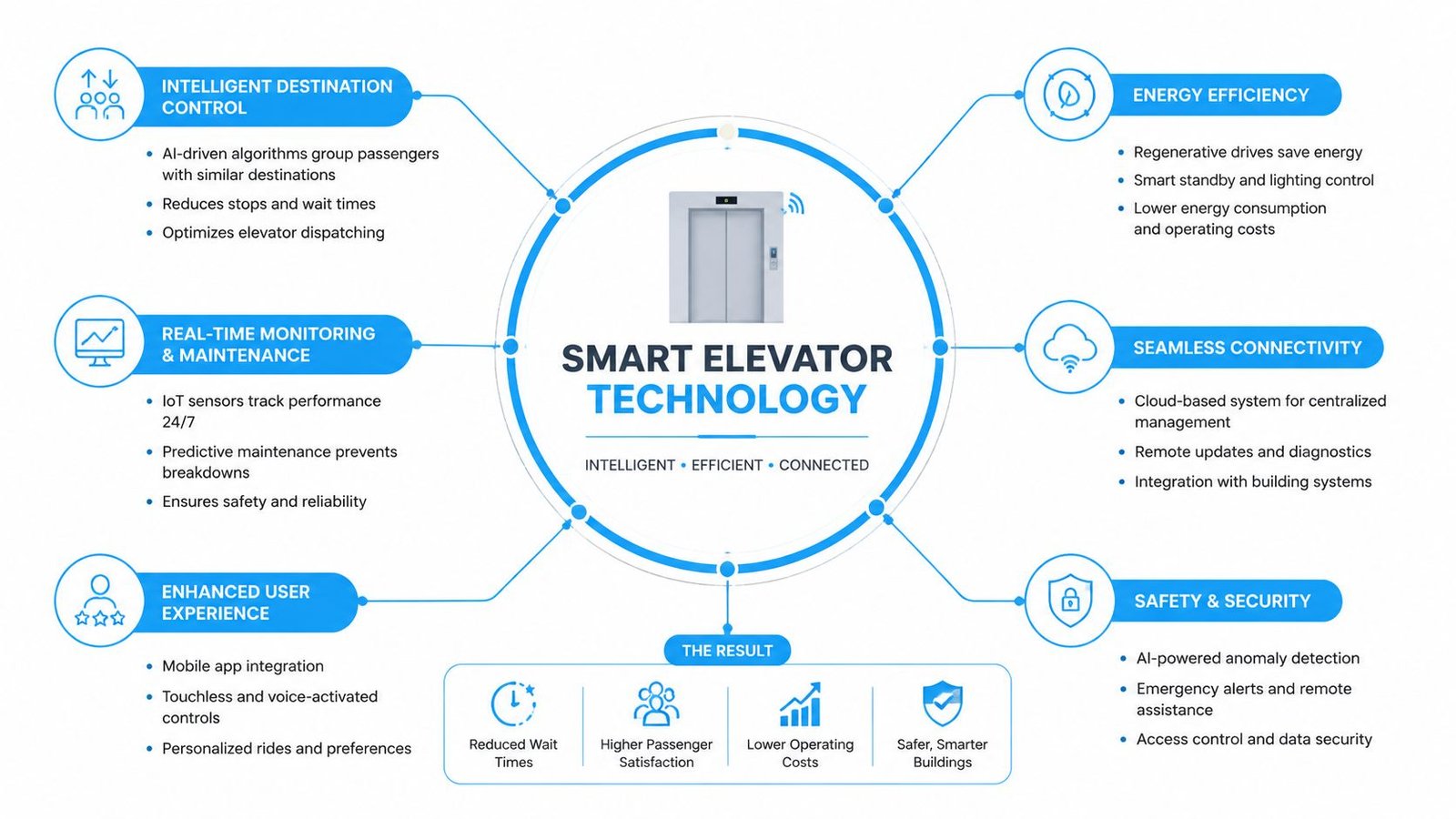
A smart elevator isn't a completely different machine. In most buildings, it's a conventional elevator system equipped with sensors, connected controls, software, and communications that allow the equipment to report conditions and adjust operation.
That distinction matters in an older property. A Kalamazoo hydraulic elevator may still have a useful hoistway, cab, door equipment, and power unit, even if its controller is outdated and its service history is scattered across paper invoices. A retrofit can add modern intelligence without tearing out every component. The contractor still has to verify compatibility, code requirements, wiring condition, hydraulic performance, and available network infrastructure.
Four building blocks owners should understand
Connected controllers run dispatch logic, door operation, leveling, safety functions, and communication with monitoring platforms. The controller is the decision-making layer. If it can't communicate reliably, the rest of the smart system has limited value.
Sensors collect information from drives, motors, doors, brakes, cabs, and other operating points. Temperature, vibration, travel behavior, error codes, and door cycles can reveal a developing problem before passengers experience a shutdown.
Analytics software turns raw readings into alerts, trends, maintenance recommendations, and service records. A dashboard shouldn't replace a qualified technician. It should help that technician arrive with better information and the right parts.
Building-network integration connects the elevator to approved monitoring, access-control, emergency communication, and facility-management systems. That connection creates convenience, but it also creates responsibilities for network security, permissions, updates, and data retention.
Practical rule: Smart capability is only useful when the building can collect trustworthy data and a service team can act on it.
A new traction elevator can be designed around these functions from the beginning, but smart capability isn't limited to new installations. Many older traction and hydraulic systems can receive meaningful upgrades. The owner decision comes down to the condition of the mechanical equipment, the flexibility of the controls, the building's disruption limits, and the value of improved uptime and passenger flow.
The Core Components Inside a Connected Elevator
Connected equipment works as a chain. A sensor detects a change, the controller records or responds to it, the analytics platform interprets it, and a technician decides what work should happen. Break one link and the owner may end up with an expensive dashboard that doesn't improve service.
Destination dispatch controls traffic
Traditional collective dispatch sends cars toward calls based on established rules. Destination dispatch collects a passenger's destination before boarding and groups riders traveling to similar floors. In a downtown Toledo medical office, that can reduce unnecessary stops and prevent the lobby from becoming a sequence of competing hall calls.
The value depends on traffic patterns, building layout, passenger behavior, and the quality of the dispatch configuration. It isn't automatically the right choice for every low-rise building. A modest office with light traffic may gain more from a reliable controller and better door performance than from a complex destination system.
Sensors reveal equipment behavior
IoT sensors can monitor vibration and temperature around a hoisting motor, drive, door operator, or other critical equipment. A change in a motor's vibration pattern may prompt inspection of bearings or alignment before a failure strands the car. The sensor doesn't diagnose every mechanical problem by itself. It gives the service team an earlier signal and a more precise starting point.
Analytics turns service into planning
Predictive maintenance software combines sensor readings with fault history, operating patterns, and inspection records. Instead of waiting for an emergency callback, a facility manager can schedule work around occupancy, tenant needs, and available parts. Cloud dashboards also give owners a clearer record of recurring faults and unresolved recommendations.
Access and communication improve the passenger experience
Mobile credentials, RFID access, and touchless call options can help residents in a Troy apartment tower reach authorized floors without pressing a hall button. Remote monitoring can provide operating alerts, while two-way communication supports faster interaction when a passenger needs assistance. These features should be selected for the building's actual security and accessibility requirements, not added merely because they appear in a product brochure.
| Component | Function | Real-Building Example |
|---|---|---|
| Destination dispatch | Groups passengers by destination and assigns cars | A Toledo medical office reduces competing stops during busy arrival periods |
| IoT sensors | Tracks conditions such as vibration and temperature | Motor data flags a possible bearing issue before a shutdown |
| Predictive maintenance software | Converts operating data into alerts and scheduled work | A facility manager plans a repair during a low-occupancy period |
| Touchless and credentialed access | Supports mobile, RFID, or controlled floor access | Residents in a Troy apartment tower access authorized floors |
| Remote monitoring and communication | Sends alerts and supports service coordination | A technician receives fault information before arriving on site |
The control layer deserves careful review before any software purchase. Owners should ask what the controller can support, which data the platform retains, how technicians access it, and whether the system remains serviceable if the original vendor changes its product strategy. Review the available elevator control systems as part of that technical assessment.
Business Benefits Owners Can Measure
A smart elevator project should survive a budget meeting without relying on vague promises. Track the outcomes that affect tenants, operating expenses, risk, and building usability.
Safety needs a documented baseline
Automatic rescue devices, two-way video or voice communication, overload sensing, door protection, and improved fault reporting can support safer operation. They don't eliminate the need for inspections, safety testing, maintenance, or trained technicians. An owner should compare the proposed system against current entrapment records, emergency-phone performance, door-related calls, inspection violations, and unresolved safety recommendations.
The right question is not whether a brochure says “safer.” Ask whether the project will reduce repeat safety faults, improve emergency communication, and produce records that the facility team can review.
Uptime belongs in the operating plan
Predictive maintenance can move the team from reactive service to planned intervention. A practical availability target is 95% or higher, but the building must define how it calculates availability, whether planned shutdowns count, and how it handles a multi-car group. A system that reports more faults without improving repair response won't meet the target.
Track outage hours, after-hours callbacks, repeat failures, mean time to restore service, and the number of shutdowns caused by doors, controls, power units, or communication equipment.
Energy savings need meter data
Regenerative drives, efficient motors, LED cab lighting, standby controls, and optimized dispatch can reduce energy use compared with older equipment. Before approving the work, establish a baseline from utility data or equipment measurements. Afterward, compare consumption under similar occupancy and operating conditions.
A peer-reviewed study reported a 20% reduction in energy consumption and a 15% decrease in average wait times for connected systems combining IoT sensing, image processing, and AI, compared with traditional methods (peer-reviewed connected elevator study). The result supports the business case for data-driven controls, but owners still need a building-specific measurement plan.
Accessibility should be tested by users
A useful modernization should support accessible operation through appropriate cab dimensions, door clearances, audible and visual indicators, braille or tactile controls, emergency communication, and dependable leveling. Review the applicable ADA requirements and Michigan Elevator Code provisions with the design professional and elevator contractor.
Measure accessibility by observing actual use. Can a wheelchair user enter and turn safely? Can a person with limited vision identify the floor and emergency controls? Do doors remain open long enough for the building's users? Compliance is the starting point, not the finish line.
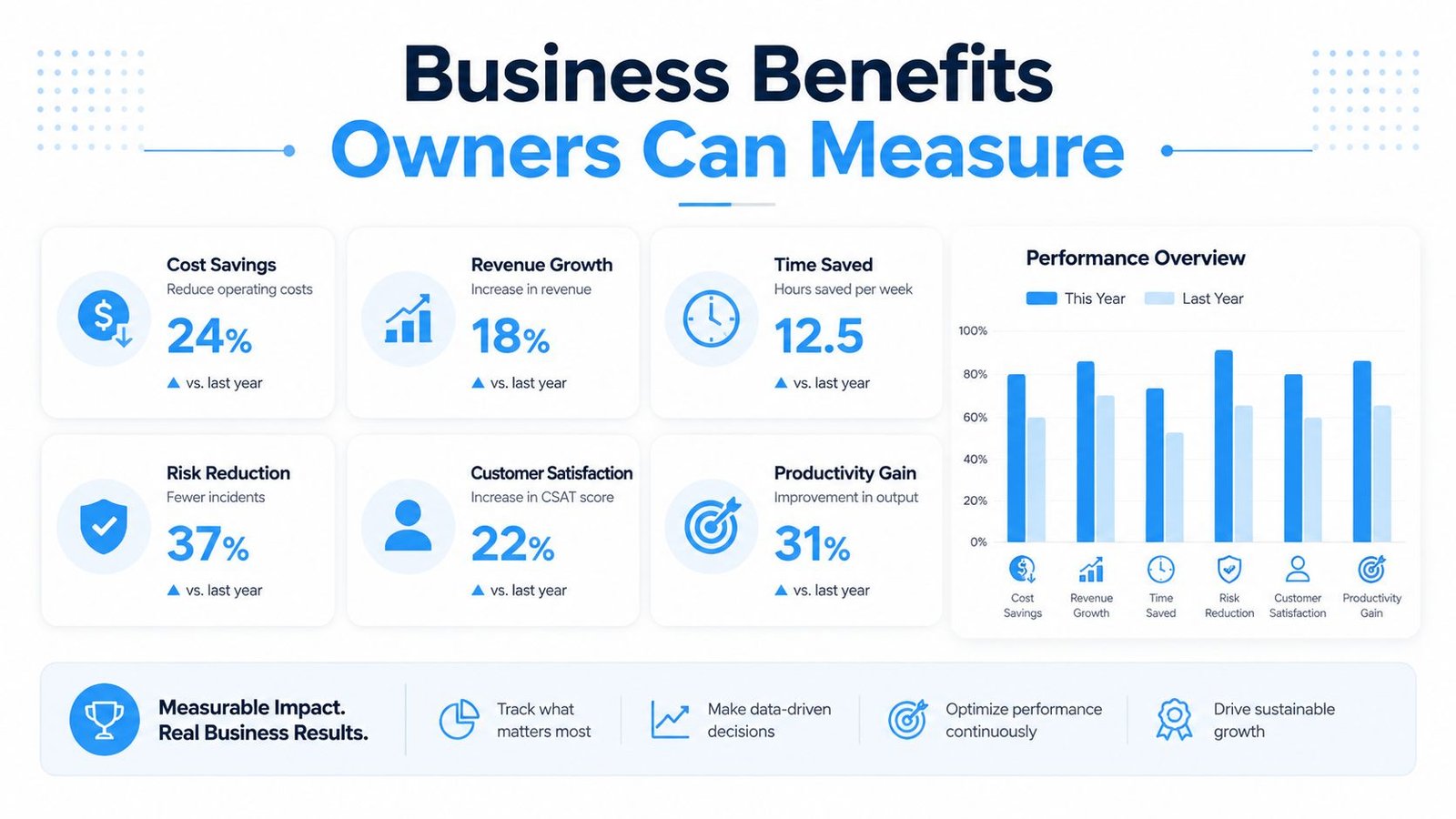
A useful scorecard combines safety incidents, outage hours, energy consumption, wait times, repeat callbacks, and accessibility findings. Manufacturer projections can inform planning, but the building's own baseline should control the investment decision.
Watch this overview of connected elevator capabilities, then compare its feature list with the operating problems documented in your property.
Retrofit or Replace How to Decide
The wrong project scope creates the worst elevator investment. A controller-only upgrade may deliver connected monitoring quickly, but it won't correct a worn jack, failing door equipment, poor ride quality, or a deteriorated hoistway. Full replacement may solve more problems, but it also costs more, takes longer, and creates greater disruption.
Use the asset condition, not the feature list
Equipment that has operated for 20 or more years often deserves a replacement analysis, especially when major components are obsolete or parts are difficult to obtain. That doesn't make age an automatic replacement order. A well-maintained hydraulic system with a sound jack, tank, cylinder, doors, and hoistway may be a strong modernization candidate.
Traction and hydraulic equipment also require different evaluations. Traction systems may support controller, drive, machine, brake, and door upgrades while retaining a usable car and hoistway. Hydraulic projects need close attention to the jack, power unit, pump, valve, piping, oil condition, and cylinder environment. A controller can't compensate for a hydraulic component that has reached the end of its practical service life.
Compare the two paths directly
| Decision Criterion | Retrofit / Modernize | Full Replacement |
|---|---|---|
| Existing equipment | Retains sound components and replaces selected systems | Removes and replaces most or all elevator equipment |
| Controller generation | Works when the existing system can support new controls and communications | Provides a clean platform for current controls and monitoring |
| Mechanical condition | Best when the hoistway, cab, doors, machine, or hydraulic equipment remain serviceable | Best when major components are worn, incompatible, or unavailable |
| Energy and ride quality | Improves these selectively, depending on project scope | Offers the broadest opportunity for coordinated improvements |
| Building disruption | Usually supports phased work and shorter shutdowns | Requires more extensive access, demolition, and coordination |
| Code-triggered work | Must address applicable ASME A17.1, ASME A17.2, and Michigan requirements | New equipment still requires approval, testing, and inspection |
| Best fit | Occupied buildings with a strong base asset | Gut-rehab, vacant, severely obsolete, or structurally unsuitable assets |
Read the elevator modernization services available for a broader understanding of the work involved, then require the contractor to identify retained components, replaced components, exclusions, testing, and warranty responsibilities.
Owner's decision checklist: Confirm equipment age and type, review outage history, inspect the hoistway and machine room, identify obsolete controls, verify code-triggered upgrades, assess network readiness, and decide how much shutdown time the building can tolerate.
Don't accept a proposal that calls every project “smart” without explaining what the building will gain. Ask for a side-by-side retrofit and replacement scope, a shutdown schedule, a code pathway, a parts strategy, and a five-year maintenance plan.
Cybersecurity and Code Compliance in Connected Elevators
A connected elevator creates another operational dependency. Remote monitoring ports, vendor VPNs, service dashboards, mobile credentials, and building-network connections expand the number of systems that can affect elevator availability. The software may improve fault visibility, but poor access control or neglected updates can create a new failure path.
The risk isn't limited to a dramatic attack. Weak vendor credentials, unpatched firmware, poorly documented remote access, and an unsegmented building network can expose controllers and service systems to problems that the elevator mechanic can't solve from the machine room.
Treat the elevator as part of the building network
Owners should require:
- Network segmentation: Keep elevator controls separate from office, guest, resident, and administrative networks.
- Multi-factor authentication: Require MFA for vendor portals, remote-service accounts, and administrative access.
- Access records: Document who can connect remotely, what they can change, and when access is removed.
- Firmware commitments: Put update responsibilities, response expectations, and support periods in writing.
- Data governance: Establish what passenger, access, diagnostic, and video data the system collects and how long it remains available.
- Recovery procedures: Maintain a manual operating and service plan for connectivity loss, vendor outages, and software failure.
No smart feature overrides mechanical safety obligations. Ohio requires every passenger elevator, escalator, moving walk, and freight elevator, including gravity elevators, to be inspected twice every 12 months. Ohio administrative rules also require periodic safety tests to follow the most recently adopted ASME A17.1 and A17.2 standards (Ohio administrative elevator inspection rule).
Michigan rules require passenger, freight, inclined, limited-use/limited-application, special-purpose personnel, rooftop elevators, material lifts, escalators, moving walks, belt manlifts, and special elevating devices to be inspected at least once every 12 months. Dumbwaiters, stairway chairlifts, one-person elevators, platform lifts, and power sidewalk elevators are inspected at least once every 24 months (Michigan elevator code document).
Michigan also requires car and counterweight safeties and governors to be maintained and tested at intervals of no more than 12 months. The person or firm performing those tests must file certification with the department and tag the governor rope with the test date and tester name (Michigan safety and governor testing rule).
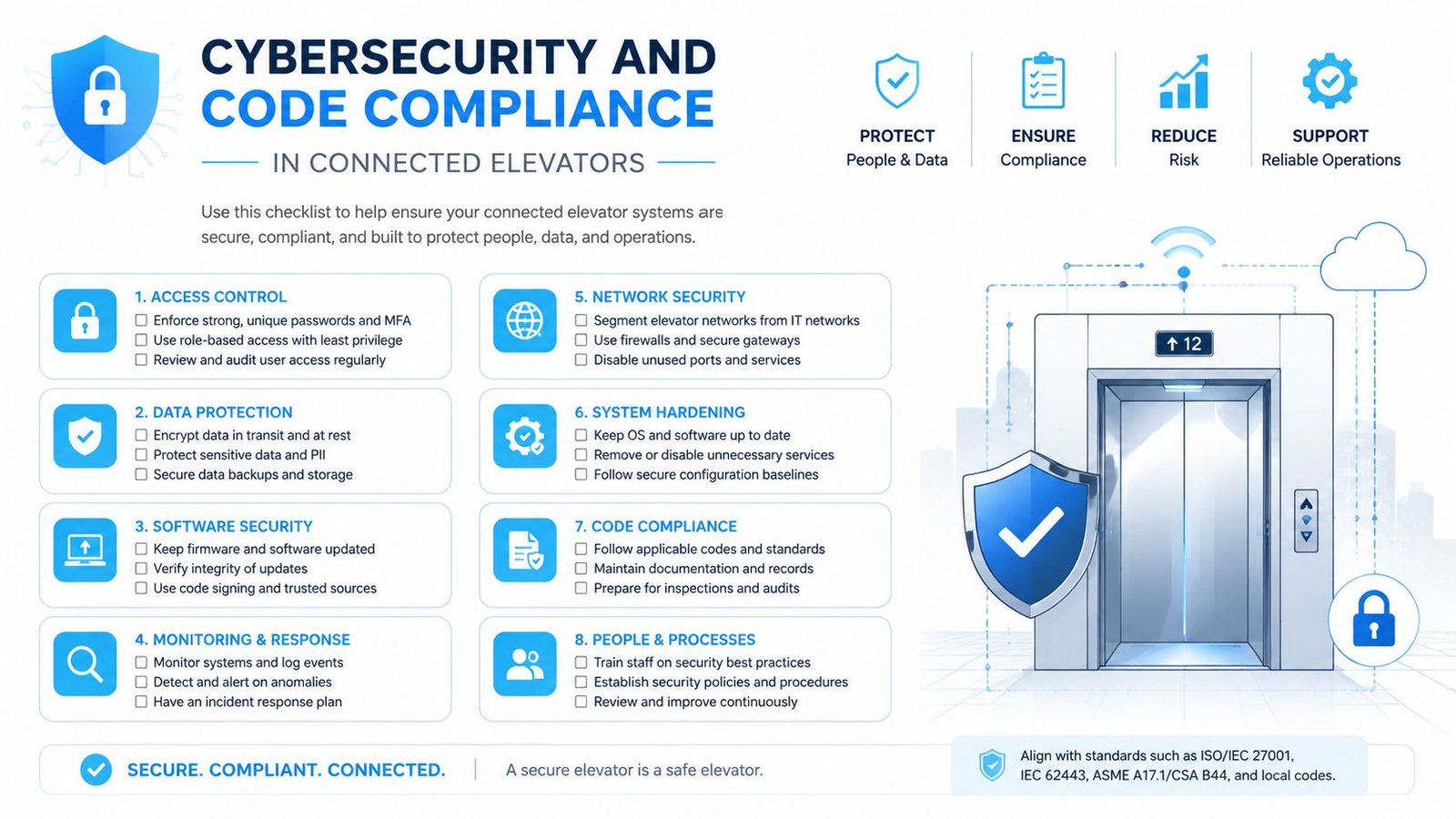
Review elevator code requirements before finalizing a connected-system specification. Put inspection dates, safety tests, certificates, violations, firmware status, remote-access permissions, and corrective actions in one compliance record.
Compliance is not a software setting. A connected car can still be shut down when required testing, maintenance, or documentation is missing.
Cost ROI and Financing Options
A credible ROI model starts with the building's current costs. Pull service invoices, outage logs, energy bills, tenant complaints, accessibility findings, inspection violations, and capital plans. Then separate the savings that the project can plausibly influence from costs that will remain regardless of the technology.
Do not use unsupported savings assumptions. The verified evidence supports measurable improvements in certain connected deployments, including the 20% energy reduction and 15% average wait-time decrease reported in the peer-reviewed study cited earlier. Your property may perform differently because traffic, equipment condition, occupancy, controls, and maintenance quality all affect results.
Build the financial case in layers
- Establish current loss: Add emergency callbacks, overtime, temporary accessibility measures, tenant concessions, lost operating time, and energy consumption tied to the elevator group.
- Separate project scopes: Price controller and monitoring work separately from doors, drives, machines, hydraulic equipment, cabs, power systems, and hoistway work.
- Assign measurable outcomes: Use outage hours, callbacks, wait times, energy use, and inspection findings as the post-project scorecard.
- Test sensitivity: Model conservative, expected, and strong outcomes without presenting any scenario as guaranteed.
- Include ownership costs: Account for software subscriptions, network support, cybersecurity administration, inspection coordination, parts, training, and future upgrades.
Financing can include commercial elevator financing, modernization-specific loans, manufacturer programs, and municipal PACE where available in Michigan. SBA 504 financing may be relevant for eligible owner-occupied commercial projects, but eligibility depends on the borrower, property, use, and lender. Get financing terms after the contractor defines the scope. Otherwise, the monthly payment may look attractive while the project leaves the most expensive mechanical risks untouched.
| Line Item | Value | Notes |
|---|---|---|
| Building profile | Four-car mid-rise apartment building | Use actual occupancy and outage records |
| Project scope | Modernization with connected controls and selected mechanical upgrades | Confirm retained and replaced components |
| Capital cost | Contractor-specific proposal | Do not substitute an unsupported allowance |
| Current callbacks | Property records | Separate emergency and planned visits |
| Current energy use | Utility or equipment baseline | Compare with similar operating conditions |
| Expected service improvement | Documented project assumption | Require the contractor to explain the basis |
| Expected energy improvement | Documented project assumption | Use measured post-installation verification |
| Financing payment | Lender proposal | Include interest, fees, term, and prepayment conditions |
| Payback | Calculated from verified savings | Exclude unverified rent or revenue claims |
For a four-car apartment building, the correct worked example is not a made-up monthly payment. Calculate the payment from the actual proposal and lender terms, then compare it with documented reductions in callbacks, energy use, and outage-related costs. If the project can't show how those figures will be measured, it isn't ready for approval.
Implementation Roadmap and Next Steps in Southern Michigan
A facility manager in Jackson, Battle Creek, Kalamazoo, or Lansing doesn't need to solve the entire technology question in one meeting. Start with the equipment, the inspection record, and the building's tolerance for shutdowns.
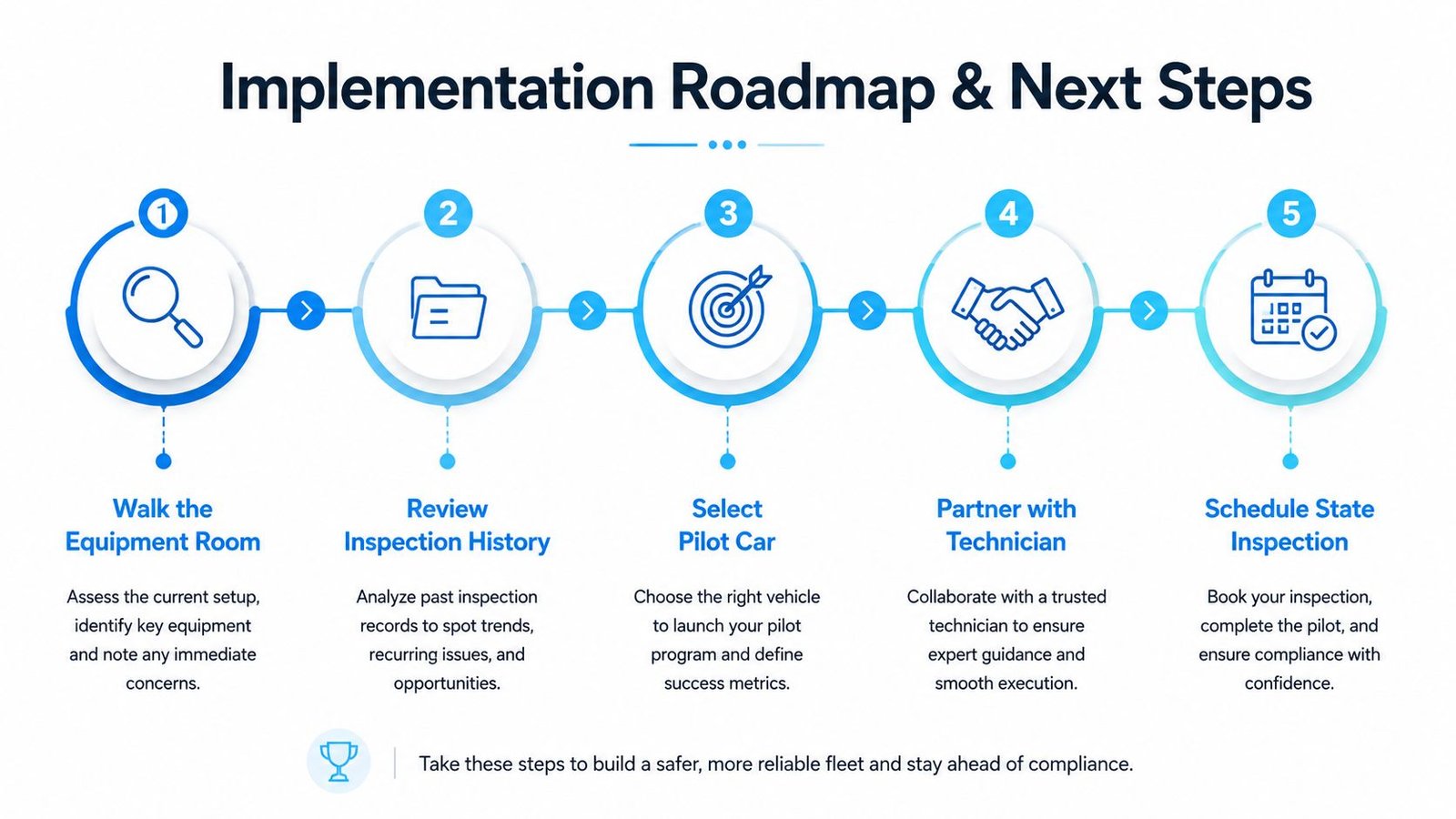
Five steps for a defensible project
1. Walk the equipment room. Record the controller, drive, machine or power unit, pump, valves, motor, generator connection, emergency phone, and visible wiring. Photograph nameplates and note oil leaks, unusual noise, heat, vibration, and housekeeping conditions.
2. Pull the last three inspection reports. List every violation, correction, repeat observation, safety-test result, and outstanding recommendation. The inspection history often reveals whether the problem is isolated or systemic.
3. Benchmark current requirements. Compare the asset with the applicable Michigan requirements and adopted code provisions. Ohio owners should also confirm the inspection and testing schedule that applies to each device type.
4. Request two scopes from a licensed elevator contractor. Require a retrofit or modernization proposal and a full replacement proposal. Each should identify equipment retained, equipment replaced, shutdown duration, testing, inspection coordination, cybersecurity controls, training, warranty, and ongoing service.
5. Reserve the installation window. Occupied buildings need tenant communication, alternate-access planning, delivery coordination, and an emergency plan. A 90-day installation window can be useful as a planning target, but the actual schedule depends on engineering, parts, permits, inspections, labor, and building conditions.
Michigan's inspection cycle makes timing important. Ohio owners face a more frequent inspection requirement for covered devices, so a proposal that ignores inspection coordination can create avoidable delays. The service plan should also address how technicians will access the equipment, how tenants will receive outage notices, where critical spare parts will be stored, and who approves emergency work.
For a regional portfolio, use a rotating maintenance schedule that covers Jackson, Battle Creek, Kalamazoo, and Lansing while preserving response capacity for urgent calls. A facility manager should assemble inspection reports, service invoices, utility records, capital budgets, lease obligations, network requirements, and tenant-access needs before the contractor arrives.
Request an on-site assessment before the next scheduled inspection. Assemble the capital request documents immediately, and schedule a code-compliance review at least 60 days before any planned tag-out so the owner, contractor, building team, and authority having jurisdiction have time to resolve open issues.
Crane Elevator Company provides maintenance, repair, and modernization services across Michigan and Ohio, including Toledo and surrounding communities, for commercial, healthcare, education, municipal, industrial, and residential elevator systems. Visit Crane Elevator Company to request an on-site assessment, compare retrofit and replacement options, and plan a connected elevator upgrade around reliable service and code compliance.