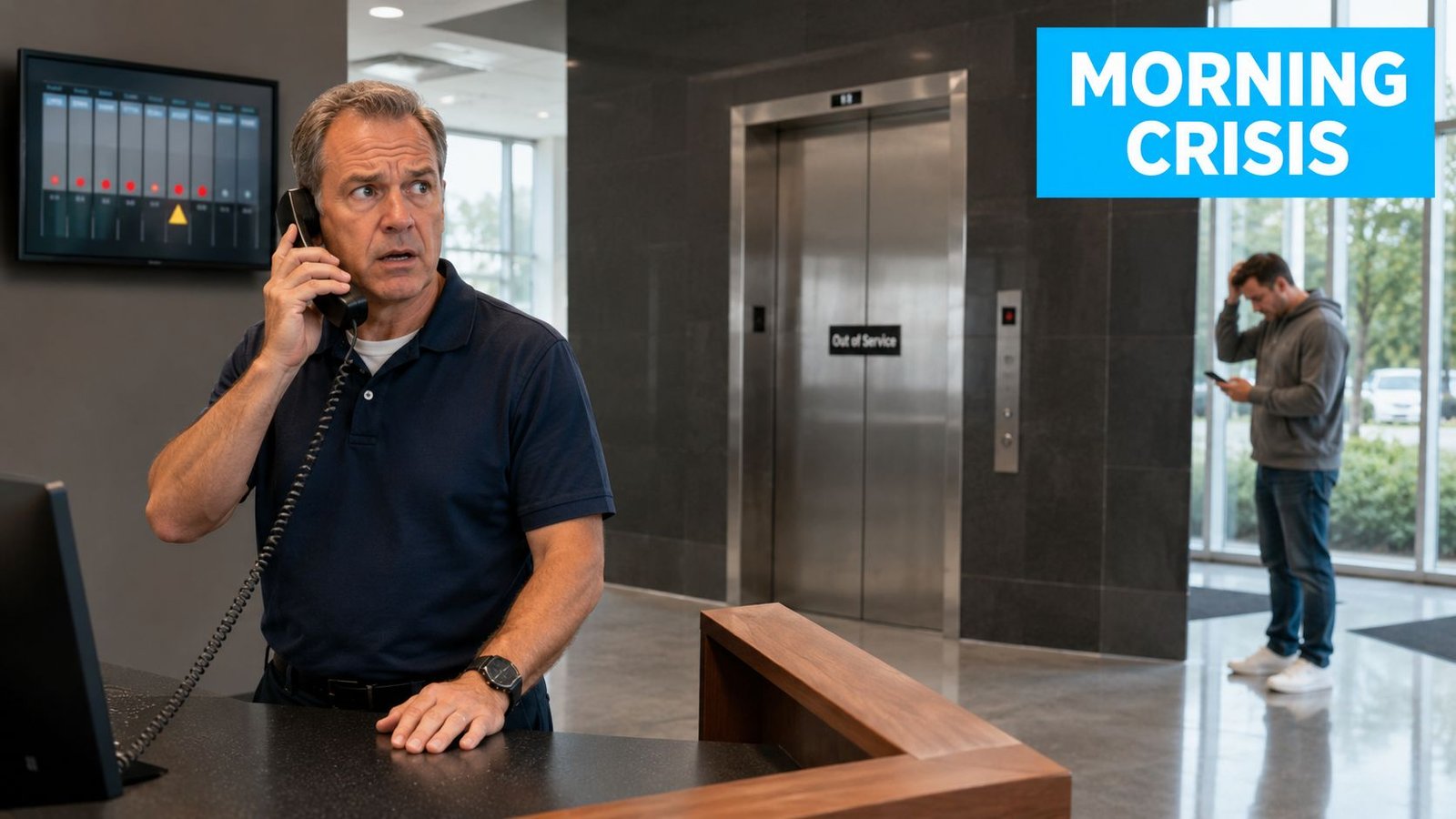
A tenant is trapped between floors, the lobby phone is ringing, and a facility manager has seconds to decide whether to evacuate the area, call emergency services, or contact an elevator company in Toledo. The first response matters, but so does the information gathered before a technician arrives. A clear error code, a note about where the car stopped, the sound heard before the failure, and the position of the main disconnect can change a vague callback into a focused diagnostic visit.
Crane Elevator Company provides maintenance, repair, and modernization services across Michigan and Ohio, including Toledo and surrounding communities. The practical issue for a building owner isn't finding a company name. It's knowing what can be checked safely on-site, what requires a licensed elevator professional, and how to keep Ohio or Michigan compliance work from turning into avoidable downtime.
Why Elevator Diagnostics Start Before the Technician Arrives
A Monday morning elevator failure rarely arrives as a neat technical report. Someone says the doors won't close. Another person reports that the car is stuck. The building manager may only know that the elevator is out of service and that several tenants are waiting for an answer.
Start by protecting people, not by resetting equipment. If anyone is trapped, injured, exposed to heat or cold, or experiencing a medical emergency, contact emergency services and keep unauthorized personnel away from the hoistway. Nobody should pry open landing doors, enter the shaft, climb onto the car, or attempt a manual rescue.
Build a useful pre-call record
Once the area is controlled, record the basics while they're still fresh:
- Car position: Is the car level with a landing, above or below the floor, or completely unknown?
- Door behavior: Do the doors open, close partway, repeatedly reopen, or remain locked?
- Controller information: Photograph the displayed error code without changing settings.
- Sound and motion: Note grinding, humming, scraping, sudden stops, vibration, or a change in leveling.
- Operating mode: Check whether fire service, independent service, inspection mode, or an emergency power sequence is active.
- Power status: Confirm whether the elevator disconnect appears energized and whether the building experienced a broader outage.
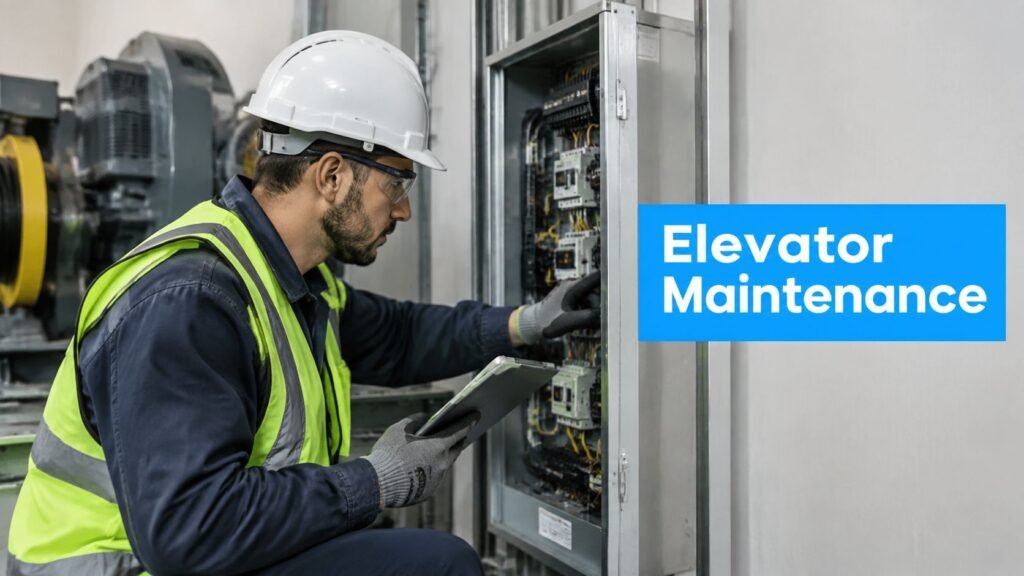
That information helps a technician distinguish a door-zone issue from a controller fault, power interruption, safety circuit opening, or hydraulic problem. It also reduces wasted time when the elevator serves an older building with equipment from a different generation than the rest of the property.
A facility manager can safely observe indicators and report conditions. A facility manager generally shouldn't open controller cabinets, defeat interlocks, bridge safety circuits, adjust door operators, or perform a car rescue. Those actions belong to qualified elevator personnel operating under the applicable state requirements.
Practical rule: A reset is useful only when the cause is understood and the equipment can be returned to normal service safely. A reset that hides a recurring fault isn't a repair.
For recurring issues, a documented maintenance program can identify patterns before a shutdown. Crane Elevator Company's predictive maintenance approach is relevant when managers need service records and condition information instead of isolated emergency calls.
Step-by-Step Troubleshooting for Common Elevator Problems
The safest troubleshooting sequence begins outside the equipment and moves inward only when a licensed technician takes over. Never bypass a safety circuit, never pry open hoistway doors, and always confirm that Phase I Emergency Recall isn't active before investigating a routine fault.
Doors fail to open or close
- Check for carts, debris, packing material, or a person blocking the sill and doorway.
- Observe whether the photo-eye or light curtain is obstructed or visibly misaligned.
- Confirm whether the car is level with the landing and whether the doors respond to a normal command.
- Stop there if the doors continue cycling, the controller reports a door-lock fault, or the operator needs adjustment.
A technician must handle door operator timing, lock adjustments, safety-edge testing, and controller fault-log work.
Passenger entrapment
- Speak calmly with the occupants and ask where the car stopped and whether anyone needs medical help.
- Keep people away from the landing doors and note the car's position from the hall indicators.
- Contact emergency services and the elevator contractor according to the building's emergency plan.
- Don't attempt to open the doors, move the car, or perform a manual rescue.
A manual car rescue requires trained, licensed personnel and the correct site-specific procedure.
Total loss of power
- Check whether the building has a general power outage.
- Verify the elevator's main disconnect position without opening electrical equipment or touching energized components.
- Check whether emergency generator or battery operation is active.
- Leave controller resets, electrical testing, and power restoration work to a licensed technician.
Noise or vibration
- Record whether the symptom occurs during starting, stopping, leveling, door movement, or travel.
- Ask occupants whether the condition affects one direction, one floor, or every trip.
- Keep the elevator out of service if the noise is severe, new, accompanied by jolting, or paired with leveling problems.
- Don't enter the machine room, pit, or car top unless you're authorized and trained for that environment.
Hydraulic leaks
- Look for visible oil around the power unit or floor, but don't touch the fluid.
- Read the oil-level sight glass if it can be viewed from a safe location.
- Note whether the car is drifting, leveling poorly, or stopping short of the landing.
- Don't add oil, recharge a hydraulic accumulator, or work on the jack, valve, tank, or power unit.
Nuisance alarms
- Confirm whether the alarm is being activated by passengers, a stuck button, or a building emergency condition.
- Check whether fire service or another emergency mode is active.
- Follow the building's approved alarm reset procedure only when no emergency exists.
- Escalate repeated alarms, failed emergency phones, or controller messages to a licensed technician.
Crane Elevator Company services equipment from Otis, Schindler, ThyssenKrupp, KONE, and other manufacturers without requiring a proprietary service lock-in. That matters when diagnostic software, specialized documentation, or access to a controller fault history is needed.
| Fault Type | On-Site Checks, Facility Manager | Licensed Technician Required |
|---|---|---|
| Doors | Remove visible obstructions, observe photo-eyes, record cycling behavior | Door adjustments, lock testing, operator repair, safety-circuit diagnosis |
| Entrapment | Communicate with occupants, call emergency support, secure the area | Manual rescue, car movement, door release, post-rescue testing |
| Power loss | Check building power and disconnect position from a safe location | Electrical diagnosis, controller reset, power-system repair |
| Noise or vibration | Record when it occurs and remove the elevator from service if unsafe | Machine, guide, brake, drive, leveling, and structural diagnosis |
| Hydraulic leak | Observe the sight glass and visible leakage without touching equipment | Oil replenishment, accumulator work, valve, jack, tank, or power-unit repair |
| Alarm activation | Confirm emergency status and follow approved reset procedures | Repeated alarm diagnosis, phone testing, fire-service and control repairs |
Ohio and Michigan Inspection Requirements You Cannot Ignore
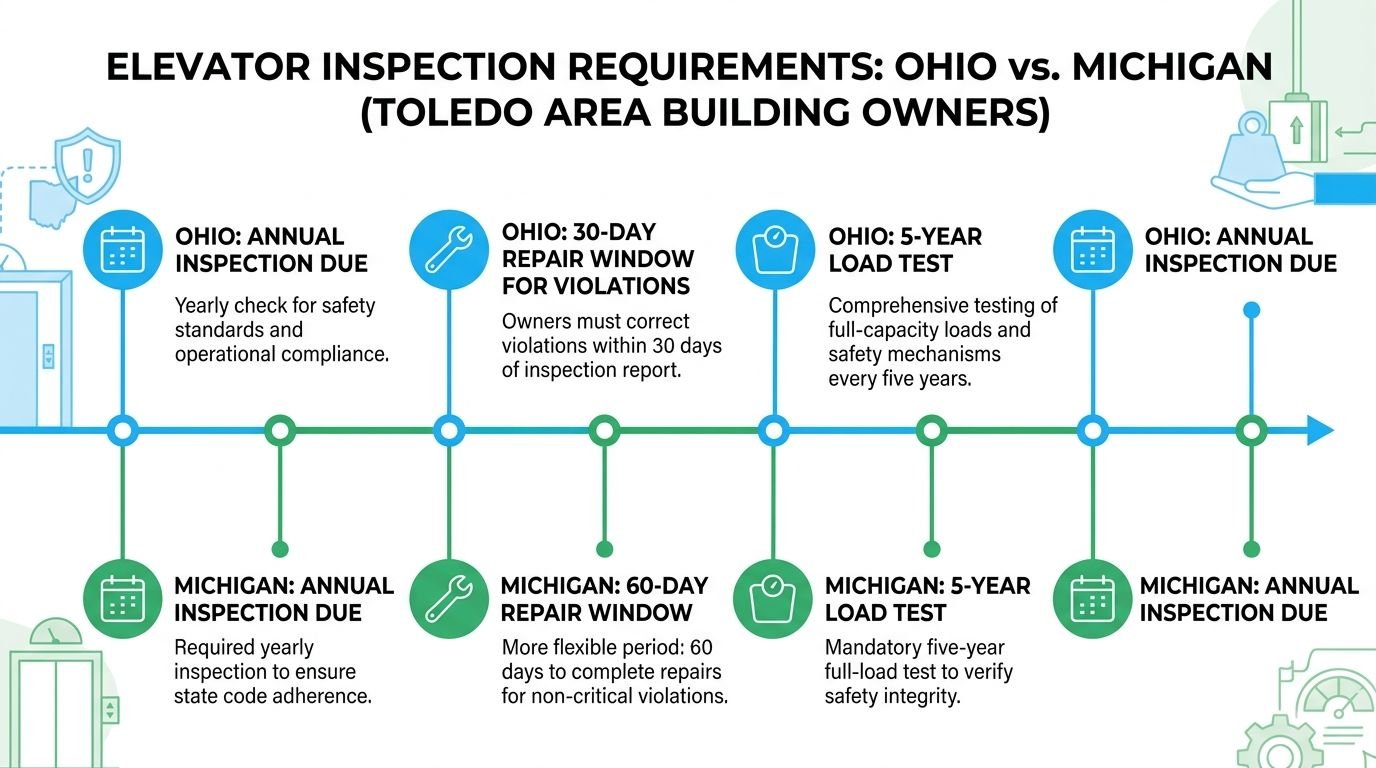
A Toledo facility can pass an internal service visit and still fail a state inspection. Owners managing properties on both sides of the state line must track separate Ohio and Michigan inspection, testing, maintenance, and documentation requirements.
Ohio requires passenger elevators, escalators, moving walks, and freight elevators to be inspected twice every 12 months. Power dumbwaiters, hoists, and other permanently installed lifting or lowering equipment not designed to carry people require inspection at least once every 12 months. Private residential elevators are exempt from that inspection-frequency rule. These requirements appear in Ohio Revised Code Section 4105.10.
Ohio's industrial compliance program issues over 32,000 certificates of operation and reviews installation and alteration permits against current standards, according to the state information cited in that statute. A failed inspection attempt can create a $120 fee plus $10 per floor where the elevator stops, so poor preparation can cost more than the corrective repair.
Scheduling is part of compliance
Ohio inspections and re-inspections depend on inspector availability. The state describes a 48-hour response window, and it will not issue a Certificate of Operation until the device passes final inspection and the required fees and forms are complete. Schedule corrective work before the inspection window, then leave time to document repairs and request reinspection.
A detailed breakdown of ongoing obligations is available in our elevator maintenance requirements for Ohio guide. Ohio also requires periodic test reports to reach the state division within five business days after testing. Reports must include the test date, test type, detailed results, and corrective action taken, as specified in Ohio Administrative Code Chapter 4101:5-3.
Michigan requires maintenance inspections and tests for elevator installations after they enter service. Safety tests for car and counterweight safeties and governors must occur at intervals of no more than 12 months. A tester's certification statement and a dated tag must be attached to the governor rope under Michigan's elevator safety rule.
Most Michigan power elevators require maintenance at least every 90 days from a licensed elevator journeyperson. Certain dumbwaiters, one-person elevators, platform lifts, stairway chairlifts, and other specified devices use a 180-day interval. Michigan also requires an on-site written record covering maintenance, repairs, replacements, inspections, callbacks, and testing, as explained in Michigan's maintenance rule.
Toledo building procedures reference the 2016 ASME A17.1/CSA B44 Safety Code for Elevators and Escalators, connecting local work to a defined safety-code framework. Crane Elevator Company services equipment from Otis, Schindler, ThyssenKrupp, KONE, and other manufacturers without requiring a proprietary service lock-in. For facility managers, that supports independent troubleshooting, repair planning, and compliance preparation before the inspector arrives.
Preventative Maintenance Checklist for Facility Managers
Preventive maintenance works best when staff record conditions consistently and leave adjustments to licensed elevator professionals. The checklist below is designed for commercial, healthcare, education, municipal, industrial, and residential properties with elevators or lifting equipment.
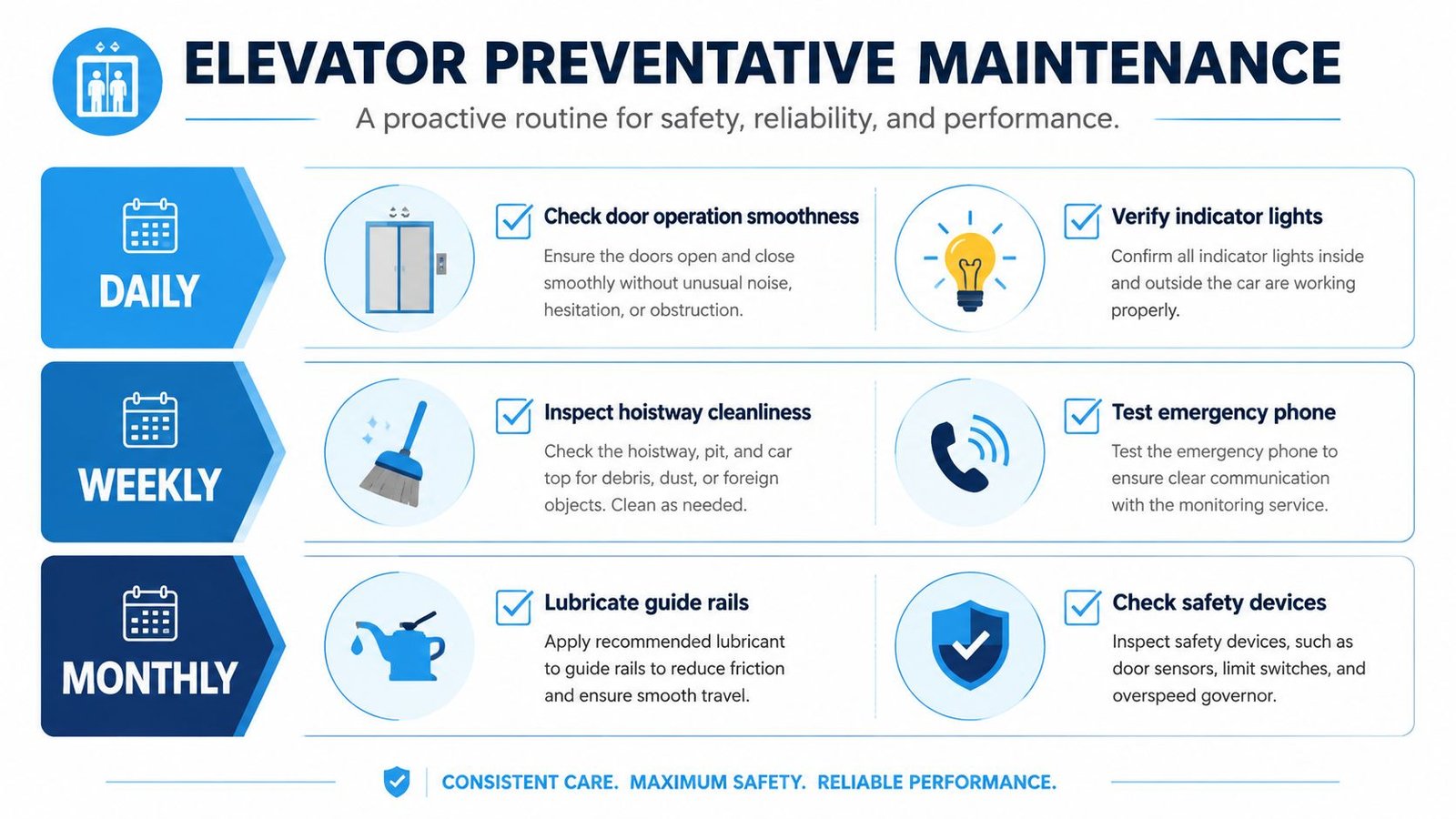
Daily observations
Facility staff can make these visual and operational checks during normal rounds:
- Door movement: Pass if doors open and close smoothly without scraping, hesitation, repeated reopening, or unusual impact. Fail if the doors cycle, stall, or require passengers to intervene.
- Indicators and buttons: Pass if hall calls, car buttons, position indicators, and direction lights respond normally. Record any dark, intermittent, or stuck indicator.
- Travel condition: Pass if the car starts, travels, and levels without unusual noise or vibration. Remove the unit from service and call a contractor for a sudden change.
A daily observation doesn't authorize anyone to adjust the operator, open a controller, or enter a restricted area. It creates an early warning record.
Weekly checks
A weekly round should test building-facing functions rather than internal machinery:
- Leveling: Compare the car floor with the landing and report any noticeable step at the threshold.
- Emergency phone: Use the approved test procedure and confirm that the call reaches the designated answering point.
- Threshold and sill area: Keep the landing and car sills free of dirt, tape, stones, and shipping debris. Staff may clean accessible surfaces, but they shouldn't remove guarded components.
- Hoistway cleanliness: Report water, oil, dropped objects, or unusual debris. Don't enter the hoistway or pit.
Monthly condition review
Managers should review machine-room and pit conditions from safe, authorized access points. The room should be clean, dry, ventilated, and free of stored materials. Hydraulic units should be checked at the oil-level sight glass, with leaks reported rather than topped off by unqualified staff.
The most productive maintenance records focus on high-use components. A study of elevator faults identified button and position indicators at 23.3%, hall doors at 18.1%, and car doors at 17.1% of fault cases, while adjustment, loosening, and transformation issues represented 46.2% of breakdown causes in that analysis, documented in this elevator accident and fault study.
Toledo's winter moisture and summer heat make housekeeping and ventilation especially important, but seasonal observations still need professional follow-up when equipment behavior changes. Keep the completed checklist with callback records and inspection documents so a technician can compare current symptoms with earlier conditions.
When Modernization Makes More Sense Than Repair
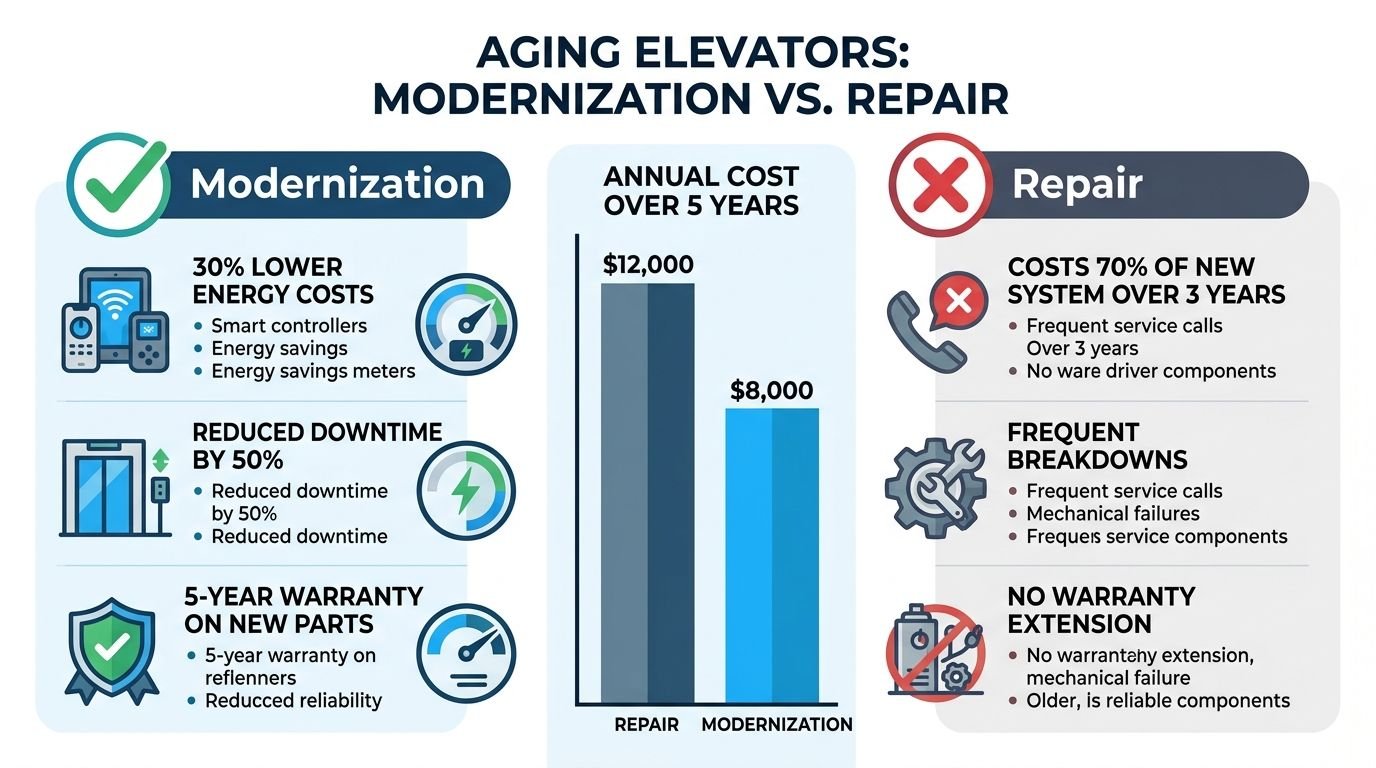
Repeated repair isn't always a maintenance problem. Sometimes it's an asset-planning problem. An older controller may still be repairable, but if parts are difficult to source, service access is restricted, and callbacks continue, another isolated fix can preserve the immediate symptom without improving the building's long-term position.
Modernization deserves a formal review when several conditions appear together:
- Recurring callbacks: The same door, leveling, control, or drive problem returns after repair.
- Parts uncertainty: The manufacturer has discontinued a component or limits access to diagnostic tools.
- Code exposure: The unit needs several corrective upgrades rather than one isolated repair.
- Operational mismatch: The elevator no longer handles the building's traffic, accessibility, freight, or emergency-power requirements well.
- Energy and ride concerns: The drive, motor, controls, or machine arrangement creates inefficient operation or inconsistent comfort.
A non-proprietary modernization can replace the most restrictive parts of a system while preserving suitable existing equipment. That approach isn't automatically right for every building. It requires a condition assessment, a code review, a clear outage plan, and an honest comparison between phased work and full replacement.
Why open architecture changes the decision
A proprietary controller ecosystem may tie future service, parts, and software access to one provider. A non-proprietary design can give the owner more flexibility to obtain qualified service and compare maintenance proposals later. The trade-off is that the contractor must specify compatible components carefully and document the final system so future technicians can work from accurate records.
Industry coverage points to predictive maintenance, Internet of Things remote diagnostics, destination dispatch, and access-control integration as important modernization considerations. Recent elevator modernization reporting also cites Otis reporting 24% organic modernization sales growth in Q2 2026, 9% modernization order growth, and a 26% constant-currency backlog increase. Those figures describe Otis's reported business performance, not a guaranteed return for an individual Toledo property, but they show that owners are actively evaluating upgrades rather than relying only on emergency repairs.
Crane Elevator Company uses a non-proprietary service model for modernization and supports all makes and models. The practical value is service flexibility, commercially available options, and a clearer path for future competitive maintenance decisions.
The case for modernization is strongest when it connects equipment condition to business risk. A phased upgrade can be easier to plan than repeated unplanned outages, but the scope should be based on documented failures, code obligations, serviceability, and the owner's capital schedule, not on a sales slogan.
Choosing the Right Elevator Company in Toledo
The Toledo region has a substantial installed base. A Toledo Regional Chamber profile reports more than 4,000 elevators, lifts, escalators, and similar systems across Northwest Ohio and Southeast Michigan, and identifies Toledo Elevator as a company founded in 1934, with 23 employees and a position as the largest independent elevator company in the Toledo metro area, as recorded in the Toledo Chamber member profile. That history reflects a market with recurring service, inspection, repair, and modernization needs.
To compare elevator companies in Toledo, ask five direct questions:
- Who responds after hours, and how is an emergency callback handled?
- Are the technicians licensed and trained for the jurisdiction where the equipment operates?
- Can the company coordinate Ohio or Michigan inspection paperwork and corrective work?
- Will the proposed modernization leave the owner dependent on proprietary parts or software?
- Does the maintenance contract define visits, documentation, callbacks, exclusions, and emergency response clearly?
Crane Elevator Company serves Toledo, surrounding Northwest Ohio communities, and Southeast Michigan with maintenance, repair, inspections, testing, and non-proprietary modernization for passenger elevators, freight elevators, residential units, wheelchair lifts, material lifts, and dumbwaiters. Its service coverage and Toledo maintenance offering are outlined through Crane Elevator's Toledo elevator maintenance services.
The right contractor should help a manager make three decisions early: whether the unit is safe to operate, whether the problem can wait for scheduled service, and whether repeated repairs justify a modernization assessment. Ask for a site assessment, review the maintenance and inspection records, and require the proposal to identify both immediate corrections and longer-term options.
Crane Elevator Company provides 24/7/365 emergency response, preventive maintenance, repairs, code-required testing, and non-proprietary modernization throughout Toledo and surrounding Michigan and Ohio communities. Visit Crane Elevator Company to request a site assessment or maintenance audit and turn the next elevator fault into a documented, manageable service decision.