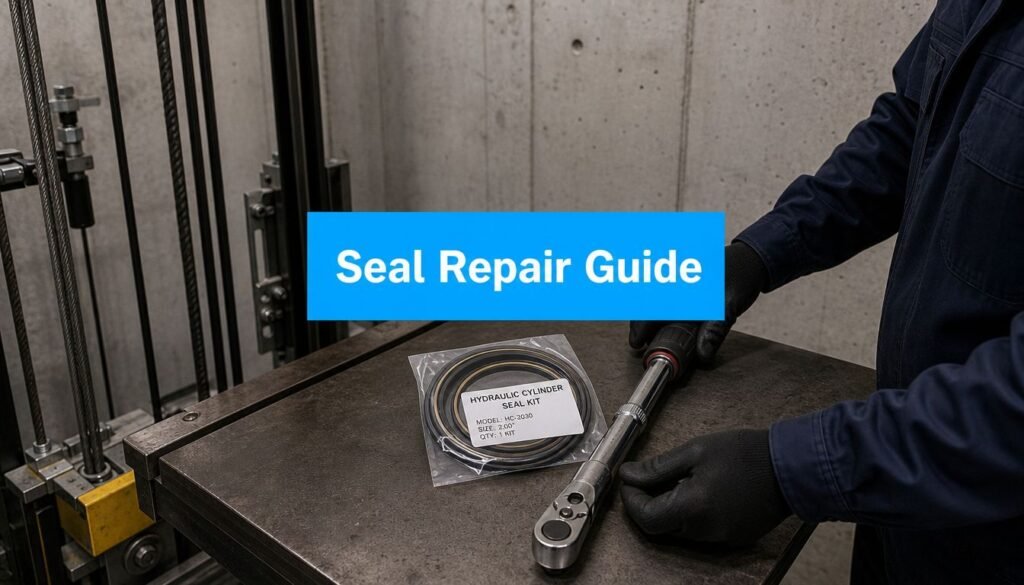
You're probably looking at a wet pit floor, a faint oil smell, and a car that still runs, which makes the decision feel annoying instead of urgent. In hydraulic elevator work, that's the dangerous middle ground. The elevator hasn't quit yet, but the leak is telling you something is already failing, and the wrong call can turn a packing job into a cylinder job.
A drip near the jack doesn't automatically mean the piston seal is the only problem. Oil can track along the rod, show up from a fitting higher up, or collect where the pit floor gives it nowhere else to go. What matters is whether the leak is repeatable, whether the reservoir keeps falling, and whether the car is still behaving normally after operation.
The best field move is to treat the leak like evidence, not a nuisance. Record where it shows up, when it returns, and whether the pit is getting slick enough to create a safety problem. If the leak is confirmed and active, hydraulic Elevator cylinder seal repair stops being a housekeeping issue and becomes a maintenance decision that affects uptime, code exposure, and the life of the cylinder itself.
When a Drip in the Pit Becomes a Real Problem
A Monday-morning drip is often how owners first notice a cylinder problem, but the drip itself is only the symptom. On a hydraulic car, oil can appear at the pit floor even when the source is a rod seal, a gland leak, or a fitting that's running down the outside of the assembly. The pattern matters more than the stain.
If the film comes back after the car runs, that's a different story from a one-time weep that never grows. A steady fall in reservoir level, visible movement on the rod, or a strong oil sheen on the polished surface points toward an active leak, not routine seepage. If the elevator still reaches travel but the pit is slicking up again and again, the problem is already past “watch it.”
Practical rule: don't top off oil and call it fixed. Adding fluid can hide overheating, pump stress, or a leak path that's getting worse behind the scenes.
A facility manager also needs to check whether the leak is creating a real building problem. Oil on the pit floor turns into a slip hazard, and if fluid reaches nearby electrical equipment, the cleanup burden grows fast. For background on pit conditions and why the area deserves regular attention, see pit and sump concerns around elevator oil management.
A minor, stable film can wait for scheduled service. Confirmed active leakage shouldn't. If the drip is sudden, heavy, or paired with strange pump or valve noise, the safer call is to stop treating it like a maintenance nuisance and get a diagnosis before the unit keeps cycling.
Diagnosing Hydraulic Cylinder Seal Failure
A solid diagnosis starts with clean metal, not a dirty pit. Wipe the rod, inspect the gland, the cylinder body, the pit floor, and the nearby fittings, then watch where the oil returns after the car sits and after a short operating cycle. Fresh oil at the gland or on the polished rod usually points to packing leakage. Oil higher up on the assembly can mean the fluid is tracking from another point.
For in-ground hydraulic cylinders, formal facility guidance calls for a 12-hour static test with a rated load, then a 15-minute sink check after the line valve is shut off, to confirm leakage and descent behavior University of Western Ontario facility guidance. That does not prove the rod seal is the only problem, but it gives maintenance staff a real benchmark instead of a guess. If the car sinks after the valve is set, the leak path may be inside the cylinder, in the valve, or somewhere else in the hydraulic circuit.
What you're trying to prove
The goal is to separate an external packing issue from a pressure-control problem. Check whether the car levels normally, whether the pump sounds strained, and whether the oil looks clean or carries contamination. Industry guidance often points to contamination as a major cause of hydraulic cylinder trouble, but the exact failure path still depends on the system in front of you.
The rod needs close attention too. Scoring, corrosion, or peening can turn a simple seal swap into a repeat leak, because new packing will not hold on a damaged surface. If the rod finish is rough, the diagnosis is not just “needs a seal.” It is a deeper repair decision.
A seal change that skips the leak source is just a callback in progress.
Finish the diagnosis by checking pressure behavior, valve response, recent work on the system, and the cleanliness around the gland. If the leak is clearly coming from the packing area and the cylinder passes the rest of the visual checks, the seal repair is the right path. If not, the next step may be system work, not parts swapping.
Safety, Permits, and Code-Side Realities
Hydraulic Elevator cylinder seal repair is controlled work, not a quick touch-up. The car has to be isolated, electrical power locked out under the contractor's procedure, and stored hydraulic energy made harmless before anyone opens the gland. The cylinder assembly also has to be supported by approved means, because the elevator's own hydraulic system is not a support plan.
Pit access matters too. Good lighting, ventilation, housekeeping, and a clear way out of the pit aren't optional details when oil, tools, and loose parts are involved. The same is true for cleanup supplies. Absorbents, waste containers, and a plan for contaminated material should be ready before the first fitting comes apart.
Why the paperwork matters
Permit and inspection triggers depend on location and the scope of the work. Internal cylinder repair, alterations, or major hydraulic changes can trigger forms, reinspection, or authority review. That's why the licensed elevator contractor should identify the responsible authority before the job starts, not after the pit is open and the owner is already committed.
The code-side risk is simple. If the repair changes how the system is documented, the building record needs to reflect that. That matters during later inspections, property sales, and any dispute over whether the work was a repair or an alteration.
Never treat a pit job like a one-person errand. Once the gland is open and parts are out, the job is controlled, messy, and easy to get wrong if the site wasn't set up properly.
For that reason, a leaking hydraulic cylinder is rarely a spontaneous maintenance task. It's a planned event that needs the right crew, the right access, and the right authority path before anyone starts pulling packing out of a gland.
The Cylinder Seal Repair Workflow From Start to Finish
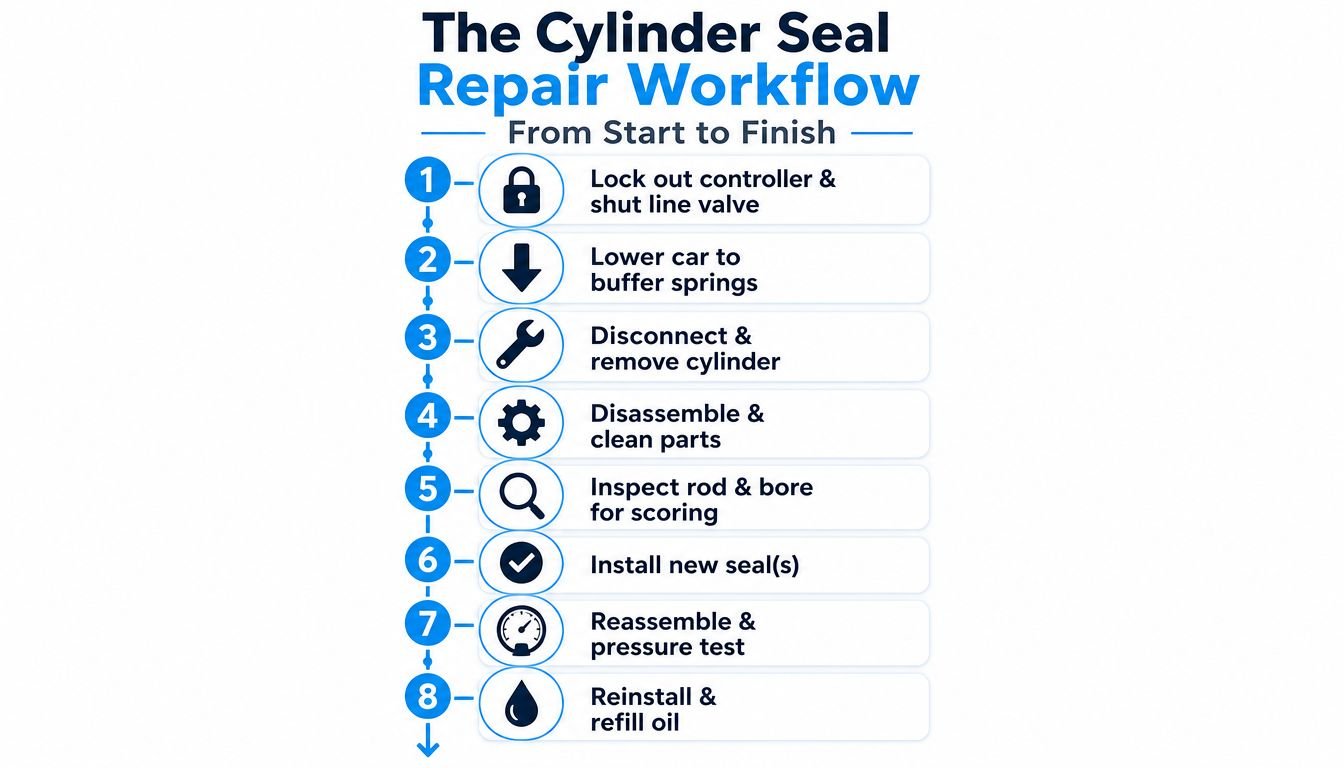
The repair starts before the gland is touched. The controller gets locked out, the line valve is shut, and the cylinder is bled down until the system is safe to handle. Once the car is lowered into a stable position and the assembly is supported, the mechanic can work without relying on hydraulic pressure to hold anything up.
A clean teardown matters more than most owners realize. The gland comes out carefully, the rod is extracted with a steady pull, and the polished surface is protected from nicks, sharp threads, and accidental scoring. If the rod hangs up, that's a warning sign, not a point for force. A sharp thread can slice a new seal during reassembly, which is why thread protection and patient handling pay off more than speed.
What good reassembly actually looks like
All old packing should be saved and matched before disposal, because part orientation and order matter. The bore, grooves, and seal lands get cleaned thoroughly, then inspected for scoring or deformation. A matched seal kit from the OEM or a qualified rebuilder is the safer move than a random shelf mix, because hydraulic elevator cylinders need the rod seals, piston seals, wipers, and O-rings to work together as a set.
Lubrication should be done with clean hydraulic fluid, not assembly grease. Then the gland goes back together with even torque, the system is brought back slowly, and the unit is cycled gradually to work air out before the final leak check. For a broader look at pump-side conditions that affect this whole repair event, see hydraulic elevator pump considerations.
A repair that skips cleanliness, part matching, or gradual testing usually leaks again. The field lesson is boring but true. The seal swap is only as good as the prep, the inspection, and the first few cycles after reassembly.
Repair the Seal or Replace the Cylinder
The hard call is rarely whether a seal is bad. It's whether the cylinder is still worth resealing. If the rod is smooth, the grooves are clean, and the cylinder geometry is intact, a full reseal can make sense. If the rod is scored, the bore is damaged, or contamination has been chronic, the repair starts to look like a delay tactic.
| Factor | Seal Repair | Full Cylinder Replacement |
|---|---|---|
| Rod surface | Works when the rod is clean and smooth | Needed when scoring or corrosion keeps cutting seals |
| Bore and groove condition | Reasonable if inspection is clean | Better when wear or deformation is present |
| Contamination history | Manageable if the system was cleaned well | Strong candidate if debris keeps returning |
| Age and prior field work | Acceptable when the cylinder still matches spec | More likely when prior non-OEM work has changed geometry |
| Downtime burden | Lower when access is straightforward | Higher, especially when excavation is involved |
| Risk of repeat leak | Lower only if the cylinder passes inspection | Lower long-term when the assembly itself is the problem |
The decision shifts hardest on in-ground cylinders, because replacement can mean excavation and a bigger coordination burden. That's why a cylinder that fails inspection shouldn't get a hopeful reseal just because it's cheaper this week. For a replacement-oriented view of the bigger job, see hydraulic elevator jack replacement planning.
A simple go or no-go mindset
If the cylinder passes visual inspection, seal replacement is a defensible spend. If the rod, bore, or grooves show damage, the repair is likely to leak again and may fail after reassembly. The owner shouldn't pay twice for the same mistake.
When the sealing surface is tired, a new packing kit doesn't restore the metal underneath it.
That's the key trade-off. Seal repair is the right move when the cylinder can still hold a seal. Replacement is the right move when the cylinder itself has become the reason the seal can't survive.
Timelines, Costs, and What Drives the Number
A scheduled seal repair is usually a one-day, two-person kind of job when the pit is accessible and the parts are on hand. Emergency work costs more because the crew is reacting to a leaking car, a wet pit, and a building that may already be unhappy about downtime. In practice, the owner pays for urgency as much as labor.
Material choices also move the number. A standard kit is one thing, a matched OEM-style packing set with wipers, secondary seals, and O-rings is another. If contamination has spread through the fluid, the scope can widen because the system needs cleanup, flushing, and careful reassembly to avoid a repeat callback.
What owners can actually control
The biggest cost drivers are often boring. Site access, pit cleanliness, whether the machine room is clear, and how fast the contractor can get in and verify the leak all matter. If the pit is cluttered or the fluid has spread, the job slows down and the risk of extra labor goes up.
For owners in Michigan and Ohio, the comparison is usually between a controlled repair visit and the larger disruption of a full jack replacement. The second job carries more coordination, more time, and more administrative drag because the work goes beyond a seal event.
| Scenario | Typical Downtime | Typical Cost Range (USD) | Main Cost Drivers |
|---|---|---|---|
| Scheduled cylinder seal repair | About one day on site | Varies by kit type and access | Parts selection, cleanliness, labor, permit needs |
| Emergency leaking-car response | Same day or urgent response | Higher than scheduled work | Rush dispatch, after-hours labor, cleanup |
| In-ground cylinder replacement | Longer project window | Significantly higher than reseal work | Excavation, scope, permits, reinspection |
If you're comparing quotes, look for what's included. A cheap number that omits cleanup, fluid disposal, or inspection follow-through often grows after the crew arrives. One visit that fixes the source is usually cheaper than two visits that only chase symptoms.
A Short Checklist Before You Sign the Work Order
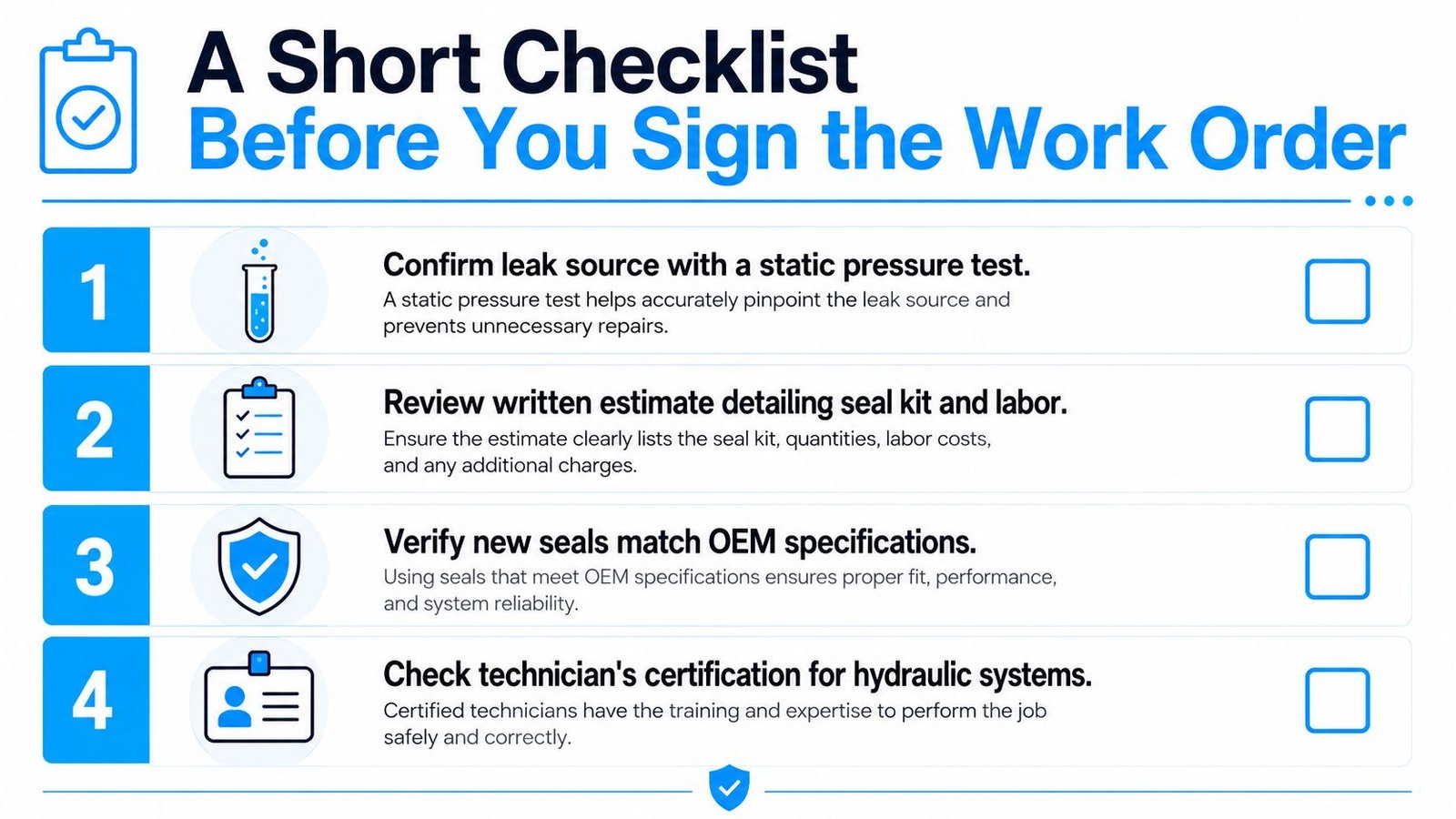
Before approving the job, insist on a static test that confirms the leak path instead of a guess based on wet concrete. Ask for the rod and bore condition to be documented before the quote is locked in, because scoring or deformation changes the whole decision. Make sure the written scope separates labor, seal kit, fluid disposal, and permit fees.
The contractor should also be clear about the age of the cylinder, its contamination history, and any prior non-OEM repair work. Those are the red flags that push a project away from reseal and toward replacement. On older cylinders, especially where margins are tight, a second opinion from a non-proprietary service company can save a building from paying for the wrong fix.
A clean decision beats a rushed one every time. If you can verify the leak, verify the surface condition, and verify the scope, you're far less likely to get burned by a short-term repair that should've been a replacement conversation.
Crane Elevator Company handles hydraulic service calls, leak diagnosis, packing work, and cylinder-related repairs across Michigan and Ohio, with field crews that know how to separate a seal problem from a bigger system issue. If you need a practical second opinion before you sign a work order, visit Crane Elevator Company and ask for a review of your leak, your cylinder condition, and the repair-versus-replacement call.