
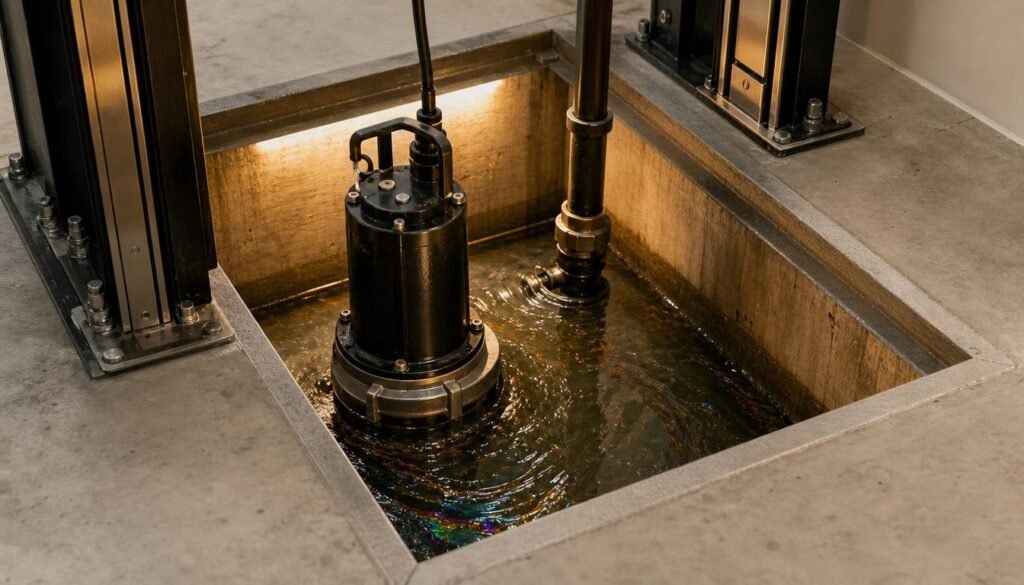
A hard rain rolls through Southern Michigan overnight. By morning, your elevator is out of service, the pit has standing water, tenants are calling, and someone on your team is asking whether the sump pump was ever tested. That's usually when the elevator sump pit stops being an afterthought.
Most facility managers don't spend much time thinking about the bottom of the hoistway until something goes wrong. But in this region, where freeze-thaw cycles, spring runoff, aging foundations, and sudden storms all work against you, the elevator sump pit is part of your front-line defense. If it fails, water reaches components that were never meant to sit submerged. Service interruptions follow fast. Repair costs usually follow faster.
The good news is that this isn't a mysterious system. Once you understand what the pit is supposed to do, what code expects, and where weather and environmental rules complicate the picture, you can manage it like any other critical building asset. That means fewer surprises, cleaner inspections, and better budget control.
The Unseen Guardian of Your Elevator Shaft
An elevator pit is the low point of the hoistway. Water will always try to find that low point. In Southern Michigan, that can happen from groundwater seepage, slab cracks, snowmelt tracked into the building, storm-driven infiltration, or a plumbing issue that finds its way into the shaft.
That's why the elevator sump pit matters. It collects unwanted water before that water can sit around buffers, guide rail brackets, compensation equipment, and wiring at the bottom of the shaft. It functions as the floor drain in the most sensitive room in the building, except this room also contains electrical equipment and safety components.
When a pit floods, the first problem isn't just inconvenience. It's exposure. Metal components corrode. Debris floats into switches. Moisture creeps into places that create nuisance shutdowns, fault conditions, and safety concerns. If the elevator is hydraulic, you also have to think about oil contamination and what can and can't be pumped out.
Practical rule: If water is entering the elevator pit often enough that staff members think it's normal, the building has a condition that needs active management, not a mop and a wait-and-see plan.
Southern Michigan properties get hit from both sides. Older buildings often have foundation seepage and patchwork drainage histories. Newer sites can still struggle if surface grading, discharge routing, or waterproofing details weren't done well. The sump pit sits at the center of that problem. It won't solve a bad building envelope by itself, but without it, even a minor water event can become an elevator outage.
Facility managers usually focus on cars, doors, callbacks, and inspection dates. Fair enough. But the unseen hardware in the pit often decides whether the elevator keeps running after the next storm.
What Is an Elevator Sump Pit and Why Is It Critical
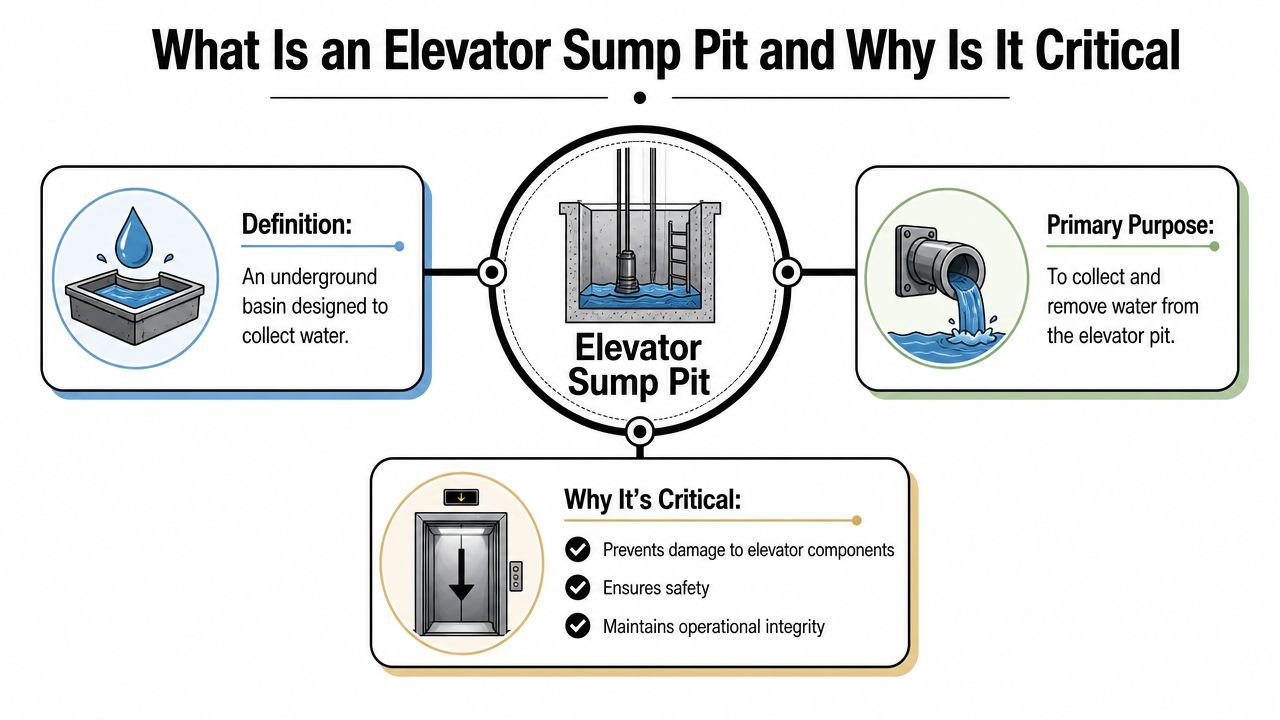
At the simplest level, an elevator sump pit is a recessed basin in or near the bottom of the elevator hoistway designed to collect water. If enough water gathers, a pump or controlled removal method gets it out before it rises high enough to threaten elevator equipment.
It helps to compare it to a basement sump system in a house. The idea is similar. Water collects in one low point so it can be managed. The difference is the stakes. In an elevator pit, the surrounding environment includes safety devices, steel supports, wiring, and in some buildings hydraulic equipment that can introduce oil into the mix. That turns a basic drainage problem into a compliance and operational issue.
What the sump pit is really protecting
A lot of people assume the pit only exists to keep the floor dry. That's too narrow. Its primary purpose is to protect the bottom-of-shaft environment from becoming a water hazard.
Key items at risk include:
- Buffers and supports: These components need a stable, clean environment. Standing water speeds corrosion and shortens useful life.
- Guide rail bases and brackets: Water at the lowest point attacks fasteners and embedded hardware first.
- Traveling cables and wiring pathways: Moisture and dirty pit water don't mix well with electrical reliability.
- Housekeeping and access conditions: A wet, dirty pit becomes harder to inspect safely and harder to service correctly.
Why it's more than just a drain
A drain allows liquid to flow elsewhere. An elevator sump pit is part of a managed system. That distinction matters. In many buildings, especially hydraulic ones, you can't assume anything collected in the pit is clean water. If hydraulic oil is present, discharging that mixture without proper controls can create a compliance problem well beyond the elevator trade.
That's why the best setups don't rely on guesswork. They use the right pump type, proper controls, and when needed, oil-sensing or oil-retention equipment. The goal isn't just to move liquid. The goal is to move the right liquid, at the right time, in a way that doesn't create a bigger problem somewhere else.
If you remember one thing, remember this. A dry pit supports elevator reliability. A managed pit supports reliability, safety, and compliance.
For a facility manager, that changes the conversation. The elevator sump pit isn't a minor accessory. It's a protective system that sits between normal building moisture and expensive downtime.
Navigating Elevator Sump Pit Codes and Inspections
The question most managers ask after a pit issue is simple. Is my building compliant? The answer depends on more than whether a pump exists.
Elevator inspectors focus on safety conditions in the pit. They're looking for water accumulation, damaged equipment, unsafe access, improper wiring methods, and signs that the pit environment can affect elevator operation. In hydraulic applications, they're also alert to the possibility that oil has entered the pit. That's where elevator code and environmental responsibility start overlapping.
What inspectors usually care about
A compliant setup starts with a pit that is safe to enter, safe to inspect, and not exposed to unmanaged water. If the pit has standing water, even if the elevator is still running, you're already in a bad position. Water can hide conditions that the inspector can't properly evaluate and can interfere with pit equipment.
Common inspection concerns include:
- Standing water: This raises immediate questions about equipment condition and safe access.
- Improper pump arrangement: A pump installed without regard to elevator code or local discharge requirements can become its own violation.
- Unprotected electrical components: Temporary fixes in pits tend to fail inspection.
- Evidence of oil contamination: If oil is present, nobody should be treating that as ordinary wastewater.
For a useful field reference, many managers keep an elevator pit inspection checklist on hand so staff can spot obvious issues before an official visit.
Southern Michigan compliance issues that catch people off guard
Southern Michigan adds two practical complications. First, weather drives repeated water intrusion. Second, many properties sit in municipalities where stormwater, sanitary discharge, and environmental handling rules are taken seriously. If hydraulic oil is even potentially involved, you can't assume the sump can pump directly out as if it were a clean basement drain.
That's where owners get into trouble. They see water in the pit and think the answer is “get it out fast.” Sometimes that's right operationally, but if the pit contains an oil-water mix, fast and compliant are not always the same thing.
A few trade-offs matter here:
| Condition | What works | What doesn't |
|---|---|---|
| Clean seepage water in traction pit | Controlled removal and regular monitoring | Ignoring repeat intrusion |
| Hydraulic pit with possible oil presence | Oil-aware controls and proper disposal practices | Direct pumping based on assumption |
| Seasonal water intrusion after storms | Building drainage correction plus pit management | Replacing pumps without solving entry path |
| Repeated inspection notes | Root-cause correction | Cosmetic cleanup right before inspection |
Field note: The pump itself rarely solves a chronic water problem. It only buys time if the building keeps feeding water into the shaft.
The environmental side of the job
Facility management has to coordinate with elevator service, building maintenance, and sometimes environmental compliance staff. If the property has hydraulic elevators, train your team to treat unexplained sheen, odor, or residue in the pit as a stop-and-escalate issue.
The safe approach is straightforward. Don't let staff improvise disposal. Don't assume “a little oil” is acceptable because the pit still looks mostly like water. And don't wait for the annual inspection to sort it out. By then, the code problem and the cleanup problem are usually both bigger.
Anatomy of an Elevator Sump Pit System
If you open the pit access and look down, the sump system shouldn't be a mystery. Once you know the parts, you can tell quickly whether the setup looks orderly and intentional or patched together over time.
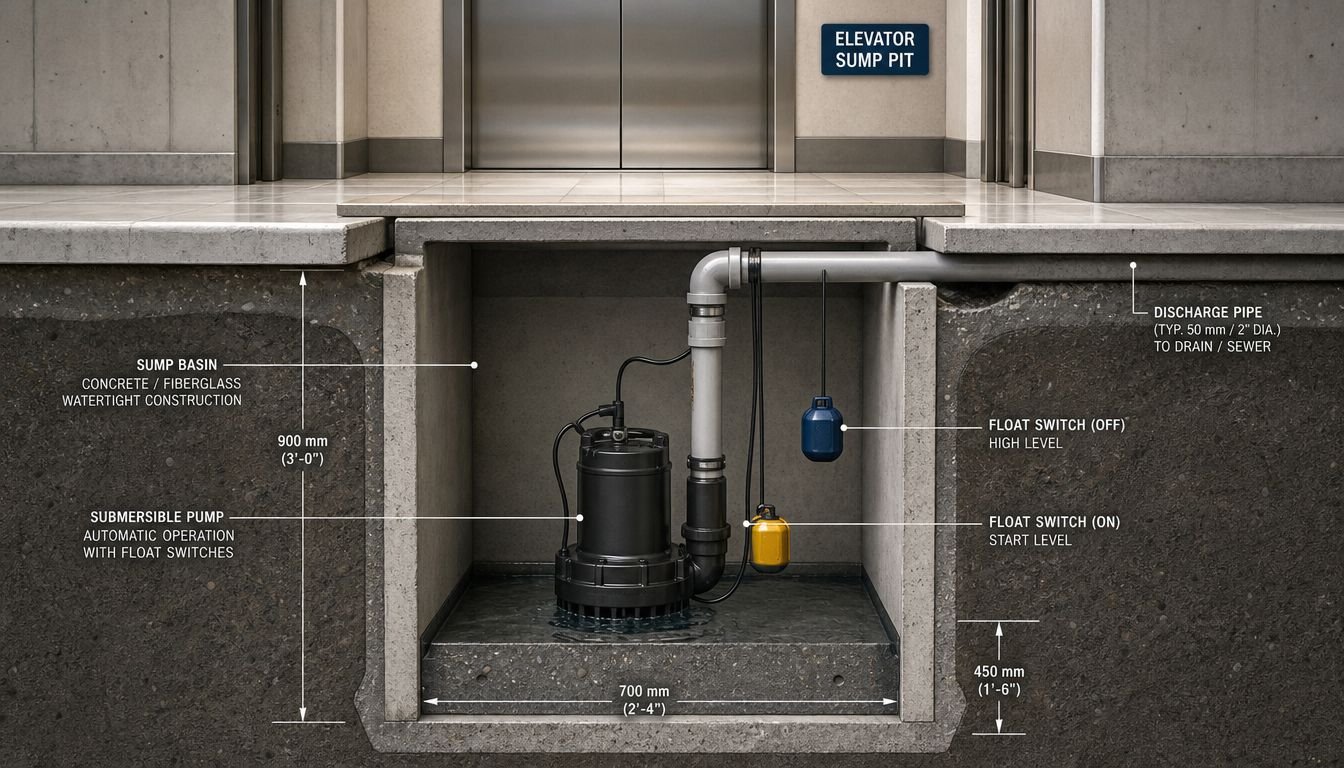
At the base is the sump basin itself. That's the low collection point where water gathers. Nearby, you'll usually find the pump, switching controls, discharge piping, and sometimes oil-monitoring equipment. In cleaner installations, everything has a clear purpose and routing path. In rougher ones, cords, piping changes, and debris tell you the system has been handled reactively.
Pump types you're most likely to see
In elevator environments, the two pump styles managers hear about most are submersible pumps and pedestal pumps.
A submersible pump sits down in the basin. It's compact, generally better protected from accidental contact, and common where space is tight. That makes it a practical fit for many elevator pits. The downside is service access. When it fails, technicians usually have to pull it out of a dirty basin to inspect it.
A pedestal pump keeps the motor above the water line, with the intake lower in the basin. That can make some service tasks easier. But in elevator pits, pedestal arrangements can be awkward because they need more vertical clearance and can leave more exposed components in a confined area.
Here's the short comparison most managers care about:
| Pump type | Usually works well for | Watch out for |
|---|---|---|
| Submersible | Tight pits, cleaner footprint, quieter operation | Harder hands-on service when fouled |
| Pedestal | Easier motor access in some setups | More exposed parts, bulkier arrangement |
Controls and accessories that matter
The pump isn't the whole system. It needs controls to know when to run and when to stop. That's usually handled by a float switch or similar level-sensing device. If the float gets hung up on debris, wiring, or pipe, the pump may never start. If it sticks in the run position, the pump can short-cycle or run longer than it should.
Other parts deserve a quick visual check:
- Discharge pipe: This carries removed water away from the pit. Poor routing or a failed check valve can send water back.
- Check valve: Helps keep discharged water from returning into the basin.
- Power disconnect and wiring: Pit equipment should look permanent and protected, not temporary.
- Alarm or monitoring contacts: Some properties want local or remote notice when water reaches a problem level.
Oil sensors and oil minders
In hydraulic elevator pits, one of the most important add-ons is an oil detection or oil retention device, often called an oil minder. These devices are meant to prevent pumping out liquid if oil is present or to help separate what can be discharged from what must be contained and handled properly.
That's one of the clearest examples of what works versus what doesn't. A standard sump pump can move water. It can't make a compliance decision. If your building has hydraulic equipment and periodic pit water, the right sensor or control package can save you from a bad call made under pressure during a storm event.
Troubleshooting Common Sump Pit Failures
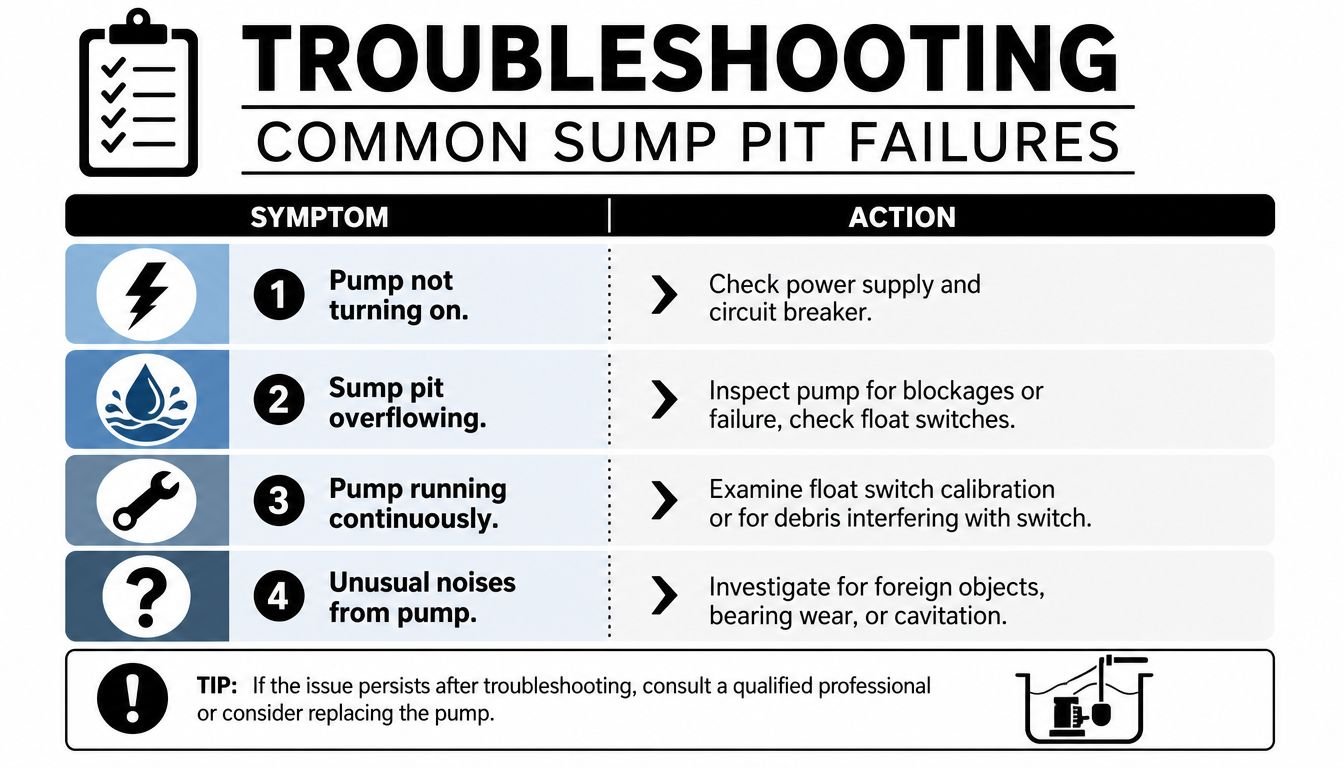
Most sump pit failures announce themselves in obvious ways. The pit is filling. The pump is silent. The pump never stops. Or it sounds terrible. The trick is knowing what your staff can safely check and what should be left to elevator and electrical professionals.
This visual guide covers the common symptoms at a glance.
If the pump isn't turning on
Start with the simple checks. Confirm the circuit hasn't tripped. Verify the disconnect is in the expected position. Look into the pit from a safe vantage point and see whether the float appears tangled, pinned, or buried in debris.
If power is available and the water level is high enough to call for pumping, but nothing happens, stop there. The motor, float switch, control wiring, or pump internals may have failed. In an elevator pit, that's not a place for improvised electrical work.
Safe first-line checks include:
- Power status: Check breaker and disconnect position.
- Obvious float interference: Debris, rags, sludge, or loose wiring can trap the float.
- Visible blockage signs: If the basin is packed with sediment, the intake may be compromised.
For a deeper look at emergency conditions and response priorities, this guide on a flooded elevator pit is worth keeping in your maintenance files.
A short video can help staff recognize the failure patterns before they become an outage.
If the pump runs continuously
A pump that never seems to shut off usually points to one of three conditions. The float is stuck in the run position. Water is returning to the pit because of discharge or check valve trouble. Or the building is taking on water faster than the system can keep up with.
A frequent error involves replacing the pump too quickly. If the discharge line is sending water back, a new pump won't fix the behavior. If stormwater intrusion overwhelms the basin after every downpour, the pump may be doing its job and still losing the battle.
Keep asking one question. Is the pump failing, or is the building asking the pump to solve a drainage problem it was never sized to handle?
If you hear noise or see overflow
Grinding, rattling, or cavitation-like sounds can mean debris in the impeller, worn internal parts, or low-water conditions that let the pump pull air. Overflow usually means the pump didn't start, couldn't move enough water, or discharged poorly.
Use this rule of thumb:
- Quiet pit, rising water: suspect no power or stuck controls.
- Running pump, no drop in water: suspect blockage, failed impeller, or discharge issue.
- Bad noise: suspect internal damage or foreign material.
- Rainbow sheen or oily residue: stop routine pumping decisions and escalate.
If staff can observe safely, great. If they need to reach into pit equipment, bypass controls, or reset electrical components without certainty, that's the point to call for service.
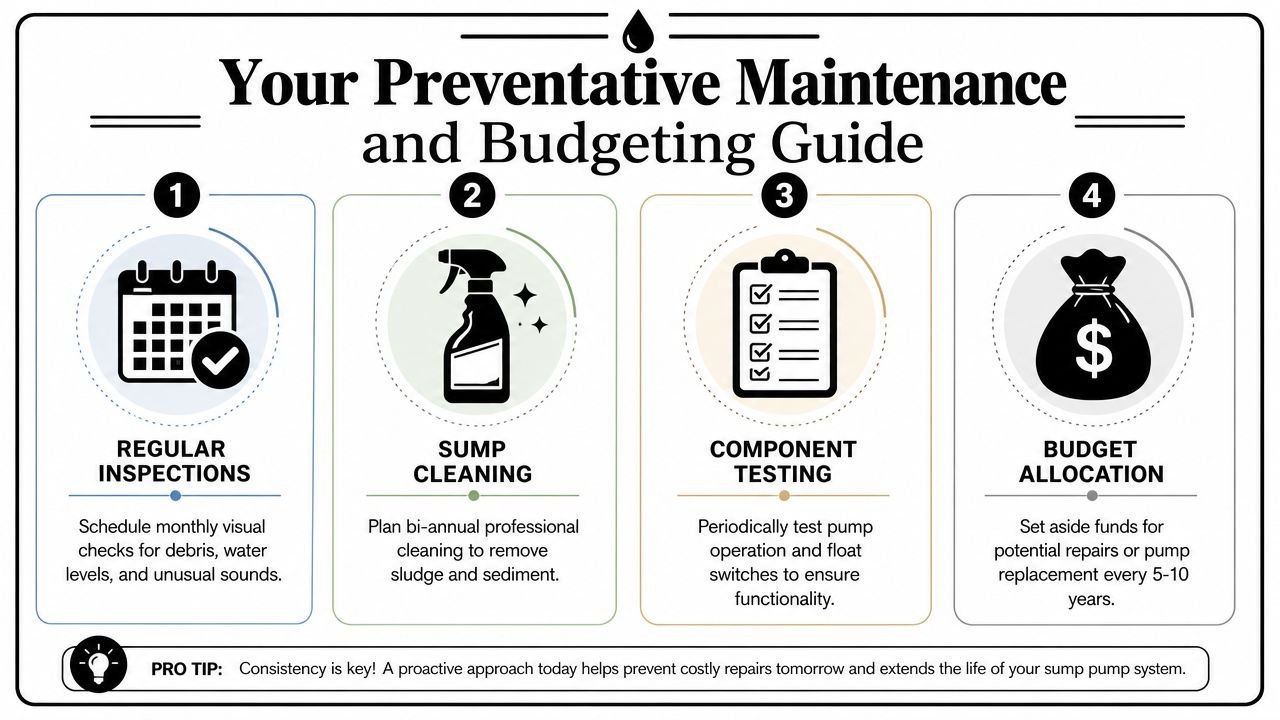
Your Preventative Maintenance and Budgeting Guide
Reactive sump work is expensive in the worst way. It doesn't just cost money. It steals time from your team, disrupts tenants, and tends to happen during bad weather when every contractor is already busy. A simple maintenance rhythm beats emergency response every time.
For most buildings, the best approach is to treat the elevator sump pit like a seasonal risk item. In Southern Michigan, that means paying attention before spring thaw, before heavy summer storms, and before winter conditions start driving freeze-thaw moisture into cracks and wall joints.
A practical maintenance routine
Your building team can handle observation and documentation. Qualified elevator and related service professionals should handle code-sensitive adjustments, electrical issues, and contamination concerns.
A useful routine looks like this:
- Monthly visual check: Look for standing water, sediment buildup, rust trails, discharge line damage, and anything interfering with the float.
- After major storms: Verify that water didn't rise unusually high and that the pump cycled as expected.
- Seasonal housekeeping: Remove debris that can foul floats, clog intakes, or hide developing issues.
- Functional testing: Have the system tested in a controlled way so you know the pump and controls respond.
- Water entry review: Track whether water shows up during specific weather events. That pattern often reveals whether grading, drains, or waterproofing need attention.
If seepage is recurring, building-side correction matters as much as pump maintenance. This overview of elevator pit waterproofing options is useful when the problem is bigger than the sump hardware alone.
Budgeting without guessing
You were asked to plan around repair and installation costs, but there's a hard limitation here. Without verified local pricing data, nobody should be giving you exact figures dressed up as facts. What you can do is budget by category and by risk.
Break the budget into three buckets:
| Budget category | What belongs there | Why it matters |
|---|---|---|
| Routine service | Inspection, cleaning, testing, minor control adjustments | Keeps small issues from becoming outages |
| Corrective repair | Pump replacement, float replacement, discharge correction, cleanup | Covers failures that still happen despite maintenance |
| Capital or building correction | Waterproofing, drainage upgrades, pit rehabilitation, control upgrades for oil handling | Addresses root causes that maintenance alone won't fix |
Budgeting advice: Reserve money for the pit even if it hasn't failed recently. Sump systems lull owners into complacency because they sit quietly until the one week you can least afford downtime.
What doesn't work is treating every pit issue as a one-off repair. If the same pit floods during similar weather, that's a pattern. Patterns justify capital planning. They also help you explain spending decisions to ownership because you're no longer paying for surprises. You're managing a known building condition.
When to Call a Professional for Your Elevator Pit
Some pit checks belong to your staff. Most repairs don't. The line is simple. If the issue involves contaminated liquid, electrical faults, recurring flooding, or anything that could affect elevator safety equipment, it's time for a qualified contractor.
Facility teams can observe, document, and report. They can note water level, listen for abnormal pump noise, and verify whether a breaker has tripped. They should not be making judgment calls about oil contamination, rewiring pump controls, or trying to restore an elevator after water has reached critical pit components.
Red flags that need immediate escalation
Call for professional service when you see any of the following:
- Oil sheen, residue, or hydraulic fluid smell in the pit
- Standing water near electrical components or safety devices
- A pump that has power but won't operate
- Repeated flooding after storms or thaw events
- Inspection violations tied to pit conditions
- Corrosion, damaged wiring, or structural deterioration in the pit
- Any uncertainty about whether the liquid can be discharged
These are not nuisance items. They're the point where elevator reliability, worker safety, and environmental responsibility overlap.
What a qualified contractor should do
A proper service call shouldn't start and end with swapping a pump. The contractor should evaluate the pit condition, identify why water is getting in, confirm whether oil contamination is possible, inspect the discharge arrangement, and verify that the control method fits both code and the actual pit environment.
A good assessment usually includes:
| What they evaluate | Why it matters |
|---|---|
| Water source pattern | Tells you whether this is a storm issue, seepage issue, or internal leak |
| Pump and float condition | Confirms whether the hardware failed or was overwhelmed |
| Discharge path | Reveals backflow, blockage, or poor routing |
| Pit equipment exposure | Shows whether elevator components were affected |
| Oil handling needs | Protects the building from compliance mistakes |
Southern Michigan facilities need contractors who understand local weather, older building conditions, and the difference between a quick pump fix and a durable pit strategy. That matters whether your property is in Detroit, Ann Arbor, Lansing, Flint, Kalamazoo, or a smaller community with the same groundwater and storm problems.
The elevator sump pit is small compared to the rest of the system. Its impact isn't. When it's maintained well, you rarely think about it. When it's neglected, it can shut down service, complicate inspections, and create environmental headaches in a single storm cycle.
If your property in Lower Michigan is dealing with pit water, sump pump trouble, code questions, or recurring elevator shutdowns after storms, Crane Elevator Company can help assess the condition, correct the root cause, and keep your equipment compliant and serviceable. Their team handles inspections, repairs, preventative maintenance, and modernization support for commercial and residential elevator systems across Southern Michigan.