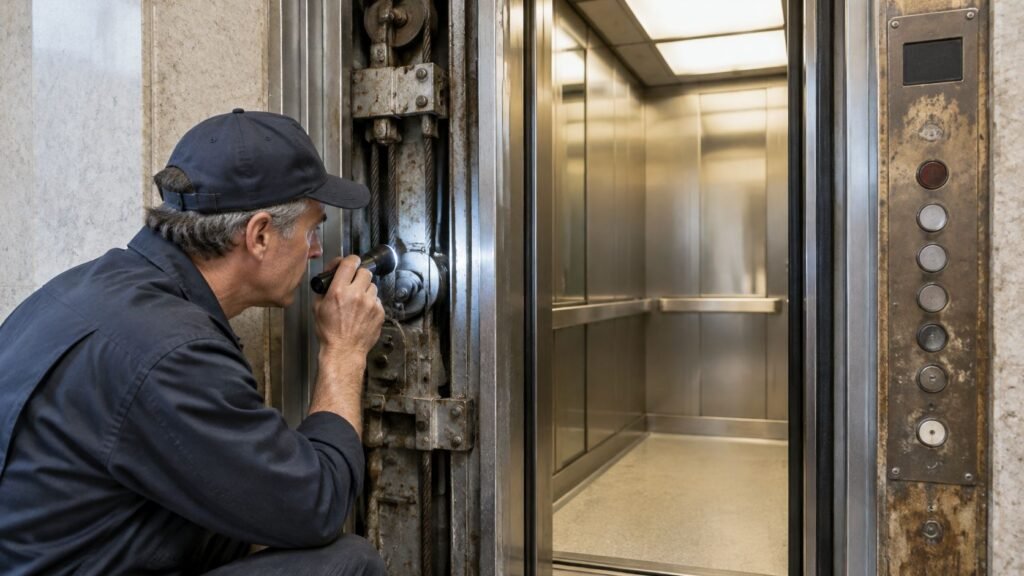
A well-maintained passenger elevator typically stays in service for about 20 to 30 years under average use, and planning for modernization usually starts around the 20-year mark. That doesn't mean the whole elevator needs replacing when it reaches that age.
The more useful question is which component will limit dependable service first. A sound car frame doesn't make an unsupported controller repairable, and a new door operator won't correct a worn hydraulic system. Owners need a component-level budget, not just an installation anniversary.
How Long Most Elevators Last
The 20 to 30 year service window is a planning benchmark, not an expiration date. Convex's elevator-modernization overview places typical upgrade planning at about 20 years, with major modernization commonly becoming necessary around 20 to 25 years.
An elevator can remain technically operational while becoming difficult to support. The distinction matters: keeping a car moving isn't the same as keeping it reliable, economical, accessible, and compliant.
Elevator lifespan benchmarks
These benchmarks describe different things. Some concern an entire installation, others concern mechanical equipment or modeled failure patterns.
| Benchmark | Typical value | What it means |
|---|---|---|
| Practical service life under average use | 20 to 30 years | Serviceable equipment still needs advance capital planning |
| Modernization planning point | About 20 years | Start a condition assessment, not automatic replacement |
| Statistical useful life, Hong Kong study | About 30 years | Based on 25,548 breakdowns across 5,400 elevators |
| Modeled extension with risk-based controller maintenance | Toward 35 years | A projection, not a guarantee |
| Mechanical equipment with preventive maintenance | 15 to 20 years | Mechanical subsystems often age sooner |
| Group of elevators in a university assessment | More than 40 years | Long operation doesn't establish acceptable remaining life |
| High-traffic hospital cars | Potentially sooner than 20 years; exact figure unknown | Frequent door, control, and motor cycles can bring modernization forward |
The research benchmarks aren't interchangeable with a warranty or a manufacturer's replacement schedule. The university group, for example, was considered well beyond renewal age, not proof that owners should aim for the same result.
Running longer isn't always better value
Evaluate repairability, not merely whether a technician can restart the equipment. An obsolete controller may work today but leave the building without a practical repair path after its next failure.
Likewise, recurring shutdowns carry costs beyond the invoice. Building staff must manage access, tenants lose dependable transportation, and healthcare or industrial operations may need alternative routes.
Practical rule: Use age to establish a planning window. Use condition, inspection findings, parts support, and service records to decide what happens next.
When owners ask how long do elevators last, the useful answer includes both remaining mechanical life and the ability to maintain acceptable service. Those aren't always the same.
Why Components Age on Different Clocks
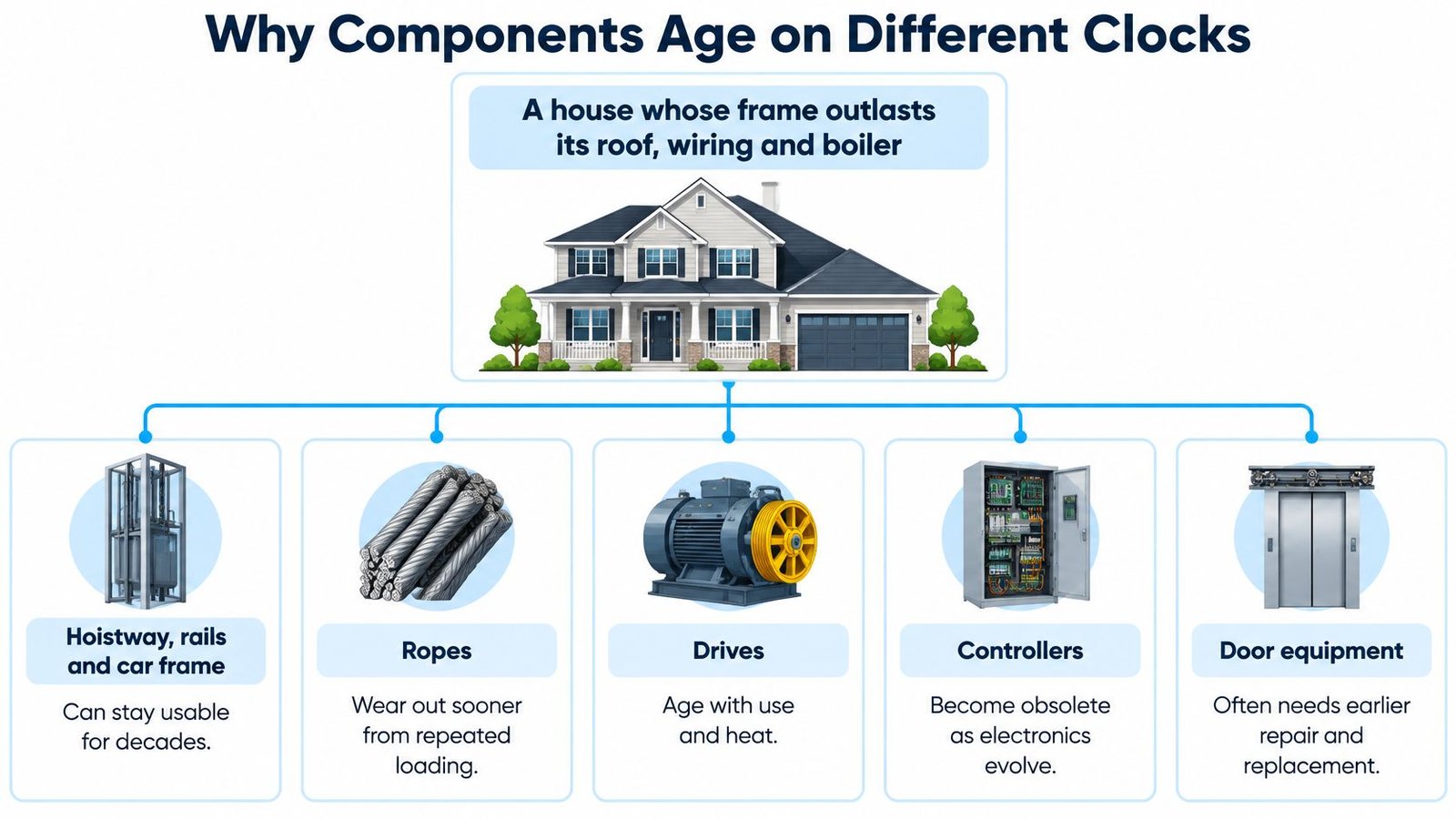
An elevator is like a house whose frame outlasts its roof, wiring, and boiler. The hoistway, rails, and car frame can remain usable while the working equipment needs renewal.
That's why budgeting for an elevator as a single asset can be misleading. You're maintaining a collection of systems with different wear patterns, support requirements, and replacement opportunities.
Component cycles that set elevator life
The component benchmarks summarized in Bisnow's modernization coverage include a 25-year life-cycle assessment, rope maintenance every six months, replacement approximately every eight years, and drive refurbishment findings of 53% to 91% lower environmental impact and 72% to 84% less e-waste, depending on the drive model.
| Component | Typical cycle | Why it matters |
|---|---|---|
| Traction wire ropes | Maintained every 6 months, replaced about every 8 years in the assessment | Treat ropes as a recurring capital item, not a permanent part |
| Drives | Often replaced one or more times during the elevator's life | Drive life is commonly shorter than system life |
| Refurbished drive compared with a new drive | Environmental impact reduced 53% to 91%; e-waste reduced 72% to 84% | Refurbishment deserves consideration when technically suitable |
| Controller | Faults can signal the onset of wear-out | Electronics support matters alongside physical condition |
| Car and landing door mechanisms | Among leading breakdown sources | Recurring door problems warrant targeted budgeting |
| Machine, jack, tank, and power unit | Assess separately within the broader modernization window | Don't replace sound equipment solely because adjacent equipment is old |
| Hoistway and structure | Can remain usable for decades | Confirm condition before assuming complete replacement is necessary |
These are assessment benchmarks, not permission to postpone manufacturer-required maintenance or condition-driven replacement. Rope condition, for example, must be judged by a qualified elevator contractor rather than calendar age alone.
Budget by subsystem
The U.S. Bureau of Reclamation's elevator guidance.pdf) gives a modernization benchmark of approximately 20 to 30 years, which may apply to selected components rather than the entire elevator.
Start the component inventory before a major failure forces the scope. Record what's installed, what has already been replaced, which parts remain available, and which defects recur.
For hydraulic equipment, separate the jack's condition from the tank, pump, valves, and packing. For traction equipment, distinguish machine condition from ropes, sheaves, drive electronics, and controls. Age tells you when to look; component condition tells you what to replace.
Five Factors and Three Building Lifespans
Identical installation dates don't produce identical remaining lives. The building's daily demands and the owner's maintenance decisions change which component needs attention first.
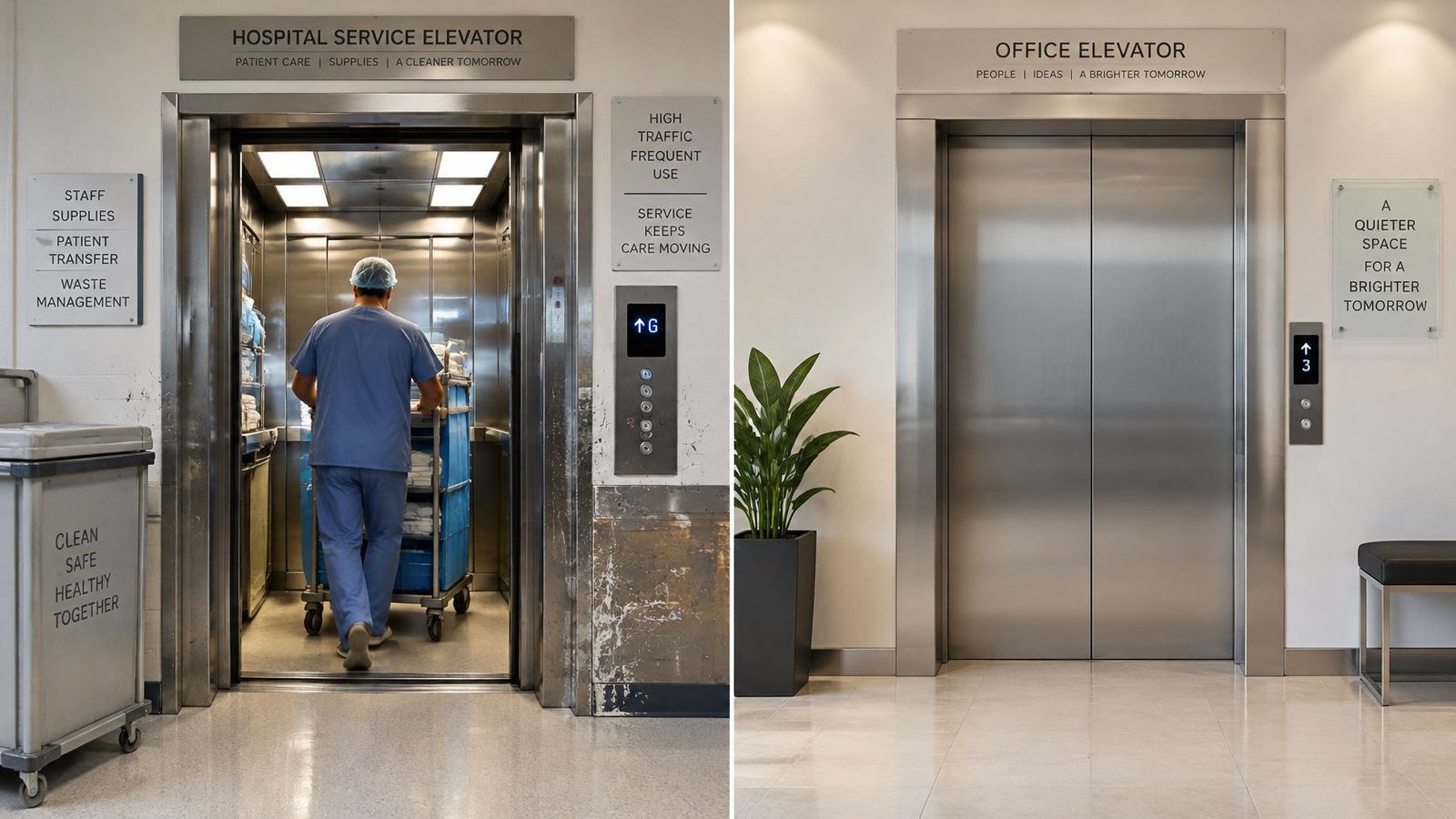
The contrast is clearest between continuous service duty and occasional office use.
What changes the timeline
- Traffic intensity. A hospital service car repeatedly opens doors, starts, stops, and carries equipment. A lightly used office car may accumulate much less wear despite the same calendar age.
- Operating environment. Water in a pit, dust around equipment, and excessive machine-room heat need correction. Replacing damaged parts without addressing their environment invites repeat failures.
- Equipment type. Traction assessments focus on ropes, sheaves, machines, and drives. Hydraulic assessments include packing leaks, jack condition, valves, and power-unit performance.
- Maintenance quality. Documented visits should show actual work and developing defects. A clean machine room, pit, and car top help technicians identify leaks, debris, and abnormal wear.
- Obsolescence. An unsupported control board can become the limiting factor even when the machine remains serviceable. Confirm diagnostic access and replacement-part support before a breakdown.
The Hong Kong University of Science and Technology study analyzed 25,548 breakdowns across 5,400 elevators, estimated statistical useful life at about 30 years, and modeled a possible extension toward 35 years through risk-based controller maintenance. Controller faults, car-door mechanisms, landing-door mechanisms, and other car-cage equipment were leading breakdown sources.
Those findings support a practical distinction: maintenance should respond to the equipment's failure pattern, not just repeat the same checklist indefinitely.
For a visual accompaniment to these equipment differences, watch the following video.
Three illustrative buildings
The lightly used office tower. Say a hypothetical office elevator still has a sound traction machine and drive, but its controller is unsupported and its door operator needs repeated adjustment. The controller establishes the capital deadline; replacing the machine because it's old doesn't address the immediate problem.
The hospital service elevator. Frequent trips make the door equipment a priority. The project also needs an operational plan for moving patients, staff, supplies, and equipment while the car is unavailable.
The family home. Low traffic doesn't eliminate deterioration. Hydraulic packing, seals, batteries where fitted, and safety devices still need attention, and dependable access matters especially when a resident relies on the lift.
A useful maintenance record identifies the failing subsystem, the corrective action, and whether the same fault returned.
Track callbacks, door faults, leveling errors, nuisance shutdowns, and controller failures by category. That log gives an owner a stronger capital-planning trigger than age alone.
Warning Signs That Repairs Are No Longer Enough
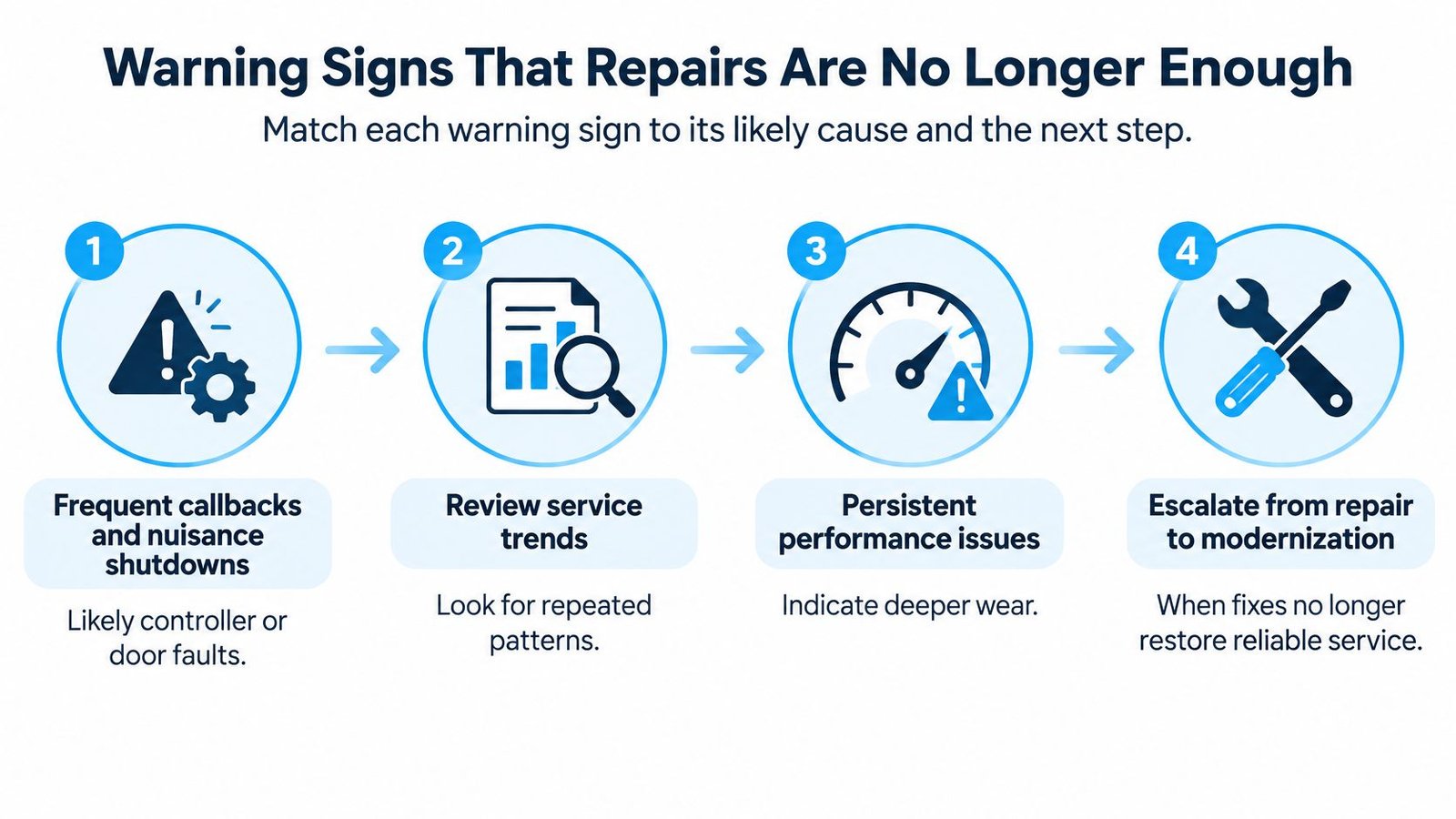
Match each symptom to a likely cause, then confirm it through inspection and fault records. A symptom isn't a diagnosis, and restarting an elevator doesn't prove the underlying defect has been corrected.
| Warning sign | Likely cause | Next step |
|---|---|---|
| Frequent callbacks and nuisance shutdowns | Controller or door faults | Review callbacks and fault logs for repeated patterns |
| Leveling errors | Drive, controller, or hydraulic leveling problems | Have the relevant control and drive systems assessed promptly |
| Doors slow to close or repeatedly reopen | Worn operator, contacts, detectors, or mechanical resistance | Schedule a door-equipment assessment |
| Parts no longer available | Obsolete control system | Plan a non-proprietary modernization |
| Rough or noisy ride | Worn guides or drive components | Request a component-level inspection |
| Repair invoices rising each year | Wear across multiple subsystems | Compare repair spending and downtime with modernization scope |
| Code deficiency cited by an inspector | Safety, door-lock circuitry, or another compliance defect | Correct by the inspector's deadline, before reinspection; observe any shutdown order |
Propmodo's coverage of aging elevator systems describes modernization as a sequencing decision: owners can renew controls, drives, door operators, and monitoring equipment while retaining suitable durable components.
Compare phased work with complete replacement
Phased work makes sense when the retained equipment is sound, compatible, and supportable. It can direct spending toward the failure-prone subsystem, but repeated mobilization and incompatible upgrade choices can erase the advantage.
Complete replacement deserves consideration when structural or rail deficiencies accompany widespread equipment wear. It may also provide a more coherent solution when accessibility, performance, and compliance requirements cannot be met sensibly through piecemeal work.
Compare proposals on these points:
- Code deficiencies. Identify required corrections and any additional work triggered by the alteration.
- Proprietary parts risk. Establish who can obtain parts, use diagnostic tools, and service the finished installation.
- Construction downtime. Require a shutdown sequence, approval milestones, and an access contingency.
- Energy use. Request equipment-specific calculations rather than an unsupported savings percentage.
- Accessibility. Include leveling, controls, signals, communication, and entrance operation in the scope.
Use the elevator modernization assessment to define retained equipment and replacement boundaries before comparing prices. For connected controls or monitoring, also establish remote-access permissions and responsibility for cybersecurity updates.
The cheapest proposal isn't the least expensive outcome if it leaves the next unsupported subsystem untouched.
Michigan Inspection Rules That Set the Maintenance Clock
A 90-day maintenance interval appears in the linked Michigan Elevator Code rulemaking document, along with rated-load testing provisions for applicable equipment and discretionary 30-day inspections. Because that document is a strikebold rulemaking version, confirm the currently effective requirements and equipment-specific applicability with the Elevator Section before setting a compliance calendar.
Michigan elevator maintenance and testing intervals
| Requirement | Interval or limit | What it means for lifespan |
|---|---|---|
| Power-elevator service and maintenance, excluding specified private-residence devices | At least every 90 days in the linked rulemaking text | Regular visits help identify wear in doors, brakes, and controls |
| Applicable rated-load safety test | Every 90 days in that text, with a general inspector present | Confirm applicability and coordinate the licensed contractor and inspector |
| State periodic inspection | Possible every 30 days at department discretion in that text | Keep maintenance and testing records current |
| Annual inspection invoice | About 90 days before certificate expiration | Pay promptly so the device enters the inspector's worklist |
| Temporary construction certificate | Maximum 90 days | Plan approval around construction use |
| Permanent elevator used during construction | Inspection every 30 days | Account for construction traffic and equipment condition |
| Permit inspection scheduling | Within 30 days of permit issue | Keep in-scope testing current to avoid approval delays |
The Michigan Elevator Section FAQ.pdf) explains the inspection required for a Certificate of Operation and the invoice sent approximately 90 days before expiration. Keep the certificate available onsite; owners generally don't directly schedule the routine annual inspection.
Michigan's elevator industry notices specify the 90-day temporary-certificate limit, 30-day construction-use inspections, and scheduling within 30 days of permit issuance. New, altered, or relocated equipment generally needs inspection and testing before service.
Organize elevator testing and compliance coordination around the actual device, permit, and inspection status. A maintenance visit doesn't replace state approval.
We serve all major Michigan cities, including Detroit, Grand Rapids, Warren, Sterling Heights, Ann Arbor, Lansing, Flint, Kalamazoo, Saginaw, Bay City, and Traverse City. The same recordkeeping discipline matters in Monroe, Midland, Holland, Mount Pleasant, and Port Huron.
Confirm Your Elevator's Age and Schedule an Assessment
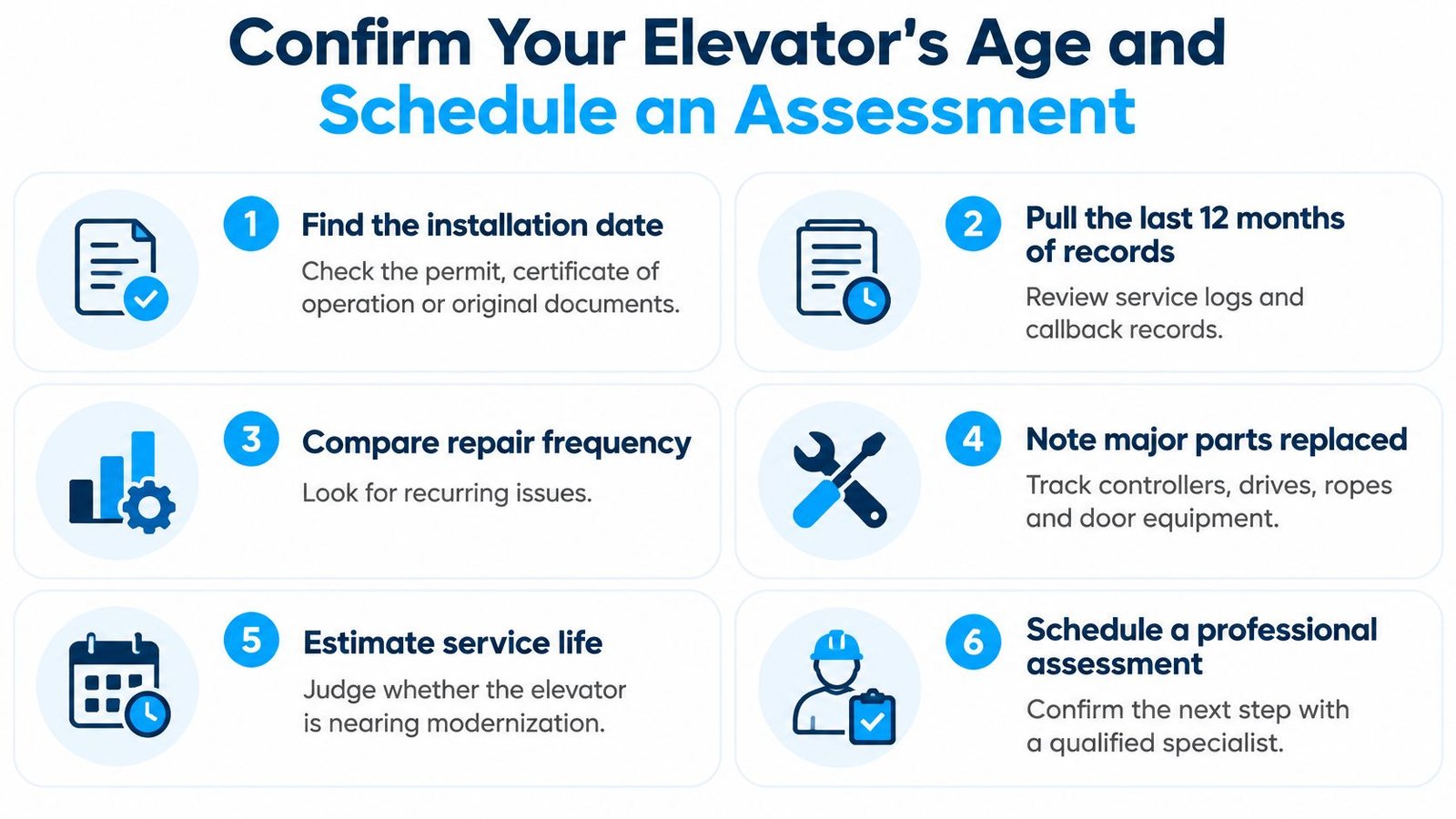
- Find the installation date. Check original permits, installation documents, and certificate records. Distinguish original equipment from later alterations.
- Pull service and callback records. Begin with the most recent year, then extend the review when a recurring problem needs more context.
- Sort breakdowns by subsystem. Separate door, controller, drive, hydraulic, and safety-device issues. Note major components already replaced.
- Check operating authorization. Confirm the Certificate of Operation, outstanding violations, and annual inspection status.
- Verify parts support. Identify the controller and door operator, then establish parts availability and diagnostic access.
- Choose the next action. Continue maintenance, phase targeted upgrades, or develop a complete modernization scope based on condition.
Turn the records into a solution plan
Crane Elevator Company is family-owned, with more than 25 years of experience serving Michigan and Ohio and 24/7/365 field availability. Our elevator repair assessment can provide a second opinion on an existing problem at no extra charge, including a visit and solution plan.
We provide preventive maintenance, state testing and inspection support, major and minor repairs, and non-proprietary modernization for passenger, service, freight, and residential elevators, wheelchair lifts, material lifts, and dumbwaiters. Work includes machine-room, pit, and car-top cleaning; COP/PI bulbs; door-lock monitoring and detectors; hydraulic packing; jack, cable, tank, power-unit, motor, sheave, and machine work; emergency phones; fire-service and generator testing; and code corrections.
For owners in Birmingham, Detroit, Ann Arbor, Lansing, Flint, Kalamazoo, and surrounding communities, call 1-734-726-4247 to arrange a review. Bring the service records and inspection notices so the recommendation addresses the equipment's actual limits.
Crane Elevator Company offers maintenance, repairs, testing, and modernization to help owners plan around component condition rather than wait for a shutdown. Visit Crane Elevator Company to request an assessment or a no-extra-charge second opinion and establish which work your elevator needs first.