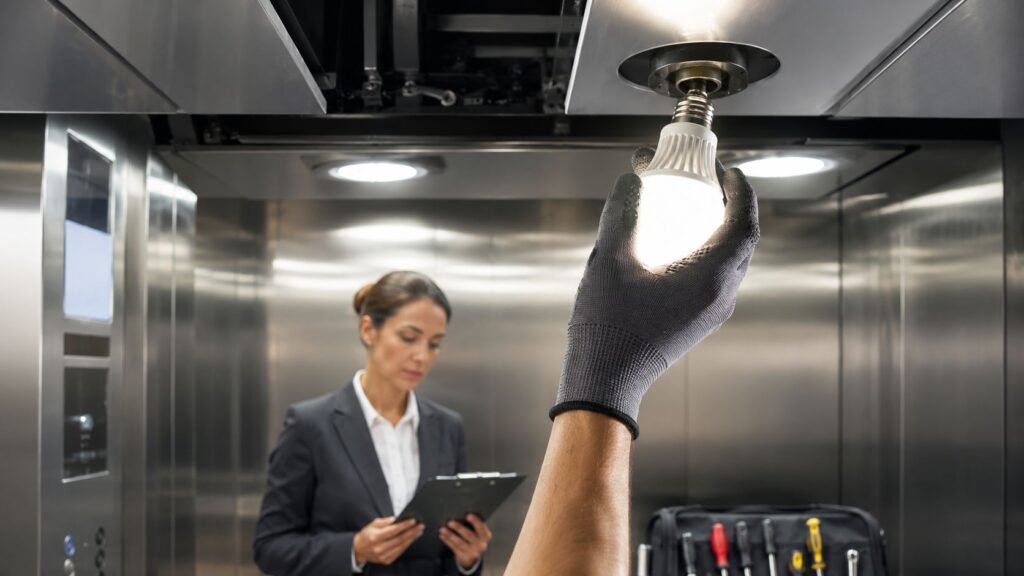
A tenant calls to report a flickering elevator light. A few minutes later, someone else mentions the cab feels dim. By the afternoon, your front desk has heard that the elevator “looks unsafe,” even though the car is still running.
That's how this issue usually starts. It looks minor, sounds easy, and tempts people to treat it like any other bulb change in the building.
In an elevator, it isn't. Lighting affects how safe the car feels, how the property presents itself, and whether you're drifting toward a code problem without realizing it. Elevator light bulb replacement is one of those jobs that seems simple until you're dealing with the fixture type, the ballast, the cab layout, access restrictions, and the question every facility manager eventually asks: is this really something building staff should touch?
The smart answer is to treat elevator lighting as part of the elevator system, not as a janitorial item. A good replacement solves the immediate complaint. A professional replacement also protects reliability, avoids repeat failures, and keeps you out of trouble during inspection.
That Flickering Light Is More Than an Annoyance
The usual scenario is familiar. A property manager gets a complaint that one car has a flickering ceiling light. Someone on staff checks it, sees that the elevator still runs, and pushes the issue to the next maintenance round.
Then the complaints keep coming. Tenants don't describe it as a bulb problem. They describe it as an elevator problem.
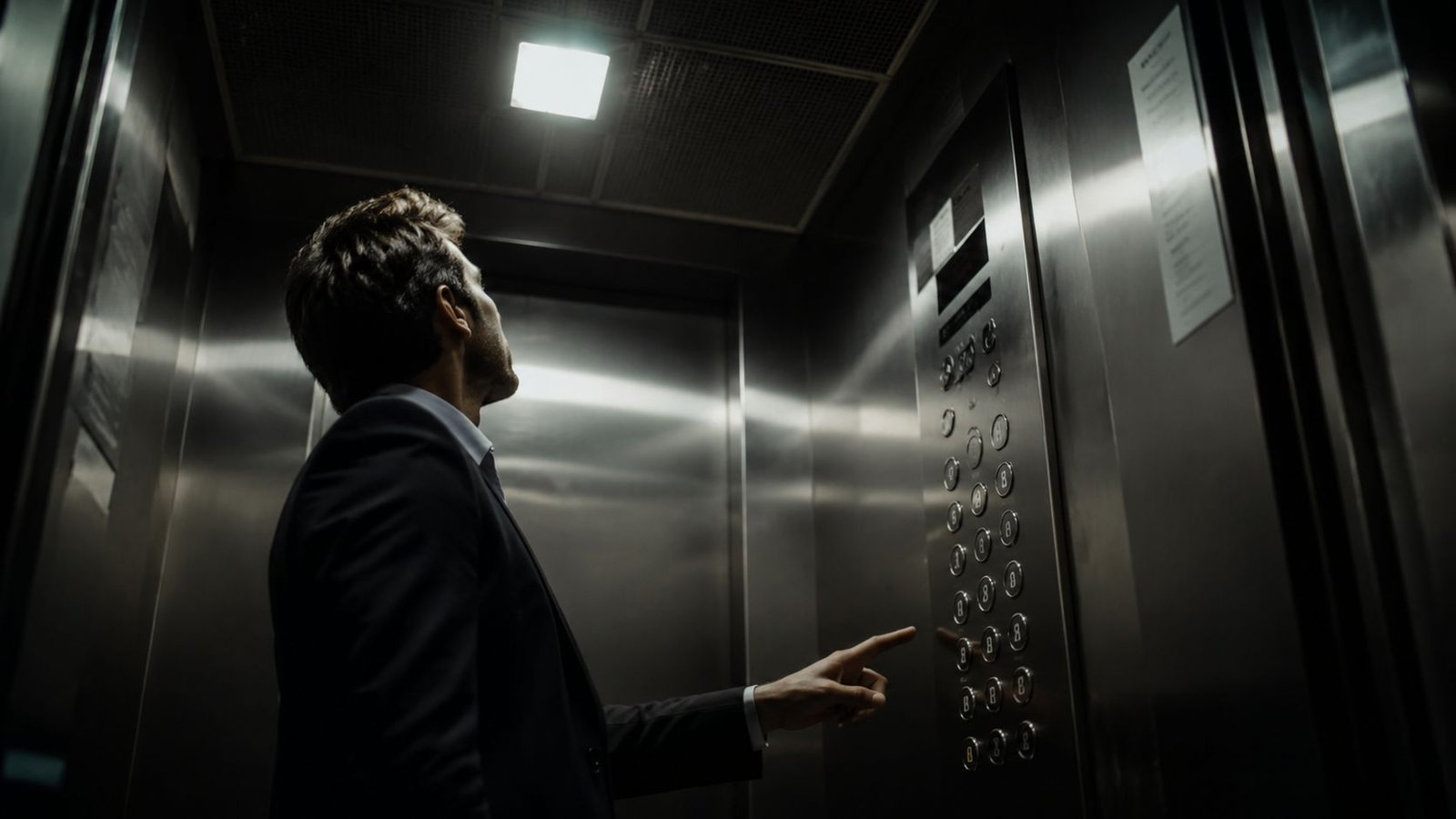
A dim or flickering cab changes how people judge the whole system. In an office tower, it makes the building feel poorly maintained. In a healthcare facility, it can unsettle patients and visitors. In municipal and school buildings, it raises the kind of attention no manager wants from safety committees or inspectors.
What the light is telling you
A bad lamp isn't always just a bad lamp. In elevator work, flicker, dimming, color shift, and intermittent output can point to wear in the lamp itself, compatibility problems, fixture issues, or upstream electrical trouble. That's why experienced teams treat these symptoms as early warnings.
A flickering elevator light is often the first visible sign that your maintenance approach is becoming reactive.
If you only respond after complete burnout, you lose time, frustrate occupants, and increase the odds of emergency calls for a problem that could have been handled during routine service.
Why managers get caught off guard
Part of the problem is access. Elevator lighting sits inside a system most building staff rightly avoid opening without the right procedures. The other part is perception. People assume a bulb is a bulb.
It isn't, especially in elevator cabs, pits, and machine rooms where lighting intersects with safety, code, and equipment compatibility. If you're managing property in Michigan, the hidden cost of a “quick fix” usually shows up later as a callback, an inspection correction, or a recurring failure that should have been prevented the first time.
Why This Simple Task Demands Serious Attention
Elevator light bulb replacement belongs in the same category as other small elevator tasks that create outsized risk when handled casually. The bulb may be inexpensive. The consequences of doing the work wrong are not.
Safety comes first
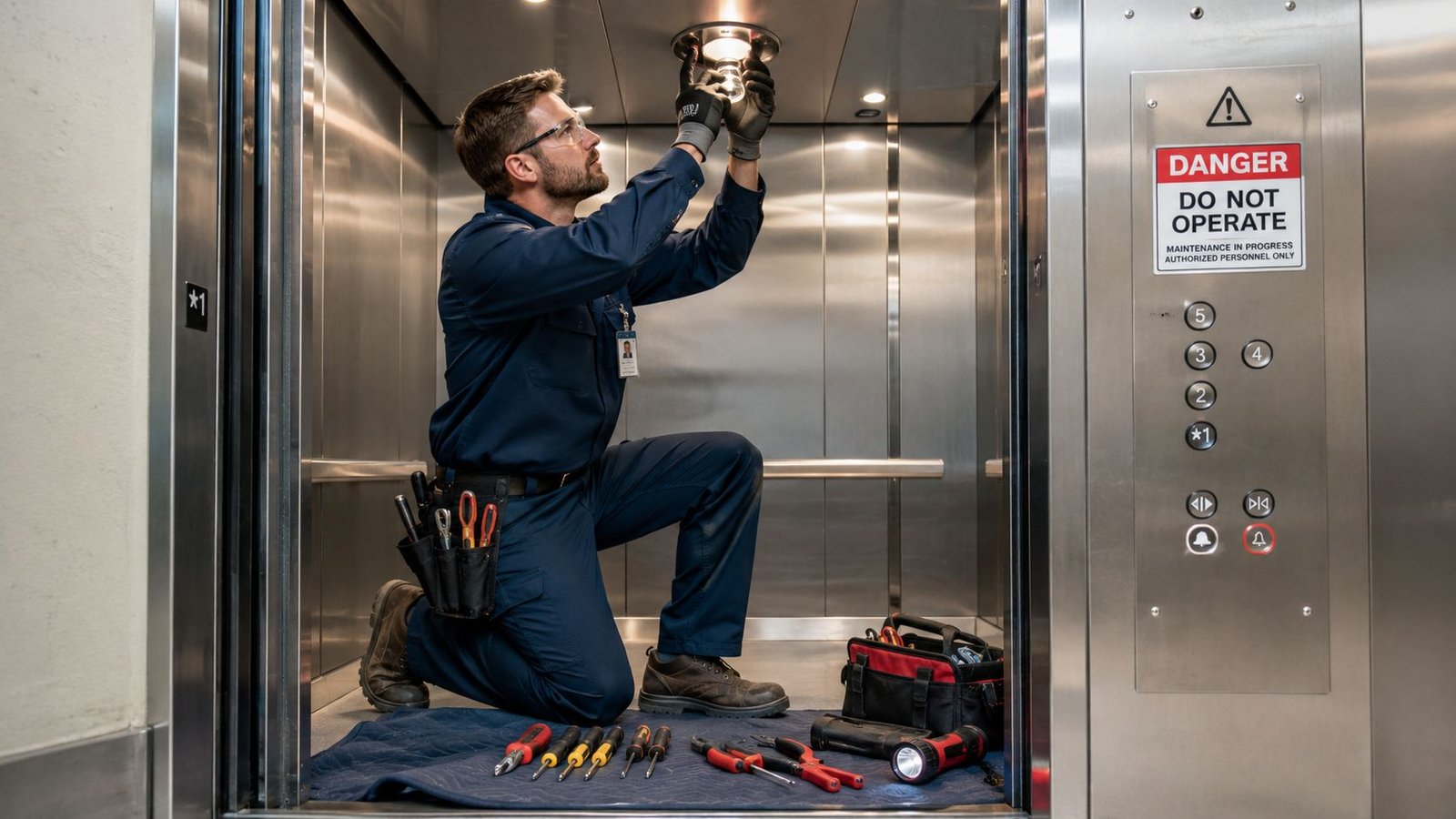
An elevator isn't a hallway fixture with a ladder under it. You're working around elevator equipment, electrical components, access panels, and spaces that require controlled entry. Proper lockout and tagout matter. So does verifying power status, securing the work area, and using the right access method for the fixture location.
If someone removes covers, reaches into a fixture, or starts guessing at wiring without training, they can create shock hazards or damage the lighting circuit. In some cases, they can also create a new problem that doesn't show up until the elevator starts seeing repeat lamp failures.
Compliance isn't optional
Lighting in elevator spaces ties directly to code expectations. That includes not just whether the light turns on, but whether the area is illuminated properly and safely. Facility managers who want the broad picture should review elevator code requirements in Michigan and common compliance issues.
The mistake I see most often is treating light output as the only question. Inspectors and technicians look beyond that. They care about safe visibility, fixture suitability, protection, and whether the installation supports the intended use of the space.
Practical rule: If the work involves elevator electrical components, access to controlled spaces, or any uncertainty about fixture type, call a qualified elevator professional instead of assigning it as a general maintenance task.
Liability follows shortcuts
If a passenger steps into a dim cab and feels unsafe, that's already a property problem. If an employee gets hurt trying to “just swap the bulb,” that's worse. If a code issue is documented after an improvised repair, the record speaks for itself.
Quick fixes tend to cost more because they don't address the full condition. A trained technician isn't just replacing a lamp. That person is checking the fixture type, confirming compatibility, looking for heat damage, and making sure the repair won't set up the next failure.
Choosing the Right Elevator Bulb Technology
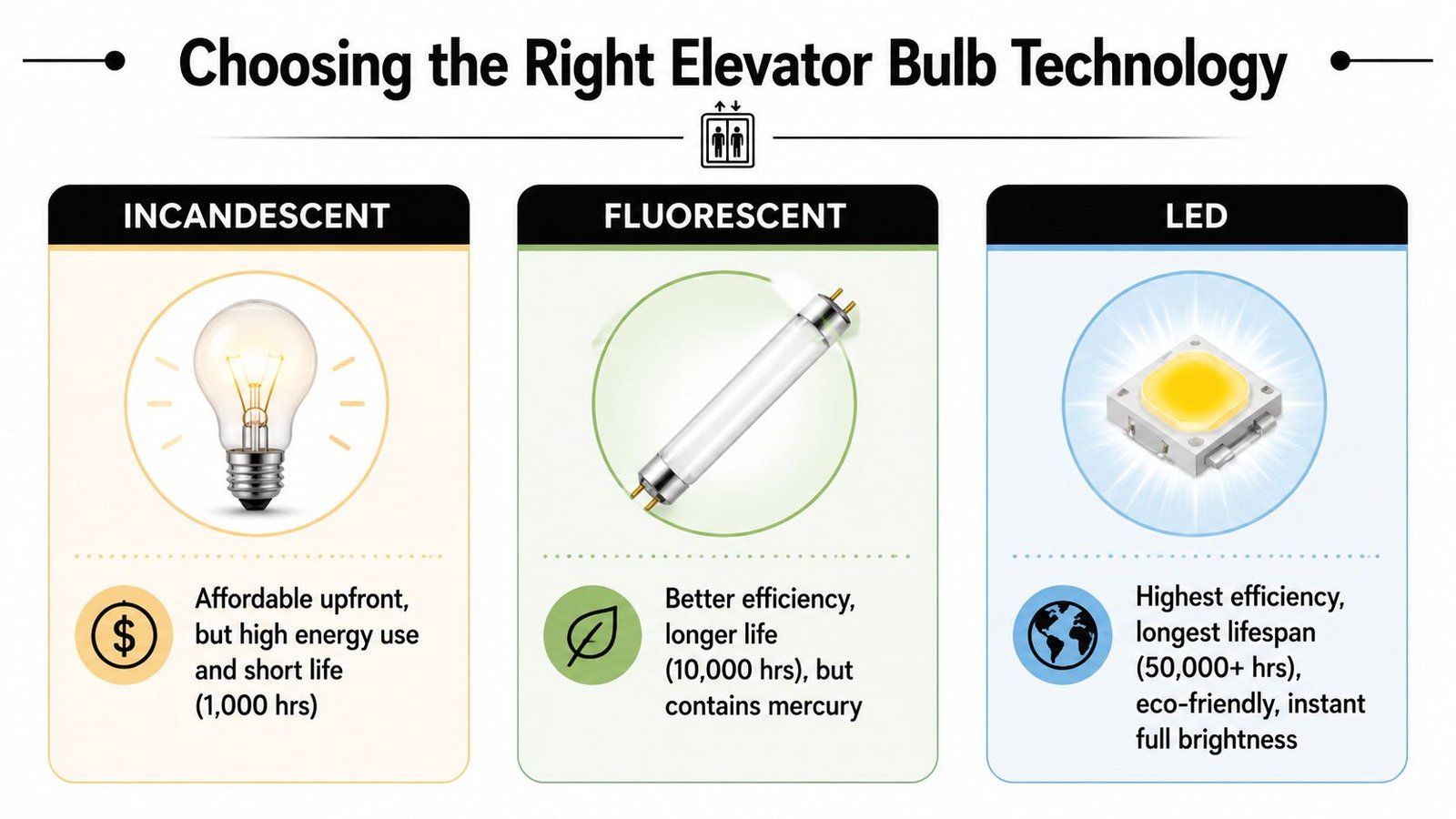
Not every elevator still uses the same lighting setup, and that matters. Before anyone orders parts, the first question should be simple: what technology is already in the cab, and does it still make sense for the building?
The practical differences
Here's the practical comparison property managers care about most:
| Technology | What works | What doesn't |
|---|---|---|
| Incandescent | Simple replacement in older setups | High energy use, short service life, more heat in the cab |
| Fluorescent | Familiar in many older commercial fixtures | Ballast compatibility issues, more complex replacement, aging components |
| LED | Lower operating cost, longer life, less heat, fewer service calls when specified correctly | Poor retrofit choices can create compliance problems if beam spread and fixture design are ignored |
Incandescent lamps are the least attractive option for most buildings now. They burn hotter, burn out faster, and keep staff tied to routine replacements. Fluorescent systems improved efficiency for years, but they come with their own baggage, especially when ballasts age and fixture components stop behaving predictably.
LED is usually the right long-term move, but only if the retrofit is done correctly.
Where LED clearly wins
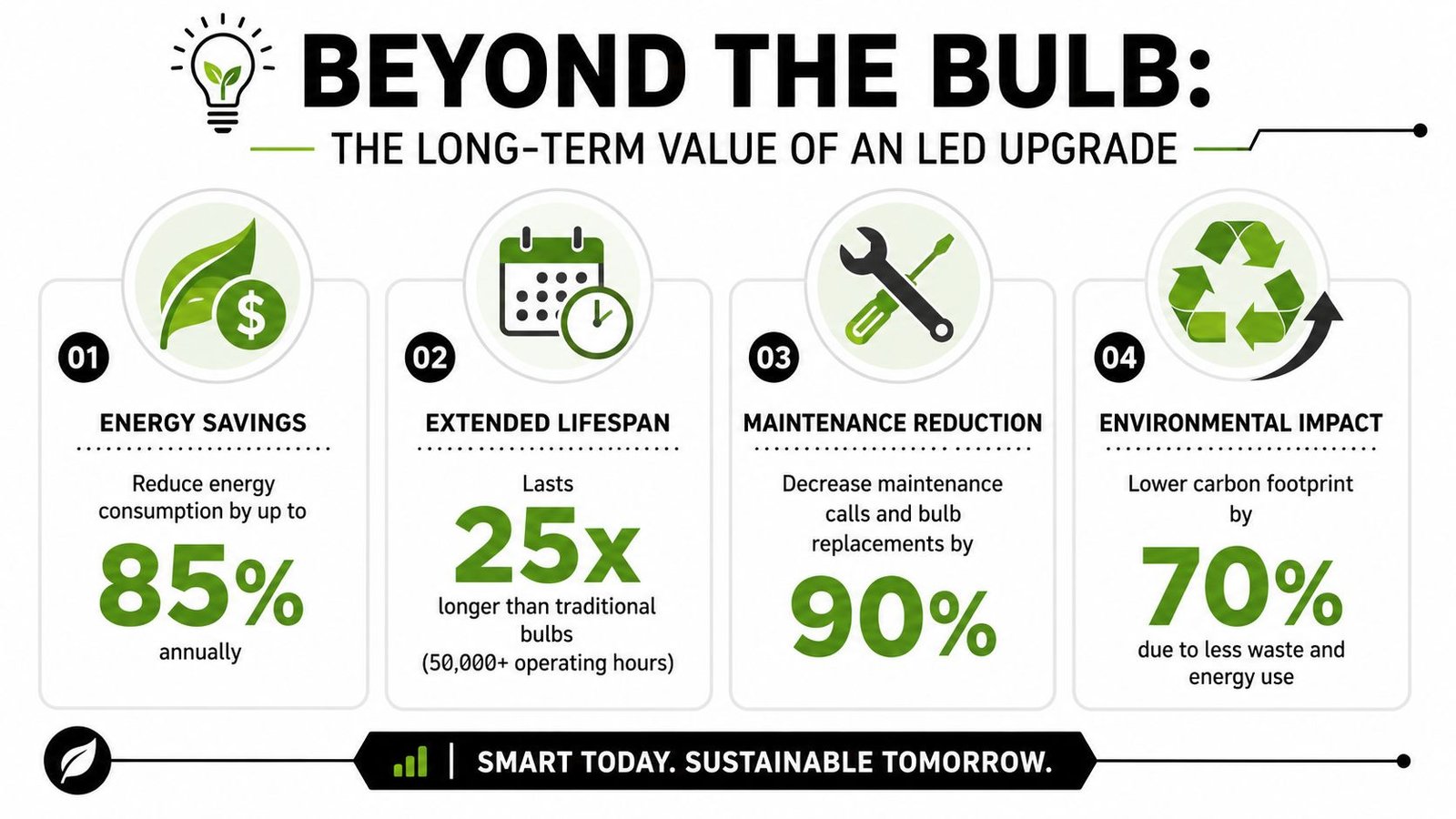
Modern LED elevator light bulbs reduce energy consumption by 90% and last 25 times longer than incandescent bulbs, and a single elevator conversion can save over $1,400 annually in energy and maintenance with a payback period of less than six months, according to Synergy Lighting USA's elevator LED analysis.
That's why LED has become the standard answer in many commercial properties. It cuts power use, sharply reduces lamp change frequency, and lowers heat inside the cab. For a busy building, fewer lamp failures also means fewer tenant complaints and fewer avoidable service interruptions.
What to ask before upgrading
The right LED decision isn't just “buy the brightest lamp.”
Use these questions when reviewing options:
- Fixture compatibility: Is the LED product designed for the existing fixture, or does the fixture itself need to change?
- Service environment: Will vibration, continuous operation, and cab heat affect performance?
- Light distribution: Does the lamp create even, usable light across the cab instead of harsh spots?
- Maintenance strategy: Are you solving one burnout, or reducing repeat calls across the property?
A good upgrade improves reliability. A bad one just changes the type of complaint you get.
Safe Replacement and When to Call an Expert
If you're responsible for the building, you should understand the process even if you're not the one doing the work. That helps you spot when a simple replacement is instead a diagnostic issue.
What a safe replacement involves
At a high level, safe elevator light bulb replacement means:
- Securing the equipment so no one is working around energized components casually.
- Accessing the fixture correctly without damaging cab finishes, covers, or hardware.
- Identifying the lamp and fixture type before any parts are installed.
- Inspecting related components for signs of wear, heat damage, or compatibility issues.
- Testing the result to confirm stable operation instead of assuming the problem is solved.
That sounds basic, but the difference between a clean service call and a repeat failure usually comes down to step three and step four.
Predictive replacement beats waiting for burnout
In elevator and transit maintenance, replacement is often triggered by visible performance decline, not just complete failure. Dimming, flickering, color change, or burning marks are all reasons to act early. The same guidance also stresses that replacement lamps must match the original wattage, size, and type, because mismatches can shorten lamp life and create recurring problems. The example given is pairing non-rapid start bulbs with rapid start ballasts, which leads to significantly shortened bulb life, as outlined in this elevator maintenance training module.
That point matters for facility managers. If your staff replaces a lamp with “something close,” they may not solve the issue at all. They may just reset the clock on the next failure.
The best time to replace an elevator lamp is often when it starts showing deterioration, not after passengers are already riding in poor light.
For buildings that want fewer repeat calls, a structured elevator preventative maintenance program demonstrates its value. The lighting issue gets handled as part of ongoing system care instead of as a string of isolated complaints.
When you should stop and call a pro
Call a qualified elevator technician when any of these conditions show up:
- Unknown fixture type: Your team can't confidently identify whether the system is incandescent, fluorescent, or LED.
- Ballast concerns: Lamps keep failing, flicker returns quickly, or the fixture points to ballast-related issues.
- Access concerns: The work requires entry into controlled elevator spaces or removal of components your staff isn't trained to handle.
- Code questions: The area looks lit, but you're not sure the installation meets inspection expectations.
- Repeated callbacks: The same car or area keeps generating lighting complaints.
This short video gives useful visual context for what elevator service work can involve in practice:
A bulb change is simple only when everything around it is simple too. In elevators, that isn't always the case.
Beyond the Bulb The Long-Term Value of an LED Upgrade
The biggest mistake property owners make is treating elevator lighting as a one-off replacement decision. The better approach is to treat it like any other modernization step. You're improving operating cost, service frequency, and building presentation at the same time.
The business case property managers care about
A well-planned LED upgrade changes more than the light source.
- Fewer routine interruptions: Longer lamp life means your team spends less time chasing burnout complaints.
- Lower operating drag: Reduced power draw helps cut a small but constant expense that never really goes away in continuously used equipment.
- Better tenant experience: Clean, stable lighting makes the elevator feel dependable, which reflects on the whole property.
- Less heat in the cab: That matters in older buildings and heavily used elevators where comfort complaints add up fast.
The hidden value is reliability
A lighting upgrade pays off best when it's tied to the broader condition of the elevator. If the fixture layout is poor, the covers are damaged, or the wrong retrofit product is selected, the building won't get the full benefit. Done right, lighting becomes one more part of a system that stops demanding attention.
That's the practical value of reviewing elevator LED lighting upgrades for commercial properties as part of a broader maintenance strategy rather than as a purchasing decision made from a catalog.
Good elevator lighting doesn't call attention to itself. It works every day, looks even, and stays out of your problem list.
For Michigan property owners, that's the significant return. Not just lower utility use, but fewer nuisance issues, more predictable maintenance, and less time explaining to tenants why the elevator still looks half-fixed.
Frequently Asked Questions About Elevator Lighting
Can my maintenance staff use any LED bulb that fits the socket
No. Fit is only one part of the decision. Elevator fixtures need the correct lamp type and compatibility with the existing setup. If the retrofit changes beam pattern or how the fixture distributes light, you can create new problems even when the lamp turns on.
If I choose a brighter LED, will that guarantee code compliance
No. Merely using high-lumen LEDs does not guarantee compliance. In fact, 58% of recent LED retrofits in elevator spaces fail to meet code-mandated minimum lighting levels because of poor beam spread and harsh shadows, not insufficient wattage, according to this analysis of LED lighting failures in elevator spaces.
Should I wait until the bulb completely fails
Usually not. In professional maintenance programs, dimming and flickering are often enough to trigger replacement. Waiting for total failure is how small lighting issues turn into tenant complaints, emergency calls, and repeat service visits.
For most buildings in Detroit, Ann Arbor, Lansing, and surrounding Michigan communities, the best move is simple: treat elevator lighting as elevator work, not general building maintenance.
If your building is dealing with flickering cab lights, repeat bulb failures, or questions about a safe LED upgrade, Crane Elevator Company can help you evaluate the issue the right way. Their team serves Lower Michigan with preventative maintenance, repairs, inspections, modernization support, and practical guidance that puts compliance and long-term reliability first.