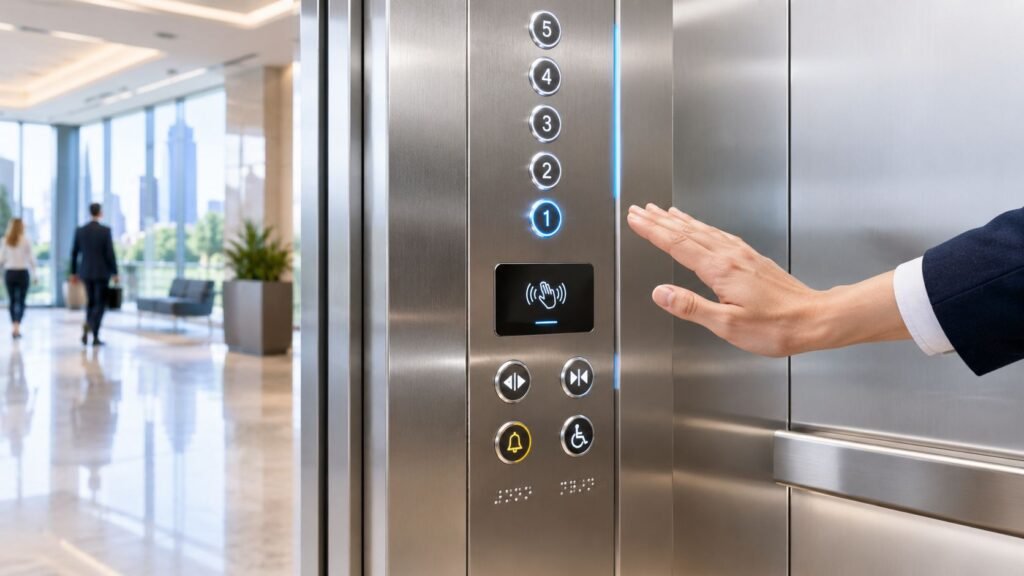
An older commercial building has a busy lobby, a modernization project on the schedule, and elevator fixtures passengers use every day. The car still runs, but its buttons look worn, the hall station doesn't suit the renovated entrance, and the project team needs to coordinate accessibility, cleaning, controller compatibility, and future maintenance. Those decisions can shape the passenger experience long after the installation crew leaves.
Innovation elevator fixtures range from custom panels and surface-mount hall stations to connected displays and accessible controls. The right choice depends on the building's existing equipment and how people use it, not just how a sample looks. Crane Elevator Company is a family-owned Michigan and Ohio contractor serving Detroit, Lansing, Ann Arbor, Grand Rapids, Toledo, Flint, Kalamazoo, Perrysburg, and surrounding communities. Its hands-on work includes preventative maintenance, repairs, inspections, modernizations, and service for passenger and residential elevators, wheelchair and material lifts, dumbwaiters, and freight equipment. Here are seven fixture providers to consider, viewed through the practical upgrade decisions owners need to make.
1. Innovation Industries
For projects where the existing look or mounting conditions are unusual, customization can be more useful than a broad selection of standard panels. Innovation Industries makes car and hall stations, lanterns, position indicators, and pushbuttons, with standard products and custom fixture work. Its options include mechanical-contact and micro-touch solid-state buttons, custom finishes, engraved panels, and nonstandard station layouts. Explore Innovation Industries' elevator fixtures.
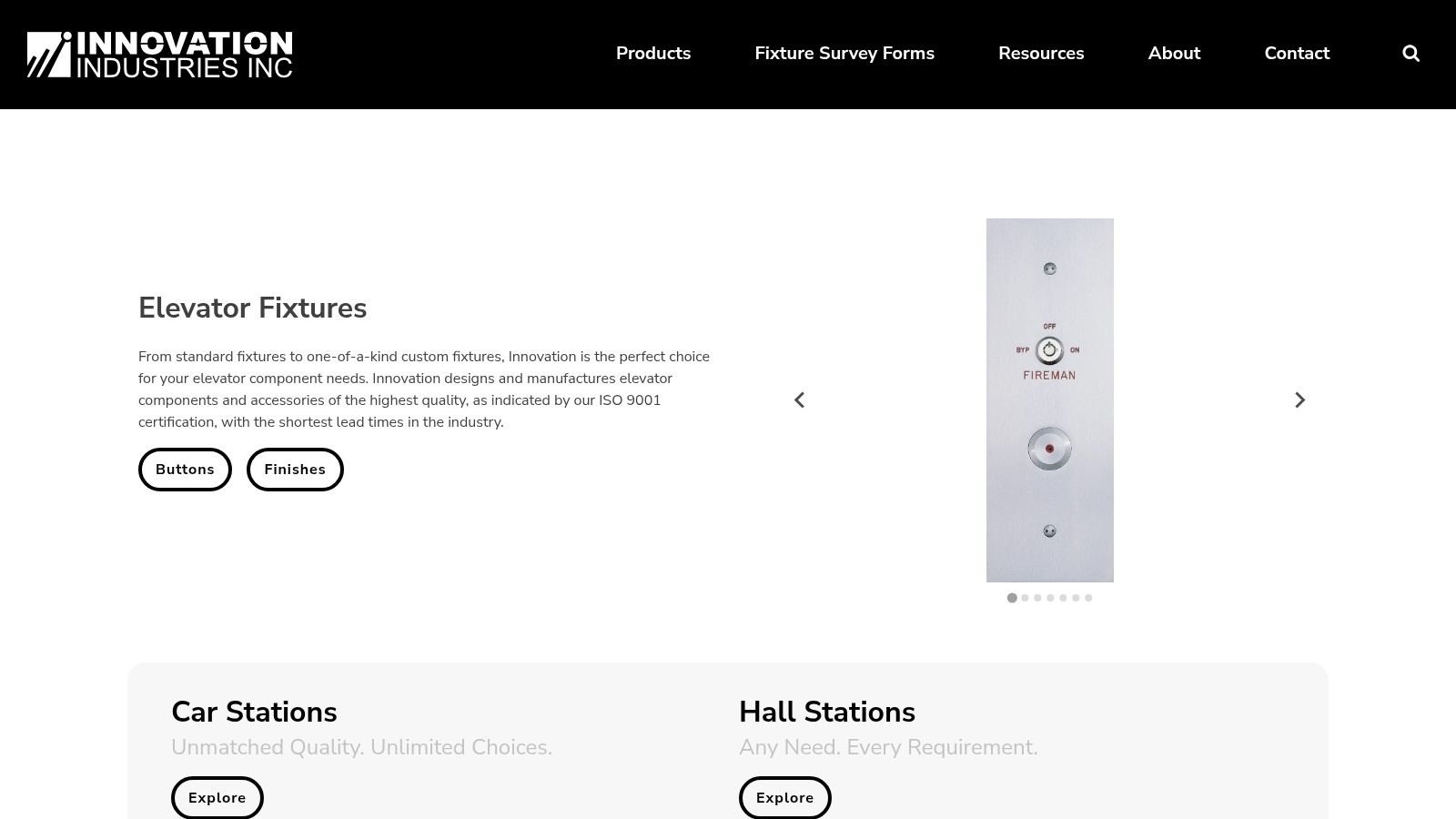
A wide product range can help when an owner wants to coordinate car and landing stations or match a building's interior. But customization isn't a substitute for field measurements. Before ordering, document the existing panel and back-box dimensions, finish requirements, control functions, and applicable code requirements. A qualified elevator contractor should confirm the proposed fixture works with the elevator equipment and can be installed and maintained as intended.
Make the submittal practical
Fixture choice also affects cleaning and service. A visually distinctive finish may suit a renovated lobby, while a common button or indicator configuration may simplify future replacement. Owners should weigh those priorities together, rather than treating appearance as the only specification.
Practical rule: Confirm the fit and the electrical and control requirements before approving a custom panel. Fixing a mismatch after fabrication can add coordination and installation work.
Pricing is quote-based, and custom options require decisions about dimensions, finishes, and code coordination. That's a reasonable trade-off when a standard fixture won't fit or the project has specific design requirements, but it makes early coordination important. For owners comparing fixture replacements within a broader modernization, Crane Elevator's Innovation Industries fixture information can help start that project conversation.
2. EPCO (Elevator Products Corporation)
A surface-mount hall station can be worth evaluating when a modernization needs to cover an existing wall opening without installing a back box. EPCO offers surface-mount hall fixtures alongside products for new installations, modernizations, and repairs. Its catalog also includes residential hall stations and fixture displays. Review EPCO's elevator fixtures.
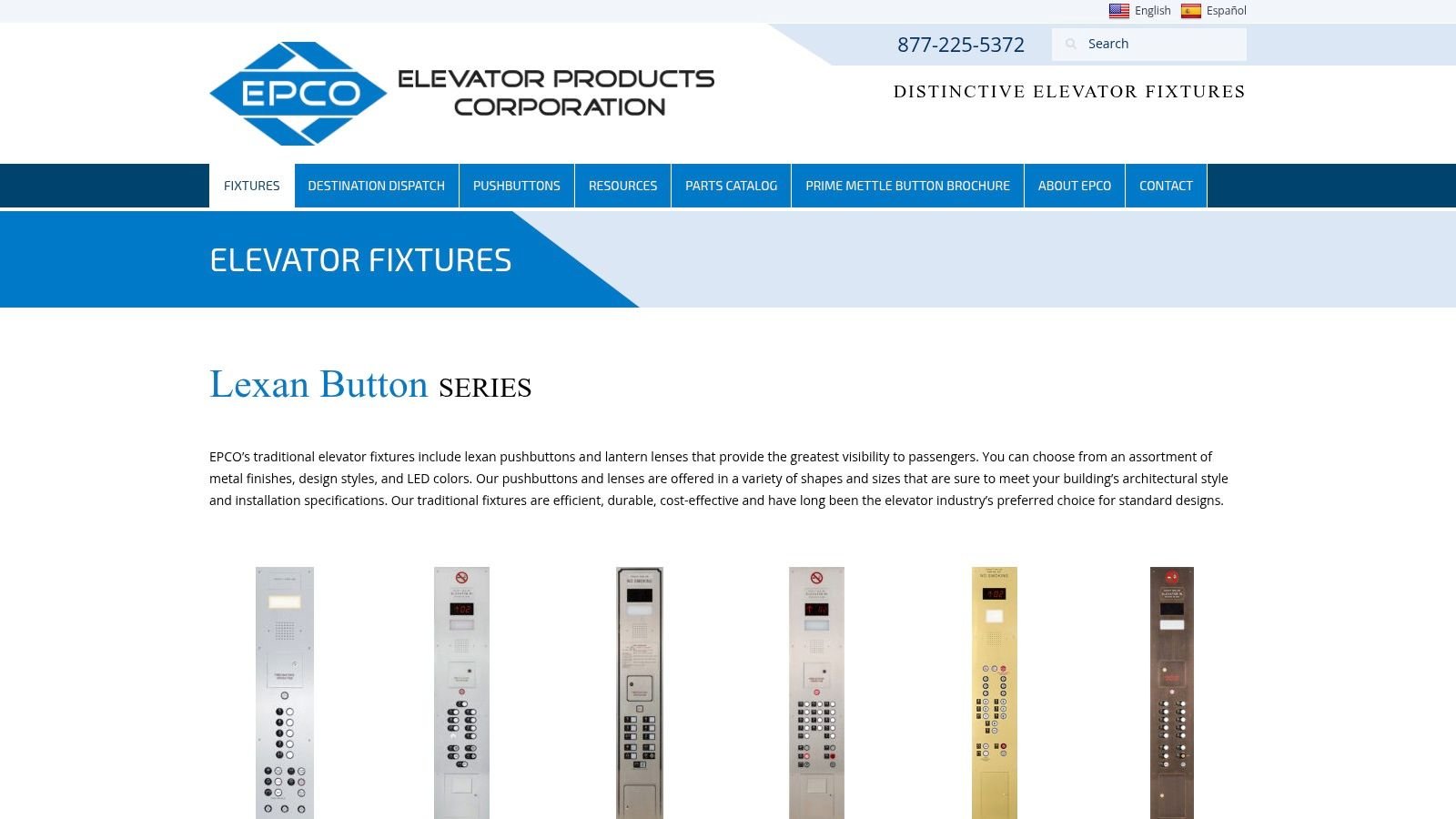
The retrofit advantage is straightforward: mounting a fixture over an existing opening may simplify work in some settings. That doesn't mean every surface-mount design will suit every wall finish or reveal. Check the fixture dimensions against the opening, confirm that it won't interfere with adjacent trim or circulation, and have the elevator contractor verify code and controller compatibility.
Balance a quick retrofit with the finished look
Residential options give owners another reason to review EPCO when the project isn't a conventional commercial lobby. Across either setting, assess the actual use case: who needs to reach and understand the station, whether the button labels and indicators are clear, and how the finished plate will hold up to routine cleaning.
Public pricing wasn't available in the supplied product information, so include the fixture, installation, and any associated wall work in the project quote. Crane Elevator's elevator push-button information provides a starting point for discussing button replacement and fixture work with a service contractor.
The main trade-off is that surface mounting can reduce some retrofit complications, but it may not deliver the flush appearance an architect or property owner wants. Choose it for a documented fit and practical installation reason, not because it appears to be the easiest option.
3. GAL Manufacturing / Vantage
Some owners want a replacement fixture that respects the building's existing character; others are updating the lobby and want a more architectural treatment. GAL's signal fixtures are offered through the Vantage Elevation brand portfolio, with traditional and architectural styles, custom design support, and material and finish choices that include stainless steel and bronze. View GAL's Vantage Elevation brand information.
That range can help a project team coordinate the elevator with surrounding finishes without treating the cab and corridor as separate design problems. Custom work is useful when a standard plate won't suit the renovation, but it also asks the team to settle dimensions, finish details, and equipment compatibility before ordering.
Verify the current specification
Manufacturer documentation includes code-related claims, but a product claim shouldn't replace project-specific review. Confirm the current model, the required fixture functions, and the applicable code requirements with the contractor responsible for the installation. The cited fixture brochure is older, so owners should verify current specifications and availability rather than relying on dated product details.
Quote-based pricing and lead times also need confirmation. If the design calls for a vintage appearance, Crane Elevator's information on vintage elevator buttons can help frame a discussion about preserving period character while maintaining practical serviceability.
The sensible use case is a project where appearance matters but reliability and maintainability still lead the decision. A finish sample looks only at the surface. Ask how the fixture is mounted, how its components can be serviced, and what replacement parts will be available later.
4. MAD Elevator
When a project includes both cab finishes and elevator interface changes, coordinating those decisions can reduce the risk of a polished interior with mismatched fixtures. MAD Elevator offers car and hall fixtures with custom material, finish, and mounting options, alongside cab-interior and digital-signage products. The company describes fixture manufacturing and fulfillment at a U.S. facility in the Dallas area. See MAD Elevator's fixture products.
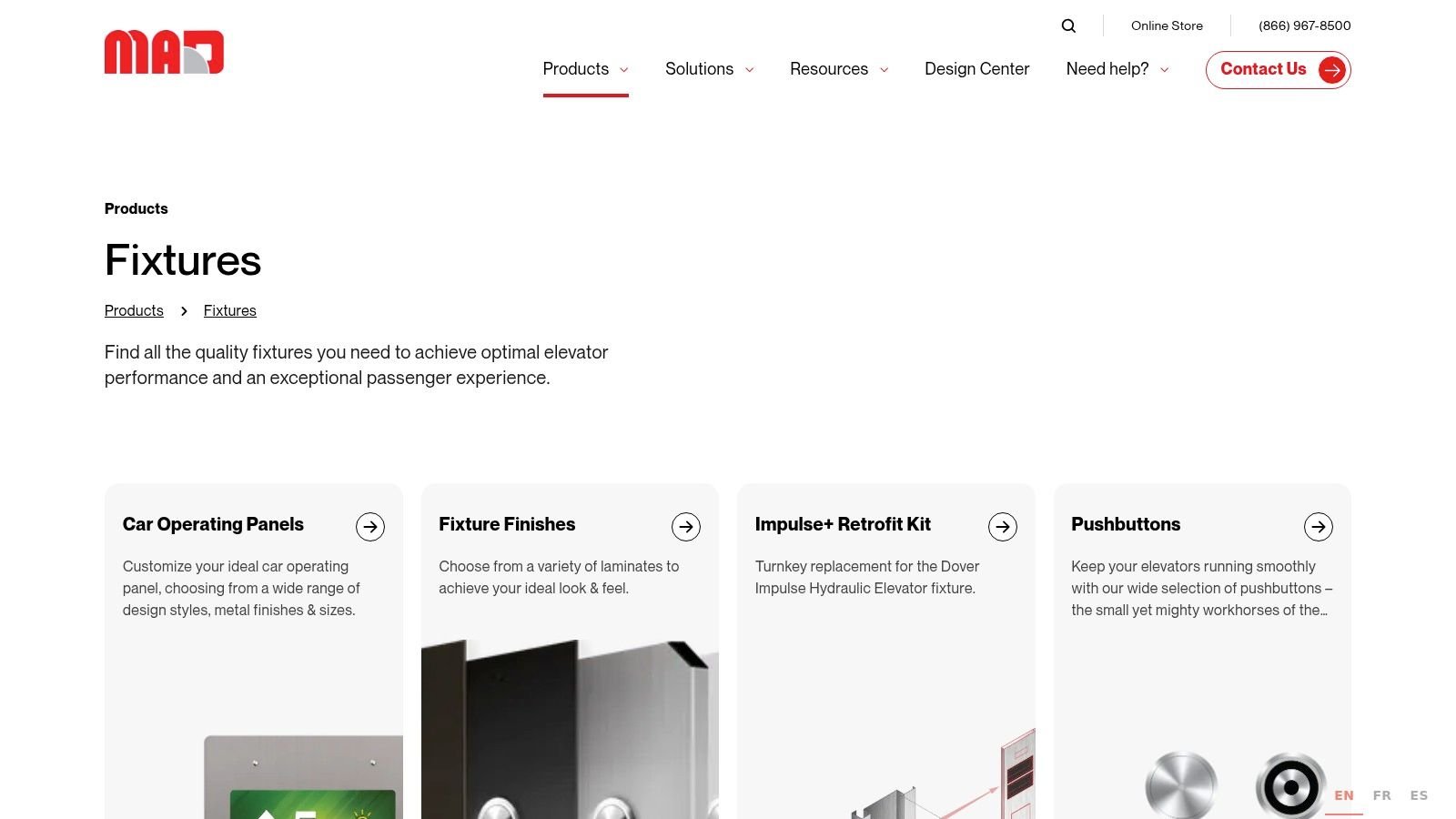
A coordinated package may suit an owner who is already refreshing the cab and wants the panels, finishes, and related digital products considered together. The trade-off is more coordination: confirm which elements are part of the fixture scope, what must connect to the elevator controller, and how installation sequencing affects other trades.
Treat digital features as an operations decision
Connected or digital interfaces can change how people interact with an elevator, but they also introduce additional components and dependencies. A touchscreen or display may rely on software, power, or network connectivity. Ask what remains usable if a feature is unavailable, how conventional controls are preserved where needed, and who supports replacement parts and updates.
A modern-looking interface isn't automatically the most dependable choice. Specify a clear fallback and a service plan before making connected features part of the building's operating routine.
Public pricing wasn't found in the supplied information. Confirm availability, lead times, delivery to the project site, and the full installation scope before comparing bids. Custom specifications can meet a particular design brief, but they may add time to approvals and coordination. Owners should make those requirements explicit early, especially when cab interiors and fixture work are being handled as linked decisions.
5. Dupar
When existing mounting conditions vary across the car and landings, a choice of fixture formats can make the retrofit easier to plan. Dupar offers car and landing fixtures, hall position indicators, lanterns, and lobby stations in surface- and flush-mount designs. Its options include custom sizing, a heavy-duty Vanguard surface-mount fixture, and the modular Unity system. Review Dupar's fixture range.
The practical advantage is flexibility. A surface-mount unit and a flush-mount station solve different installation and finish problems, and custom sizing may help when a standard panel won't fit. Don't assume that a fixture advertised for a particular mounting style will suit the wall or cab without modification. Confirm clearances, dimensions, fastening, wiring, and the installation access available at the site.
Match ruggedness to the location
A heavy-duty option may be relevant where a fixture faces demanding use, but “heavy-duty” isn't a substitute for specifying actual operating conditions. Describe exposure to moisture, dirt, cleaning products, impact, or vandalism to the contractor, then verify that the selected product and its electrical components suit those conditions.
Pricing isn't listed in the supplied information. Confirm U.S. availability, lead times, and current specifications, particularly for custom sizing or finishes that may add planning. A broad car-and-hall portfolio can help coordinate the passenger experience, but owners should also ask how replacement parts and service will be handled once the modernization is complete.
6. Nidec Elevator / Canton
Pre-engineered choices can keep fixture selection manageable when the job needs a defined car and hall station package. Canton Elevator, within the Nidec Elevator portfolio, offers pre-engineered JET PLUS stations as well as other fixture collections. Options include stainless steel or Muntz cover plates, buttons, key switches, displays, and hands-free phones. Check Canton's fixture options.
Canton states that JET PLUS fixtures can ship within four weeks. Treat that as a timing reference to verify, not a project promise: the selected configuration and current order conditions can affect delivery. Ask for written confirmation of the schedule and check it against the modernization plan, especially if elevator downtime must be coordinated with tenants, patients, students, or building operations.
Look past the initial package
The company describes its elevator equipment as open-market and non-proprietary, a point owners may want to consider when evaluating future service flexibility. Still, a label alone doesn't settle the question. Have the project team identify the fixture components, control interfaces, documentation, and replacement parts needed to support the installed system.
Pre-engineered configurations can simplify specification, but buyers should confirm that the package covers the actual project scope. Pricing requires a quote. Compare the complete installed solution, including compatible displays, switches, communication equipment, and service access, rather than assuming that a standard package includes every function the building needs.
7. ECC Elevator
ECC Elevator supplies car operating panels, hall stations, position indicators, and lanterns. The company describes its fixtures as made in the United States, offers engineering assistance for fixture design, and says it stocks replacement parts. Explore ECC Elevator's products and services.
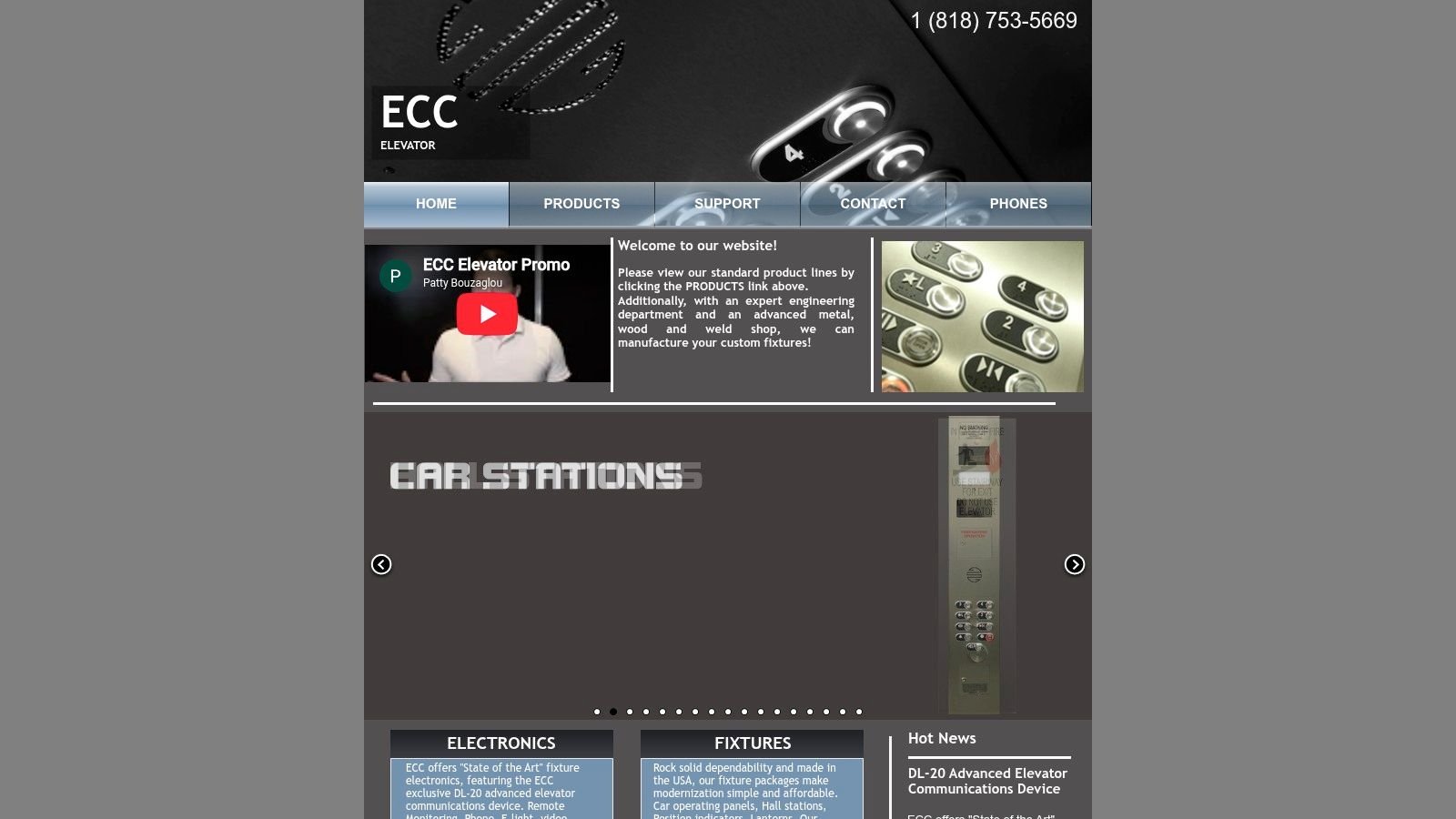
Engineering help can matter when a project has a particular panel layout, equipment constraint, or finish requirement. Replacement-parts support can also be valuable, but owners should clarify which components are stocked, how they're identified, and how future orders will be matched to the installed fixtures.
Build serviceability into the specification
Online product details are less extensive than some fixture catalogs, so confirm the current range, compatibility, and inventory directly before committing. Ask for drawings and specifications that show the panel arrangement, dimensions, electrical requirements, mounting method, and any related communications equipment. That documentation can help the owner and service contractor maintain the elevator without relying on appearance or memory to identify a part.
Pricing isn't publicly listed in the supplied information. Get a project-specific quote and compare it with the installation scope and future support plan. ECC may suit projects where design assistance and replacement parts are key considerations, provided the owner verifies the details that will matter during operation.
Innovation Elevator Fixtures: Top 7 Comparison
| Provider | Implementation Complexity | Resource Requirements | Expected Outcomes | Ideal Use Cases | Key Advantages |
|---|---|---|---|---|---|
| Innovation Industries | Moderate; custom dimensions, finishes, and code requirements need coordination | Quote, fixture specifications, and qualified elevator installer | Standard or custom fixtures matched to project requirements | Replacements, modernizations, or unusual layouts and appearance needs | Broad catalog, extensive customization, U.S. manufacturing |
| EPCO | Low to moderate; verify fit, compatibility, and code requirements | Quote and existing-opening measurements; qualified installer | Fixture installation, with surface-mount options that may cover existing openings | Retrofits, repairs, new installations, and residential projects | Surface-mount designs can simplify some retrofits |
| GAL Manufacturing / Vantage | Moderate; confirm current models, equipment fit, and code requirements | Quote, project specifications, and qualified installer | Traditional, architectural, or custom fixture selection | Replacements and renovations requiring style or finish matching | Broad design and finish options; established product line |
| MAD Elevator | Moderate; custom materials, finishes, and mounting require coordination | Quote, project specifications, and confirmation of availability and lead time | Fixtures coordinated with cab interiors or digital products | Projects combining fixture, cab-interior, or digital upgrades | Customization and related product offerings |
| Dupar | Moderate; select mounting format and confirm custom sizing | Quote, measurements, and qualified installer | Coordinated car and hall fixtures suited to project dimensions | Retrofits with varied mounting conditions or nonstandard panel sizes | Broad portfolio, surface- and flush-mount choices |
| Nidec Elevator / Canton | Low to moderate; pre-engineered options simplify selection, but fit and lead time need confirmation | Quote, selected configuration, and qualified installer | Pre-engineered car and hall fixtures; stated shipping within four weeks for JET PLUS orders | Projects prioritizing standard configurations or service flexibility | Pre-engineered choices and open-market positioning |
| ECC Elevator | Moderate; confirm product details, compatibility, and inventory | Quote, engineering consultation as needed, and qualified installer | Fixture package with potential access to replacement parts | Projects needing engineering support or future maintenance planning | Engineering assistance and stocked replacement parts |
Choose Fixtures for the Building You Actually Operate
The best fixture isn't necessarily the newest-looking panel or the longest list of options. It's the one that fits the elevator, works for the people who use it, and can be maintained within the building's operating and budget constraints. In an older Michigan building, a surface-mount station may avoid some wall work, while a custom panel may better suit a nonstandard opening. In either case, the contractor needs accurate site information before the owner approves the order.
Use this selection checklist with your project team:
- Compatibility: Record existing panel and back-box dimensions, control functions, voltage requirements, and relevant equipment details. Confirm the proposed fixtures work with the elevator controller.
- Accessibility: Review reach, visibility, tactile information, audible cues, and the approach space around controls. A fixture that's technically installed doesn't automatically make the car easy for every passenger to use.
- Cleaning and environment: Describe routine cleaning and any exposure to moisture, dirt, or corrosive conditions. Confirm that materials and electrical components suit the space.
- Connectivity and security: If the fixture uses a screen, network connection, or building-system integration, ask what happens during an outage and how the building will preserve usable controls.
- Code coordination and access: Confirm required functions and documentation with the elevator contractor. Plan how installers and future technicians will reach, remove, and service the fixtures.
- Parts and lifecycle cost: Ask about replacement availability, documentation, and support after installation. Compare the complete cost of ownership, not just the purchase price.
Property owners and managers in Detroit, Lansing, Ann Arbor, Grand Rapids, Toledo, Flint, Kalamazoo, Perrysburg, and surrounding communities can start by documenting current conditions and requesting a second opinion. Compare a fixture repair with a targeted modernization and a broader upgrade, then include ongoing service in the decision. That approach helps avoid buying a visually appealing fixture that doesn't address access, compatibility, or maintenance needs.
Crane Elevator serves commercial, industrial, healthcare, educational, municipal, and residential buildings with every type of elevator service. Its work includes preventative maintenance, inspections, repairs, safety testing, emergency communications, fire-service and generator testing, violation corrections, and full non-proprietary modernizations. Responsive field operations are available 24/7/365, giving owners a service partner for both planned upgrades and operational needs.
Crane Elevator Company can help Michigan and Ohio owners assess elevator fixtures, coordinate replacement with modernization work, and plan for long-term serviceability. Contact Crane Elevator Company to discuss your building's equipment, request a second opinion, and compare repair and modernization options.