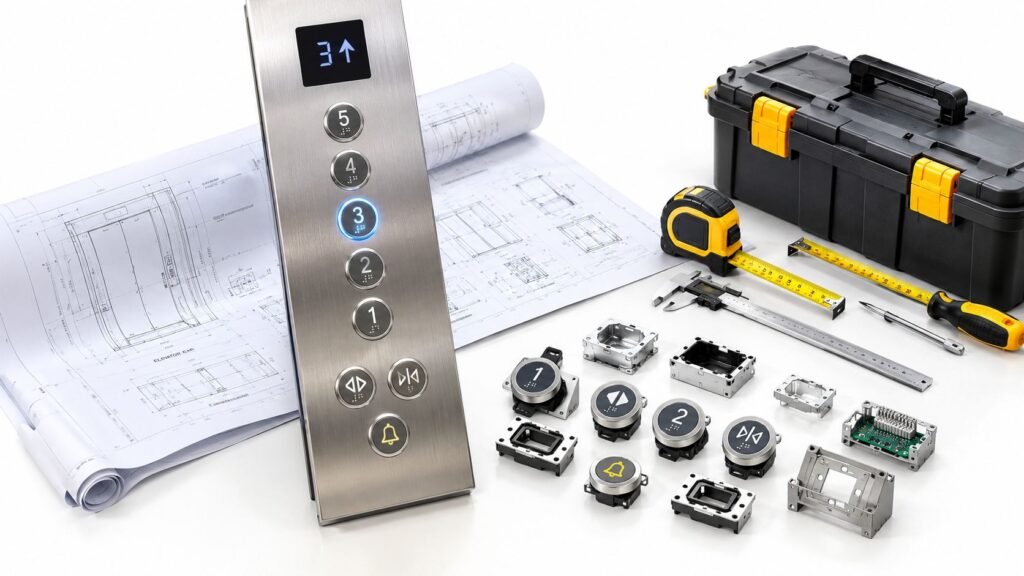
A facility manager in Grand Rapids opens a quote for new hall stations, push buttons, and a car operating panel. The price is higher than expected, and the fixtures look like a straightforward finish upgrade. Before signing, though, it's worth asking what the building is buying: a new appearance, or an interface that will remain accessible, serviceable, and ready for inspection?
Innovation Industries elevator fixtures can be part of a practical modernization, but the brand name alone doesn't settle whether a proposed package fits the existing elevator. Dimensions, wiring, code requirements, and future service access matter just as much as finish and button style. Treat the fixture quote with the same scrutiny you'd give a controller or drive replacement.
Why Elevator Fixtures Deserve a Second Opinion
A hall station or car panel may look like a small part of a larger project. Riders interact with it every day, however, and a poor fit can create problems long after the installer has left. The buttons, indicators, tactile labels, and emergency controls affect how people use the elevator, while the fixture's wiring and mounting can affect how a contractor maintains it.
That's why the first question shouldn't be, “Which finish looks best?” Ask whether the fixture matches the existing equipment, whether it preserves required accessibility features, and whether qualified elevator contractors can service it. A good-looking panel that needs unplanned metalwork or leaves emergency controls awkwardly placed isn't a good value.
Look beyond the faceplate
The quoted scope may include hall stations, a car operating panel, indicators, buttons, and other cab equipment. Those components don't all carry the same risk. A trim change is mostly about appearance; replacing a car operating panel can affect accessibility, emergency communication, wiring, and inspection readiness.
Ask the contractor to explain what is being replaced and what stays in place. A faceplate-only replacement is different from a complete panel and back-box change, and both differ from a broader control-system alteration. The quote should make that distinction clear, including any work needed to adapt existing wiring or mounting.
Field rule: Don't approve a fixture package until someone has checked the existing equipment in person and confirmed the proposed parts against it.
Decide who owns the result
A branded fixture doesn't automatically mean the elevator is locked to one service provider. But the purchase decision can create avoidable dependence if the project doesn't document wiring, parts, and service requirements. Ask who can troubleshoot the panel after installation, whether replacement components can be sourced, and what records the building will receive.
Crane Elevator Company works on elevator maintenance, repairs, inspections, and modernization across Detroit, Lansing, Ann Arbor, Grand Rapids, and surrounding communities. For a facility manager comparing a fixture quote, a second opinion can clarify whether the scope addresses fit, serviceability, and compliance, rather than just appearance.
What Innovation Industries Elevator Fixtures Actually Are
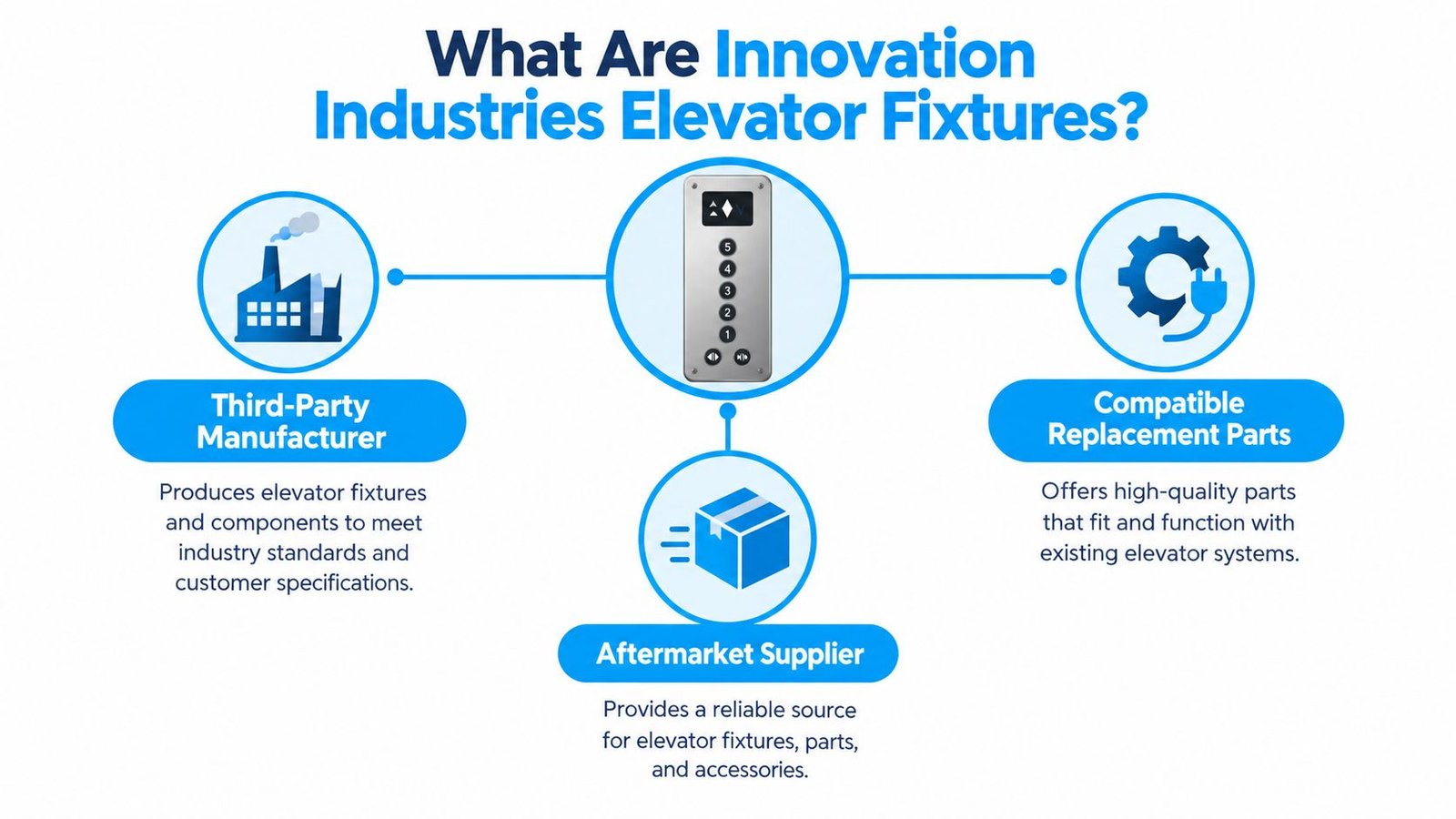
Innovation Industries makes elevator fixtures: the components riders use to call an elevator and operate it. Depending on the project, that can include hall stations, push buttons, car operating panels, tactile and Braille devices, position indicators, and related cab equipment. These fixtures may be specified for a new installation or considered for an existing elevator, but compatibility needs to be checked against the actual equipment.
The simplest distinction is this: fixtures are the human interface; controls are the system that directs the elevator's operation. A new panel may change what passengers touch, see, and hear without replacing the controller that decides how the car responds. That's why a fixture quote shouldn't be treated as a complete controls modernization unless the scope explicitly includes controls work.
Fixtures have their own engineering history
Elevator development has repeatedly combined mechanical safety, operating controls, doors, and passenger interfaces. Elisha G. Otis demonstrated his safety brake at the New York World's Fair in 1854, and the invention was patented in 1861. The first safe commercial passenger elevator was installed in 1857 at E.V. Haughwout and Co.’s department store in Manhattan, according to the National Academies' history of elevator development.
The interface evolved as well. Elevator buttons appeared in 1892, electronic signal control in 1924, automatic doors in 1948, and the first operatorless elevator in 1950. Those milestones show why fixtures deserve attention as functional equipment, not merely decorative trim.
Specify the fixture as part of the system
Before ordering, identify the intended scope: hall station replacement, car panel replacement, button and indicator work, or a broader modernization. Then confirm how the proposed fixtures connect to the existing controller, what installation changes are needed, and which accessibility markings and emergency functions must be retained.
For a closer look at button options and replacement considerations, review Crane Elevator Company's elevator push-button information. The key is to treat a fixture as one layer of the elevator system and coordinate it with the equipment behind the panel.
Non-Proprietary Service and Why It Matters in Michigan
A fixture doesn't have to dictate who services the elevator. Non-proprietary serviceability means the building can use qualified elevator contractors to maintain, adjust, inspect, and repair its equipment, rather than relying on a single provider because parts, tools, or access are restricted. The practical test is not the label in a brochure. It's whether the installed equipment can be documented, supported, and serviced without unnecessary barriers.
A fixture purchase can be compatible with that approach, but don't assume it. Ask for the exact fixture model and wiring details, confirm the replacement-parts path, and have the elevator contractor verify how the panel works with the existing controller and other components. If the quote depends on proprietary access or a service arrangement that hasn't been explained, get that clarified before approving the work.
Ask who can maintain it after installation
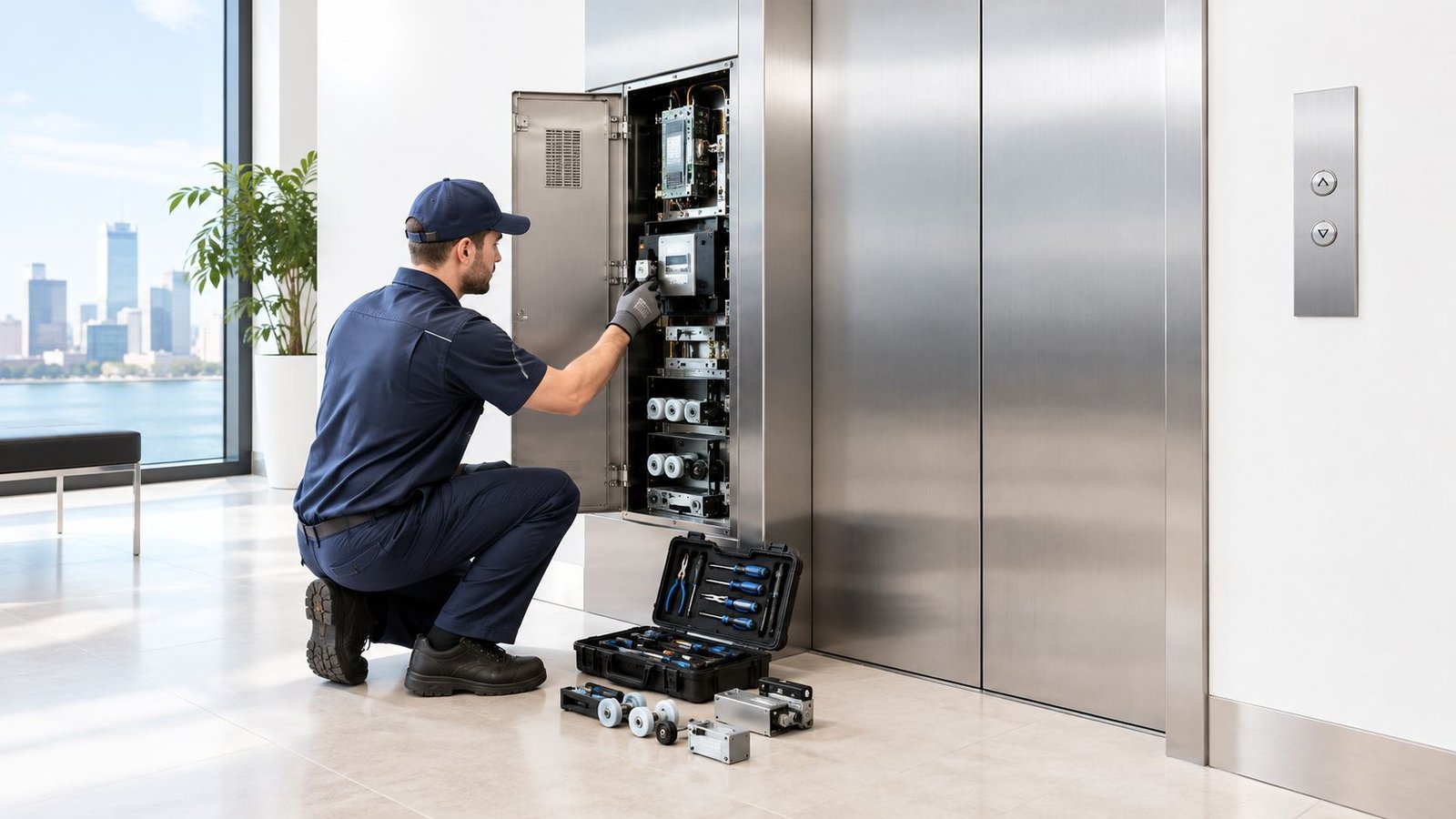
For an industrial building in Detroit, a healthcare facility in Ann Arbor, or a municipal property in Lansing, provider flexibility matters when scheduling repairs, maintenance, or inspection-related work. The same concern applies to an apartment building in Holland or a commercial property in Mount Pleasant. A fixture that can be maintained by qualified contractors gives the owner more choice when service needs change.
That doesn't mean every contractor can work on every component without qualification. Michigan requires licensed professionals for elevator installation, alteration, maintenance, repair, servicing, inspection, adjustment, and testing. For an installation or alteration, a licensed elevator contractor must apply for a permit, and plans and specifications must be submitted for approval before a permit is issued, as described in the state's elevator permit information.
Make serviceability part of the submittal
Don't settle for “compatible” without a clear record of what that means. Request fixture specifications, wiring diagrams, mounting details, and instructions for future replacement or adjustment. Keep those documents with the building's elevator records so a future contractor isn't forced to reconstruct the installation from scratch.
Crane Elevator Company's non-proprietary modernization approach is one way to frame that discussion: evaluate whether the proposed equipment can be maintained without tying the building to a single provider. Owners can use Crane's explanation of non-proprietary elevators to prepare questions, then have a licensed contractor assess the actual equipment and proposed scope.
Fixtures That Affect Safety and Accessibility
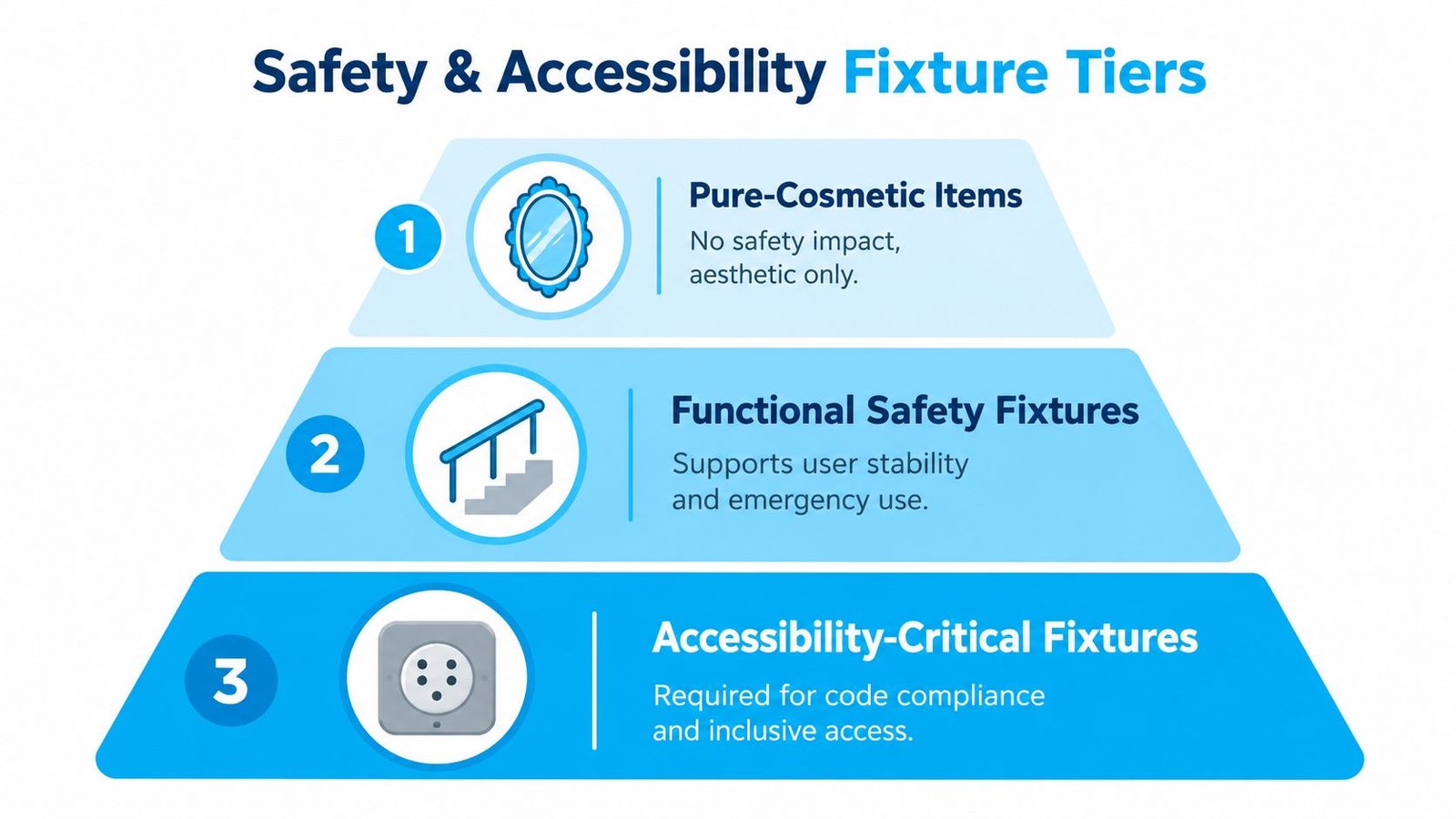
A fixture quote should separate appearance choices from components that affect access, wayfinding, and emergency use. Decorative trim and custom faceplates mainly change how the cab looks. Position indicators and floor designations help riders understand where they are. The car operating panel, emergency communication, fire-service controls, tactile labels, and accessible call buttons deserve the closest review because their placement and function can affect both safe use and compliance.
The 2010 ADA Standards address elevator features including raised and Braille floor designations at hoistway entrances, tactile characters and Braille on car operating controls, visible and audible car-position indicators, accessible emergency communication, compliant call buttons, and specified signal timing and illumination. The U.S. Access Board states that tactile floor characters must be at least 2 inches (51 mm) high. Emergency controls must be grouped at the bottom of the panel, with centerlines at least 35 inches (890 mm) above the finished floor, under the requirements summarized in the ADA lodging guide.
Compare the risk, not just the finish
A faceplate can be selected for appearance after the contractor confirms that it doesn't interfere with controls or labels. A position indicator needs to remain legible and provide required visual and audible information. A replacement car operating panel needs a full review of button locations, spacing, tactile markings, Braille, illumination, emergency controls, and communication equipment.
These are not interchangeable concerns. A panel can look modern and still be a poor replacement if the new layout shifts emergency controls, crowds buttons, or leaves required information difficult to locate. Don't approve the final design from a finish sample alone; review the panel layout and installation details.
Treat emergency access as a design requirement
Accessibility isn't limited to the needs of one group of riders. Consider whether people with low vision can identify controls, whether a passenger with hearing loss can receive usable visual information, and whether a person with limited dexterity can reach and operate the buttons. Emergency communication should be reviewed as part of the fixture package, not left as an assumption.
A compliant-looking panel isn't enough. Check the actual button arrangement, labels, indicators, and emergency communication in the submitted design.
For planning and review, use Crane Elevator Company's elevator ADA requirements resource, then have a qualified contractor verify the proposed fixture against the applicable requirements for the building and elevator.
The Pre-Order Field Survey That Prevents Custom Delays
Don't order a custom fixture from a photograph, an old invoice, or a quick sales call. Mixed-age equipment can have unusual openings, back boxes, conduit entries, wiring, or button layouts. A fixture that looks close on paper may still require unplanned metalwork or rewiring if nobody has checked the elevator in the field.
The licensed elevator contractor should own the field verification and code review, with the owner confirming building needs and approving the documented scope. The manufacturer can confirm product options, but it shouldn't be expected to infer site conditions. An architect or design professional may coordinate the broader project, yet the existing equipment still needs an on-site survey by someone qualified to assess elevator fixtures and their connections.
Record the information the order depends on
Use a written survey and attach clear photographs. Record the existing fixture dimensions and relevant electrical and accessibility details before selecting a replacement. If a measurement is uncertain, mark it for confirmation instead of allowing an assumption to become a custom order.
| What to document | What to record | Why it matters |
|---|---|---|
| Faceplate and cutout | Overall dimensions and opening dimensions | Confirms whether the proposed fixture covers and fits the existing opening |
| Back box | Depth, mounting method, and available space | Helps identify whether a faceplate-only replacement is possible |
| Conduit entry | Entry location and direction | Flags potential interference with the new fixture or wiring |
| Electrical details | Voltage and current lamp or LED configuration | Supports compatibility checks for indicators and lighting |
| Button layout | Spacing, labels, and positions | Helps preserve usability and required control relationships |
| Special controls | Fire-service controls and emergency functions | Prevents critical features from being omitted or moved without review |
| Accessibility markings | Existing tactile labels, Braille, and their locations | Identifies what the design must preserve or replace compliantly |
Resolve the replacement scope before release
Once the survey is complete, decide whether the project replaces only the visible faceplate, the fixture and back box, or connected equipment as part of a larger alteration. Ask the contractor to flag any deviations between the existing layout and the proposed submittal before the order is placed. That's when changes are easiest to manage.
For older freight cars in Detroit or residential elevators in Kalamazoo, the practical lesson is the same: field measurements are part of the purchase, not a step to improvise after delivery. Put the measurements, drawings, wiring details, and agreed scope in the project file. That documentation reduces the chance that a custom fixture becomes a custom delay.
How Michigan Code Cycles Shape the Fixture Decision
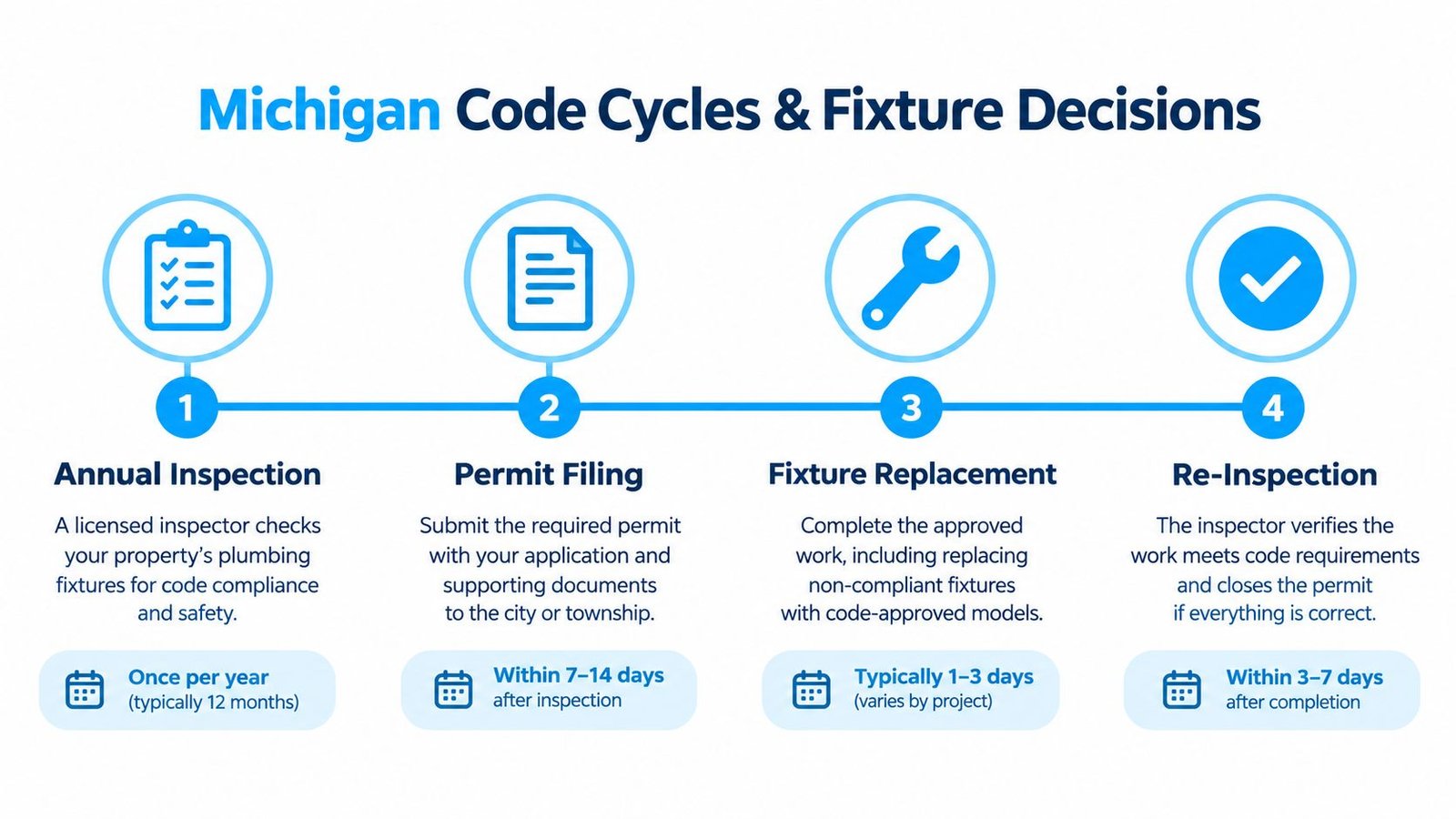
Michigan elevator work sits inside a state inspection and permit framework. The Michigan Elevator Section administers and enforces the state elevator code, inspects installations and alterations, conducts annual safety inspections, investigates accidents and code violations, and verifies required permits. That matters whether a property is in Detroit, Lansing, Ann Arbor, or Grand Rapids, or in communities such as Ypsilanti, Novi, Dearborn, Mount Pleasant, Holland, or Saginaw. The state describes those duties through its Elevator Section information.
For an owner, the lesson is straightforward: don't treat a fixture alteration as a stand-alone purchase that can be disconnected from permits, inspection preparation, and service records. Confirm with the licensed elevator contractor whether the planned work requires a permit and what documents must be submitted. The contractor should define the scope and coordinate the required process, rather than leaving the owner to guess whether a panel replacement counts as part of a regulated alteration.
Keep maintenance records with the equipment
Michigan rules require maintenance at least once every 90 days for most power elevators, with specified exceptions. Certain devices, including dumbwaiters, one-person elevators, platform lifts, and stairway chairlifts in nonresidential buildings, have a minimum maintenance interval of at least 180 days. The rules also require a written record of maintenance, repairs, replacements, inspections, callbacks, and testing to be kept in the machine room or on-site when no machine room exists, as set out in Michigan's elevator maintenance rule.
That record should include the fixture work and supporting documentation. Keep the approved submittal, installed-component details, relevant test results, and service notes together so the next inspection or repair starts with an accurate history.
Construction elevators need separate planning
Permanent passenger or freight elevators used temporarily during construction have more frequent controls. The state's current elevator code materials require maintenance every 30 calendar days by a licensed elevator journeyperson and inspection by a state-employed general inspector every 90 calendar days. A temporary certificate of operation is required before use and may not exceed 90 calendar days, according to the Michigan elevator code document.
For developers and general contractors, coordinate fixture changes with the elevator contractor's permit, testing, and inspection plan. Crane Elevator Company serves Detroit, Lansing, Ann Arbor, Grand Rapids, and surrounding areas with maintenance, repairs, inspections, modernization, testing, and installation support across different elevator types. A fixture package is easier to manage when it's planned as part of the documented work, not added late as a finish item.
Choosing Fixtures That Protect the Building Long Term
The right question isn't whether to buy Innovation Industries fixtures. It's whether the chosen package will keep the elevator accessible, serviceable, and ready for inspection throughout its working life. That means evaluating the fixture with the existing equipment, expected service needs, energy use, and emergency functions in view.
Elevator energy use also deserves a place in the decision. Industry estimates in a Building Owners and Managers Association document put elevator electricity consumption at approximately 3% to 10% of a building's total electricity, with annual use ranging from about 1,900 kWh for a lightly used low-rise elevator to 15,000 kWh for a heavily used high-rise elevator. Efficient options may include LED cab lighting and controls that reduce standby use, but savings depend on the building and equipment. Require a measured baseline rather than assuming a particular result.
A practical specification should also address low-power indicators, sleep-mode behavior, illumination, controller compatibility, and serviceability. If emergency communication or other connected functions are part of the proposal, ask how they'll be tested and maintained after installation. Finish matters, but it shouldn't outrank those operating requirements.
Before signing, hand your contractor this checklist:
- Confirm serviceability: Ask whether qualified elevator contractors can maintain the installed fixtures and obtain replacement components.
- Document the field survey: Attach measurements, wiring details, photographs, and the agreed replacement scope.
- Verify accessibility: Review tactile markings, button layout, indicators, and emergency controls on the submittal drawings.
- Coordinate permits: Have the licensed contractor determine and manage the required permit and inspection steps.
- Align the schedule: Fit installation and testing into the building's maintenance and inspection plan.
Crane Elevator Company provides elevator modernization, maintenance, repairs, inspection support, and installation services across Detroit, Toledo, Ann Arbor, Lansing, Perrysburg, Flint, Kalamazoo, and surrounding Michigan and Ohio communities. For a fixture proposal, ask for a field review and a serviceability check before approving the order.
Talk with Crane Elevator Company about reviewing your existing fixtures, checking compatibility, and planning an accessible, serviceable modernization. Request a second opinion or a project quote before you commit to the order.