The call usually comes at the worst time. A tenant is moving patients, residents, staff, or customers through the building. The elevator is down. Someone is angry. Someone else is asking whether people are trapped, whether the building is still accessible, and how fast a technician can get there.
That's when lift maintenance stops looking like a line item and starts looking like what it really is: operational risk control.
Building owners in Southern Michigan deal with this every day across offices, schools, medical buildings, apartment properties, municipalities, and industrial sites. The mistake I see most often is treating elevator service like a fixed commodity. It isn't. Good lift maintenance depends on usage, environment, equipment age, code exposure, and the quality of the contractor's work after the contract is signed.
The True Cost of a Broken Elevator
A broken elevator creates two problems at once. The first is obvious: the unit doesn't run. The second is bigger: the building stops working the way people expect it to.
In a medical office, that means delayed patient flow. In a senior living property, it means mobility and dignity issues for residents. In a commercial building, it means complaints, management pressure, and immediate questions about whether the building owner has been keeping up with service. Emergency repair invoices hurt, but the reputational damage often lasts longer.
The scale of the industry tells you how central this work has become. The global elevator maintenance market was valued at US$41.7 billion in 2026 and is projected to reach US$62.7 billion by 2033, with maintenance and repair making up nearly 50 to 51 percent of total service volume globally, according to Persistence Market Research's elevator maintenance market analysis. That's a strong signal that owners everywhere are dealing with the same reality: elevators need constant attention because they are constantly used.
A lot of owners still compare maintenance prices as if they're buying the same service from every provider. They aren't. Instead, consider what failure risk you're carrying between visits, what work is performed on site, and what you'll pay when a “cheap” contract leaves out the items that matter. If you want a better sense of how owners typically evaluate those costs, this breakdown of the cost of elevator maintenance is a useful starting point.
Practical rule: The cheapest month of elevator service can produce the most expensive day of building operations.
What Lift Maintenance Contractors Actually Do
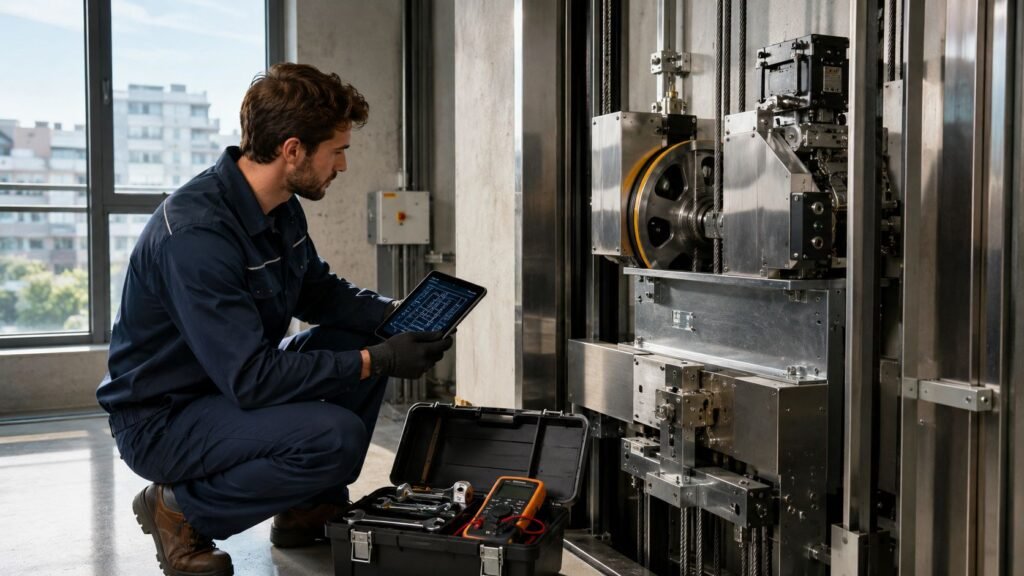
A good contractor does far more than show up, ride the car once, and leave a signature on a ticket. Proper lift maintenance is hands-on mechanical work, electrical inspection, cleaning, testing, documentation, and judgment.
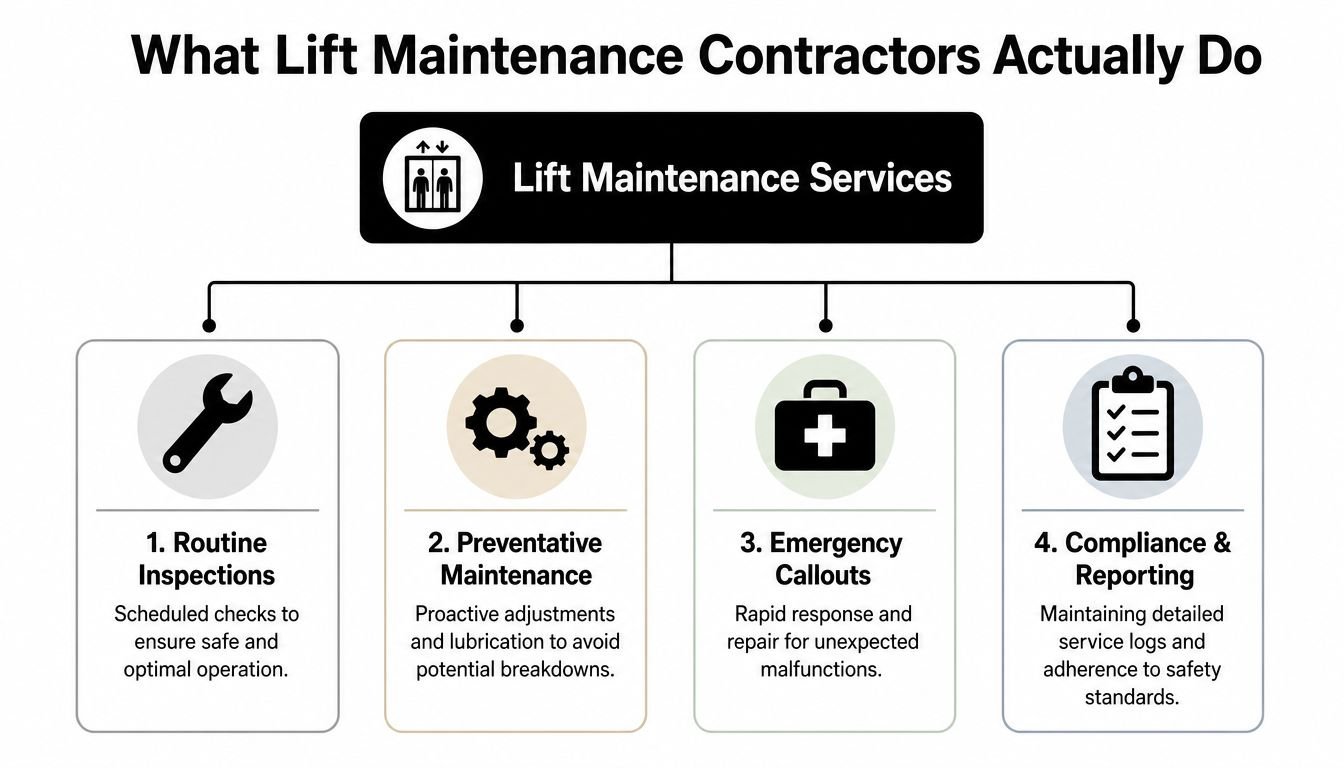
Routine inspections catch the small failures first
The best maintenance visits are boring in the right way. The technician is looking for wear before occupants notice symptoms.
That means checking door operation, leveling accuracy, ride quality, unusual vibration, machine noise, controller faults, limit devices, emergency communication, and how the car responds under normal use. On hydraulic units, that often includes looking for packing issues, leaks, heat, and signs that the power unit isn't staying clean or stable. On traction equipment, it includes watching for cable wear, sheave condition, brake performance, and door system drift.
Preventative work keeps nuisance calls from becoming shutdowns
Preventative maintenance is where a contractor earns their keep. This is the adjustment, lubrication, tightening, cleaning, replacement, and calibration work that prevents repeat callbacks.
Typical examples include:
- Door equipment attention: Doors cause a large share of complaints. A skilled mechanic will inspect tracks, rollers, guides, gibs, interlocks, closers, and door operator behavior instead of resetting the same fault over and over.
- Basic electrical upkeep: Burned-out COP or PI bulbs, loose connections, and dirty contacts may sound minor, but they create tenant complaints and false confidence in a system that's slipping.
- Hydraulic care: A neglected hydraulic packing issue rarely gets better by itself. It usually becomes a leak, a mess, a shutdown, or all three.
- Control and safety review: Good maintenance includes checking how safety circuits behave, not just whether the car still runs today.
Clean-downs are maintenance, not housekeeping
A machine room, pit, and car top need full clean-down attention. Dust, oil, debris, and moisture don't just look bad. They hide leaks, interfere with moving parts, create fire hazards, and make inspection work less reliable.
Owners sometimes underestimate this because cleaning doesn't sound technical. In practice, clean equipment is easier to inspect correctly. A dirty machine room often tells you the contractor is rushing, skipping, or treating the account like a route stop instead of a responsibility.
A clean pit and a clean machine room make it easier to spot what's changing. That's how you catch trouble early.
Testing and reporting matter as much as wrench work
Maintenance also includes the paperwork and procedural discipline that protect the building owner. Service records, documented findings, recommendations, follow-up items, and code-related observations all matter. If a contractor sees an issue and never communicates it clearly, the owner still carries the risk.
A solid maintenance relationship usually includes these core outputs:
| Service area | What good work looks like |
|---|---|
| Inspections | Clear findings tied to actual components and operating conditions |
| Preventative tasks | Adjustments, lubrication, replacements, and cleaning done on schedule |
| Emergency response | Troubleshooting that fixes root causes instead of repeating temporary resets |
| Reporting | Service logs, code observations, and repair recommendations documented clearly |
That's the standard building owners should expect. If all you ever receive is a short invoice note and vague reassurance, you probably don't know enough about the condition of your equipment.
Choosing Your Maintenance Program Type
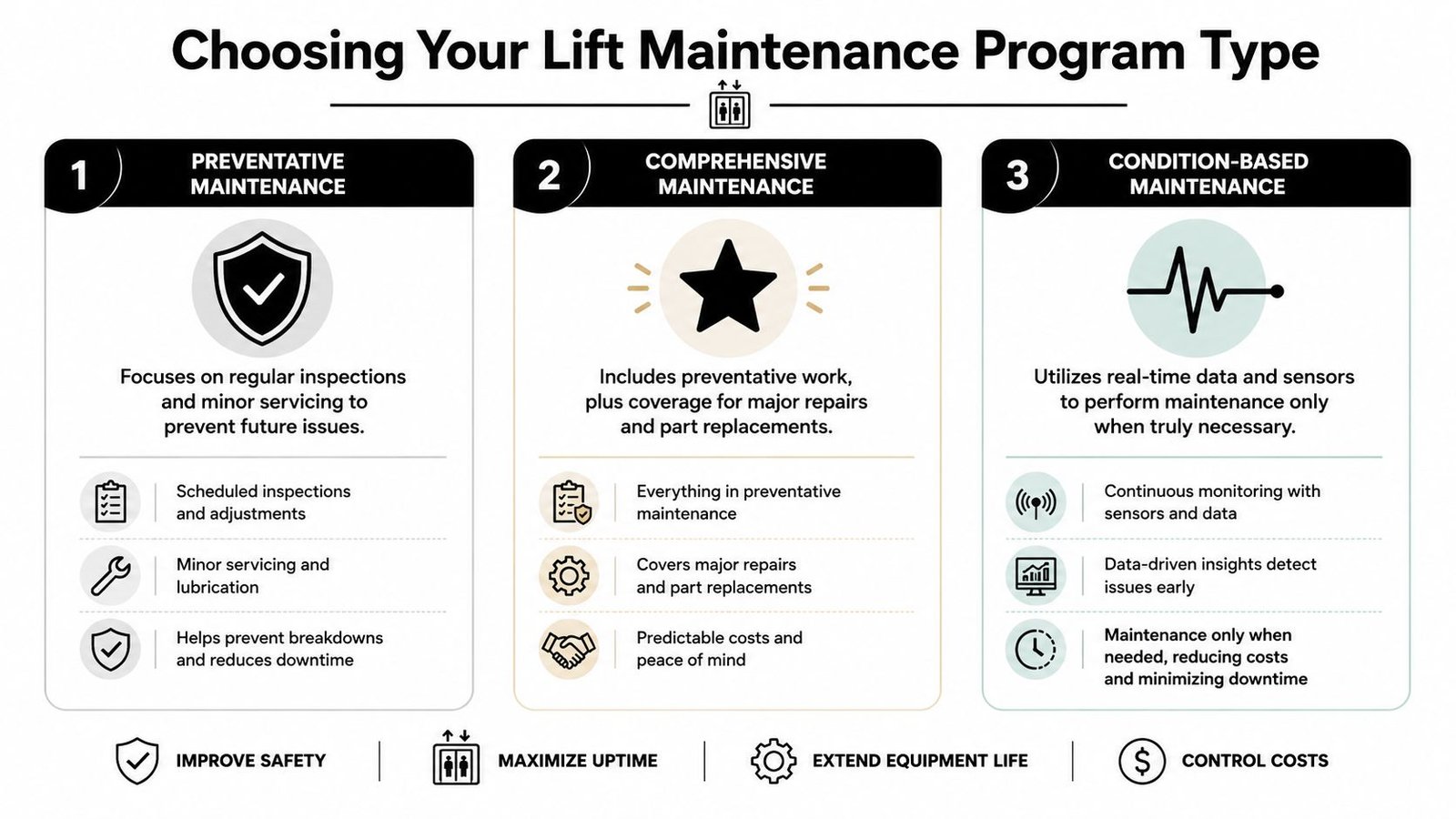
Not every building needs the same contract. The right program depends on traffic, tenant expectations, equipment age, budget tolerance, and how much repair risk you want to hold yourself.
Owners usually end up choosing between a basic preventative model and a fuller coverage model. A third option is becoming more common: connected or condition-based service supported by remote monitoring and predictive diagnostics.
Preventative maintenance contracts
A basic preventative maintenance contract is often called an oil-and-grease contract. It usually covers scheduled visits, inspection, lubrication, minor adjustment, and limited routine service. It often does not include major parts, significant repairs, or after-hours labor.
This type of program can work for lighter-duty equipment, owners with a higher tolerance for variable repair bills, or properties where the lift isn't mission-critical every hour of the day. The risk is that owners focus on the low monthly fee and forget how much is excluded until the first serious failure.
Full-service contracts
A full-service contract shifts more risk to the contractor. In exchange for a higher monthly price, the owner usually gets broader coverage for repair labor and replacement parts, subject to the exclusions in the agreement.
This model tends to fit buildings where elevator uptime is directly tied to operations and access. Healthcare, senior housing, larger multi-tenant properties, and public-use buildings often benefit from more predictable coverage. The question isn't whether repairs will happen. It's whether you want to absorb them one event at a time or budget for them in advance.
Connected and condition-based programs
The industry has been moving away from purely reactive service. More than 35 percent of service contracts globally transitioned from traditional reactive maintenance to connected, digitalized service models in 2023 to 2024, and that shift led to a reported 28 percent decrease in emergency downtime incidents in many advanced markets, according to Market Growth Reports on elevator maintenance, repair, new installation, and modernization.
That matters because modern lift maintenance shouldn't rely only on the calendar. A connected system can help identify recurring door lock issues, fault patterns, or wear conditions before they become a shutdown. It doesn't replace a competent mechanic, but it helps that mechanic arrive informed.
The best program isn't the one with the lowest monthly number. It's the one that matches the consequences of failure in your building.
Maintenance contract types compared
| Feature | Preventative Maintenance Contract | Full-Service Contract |
|---|---|---|
| Monthly cost | Lower upfront cost | Higher upfront cost |
| Scheduled visits | Usually included | Included |
| Lubrication and minor adjustments | Included | Included |
| Major part replacement | Often excluded | Often included, subject to terms |
| Repair labor beyond routine service | Commonly billed separately | More likely included |
| Budget predictability | Lower | Higher |
| Owner risk during breakdowns | Higher | Lower |
What works and what doesn't
What works is matching the contract to building reality. A lightly used private office lift can often live under a narrower agreement if the owner is disciplined about repairs. A heavily used hospital-adjacent or municipal elevator usually can't.
What doesn't work is buying a stripped-down contract for a high-demand building and hoping call volume stays low. That approach looks economical right up until the unit starts failing during busy hours, tenants lose confidence, and every visit turns into a chargeable repair event.
Decoding Contracts and Non Proprietary Solutions
Most problems in elevator service start long before the first breakdown. They start in the contract. If you don't understand what the agreement includes, excludes, and locks you into, you're managing blind.
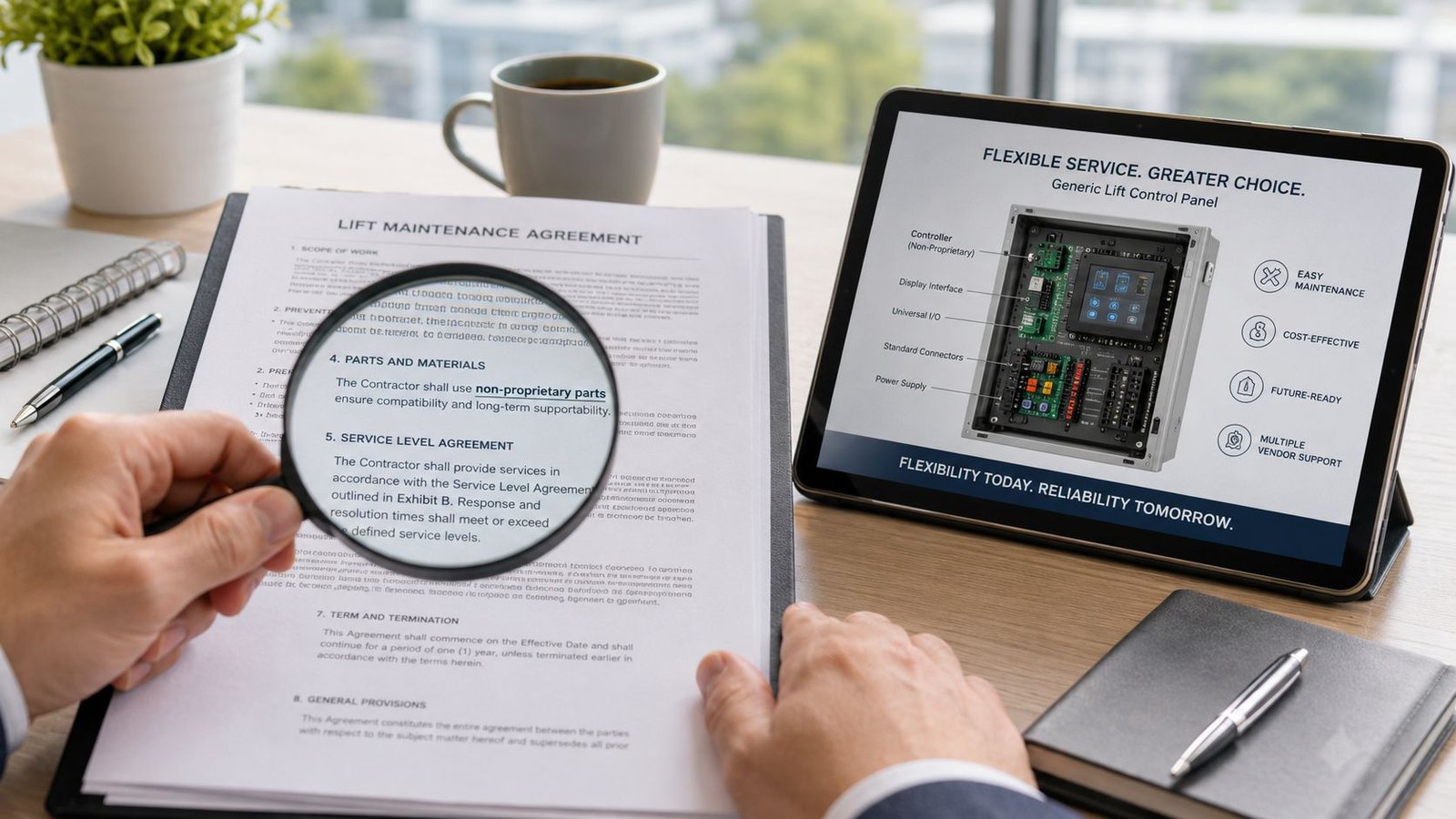
A maintenance contract should answer basic operational questions in plain language. How often will the technician visit? What parts are excluded? What counts as billable callback work? What response times apply during business hours, after hours, weekends, and holidays? Is there automatic renewal language? Who controls access to software, diagnostic tools, or replacement components?
Owners should read the service agreement the same way they'd read a roof warranty or major mechanical contract. The elevator may be smaller than a boiler plant, but it can create faster public consequences when it fails.
If you want a baseline for what those agreements often cover, review a lift maintenance contract guide before you sign or renew anything.
The clauses that deserve your attention
A short contract can still hide expensive terms. These are the clauses I'd focus on first:
- Scope of work: If the contract says “inspect and lubricate” but doesn't define the actual tasks, expect disputes later.
- Parts exclusions: Controllers, door operators, boards, pumps, motors, and wiring often become the battleground items.
- After-hours billing: A unit that fails at closing time may trigger a much larger invoice than the owner expected.
- Response wording: “Prompt service” is not the same as a defined dispatch commitment.
- Termination and renewal terms: Owners get stuck when the exit language is harder than the sign-up language.
Why non proprietary matters
A proprietary setup can limit your options. If only one manufacturer or one narrow network can service your controls, provide the software access, or source key components, your ability to bid maintenance competitively shrinks.
A non proprietary approach protects long-term flexibility. It allows qualified independent contractors to service the equipment, source support more competitively, and modernize without rebuilding the entire relationship around one vendor's closed system. For owners planning long hold periods, that matters a lot more than the sales pitch usually suggests.
This doesn't mean every proprietary system is bad. It means owners should understand the trade-off. Convenience at installation can become dependency later.
Static schedules cause avoidable failures
A calendar-only maintenance interval is one of the most common mistakes in the field. Two elevators can sit in the same city under the same contract and need completely different service frequency.
Commercial lifts with heavy use may require service every 60 days instead of a standard 180-day interval to prevent up to 40 percent more premature failures, according to CertifyMeOnline's maintenance guidance. That same source notes that a significant portion of breakdowns in high-traffic facilities happens when maintenance schedules ignore peak usage.
That's the point many generic elevator blogs miss. Usage intensity matters. So do dirt, moisture, delivery traffic, public abuse, and the type of door cycles your building creates every day.
Use conditions should drive service frequency
A provider who knows what they're doing will ask questions like these before setting intervals:
- How many starts and stops does the unit handle on a normal day?
- Is the building moving patients, carts, freight, students, residents, or office users?
- Does the elevator face salt, dust, humidity, temperature swings, or debris exposure?
- Are recurring callbacks tied to peak-hour door cycling or loading patterns?
Here's a useful technical explainer on how elevator components are maintained and diagnosed in the field:
If a contractor never asks those questions and assigns every account the same visit pattern, that's not customized maintenance. That's route management.
Navigating Southern Michigan Compliance Rules
In Southern Michigan, lift maintenance isn't just about uptime. It's also about passing inspections, correcting violations quickly, and keeping equipment aligned with current safety expectations.
Owners don't need to become elevator inspectors, but they do need to understand who carries responsibility. The state, local enforcement authorities, inspectors, and your elevator contractor each play a role. The owner's role is simple and serious: keep the equipment safe, serviceable, and ready for inspection without last-minute scrambling.
What inspectors care about in practice
Inspectors aren't grading style. They're looking for safety, code conformance, and whether the unit's actual condition supports continued operation.
That usually means attention to items such as:
- Door protection and lock function: If doors don't secure and monitor properly, the unit can become a major liability quickly.
- Fire service and emergency features: These systems have to work when needed, not just appear present on paper.
- Machine room and pit condition: Cleanliness, access, leaks, and unsafe conditions often signal deeper maintenance problems.
- Records and prior corrections: Open items that linger too long create credibility problems during follow-up.
Door lock monitoring and aging equipment
One issue many Michigan owners run into is the gap between older equipment and newer code expectations. Existing elevators may still run, but that doesn't mean they satisfy current safety priorities. Door lock monitoring is a strong example. If your building has older equipment, don't assume “grandfathered” means “ignore it forever.”
Aging equipment also creates a practical compliance problem. Parts get harder to source, faults become less predictable, and recurring repairs start to blur into modernization territory. That's when owners need a contractor who can separate a temporary fix from a code-sensitive long-term answer.
Field advice: The best time to address a code exposure is before the inspector writes it up, not after the elevator is already out of service.
How owners stay ahead
The most effective buildings don't prepare for inspections at the last minute. They build inspection readiness into regular operations.
That usually looks like this:
| Owner action | Why it matters |
|---|---|
| Keep service records organized | You can confirm what was done and what remains open |
| Review recurring trouble calls | Repeat issues often become inspection issues later |
| Ask for written correction plans | Verbal promises don't help when deadlines arrive |
| Budget for compliance upgrades | Delaying obvious safety work raises the odds of shutdowns |
For Southern Michigan owners, the practical takeaway is straightforward. Don't separate maintenance from compliance. The buildings that pass inspections more smoothly are usually the same buildings with cleaner equipment, better records, and contractors who fix root causes instead of chasing symptoms.
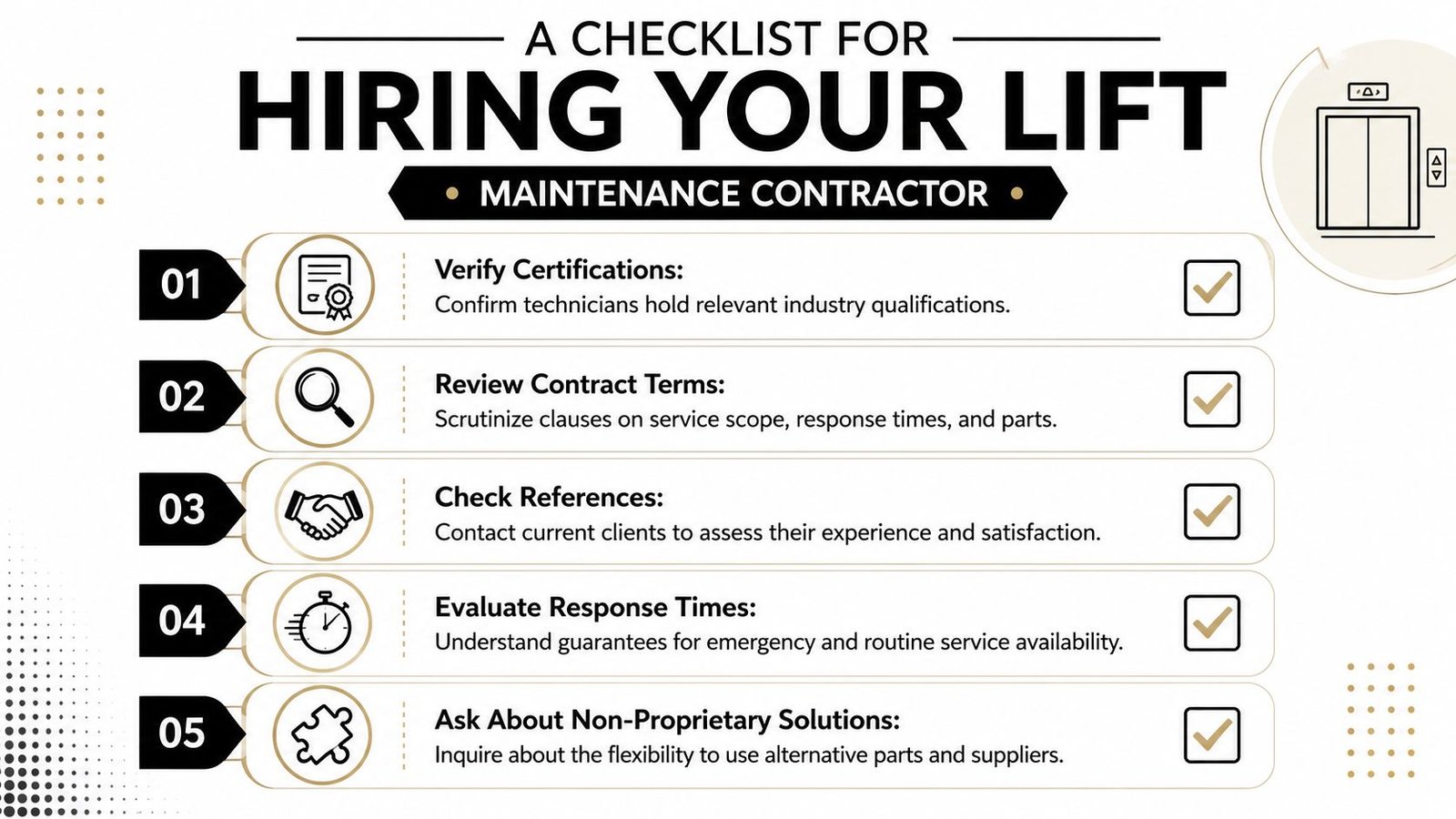
A Checklist for Hiring Your Lift Maintenance Contractor
A low bid can win the contract and still lose you money. If the technician skips clean-downs, misses wear patterns, or treats every callback like a one-off event, the building keeps paying through downtime, violations, and tenant frustration.
That's why hiring the right contractor should be an audit process, not a price comparison.
Ask how they prove quality on site
Most providers can talk about experience. Fewer can show you how they verify the work after each visit.
Data from 2025 shows that providers who implement policies like no-show, no-pay and perform full clean-down protocols in pits and machine rooms reduce repeat code violations by 55 percent, according to Stannah's guidance on choosing a lift maintenance company. That's useful because it gives owners a better quality yardstick than “we've been in business a long time.”
Ask direct questions:
- What does a completed visit include? You want specifics, not broad promises.
- Do you clean pits, car tops, and machine rooms as part of routine service? If not, expect hidden deterioration.
- How do you document missed visits or incomplete work? If there's no accountability, there's no control.
- How do you track repeat callbacks on the same unit? Repeat failures usually signal poor diagnosis, poor cleaning, poor adjustment, or all three.
Look for evidence, not slogans
A contractor should be able to show service logs, deficiency reports, recommendations, and a clear description of what happens during both routine maintenance and emergency response. You're not just hiring a mechanic. You're hiring a system of follow-through.
Good signs include written findings that name actual components, clean documentation, realistic repair recommendations, and technicians who can explain why a unit is failing in language an owner can understand.
Bad signs are just as clear:
- Vague tickets: “Checked unit, working at this time” tells you almost nothing.
- Recurring door issues with no root-cause plan: That usually means the provider is resetting symptoms.
- Messy equipment areas: Dirty machine rooms and pits point to rushed service.
- Price-first sales process: If the conversation stays on cost and never gets into scope, exclusions, or traffic conditions, you're not buying quality control.
A contractor's paperwork should make the building owner smarter after every visit. If it doesn't, the account is being managed too loosely.
Use a hiring standard that fits your building
A healthcare facility, municipal building, school, and apartment property won't evaluate contractors exactly the same way. But the core hiring checklist should stay tough.
- Verify licensing and insurance. Ask for current proof and confirm it matches the entity signing the contract.
- Review technician capability. Find out who works on your units, not just who sold the account.
- Test their communication style. If they can't explain exclusions and recurring issues clearly before the contract, they won't get clearer later.
- Ask about non proprietary support. You want flexibility to service and modernize without being boxed in.
- Request references from buildings like yours. A contractor who's strong in low-rise residential work may not be the right fit for a busy public building.
The cheapest contract is often the hardest one to live with
Owners sometimes save money by buying less coverage than the building needs. More often, they just delay the cost until it returns as emergency labor, repeat violations, and frustrated occupants.
If I had to reduce the hiring decision to one principle, it would be this: choose the contractor who can explain how their work reduces failure risk. If they can't explain that clearly, they probably can't deliver it consistently.
Proactive Maintenance Is an Investment Not an Expense
Elevators don't reward neglect. They expose it.
When owners treat lift maintenance as a commodity purchase, they usually end up with generic visit schedules, thin documentation, preventable callbacks, and contracts that protect the vendor more than the building. When they treat it as an asset management decision, the conversation changes. Service frequency gets matched to real usage. Contract language gets read carefully. Quality gets measured by outcomes, not just attendance.
That approach matters even more in Southern Michigan, where building types vary widely and aging equipment is common. A lightly used office lift, a school elevator, a patient transport unit, and a municipal platform lift don't carry the same operational risk. They shouldn't be maintained as if they do.
What a smart owner prioritizes
The strongest maintenance programs usually have four traits in common:
- They match service intervals to real traffic and conditions.
- They demand clean-downs, documentation, and visible workmanship.
- They preserve flexibility through non proprietary thinking where possible.
- They connect maintenance decisions to compliance, not just repairs.
If you build around those principles, you'll make better decisions whether you're renewing a contract, troubleshooting chronic callbacks, or planning a modernization path. You'll also be in a better position to evaluate whether your current program protects the building.
A preventative program is usually the backbone of that strategy. If you want to compare what a stronger long-term service approach looks like, this overview of elevator preventative maintenance lays out the operational logic well.
The long-term payoff
Good lift maintenance does three things at once. It protects people, stabilizes building operations, and slows the expensive slide toward emergency-only ownership.
That's why I'd never frame elevator service as just another operating expense. It's part of how a building owner protects access, tenant trust, inspection readiness, and equipment life. Spend carefully, yes. But don't spend blindly.
If you need a practical second opinion on elevator service, modernization planning, code issues, or a maintenance contract in Lower Michigan, Crane Elevator Company is a strong place to start. They serve Southern Michigan with non-proprietary solutions, preventative maintenance, repairs, inspections, and modernization support built around long-term reliability rather than short-term shortcuts.