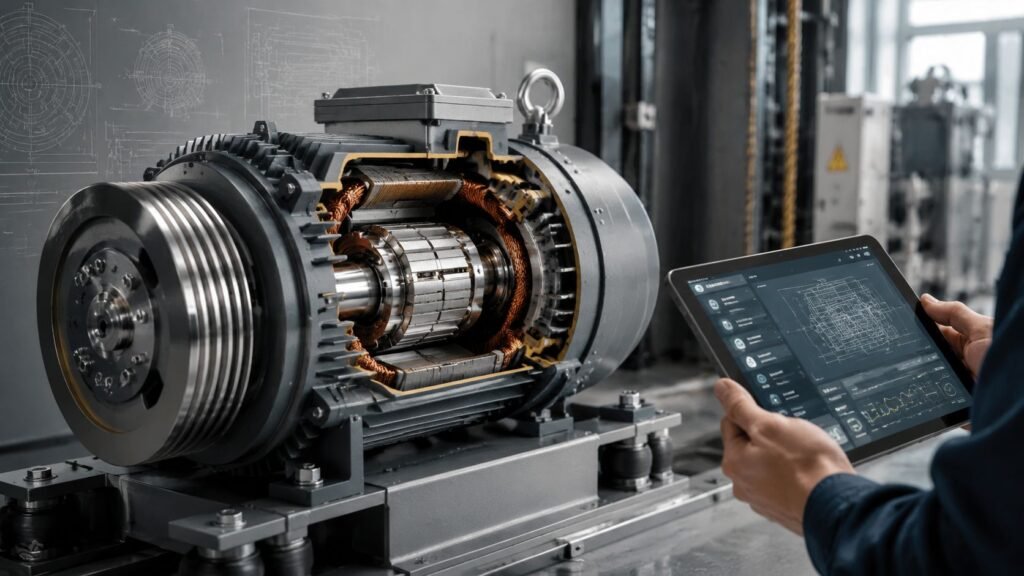
An elevator rarely fails without warning. The warning signs are usually there first: a low growl on startup, a rough takeoff, a car that feels slightly less level at the landing, a machine room that smells hotter than it should. By the time tenants start reporting “the elevator feels off,” the motor has often been under stress for months.
That's where most conversations about elevator motor repair go wrong. They start at the breakdown. The better question is earlier and much cheaper: how do you know the motor is failing before it stops? The answer isn't guesswork. It comes from understanding what the motor is telling you through vibration, heat, current draw, alignment, brake behavior, and the specifications printed right on the nameplate.
A lot of building owners treat the motor as a black box. If the car runs, leave it alone. If it quits, call for service. That approach usually produces the most expensive repairs, the most tenant disruption, and the worst timing.
The First Sign of Trouble Understanding Your Elevator Motor
The first sign of motor trouble usually isn't total failure. It's a change in behavior.
You might hear a sharper bearing sound during acceleration. You might notice inconsistent ride quality, especially when the car is loaded. A technician may find fine black dust where it shouldn't be, a warm controller cabinet, or mounting hardware that has started to work loose. None of that means the motor is dead. It means the system is asking for attention now, while the repair is still manageable.

What failing early usually looks like
Most facility managers don't need to diagnose winding damage from scratch. They need to know which symptoms deserve immediate follow-up. The common early indicators are practical:
- New vibration: A machine that used to run smoothly now has a steady tremor through startup or slowdown.
- Ride complaints: Passengers describe jerking, shuddering, or uneven stopping.
- Heat: The motor, brake area, or controller space runs hotter than normal.
- Noise changes: A whine, scrape, rumble, or cyclic knocking often points to alignment, bearing, or brake issues.
- Repeat resets: If faults clear and then return, the problem usually isn't random.
One of the most useful facts on this subject is also one of the most overlooked. Data from industry analysis shows that 68% of elevator motor failures in commercial buildings stem from unaddressed vibration wear over 12–18 months, yet only 22% of maintenance contracts include vibration monitoring as a standard checkpoint, according to industry analysis on elevator upkeep and common maintenance issues.
Practical rule: If vibration has changed, don't wait for a shutdown to confirm there's a problem. Vibration is often the failure notice.
Why reactive repair costs more than it looks
Repair demand in this trade is massive because elevators are long-life assets that never stop needing attention. The global elevator maintenance and repair segment accounted for USD 4,680.0 million in 2025 and is projected to reach USD 7,073.5 million by 2034, with maintenance and repair representing about half of total service volume and supported by an installed base of more than 18 million elevator units worldwide, as detailed in global elevator maintenance and repair market projections.
That matters because it confirms something every seasoned mechanic already knows. The core business of elevators isn't just installation. It's keeping aging equipment reliable, safe, and aligned.
When you understand your motor specs and track the condition of the machine before failure, you give yourself options. You can plan a bearing job before a rotor rub. You can correct alignment before it damages the sheave and cables. You can address heat before insulation breaks down.
That's what proactive elevator motor repair looks like. It isn't waiting less anxiously. It's reading the signs early enough to prevent the bad day.
Decoding the Nameplate Key Elevator Motor Specifications
Every useful conversation about a motor starts with the nameplate. If the contractor, property manager, and building engineer aren't looking at the same plate data, people end up talking past each other.
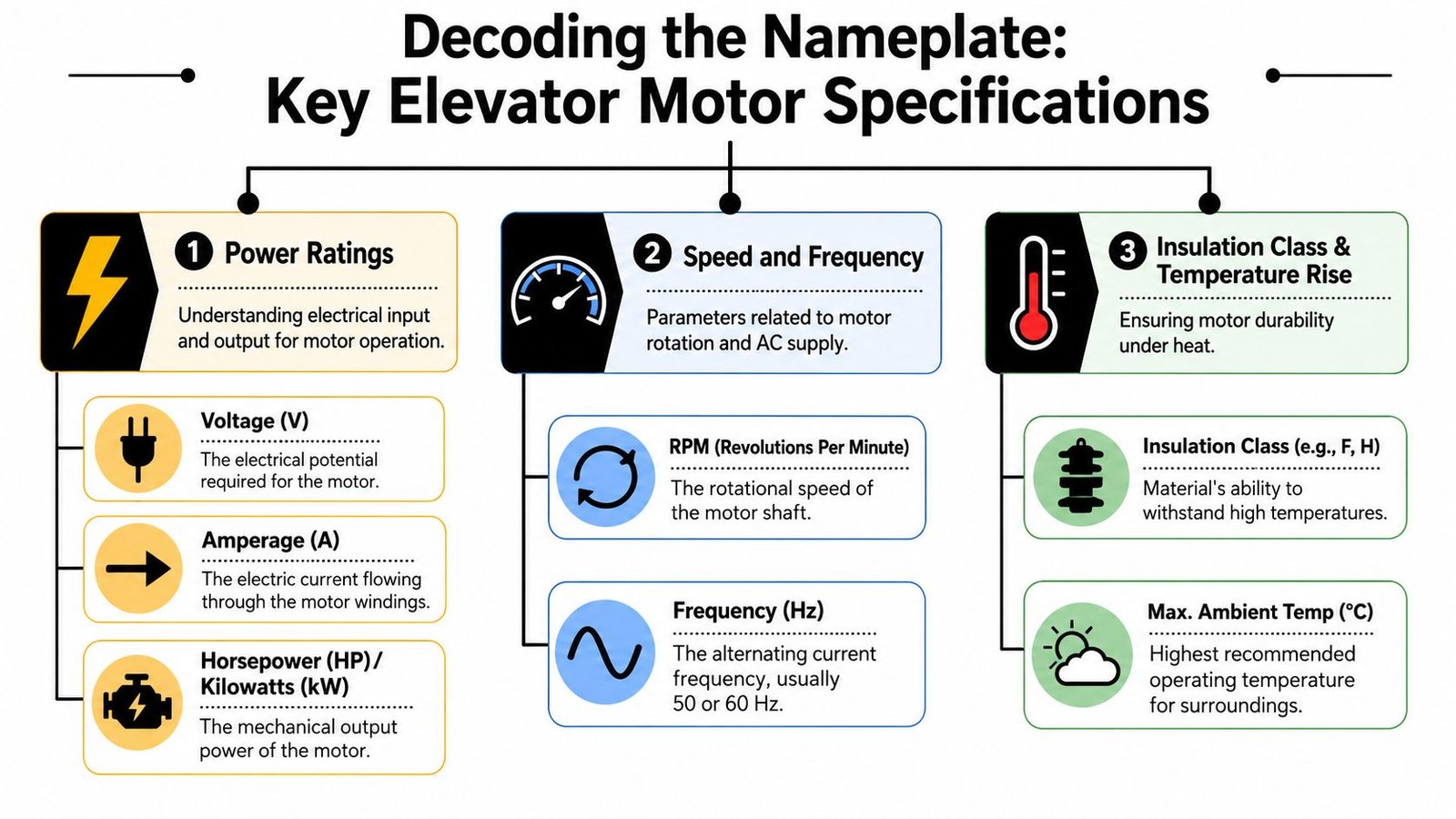
The nameplate tells you what the motor was built to do, what power it expects, and where its operating limits begin. That doesn't mean every line on the plate is equally important. Some values drive repair decisions immediately.
The numbers that matter first
Horsepower
Horsepower (HP) is the motor's mechanical output rating. Think of it as the motor's ability to do lifting work over time.
Why it matters: if the installed motor is undersized for the car, duty, or traffic pattern, it runs hot and wears faster. If someone proposes a replacement with a different HP rating, that's never a minor change. It affects starting performance, controller behavior, and brake coordination.
Torque
Torque is rotational force. In elevator work, torque matters as much as horsepower because the motor has to start, hold, and control the load smoothly.
Why it matters: weak torque shows up as sluggish starts, poor acceleration control, and extra strain during heavy load conditions. A motor can look adequate on paper and still be wrong for the application if torque characteristics don't match the machine.
RPM
RPM means revolutions per minute. It tells you how fast the shaft turns.
Why it matters: RPM has to match the drive arrangement, sheave design, and controller expectations. The wrong RPM can create speed errors, leveling issues, and poor ride quality even if other ratings look close.
The electrical side of the story
A motor can be mechanically sound and still fail because the electrical match is wrong.
- Voltage: This is the supply the motor is designed for. If the building supply and motor rating don't match, heat and nuisance faults follow.
- Full Load Amps (FLA): This is the current the motor draws at rated load. It gives technicians a baseline for checking whether the motor is working normally or being overworked.
- Frequency: Usually tied to the power system and drive configuration. It affects motor speed and performance.
A nameplate doesn't just identify the motor. It gives you the baseline for every useful diagnostic test afterward.
The ratings many managers overlook
Service factor
Service factor is overload margin. The simplest way to explain it is this: it tells you how much short extra demand a motor may tolerate beyond its rated load under proper conditions.
Why it matters: some people treat service factor as spare capacity they can use every day. That's a mistake. Living in that margin creates heat, and heat shortens motor life.
Insulation class
Insulation class tells you how much temperature the winding insulation can withstand.
Why it matters: motors don't usually die because they got old in a calm, abstract way. They die because heat damaged insulation, and insulation failure becomes an electrical failure. If a machine room runs hot or ventilation is poor, insulation class stops being a catalog detail and becomes a risk item.
What a facility manager should ask for
When a contractor discusses elevator motor repair, ask for these specifics from the nameplate and the jobsite:
- Rated output: HP or kW
- Speed: RPM
- Electrical match: voltage, phase, frequency, FLA
- Thermal margin: service factor and insulation class
- Observed condition: current draw, vibration, temperature, and alignment findings
If those aren't part of the conversation, you're not discussing motor health yet. You're just discussing symptoms.
Advanced Motor Components and Systems Explained
The motor doesn't work alone. A traction machine is a system, and many “motor problems” often start in the parts wrapped around it.
That's why good elevator motor repair includes the brake, mounting arrangement, shaft condition, feedback device, and machine room environment. If one of those is wrong, the motor keeps paying for it.
Brake systems and why they matter
Most traction setups rely on a brake that releases electrically and applies mechanically. If that brake doesn't release cleanly, the motor works against drag every time the car moves. If it doesn't set correctly, you've got a safety problem.
Watch for these real-world clues:
- Brake dust and heat: Often signal wear or improper adjustment.
- Delayed release: The motor strains on startup.
- Uneven stopping feel: Can point to brake issues, not just control logic.
A motor that repeatedly starts under brake drag will show higher heat and stress long before it fails outright.
Mounting and shaft details
Mounting style sounds boring until alignment goes bad. Whether the machine is foot-mounted or arranged differently, the mounting has to stay rigid and true. Soft feet, shifted bases, or deteriorated isolators let vibration build through the whole assembly.
The shaft matters just as much. If the shaft is worn, bent, or improperly fitted to couplings or sheaves, the machine won't run true. Bearing replacements won't solve that by themselves.
Misalignment is one of the most expensive “small” problems in elevator work because it damages more than one part at a time.
Encoders, feedback, and control
The encoder or feedback device is the motor's position and speed reference. It tells the controller what the machine is doing, not what it hopes the machine is doing.
When the feedback system drifts, slips, or fails intermittently, the elevator may show:
- hunting at the floor
- rough acceleration or deceleration
- inconsistent leveling
- unexplained drive faults
That can feel like a motor defect to building staff. In practice, the motor may be healthy while the control system is flying half-blind.
IP rating and the machine room environment
The IP rating tells you how well the motor resists dust and moisture intrusion. In a clean, climate-controlled machine room, that may not get much attention. In an older building with poor housekeeping, airborne dust, humidity, or temperature swings, it matters a lot.
A dirty machine room shortens component life in ways owners don't always connect back to the motor. Dust holds heat. Moisture attacks insulation. Poor airflow raises cabinet temperature. All three conditions make diagnostics harder because they create layered failures instead of one clean root cause.
If you want the motor to last, protect the environment around it. That's part of the motor system too.
How to Read an Elevator Motor Spec Sheet
A spec sheet is where the nameplate stops being a label and starts becoming useful. The plate gives you the core identity of the motor. The manufacturer data fills in operating details, construction details, and limits that matter during repair or replacement.
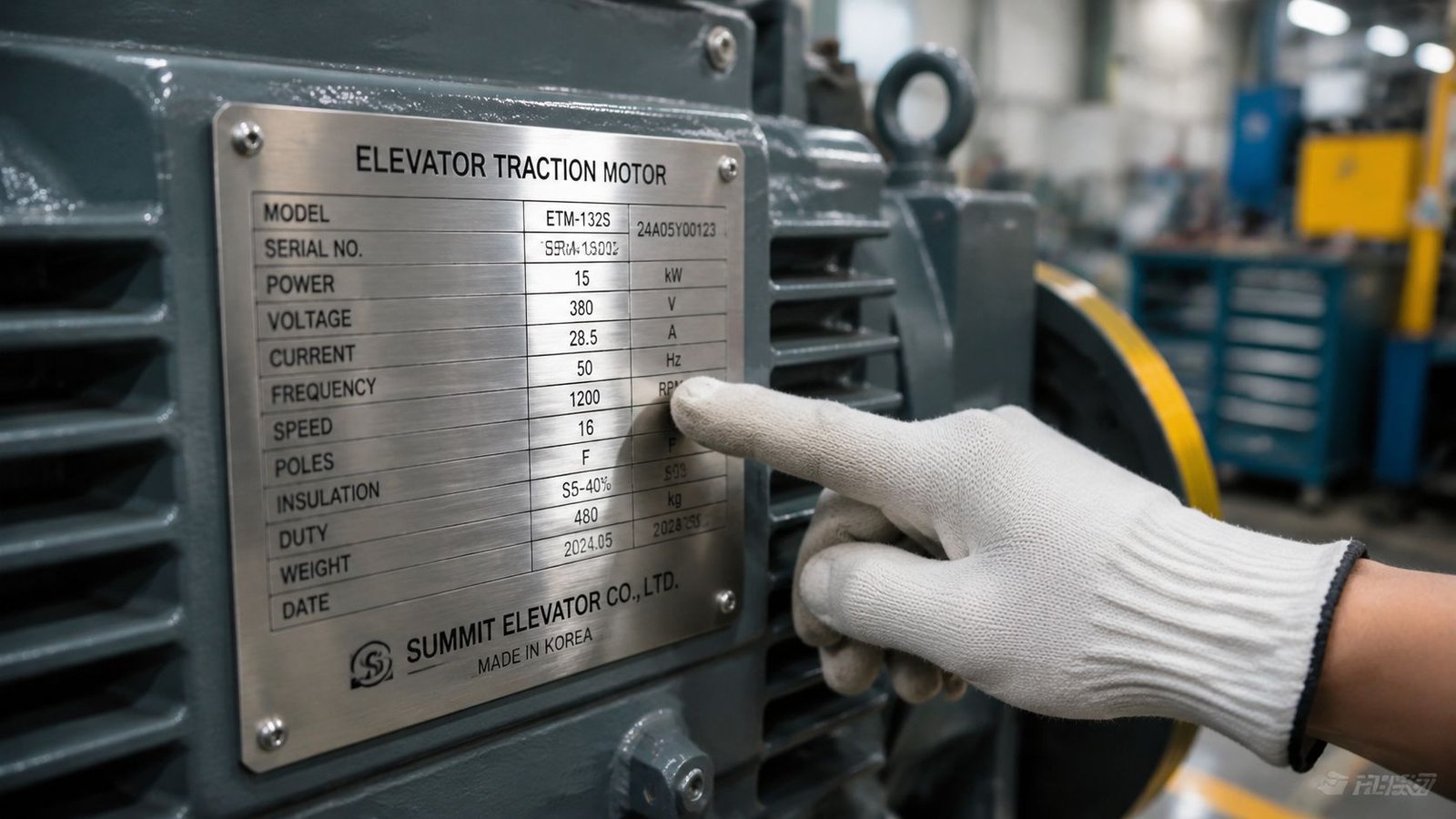
Start with the metal plate on the machine itself.
What to read first on the plate
On a service call, the fastest useful read usually goes in this order:
Motor identification
Find the manufacturer, model, serial, and frame data. Without that, parts lookup and OEM comparison become guesswork.Electrical ratings
Confirm voltage, phase, frequency, and full load amps. If these don't line up with the building supply and controller setup, the rest of the discussion gets shaky.Output and speed
Read horsepower or kilowatt rating and RPM. This tells you whether the machine is in the right performance family for the elevator.Thermal data
Check insulation class, ambient assumptions, and any service factor shown.
How the spec sheet adds context
The full sheet usually answers the questions the nameplate can't fit. It may list duty rating, enclosure type, mounting dimensions, shaft extension details, bearing references, and braking or feedback compatibility.
Here's what experienced techs look for when cross-referencing:
- Duty rating: Can this motor handle how the building uses the elevator?
- Mounting dimensions: Will a replacement fit the existing machine bed and shaft centerline?
- Insulation and temperature limits: Is the motor appropriate for the machine room conditions?
- Feedback compatibility: Does the encoder or resolver match the controller and drive?
If a quote says “equivalent motor” but doesn't include shaft, mounting, brake, and feedback compatibility, it isn't a complete equivalency check.
A practical reading method
Don't read the page top to bottom like a brochure. Read it like a comparison tool.
Use this sequence:
| Checkpoint | What you compare | Why it matters |
|---|---|---|
| Plate to building power | Voltage, phase, frequency | Prevents basic electrical mismatch |
| Plate to controller setup | FLA, speed, feedback type | Avoids nuisance faults and poor control |
| Plate to mechanical layout | Mounting, shaft, brake interface | Protects alignment and installation fit |
| Spec sheet to machine room reality | enclosure, temperature limits, ventilation needs | Reduces heat and contamination risk |
A facility manager doesn't need to memorize every line item. You do need to know where the critical values are, and you need to insist that any repair proposal matches them with specifics.
That's how a spec sheet becomes a management tool instead of just paperwork in a maintenance file.
Typical Motor Specs for Different Elevator Types
A motor rating only makes sense in context. A value that looks perfectly normal on one elevator can be completely wrong on another. The motor has to match the lifting method, the duty cycle, the building height, and how the car is used all day.
The easiest way to think about it is by elevator type.
Typical Elevator Motor Specifications by Elevator Type
| Elevator Type | Typical HP Range | Typical RPM Range | Key Characteristics |
|---|---|---|---|
| Low-speed hydraulic | Lower to moderate, application-specific | Usually tied to pump motor design rather than car speed alone | High starting load, intermittent duty, pump-driven lifting |
| Geared traction | Moderate range | Moderate motor speed with gear reduction in the machine | Balanced mix of torque and speed for mid-rise use |
| High-speed gearless traction | Moderate to high, application-specific | Lower machine speed at the sheave with direct drive behavior | Smooth control, continuous duty expectations, high ride quality |
| Modern MRL systems | Compact and application-specific | Varies by integrated machine design | Tight packaging, hoistway-mounted equipment, compatibility matters more than generic equivalence |
Why hydraulic motors behave differently
A hydraulic elevator motor doesn't directly drive the car the way a traction motor does. It powers a pump. That means the motor is built around oil movement, pressure generation, and intermittent run periods.
In plain terms, hydraulic motors often see strong starting demand and then rest between trips. If someone compares that motor to a traction motor using only horsepower, the comparison misses the entire operating profile.
Why traction motors demand tighter matching
Geared and gearless traction systems are less forgiving about mismatch. Speed control, leveling, brake timing, and feedback all interact with the motor much more directly. That's why a “close enough” replacement often creates callbacks.
A geared machine uses reduction gearing to trade motor speed for lifting force in a controlled way. A gearless machine removes that gearbox, so the motor itself has to deliver the motion quality and torque characteristics the system needs. In high-use buildings, small errors become obvious fast.
Why MRL motors need extra caution
Machine-room-less systems save space, but they don't simplify elevator motor repair. They usually tighten physical tolerances and make access harder. Heat management, encoder compatibility, mounting geometry, and controller matching become more sensitive because everything is packaged so tightly.
For a building owner, the takeaway is simple. Don't ask whether a motor spec seems large or small in the abstract. Ask whether it's normal for your elevator type, your traffic pattern, and your machine arrangement. That's the comparison that protects reliability.
Motor Selection and Replacement Compatibility
When a motor fails, the temptation is to solve the problem with the fastest available replacement. Sometimes that's the right move. Often it creates a second problem that shows up after the invoice is paid.
Good replacement work is about compatibility, not just availability. A motor can match horsepower and still be wrong for the elevator.
What has to match beyond the obvious
The basic checks are familiar: horsepower, RPM, voltage, and current. Those are not enough by themselves.
A proper compatibility review also includes:
- Mounting geometry: base dimensions, bolt pattern, centerline, and overall footprint
- Shaft details: diameter, length, keyway, fit, and sheave interface
- Brake relationship: release characteristics and mechanical fit
- Feedback device: encoder or resolver type, signal compatibility, and mounting
- Thermal behavior: enclosure and heat tolerance in the actual machine room
If one of those is off, the installation may still run. It just won't run well, and it may not run long.
Like-for-like replacement versus modernization
A direct replacement works best when the rest of the machine and controls are in sound condition. If the controller is aging, the brake system is inconsistent, or the feedback setup is obsolete, a straight motor swap can become a patch on a larger system problem.
A broader modernization makes more sense when the motor failure is tied to system age or compatibility limitations. It costs more up front, but it can remove the repeated labor of keeping mismatched old components alive.
The cheapest quote is often the one that assumes the fewest compatibility problems. That's also why it can become the most expensive after startup.
Why non-proprietary matters
Owners should pay close attention to whether the proposed solution locks them into one service channel. A proprietary motor or control arrangement can limit future bidding, parts options, and service flexibility. A non-proprietary approach usually gives the building more influence over long-term cost and response time.
If you're reviewing options for professional elevator motor repair services, ask the contractor to spell out whether the proposed motor, brake, and feedback package can be serviced by qualified independent providers or only through one manufacturer path.
The financial stakes are rising
This decision matters even more because the equipment itself is expensive and getting more valuable to preserve. The global elevator motors market is projected to grow to USD 16.50 billion by 2035, while the average price per elevator unit is expected to reach $51,500 by 2028, according to elevator motor market projections and pricing outlook.
That doesn't mean every failing motor should be rebuilt forever. It does mean premature replacement is a costly habit. The smart move is to evaluate whether the existing machine can be repaired, rewound, realigned, or selectively upgraded before treating full replacement as the automatic answer.
For facility managers, the best safeguard is simple: require a compatibility worksheet, not just a part number.
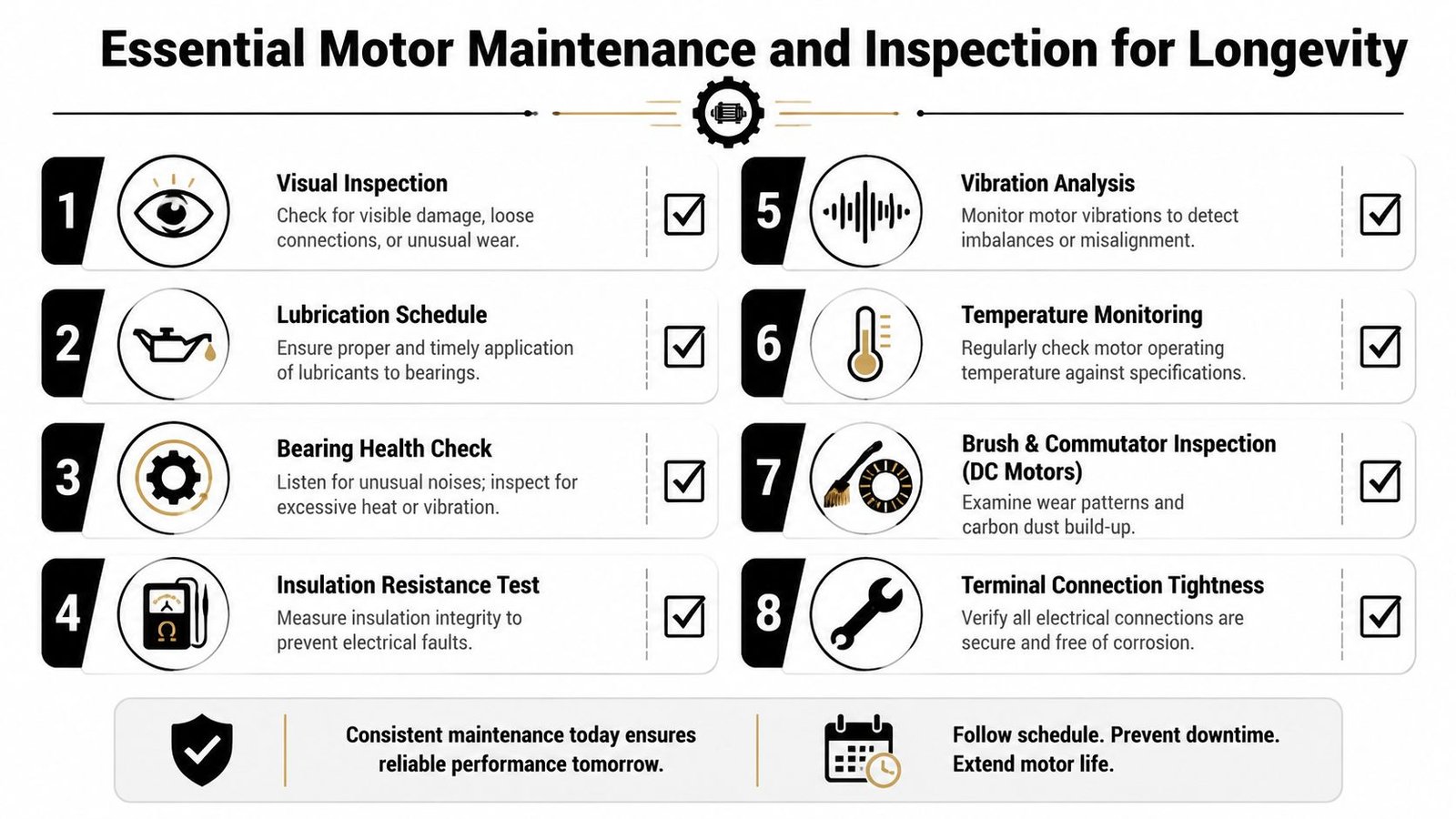
Essential Motor Maintenance and Inspection for Longevity
Most catastrophic motor failures begin as routine maintenance failures. Dirt stays in the machine room. Alignment drifts. A bearing gets noisy. Current rises slowly. Nobody trends vibration. The elevator keeps running until one day it doesn't.
Preventive work changes that pattern. It catches heat, friction, contamination, and misalignment before they become shutdowns.
The baseline standard for traction motor care
Traction elevator motor repair and maintenance have to follow ASME A17.1 requirements. That includes semi-annual inspections for all elevators, with more frequent attention for older units. During repair and maintenance, technicians should clean guide rails with high-flash-point solvents, vacuum the hoistway, perform annual vibration analysis and laser-alignment checks, recalibrate door sensors precisely, re-groove sheaves before they damage cables, and maintain proper machine room HVAC conditions to prevent overheating, as described in traction elevator maintenance requirements under ASME A17.1.
Those tasks sound like housekeeping mixed with precision work. That's exactly what they are. Elevator motors live or die on details.
What a strong maintenance program includes
A proper Maintenance Control Program (MCP) gives the technician a written schedule for what to inspect, how often to inspect it, and what standards define acceptable condition. Without that structure, service becomes complaint-driven.
Key tasks should include:
- Quarterly drive component inspection: Look for wear, heat signs, loose fasteners, and abnormal operation.
- Electrical connection evaluation: Tighten and inspect terminals, contact points, and signs of arcing or corrosion.
- Cable tension review: Uneven tension changes loading and can aggravate vibration.
- Lubrication control: Use the correct lubricant and interval. Over-lubrication and under-lubrication both create problems.
- Winding resistance verification: Compare readings against OEM expectations when motor condition is in question.
- Condenser replacement when worn: Don't leave degraded components in place hoping they survive another season.
Proactive motor maintenance such as quarterly drive component inspections and electrical connection evaluations in an MCP reduces lifecycle costs by 30-40% compared to reactive repair models, according to best practices for elevator maintenance versus repairs.
If you want to see what that philosophy looks like in practice, review what a focused elevator preventative maintenance program should include and compare it against your current contract scope.
A clean machine room, a vibration trend, and a documented alignment check will prevent more motor failures than a stack of emergency invoices.
The checks that catch failure before shutdown
Some inspections are especially valuable because they reveal problems early.
Vibration analysis
This is one of the best early-warning tools for bearing wear, imbalance, looseness, and misalignment. If vibration is measured consistently over time, trends show up before the machine becomes noisy enough for everyone to hear it.
Laser alignment
Old-school alignment methods can get you close. Laser alignment gets you precise. That precision matters because slight offset at the motor and sheave turns into bearing load and heat over months of operation.
Temperature and ventilation review
Machine room HVAC isn't cosmetic. If the room runs hot, the motor, brake coil, controller cabinet, and insulation all suffer. Heat accelerates electrical aging and makes borderline components fail under load.
Cleaning and contamination control
Dust, lint, and debris hold heat and interfere with moving parts. Guide rail cleaning, hoistway vacuuming, and machine room clean-downs are mechanical reliability work, not janitorial extras.
What doesn't work
Reactive maintenance doesn't work well for motors. Neither does a contract that lists generic inspections without condition-based checks.
A poor program usually has these warning signs:
- No vibration monitoring
- No alignment documentation
- No machine room climate review
- No trend data on current, heat, or repeat faults
- No MCP tied to OEM requirements
A motor doesn't need attention because it's fragile. It needs attention because it's carrying a safety-critical load every day. That's why disciplined elevator motor repair starts long before the actual repair.
Partnering with a Pro for Elevator Motor Repair in Michigan
Elevator motor work isn't handyman work, and it isn't a side task for a generic electrical contractor who happens to be available. The motor sits inside a code-regulated system where mechanical fit, electrical performance, braking, feedback, and life safety all meet. A bad diagnosis can waste money. A bad repair can put people at risk.
That complexity is one reason the service side of this industry is so large. In the United States, the Elevator Installation & Service industry generated $53.9 billion in 2026, with 32,787 businesses operating under NAICS code 23829, which explicitly covers the maintenance and modernization services essential for expert motor repair. That figure was noted in the market outlook cited earlier.
What a qualified partner should bring
The right elevator contractor should be able to do more than replace a failed motor. They should be able to explain why it failed, what else was affected, and how to keep the replacement from repeating the same history.
Look for a partner who can provide:
- Code-aware diagnosis: not just “the motor is bad,” but a system-level explanation
- Field testing: current, vibration, heat, brake behavior, and alignment checks
- Repair versus replace judgment: not every failure needs a full modernization
- Clear compatibility review: especially for older traction equipment and MRL systems
- Emergency support: because some failures still happen at the worst possible time
Why local experience matters in Michigan
Buildings in Lower Michigan cover a wide range. Older municipal buildings, hospitals, schools, apartment towers, industrial sites, and mixed-use properties all put different demands on elevator equipment. The practical value of a local specialist is that they've seen the combinations before: aging controllers paired with replacement machines, under-ventilated machine rooms, seasonal temperature stress, and deferred maintenance that finally catches up.
If you're evaluating providers, it helps to start with a company that focuses on elevator service across Michigan and understands both day-to-day maintenance and longer-term modernization planning.
A good contractor should also be comfortable giving a second opinion. That's often where owners save the most money. Not because every first diagnosis is wrong, but because the proposed scope may be broader than the actual root problem.
The motor is too important to guess at. When the car starts sounding different, riding differently, or heating up, get a qualified elevator specialist involved before the shutdown makes the decision for you.
If your building is showing early signs of motor trouble, Crane Elevator Company can help you sort out whether you need targeted repair, a deeper diagnostic review, or a smarter long-term modernization plan. Crane serves Lower Michigan with proactive maintenance, non-proprietary solutions, code-focused service, and responsive support for everything from aging freight equipment to modern passenger systems. If you want a free second opinion before committing to a costly repair path, they're a practical place to start.