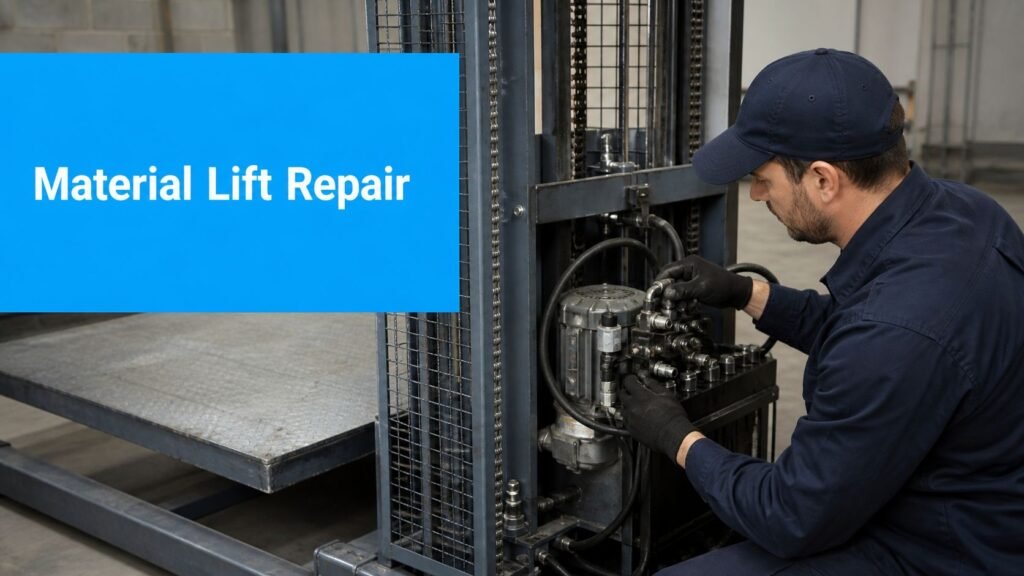
At 6:00 a.m., a material lift stops between floors with a loaded car inside. Production waits, operators start looking for a reset button, and a facility manager has to decide whether the unit needs a simple adjustment or an immediate shutdown. That decision can't be based on the symptom alone. A door that won't close may involve alignment, a damaged interlock, a control fault, or a safety circuit that must not be bypassed.
Material lift repair is regulated work, not just warehouse equipment troubleshooting. The right response protects people, preserves evidence for inspectors, and prevents a temporary restart from becoming a larger outage. The practical question is always the same: what failed, what safety function is affected, and what verification must occur before the lift returns to service?
Why Material Lift Repair Is More Complex Than It Looks
A technician may arrive to find a lift that runs from one landing but refuses to answer a call from another. The visible problem could be a worn door roller, but the actual fault may sit in the door interlock circuit, a limit switch, the controller, or the wiring between floors. Replacing the obvious part without testing the complete circuit can leave the underlying defect in place.
ASME A17.1 formally defines a material lift as a hoisting and lowering mechanism with a car moving within a guide system at an angle greater than 70 degrees from horizontal, serving two or more landings for transporting materials. The standard distinguishes Type A and Type B material lifts, and it states that persons aren't permitted to ride on Type A lifts. The ASME A17.1 text also places design, construction, operation, inspection, testing, maintenance, alteration, and repair inside the code's scope.
The classification changes the repair decision
A Type A lift isn't just a small elevator with fewer features. Its operating restrictions affect how the owner controls access, how the technician tests the car, and how the service team documents the repair. A rideable configuration has a different risk profile because passenger protection, controls, leveling, and emergency communication may apply.
The code framework also reaches beyond the motor or hydraulic power unit. A competent repair inspection considers guarding, door and gate interlocks, car movement limits, safety devices, hoistway conditions, and operating restrictions. A quick reset may restore motion while leaving a failed contact or misaligned gate unresolved.
Practical rule: Never authorize a safety-circuit bypass as a way to restore production. The lift should remain out of service until a qualified technician diagnoses the fault and verifies the complete affected system.
What facility managers should authorize
Ask for a written description of the failure, the affected components, the proposed corrective work, and the tests required before release. If the technician recommends a part replacement, the quote should identify whether the work is a repair, an alteration, or a code-triggered upgrade.
The most useful question isn't “How fast can you get it running?” Ask instead, “What failed, what prevented normal operation, and what proves the lift is safe after repair?” That answer separates disciplined material lift repair from improvised troubleshooting.
Types of Material Lifts and What Makes Them Different
“Material lift” covers more than one equipment arrangement. The first step in any service call is identifying the equipment's intended use, construction, and classification. The ASME definition anchors the distinction: a regulated material lift moves a car through a guide system between landings for material transport, rather than functioning as ordinary warehouse equipment.
A vertical reciprocating conveyor may move pallets, totes, or production materials between levels. A dumbwaiter handles smaller goods through a dedicated hoistway. Wheelchair lifts and LULA elevators can carry people, so their controls and protective systems require a different repair approach. The phrase “it only moves a short distance” doesn't determine the applicable requirements.
Use and rider status come first
For a freight-only unit, the technician focuses heavily on gates, interlocks, load handling, travel limits, chains or ropes, brakes, and the control system. A Type A material lift's no-rider restriction is especially important. If employees start riding it because the lift is convenient, the facility has created an operating problem that a component repair won't solve.
A wheelchair lift or LULA elevator requires passenger-oriented checks such as leveling, accessible controls, emergency communication where applicable, and protection against movement with an open access point. A dumbwaiter still needs controlled access and a properly protected hoistway. The same “door won't close” symptom can therefore lead to different corrective actions.
| Lift Type | Primary Use | Passenger Rated | Key Code Considerations |
|---|---|---|---|
| Vertical reciprocating conveyor | Moving materials between levels | Usually no | Guarding, gates, interlocks, travel limits, and operating restrictions |
| Type A material lift | Transporting materials under its classification | No | No-person operation, material handling, guarding, and code-defined controls |
| Dumbwaiter | Moving food, supplies, records, or small goods | No | Hoistway protection, landing access, interlocks, and controlled operation |
| Wheelchair lift | Providing accessible vertical movement | Yes | Passenger protection, controls, leveling, emergency features, and accessibility requirements |
| LULA elevator | Limited passenger travel in suitable buildings | Yes | Passenger safety systems, doors, controls, leveling, and applicable elevator requirements |
Before approving a quote, compare the proposed work with the unit's nameplate, drawings, operating instructions, and maintenance records. A rideable material lift may look similar to a freight-only unit, but the repair scope can differ substantially because the equipment serves people.
Common Problems and Warning Signs to Watch For
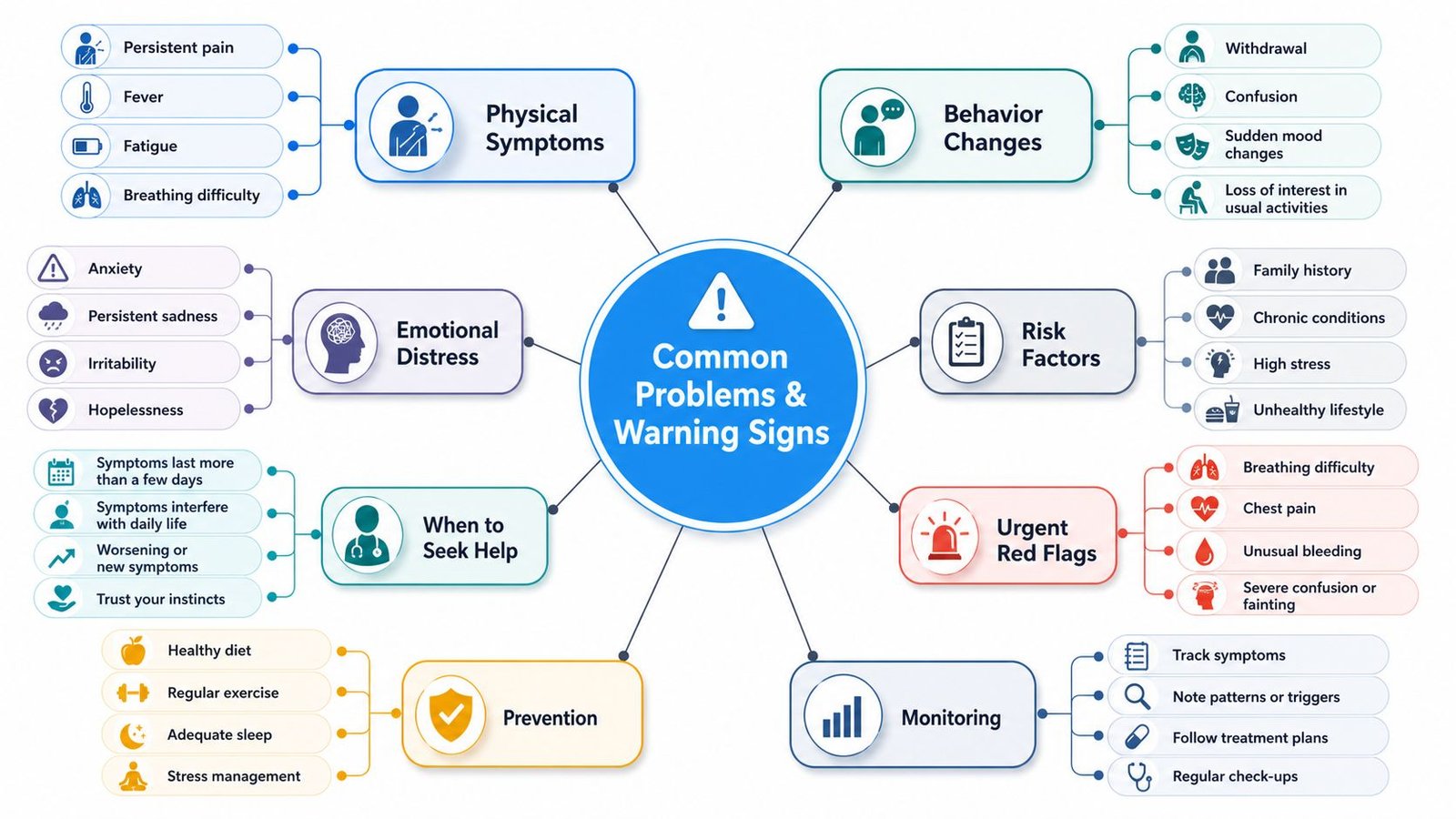
Material lift failures usually provide clues before the final shutdown. The clue may be a door that needs to be pushed closed, a car that stops slightly above the landing, a hydraulic unit that sounds strained, or a call button that works only intermittently. Treat these changes as inspection prompts, not annoyances to work around.
Door and gate symptoms
A door or gate problem may be a minor adjustment when the panels are visibly misaligned and the interlock engages correctly after adjustment. It becomes a shutdown issue when the lift can run with an access point open, the contact chatters, the gate is damaged, or operators must hold or defeat a switch to make the unit move.
Look for:
- Intermittent operation: The lift runs after repeated door movement or requires a second call.
- Mechanical resistance: Rollers, tracks, hinges, or closers bind during normal movement.
- Unsafe behavior: The car moves without a properly closed and locked landing entrance.
Don't keep cycling the lift to see whether the problem clears. Repeated operation can worsen mechanical wear and obscure the original fault.
Hydraulic and drive symptoms
Slow travel, uneven leveling, unusual pump noise, or fluid around the cylinder, valve manifold, hose, or fittings points to the hydraulic system. A small external leak may require cleaning, seal replacement, or a fitting repair. A recurring leak, pressure loss, uncontrolled settling, or contamination concern deserves immediate professional evaluation.
Mechanical lifts may show slack chain, unusual vibration, rope wear, brake noise, or inconsistent stopping. These symptoms require a technician to inspect the complete load-supporting and stopping system rather than tightening one accessible component.
Electrical and safety symptoms
Unresponsive call buttons, erratic floor selection, recurring fault codes, or a controller that resets and then fails again can indicate wiring, sensors, relays, power quality, or a control board problem. A reset only clears the symptom. It doesn't establish that the failed input or output is safe.
A tripped overspeed governor, broken rope or chain switch, pit stop switch fault, or failed limit device should be treated as a do-not-operate condition until a qualified technician tests and documents the safety circuit. Safety devices exist to prevent motion under abnormal conditions, so defeating them trades a short operational gain for a serious exposure.
Inspection Schedules and Code Requirements You Must Follow
A maintenance calendar should combine the equipment manufacturer's instructions, the applicable jurisdiction's rules, the lift's age and condition, and its actual duty cycle. ASME A17.1/CSA B44 treats material lifts as regulated elevating equipment, and the standard's scope includes inspection, testing, maintenance, alteration, and repair. The ASME A17.2 inspection guidance describes dedicated material-lift inspection coverage across the car, machinery room, top of car, outside hoistway, and pit areas, with repairs tied to a Maintenance Control Program.
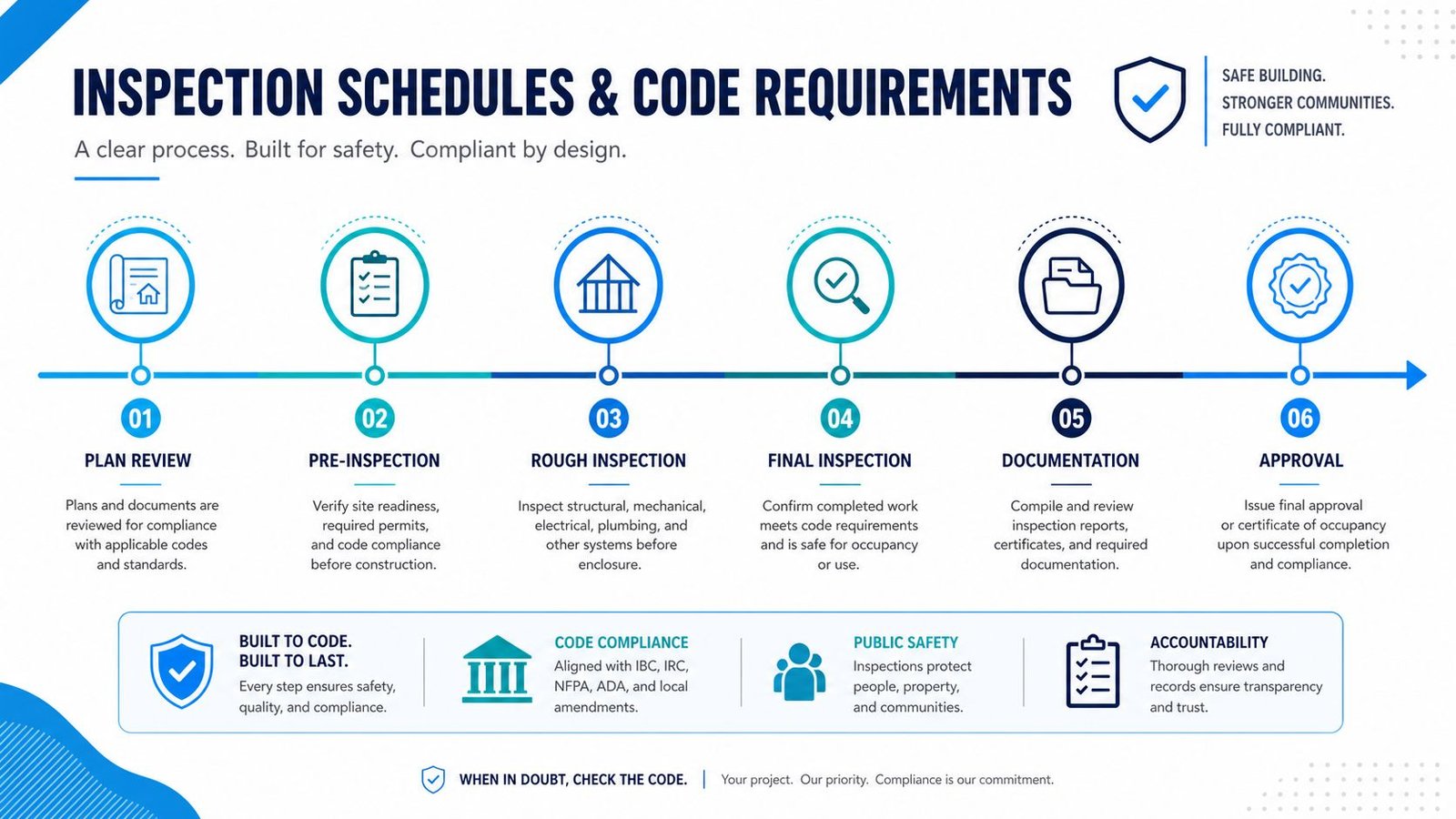
Build the calendar around three layers
Routine site checks should capture visible damage, leaks, unusual sounds, gate condition, signage, and obvious operating changes. These checks don't replace a qualified inspection, but they help operators report developing problems before a failure strands a load.
Scheduled maintenance should address cleaning, lubrication, adjustment, component condition, and documentation. Ontario's regulation expressly includes inspection, cleaning, lubrication, adjustment, and the repair or replacement of worn or defective parts within maintenance. It also requires inspection and testing intervals not to exceed 12 months. Ontario's elevating-device regulation ties maintenance intervals to equipment quality and age, manufacturer specifications, and frequency of use.
Jurisdictional inspections and tests must be tracked separately from internal checks. Michigan requires material lifts to be inspected at least once every 12 months, while Hawaii's published table lists material lifts at 12 months for routine inspection, 36 months for a more detailed test, and 60 months for a major interval. Michigan's inspection rule illustrates the annual baseline, while local requirements and the authority having jurisdiction determine the exact obligations at a particular site.
Document the components, not just the visit
A useful record names the lift, date, technician, findings, corrective action, parts installed, test results, open deficiencies, and return-to-service authorization. Track door interlocks, limits, safeties, hydraulic leakage, controls, emergency features, and pit or hoistway conditions as separate entries.
Don't file a generic invoice as the maintenance record. If a future inspector or another contractor can't tell what was checked and what remains unresolved, the facility has lost much of the value of the service visit.
Typical Repair Procedures and Cost Ranges
Repair pricing depends on the fault, equipment configuration, access, parts availability, testing requirements, and whether the work exposes an alteration or code issue. No responsible contractor can price every material lift repair from a symptom such as “stuck at the second floor.” A useful quote separates diagnosis from corrective work and identifies what could change after inspection.
Door repairs may involve cleaning and alignment, roller or track work, an interlock, an operator, or damaged guarding. Hydraulic work may range from a valve adjustment or hose replacement to cylinder resealing, pump replacement, or power-unit work. Control repairs can require tracing field wiring, replacing a sensor, repairing a relay, or sourcing a compatible board.
| Repair Type | Cost Range | Primary Cost Drivers | Typical Downtime |
|---|---|---|---|
| Door or gate adjustment | Quote should be site-specific | Alignment, access, damaged hardware, testing | Often limited if parts are available |
| Interlock or door component repair | Quote should be site-specific | Component type, wiring, landing access, code verification | Depends on diagnosis and parts |
| Hydraulic repair | Quote should be site-specific | Leak location, cylinder or pump condition, fluid contamination, access | May extend when major components require removal |
| Control troubleshooting | Quote should be site-specific | Wiring complexity, controller design, diagnostics, replacement availability | Varies from a service visit to extended outage |
| Safety-device repair | Quote should be site-specific | Device condition, testing, adjustment, and required documentation | Lift remains unavailable until verification is complete |
The table deliberately avoids invented price promises. A contractor who offers a fixed number before opening the doors, inspecting the pit, and identifying the controller is guessing. Ask for labor, travel, parts, testing, permits, and possible follow-up visits to be shown separately.
For owners comparing equipment options, material lift service and equipment information can help frame the conversation, but the final repair scope still depends on the installed unit. Older equipment creates a further trade-off: a lower immediate repair cost may preserve an obsolete system, while a larger modernization may improve parts support and serviceability. The right comparison is repair cost plus downtime risk, not the invoice alone.
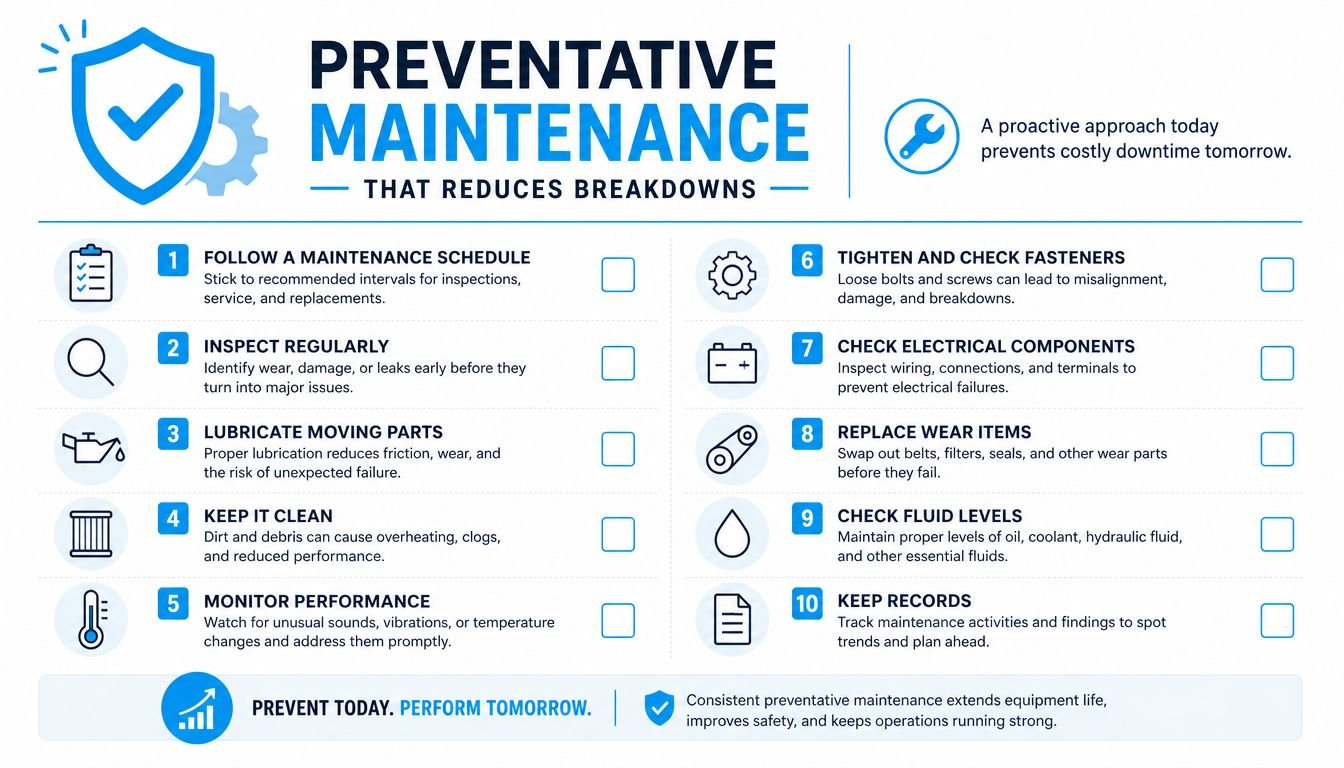
Preventative Maintenance That Reduces Breakdowns
Reactive repair is unavoidable when a component fails without warning, but it shouldn't be the operating strategy. A planned program gives the service team access to the same areas and functions that inspectors evaluate, while allowing corrective work to occur before a small defect becomes a shutdown.
The strongest maintenance plans connect three decisions:
- Compliance: Schedule required inspections, tests, and maintenance activities before deadlines become emergencies.
- Liability control: Keep clear records showing what the facility reported, what the technician found, and what the owner authorized.
- Operational planning: Coordinate parts, access, lockout procedures, and production windows instead of paying for avoidable emergency disruption.
Match the work to the application
A clean indoor dumbwaiter doesn't experience the same conditions as a freight lift in a dusty loading area. Usage intensity, environmental exposure, equipment age, and the manufacturer's instructions should shape the maintenance plan.
Technicians should inspect and clean door tracks, verify alignment, examine interlocks, check chains or ropes, look for hydraulic leakage, assess fluid condition, test controls, and review safety-device operation. Lubrication only helps when the lubricant is appropriate and the underlying alignment or wear problem has been corrected. Adding grease to a damaged track isn't maintenance, it's concealment.
A maintenance contract has value only when it defines what gets inspected, what gets corrected during the visit, and what becomes a separately authorized repair.
Document every visit, including “no defect found” results. A log that records recurring door faults, repeated resets, leakage, or the same failed input helps the owner decide whether continued repair is sensible.
Replacement becomes the more practical path when the unit has recurring safety faults, unavailable parts, structural deterioration, or a repair scope that no longer restores dependable operation. That decision should come from condition, supportability, compliance, and operational risk, not from age alone.
The following video can supplement a facility's maintenance training, but it doesn't replace the manufacturer's instructions, the applicable code, or a qualified inspection.
How to Choose a Qualified Material Lift Service Provider
Start with the provider's experience on the actual equipment, not with a generic claim that the company services “all lifts.” Ask whether the technicians work on freight lifts, material lifts, dumbwaiters, wheelchair lifts, hydraulic systems, and the specific controller installed at your site.
Check technical and regulatory capability
Request evidence of applicable state and local licensing, insurance, and technician qualifications. If the provider uses QEI or CET personnel, ask which tasks those credentials cover and who will perform the repair. Also ask whether the company can coordinate with the local authority having jurisdiction when a permit, inspection, test, or violation correction is involved.
A capable provider should explain:
- Diagnosis: Which tests will distinguish a mechanical fault from a control or interlock fault?
- Parts strategy: Can the company support both proprietary and non-proprietary systems, and how will it handle obsolete boards?
- Return to service: What test sequence confirms that the repaired door, control, hydraulic, or safety system works correctly?
- Response terms: What does emergency response mean in writing, including after-hours coverage, travel charges, and approval procedures?
If a contractor recommends bypassing a gate, interlock, limit, or safety circuit, stop the conversation and seek another opinion.
Ask for references from facilities with similar loads, usage, and building conditions. A hospital, school, manufacturing plant, and municipal building may all use material-handling equipment, but their access controls, uptime requirements, and approval processes differ.
For a provider comparison, review reliable elevator service support alongside local licensing records, insurance certificates, written response commitments, sample maintenance reports, and the provider's approach to code-required testing. The cheapest hourly rate isn't useful if the technician lacks the parts, documentation, or authority coordination needed to complete the repair.
Local Material Lift Repair Support in Southern Michigan
Southern Michigan facilities often manage older industrial buildings, mixed equipment inventories, and demanding loading operations. A material lift in Ann Arbor may have a different service history from one in Lansing, Kalamazoo, Jackson, or Detroit, even when both units use similar components. The contractor still has to inspect the installed equipment rather than assume that a familiar symptom has a familiar cause.
Local support matters because the provider can plan around Michigan inspection requirements, coordinate with the applicable authority, and maintain a consistent record across multiple properties. It also makes follow-up easier when a repair requires a return visit, a special part, or a correction identified during testing.
Crane Elevator Company serves Michigan and Ohio with maintenance, repair, code-required inspections, and modernization for elevators and lifts, including wheelchair lifts, residential elevators, material lifts, and dumbwaiters. Its service model includes scheduled maintenance, repair work, non-proprietary modernization, emergency response, and documentation-oriented support. For a multi-site owner, using one qualified contractor can simplify vendor coordination while preserving a separate service history for each lift.
The practical next step is to gather the equipment nameplate information, recent inspection reports, fault history, photos of the affected landing or machine area, and the operational impact. Give that package to the service provider before the visit, then require a written diagnosis that distinguishes a minor adjustment from a shutdown-level safety defect.
Crane Elevator Company provides material lift maintenance, repair, inspections, modernization, and emergency service for facilities across Michigan and Ohio. If your lift is recurring, out of service, or facing an inspection issue, visit Crane Elevator Company to request service or a second opinion.