
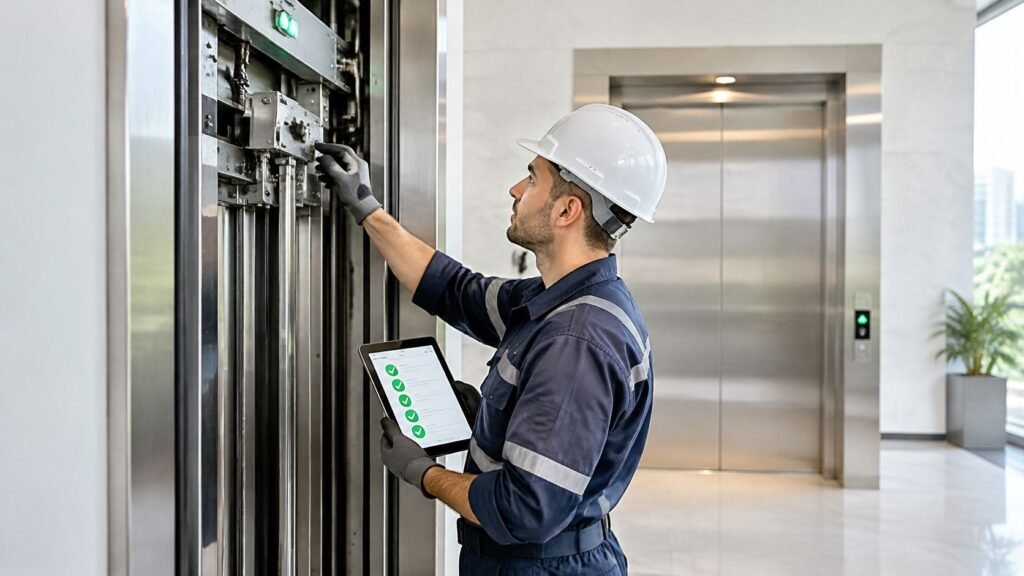
It's a Tuesday morning, your clinic is filling up, and the only passenger car stops between floors with two staff members inside. Someone calls the after-hours number because it's the only number on the cab sticker. That's usually when a manager learns what the maintenance contract bought.
What an Elevator Maintenance Program Actually Does
Say that clinic car had been drifting on leveling for weeks. Doors took an extra nudge to close. Nobody logged it because the car still ran. Then a door lock fault stopped it in the hoistway, the entrapment call went out, appointments backed up, and the invoice arrived as an emergency callback at an after-hours rate.
An elevator preventive maintenance program exists to catch that drift before riders feel it. It's a written plan that puts a qualified technician on each car at a set interval to inspect, clean, lubricate, adjust, and test. Think scheduled oil and brake service on a shuttle fleet, not a tow truck after the engine dies on the highway.
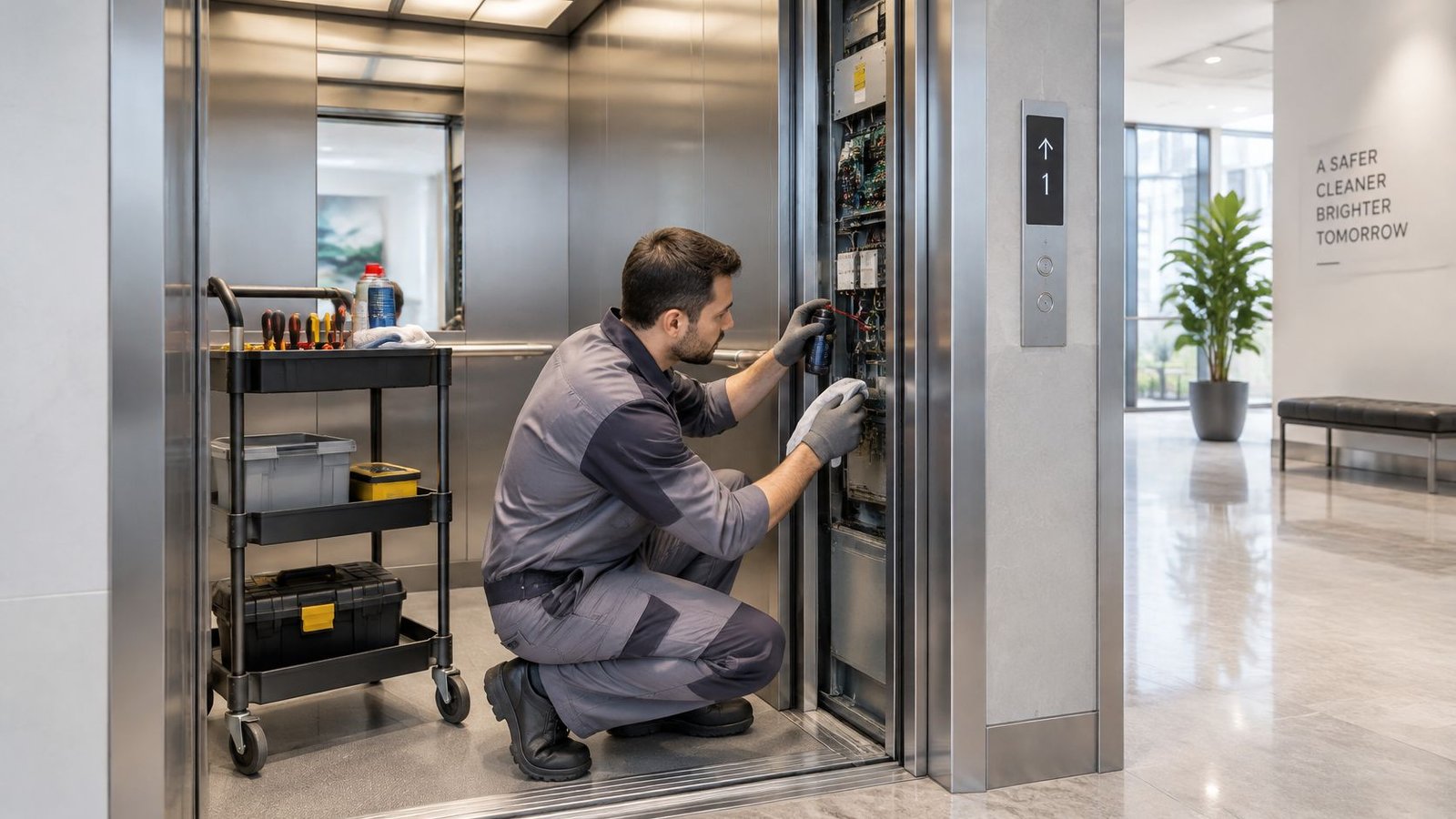
Three kinds of work, plainly defined
- Preventive work follows the calendar or duty cycle: The technician comes because the interval is due, not because the car failed. The visit has written tasks and a record of what was found.
- Predictive work follows a change in condition: A repeating door fault, hydraulic oil on the pit floor, or rising motor current tells the technician to act before the next scheduled date.
- Reactive work starts after failure: The car is already out of service, passengers are already affected, and you're paying for diagnosis under time pressure.
Most buildings run all three. The question is the mix. A program that's mostly reactive means the equipment sets your schedule and your budget. A program that's mostly preventive means you choose the shutdown window, order parts ahead, and keep riders out of the conversation.
The payoff is straightforward. You get fewer entrapments, smaller emergency bills because worn parts get replaced on a weekday instead of a Sunday, and records an inspector or insurer can read. That last point matters more than owners expect. After an incident, nobody asks whether a technician appeared. They ask what was checked, what was found, and what was corrected.
A signed visit slip proves a person was in the building. It doesn't prove the car got safer or more reliable.
What belongs on each visit, and how often it should happen, depends on the equipment in the hoistway. That's a scheduling decision, not a guess, and it's where good programs separate busy passenger cars from a lightly used home lift.
Service Tasks and Intervals by Equipment Type
Start with a table you can tape to a work order. If a task doesn't fit on a row, it won't get closed in the field.
| Asset or test | Typical interval | What the visit covers | Why it matters |
|---|---|---|---|
| High-traffic passenger traction | Monthly | Doors and locks, brake and rope visual, machine room, ride and leveling | Stops callbacks on the busiest cars |
| Passenger hydraulic | Monthly, or quarterly if cycles are low | Oil, packing, jack, valve, pit, leveling | Catches leaks before a shutdown |
| Freight or hospital car | Monthly, with a planned outage window | Same checks plus heavy-duty doors and duty-cycle wear | Downtime stops clinical or freight work |
| Home elevator or wheelchair lift | Quarterly to semiannual | Safety edges, batteries, door locks, ride | Lower use, still a life-safety device |
| Category 1 test | Every 12 months, no load | Doors, alarm, emergency phone, leveling, ride | Annual evidence for the inspector |
| Category 3 test | Every 3 years, full load, where adopted | Full-load safety checks on covered hydraulic equipment | Code proof between the five-year test |
| Category 5 test | Every 5 years | Buffers, governor trip, full-load safeties | Highest-consequence safety test |
| Fire service and generator | Annual or as the AHJ requires | Phase I and II recall, standby power | Evacuation and outage readiness |
Why the interval moves
Treat the table as a starting point, not a contract you never revisit. The NIST maintenance benchmarking report defines preventive work as scheduled at specified time or usage intervals, while predictive work uses condition measurements to decide when to intervene. In its manufacturing survey, maintenance averaged 31.8% preventive, 17.3% predictive, and 45.7% reactive, which is a useful reminder that a calendar alone doesn't make a program preventive.
For elevators, that means each unit needs its own history. Record door-lock faults, hydraulic leakage, abnormal motor or sheave behavior, safety-test results, emergency-phone checks, and repeat callbacks. Then adjust frequency for traffic, age, duty cycle, environment, and failure history.
When to shorten the clock
- Repeat callbacks on the same car: Move it to a shorter interval until the fault pattern breaks. Log the change and the reason.
- A wet pit or dock environment: Water and debris age packing, buffers, and door equipment faster than a clean residential hoistway does.
- High cycles or 24-hour use: A hospital or housing lobby wears door rollers, gibs, and detectors on a different schedule than a private lift.
- Aging equipment near modernization: Older controllers and machines need closer looks, not longer gaps, while you plan capital work.
Field rule: Keep the code clock separate from the lube clock. A monthly visit doesn't satisfy a Category 1, 3, or 5 test, and a passed test doesn't replace monthly door and ride checks.
One more discipline matters. Don't add tasks nobody closes. A long checklist that a technician initials in the cab is worse than a short list with findings, measurements, and a follow-up work order. Every row in the table should produce either a pass, a correction on the spot, or a dated plan to repair. If a finding has no owner and no due date, the interval isn't working, no matter how often the truck parks outside.
Payoffs in Uptime, Cost, and Compliance
The clearest numbers on maintenance strategy come from manufacturing, so read them as a cautionary scale, not as elevator data. The pattern still maps to a building where one car serves every floor.
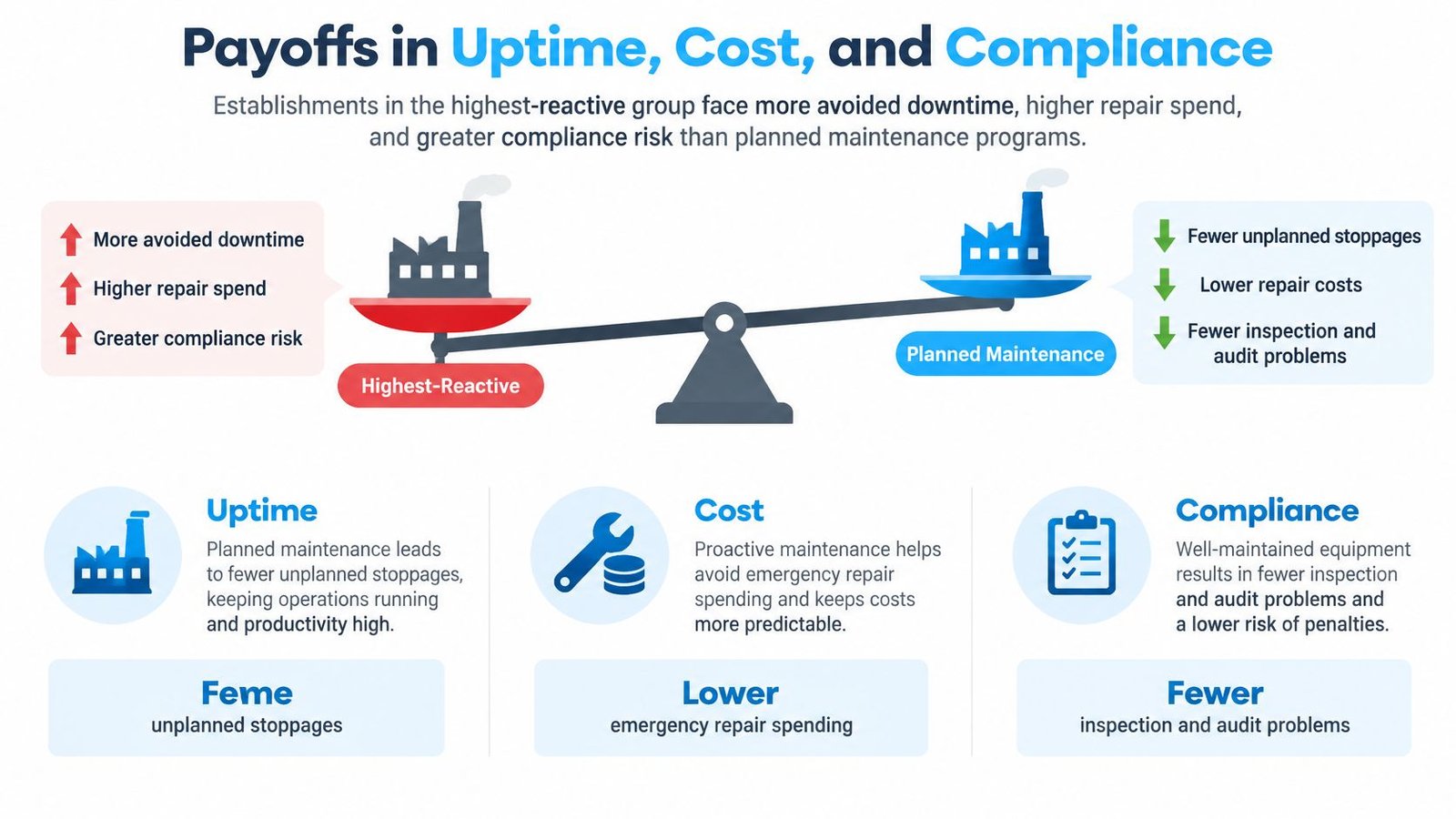
In the NIST analysis of discrete manufacturing establishments, the highest-reactive group experienced 3.3 times more downtime and 16.0 times more defects than less reactive peers. That same group recorded 2.8 times more lost sales from defects, 2.4 times more lost sales from delays, and 4.89 times more inventory increases tied to maintenance issues. Among establishments with less than half reactive work, the top half in predictive use showed 15% less downtime, an 87% lower defect rate, and 66% fewer inventory increases from unplanned maintenance.
What that looks like in a building
Translate defects and lost sales into elevator terms. A failed motor, controller, or set of ropes can cost more than a year of routine visits once you add emergency labor, expedited parts, and a car held out of service. An entrapment adds tenant complaints, possible liability exposure, and insurance questions you can't answer if records are thin. Reviewing the cost of elevator maintenance against one major failure usually ends the argument about whether planned visits are overhead.
Compliance is the second payoff, and it's less optional. Cities, states, and insurers expect documented maintenance plus passed Category 1, 3, and 5 tests. A missed test, a dead emergency phone, or an open violation can bring correction orders and a shutdown until the work clears. Planned programs keep those dates on a calendar with an owner, so the inspection isn't a surprise event.
This short video walks through how planned work changes the cost conversation.
Third, maintained equipment usually postpones modernization. Clean machines, adjusted doors, and corrected leaks let components reach their intended service life. I would ask each contractor to state expected remaining life per unit, in writing, instead of relying on a general age figure for the whole bank.
Those manufacturing multiples aren't guarantees for your building. Asset age, inspection quality, parts on hand, staffing, and work-order discipline decide results. A cheaper contract that skips tests or produces no clean evidence isn't a saving. It's a deferred bill with interest.
KPIs That Show the Work Is Preventive
Here's the uncomfortable gap. In the 2025 MaintainX survey of 1,320 maintenance professionals, 71% of organizations reported using preventive maintenance, yet fewer than 35% said their teams spent most of their time on preventive tasks, and 58% of facilities devoted less than 40% of maintenance time to planned work. A similar split appears in the MaintainX survey of 1,165 maintenance, repair and operations professionals reported by Facilities Dive, where 86.8% of facilities reported using preventive maintenance strategies in 2024 while 59% dedicated less than half their maintenance time to planned work.
The label isn't the program. Judge these six numbers per car or bank, monthly.
| Metric | What to count | Healthy signal |
|---|---|---|
| Callback rate | Emergency visits per car per month | A falling trend, not a signed visit slip |
| Mean time between failures | Days between passenger-affecting faults | Rising after a task or parts change |
| Mean time to repair | Hours from call to car released | Stable or shorter, including after-hours |
| Planned versus reactive hours | Share of labor that was scheduled | Moving past half planned, not a paper label |
| Overdue code tests | Category 1, 3, and 5 plus fire service past due | Zero overdue on life-safety items |
| Repeat faults | Same door, leak, or leveling issue within 90 days | Triggers a frequency or replacement decision |
One worked example
Say one traction car logs three door-lock callbacks in a quarter. A checkbox program writes another generic monthly line and moves on. A preventive program shortens the door inspection interval, replaces the worn lock or detector, notes roller and gib condition in the unit history, and watches whether mean time between failures rises. If it doesn't, the next step is a parts or modernization decision, not a fourth identical callback.
That logic is the practical core of predictive maintenance for elevators, and it starts with records, not sensors. Add monitoring only after the asset history is clean, and only on a high-cost or high-consequence car where a threshold triggers a real action. The signal has to order parts, book a shutdown window, and get a qualified technician dispatched. Otherwise you've bought an alert nobody can act on.
That caution fits adoption reality. Predictive maintenance was reported by only 27% of maintenance teams in 2025, and resource limitations were the leading challenge for 45% of maintenance leaders, according to MaintainX maintenance statistics. Dirty data plus no available technician doesn't improve reliability.
If you can't show callbacks falling or time between failures rising, you don't have evidence of prevention. You have evidence of attendance.
Start simple. Track scheduled work completed versus deferred, emergency labor hours, and downtime by asset criticality. Those three tell an owner more in one quarter than a year of cab stickers.
How to Match a Program to the Building
Matching isn't another task checklist. It's a sorting exercise you do before price enters the room.
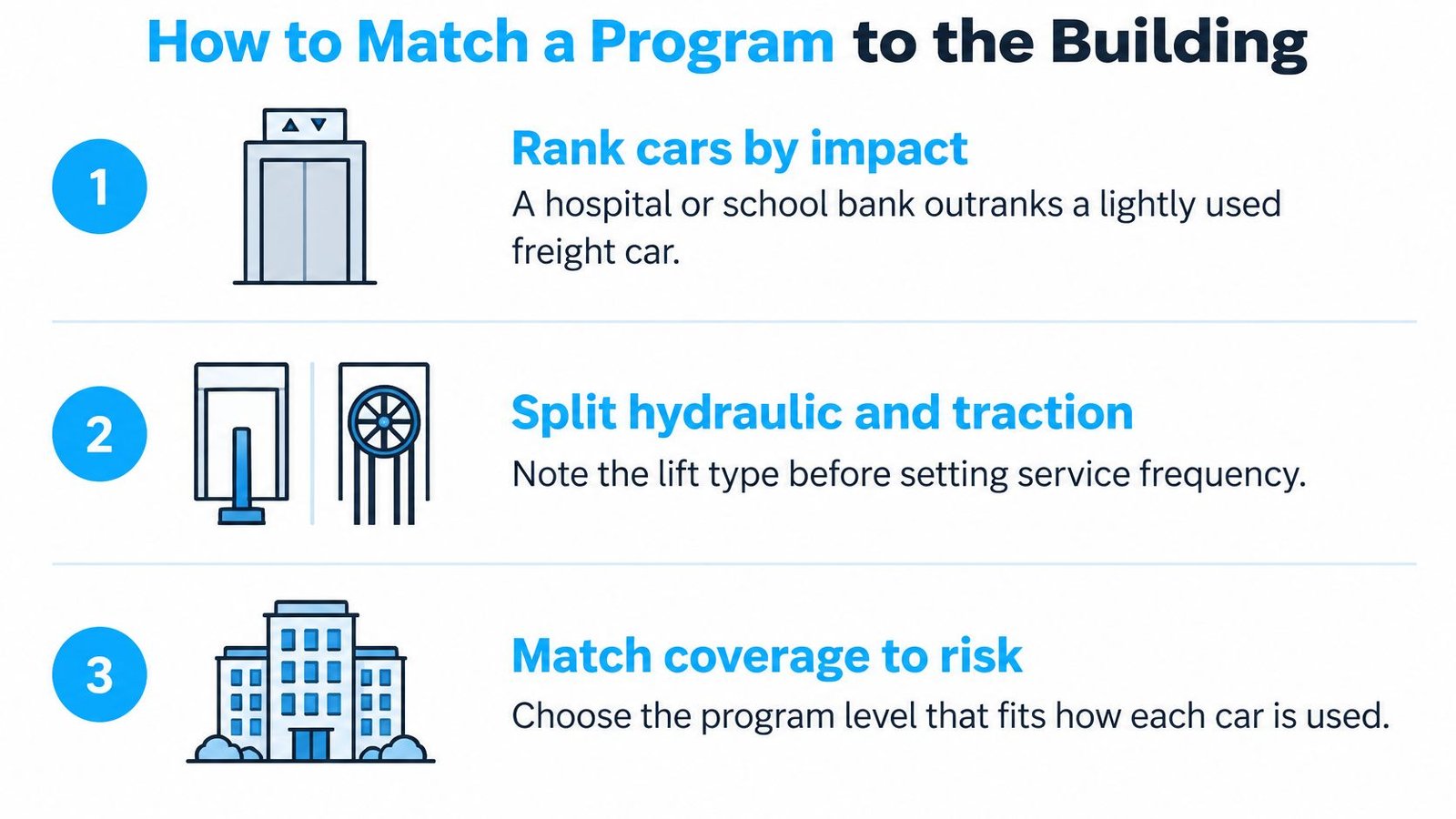
Eight checks before you compare bids
- Rank cars by what a stoppage does: A hospital or school bank outranks a lightly used freight car, because the consequence of downtime isn't equal.
- Split hydraulic from traction and note age: Packing, jacks, and buried cylinders fail differently from ropes, sheaves, and machines, so the inspection emphasis changes.
- Count cycles and environment: A wet pit, loading dock, or 24-hour lobby needs a shorter door and leak look than a private residence.
- Check whether an asset history exists: If callbacks aren't logged, buy disciplined records before any sensor package. You can't trend what nobody wrote down.
- Match coverage hours to riding hours: Housing and hospitals need night coverage. A small office may not, and shouldn't pay as if it does.
- Name who handles code work: Ask who corrects violations, pulls alteration permits, stands the Category 1, 3, and 5 tests, and handles door-lock monitoring retrofits.
- Treat residential units as their own case: A home elevator or wheelchair lift needs a lighter custom plan and a technician who treats the call as a priority home visit, not a leftover stop on a commercial route.
- Reject scope gaps and lock-in: Turn down a low bid that omits tests, clean-down, or small wear items. Turn down a long proprietary lock-in if modernization is likely in the next few years.
The verdict in two situations
Busy public cars need monthly full preventive coverage plus the code clock, with coverage hours that match when people ride. Low-use residential units need a shorter custom scope, but the same safety discipline on locks, edges, batteries, and emergency communication. Lower use never means lower consequence for the person riding alone at home.
Price is the last sort, after scope matches risk. Ask what drives it: number of cars, hydraulic versus traction equipment, after-hours coverage, which parts are quoted separately, and whether the contract locks you into a proprietary control system. Request an itemized quote for each unit rather than comparing one blended monthly figure across providers. A single number hides exactly the differences you're trying to judge.
Clauses Worth Reading in a Service Agreement
Treat the agreement as the scope, not a logo page. Two common shapes cover most of what you'll be offered.
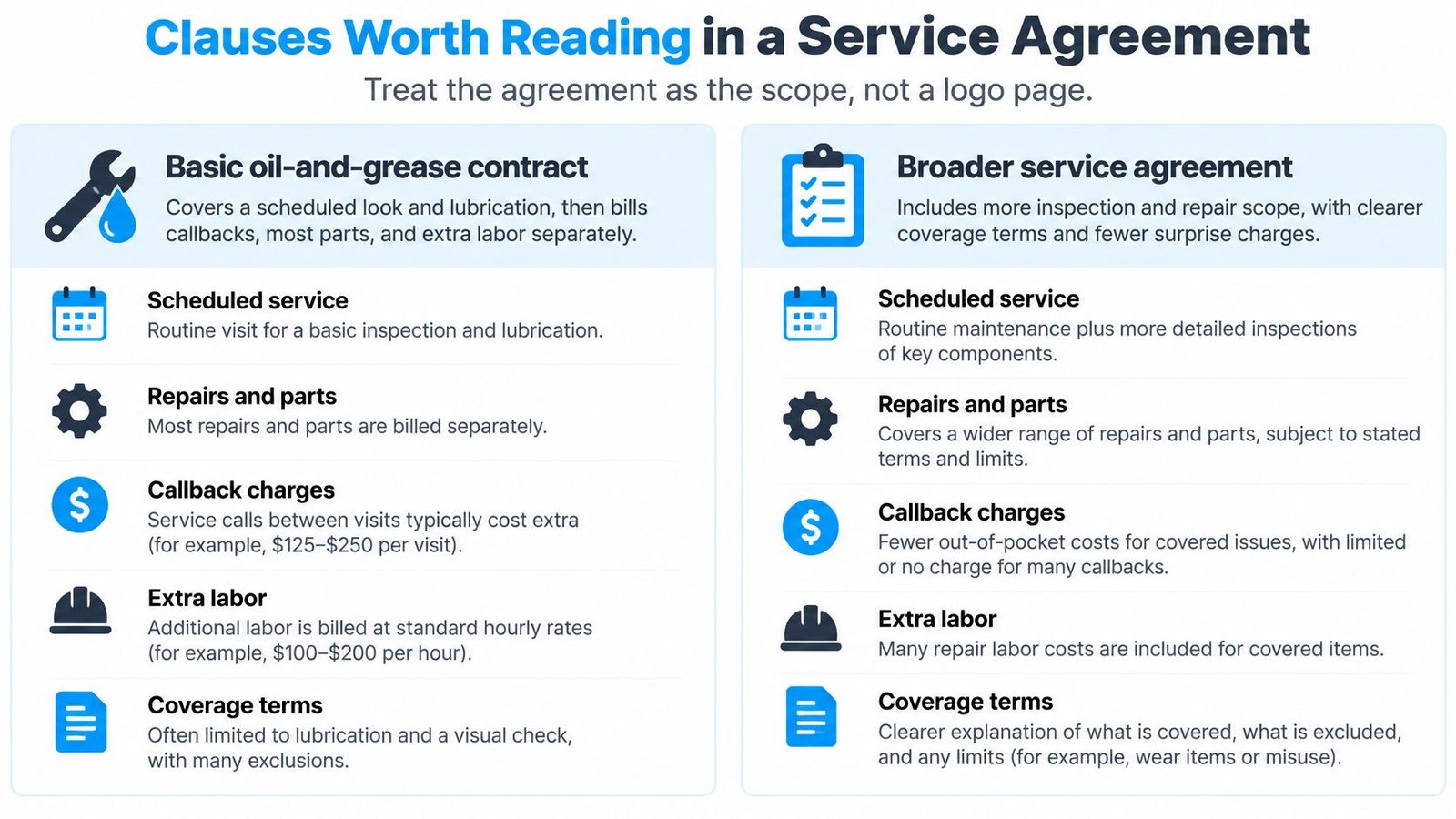
| Clause | Basic oil-and-grease visit | Full preventive agreement |
|---|---|---|
| Scheduled labor | A short look and lube | Written tasks at the interval in the schedule |
| Callbacks | Billed, or a small annual cap | Included in defined hours, after-hours rate stated |
| Parts | Mostly extra | Wear items listed; major components quoted separately |
| Machine room, pit, and car top | Often skipped | Full clean-down required in the scope |
| COP and PI bulbs | Often a separate ticket | Included with the visit |
| Missed visit | Invoice still sent | Credit, or no pay if the technician does not show |
| Term and exit | Multi-year auto-renewal | Month-to-month or a clear cancellation window |
| Records | Cab sticker only | Findings, callbacks, and test certificates |
| Controls | Proprietary, one vendor | Non-proprietary, any qualified firm can service |
How the two shapes behave in practice
A basic oil-and-grease contract covers a scheduled look and lubrication, then bills callbacks, most parts, lamps, and cleaning as extras. It can suit a low-use unit with an owner who accepts variable bills. It fails when a busy building assumes the low monthly price included the work that prevents shutdowns.
A full preventive agreement still excludes major components such as a jack, machine, or controller, and any contractor who implies otherwise is overselling. What it should write in is labor for scheduled tasks, a defined list of included wear items, callback coverage with a stated after-hours rate, and clean-down of the machine room, pit, and car top. Car operating panel and position-indicator bulb replacement sounds minor until you're paying separate tickets for dark fixtures tenants notice daily.
If the sentence doesn't say who does the work, how often, and what is billed extra, it is not a maintenance promise.
Three clauses deserve a highlighter. First, missed visits should be credited, and some owners negotiate that a no-show isn't invoiced at all. Second, term and exit matter because multi-year auto-renewal with a stiff exit fee behaves very differently from month-to-month when service slips. Third, controls decide your future options: proprietary controls lock the next repair to one firm, while non-proprietary controls let any qualified contractor work the car later.
Records, obstruction and fire-service devices, emergency phones, and violation correction should also say who pulls permits and who meets the inspector. Owners comparing affordable elevator maintenance options should mark every excluded part and every test billed as extra before comparing price. The cheapest signature often belongs to the thinnest scope.
Confirm the Agreement Before You Sign
Don't sign from a proposal summary. Before you commit, hold five items in writing for each unit: the service interval, the included wear items, the callback and after-hours rule, who performs the Category 1, 3, and 5 tests, and how a missed visit is credited. If any one of the five lives only in a sales conversation, it doesn't exist.
Check those five against the clauses that hide cost most often. Confirm the no-show term, the machine-room, pit, and car-top clean-down, and car operating panel and position-indicator bulb replacement. Those three lines separate a program that maintains equipment from one that maintains an invoice schedule.
What this looks like in Michigan and Ohio
For owners in Michigan and Ohio, we run a proactive program covering all makes and models, from older freight cars to passenger units, home elevators, and wheelchair lifts. Our modernization work is non-proprietary, so another qualified firm can still service the equipment later. That keeps the owner in control of the asset instead of the contract.
Our agreements are month to month. Our No Show, No Pay Maintenance Policy means if we don't show up, you don't pay. Maintenance includes a full cleaning of machine rooms, pits and cartops, and COP and PI bulb replacements are included with maintenance. Those aren't add-ons we negotiate per visit. They're in the scope because a dirty pit and a dark fixture are findings, not decorations.
The practical next step is simple. Send your unit list, last test dates, and any open violations, and get a maintenance quote built unit by unit. Keep a car in service only with a contractor who documents findings, closes corrections, and can show the trend improving. A stamp that someone visited isn't a maintenance program, and you shouldn't pay for it as if it were.
Send us your unit list, last Category 1, 3, or 5 test dates, and any open violations, and we'll build a preventive plan around each car's traffic, age, and failure history instead of a generic monthly checkbox. Our month-to-month agreements include full machine-room, pit, and car-top clean-downs, COP and PI bulb replacements, and a No Show, No Pay policy. Visit Crane Elevator Company to request an itemized quote for your Michigan or Ohio building.