You're probably here because a thyssenkrupp elevator in your building is still running, but ownership has started to feel different than it did on day one. The car rides fine most days. Tenants use it without thinking. Then a shutdown happens, a technician mentions a factory-specific reset, and the quote you get back seems built around one assumption: you'll stay inside the OEM ecosystem because you have no other choice.
That's the moment many owners in Southern Michigan start looking harder at what they own.
A TK unit can be a solid piece of equipment. The company's engineering history is real, and so is its footprint in the market. But long-term elevator ownership isn't just about how the equipment was designed. It's about who can service it, how quickly parts can be sourced, whether your maintenance plan prevents repeat failures, and what happens when the controller, door equipment, or fixtures age out of economical repair.
For many owners, the smartest move isn't replacing the whole system with the newest branded platform. It's taking control of the service strategy, then planning a path from proprietary dependence to a non-proprietary maintenance and modernization model that protects uptime, budget, and flexibility.
Understanding Your Thyssenkrupp Elevator Investment
A common ownership story goes like this. A facility manager approves routine service for a thyssenkrupp elevator, then gets a call after a nuisance shutdown. The elevator is back online, but the follow-up quote includes a control issue, a recommendation for brand-specific diagnostics, and a parts number nobody else seems eager to touch.
That's when the equipment stops feeling like a simple building system and starts feeling like a managed ecosystem.
Why the brand shows up everywhere
There's a reason so many owners in offices, medical buildings, schools, condos, and municipal properties have TK equipment in place. The elevator business that operated under Thyssenkrupp had deep roots dating back to predecessor companies founded in Germany in the 1860s to 1880s, and by the time of its divestment in 2020 it employed more than 50,000 people worldwide and generated approximately €8 billion in annual revenue, making it one of the world's leading elevator manufacturers with installations in major global infrastructure, according to this history of TK Elevator.
Scale matters. It means there are a lot of these units in service, a lot of owners making the same decisions, and a lot of buildings now entering the years when repair strategy matters more than brand reputation.
What owners usually miss at the beginning
The purchase decision and the ownership decision aren't the same thing. A well-known manufacturer can deliver capable equipment, but the long tail of ownership is where budgets get strained.
The pressure points are usually practical:
- Repair approval speed: If a part or software access issue limits who can respond, you lose time.
- Quote transparency: If only one lane exists for diagnostics and replacement parts, it's harder to judge price.
- Lifecycle planning: If you don't map service costs early, modernization gets forced on you instead of scheduled.
For owners trying to get ahead of that curve, it helps to understand how elevator maintenance costs build over time, especially when repeated callbacks start replacing true preventive work.
Owner mindset: Don't judge a thyssenkrupp elevator only by how it runs this month. Judge it by how many service options you'll still have when the expensive components age.
Key Thyssenkrupp Models and Technology
Before you can make a smart maintenance decision, you need to identify what kind of TK system you have. In Southern Michigan, most owners aren't dealing with futuristic showcase equipment. They're dealing with practical hydraulic and traction units in low-rise and mid-rise buildings, plus the occasional machine-room-less setup.
The systems most owners actually have
A hydraulic thyssenkrupp elevator is common in shorter commercial buildings, clinics, apartments, and municipal properties. These are often chosen because the application doesn't demand a high-speed traction package. From an ownership standpoint, hydraulics can be straightforward, but age brings familiar concerns: jack condition, packings, oil-related issues, valve behavior, door equipment wear, and controller obsolescence.
A traction system is more common once the building gets taller or the traffic pattern gets heavier. You'll see these in office buildings, hotels, hospitals, and some larger residential properties. Traction equipment brings a different service profile. Ropes, machines, sheaves, brakes, encoders, and drive-related controls all enter the maintenance conversation. When the controller is proprietary, even an otherwise normal traction modernization can become more restrictive than it needs to be.
A machine-room-less unit often looks attractive on paper because it saves space. The service implication is that access, parts compatibility, and long-term support matter even more. If the package ties you to specific boards, software tools, or fixture communication, a simple failure can turn into a branded event instead of a standard repair.
The advanced TK platforms owners hear about
TK also built its reputation on more advanced systems. The best known examples are TWIN and MULTI.
According to TK Elevator's product overview, the TWIN passenger elevator system uses two independent cars in a single shaft, can boost passenger transport capacity by up to 40%, and is designed primarily for high-rise buildings exceeding 164 ft (50 m). That's impressive engineering. It also tells most Southern Michigan owners something important. TWIN is not the normal answer for a medical office, school, or common mid-rise commercial property.
MULTI is the system that gets attention because it uses ropeless linear motor propulsion, allows both vertical and horizontal movement, and uses lightweight carbon composite cabins. The MULTI brochure states the cabin structure weighs 50 kg versus 300 kg in standard steel units, with a 50% overall weight reduction, supports speeds up to 5 m/s, and describes 50% energy savings via regenerative braking in the development material from the thyssenkrupp MULTI brochure.
Why technology type changes the service conversation
The engineering story matters less than the service consequence.
| System type | Where owners usually see it | Ownership question |
|---|---|---|
| Hydraulic | Low-rise commercial, residential, municipal | Are the jack, power unit, door equipment, and controller still economical to maintain? |
| Traction | Mid-rise and higher traffic buildings | Can machine and control components be serviced competitively? |
| MRL | Space-conscious projects | Will access and proprietary controls make simple repairs harder later? |
| TWIN or MULTI | Specialized or showcase applications | Is there realistic local service flexibility outside the OEM lane? |
A building owner doesn't need to be impressed by every feature. The owner needs to know which features increase dependence on proprietary tools and support.
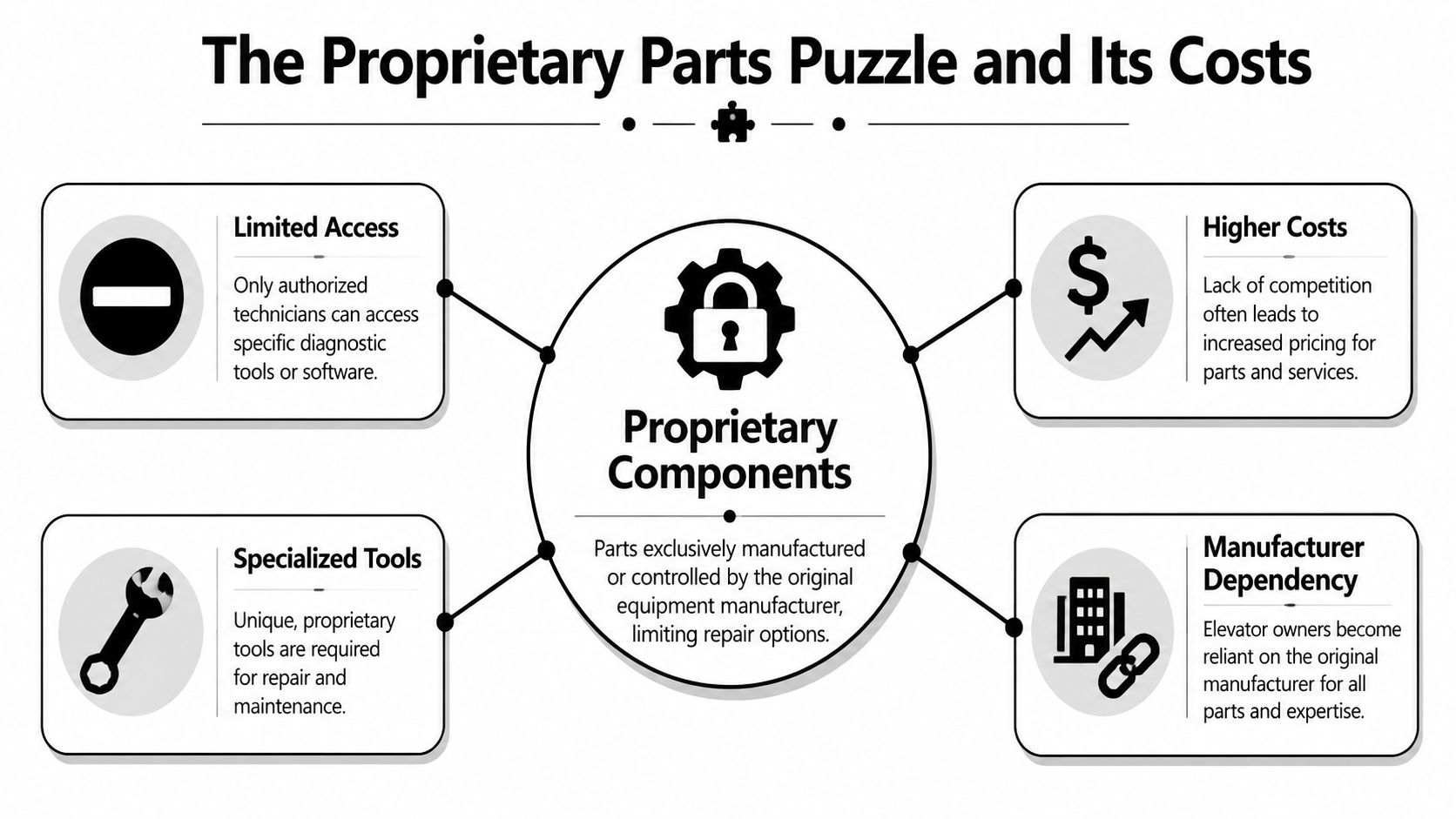
The Proprietary Parts Puzzle and Its Costs
If you've ever owned a European car after the warranty period, you already understand the basic problem. Dealer-only diagnostics, model-specific modules, and parts that aren't sitting on every shelf tend to shape the bill before a wrench is even turned.
A proprietary thyssenkrupp elevator can work the same way.
What proprietary means in the field
In elevator ownership, proprietary usually doesn't mean every single component is unique. It means the parts that control access to the system are restricted enough that your service choices narrow fast.
That can include:
- Controller logic and software: Resetting faults, changing parameters, or diagnosing intermittent shutdowns may require OEM-specific access.
- Boards and communication architecture: A failed board isn't just a failed board if the replacement has to match closed programming.
- Fixtures and door interfaces: Calls, indicators, and door equipment often look simple, but the communication layer can still tie you to the original platform.
- Specialized troubleshooting workflow: Even a good mechanic loses time when the system is built around brand-specific procedures.
How owners end up paying for it
The immediate cost is the repair invoice. The larger cost is the loss of advantage.
When one service path dominates the equipment, several things usually happen:
- Competitive bidding gets weaker. You can request another quote, but not every company can fully support the same repair.
- Lead times feel longer. If critical parts live inside a narrower supply path, downtime pressure rises.
- Maintenance gets reactive. Teams stop asking what should be replaced proactively and start approving whatever gets the car running again.
- Modernization gets delayed. Owners know they need a broader fix, but the old platform keeps forcing piecemeal spending.
Here's the embedded overview of the issue from a service perspective:
The hidden cost isn't only parts
Dependency is the penalty. If your building has one elevator down, one tenant complaint cycle underway, and one available service lane, you aren't negotiating from strength.
Practical rule: The more your elevator depends on brand-specific boards, software, and access methods, the less control you have over future repair timing and pricing.
That doesn't mean OEM service is always wrong. It means owners should know when they're paying for engineering quality and when they're paying for limited optionality.
Common Failure Modes and Maintenance Needs
Aging elevators don't fail in mysterious ways. They usually fail in predictable patterns. The problem is that many service programs still treat those patterns as isolated events instead of signs that a system needs a different maintenance strategy.
The calls owners see most often
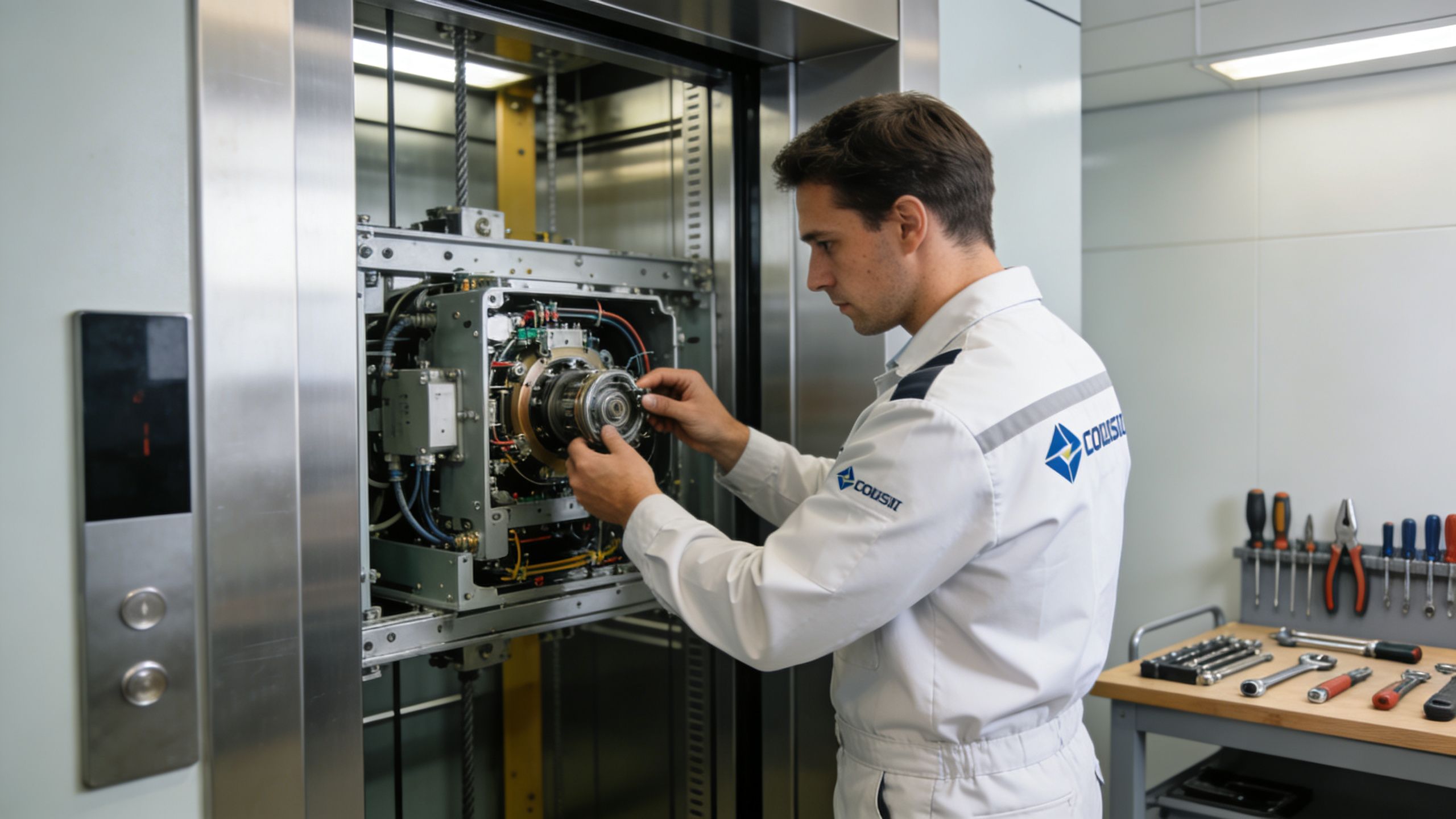
On many older TK systems, the service history tends to cluster around a few areas.
Door equipment is high on the list. Door locks, operators, rollers, linkages, and sensors take constant cycles. A car that runs well mechanically can still become a headache if the doors keep misbehaving. In real ownership terms, that means nuisance shutdowns, entrapments, and repeat callbacks.
Hydraulic components become a concern in low-rise equipment. Jacks, packings, power units, and related hardware need attention as systems age. Even when the unit still runs, deferred maintenance in this area often turns small issues into bigger ones.
Controls and boards eventually become the decision point. Once faults start centering on aging electronics, owners have to decide whether they are still repairing a system or just prolonging a platform that has become expensive to support.
What the available data suggests
One of the few concrete signals in the available material is this: independent contractors report high repair frequency on TK systems' hydraulic jacks and door locks, with some industry analogs suggesting up to 15% annual service calls, according to ENR coverage referenced in the research set. That doesn't prove every thyssenkrupp elevator is problematic. It does support what many contractors already expect. Hydraulic and door-related issues need active management, not passive contract renewals.
What effective maintenance looks like
A useful maintenance program does more than respond to breakdowns. It should include:
- Clean conditions: Machine room, pit, and car top housekeeping matter because dirt and debris hide wear and create avoidable faults.
- Pattern tracking: Repeated door calls or recurring hydraulic adjustments should trigger a plan, not another isolated invoice.
- Scheduled wear replacement: Rollers, contacts, seals, and other consumable items should be replaced before they create downtime.
- Clear modernization thresholds: When boards, door operators, and drive-related components begin failing together, the maintenance strategy should shift toward replacement planning.
Most “unreliable elevators” are really elevators with a reactive service history.
Owners don't need perfect uptime promises. They need a contractor who can tell the difference between a repairable wear issue and a system that's aging into structural service risk.
Your Path to a Non-Proprietary Modernization
There comes a point when continuing to repair a proprietary platform stops being disciplined asset management and starts becoming expensive hesitation. For many owners, that point arrives when control issues, door failures, and support limitations begin stacking up in the same budget cycle.
A non-proprietary modernization is usually the cleanest way out.
What that modernization actually means
This isn't about stripping out everything that still has useful life. It means replacing the components that keep you trapped in a closed service model.
In practice, that often includes the controller, selected electrical equipment, fixtures, and door-related hardware. On some projects, it also means addressing the machine, pump unit, or other core components if their condition justifies it. The goal is simple: when the work is done, the elevator should be serviceable by qualified independent contractors without depending on a single manufacturer's exclusive ecosystem.
That changes the ownership math for the rest of the equipment's life.
Why this path fits Southern Michigan buildings
The gap in current data matters. While TK Elevator promotes advanced systems like MULTI, there's still a significant lack of data on retrofit feasibility for the common 2-10 story buildings found across Michigan, which makes non-proprietary modernization of existing hydraulic and traction systems the more practical and cost-effective path for many owners, based on the referenced discussion of MULTI retrofit limitations.
That lines up with what many building owners already know from experience. Most properties in Detroit, Ann Arbor, Lansing, Flint, and surrounding markets don't need experimental horizontal travel concepts. They need reliable vertical transportation that can be serviced competitively for years.
For owners weighing options, it helps to review what a non-proprietary elevator modernization involves before approving another branded upgrade that keeps the same long-term constraints in place.
Modernization Approach Comparison
| Factor | OEM Proprietary Modernization | Independent Non-Proprietary Modernization |
|---|---|---|
| Service flexibility | Often remains tied to OEM tools, parts pathways, or programming access | Broadens future service options for qualified contractors |
| Parts sourcing | Can remain brand-dependent | Typically built around more universally supportable components |
| Long-term bidding power | Narrower | Stronger competitive leverage |
| Future repair planning | May continue the same ecosystem you're trying to escape | Gives owners more control over lifecycle decisions |
| Best fit | Owners who want to stay with the OEM platform | Owners who want flexibility and less vendor dependency |
When to modernize instead of patching
These signs usually mean it's time to stop thinking in single repairs:
- The same subsystem keeps failing: Especially doors or controls.
- Quotes increasingly reference obsolete or hard-to-source electronics: That's a warning, not a one-off inconvenience.
- You can't get meaningful competition on repairs: Limited choice today usually means higher cost tomorrow.
- Compliance upgrades are coming anyway: If code work is unavoidable, combine it with strategic modernization.
A non-proprietary modernization doesn't make an elevator maintenance-free. Nothing does. It does put the owner back in control of service access, part choice, and future budgeting.
Navigating Michigan Elevator Code and Compliance
Code work changes ownership decisions faster than most repair invoices do. A unit can limp along with aging components for a while, but once compliance issues surface, the owner has to act on the timeline the jurisdiction sets, not the timeline the budget prefers.
That's especially important in Southern Michigan, where many buildings have older elevators that need both reliability work and code updates.
Why compliance affects modernization choices
When you perform a significant repair or modernization, code requirements don't stay abstract. They become part of the scope. Inspectors will expect the system to meet the applicable rules tied to the work being done, and any existing violation history starts mattering more.
For owners, the practical takeaway is straightforward. If you already know a thyssenkrupp elevator has aging controls, recurring door issues, or outdated safety features, it makes more sense to plan the compliance path together with the equipment path. Doing one without the other often leads to duplicated labor and more disruption.
What local owners should verify
A solid compliance review should answer these questions:
- What existing violations are open: Don't approve major work without seeing the full list.
- What code-triggered upgrades will be required: Especially for door safety and monitoring functions.
- Who is handling permits and scheduling: Missed paperwork creates real delays.
- Whether testing and related systems are coordinated: Fire service, emergency communication, and generator-related functions need to be part of the conversation.
Owners in Michigan should also review the state-specific deadline and code context around Michigan elevator code requirements before January 1st, 2028, because compliance planning gets harder when it starts late.
Code compliance isn't a side issue. It's part of the ownership cost of every elevator that stays in service.
The local advantage matters
A contractor who works regularly with Southern Michigan jurisdictions usually understands how local inspection expectations play out in real projects. That matters because elevator code work is never just about installing parts. It's about documentation, sequencing, reinspection, and finishing the job in a way that leaves the owner with fewer unresolved risks.
A Building Owner's Decision Checklist
If you're deciding what to do with a thyssenkrupp elevator right now, don't frame it as a choice between doing nothing and buying something new. Frame it as an ownership strategy decision.
Ask these questions before you renew or approve
What are you really paying for each year
Separate routine maintenance from callback repairs, shutdown responses, and recurring door or control work. If the same problems return, your current plan may be preserving invoices more than preserving uptime.How dependent are you on one service path
If a reset, board replacement, or programming change always circles back to one source, you have a dependency problem whether the elevator is running today or not.Can the current platform still be supported sensibly
Some older systems deserve continued maintenance. Others are one major electronic failure away from becoming budget traps.Are you postponing a modernization that would simplify everything
If control access, parts delay, and code concerns are all rising together, postponement usually costs more than planning.
What a second opinion should include
A useful review doesn't just produce another quote. It should give you:
| Review item | Why it matters |
|---|---|
| Current equipment condition | Shows whether repair spending is still rational |
| Failure pattern by subsystem | Separates isolated issues from systemic ones |
| Code exposure | Prevents surprise scope later |
| Modernization options | Lets you compare branded continuity against non-proprietary flexibility |
The ownership strategy that usually ages best
The strongest long-term position is simple. Keep the existing elevator safe and reliable with disciplined maintenance while it still makes financial sense. Then modernize into a non-proprietary platform before repeated failures and compliance pressure force a rushed decision.
That approach gives you more control over service vendor choice, future parts access, and budgeting. It also reduces the chance that one aging proprietary component will dictate the next several years of spending.
If you own a TK system in Southern Michigan and want a practical path forward, Crane Elevator Company can provide a second opinion on maintenance, repairs, code issues, and non-proprietary modernization options for commercial, residential, and institutional properties across Lower Michigan.