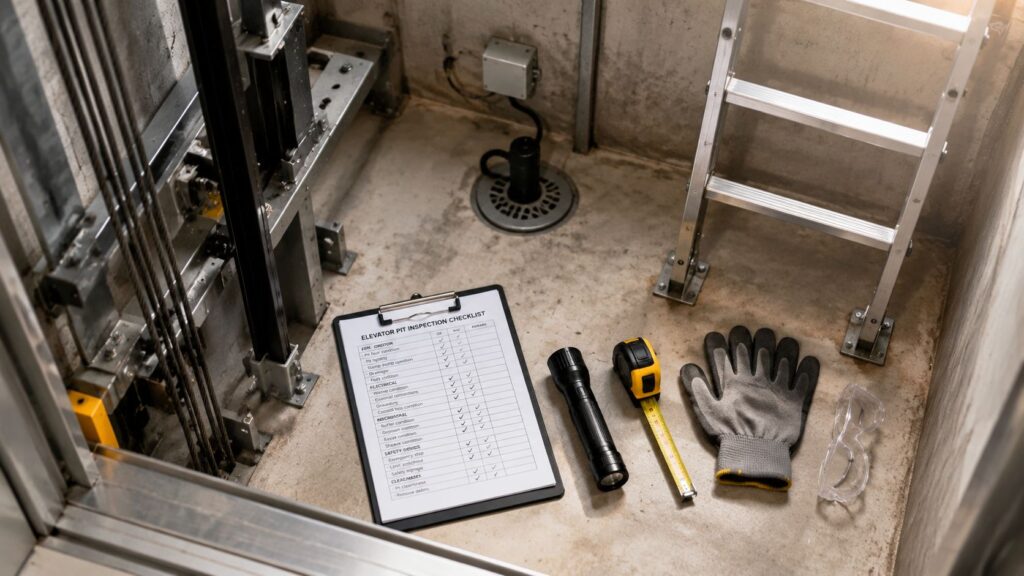
An elevator pit usually gets attention after something goes wrong. A mechanic finds standing water during a shutdown. A state inspector flags debris near a buffer. A manager notices an oil stain that wasn't there last month and suddenly a simple maintenance visit turns into a bigger repair discussion. That's how pit problems get expensive. They stay hidden until they affect safety, compliance, or uptime.
A detailed pit inspection checklist helps you catch those problems early. The best checklists don't stop at housekeeping. They force a real look at structure, drainage, electrical exposure, hydraulic leakage, rail supports, and safety devices that sit where few people spend enough time looking. For powered industrial equipment, OSHA's pre-use model treats inspection as a documented pass/fail routine across major safety items rather than a quick glance, and that same disciplined approach is worth applying to elevator pits too, especially when failure consequences are high (OSHA powered industrial truck inspection guidance).
For facility managers, that matters in practical terms. You need a repeatable way to separate minor cleanup from conditions that justify shutting the unit down and calling a licensed elevator contractor. You also need records. A written, photo-backed inspection history gives you a cleaner handoff to your elevator company, a better paper trail for compliance, and fewer surprises during annual testing or corrective work.
Use the checklist below as a structured inspection plan. It's written the way an experienced elevator technician would explain it on a site walk. Straight answer, clear priorities, and no confusion about what your staff can handle in-house versus when it's time to call Crane Elevator Company.
1. Pit Floor and Foundation Integrity Assessment
The pit floor tells you a lot about the health of the hoistway. If the concrete is spalling, cracked, heaving, or staying wet, that isn't just a cosmetic problem. It can affect buffer mounting, rail bracket stability, sump performance, and safe access for anyone working below the car.
In Southern Michigan, older buildings often show the same pattern. A basement pit looks fine in summer, then winter moisture and freeze-thaw movement open up small cracks around the perimeter or near the drain. In an office building from the 1980s or 1990s, I'd rather catch that when it's hairline than after water starts tracking through the slab and corroding metal in the pit.
What to inspect closely
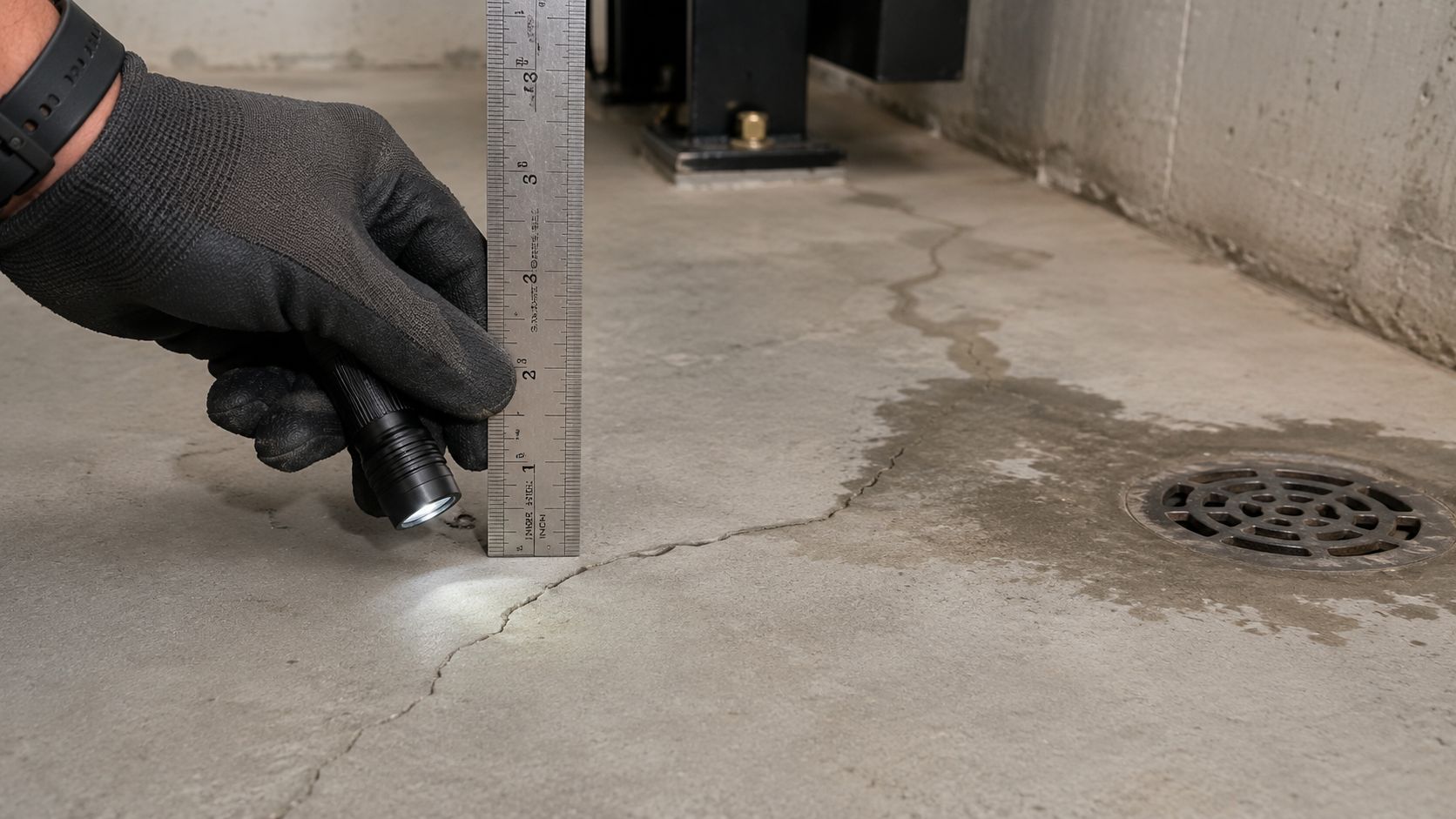
Look at the slab surface first, then the edges where wall and floor meet. You're checking for active cracking, uneven settling, loose concrete, rust staining, and signs that water is entering from below or through a wall seam. If the pit serves a hydraulic elevator, pay extra attention to any area around the cylinder, piping, or power unit line routing where leakage and water can combine into a messy diagnosis.
Use a flashlight, a ruler, photos, and consistent viewpoints. Don't rely on memory. The useful question isn't whether a crack exists. It's whether it's growing, holding water, or changing the support condition of anything mounted in the pit.
Practical rule: If a crack is changing, wet, or associated with settlement, stop treating it like routine housekeeping.
In-house versus contractor work
Your staff can handle basic cleaning, photo documentation, and routine observation. They can note whether a pit drain is backing up, whether concrete is flaking, and whether rust is getting worse. They should not decide on structural adequacy, patch over active movement, or work around questionable supports as if the issue is solved.
Call a professional when you see movement, recurring water entry, deteriorated concrete near mounted equipment, or anything that could affect ASME A17.1 clearances or support conditions. If a healthcare or industrial site has a hydraulic unit with heavy use, bring in both the elevator contractor and, when needed, a waterproofing or structural specialist. Cheap patching usually fails twice. Proper diagnosis costs less than repeated shutdowns.
2. Hydraulic System Fluid Analysis and Leak Detection
Hydraulic elevator pits have a way of normalizing bad conditions. A small oil sheen sits in one corner for months, everyone works around it, and then one day the unit starts leveling poorly or a code issue shows up during inspection. Leaks don't fix themselves, and contaminated fluid doesn't get kinder with age.
OSHA inspection procedures in adjacent industrial settings put leaks, hoses, and other safety-functional deficiencies in the high-risk category, not the minor-items category (inspection procedure guidance on safety-critical defects). That's the right mindset for hydraulic elevators. If oil is escaping into the pit, you're dealing with a reliability problem, a safety problem, and sometimes an environmental one.
What separates nuisance leakage from a real issue
Start with the obvious. Check for fresh oil at fittings, line connections, packing areas, valve blocks, and around the jack or cylinder area. Then look at the floor pattern. Fresh drips, absorbed residue, and spread marks often tell a better story than the component itself.
A facility team can also watch for operating symptoms:
- Slow leveling or drift: The car doesn't hold position cleanly.
- Noisy starts or rough stops: The pump or valve behavior has changed.
- Dark or dirty fluid appearance: Contamination or age may be part of the problem.
- Repeat cleanup in the same spot: The leak is active, not historical.
If you suspect pump or power-unit problems, don't wait until the unit is down. A planned review of the hydraulic elevator pump replacement process is a lot easier to manage than an emergency outage.
What your staff can do safely
Housekeeping, absorbent placement where appropriate, log entries, and photo documentation are reasonable in-house tasks. Anything involving opening the hydraulic system, adjusting valves, changing seals, or diagnosing pressure-related behavior belongs to a licensed elevator mechanic.
A clean pit doesn't prove the hydraulic system is healthy. It only proves someone mopped it.
For buildings with older hydraulic elevators, especially offices, schools, and medical facilities, trend tracking matters. If the same leak returns after cleanup, push for corrective action instead of accepting repeated “monitor for now” notes. Monitoring is a short-term instruction, not a maintenance strategy.
3. Cable and Rope Condition Evaluation
Ropes don't usually fail without warning, but they do wear in ways people miss. Dirt packs into the lay. Corrosion starts where lighting is poor. Tension imbalance shows up as ride issues before anyone decides to look closely at the rope set. That's why rope checks need more than a quick glance upward.
On traction units, the pit view helps confirm bottom-of-travel conditions, compensation components where present, and the general state of anything exposed to moisture or contamination below. In older freight elevators around Detroit warehouses and manufacturing sites, I've seen perfectly serviceable-looking equipment from lobby level turn out to have serious deterioration lower in the hoistway where nobody was paying attention.
What a useful rope inspection includes
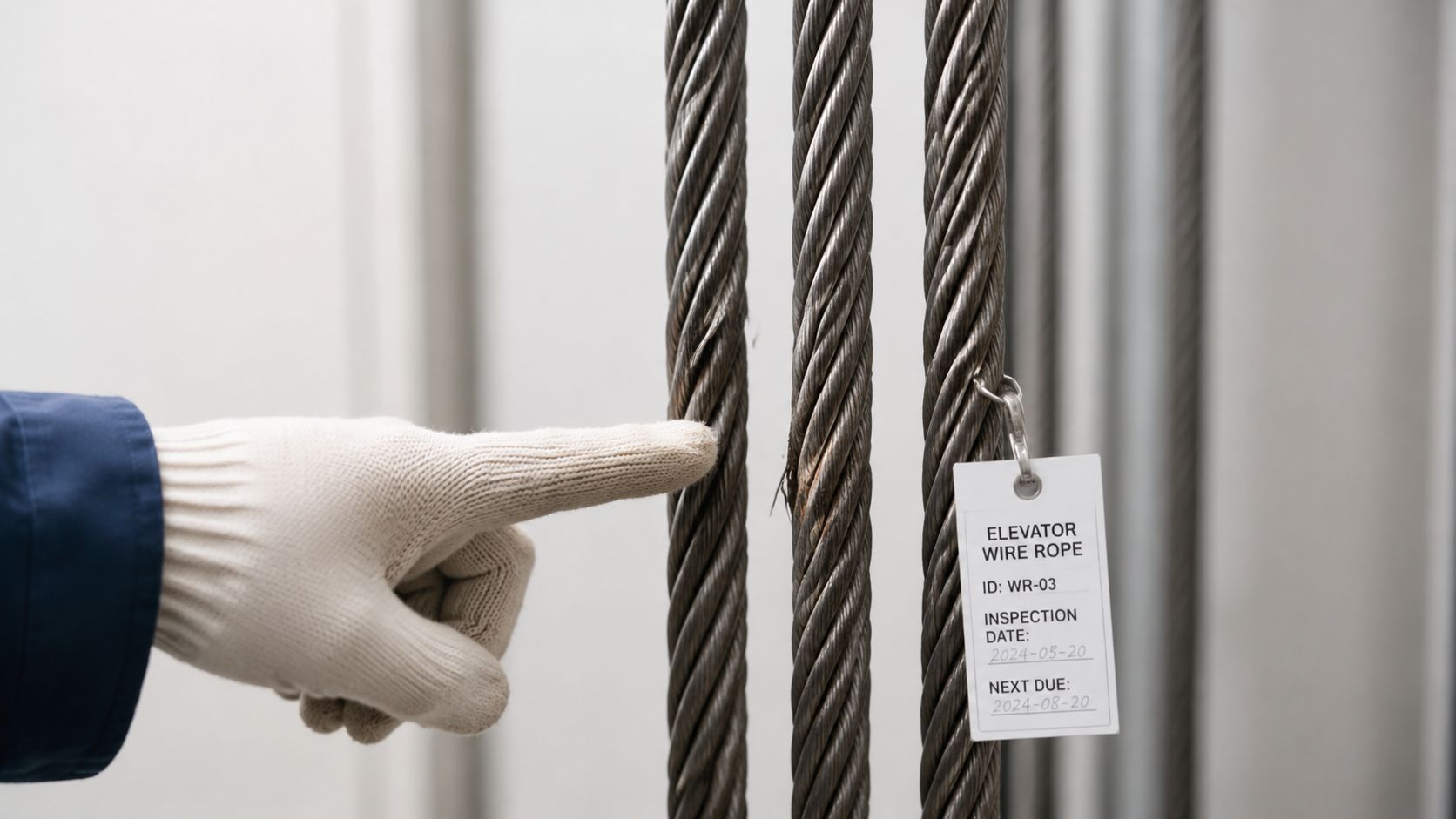
Check for broken wires, corrosion, lubrication condition, flattening, birdcaging, and inconsistent tension behavior. Also inspect fastening points and associated hardware for rust, movement, or looseness. If the car has been running with rail misalignment or poor sheave conditions, the ropes may tell that story before another component does.
Your team can photograph and report visible abnormalities. They should never make a serviceability call on ropes based on appearance alone. Elevator rope replacement decisions need qualified inspection, proper measurement, and comparison against the manufacturer's criteria and governing code requirements.
If your building is showing signs of rope wear, uneven ride, or age-related deterioration, schedule a focused review of elevator cable replacement service before the issue turns into an outage.
What to flag immediately
- Visible broken strands: Take the car out of service until a licensed mechanic evaluates it.
- Heavy rust or pitting: Moisture exposure may be degrading more than the rope.
- Uneven rope condition across the set: That often points to a larger system issue.
- Loose or distressed terminations: Treat this as urgent.
Field judgment: The longest checklist isn't the best one. The best one tells you which findings can't wait.
For universities, municipalities, and older commercial buildings, rope photos taken from the same angle during routine visits can be surprisingly useful. Not because photos replace inspection, but because they show change over time. Change is what drives decisions.
4. Pit Water Management and Environmental Monitoring
Water in the pit is one of the most common problems managers underestimate. They see a little standing water, assume the sump will handle it, and move on. Meanwhile, metal corrodes, electrical exposure risk goes up, hydraulic residue spreads, and the pit becomes harder to inspect safely.
This is one area where a broader industrial inspection mindset is useful. Open-pit inspection guidance treats daily review of changing conditions like visibility, drainage, surface condition, and access as a core safety control because environments change fast (daily open-pit inspection guidance). Elevator pits are smaller, but the principle is the same. Weather, groundwater, drain blockage, and traffic through adjacent spaces can change conditions quickly.
What to look for each visit
Start simple. Is there standing water, dampness, staining, rust bloom, or a musty odor? Is the sump clean, functional, and discharging properly? Are there signs of old hydraulic contamination mixing with incoming water?
In Ann Arbor and Lansing basements, seasonal groundwater rise can turn a mostly dry pit into a recurring problem area. In older Detroit buildings, I'd also look for failed wall coatings, deteriorated drain lines, and evidence that previous water entry was “managed” with cleanup instead of repaired at the source.
A practical pit inspection checklist should include these observations:
- Water source clues: Floor seepage, wall intrusion, condensate, or piping leaks.
- Sump performance: Float operation, discharge path, and visible debris.
- Contamination signs: Oily sheen, unusual discoloration, or chemical odor.
- Effect on equipment: Corrosion at buffers, rails, brackets, switches, or wiring.
If moisture is recurring, a proper review of elevator pit waterproofing options is usually more cost-effective than repeated cleanup visits.
When to escalate
Your team can test whether the area is wet, document water depth visually, and report sump alarms or failures. They should not enter a wet pit with electrical concerns, attempt code-sensitive repairs, or assume all water is “just groundwater.”
Water in the pit is never a harmless background condition. It always has a source, and the source matters.
If contamination is suspected, especially at an industrial or older hydraulic site, bring in the elevator contractor promptly and involve environmental support where needed. Cleaning without identifying the source only makes the next inspection harder.
5. Structural Support and Rail System Inspection
If the rail system is out of line, the elevator will usually tell on itself. You'll hear noise, feel rough travel, or see unusual wear elsewhere first. By the time someone looks at the supports, the car may already be riding harder than it should.
Guide rails, brackets, backing, shims, and fasteners all work together. One missing shim, one loose fastener, or one settling-related shift in the hoistway can throw the system off enough to create repeated service calls. Freight elevators are especially unforgiving here because load patterns expose weak alignment faster than passenger cars do.
What experienced inspectors check
A good inspection doesn't stop at “rails appear secure.” It looks for loose brackets, corrosion at supports, movement at attachment points, cracked backing, and signs that the guide shoes or rollers are wearing unevenly. In older commercial towers and schools, settlement can show up as progressive misalignment that starts as nuisance noise and ends as a more involved corrective job.
Use a straightedge, alignment tools, torque verification where appropriate, and repeatable photo documentation. If your contractor is doing the work right, they're correlating rail findings with ride quality, door behavior, and shoe or roller wear.
What belongs in-house and what doesn't
In-house staff should report sound changes, vibration, and visible loosening or corrosion. They can keep access areas clear and maintain a clean pit so the mechanic can see what matters. They shouldn't tighten structural hardware blindly or alter shim conditions.
For ASME A17.1 compliance, rail support and alignment issues aren't guesswork items. If a bracket is moving or a rail is out, a licensed elevator contractor needs to evaluate the condition and correct it using the right procedures and hardware. This is one of those repairs where partial fixes often create bigger callbacks later.
Minor misalignment rarely stays minor. The system keeps running, and the wear spreads to parts that were fine before.
In industrial sites, a little downtime saves a lot of money. Schedule correction during a planned service window rather than waiting until the car starts tripping out or damaging related components.
6. Safety Device and Buffer Spring Functionality Testing
This is the line between routine maintenance and life safety. Buffers, safeties, governors, braking-related devices, final limits, and associated protective equipment are there for abnormal conditions. If one of them isn't correct, you don't have a paperwork problem. You have a unit that may not protect people or mechanics the way it's supposed to.
For facility managers, the mistake is assuming a clean pit and a running elevator mean the safety side is covered. It isn't. Safety devices need proper testing, proper records, and a contractor who understands the code path for the specific unit. That includes ASME A17.1 requirements tied to the equipment type, speed, and configuration.
What gets overlooked most often
Buffer areas collect debris. Springs and oil buffers can sit in conditions that invite corrosion. Switches can be present but compromised by moisture, impact, or poor previous repairs. In older buildings, I also watch for outdated components that are technically still there but no longer performing the way a modern maintenance program should accept.
This is not an area for improvised in-house testing. Building staff can verify that the pit is accessible, clean enough for inspection, and free of obvious physical damage. They can't perform code-level safety tests or sign off on device condition.
- Call immediately for any impact damage: Bent hardware, disturbed mounts, or broken guards need professional review.
- Treat missing covers or damaged switch components as urgent: Exposure and accidental contact risks go up fast in the pit.
- Don't defer annual testing support: Delays can trigger service interruptions and violation issues.
Documentation matters as much as the test
When a licensed mechanic tests pit safeties and related devices, the value isn't only the pass or fail result. It's the record of what was tested, under what conditions, and what corrective action followed. That documented chain is what protects the building when an inspector asks questions later.
If a contractor shrugs off a questionable safety item because “it's still running,” push back. Running isn't the same as compliant, and compliant isn't the same as well maintained. Good contractors know the difference.
7. Electrical System and Emergency Power Verification
A wet or dirty pit turns small electrical problems into dangerous ones. Corrosion creeps into connections. Insulation gets compromised. A float switch, light, receptacle, disconnect, or wiring method that was acceptable years ago may no longer be in good condition today.
Electrical review in the pit should focus on exposure, damage, and emergency readiness. If the building has standby power, fire service requirements, emergency communications, or healthcare-related reliability demands, the inspection needs to connect pit conditions to the larger system response. Too many managers treat pit electrical as separate from outage planning. It isn't.
What to inspect with a hard eye
Look for damaged conduit, loose boxes, poor cover condition, corrosion at terminations, water near electrical components, and non-elevator materials stored where they don't belong. Check pit lighting and receptacle condition. Make sure access for service is clean and safe.
Digital inspection programs are gaining traction because teams want faster reporting, better documentation, and a closed-loop way to track defects. The global digital inspection market was estimated at USD 17.70 billion in 2025 and is projected to grow at 8.6% CAGR from 2026 to 2033, according to Digital Inspection Market analysis. For a facility manager, the takeaway is simple. Photos, timestamps, and corrective-action tracking beat handwritten notes that disappear into a binder.
Who should handle what
Your maintenance staff can verify lights work, report corrosion, and note whether backup systems appear healthy from a routine facilities standpoint. They should not open elevator electrical equipment, troubleshoot controller faults, or perform electrical repairs inside the elevator system unless they are specifically licensed and authorized to do so.
The cheapest electrical fix in a pit is often better housekeeping and faster reporting. The expensive fix is waiting until moisture reaches a failure point.
In hospitals, municipal buildings, and high-traffic offices, connect the elevator contractor with your electrical vendor when standby power, transfer sequence, or emergency communications are involved. Split responsibility is where details get missed.
8. Door System and Safety Edge Inspection
Most managers think of door problems as lobby problems, not pit problems. That's a mistake. What happens at the door often traces back to conditions that show up elsewhere in the system, including rail alignment, car movement, moisture, debris, and neglected maintenance. Door faults are also one of the quickest ways to turn routine tenant frustration into a safety call.
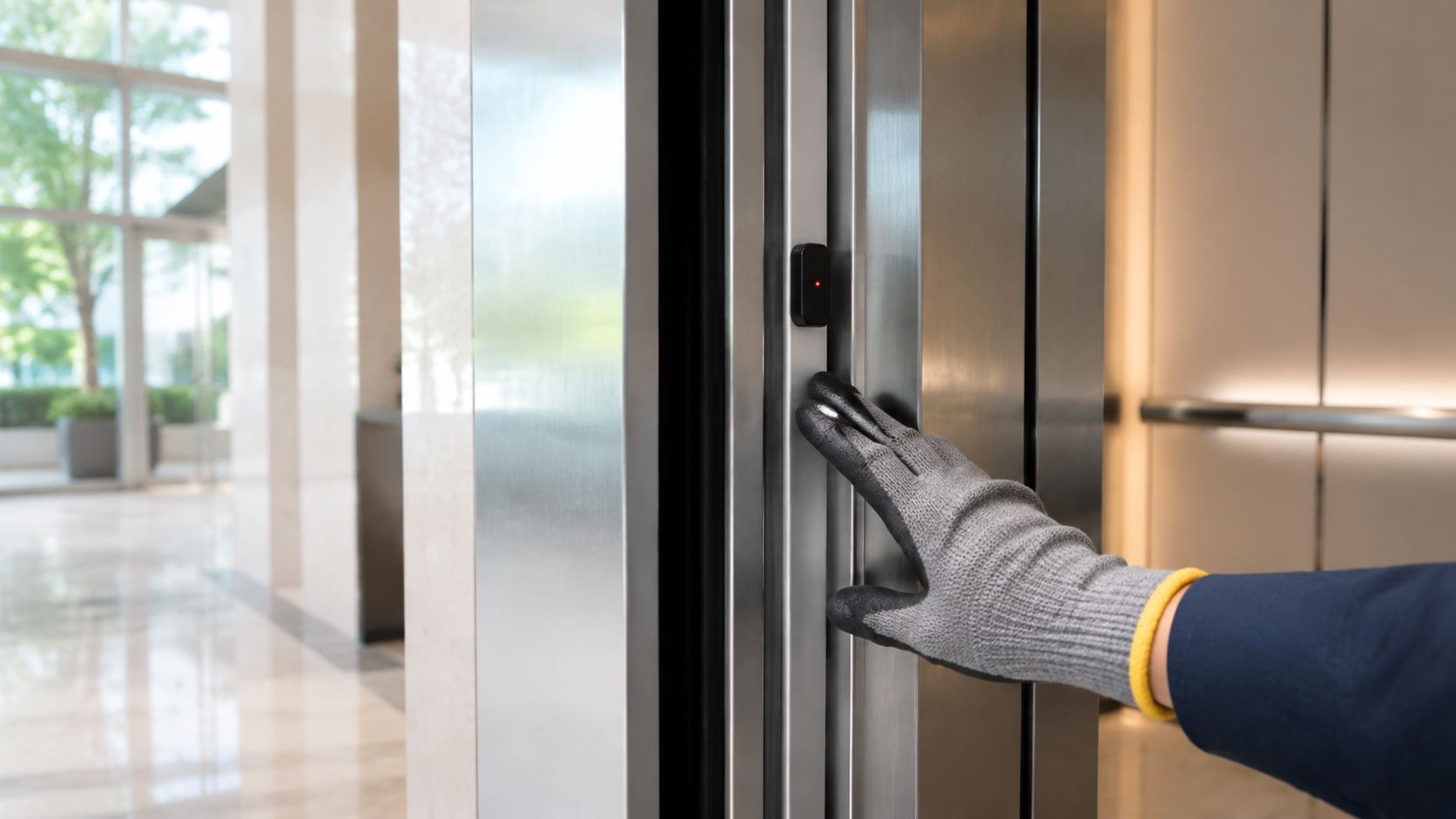
A strong pit inspection checklist should still tie into door performance. If the car is riding poorly, stopping unevenly, or operating in a damp, dirty hoistway, the doors may show symptoms before anyone notices the deeper cause. Sticking doors, nuisance reopening, slow response, or unreliable safety-edge operation are never “just a door issue” until someone proves it.
What facility staff should test routinely
At the landing level, your team can observe door closing behavior, reopening response, lock-related hesitation, and photo-eye cleanliness. They can note if one floor is consistently worse than others. They can also document whether the car gate, if present, is closing fully before movement.
For larger portfolios, build your routine around pass/fail conditions instead of a long equal-weight checklist. OSHA-style inspection thinking and modern defect-tracking workflows both push toward identifying critical defects quickly and documenting corrective action instead of collecting low-value checkmarks. That approach lines up with a smarter pit inspection checklist because it helps separate hazardous door behavior from minor adjustment items.
- Unsafe reopening or failure to detect obstruction: Call your elevator contractor the same day.
- One floor repeatedly sticking: Document the floor and time pattern.
- Grinding, scraping, or delay before travel: Report it as a system symptom, not just a door symptom.
- Dirty sensors only: Clean if your procedure allows it, then retest and document.
Here's a useful visual refresher on inspection mindset and safe observation practices:
Keep the checklist usable
Don't bury urgent door issues in a long maintenance form. If a safety edge, detector, interlock-related function, or closing behavior is questionable, that should stand out immediately on the inspection record. The buildings that stay ahead of elevator problems aren't the ones with the most boxes checked. They're the ones that identify the few dangerous findings and close them fast.
8-Point Pit Inspection Comparison
| Inspection Item | Implementation Complexity | Resource Requirements | Expected Outcomes | Ideal Use Cases | Key Advantages |
|---|---|---|---|---|---|
| Pit Floor and Foundation Integrity Assessment | Moderate–High (may need dewatering, structural testing) | Structural engineer, concrete testing tools, moisture detection, access equipment | Identifies cracking, settlement, drainage issues and load-bearing capacity; repair recommendations | Older buildings, hydraulic pits, freeze–thaw climates, heavy freight elevators | Prevents structural failure, protects equipment, ensures code compliance |
| Hydraulic System Fluid Analysis and Leak Detection | Moderate (sampling, pressure checks, lab analysis) | Fluid sampling kits, pressure gauges, UV dye, lab services, trained techs | Detects fluid degradation, contamination, leaks, pump and hose issues; maintenance plan | Hydraulic elevators, aging systems, facilities with environmental risk | Prevents pump/system failure, reduces contamination, extends component life |
| Cable and Rope Condition Evaluation | High (requires shutdown and detailed measurements) | Trained inspectors, measuring tools, tension devices, downtime for inspection/replacement | Reveals broken strands, corrosion, diameter loss, tension imbalance; replacement timing | High-use elevators, old or freight elevators, multi-rope systems | Prevents catastrophic cable failure, ensures load safety, supports compliance |
| Pit Water Management and Environmental Monitoring | Low–Moderate (routine tests and sump checks) | Water testing kits, sump pump testing tools, drainage inspection, environmental consultant if needed | Identifies water intrusion, contamination, sump failures and remediation needs | Basement pits, areas with high groundwater, sites with historical spills | Prevents corrosion/contamination, protects controls and hydraulics, aids regulatory compliance |
| Structural Support and Rail System Inspection | High (precision alignment and possible structural work) | Laser alignment tools, torque wrenches, structural evaluation, skilled technicians | Determines rail straightness, bracket integrity, bolt torque and alignment corrections | Misaligned or noisy elevators, buildings with settlement, freight systems | Prevents binding and excessive wear, improves ride quality, maintains safety device function |
| Safety Device and Buffer Spring Functionality Testing | High (shutdown, dynamic/load testing, certified procedures) | Certified technicians, load/test equipment, safety device fixtures | Verifies governor, brakes, safety device engagement and buffer performance; pass/fail documentation | Annual compliance tests, freight/passenger safety-critical systems, historic elevators | Confirms life‑safety performance, reduces catastrophic risk, required by code |
| Electrical System and Emergency Power Verification | Moderate–High (power-downs and specialized tests) | Electricians, insulation/thermal testers, battery/generator test equipment | Assesses motor/controller health, grounding, emergency power and alarm readiness | Healthcare, high-rise, facilities needing reliable emergency evacuation | Ensures emergency operation, prevents electrical hazards, supports code compliance |
| Door System and Safety Edge Inspection | Moderate (sensor testing and mechanical adjustment) | Door technicians, alignment tools, photo-eye and safety edge testers, replacement parts | Confirms lock function, safety edge responsiveness, photo-eye alignment and smooth operation | High-traffic passenger elevators, healthcare, older door systems | Prevents entrapment/crushing injuries, improves reliability, reduces nuisance stops |
From Checklist to Action Partnering for Elevator Safety
A pit inspection checklist is only valuable if it leads to action. That sounds obvious, but a lot of buildings still treat inspections like paperwork. Someone notes water in the pit, repeated oil residue, a questionable buffer area, or a recurring door issue, then the form gets filed and the condition stays in service. That's where avoidable shutdowns start.
The better approach is to split findings into three buckets. First, housekeeping and observation items your staff can handle, such as cleaning, documenting, checking lights, and reporting pattern changes. Second, maintenance issues that should be scheduled promptly, such as recurring moisture, corrosion, ride quality changes, or persistent door irregularities. Third, immediate safety concerns that require a licensed elevator contractor before the unit keeps running, including hydraulic leaks, rope damage, electrical exposure, safety-device concerns, and anything affecting code compliance or safe access.
That triage mindset also fits where modern inspection practice is going. In high-risk asset work, visual documentation, repeatable records, and safer assisted inspection methods are becoming standard benchmarks. The global infrastructure inspection robots market is projected to grow from US$3.6 billion in 2026 to US$9.0 billion by 2033 at 13.9% CAGR, and visual inspection is expected to account for over 40% of 2026 revenue, according to infrastructure inspection robots market projections. For elevator pits, that doesn't mean you need a robot. It means your inspection process should emphasize clear photos, consistent evidence, and records that help a professional make decisions fast.
If you manage property in Detroit, Ann Arbor, Lansing, Flint, Kalamazoo, or anywhere across Lower Michigan, keep your checklist practical. Add photos. Note exact locations. Mark pass, fail, and out-of-service conditions clearly. Build a downloadable template your staff can use the same way every time, then review it with your elevator contractor so everyone is looking at the same priorities.
For anything involving safety devices, hydraulic systems, cables, structural supports, or elevator electrical work, bring in a licensed professional immediately. That's where a company like Crane Elevator Company earns its value. They don't just correct violations. They help you separate chronic nuisance issues from true shutdown risks, build preventative maintenance around the actual condition of the equipment, and avoid locking your property into proprietary dead ends. Their non-proprietary approach, broad field capability, and No Show, No Pay policy give facility managers a practical partner instead of another vendor who only appears when something breaks.
If you've got a pit condition you're unsure about, don't wait for the annual test or the next failure call. Get a second opinion while the problem is still manageable.
If your elevator pit has standing water, oil residue, corrosion, unusual noise, or a condition you can't confidently classify, contact Crane Elevator Company for a free second opinion or a competitive quote. They serve Lower Michigan with hands-on field experience, non-proprietary solutions, code-required inspections, repairs, modernizations, and responsive 24/7/365 support that helps building owners reduce downtime and control lifetime costs.