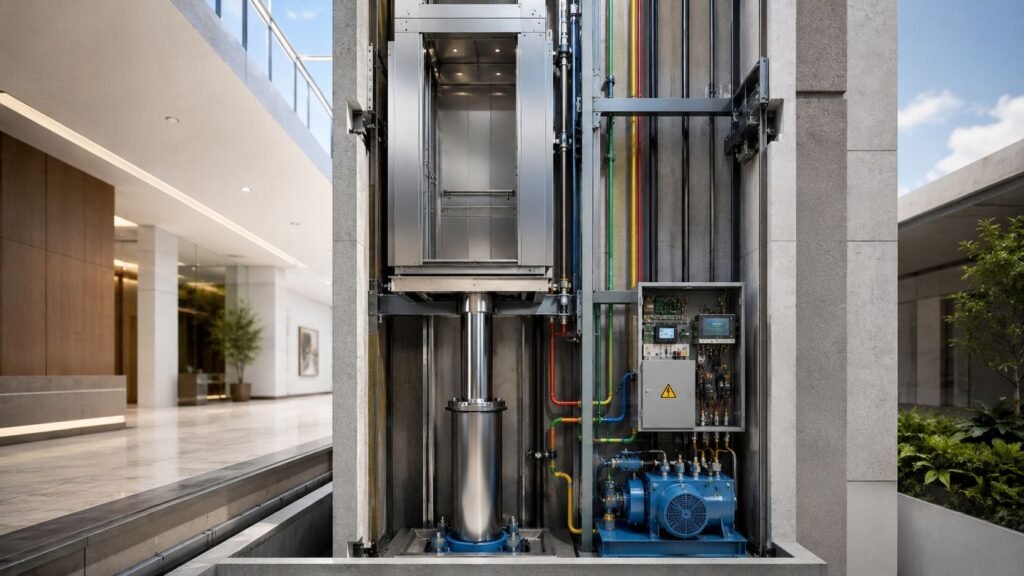
You're staring at an elevator that's started to cost real money. The service calls keep coming, the repair quote got ugly, and somebody finally mentioned code issues that don't sound optional. If it's a hydraulic unit in a low- or mid-rise building, that usually means one thing, modernize it before it forces your hand.
Why Property Owners Are Reconsidering Their Hydraulic Elevators
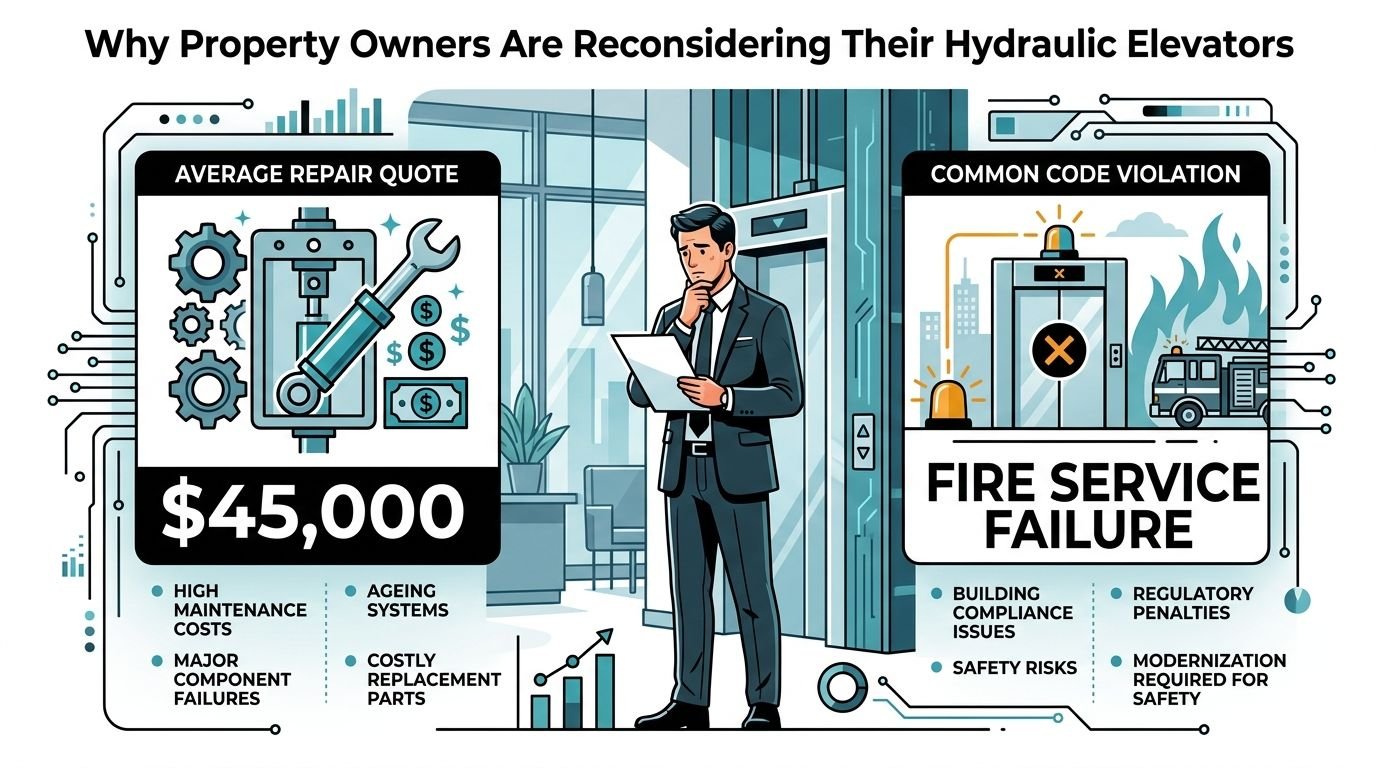
A lot of owners wait until a hydraulic elevator is failing in public before they take the decision seriously. That's backwards. The smarter move is to look at the age of the equipment, the repair history, and whether the building can keep absorbing surprises without hurting tenants, residents, or operations.
Hydraulic elevators are still common in lower- and mid-rise buildings because they fit the job. The issue is age. One major industry source says there are more than 1 million elevators in the United States, and more than 30% of the world's 21 million elevators are over 20 years old (TK Elevator). That age profile lines up with the point where hydraulic systems are commonly upgraded around the 20 to 25 year mark.
For owners, that doesn't mean “replace everything tomorrow.” It means the equipment has probably reached the stage where a hydraulic elevator Modernization conversation makes financial sense. In many buildings, modernization is the better play because it improves compliance, ride quality, and serviceability without tearing out infrastructure that still has useful life. That's especially true when the building stock is older and the elevator already fits the shaft, pit, and use case.
Practical rule: If the elevator is old enough that you're budgeting repairs instead of scheduling them, you're already in modernization territory.
The market also backs up the retrofit demand. A 2026 forecast puts the global hydraulic elevators market at US$21.8 billion in 2026 and projects US$31.7 billion by 2033, a 5.5% CAGR, with North America at 39.7% of the market (TK Elevator). That doesn't mean every building should rush. It does mean a lot of owners are having the same conversation you are, and they're choosing upgrade work over full replacement because the economics are hard to ignore.
How a Hydraulic Elevator Works
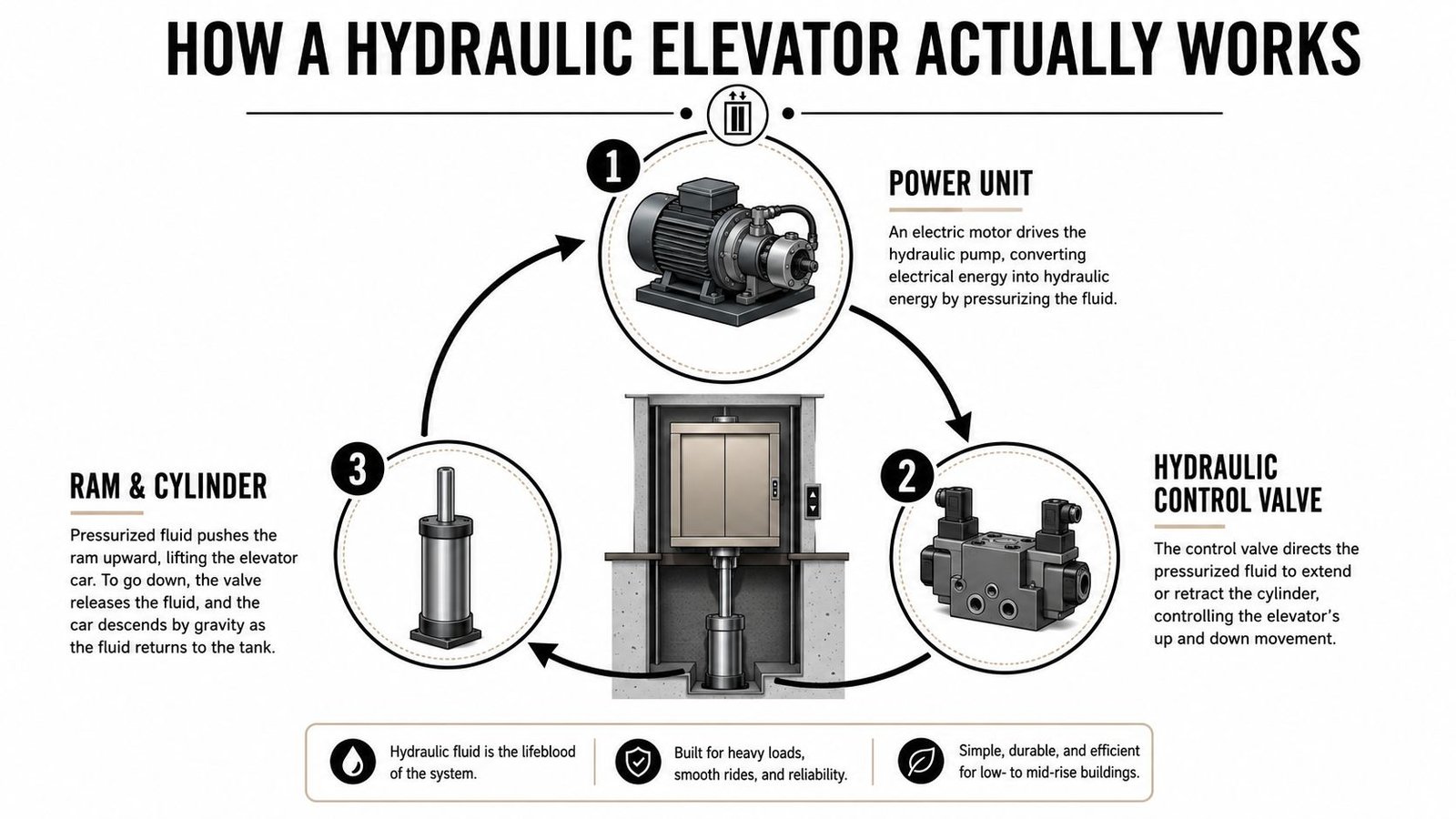
A hydraulic elevator runs on a straightforward setup, and that simplicity is why a targeted modernization makes sense. The system functions like a heavy-duty lifting setup with core parts that cooperate every time the cab moves.
The three parts that matter most
The first piece is the ram or jack and cylinder, usually buried in the ground. That component carries the load and moves the car. If the cylinder, jack packing, or buried piping is compromised, the scope of the job changes fast.
The second piece is the power unit. It includes the pump motor, oil tank, and the hardware that pushes hydraulic fluid when the car rises. If an owner keeps hearing pump noise, overheating, or slow movement, this is usually where the trouble starts.
The third piece is the hydraulic control valve and controller logic. That is the brain and traffic cop. It tells the system how much fluid to move, when to stop, and how to behave under fault conditions. A modern controller can stop the unit and send it to the lowest landing when it detects failure conditions, which is the kind of safety behavior you want in older equipment (code-based modernization guidance).
The rest of the elevator, the cab, doors, fixtures, and wiring, shapes the passenger experience. Riders notice that first, but serviceability is won or lost at the core components. If the hydraulic parts are obsolete, proprietary, or buried in a way that makes future work difficult, a nice cab will not solve the maintenance problem.
For a straightforward overview of one common hydraulic platform, see this hydraulic elevator reference.
A contractor should be able to tell you, in plain English, which parts are staying, which are being replaced, and which parts will still be serviceable by other licensed companies after the job is done.
The ownership issue is proprietary versus non-proprietary. Proprietary controls can lock you into one vendor for software, diagnostics, and future service. Non-proprietary systems keep the next repair bid competitive. If you are budgeting for the long haul, that distinction matters just as much as the hardware itself.
Typical Price Ranges for Hydraulic Elevator Modernization
Owners always ask for one number. That is the wrong place to start. A hydraulic elevator modernization quote is a bundle of decisions, and the final price moves with the parts you keep, the parts you replace, and the hidden work that shows up once the pit, machine room, and buried components are opened.
The benchmark is wide for a reason. One contractor-industry estimate puts a typical hydraulic elevator modernization at $100,000 to $150,000, with energy costs reduced by 40% to 50% annually and maintenance expenses reduced by 25% to 30% (Elevator World). The same source says that if a building spends $12,000 per year on elevator energy, the annual savings could land between $4,800 and $6,000 after modernization. Those numbers are useful, but only when the scope includes the hydraulic system, not just the visible fixtures.
Cost table you can use to sanity-check bids
| Scope Item | Typical Range (USD) | Main Cost Drivers |
|---|---|---|
| Controller and valve package | Often one of the largest line items in the control portion of the job, commonly a five-figure upgrade | Code requirements, open vs. proprietary platform, wiring changes |
| Power unit replacement | Can stay moderate if the tank and pump are reusable, or rise sharply if the whole unit is tired | Capacity, age, oil condition, submersible vs. dry configuration |
| Door system upgrades | Usually a mid-range add-on unless operators and panels need major replacement | Operator type, door panel condition, safety edges, reuse potential |
| Jack and cylinder work | Can become the biggest swing item on the whole project | Leak history, plumbness, soil conditions, buried access |
| Fixtures and cab interface | Often lower than the hydraulic work, but still material | COP style, PI fixtures, finishes, accessibility needs |
| Accessibility and code items | Costs vary with how far the existing car is from current requirements | Door protection, signals, communication, local enforcement |
| Electrical and fire service interfaces | Frequently overlooked until the final bid review | Panel work, machine-room changes, alarm and recall coordination |
| Pit work and cleanup | Can move from minor to major fast if water or corrosion is present | Water intrusion, corrosion, contamination, debris removal |
Use that table to compare proposals, not to chase the cheapest line. A low bid that skips electrical corrections, pit work, or fire service coordination is not a bargain. It is a deferred problem with a neat cover sheet.
The hydraulic side is where budgets get distorted. The visible items, buttons, fixtures, and cab finishes, are easy to price. The buried jack, cylinder, and piping decisions are where owners get surprised, and those choices decide whether the building gets a modernization that any qualified contractor can service later or a proprietary setup that narrows your options.
A second market marker shows why owners keep funding these jobs. Analysts expect the U.S. elevator modernization and maintenance market to reach US$2.20 billion by 2030 at a 4.0% CAGR (Elevator World). That kind of spending pattern tells you one thing clearly, owners are paying for modernization because waiting for failure costs more and creates more disruption.
Straight talk: If a quote only covers controls and buttons, it is not a full hydraulic modernization. It is a partial upgrade, and the hydraulic core is still the risk.
New Install vs Modernization Compared
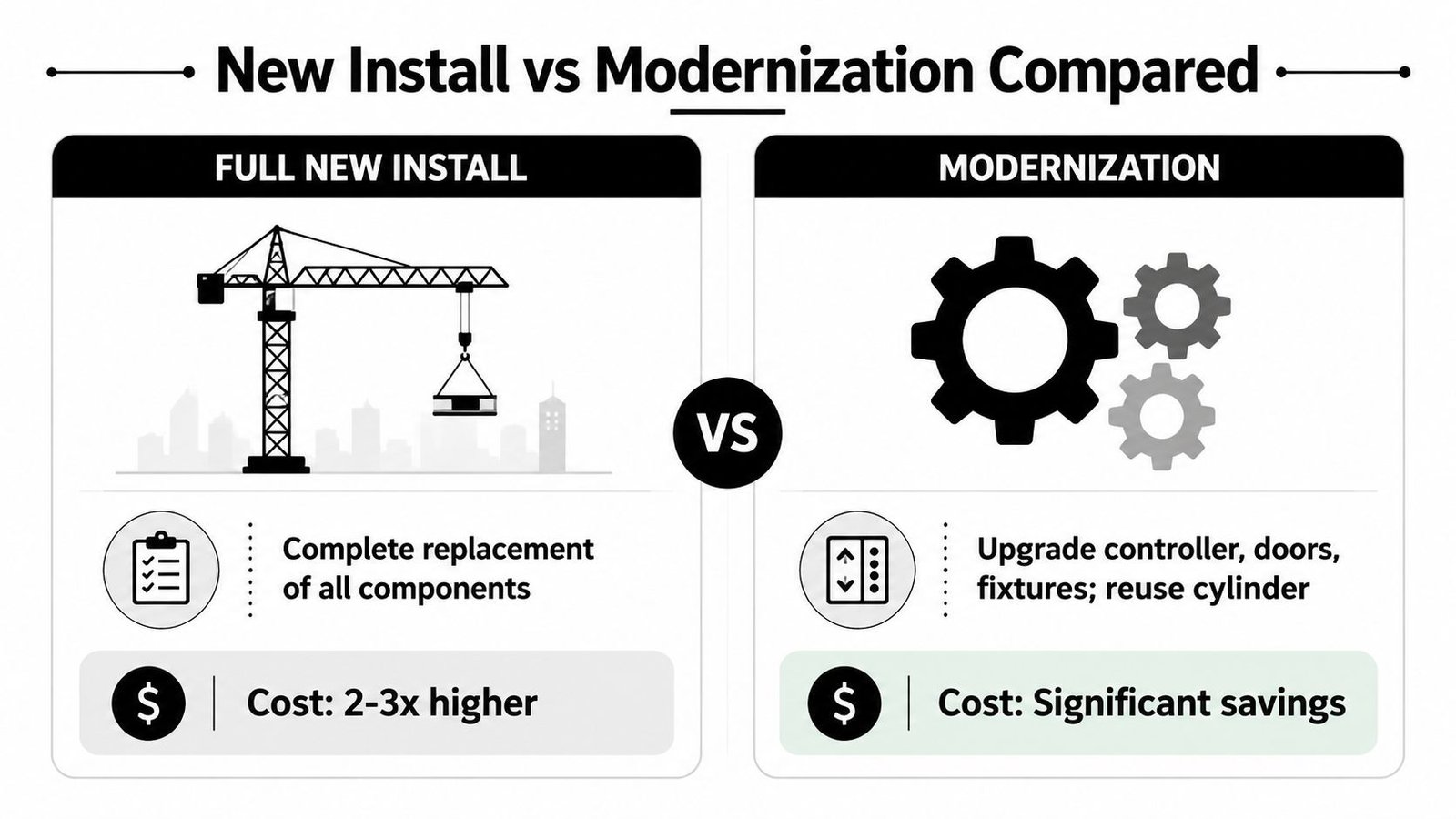
A full replacement sounds neat on paper. Tear it out, start fresh, reset the building’s elevator system. On site, that choice usually costs more, takes longer, and causes more disruption than owners expect, especially when the shaft, pit, and hydraulic infrastructure still have usable life left.
The cost gap is the part owners need to respect. Modernization keeps part of the existing system in service, while a new install replaces much more of it. In practical terms, new install work is often two to three times the cost of a modernization, and it brings a heavier coordination burden with it. That is why most owners stay with modernization unless the building has a real structural or hydraulic problem that forces a full reset.
When modernization wins
Modernization wins when the building still needs the same basic elevator footprint, the shaft and pit can keep doing their job, and the owner wants less tenant disruption. It also makes sense when the goal is better reliability, safer operation, and easier future service without turning the project into a demolition job.
That is the right call for buildings that are still working, but aging in the usual places. If the core structure is sound and the existing arrangement is still compatible with how the property is used, modernization gives you a cleaner path and keeps the project focused on service life, not reinvention.
When replacement wins
Replacement makes sense when the infrastructure is done. If the hydraulic system is failing, the site conditions are ugly, or the building is changing use in a way that makes the current setup obsolete, modernization becomes a short-term patch with a long-term bill attached. At that point, starting fresh is the cleaner answer.
Owners should be honest about what they are buying. A replacement resets the system, but it also means more downtime, more mess, and more coordination with the building. Modernization is usually the smarter choice when the structure and hydraulic base still have life left in them and the work can be planned around normal building operations.
The technical article from Bucher Hydraulics technical article makes the point clearly. Older hydraulic elevators often end up with a mix of legacy and upgraded parts, so the right scope has to be built around what the existing system can support. That is why a one-size-fits-all quote usually misses the mark.
If the elevator still fits the building and the hydraulic base is serviceable, I would modernize it before I started talking about full replacement. A well-planned modernization keeps the project serviceable for the next contractor, instead of boxing the owner into a proprietary setup that gets expensive later.
The Hidden Decision Nobody Talks About, Jack, Cylinder, and Piping
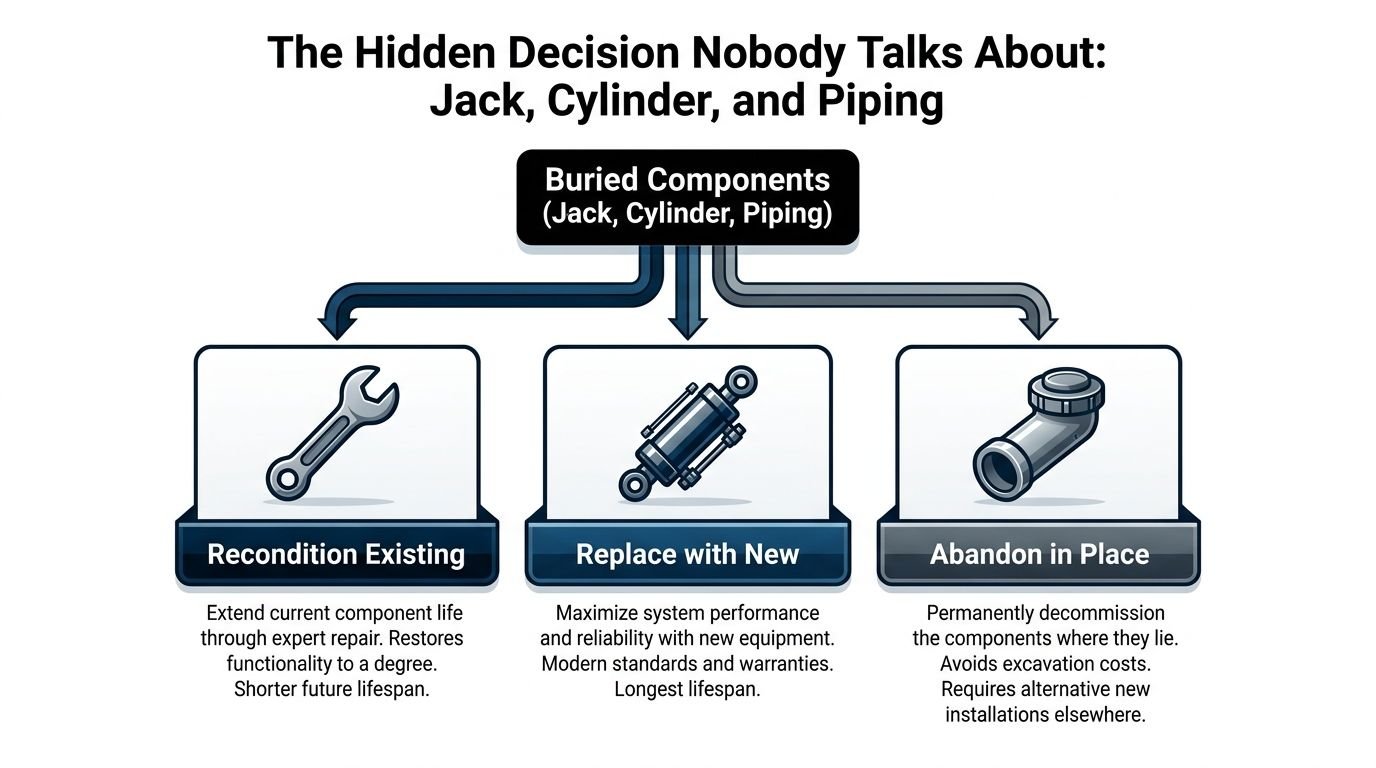
Many proposals go soft when they price the controller, maybe the doors, maybe the fixtures, and then act like the buried hydraulic system will sort itself out. It won’t. The jack, cylinder, and piping are the decision that decides whether your modernization is a long-term fix or just a nicer-looking headache.
Three real paths contractors use
Recondition existing components when the cylinder is sound, the jack packing is manageable, and the piping tests out clean. That’s the leanest option, but it only works if the components are worth keeping.
Replace with new components when the leak history, corrosion, plumbness, or site conditions say the old setup is no longer worth defending. If the buried hardware is already the weak point, upgrading everything above it just delays the next shutdown.
Abandon in place when excavation is the wrong fight or when the scope is being phased. In those cases, a contractor may seal off old buried elements and reroute the modernization around them, but only if the design and code path make sense.
The technical article on hydraulic modernization points out that the scope often comes down to whether the pump unit, valves, cylinder, and piping are retained or replaced, and that mixed legacy and upgraded parts are common in older systems (Bucher Hydraulics technical article). That’s the part most owners don’t hear until the bid is already in hand.
Phasing the work makes sense when the building can’t afford a long outage. Controls first, buried hardware later, is often the cleaner sequence. It lets the owner stabilize the elevator now, then address the jack or cylinder on a separate schedule instead of dragging the whole building through one giant shutdown. For a deeper dive on the buried hardware side, review this hydraulic jack replacement resource.
Ask one direct question before you sign anything, “Is the proposal keeping the cylinder, reusing the buried piping, or pricing a true replacement of the hydraulic path?”
How Preventative Maintenance Lowers Lifetime Cost
The cheapest modernization is the one you do not have to repeat because the elevator was kept in service before the problems turned ugly. That is straight contractor truth. Owners keep small faults from becoming large capital projects when they stay ahead of leaks, wear, and contamination.
What disciplined maintenance looks like
A serious maintenance program starts with cleanup. Pit, machine room, and car-top clean-downs matter because dirt, oil, and debris hide the same problems over and over. If a contractor never cleans the spaces where failures start, they are not maintaining the equipment, they are just resetting nuisance calls.
Crane Elevator Company’s maintenance model includes full clean-downs of pits, machine rooms, and car tops, COP and PI bulb replacements, No Show, No Pay, and a push toward non-proprietary parts so the owner is not trapped with one vendor. That is the right shape for a maintenance plan because it keeps future service competitive and keeps replacement parts serviceable by more than one shop.
Their elevator preventative maintenance program puts that approach in one place. Any contractor a property owner hires should be able to explain a similar plan in plain language, without hiding behind proprietary controls or vague service promises.
The financial logic is simple. Reactive maintenance is where owners get hit hard, because emergency repair bills can dwarf routine service. Preventative maintenance slows that cycle down by catching leaks, contamination, failing bulbs, contact wear, and other small issues before they turn into shutdowns. It also protects the hydraulic side of the job, the jack, cylinder, and buried piping decisions that too many bids gloss over until the failure is already expensive.
What to ask before you sign a maintenance contract
- Will you clean the pit and machine room regularly? If not, expect repeat faults.
- Do you replace common wear items proactively? Bulbs, seals, and similar parts should not wait for failure.
- Are your modernization components non-proprietary? If the answer is no, your maintenance competition shrinks.
- Who owns the service access after install? You want freedom to bid the work later.
One plain rule
Preventative maintenance protects the modernization you just paid for. If the maintenance plan is weak, the new equipment ages badly. If the maintenance plan is disciplined, the elevator stays serviceable, and the next capital request comes much later.
Southern Michigan Considerations, Permits, and Financing Options
Lower Michigan owners deal with a mix of older buildings, busy contractors, and inspectors who expect the paperwork to be right the first time. Detroit, Ann Arbor, Lansing, Flint, and Kalamazoo all have enough older elevator stock that the permit path matters just as much as the hardware list. If your proposal ignores permitting, it’s incomplete.
Code and inspection realities
Michigan owners need to pay attention to the state’s adoption of the 2015 edition of ASME A17.3, especially on existing elevators where safety upgrades can be triggered by modernization work. Recent regulatory guidance also points to a 2028 compliance clock for certain items, including door lock monitoring on existing hydraulic elevators. That’s not a theoretical date. It’s a real planning line owners should build into capital budgeting.
A controller replacement can also trigger new compliance work. Industry guidance notes that modernizations can force additional code items, so a “controls-only” scope can expand once the inspector and the contractor get into the actual project details. That’s why permit review and inspection coordination need to happen before the order is placed, not after the old parts are torn out.
Budgeting and financing without drama
The neutral benchmark says building owners should set aside at least S$120,000 per lift for modernization (BCA lift modernisation guidance). That isn’t a Michigan price tag, but it’s a useful reminder that owners need to budget for a serious project, not a minor repair. If the scope includes buried hydraulic work, a phased plan is often smarter than trying to swallow the whole job at once.
A practical financing structure lets the owner spread the cost across the useful life of the upgraded equipment. That matters in commercial, healthcare, education, and municipal settings where the elevator is essential but capital cycles are tight. The financing question shouldn’t be “Can we avoid it?” It should be “How do we keep the building moving while paying for the upgrade responsibly?”
For owners who want a local route, Crane Elevator Company works with commercial elevator financing and modernization financing in Lower Michigan, including Detroit, Ann Arbor, Lansing, Flint, and Kalamazoo. That’s the kind of conversation to have after the scope is defined, not before.
Get the permit path, the inspection responsibilities, and the financing lined up together. Separating them is how good projects turn into expensive delays.
Your Next Step and What to Ask Any Elevator Contractor
Don’t buy a quote until you can answer five questions. What exactly is being replaced, are the parts proprietary or non-proprietary, what maintenance happens after install, who handles permits and inspection, and what happens if the proposal misses a major buried-component issue. If the contractor can’t answer those clearly, keep looking.
Ask for a free second opinion if the first bid feels thin. That’s especially important on hydraulic jobs, where the jack, cylinder, and piping can swing the entire project. A credible proposal should read like a plan, not a wish.
If you want a straight answer on whether your hydraulic elevator needs modernization, repair, or a phased buried-component strategy, talk to Crane Elevator Company. They handle preventative maintenance, non-proprietary modernizations, code-related repairs, and financing conversations across Lower Michigan, and you can start by visiting Crane Elevator Company.