A hydraulic elevator that starts leveling poorly during a hot Michigan afternoon can leave a facility manager with an uncomfortable choice. Is the problem the pump, the valve, the oil, the ventilation, or the elevator oil cooler? The wrong answer can lead to repeated service calls, tenant complaints, and a replacement that never addresses the heat source.
An oil cooler is important, but it isn't a universal cure. The right decision begins with understanding how hydraulic heat is created, how cooling capacity is measured, and what other faults can produce the same symptoms.
What an Elevator Oil Cooler Actually Does
During a hot July week in Detroit, a hydraulic elevator may begin creeping past the landing instead of stopping cleanly. The car reaches the floor, corrects, and then drifts again after repeated trips. A facility manager usually notices the problem during busy periods, when continuous operation keeps the machine room warm.
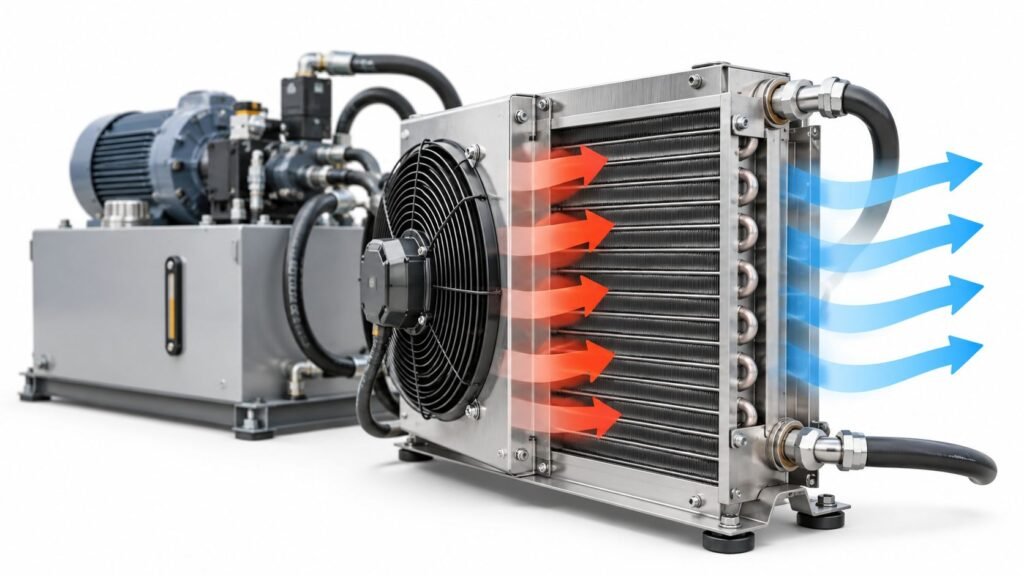
An elevator oil cooler works like a radiator for the hydraulic system. It lowers the temperature of the oil so the fluid can continue responding predictably as the elevator operates. The cooler does not repair a damaged valve, replace contaminated oil, or correct poor ventilation. It manages one part of the system's thermal load.
Temperature changes can alter elevator behavior before a complete failure occurs. As hydraulic oil becomes hotter, its viscosity falls and the fluid becomes thinner. The control valve may then respond differently, producing leveling errors, bounce, chatter, delayed response, and hot oil odors, symptoms associated with hydraulic fluid temperature management in elevator systems. A hydraulic elevator oil cooler engineering guide provides further technical context.
Why leveling changes with temperature
A hydraulic elevator relies on consistent oil flow to accelerate the car, slow it, and bring it to the landing. When oil viscosity changes, the valve's timing and response can change as well. The car may still run, yet stop less accurately or require more correction than it did earlier in the day.
Temperature alone does not identify the failed component. A worn valve, contaminated oil, incorrect adjustment, or mechanical fault can produce a similar complaint. Heat becomes a stronger suspect when the problem appears after repeated trips, worsens in warm weather, and improves after the elevator sits idle.
Practical rule: Treat the cooler as one part of the elevator's heat-management system. Establish when the oil gets hot and what the elevator is doing at that time before choosing a replacement.
Cooling requirements vary with ambient temperature, trip frequency, load per trip, travel height, speed, valve pressure drop, and machine-room ventilation. A well-ventilated installation may operate without a dedicated cooler. A high-traffic elevator in a shopping mall, hospital, or exhibition center may need forced-air cooling or dedicated refrigeration.
Michigan weather can expose the difference between a system that handles average conditions and one that has little thermal margin. Winter may hide a developing problem, while a hot, poorly ventilated machine room brings it forward. The practical question is thermal balance, not just whether the existing cooler is old.
How Hydraulic Oil Coolers Work Inside the Machine Room
The hydraulic power unit generates heat as a byproduct of lifting work, and the cooling circuit removes it. The pump sends oil through the system to move the car, while the control valve regulates that flow. Energy becomes heat when oil passes through restrictions, when pressure drops across the valve, or when the elevator makes frequent corrections. High traffic can therefore heat the oil even when every trip appears normal.
The flow path in practical terms
A typical cooling circuit follows this sequence:
- Warm oil leaves the reservoir. A dedicated pump or circulation branch draws oil from the tank after the thermostat calls for cooling.
- The oil passes through the cooler. A radiator core, plate assembly, or coil transfers heat from the oil to another medium.
- Heat moves away from the unit. A fan sends heat into the machine room, while water-cooled and refrigerant-based designs transfer it to a water circuit or refrigeration loop.
- Cooled oil returns to the reservoir. It mixes with the tank contents and remains available for the next operating cycle.
The radiator-style comparison is useful for understanding capacity. More fin surface and a stronger fan can move more heat, but only when oil flow, ambient temperature, and installation clearances support the rating. A nameplate capacity means little without the temperature difference and surrounding conditions.
Hydraulic elevator coolers are often selected to remove about 25% to 30% of the system's input power, rather than every watt produced during operation, according to this elevator oil cooler sizing reference. The correct selection still depends on duty cycle and the complete heat balance.
Common cooler arrangements
Air-to-oil fan units resemble compact radiators with an electric fan. They suit machine rooms that can accept discharged heat and provide enough clear, clean airflow around the core.
Plate heat exchangers move oil and a separate cooling medium through divided passages. Their compact size can help with space, but water quality, controls, and service access affect reliable operation.
Water-cooled coils use building water to carry heat away. They can perform well where suitable water service is available, although plumbing, controls, and maintenance add to the installation requirements.
Commercial equipment illustrates how specific cooler selection can become. Available products may be rated by heat-removal capacity, temperature difference, ambient operating range, sound level, and other installation limits. Compare those values with the machine room rather than selecting by physical size alone.
Inspect the pump, tank, valve, thermostat, fan, and cooler as one working circuit. A hydraulic elevator pump service resource can help an owner identify which part belongs in the first inspection. In Michigan, a cooler that works through winter may show inadequate capacity when a poorly ventilated machine room becomes hot, so seasonal conditions and airflow belong in the diagnosis.
A short visual explanation can help non-specialists follow the cooling circuit:
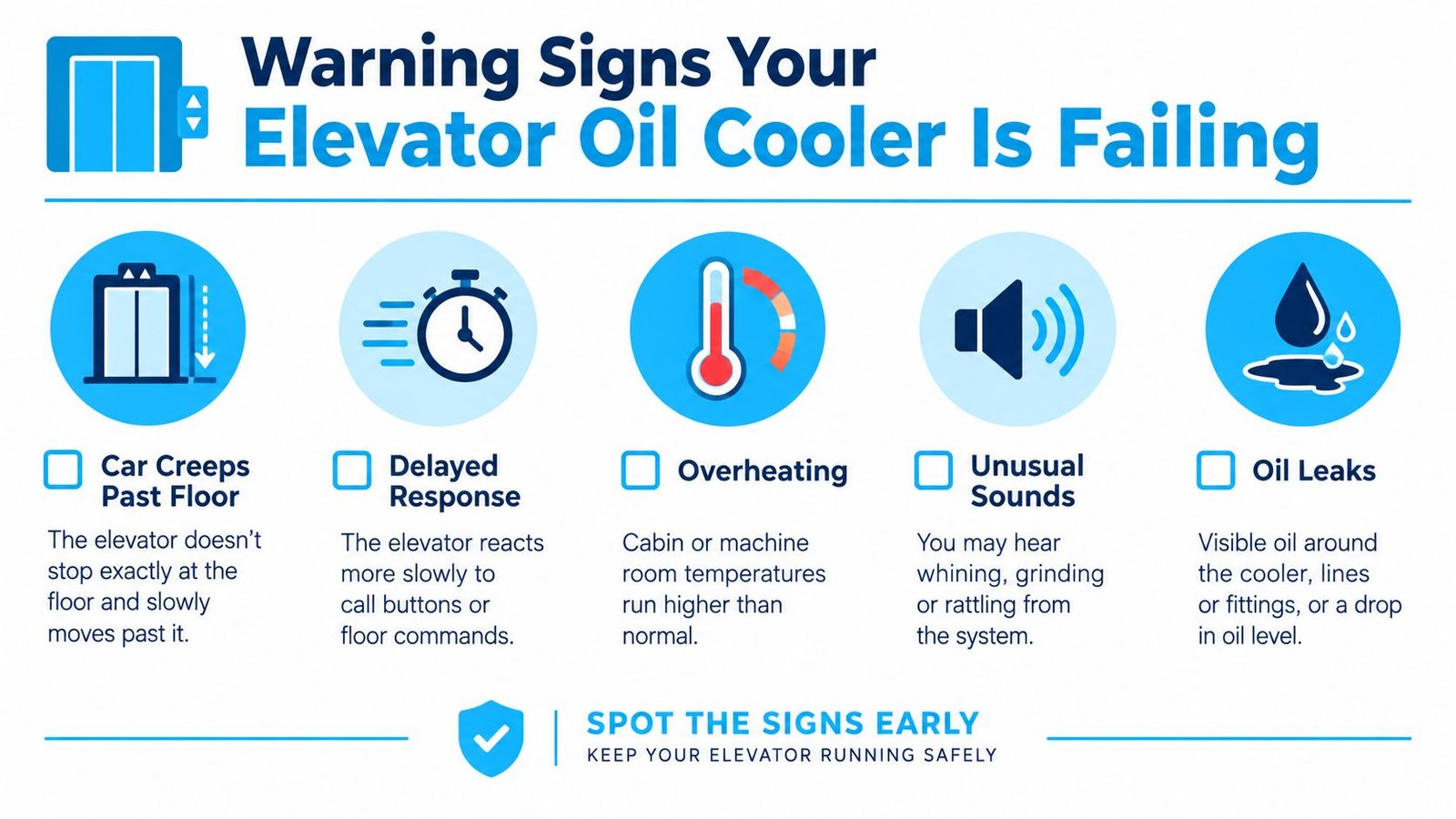
Warning Signs Your Elevator Oil Cooler Is Failing
A hydraulic elevator can run normally during the morning and then become slow, sticky, or imprecise after a busy period. That pattern often points to heat building faster than the cooling system can remove it. One complaint alone may have another cause, but several symptoms appearing together deserve a service inspection.
Symptoms people notice first
- The car creeps past the floor. Leveling drift can appear when hot oil changes how accurately the valve meters flow.
- Response becomes delayed. Starts, corrections, or loaded trips may feel hesitant after repeated operation.
- A hot-oil odor develops. A burnt smell or visible oil sheen near the tank calls for prompt attention. Possible causes include excessive temperature, a leak, or degraded fluid.
- The fan behaves abnormally. A fan that never starts, runs constantly, or makes unusual sounds may have a failed motor, thermostat, contactor, blocked coil, or restricted airflow.
- The temperature keeps rising. A controller gauge or service reading that climbs during ordinary traffic indicates that heat removal is falling short of heat generation.
As noted earlier, thinner hot oil alters valve metering. Here, that change may show up as creep, delayed response, or inconsistent leveling. The cooler does not need to stop completely to cause trouble. Dirt on the core, a failed thermostat, a weak fan, a blocked intake, or poor circulation can reduce usable cooling capacity enough to overheat the system.
A technical guide describes thermostatic operation around a common 110°F to 115°F setpoint, while some systems begin cooling after roughly a 10°C to 12°C rise above ambient, depending on configuration. The mechanic should verify the actual control arrangement instead of assuming every unit uses the same setting.
What to check before ordering parts
Begin with a temperature trend rather than a replacement quote. Record the oil temperature when the elevator is cold, after normal traffic, and when the complaint occurs. Check whether the fan starts, whether air can move through the fins, and whether the circulation pump is moving oil.
A Michigan machine room may behave differently in winter and summer. A cooler that appears adequate in cold weather can struggle when a poorly ventilated room becomes hot. That makes room temperature and airflow part of the diagnosis, not just background conditions.
Do not assume a leak comes from the cooler core. Fittings, hoses, gaskets, seals, and the tank can leave oil in the same area. A noisy fan also does not prove that the core is plugged. The service diagnosis should connect the symptom with a measured loss of heat transfer before an owner orders parts.
Reading Cooler Specs Without Getting Lost
A specification sheet is a set of operating conditions, not a promise that the cooler will perform the same way in every machine room. Start with four fields: heat-removal capacity, operating temperature, flow requirement, and noise. Then ask what each rating assumes.
| Spec | What It Means | What to Ask the Contractor |
|---|---|---|
| Heat-removal capacity | The heat the cooler can reject under stated test conditions | At what oil flow, temperature difference, and ambient was this rating measured? The SEIM elevator-market documentation gives examples of how these conditions accompany the capacity figure. |
| Thermostat setpoint | The oil temperature or temperature rise that starts circulation | Is the control based on oil temperature, ambient rise, or another arrangement? Confirm the setting and switching behavior against the oil cooler installation guide. |
| Ambient operating range | The surrounding temperature range covered by the rating | What is the hottest expected machine-room temperature, and does the rating still provide enough margin then? |
| Noise rating | Sound measured at a stated distance and operating condition | Where was the measurement taken, and will the fan be near occupied space, a hallway, or an apartment? A commercial cooler specification lists its measuring distance with the noise value. |
| Flow requirement | The oil volume the cooler needs to transfer heat properly | Does the circulation pump deliver the required flow after accounting for hoses, fittings, and bypass pressure? |
Capacity depends on the conditions
A BTU-per-hour figure is useful only beside its test conditions. A cooler rated in a mild room may have less practical margin in a hot, poorly ventilated Michigan machine room. Two units with the same nominal capacity can also differ because of coil area, fan performance, oil flow, and installation clearance.
Use the 25% to 30% heat-removal guideline as an initial check, not as the final selection method. Ask for the calculated hydraulic input power, expected heat load, design ambient, and cooler performance at that condition. The engineering discussion of elevator oil cooler selection explains why an elevator's horsepower label alone cannot determine cooler size.
Match flow and controls
The cooler's flow range must suit the circulation pump and hydraulic power unit. Too little oil reduces heat transfer. Excessive flow can increase pressure loss or create control problems. Have the technician compare pump output with the cooler requirement, then review the valve's bypass or relief setting.
The thermostat, contactor, pump, and controller should be checked as one system. A replacement cooler may have adequate capacity yet operate poorly if its control signal, switching cycle, or electrical arrangement does not match the existing equipment. That comparison gives the owner a clearer choice between a direct replacement, a modified installation, and further diagnosis.
When a Cooler Alone Is Not the Real Fix
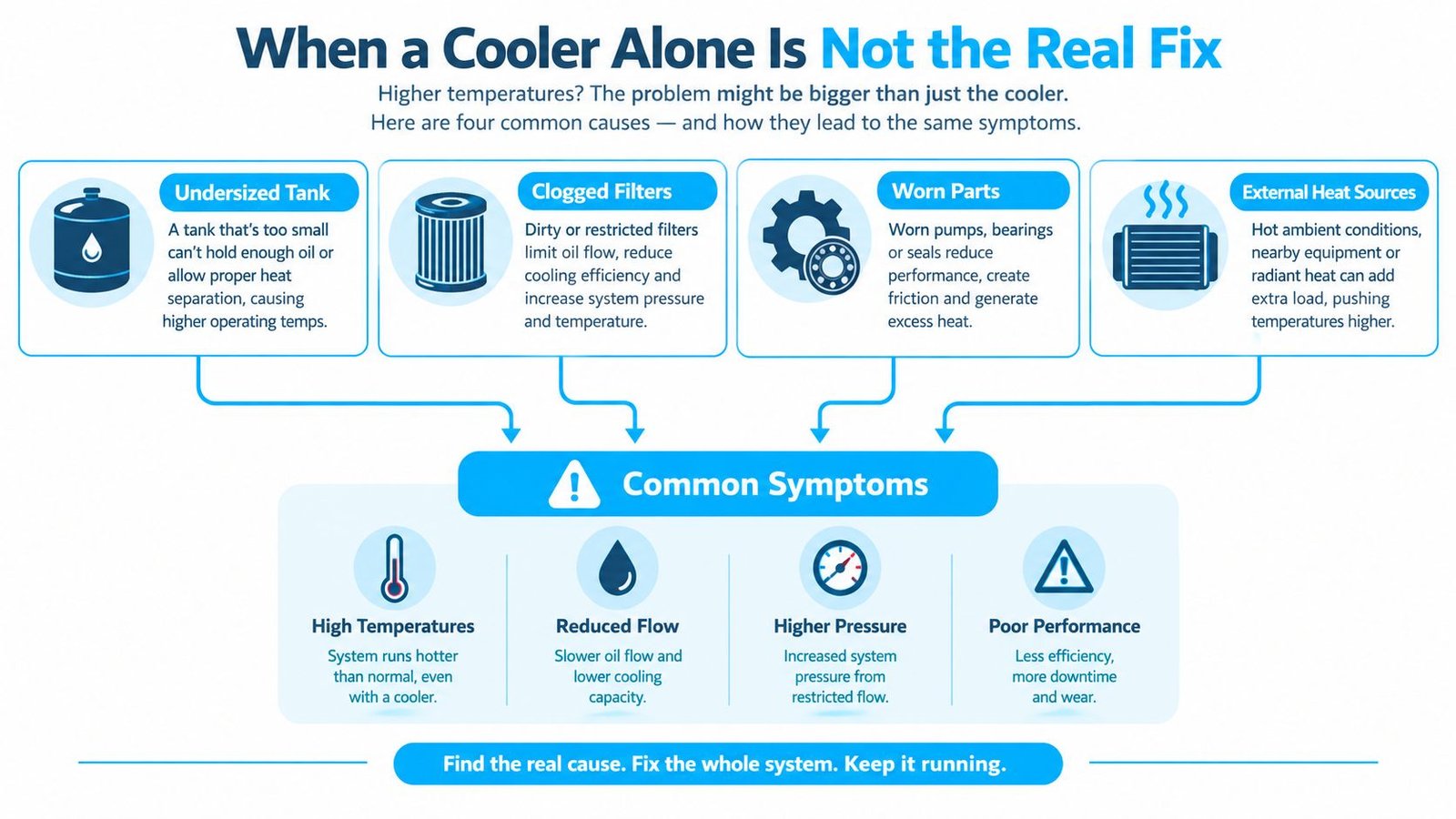
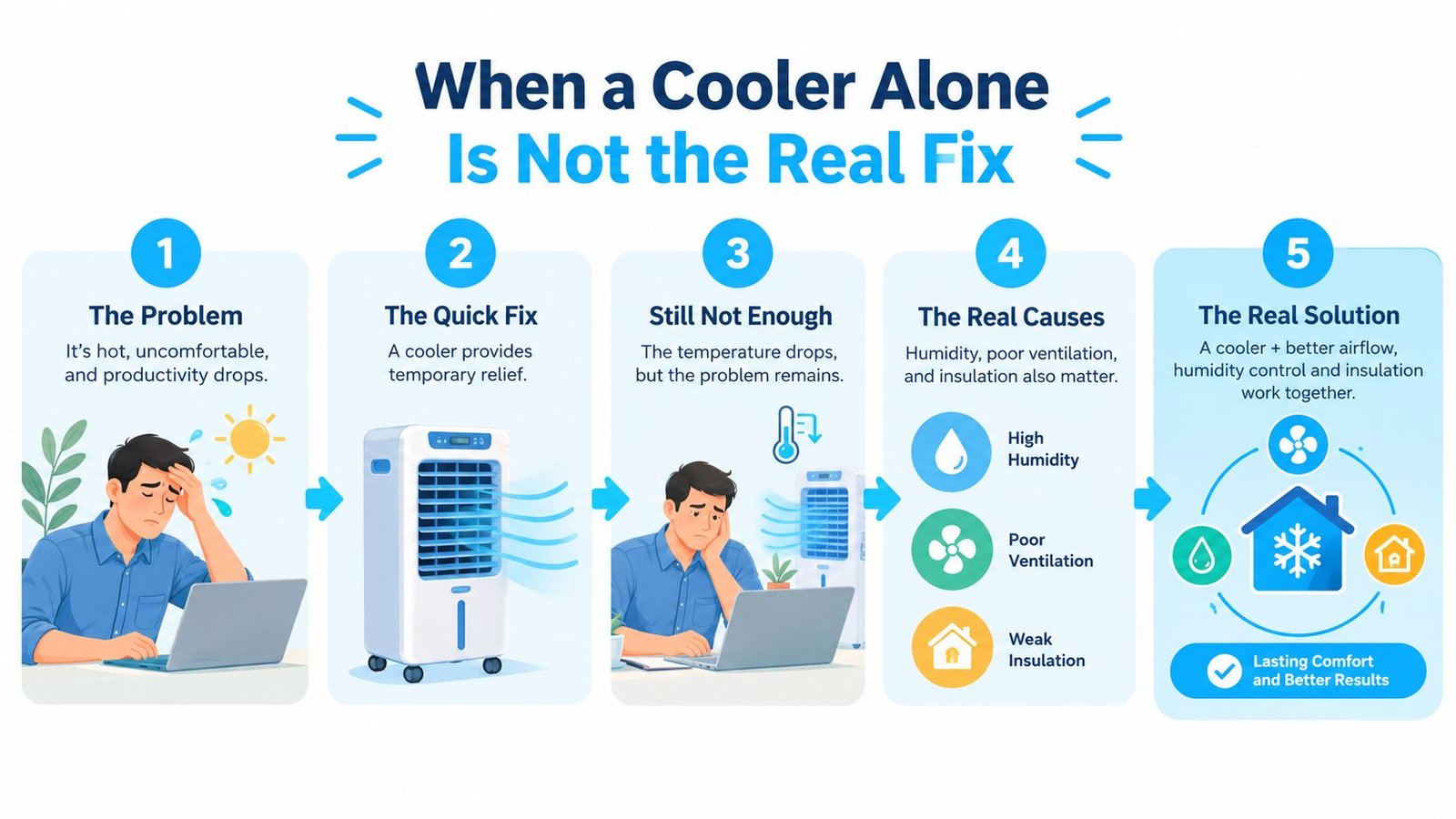
A hot hydraulic elevator doesn't automatically need a larger cooler. Heat problems can begin with the tank, ventilation, valve adjustment, oil condition, or pressure loss. Adding cooling capacity before identifying the source can leave the original fault untouched.
Four competing causes
An undersized or compromised tank has less oil volume available to absorb heat. Sludge can also reduce usable working volume and interfere with circulation. A mechanic can compare the tank's actual condition and capacity with the equipment nameplate and operating duty.
Poor machine-room ventilation creates another trap. An air-cooled unit may be working, but it can only reject heat into air that is cooler than the oil. If the room is drawing in dusty outside air or recirculating its own warm discharge, the cooler's performance can fall.
A valve that bypasses or throttles improperly may generate heat continuously. The technician can compare operating pressure, observe valve behavior, and check temperatures at the pump inlet and return line. A temperature probe often reveals whether the system is generating abnormal heat before the cooler has a chance to remove it.
Oil condition matters as well. The selected grade, contamination level, and viscosity history affect how the pump and valve behave. A fluid sample can identify whether the oil has degraded or whether the system is carrying contamination that needs correction.
A cooler removes heat. It doesn't repair a valve, restore lost tank volume, improve room ventilation, or correct unsuitable oil.
A better decision rule
Use measured conditions, not a sales description. If return-line oil is above 130°F, the tank is full, and the machine room is below 95°F, the cooler becomes a stronger suspect. Those thresholds come from the diagnostic framework in the hydraulic elevator heat-management material, and they still need to be interpreted by a qualified elevator mechanic.
If the tank is low, the room is hot, or the valve is creating excessive pressure loss, a cooler may only mask the symptom. The same source emphasizes that tank sizing, ventilation, oil selection, and valve tuning can be necessary parts of the solution.
Before approving a replacement, ask for a temperature log, airflow inspection, pump and fan checks, and an explanation of the heat source. A smaller repair can be more valuable than a new cooler when the diagnosis points elsewhere. The buyer's real question is whether the cooling circuit is under-capacity or whether the elevator is creating more heat than its design should produce.
For related hydraulic power-unit work, review the inspection scope for hydraulic elevator packing and seal service, because a leak or seal problem can be mistaken for a cooler failure.
Maintenance Schedule and Replacement Options
A cooler lasts longer when technicians protect its airflow and verify its controls. Dust, lint, and oily debris can cover the fin surface, forcing the fan to work harder while reducing heat transfer. In a machine room with poor filtration, cleaning isn't cosmetic. It directly affects the cooler's ability to reject heat.
A service rhythm that works
Monthly, inspect the fan, guard, wiring, hoses, fittings, and coil face. Look for oil residue, bent fins, unusual vibration, and a fan that fails to start when the thermostat calls for cooling.
Quarterly, remove lint and dust that restrict airflow. Cleaning methods should suit the equipment and site conditions, because aggressive washing or careless air pressure can bend fins or push contamination deeper into the core.
Before the cooling season, test the thermostat, contactor, circulation pump, and temperature controls. Confirm that the cooler starts at the intended setpoint and stops correctly once the oil returns to the expected range.
During deeper service, inspect fan bearings, straighten damaged fins, examine gaskets, and check the coil and connections for leakage. The exact interval should follow the equipment condition and the maintenance program, not an arbitrary calendar alone.
A hydraulic elevator tank and power-unit replacement resource is useful when the cooler problem is part of a wider power-unit condition rather than a standalone component failure.
Repair, retrofit, or replace
The choice depends on the failure and the age of the surrounding equipment. A repair may make sense when the coil is sound and the fault is limited to a thermostat, contactor, fan motor, fitting, or gasket. A retrofit can be appropriate when the hydraulic system remains healthy but the original cooler is obsolete or poorly matched to current traffic.
An OEM replacement is more persuasive when parts are unavailable, thermostat faults keep returning, or the nameplate capacity no longer reflects the building's use. A contractor should explain whether the proposed unit matches the pump, reservoir, controls, ambient conditions, and available service space.
Each visit should document the temperature trend, fan amp draw, gasket condition, and sight-glass oil condition. Oil sampling and tank cleaning may require separate authorization, so ask what the quoted inspection includes before assuming those tasks are part of the base visit.
Owner's checklist: Ask for the measured oil temperature, cooler start and stop behavior, airflow condition, and the reason the recommended repair matches the diagnosed fault.
The best replacement isn't always the largest model. It should provide useful thermal margin without creating avoidable control, noise, plumbing, or maintenance problems.
Lifespan, Compliance, and Why Local Service Matters
Cooler health affects more than ride comfort. Repeated overheating can place additional stress on seals, valves, pumps, and motors, while contaminated or degraded oil can spread the problem through the hydraulic circuit. A cooler that lowers oil temperature by nearly 40°F, or 22°C, under suitable site conditions is a measurable component benefit, as described in this elevator technical tip on oil cooling.
Some cooler designs can also filter oil, which may help extend component life. That benefit doesn't make the unit maintenance-free. Dusty environments still require periodic cleaning, and some installations may need optional filtration, so owners should evaluate both temperature reduction and the ongoing service burden.
Documentation supports better decisions
A facility manager should keep the cooler's performance data with the elevator maintenance records. Record the oil temperature during representative operation, note ambient machine-room conditions, and document fan or thermostat faults. Those records give the mechanic a useful baseline when a summer complaint returns.
Code inspections and testing should remain part of the broader elevator program. Cooling work doesn't replace required inspections, safety tests, or corrections, and local requirements may affect scheduling, access, and documentation. A contractor who understands the equipment can coordinate cooling repairs with the next inspection rather than treating the cooler as an unrelated purchase.
Michigan service realities
Michigan buildings experience sharply different operating conditions across the year. A machine room that performs acceptably in cold weather can struggle when summer traffic, warm outdoor air, and limited ventilation arrive together. Older equipment may also require careful parts sourcing and a practical plan for keeping the elevator available during repair.
Local coverage matters when a facility needs maintenance, repair, modernization, installation, testing, or emergency response. Crane Elevator Company states that it serves southern Michigan, including Detroit, Ann Arbor, Lansing, Flint, Kalamazoo, Livonia, Ypsilanti, Saginaw, Bay City, Port Huron, Jackson, Warren, Sterling Heights, Howell, Midland, and Grand Rapids-area communities, as well as surrounding communities in Michigan and Ohio, according to its regional elevator service information.
The right decision framework is simple: verify cooler performance, document temperature trends, identify the actual heat source, and choose a service partner that can support the complete hydraulic elevator. That approach protects the tenant experience and gives older systems a better chance of reliable operation.
Crane Elevator Company provides maintenance, repairs, inspections, testing, modernization, and hydraulic component service across Detroit, Lansing, Ann Arbor, Grand Rapids, and surrounding Michigan and Ohio communities. If your elevator is showing leveling drift, overheating, oil odors, or cooler control problems, visit Crane Elevator Company to request service and discuss the right diagnostic path.